Quick Summary
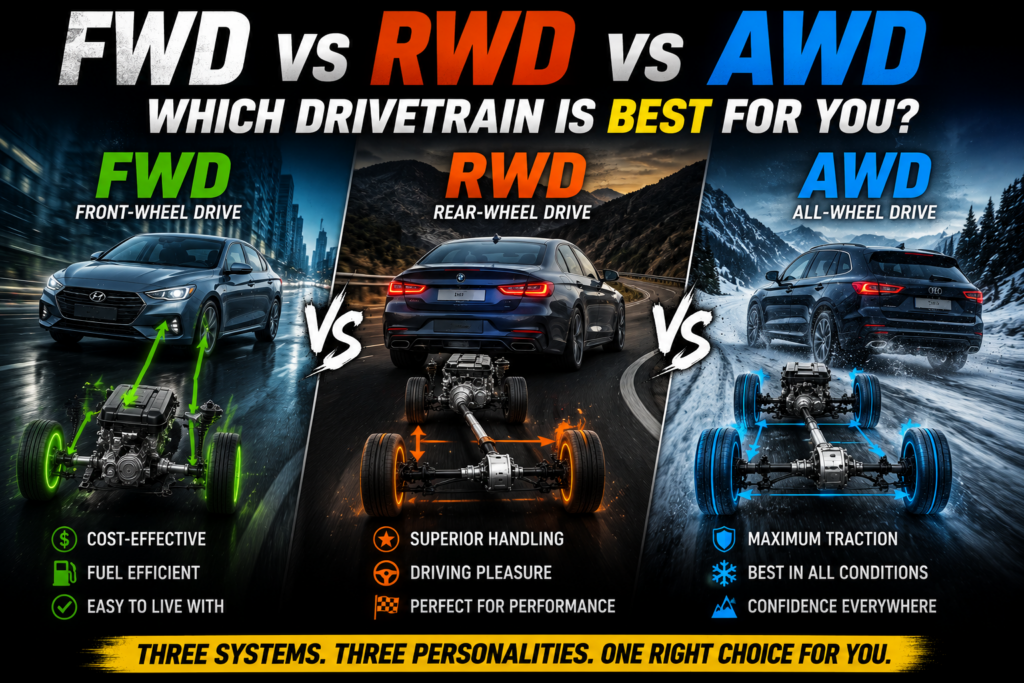
FWD is usually the smartest choice for normal commuting because it is affordable, efficient, compact, and good enough for most conditions.
RWD is the best fit for drivers who care about handling balance, high-speed stability, and the classic feeling of a performance car.
AWD gives the strongest traction advantage in snow, rain, loose surfaces, and hard acceleration, but it usually adds cost, weight, and some efficiency loss.
Modern AWD is not always a heavy permanent system. Many systems run mostly as two-wheel drive and connect the second axle only when needed.
There is no single best drivetrain. The best choice depends on where you drive, how you drive, and what you expect from the car.
Why This Matters
FWD vs RWD vs AWD sounds like a simple mechanical comparison, but it quickly becomes a real-life question.
If you commute every day in a normal city, front-wheel drive may be the most sensible answer. If you enjoy cornering, balance, and acceleration feel, rear-wheel drive can make a car feel more natural and more alive. If you live where roads are often snowy, wet, steep, or unpaved, all-wheel drive can give useful confidence.
That is why the question should not be:
Which drivetrain is the best?
It should be:
Which drivetrain is best for this driver, on these roads, in this kind of car?
Once we look at it that way, FWD, RWD, and AWD stop being winners and losers. They become different answers to different problems.
How It Works
The basic difference is simple.
FWD, or front-wheel drive, sends engine power to the front wheels. The front tires have to steer the car and pull it forward.
RWD, or rear-wheel drive, sends engine power to the rear wheels. The front tires mainly steer, while the rear tires push the car forward.
AWD, or all-wheel drive, can send power to both front and rear axles. Depending on the system, it may do this all the time, only when needed, or with a rear-biased or front-biased strategy.
The important part is not only which wheels receive power. It is what that choice does to cost, packaging, traction, handling, fuel economy, and driving feel.
Front-Wheel Drive: The Sensible Default
FWD is the reason most everyday cars can be affordable, spacious, and efficient.
In a typical front-wheel-drive car, the engine and transmission are packaged together at the front. The transmission, final drive, and differential are often combined into one compact unit called a transaxle. That means the powertrain can be built as a compact module and installed efficiently during production.
This is one reason FWD is so common in compact cars, family sedans, hatchbacks, crossovers, minivans, and many hybrid models. It reduces parts count, simplifies manufacturing, and frees up cabin space because there is no large driveshaft running to the rear axle.
For most drivers, that matters more than perfect handling balance.
FWD also tends to be good for fuel economy. The drivetrain is compact, usually lighter than an equivalent AWD system, and does not need to spin as many extra shafts, gears, and couplings. Less mechanical complexity usually means less energy loss.
There is another practical advantage people sometimes forget: snow starts.
Because the engine sits over the front axle, there is extra weight on the driven wheels. On a snowy driveway or cold morning commute, that weight can help the front tires dig in and pull the car forward. With good winter tires, a FWD car can be surprisingly competent in winter.
But FWD has limits.
The biggest one is understeer. Understeer means the car does not turn as much as the driver asks. In a FWD car, the front tires are asked to steer, brake, and accelerate. When they are overloaded, the car tends to push wide.
Torque steer is another FWD weakness. Under hard acceleration, especially in powerful front-drive cars, the steering wheel may pull to one side because the front wheels are also handling engine torque.
So FWD is not the most exciting layout. It is the most rational one for many people.
Rear-Wheel Drive: The Driver’s Layout
RWD separates the job of steering and driving.
The front wheels steer. The rear wheels push.
That simple split changes the character of the car. Because the front tires are not also responsible for pulling the car forward, the steering can feel cleaner. Under acceleration, weight naturally shifts toward the rear axle, which gives the driven rear tires more grip. This is one reason RWD works so well in powerful cars.
RWD can also help with balance. In many front-engine rear-wheel-drive cars, engineers can place the engine, transmission, driveshaft, and rear differential in a way that spreads weight more evenly across the car. That does not automatically make every RWD car great, but it gives engineers a strong starting point for handling.
This is why BMW, Mercedes-Benz, Porsche, and many performance brands have cared so much about rear-driven layouts. It is not only tradition. It is a way to create steering feel, acceleration balance, and a more natural relationship between throttle and cornering attitude.
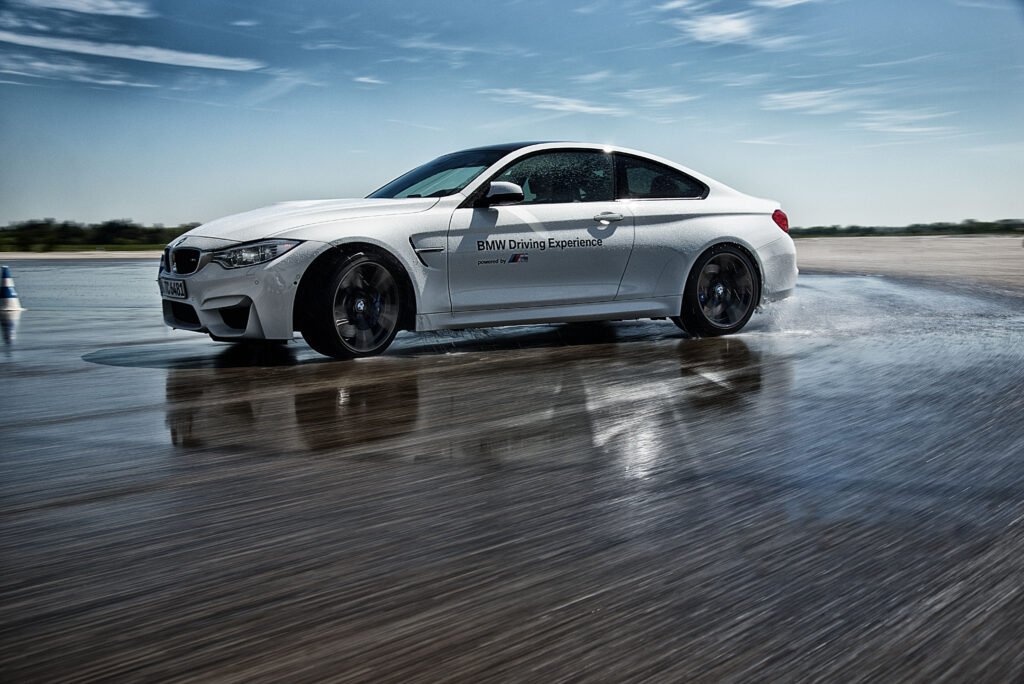
RWD is also the classic drivetrain for drift and oversteer. Oversteer means the rear of the car rotates more than the front. In controlled conditions, skilled drivers can use throttle to adjust the car’s angle. That is part of why RWD feels playful and expressive.
But RWD has a clear weakness: snow traction.
With the same tires, a front-engine RWD car is usually worse than FWD or AWD when starting on snow or ice. The engine weight is at the front, but the driven wheels are at the back. That means the rear tires may not have enough weight pressing them into the surface.
Modern technology has made this less scary than it used to be. ESC, traction control, better tire compounds, limited-slip differentials, and winter tires have made modern RWD cars much easier to live with. A RWD car on good winter tires can be far more capable than an AWD car on poor all-season tires.
Still, physics has not disappeared. If you live on steep icy roads, RWD requires more care.
All-Wheel Drive: The Traction Specialist
AWD is about traction.
When more than two tires can receive power, the car has more ways to use available grip. This helps when accelerating on wet roads, snowy roads, gravel, dirt, steep hills, and other low-grip surfaces.
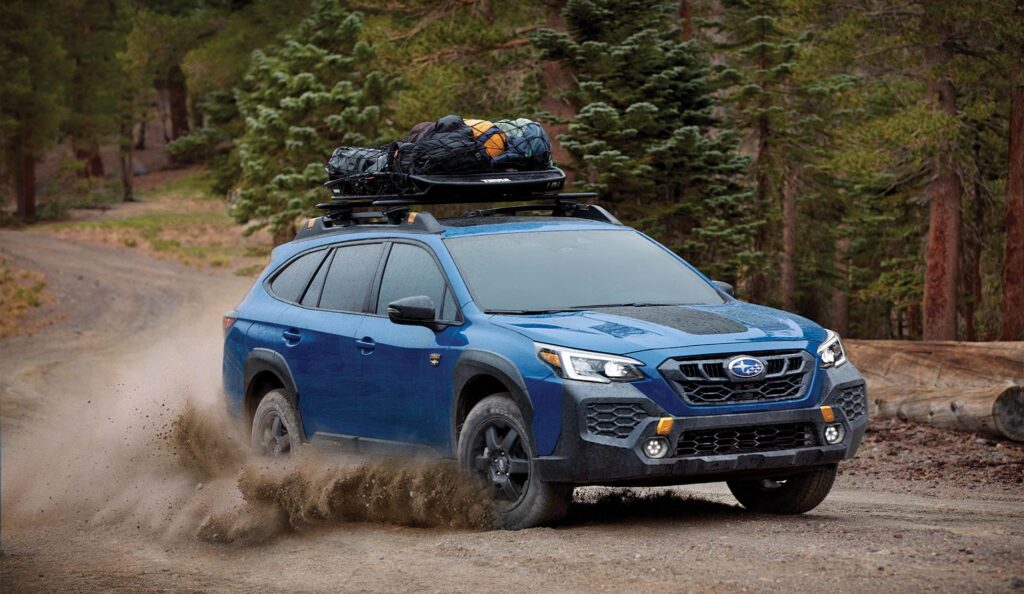
AWD also helps powerful cars put power down. A high-output engine can overwhelm two tires more easily than four. By spreading torque across more contact patches, AWD can make launches more consistent and acceleration feel more secure.
This is why AWD is common in performance EVs, fast crossovers, rally-inspired cars, and luxury sedans in cold-weather markets.
But AWD is not free.
It needs extra parts: a transfer case or power transfer unit, driveshafts, couplings, rear drive modules, extra differentials, control electronics, and additional cooling or lubrication depending on the system. Those parts add cost. They add weight. They also create mechanical drag, which can reduce fuel economy.
The right way to describe AWD is not “useless most of the time.” That is too harsh.
A better way to say it is this:
Most drivers will not use the full capability of AWD every day.
If you drive mostly in dry suburbs, on flat roads, at normal speeds, AWD may spend much of its life waiting for a situation where it matters. But when that situation arrives, such as a snowy hill, a wet highway ramp, a gravel road, or a fast launch, the extra traction can be genuinely useful.
Modern AWD Is Not Always Permanent AWD
This is one of the most important updates to understand.
Old AWD systems often made people think all four wheels were being driven all the time. Some systems still work that way, especially performance-oriented or off-road-focused layouts. But many modern AWD systems are on-demand.
That means the car may drive mostly like FWD or RWD in normal conditions, then connect the other axle when sensors detect slip or predict that extra traction will be useful.
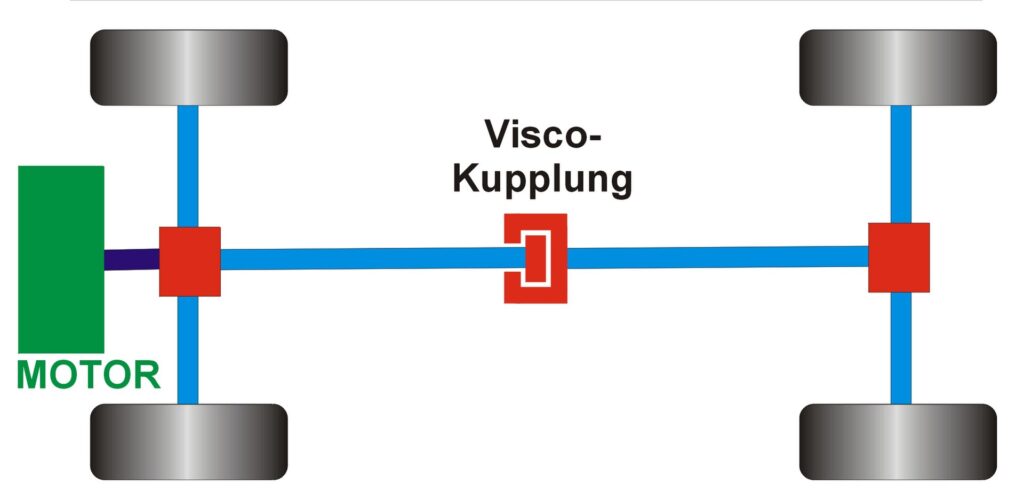
Systems associated with Haldex-style couplings, BorgWarner AWD couplings, Magna disconnect systems, and similar supplier technologies helped make this approach common. The idea is simple: if AWD is not needed, reduce the amount of hardware being actively driven. When AWD is needed, reconnect it quickly.
This is why modern AWD fuel economy penalties can be smaller than older drivers expect. The hardware is still there, so weight and cost remain. But software, clutches, disconnects, and smarter lubrication control can reduce the old “AWD always wastes fuel” problem.
Why Do BMW and Mercedes-Benz Still Care About Rear-Wheel Drive?
BMW and Mercedes-Benz do not use RWD only because of nostalgia.
For premium brands, drivetrain layout is part of how a car feels.
A rear-drive platform gives engineers a different starting point. The front wheels can focus more on steering. The rear wheels can manage propulsion. The car can be tuned to rotate naturally through corners. Under acceleration, rear weight transfer supports the driven wheels instead of fighting them.
BMW has built much of its identity around this feeling. The 3 Series, for example, has long been associated with rear-wheel drive, balanced weight distribution, and steering precision. Even when BMW uses xDrive, many performance versions are tuned with a rear-biased feel because the brand does not want AWD to erase the classic BMW character.
Mercedes-Benz has a slightly different personality, but the logic is similar. In larger sedans, grand tourers, and performance models, RWD supports refinement, stability, and power delivery. It helps a car feel calm at speed and strong under acceleration.
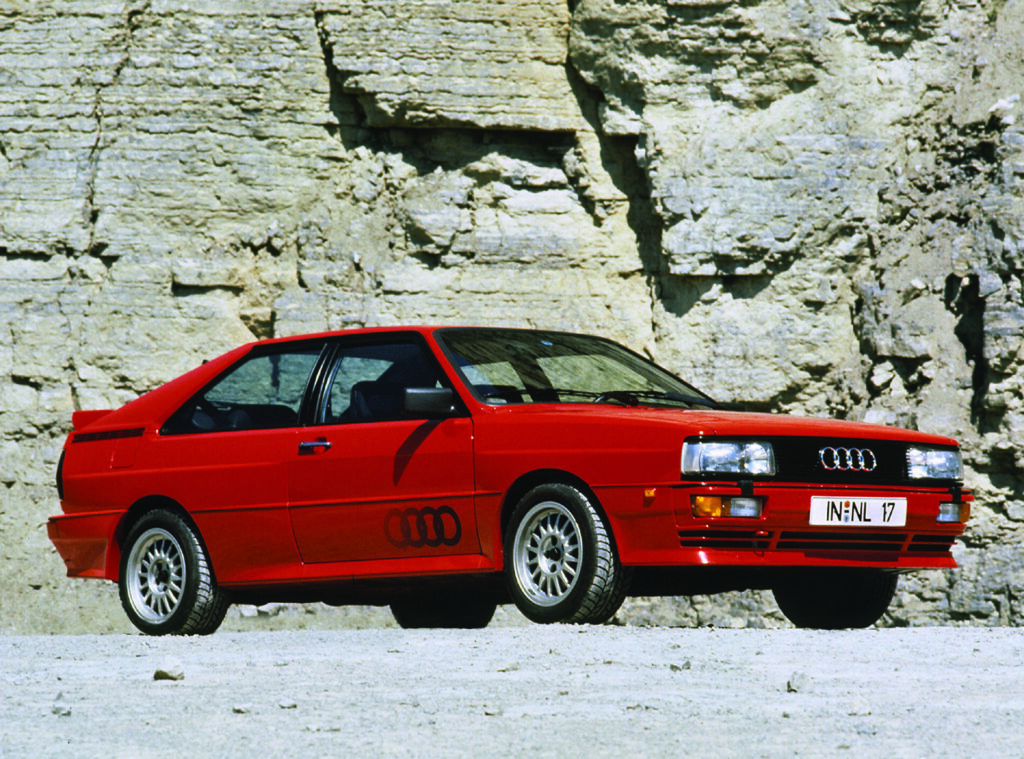
Audi is the opposite example in a useful way. It made quattro part of its identity. Subaru did something similar with Symmetrical AWD. Porsche often uses RWD where it wants purity and AWD where it wants maximum traction and all-weather performance.
The point is not that one layout is always better. The point is that drivetrain layout is part of the car’s character.
For mainstream cars, FWD often makes more sense. For premium and performance cars, RWD still gives engineers a more expressive canvas. For brands built around all-weather traction, AWD can become a core identity.
Common Misconceptions
“AWD is always safest.”
AWD helps a car accelerate in low-grip conditions, but it does not magically improve braking. It also cannot overcome bad tires. Tires still matter enormously in snow and ice, regardless of whether the car is FWD, RWD, or AWD.
“FWD is cheap, so it must be bad.”
FWD is cheaper to build, but that does not make it bad. It is efficient, compact, practical, and very good for normal driving. Most people do not need RWD balance or AWD traction every day.
“RWD is impossible in winter.”
Older RWD cars could be difficult in snow, especially with poor tires. Modern RWD cars are much better because of ESC, traction control, better tires, and smarter differentials. Still, same tires and same conditions, RWD is usually the weakest winter-start layout.
“AWD means all four wheels are always powered equally.”
Not anymore. Many modern AWD systems are variable or on-demand. They may send most power to one axle during normal driving and connect the other axle when conditions demand it.
“RWD is only for drifting.”
Drifting is one visible part of RWD culture, but RWD is also about steering feel, balance, high-speed stability, and power delivery. That is why many luxury and performance cars still use it.
Real-World Examples
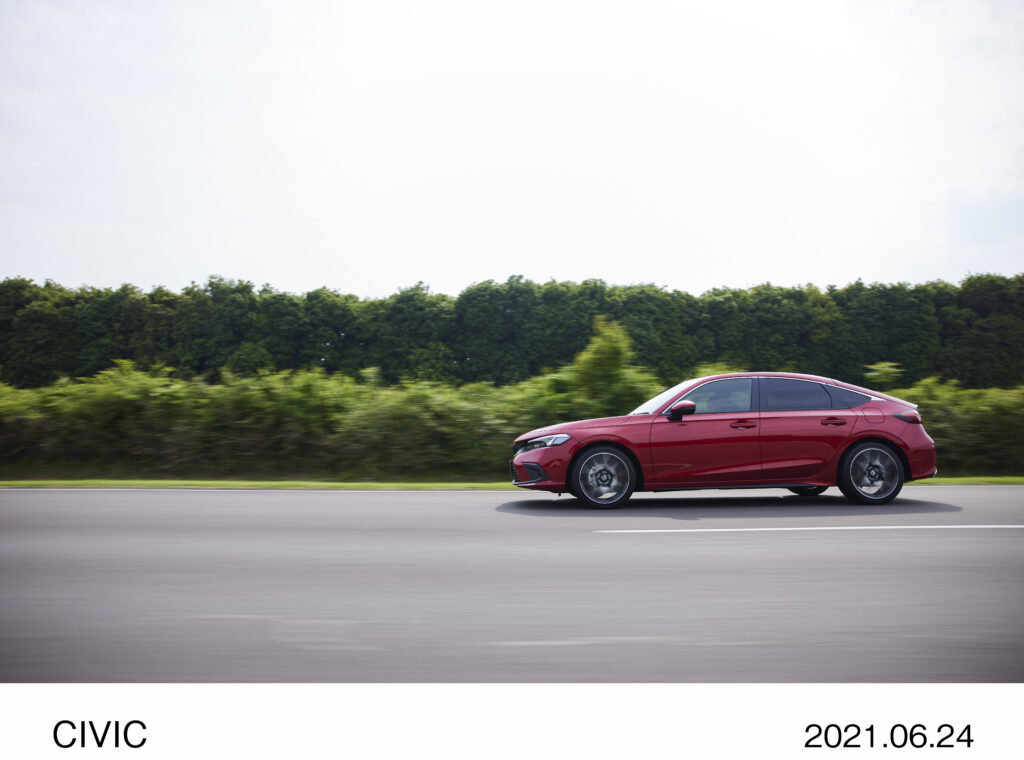
A compact commuter car usually makes sense with FWD. It keeps cost down, saves space, and gives enough traction for normal rain and mild winter conditions.
A BMW 3 Series or Mercedes-Benz C-Class shows why RWD still matters. Even if AWD is available, the rear-drive foundation helps explain the steering and handling character these cars are known for.
A Subaru, Audi quattro model, or BMW xDrive model shows the appeal of AWD. The driver may not need all four wheels every moment, but the added traction can be reassuring in bad weather or useful in hard acceleration.
A high-performance EV also shows why AWD is spreading. Electric motors can deliver instant torque, so using both axles helps manage traction and acceleration.
Which Drivetrain Fits You Best?
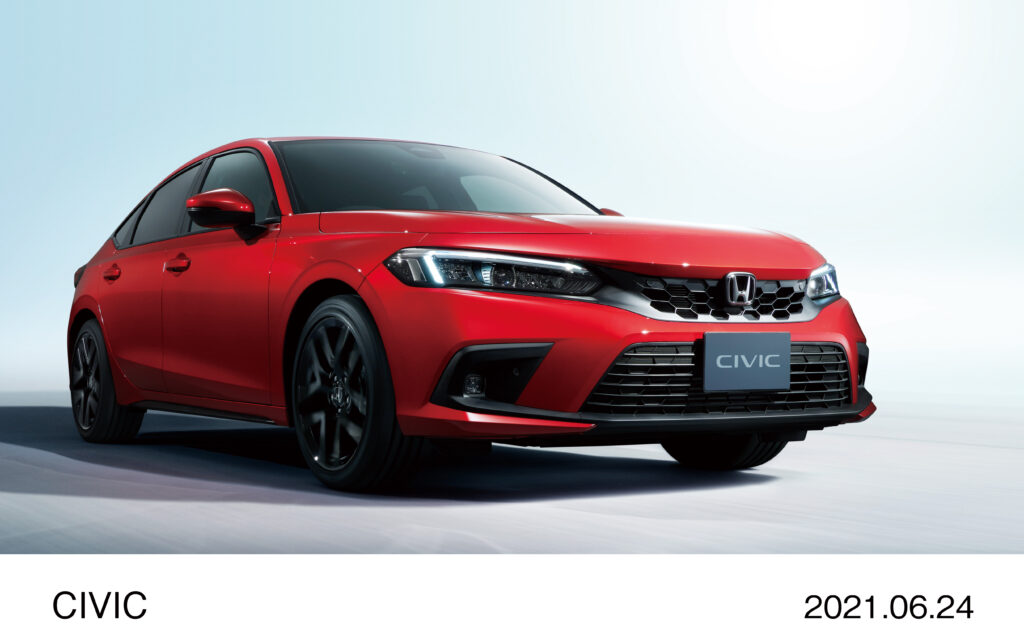
Choose FWD if your life is mostly commuting, school runs, errands, city driving, and highway cruising. It is usually the most sensible answer for cost, fuel economy, packaging, and simplicity.
Choose RWD if you care about driving feel, steering balance, throttle control, and the classic performance-car character. It is the most enjoyable layout for many enthusiasts, especially in dry conditions.
Choose AWD if you often drive in snow, heavy rain, steep terrain, gravel, or low-grip conditions. It also makes sense if the car has a lot of power and needs help putting that power down cleanly.
The tire choice still matters. A FWD car on good winter tires may feel more secure than an AWD car on weak all-season tires. AWD helps you go, but tires help you go, stop, and turn.
Cariary Thoughts
What I find interesting about this topic is how often people treat drivetrain choice like a ranking.
FWD sounds ordinary. RWD sounds exciting. AWD sounds superior.
But once we slow down, the picture becomes more human.
FWD is the layout for people who just need a car to work well without making life expensive. That is not boring. That is intelligent engineering for real life.
RWD is the layout that reminds us cars are not only transportation. The way a car turns, accelerates, and responds can matter emotionally.
AWD is the layout that makes the most sense when the road is not predictable. It gives extra confidence, but it also asks you to pay for hardware you may not use every day.
So I do not think the best drivetrain is the one with the most driven wheels.
The best drivetrain is the one that matches your roads, your weather, your budget, and the kind of driving that makes sense for you.
One-Line Summary
FWD is usually best for practical daily driving, RWD is best for driving feel and performance balance, and AWD is best when traction matters most.
FAQ
Is FWD better than AWD?
FWD is better if you care most about price, fuel economy, simplicity, and interior space. AWD is better if you regularly drive in snow, heavy rain, steep roads, or low-grip conditions.
Is AWD better than FWD in snow?
AWD is usually better for getting moving in snow, especially on hills. But AWD does not replace winter tires. Tires are still critical for braking, turning, and overall control.
What are the main RWD advantages?
RWD separates steering and propulsion, which can improve steering feel, handling balance, high-speed stability, and throttle control. That is why many sports cars and premium sedans use it.
Why do most normal cars use FWD?
FWD is cheaper and easier to package. The engine, transmission, and driven axle can be arranged compactly at the front, leaving more room for passengers and cargo while keeping cost and weight down.
Is RWD bad in the rain?
RWD is not automatically bad in rain, especially with modern stability control and good tires. But if the driver accelerates too aggressively on a wet road, the rear tires can lose grip more easily than in FWD or AWD.
Does AWD use more fuel?
Usually yes, because AWD adds parts and weight. However, modern on-demand AWD systems can reduce the penalty by disconnecting or reducing torque to one axle when AWD is not needed.
Is AWD worth it for daily driving?
It depends on your climate and roads. If you live somewhere dry and flat, AWD may not be necessary. If you deal with snow, steep hills, dirt roads, or frequent heavy rain, AWD can be worth the extra cost.
Why do BMW and Mercedes still use RWD?
RWD helps create the steering feel, balance, and power delivery that many premium and performance cars are known for. Even when these brands offer AWD, the rear-drive foundation still shapes the car’s character.