CARIARYCAR · DIARY · PERSPECTIVE
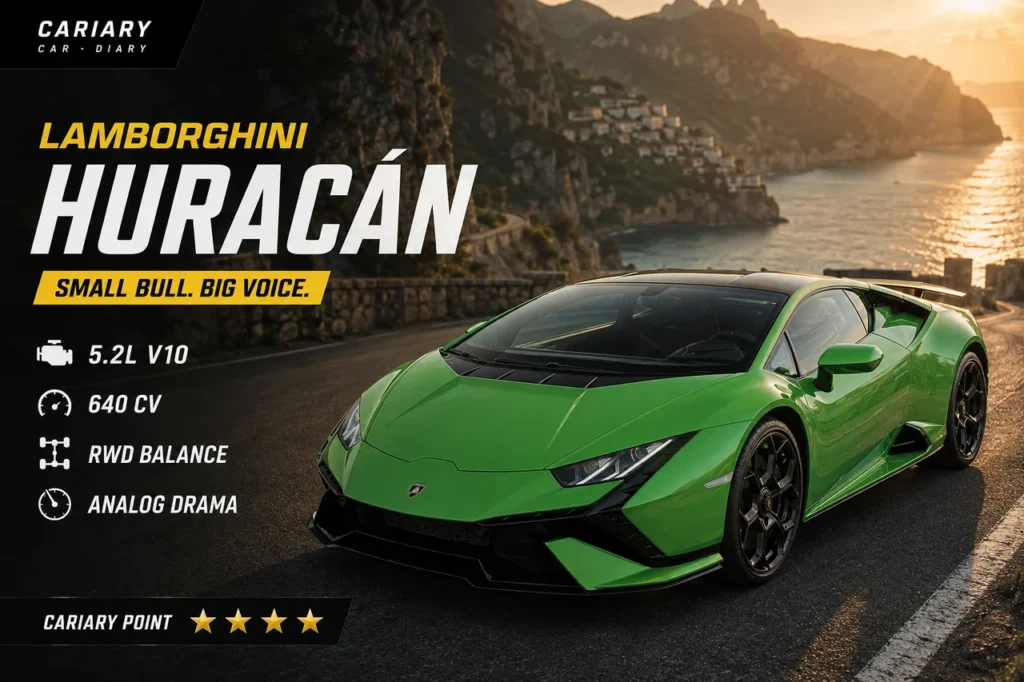
Cover: AI-generated Cariary editorial illustration, checked against Huracán Tecnica proportions. It is not road-test photography.
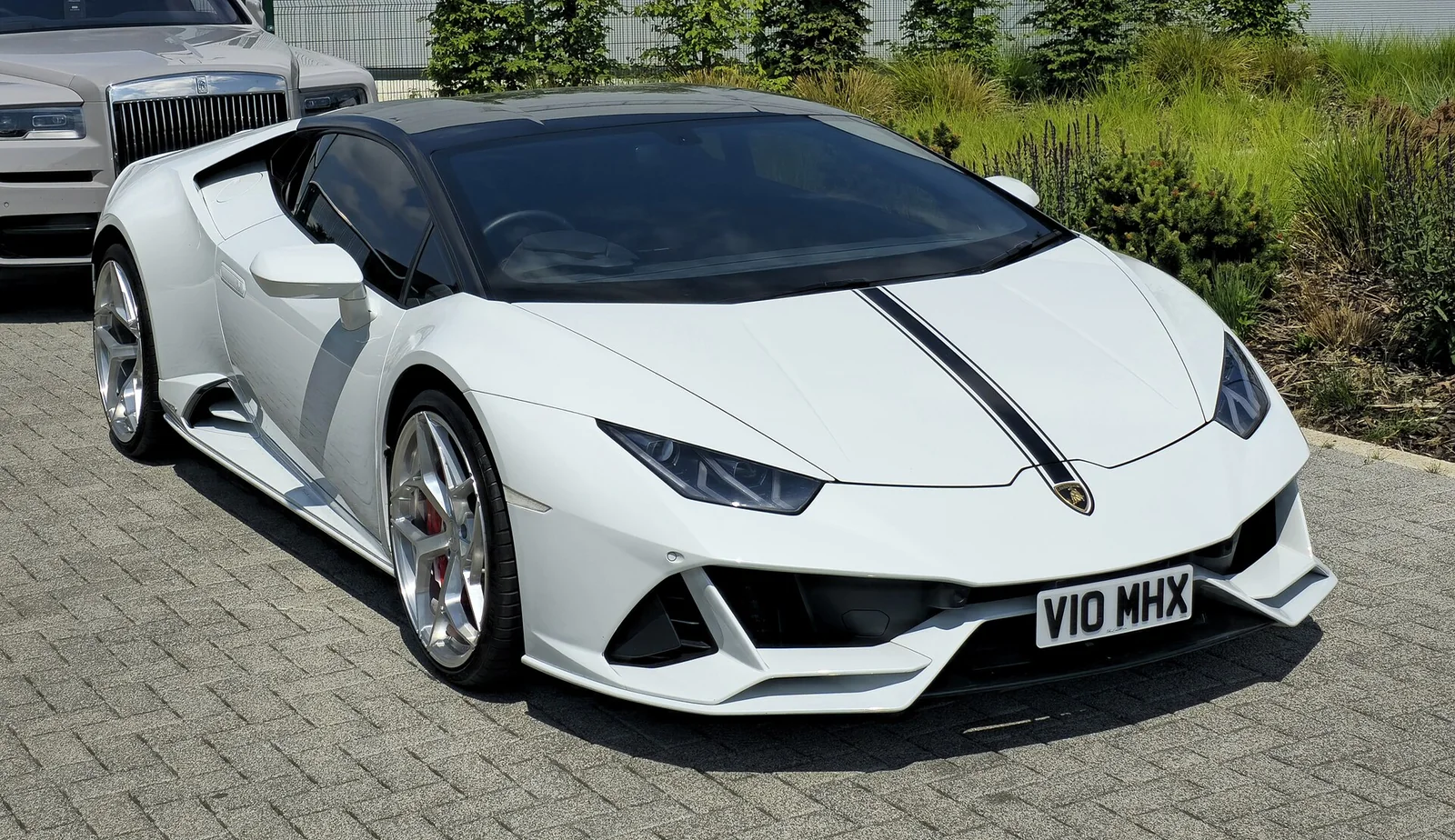
This Lamborghini Huracan review explains why the “small” bull became one of the most important modern Lamborghinis. The Huracán is smaller, easier to place and less ceremonial than the V12 flagship, yet its naturally aspirated V10 gives it a voice and throttle response that newer, faster hybrid supercars cannot reproduce in quite the same way.
The Huracán arrived in 2014 as the Gallardo’s replacement and remained in production for a decade. Lamborghini said the 14,022nd example had already passed the Gallardo’s total production by October 2019; by early 2024, Huracán sales had exceeded 25,000 and the final production year was allocated. Those numbers do not make it ordinary. They show how successfully Lamborghini turned the exotic-car ritual into something owners could understand and use.
This is a research-based buyer review of the 2014–2024 Huracán family, with emphasis on the late EVO RWD, Tecnica, STO and Sterrato. Cariary has not road-tested these cars. Manufacturer performance figures are identified as official claims, while road impressions are attributed to independent reviewers.
Lamborghini Huracan Review: Quick Verdict
CARIARY POINT: ★★★★ — 4/5. The Huracán earns four stars for a sensational naturally aspirated V10, compact mid-engine proportions, a quick dual-clutch gearbox and a late-model range that offers genuinely different characters. The missing star reflects poor visibility, limited luggage space, high running costs, difficult access and the care required when buying a used supercar with expensive brakes, tyres and bodywork.
- Best all-round choice: Huracán Tecnica, because it combines the STO’s 640 CV output with rear-wheel drive and a more road-friendly chassis.
- Best simpler road choice: EVO RWD, especially when feel and value matter more than the fastest lap or the rarest badge.
- Choose STO for: track focus, aero, braking and the most intense factory road-car experience.
- Choose Sterrato for: rough-road freedom, playful character and rarity rather than maximum top speed.
Table of Contents
- How small is the small bull?
- Why the V10 matters
- EVO RWD, Tecnica, STO or Sterrato?
- Why Tecnica is the sweet spot
- STO and Sterrato: opposite extremes
- Interior and daily use
- Coupé or Spyder?
- Used-buying checklist
- Rivals and alternatives
- Cariary Perspective
- Buyer questions
The Small Bull Is Small Only Beside a V12 Lamborghini
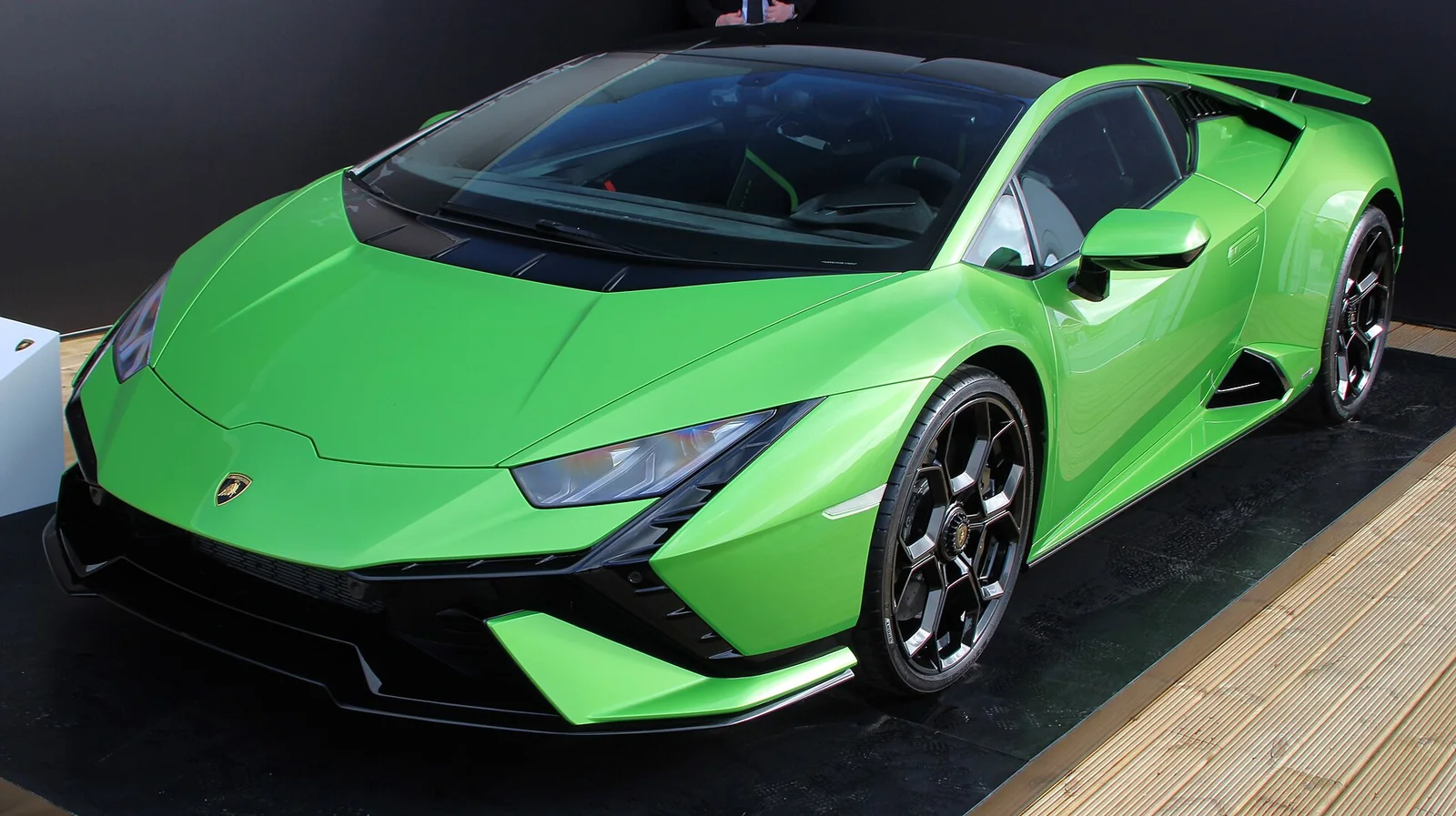
“Small bull” is a useful description of the Huracán’s place in the range, but it can mislead in a parking garage. A Huracán Tecnica is 4,567 mm long and only 1,165 mm high, yet the body is 1,933 mm wide without mirrors and 2,236 mm across with them. It is shorter than many sports coupes, but considerably wider and far lower.
That shape creates the first part of the magic. The nose disappears below the windscreen, the cabin sits close to the front axle, and the V10 occupies the space behind the seats. The car feels compact along its length and immediate around the driver. Conventional doors also make an ordinary garage easier than the scissor doors associated with Lamborghini’s V12 flagships.
Our Lamborghini Aventador review shows the difference. The Aventador is larger, louder in its visual ceremony and built around a single-clutch ISR transmission that can make every gear change feel like an event. The Huracán’s seven-speed dual-clutch gearbox is smoother, quicker and easier in traffic. It asks less from the driver before the road becomes interesting.
Ease does not mean invisibility. Rearward sight is restricted, the turning circle is still a supercar concern, and a low splitter can turn a ramp into a calculation. A front-axle lift system is among the most valuable options on a road-used example. Verify that it operates quickly, holds position and returns without warning messages.
The 5.2-Litre V10 Is the Reason to Buy One
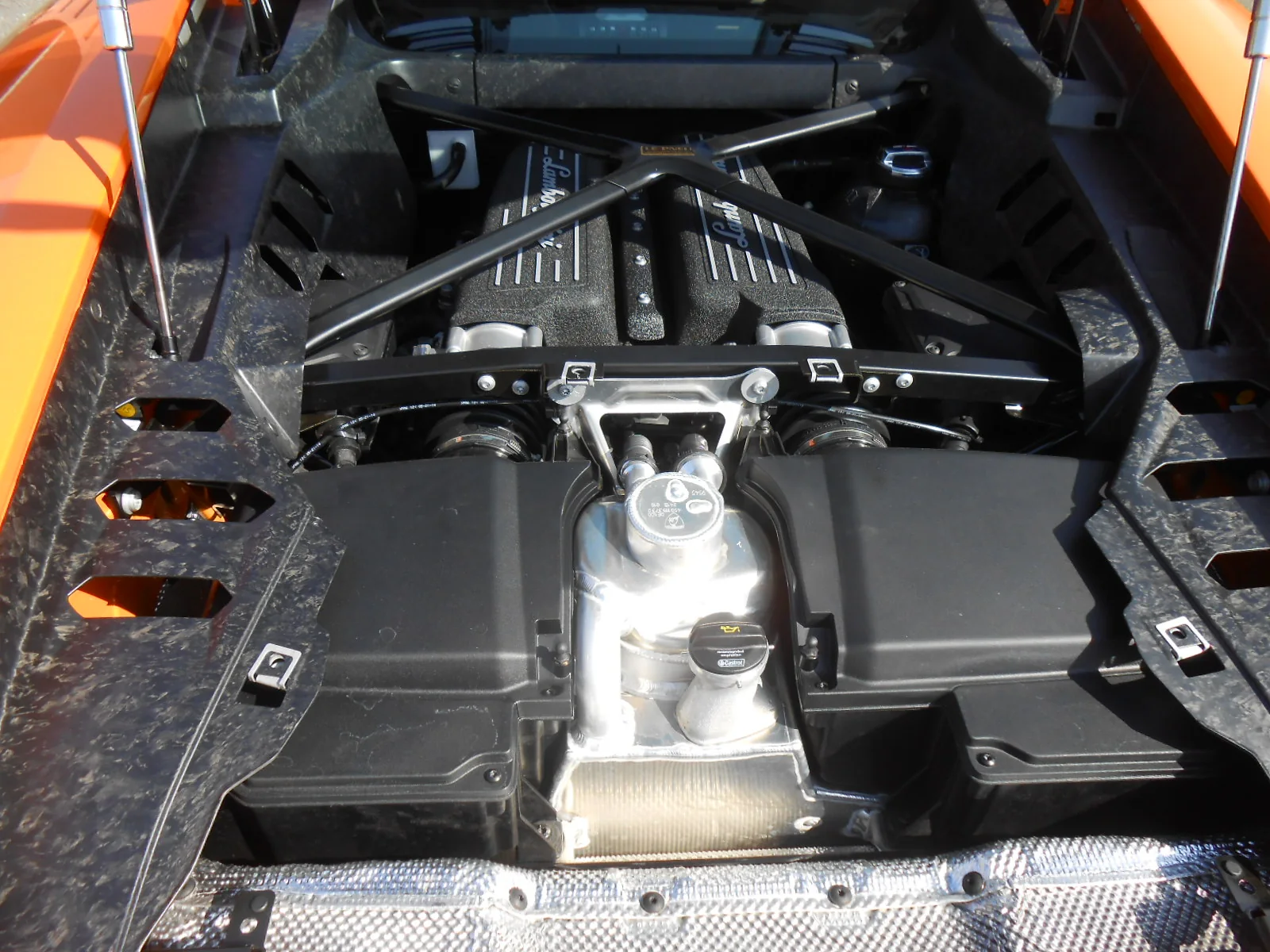
Late Huracán variants show how much character Lamborghini extracted from one engine. The EVO RWD produces 610 CV at 8,000 rpm and 560 Nm, while the Tecnica and STO raise output to 640 CV and 565 Nm. The numbers are substantial, but the experience comes from how they arrive. There is no turbocharger between the accelerator and the engine’s response, and the car saves its most intense acceleration and sound for the upper half of the rev range.
That progression matters in 2026 because the replacement has changed direction. Lamborghini’s Temerario combines a twin-turbo V8 and three electric motors for a claimed 920 CV. It is dramatically more powerful and more technically advanced. The Huracán answers with a simpler proposition: ten cylinders, no turbo boost and an engine that builds toward 8,000 rpm.
The distinction is emotional rather than a claim that older technology is always better. A modern hybrid can respond instantly, fill torque gaps and deliver far greater performance. The Huracán makes the driver work through the rev range and then rewards the effort with sound, vibration and a clear mechanical crescendo. For many buyers, that is the asset most likely to outlast any comparison of acceleration times.
Lamborghini’s official figures put the Tecnica at 0–100 km/h in 3.2 seconds, 0–200 in 9.1 and a 325 km/h top speed. The EVO RWD is only a tenth slower to 100 km/h. On the road, that difference is meaningless. Steering confidence, tyre condition, brake temperature and available space matter more.
EVO RWD, Tecnica, STO or Sterrato?
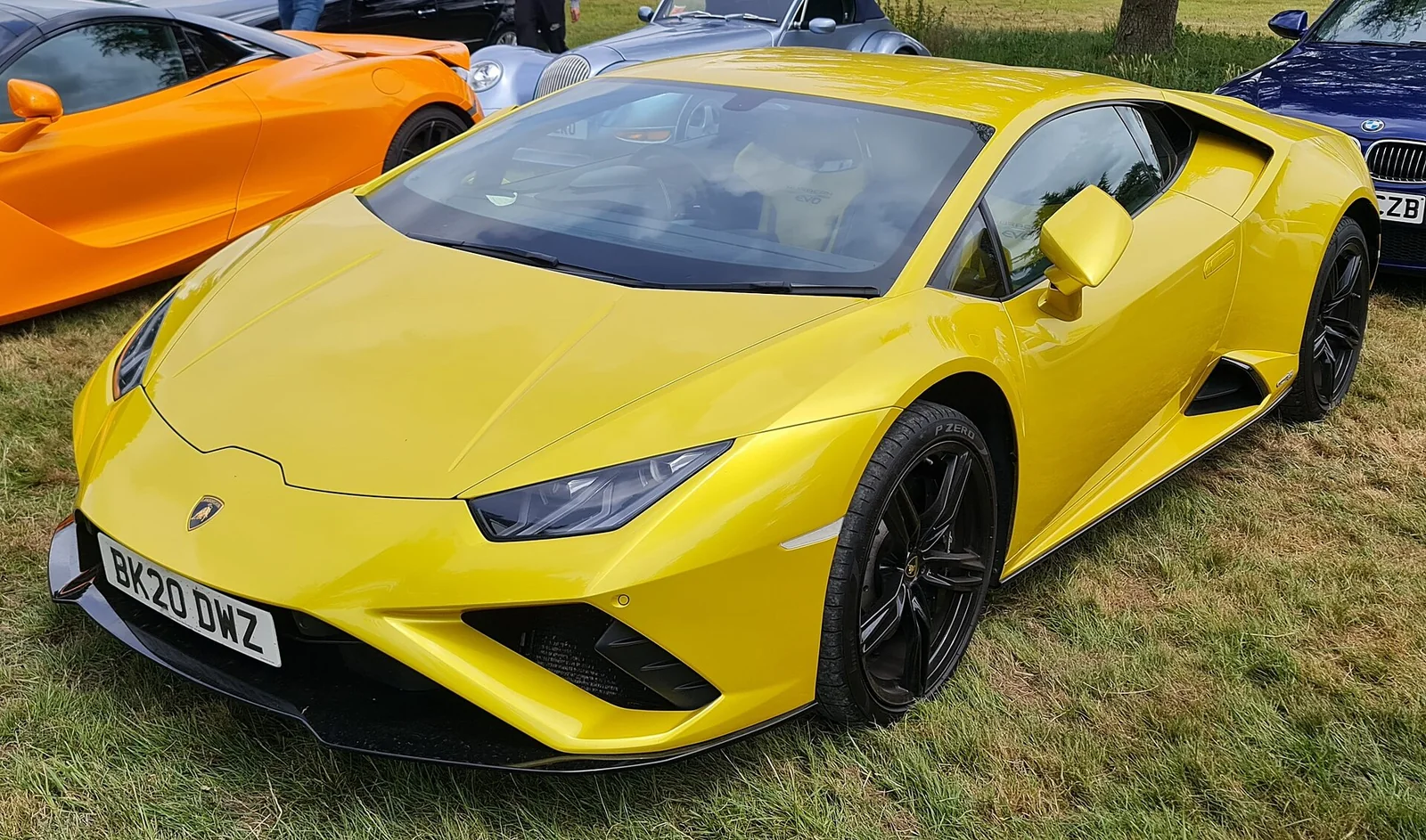
The late range is easier to understand when each version has a job. The EVO RWD is the clean road driver’s car. Its 610 CV goes only to the rear wheels, and Lamborghini’s Performance Traction Control System is calibrated to allow progressive movement before intervention. It weighs a claimed 1,389 kg dry and reaches 100 km/h in 3.3 seconds.
The all-wheel-drive EVO is the secure, brutally effective choice, especially where weather or traction matters. It is the easiest Huracán to deploy hard, but the front driven axle gives it a different balance. Buyers should drive the two layouts rather than assuming the larger power or faster claim creates the better road car.
Tecnica takes the STO’s 640 CV tune and combines it with rear-wheel drive, rear steering, magnetic dampers and a less extreme body. STO removes more compromise in pursuit of circuit performance. Sterrato changes the surface entirely, adding ride height, all-terrain tyres, underbody protection and a dirt-oriented Rally mode.
Early LP 610-4 and LP 580-2 cars can cost less and preserve the clean original styling. They also predate the EVO’s integrated 8.4-inch center touchscreen and later chassis calibration. Their age makes service history and condition more important than the difference between one badge and another.
Tecnica Is the Huracán Sweet Spot
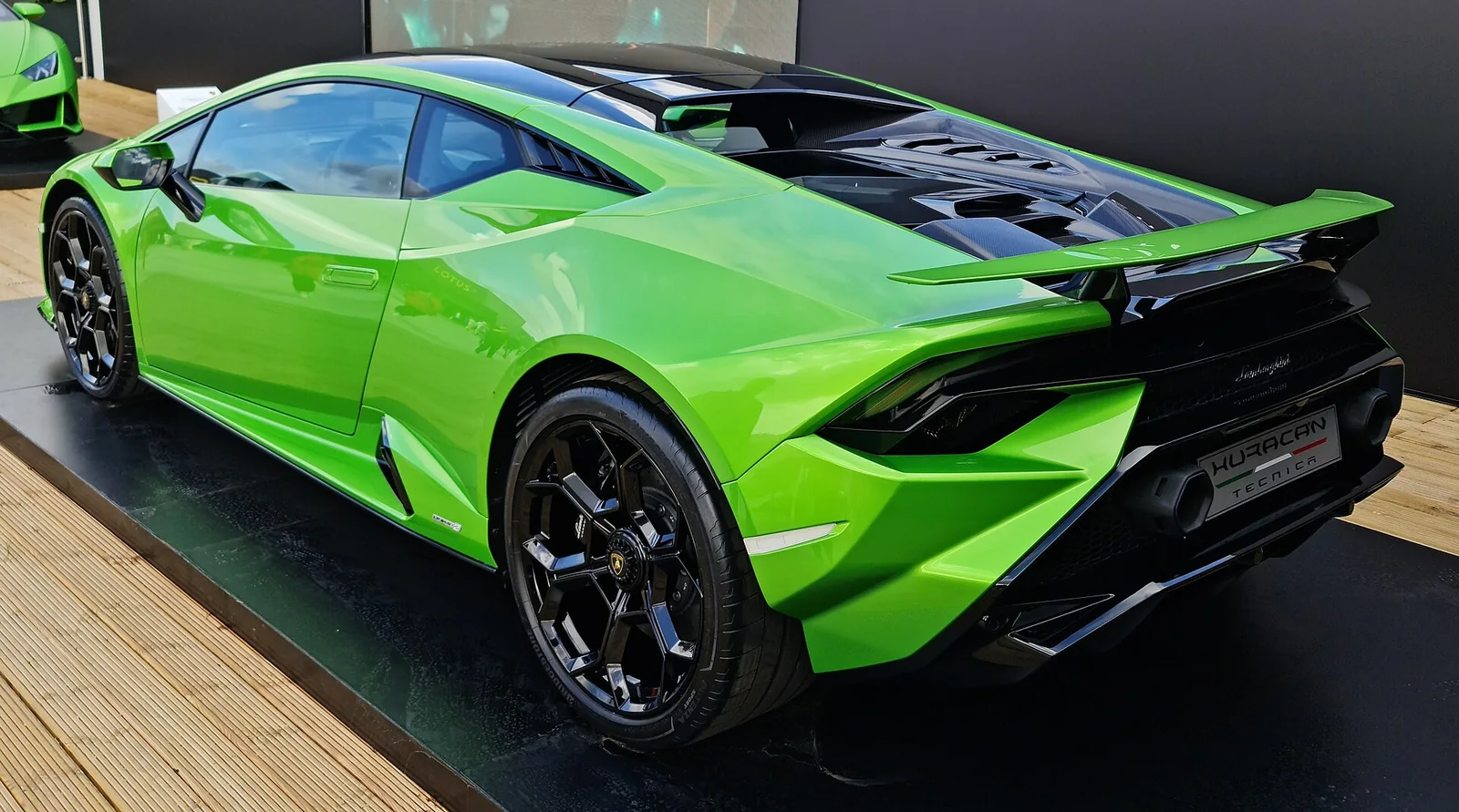
Tecnica is the best answer for a buyer who wants the final road-focused expression of the V10. The official dry weight is 1,379 kg with a 41:59 front-to-rear distribution. Carbon-ceramic brakes are standard, rear steering helps both agility and stability, and the fixed rear wing creates a clear visual link to the STO without dominating the shape.
Independent impressions support the positioning. Top Gear called it the sweet spot between EVO RWD and STO and found the ride civilized in Strada mode. Car and Driver also judged it at home on the road while retaining genuine track capability. Both identified familiar packaging limits, including headroom for taller drivers and poor rear visibility.
The specification needs discipline. Lightweight racing seats look appropriate and can hold the driver securely on circuit, but the more adjustable comfort seat may be the better choice for long trips and mixed drivers. Sit in the exact seat, wear the shoes and helmet you intend to use, and confirm the steering-wheel relationship before buying.
Tecnica is still loud, low and impractical beside a Porsche 911. Its advantage is that the chassis no longer asks for a track day before it makes sense. It lets the V10, steering balance and rear-driven behavior become the event on an ordinary road.
STO and Sterrato Push the Same Platform in Opposite Directions
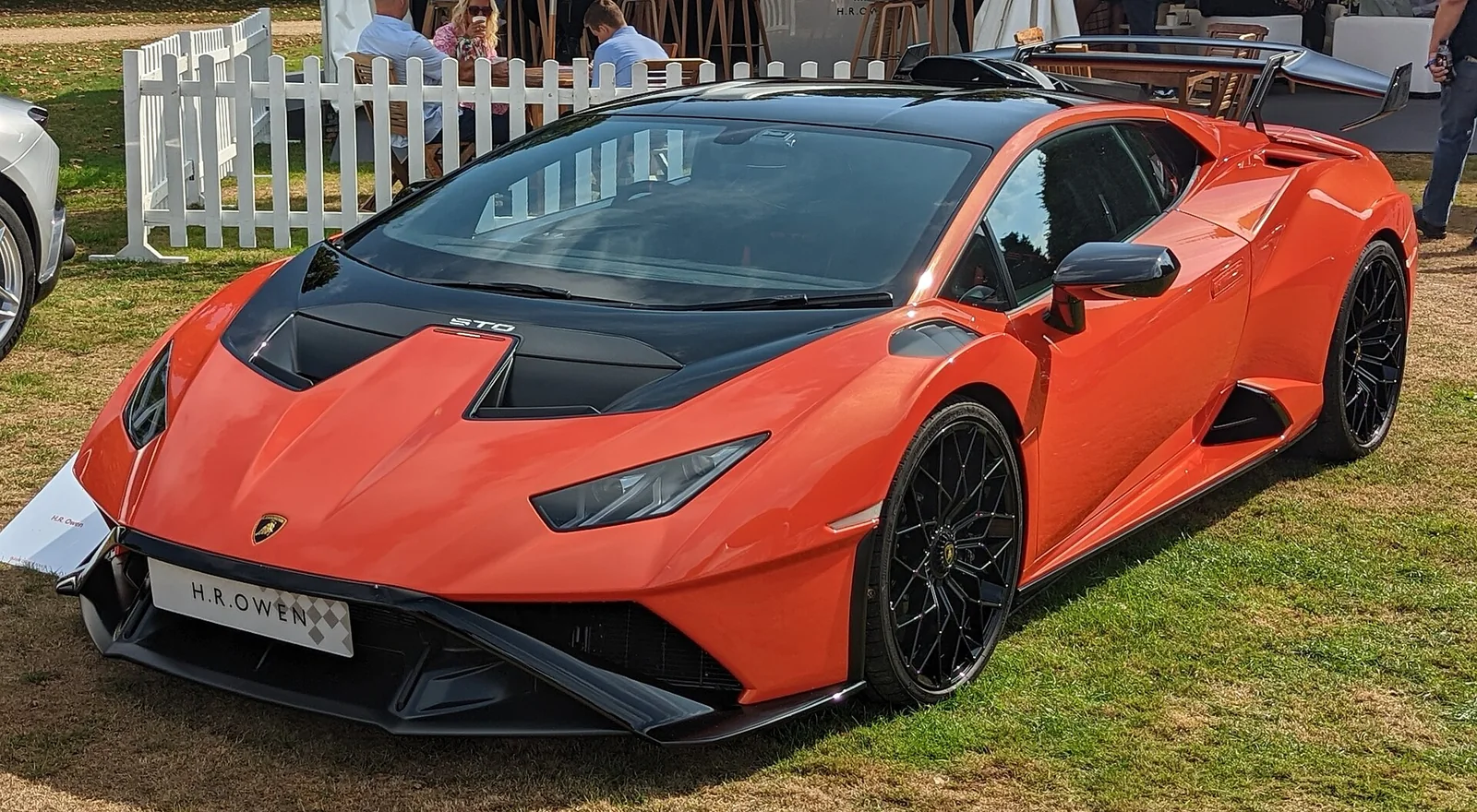
STO stands for Super Trofeo Omologata, and the name states the purpose. Lamborghini says more than 75 percent of its exterior panels are carbon fiber. The front bonnet, fenders and bumper form a single “cofango” assembly, the dry weight drops to 1,339 kg, and the CCM-R brakes were developed from motorsport experience. Official claims are 3.0 seconds to 100 km/h and 310 km/h at the top end.
Top Gear’s road review describes the engine as the star while warning that the car is stiff, noisy and demanding at low speed. That is the correct context. STO is a magnificent choice for a buyer who will use the aero, braking and precision on circuit. On broken roads and long motorway journeys, its focus becomes a cost paid on every trip.
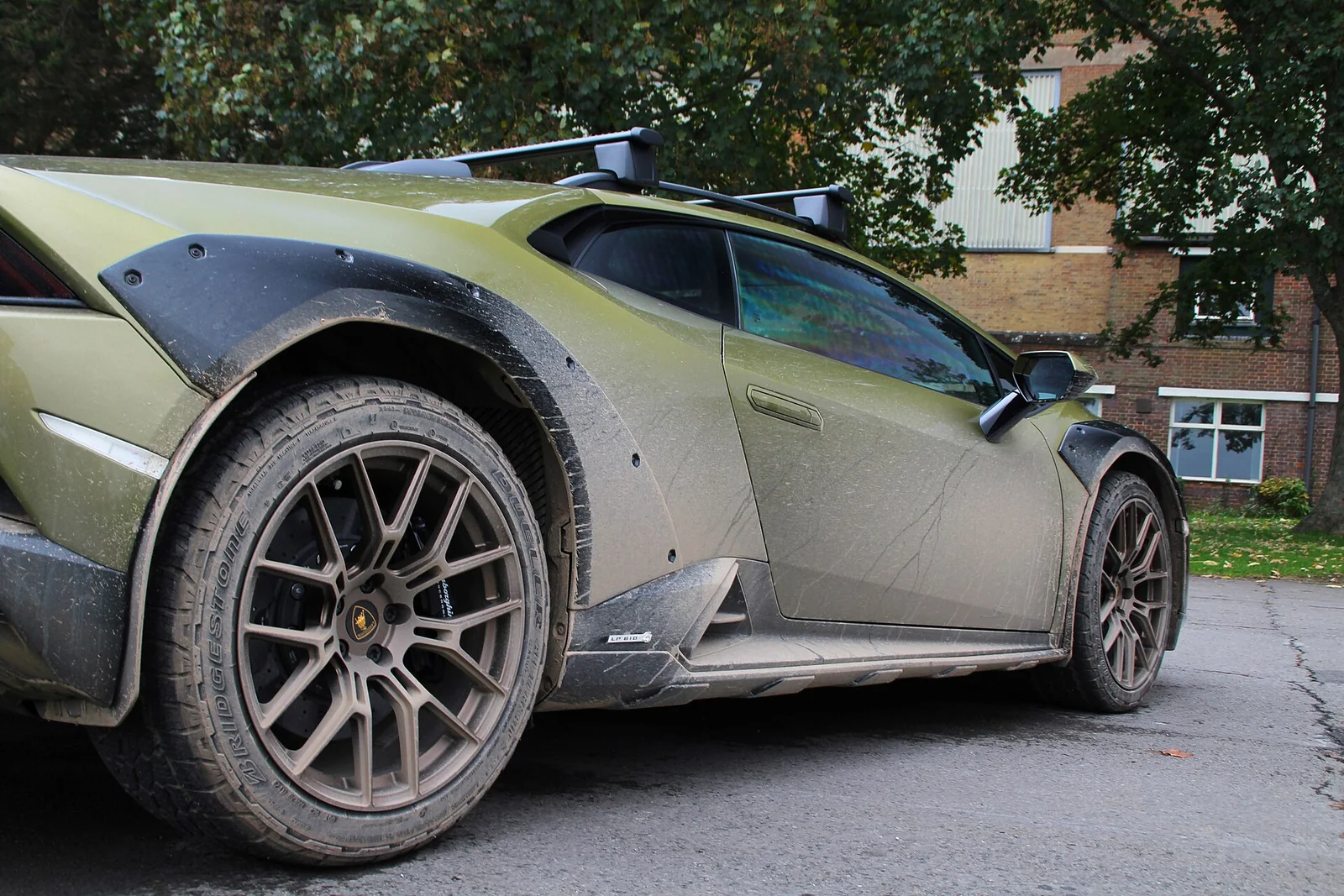
Sterrato does almost the reverse. Compared with the EVO, the body rises by 44 mm, the tracks widen by 30 mm at the front and 34 mm at the rear, and all-terrain tyres trade some ultimate road precision for compliance and grip on loose surfaces. A roof scoop feeds cleaner air to the engine, while underbody protection and Rally mode encourage the owner to leave perfect asphalt.
The 610 CV all-wheel-drive Sterrato reaches 100 km/h in a claimed 3.4 seconds and is limited to 260 km/h. Only 1,499 were built. Top Gear found it more comfortable and usable over broken roads, but noted that the roof scoop virtually removes rear visibility. It is the playful collector’s choice: slower on paper, freer in the places where an ordinary Huracán feels fragile.
The Cabin Turns Drama Into Routine, With Limits
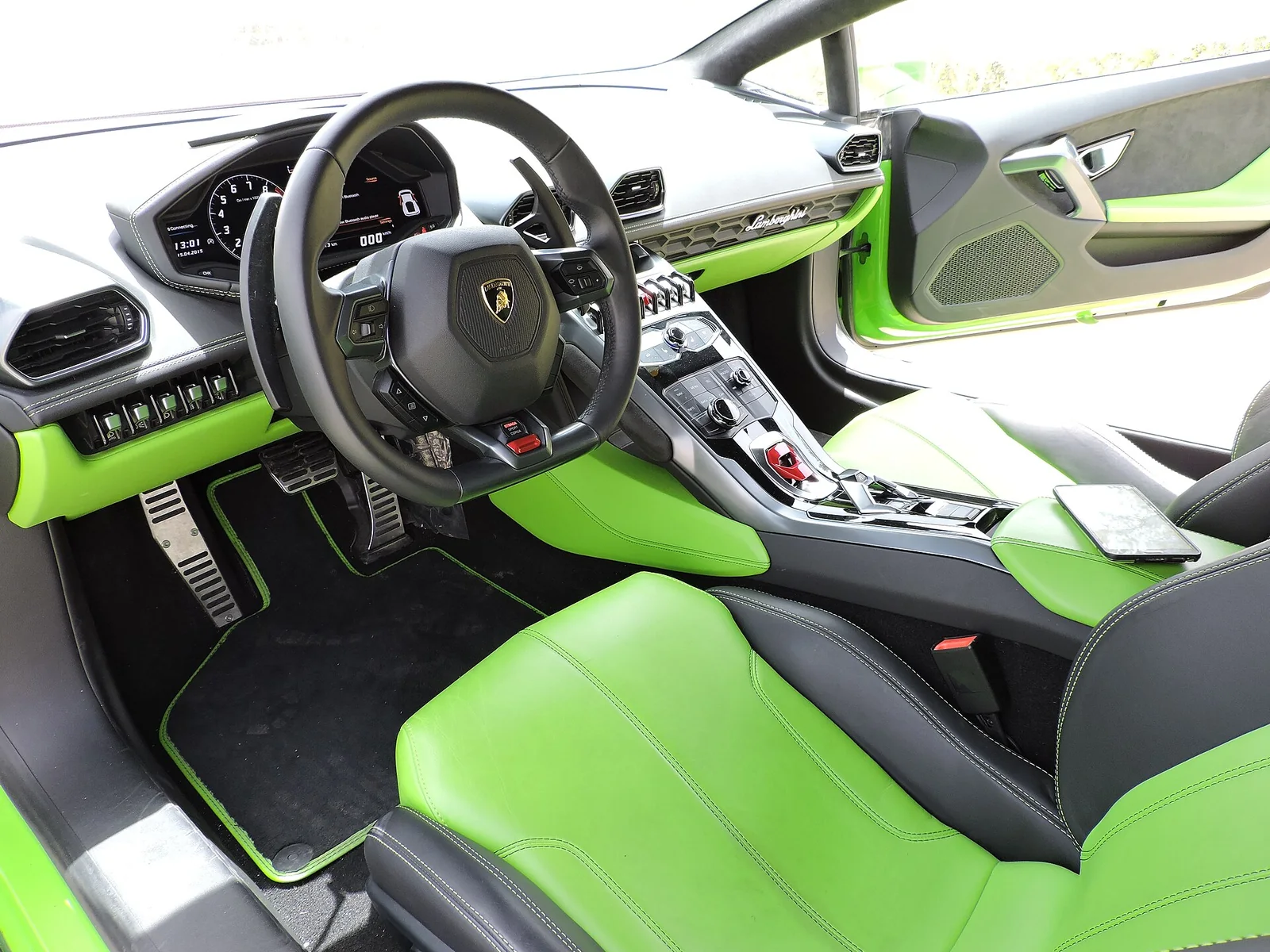
The red flip cover over the starter button, hexagonal vents and steep center console make starting a Huracán feel special. The digital instrument cluster keeps speed, revs and drive-mode information in the driver’s sightline. EVO-era cars add an 8.4-inch portrait touchscreen for climate, media and vehicle functions.
That screen now feels dated beside newer systems, and moving climate controls into a small display is not always convenient on a rough road. Physical switches remain for the functions that create the theater, but infotainment was never the reason to choose this car.
Practicality is measured in small decisions. The front compartment can take soft bags, but a weekend for two requires disciplined packing. Door openings are conventional but the sill is wide and the seat is low. Rear visibility is poor in every version and worse in the Sterrato. Cabin noise, tyre roar and heat after spirited driving are part of the ownership experience.
Fuel use is equally direct. Lamborghini’s U.S. pages list 15 mpg combined for the EVO RWD, Tecnica, STO and Sterrato. Driving style can make the real result substantially worse. The cost of fuel may be manageable relative to the purchase, but the short range and frequent stops still affect long journeys.
Coupé or Spyder?
The Spyder strengthens the most obvious Huracán attraction: it removes the roof between the driver and the V10. In good weather and at sensible road speeds, that can matter more than a small performance difference. It also adds weight and mechanical complexity, reduces some storage flexibility and can create more wind and structure noise.
Inspect the roof through several complete cycles and check seals, drainage areas, fabric condition and warning messages. Look for signs of water entry behind the seats and in the carpets. For track use, confirm helmet clearance and the event organizer’s rollover requirements. The coupé remains the cleaner answer for stiffness, security and luggage; the Spyder is the emotional choice.
A Used Huracán Needs Evidence, Not Reassurance
The Huracán’s reputation for usability should never replace a professional pre-purchase inspection. Begin by decoding the exact variant, market specification and option list. A car advertised loosely as an EVO or Tecnica needs documents that match its VIN, equipment and body panels.
- Cold start: ask for a genuinely cold engine, listen for abnormal rattles and check for warning lights after the self-test.
- Transmission: test reverse, low-speed maneuvering and hot shifts. The dual-clutch gearbox should not produce unexplained warnings or harsh engagement.
- Front lift and underbody: operate the lift repeatedly and inspect the splitter, flat floor, diffuser and jacking points for strikes.
- Brakes: carbon-ceramic discs require expert measurement and surface inspection. Replacement cost makes casual visual reassurance inadequate.
- Tyres and wheels: confirm correct specification, matching axle pairs, age, tread, sidewalls and inner-rim condition. Uneven wear can expose alignment or suspension issues.
- Body and track use: inspect carbon panels, paint meter readings, fasteners, protective film and signs of heat or gravel damage. Track use is not automatically bad; undocumented repair is.
- History: demand complete invoices, recall and campaign evidence, diagnostic scans and proof that annual servicing followed the relevant market schedule.
Lamborghini’s Selezione certified pre-owned program advertises 150 checks and eligibility limits that include age and mileage. Program terms vary by market, so obtain the actual warranty booklet and exclusions for the specific car. An independent specialist inspection remains valuable even when the dealer supplies certification.
The Rivals Are Faster, Easier or More Modern—But Few Sound Like This
A Porsche 911 Turbo is easier to see out of, easier to load and far less conspicuous. Our Porsche 911 review explains why that everyday range is central to the car. A 911 GT3 offers its own naturally aspirated purity and sharper luggage practicality, but the rear-engine shape and six-cylinder voice create a different experience.
Ferrari’s 296 GTB, McLaren’s Artura and Lamborghini’s Temerario use electrification and turbocharging to deliver performance the Huracán cannot match. They also introduce more systems and a different throttle-and-sound character. The decision is not old versus new in the abstract; it is whether the buyer values maximum capability or the V10’s direct emotional story.
The Audi R8 is the rational relation from the same era. It shares the broad V10 and mid-engine family while offering a quieter image and a more restrained cabin. Exact components and calibrations vary, so it should not be treated as the same car in different clothing. The R8 is for discretion; the Huracán makes arrival part of the purchase.
Within Lamborghini, the Revuelto and Urus show the two directions around it: electrified V12 flagship drama and SUV practicality. The Huracán occupies the narrow ground between them—lower, simpler and more intimate.
Cariary Perspective: The Huracán Made Exotic Feel Legible
Recommended: Huracán Tecnica for the buyer who wants the final, most complete road-focused version. It has the full 640 CV output, rear-wheel drive, rear steering and enough compliance to let the engine dominate the ownership experience.
Alternative recommendation: EVO RWD for a driver who wants a cleaner price-to-experience relationship. It gives away little meaningful road performance and keeps the rear-driven balance. Buy the best documented car rather than stretching for a more prestigious badge with weaker history.
Specialist choices: STO for frequent track use and Sterrato for collectors who will enjoy its broader surface ability. Both are brilliant because their compromises are deliberate. Neither is automatically the best Huracán for ordinary roads.
The Huracán’s lasting achievement is not that it was the fastest Lamborghini of its decade. It took the shape, noise and attention of a mid-engine supercar and made the controls coherent enough that an owner could reach the engine’s personality without fighting the car first. Small is relative. The voice is not.
One-line verdict: The Huracán is the small bull with the big voice—a usable supercar whose naturally aspirated V10 now matters more than its acceleration figure.
Lamborghini Huracan Review: Buyer Questions
Which Lamborghini Huracán is best for road use?
Tecnica is the strongest all-round choice because it combines 640 CV, rear-wheel drive and rear steering with a more compliant, less aero-dominated package than STO. EVO RWD is the value-focused alternative.
Is the Huracán easy to drive every day?
The dual-clutch gearbox and predictable controls make it easier than the Aventador, but it remains low, wide and difficult to see out of. Storage, entry, fuel range and ground clearance limit daily convenience.
Is Huracán STO comfortable on the road?
Independent reviews describe it as stiff, noisy and demanding at low speeds. Its brakes, aero and body construction make most sense on circuit. Tecnica is the better road-first interpretation.
Why is Huracán Sterrato slower?
Its raised ride height, all-terrain tyres and off-road priorities trade aerodynamic and high-speed performance for compliance and traction on loose or broken surfaces. Top speed is limited to 260 km/h.
How reliable is a used Huracán?
This review does not have enough controlled long-term data to predict an individual car’s reliability. A specialist inspection, complete service history, diagnostic scan and careful checks of brakes, tyres, lift system and underbody are essential.
Is the Huracán now a collector car?
Its discontinued naturally aspirated V10 gives it long-term significance, and rare variants may attract stronger collector demand. Future value is uncertain; condition, specification, mileage and documentation remain decisive.
Data reference date: September 6, 2026. Specifications are global or U.S.-market manufacturer figures unless otherwise stated. Availability, certified-pre-owned terms and used values vary by market. Manufacturer claims were not independently verified by Cariary.

