I started exploring the Dakar Rally with one question: how can anyone race that quickly when finding the route is already a challenge? The spectacular dune footage is only the visible part. Behind it are navigation decisions, damaged tires, interrupted sleep and a machine that must be ready to do it all again tomorrow.
A driver slowing before a crest may be making the fastest sensible decision of the day. A navigator asking for a moment to check the roadbook may save far more time than another burst of acceleration. Even a competitor kneeling beside a wheel is still part of the sporting story.
That is what makes this rally worth understanding. Dakar asks people to find the way, protect the vehicle and manage their own energy while remaining genuinely fast. Let us work through the pieces that make the highlights, timing screens and bivouac interviews fit together.
Quick Summary
- Dakar is a long-distance rally-raid, not a circuit race or a continuous two-week sprint.
- Special-stage times build the overall result, with penalties and applicable time adjustments also affecting classification.
- Roadbooks and waypoints make navigation a central competitive skill.
- Different vehicle categories have different technical and sporting rules; a motorcycle does not compete for the same result as a truck.
- Start with one crew, its category, the daily stage result and the overall standings. Then ask what happened between those numbers.
1. How to Watch the Dakar Rally: Understand the Distance First
Rally-raid, also called cross-country rallying, combines long timed sections with navigation across varied terrain. Competitors start at intervals rather than lining up side by side for a grand-prix launch. A day can involve hundreds of kilometers before anyone reaches the evening camp.
The 2026 Dakar ran in Saudi Arabia from January 3 to 17. Its published FIA itinerary listed a prologue and 13 stages, approximately 8,000 kilometers overall and roughly 4,800 kilometers of selective sections. These are edition-specific itinerary figures, not a fixed annual distance; category routes and in-event revisions can differ. See the 2026 Dakar FIA supplementary regulations.
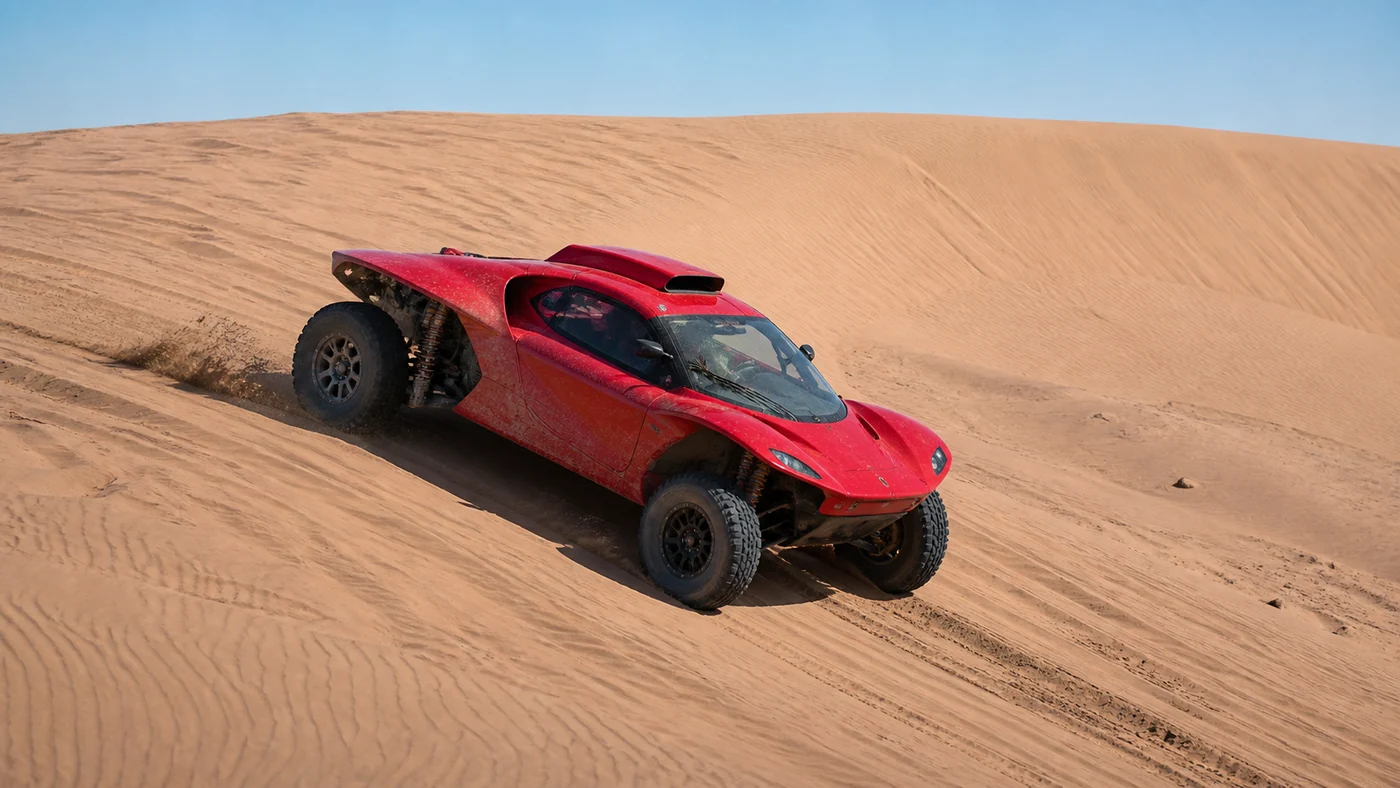
Not all that distance is racing against the clock. A liaison is a connecting journey to or from the competitive section. A special stage, called a selective section in the regulations, is where the timed contest happens. The difference matters when a headline describes an enormous daily distance: part of that distance may be transportation.
Nor is the entire route made of dunes. Gravel, rocky ground, sandy tracks and other surfaces can create very different problems within the same event. The landscape is not merely scenery. It changes what the driver, navigator, tires and suspension must do.
Why is it still called Dakar?
The name comes from the original journey toward Dakar, Senegal. The first edition, known as the 1979 rally, actually departed Paris on December 26, 1978. After its African era, the event moved to South America in 2009, following the cancellation of the 2008 edition, and to Saudi Arabia in 2020. The historical name stayed. The organizer’s Dakar history traces those changes.
There is another name worth recognizing: W2RC, the World Rally-Raid Championship. Dakar is a major round within that wider season, but winning Dakar and becoming a season champion are different achievements. Also, not every Dakar entrant is registered for the same championship contest; the organizer lists Dakar and W2RC participation separately in its 2026 entry figures.
2. Follow the Total Time, Not Just the Stage Winner
The simplest starting point is accumulated special-stage time plus time penalties. Applicable bonuses, credited time and official adjustments must also be included. The lowest valid total within the relevant classification wins, not the greatest number of daily victories.
Consider this deliberately simplified example, not actual Dakar results:
| Crew | Three stage times combined | Penalties | Adjusted total |
|---|---|---|---|
| A | 10h 50m | 15m | 11h 05m |
| B | 10h 58m | None | 10h 58m |
Crew A was eight minutes quicker on the stages but finishes seven minutes behind after its penalty. Watching only the daily highlight reel would miss the deciding part of the contest.
A missed waypoint, a speed-limit infringement or prohibited assistance can lead to a penalty. Getting lost is slightly different: it immediately costs elapsed time, but a navigation mistake is not automatically a separate offense. Additional penalties depend on what rule was actually broken. The FIA cross-country sporting regulations distinguish the requirements and sanctions.
Keep two results open in your mind: today’s stage and the rally overall. A crew can lose time today yet retain a comfortable overall advantage. Another can win a stage while remaining far behind after an earlier repair.
The numbers on a live screen also need context. Competitors do not reach a timing point simultaneously. A gap at one checkpoint should be compared with another competitor’s time at that same checkpoint, not their position somewhere else on the route. Provisional results may change after official decisions.
3. Read the Roadbook Before Trusting the Tracks
This is where Dakar first became much more interesting to me. The navigator is not simply announcing familiar corners. The crew must continually match the organizer’s instructions to what is actually in front of the car.
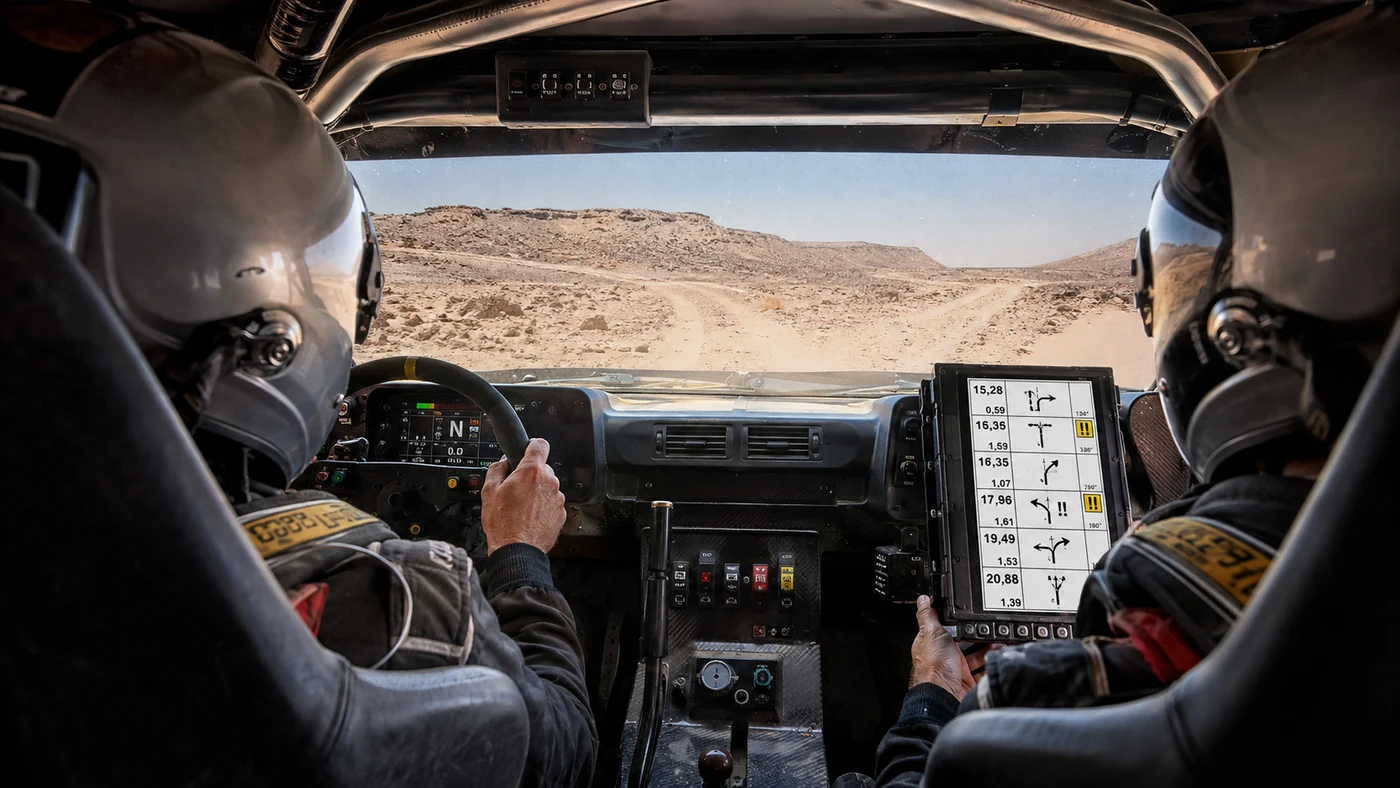
A roadbook presents a sequence of distances, directional sketches and warnings. Modern electronic displays change how the information is presented, not the underlying need to interpret it. This is not ordinary phone navigation with an unrestricted street map telling you every turn.
Three ideas make the screen less intimidating:
| Term | Plain-English meaning | What to notice while watching |
|---|---|---|
| Tulip diagram | A simplified drawing of the route feature or junction | The crew is matching a symbol to the landscape |
| CAP | A compass heading, expressed in degrees | A direction can matter even without an obvious road |
| Waypoint | A virtual checkpoint used to verify passage | Passing nearby may not be sufficient to validate it |
For a hypothetical instruction, imagine a distance reading, a branching track and an outgoing compass heading. The crew needs all three pieces to agree. A convincing tire track alone is not enough. The organizer provides a roadbook and CAP lexicon for readers who want to recognize the notation rather than guess at the symbols.
Some waypoint types reveal guidance only once the competitor enters a defined opening area; others provide no directional guidance. The exact behavior depends on waypoint type and regulations. There is no single universal activation radius, and the navigational equipment is deliberately restricted rather than absent.
What happens after a wrong turn?
Suppose a crew travels five kilometers in the wrong direction and must return along the same path. That is ten unnecessary kilometers in a simple out-and-back example, before allowing for the time spent recognizing the mistake. It is not a claim that every wrong turn has an identical penalty or recovery route.
Now add difficult sand, a concealed crest or another confusing junction. A small hesitation early can be cheaper than confidently accelerating away from the route.
Following another competitor does not remove the problem. The vehicle ahead may also be wrong. Several crews can make the same mistake if each treats tracks as proof rather than evidence to check against the roadbook.
In a car, the driver concentrates on vehicle control and the immediate surface while the navigator manages route instructions, distance, headings and checkpoints. Their work overlaps through conversation. The useful question in an onboard clip is not only how fast they are going, but whether both people share the same understanding of what comes next.
4. Follow the Day From Bivouac to Bivouac
A typical day follows a recognizable sequence: leave the bivouac, complete a liaison, race the special stage, take another liaison and reach the next camp. Public-road sections require compliance with road rules, and liaison time controls still matter even though the section is not a speed contest. The organizer’s typical-day guide is a useful introduction.
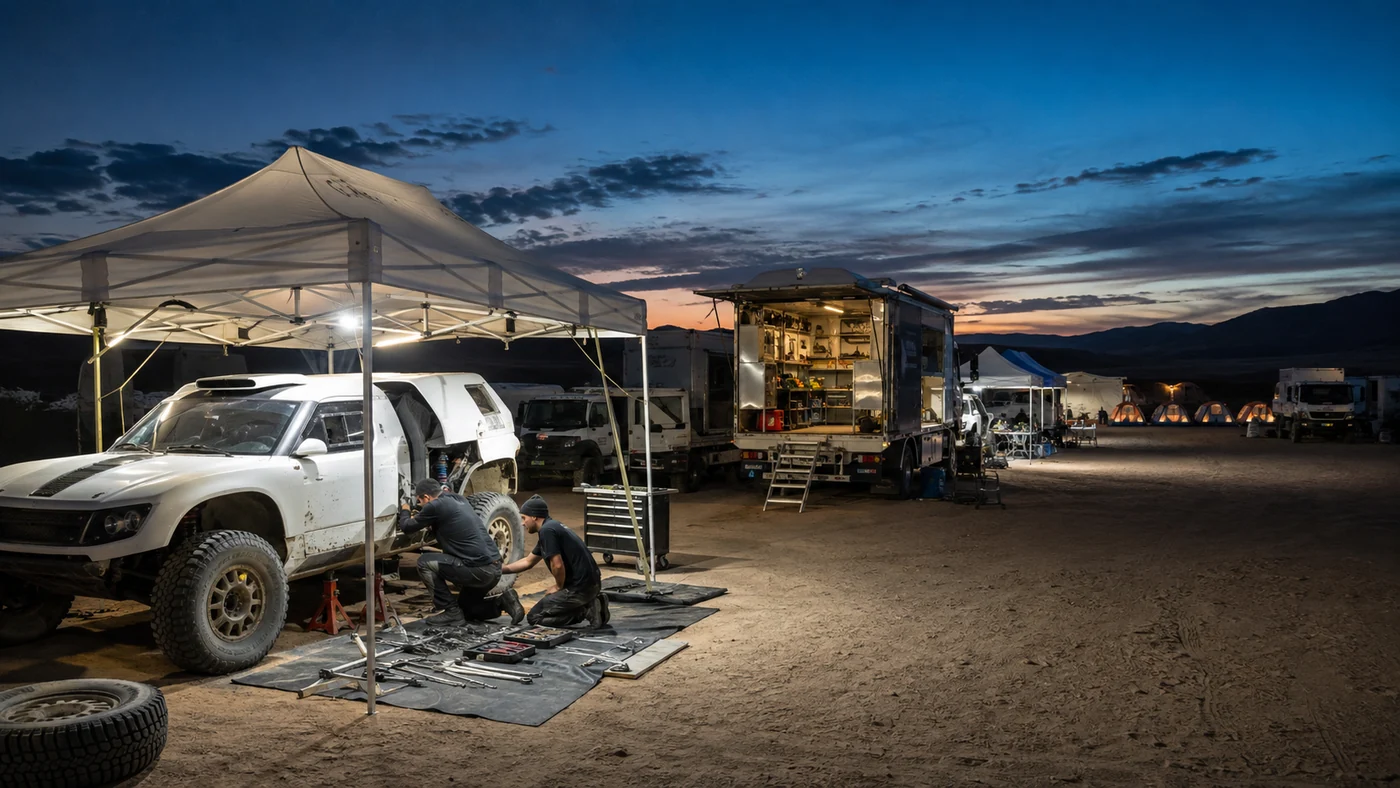
A bivouac is the rally’s temporary base: part workshop, part sleeping area and part operations center. Mechanics, engineers, medical personnel, organizers and media work around the competitors. It can relocate with the itinerary, but not necessarily every night; loop stages and multi-night stays also exist.
For viewers, the bivouac interview is often the missing explanation behind a result. A crew that lost time might describe a vibration, an uncertain roadbook interpretation or a tire problem that the helicopter footage could not show.
Why marathon stages change the calculation
On marathon sections, access to normal team servicing is restricted. Damage must be carried forward with much less opportunity for a complete workshop reset. However, saying that nobody can receive any help in every marathon format would be misleading: permitted help, vehicles and working arrangements are specified for that edition and category.
The 2026 event used refuge bivouacs with basic overnight provisions. The organizer’s race-format explanation describes both those arrangements and specific assistance exceptions. It is better to read the day’s conditions than apply a rule remembered from another year.
The underlying strategic idea is easy to understand. If a hard impact today leaves a damaged suspension component that cannot be properly replaced tonight, tomorrow begins with a problem. Protecting the vehicle can therefore have a benefit extending far beyond the current stage.
The rest day is not a holiday for the mechanics
Drivers and riders need recovery, but the team uses the pause for substantial inspection and permitted maintenance. Suspension, bearings, fluids, cooling, wiring and accumulated body damage all deserve attention. Discovering wear in camp is preferable to discovering its consequences halfway through the next stage.
5. Notice What the Driver Is Protecting
A rally-raid machine has to absorb repeated impacts while its engine, transmission and cooling systems continue working. Suspension travel is the distance through which a wheel can move relative to the body. More useful travel can help the wheel follow rough ground, but springs, dampers and geometry must control that movement.
A damper converts suspension motion into heat. Repeated rough running therefore challenges not just strength but temperature control. Tires, mounting points and other components have their own limits. A vehicle that looks calm over a rough surface may be doing considerable work underneath.
Dust adds a different problem. Air must reach the engine and cooling system without unwanted contamination or blockage. Protection has to coexist with airflow, service access and the need to carry fuel, tools and spares.
These are not abstract priorities. Toyota described greater cooling redundancy in its 2024 GR DKR Hilux development, while Ford’s 2026 Raptor program highlighted improvements in suspension, visibility, cockpit access and durability. The point is not that one part makes a car unbeatable. The whole vehicle must remain usable under sustained load.
Dunes reward judgment, not just throttle
A driver approaching a dune cannot assume the far side mirrors the near side. The crest may conceal a steep drop or a surface that changes how the vehicle lands and accelerates.
Too little momentum can leave the vehicle digging into soft sand. Too much can create an impact that the suspension and tires cannot comfortably absorb. Good dune driving is partly the ability to judge that narrow middle ground from shape, texture and available visibility.
This is an explanation of professional competition, not a dune-driving tutorial. The dramatic footage should not become an invitation to copy racing speeds in an ordinary off-roader.
Tire pressure is a compromise
Reducing pressure can enlarge a pneumatic tire’s footprint and help it float over soft sand rather than sink into it. But lower is not always better. Excessive deflection can build heat, expose a sidewall to damage and increase the risk of the tire bead losing its seat on the rim.
Vehicle weight, tire construction, wheel design, speed and terrain all affect the decision. There is no universal Dakar pressure to copy into a road car. BFGoodrich’s sand-terrain guidance explains flotation, while its tire-selection guide emphasizes matching pressure to the actual vehicle and tire.
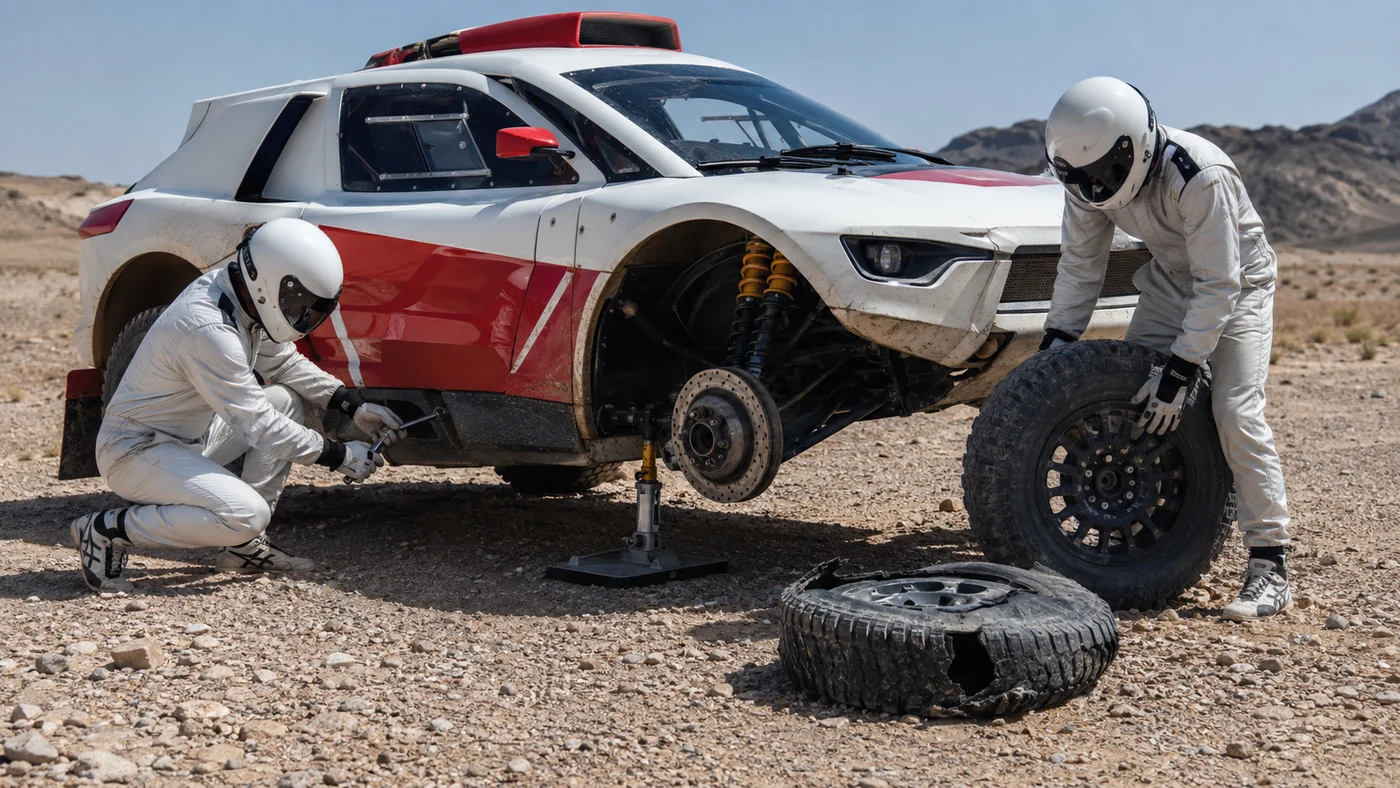
Sharp rocks can still defeat tough competition tires. A puncture costs more than the stationary wheel-change time: the crew must notice it, find a suitable place to stop, work with what it carries and regain pace afterward.
Spare wheels provide resilience but add mass. Their carriage is governed by category rules, so crews cannot simply pack an unlimited number. Within the permitted choices, extra recovery capacity and extra weight compete with each other.
6. Learn the Categories Before Comparing the Machines
The same Dakar event contains several different contests. A familiar body shape does not tell you exactly what is underneath, and an unfamiliar buggy is not necessarily a lower-quality racing machine.
| Category | Basic identity | Main viewing interest |
|---|---|---|
| Ultimate | Top-level cross-country competition cars, including purpose-built prototypes | High pace, navigation and whole-vehicle durability |
| Stock | More closely production-based cross-country vehicles | How a road-derived platform is adapted to extreme use |
| Challenger | Lightweight prototype vehicles | Agility and specialized off-road engineering |
| SSV | Side-by-side vehicles under a separate, more production-related rule set | Close competition in compact machines |
| Truck | Competition-prepared cross-country trucks | Mass, momentum and mechanical control |
| Bike | Rally motorcycles with a single rider | Riding and navigating without a co-driver |
Use the official Dakar category entry breakdown to see which groups are actually present in an edition. Category names and technical rules evolve, so an old T-number alone may not explain a current vehicle accurately.
Ultimate and Stock are not the same promise
Toyota, Ford, Dacia and MINI-associated programs are familiar names in the top car field. For a dated example, the 2026 event featured the new Toyota DKR GR Hilux and Ford Raptor T1+ entries. Nasser Al-Attiyah and Fabian Lurquin won in the Dacia Sandrider, as documented in Dacia’s event report.
Those names should not suggest that a showroom pickup is competing with only a roll cage added. Ultimate permits specialized racing architecture. The relationship between the competition machine and the road vehicle varies considerably.
Stock moves the interest closer to production origins, but stock does not mean completely unmodified. Safety equipment and permitted competition changes still matter. Defender’s 2026 Dakar Stock campaign is a useful illustration of this distinction: a production-based story, not a claim that any standard customer car could duplicate the result.
Challenger and SSV: lighter does not mean easy
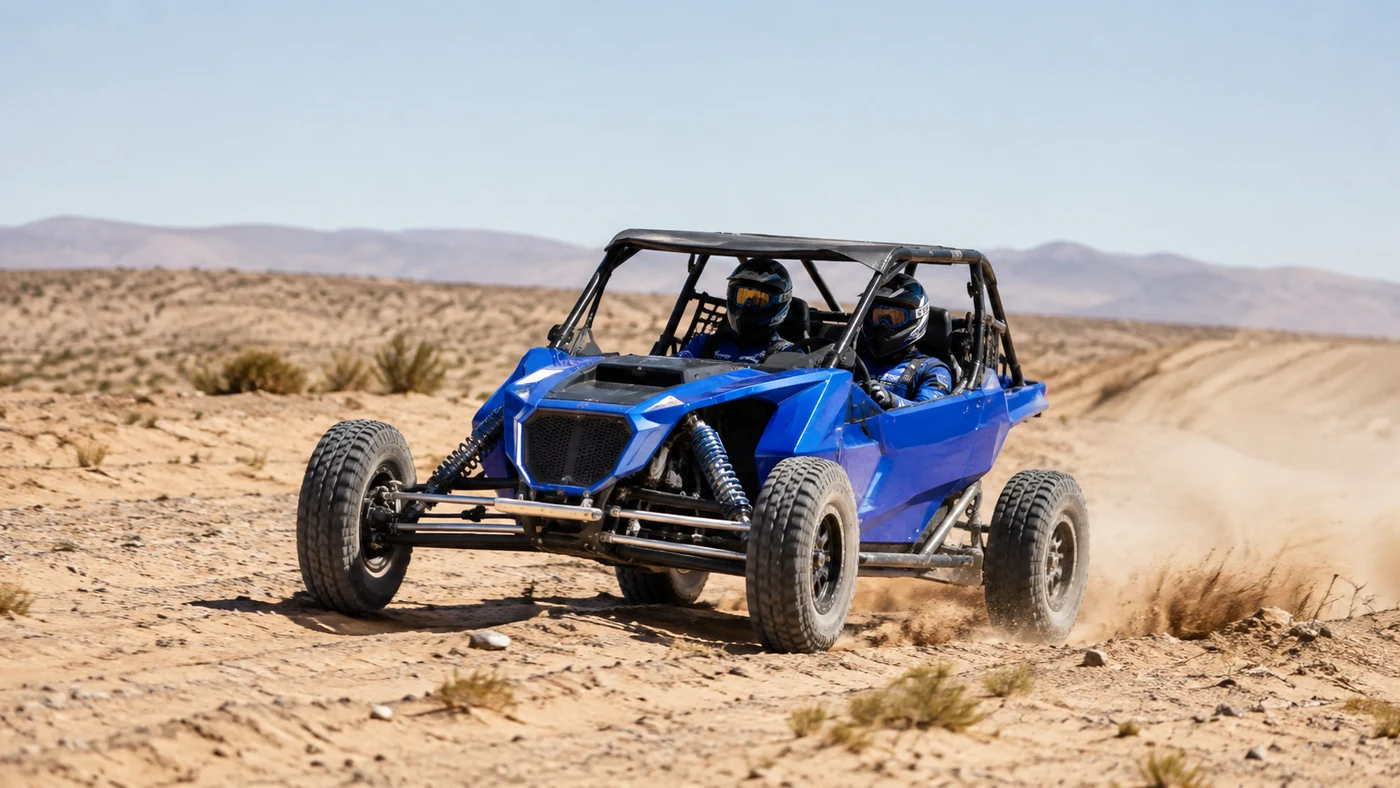
These compact vehicles make the difference in scale immediately visible. Exposed suspension, a small cabin and relatively low mass create a different way of crossing the terrain. Challenger and SSV are separate rule sets, however, not interchangeable names for every small buggy.
A lighter vehicle still needs accurate navigation, controlled landings and mechanical care. The organizer’s Challenger and SSV preview also shows how these categories can form part of a competitor’s career without constituting automatic promotion to Ultimate.
Trucks: watch the control behind the spectacle
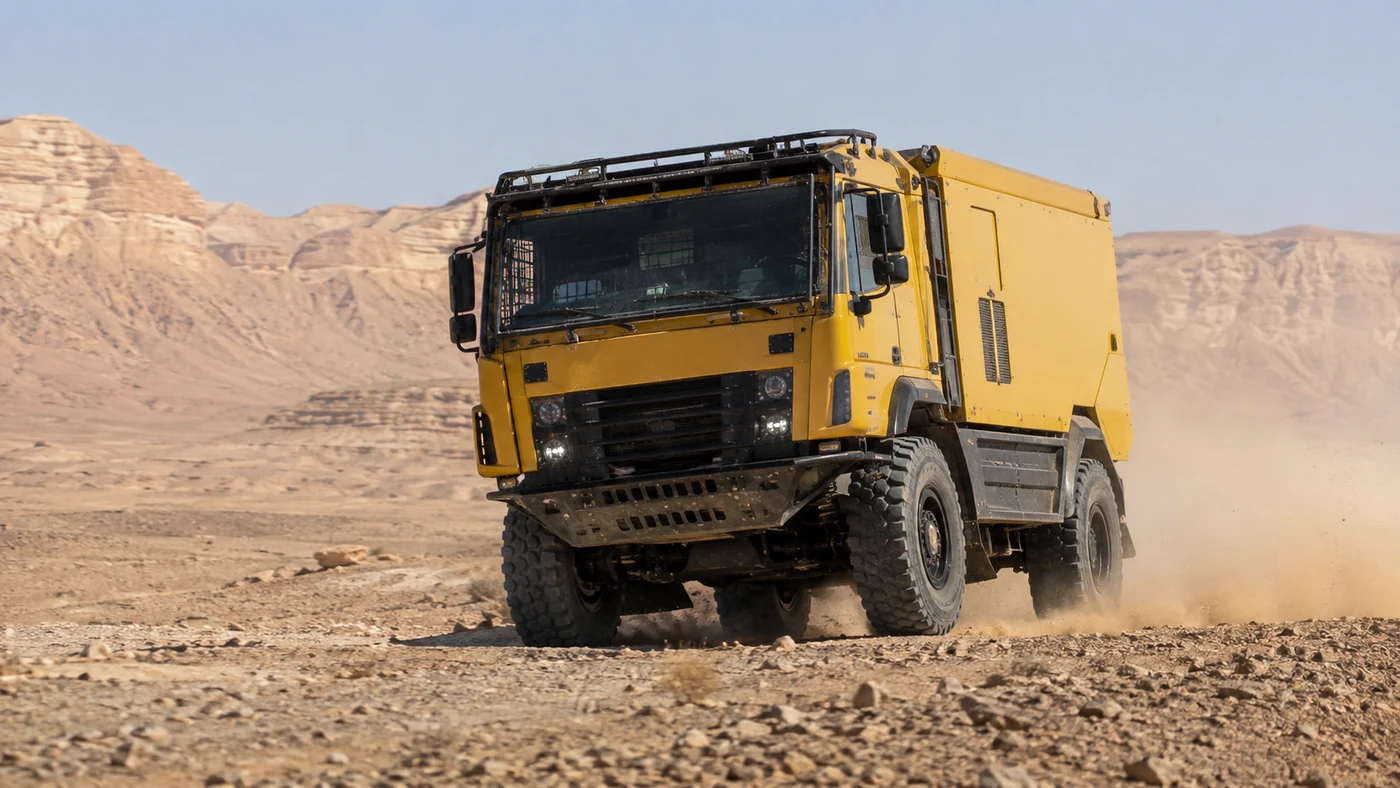
The first reaction to a racing truck is understandable: that is a very large object to move that quickly over rough ground. Yet the interesting part is not simply its size. It is how deliberately the crew must manage the consequences of that size.
Momentum can help carry a truck through difficult terrain, but it also increases what the brakes, tires and suspension must deal with. A jump is a dramatic image, not evidence that landing hard is a good strategy. These are competition-prepared machines rather than ordinary freight trucks sent into the dunes.
Dakar Classic and Mission 1000 need another distinction. Classic centers on regularity and navigation with historic-style vehicles; it is not simply the modern race with old cars. Mission 1000 provides a separate challenge for alternative-energy machinery on dedicated routes. Neither should be folded into the Ultimate leaderboard.
7. Appreciate What the Bike Rider Does Alone
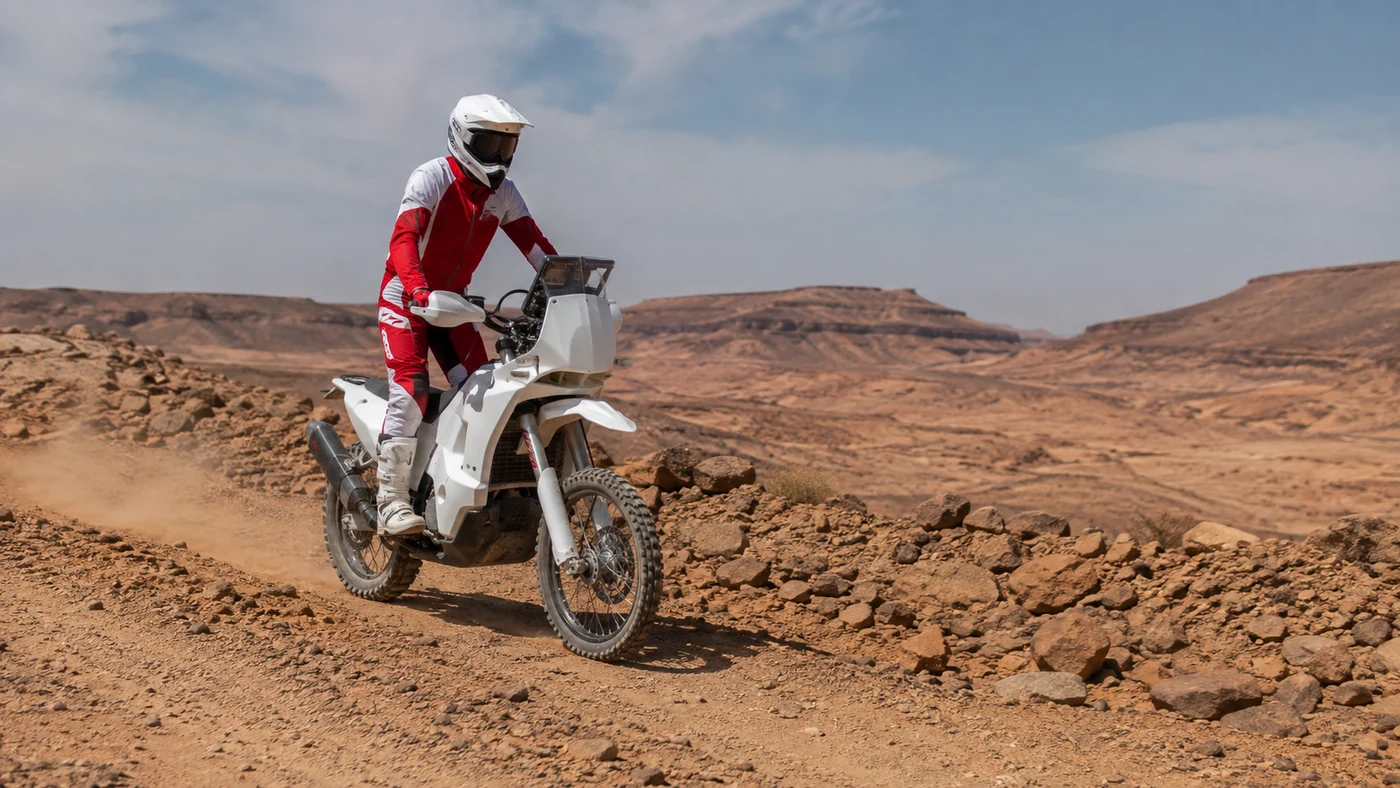
In a car, navigation has a dedicated seat. On a motorcycle, the rider must read the roadbook, maintain direction, judge the surface and control the machine. The same person has to manage both the route problem and the immediate physical problem.
The contrast becomes particularly clear when the rider is standing on the foot pegs across rough ground. The terrain is moving the motorcycle underneath them while their attention must also return to navigation information. Even a brief uncertainty can interrupt rhythm.
Original by Motul adds a further layer. It is the challenge for eligible riders competing without their own normal assistance crew, maintaining their motorcycles themselves. It does not mean the event provides no logistics or safety support. The organizer describes the specific arrangements in its Original by Motul information.
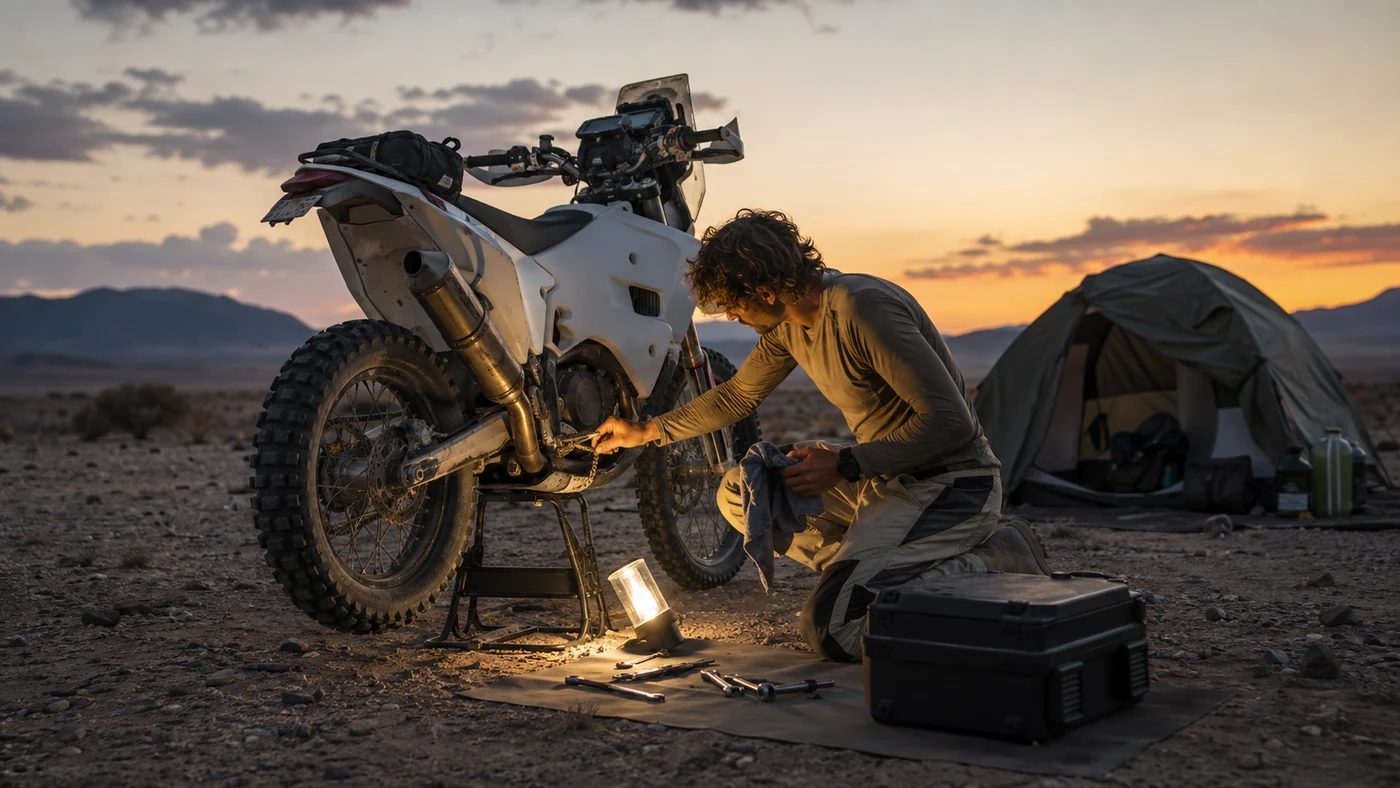
After riding comes inspection and repair. Then food, rest and preparation for another start. What looks like a quiet evening beside a bike may be one of the most consequential parts of the rider’s event.
Fatigue also affects drivers and navigators in cars and trucks. Repeated shocks, vibration, heat exposure, concentration demands and limited recovery accumulate. Conditions are not uniformly hot: desert mornings and nights can be cold. The challenge is sustained adaptation, not a single dramatic description of the weather.
It is tempting to rank Dakar as physically harder than every other motorsport. I would rather recognize the distinct workload than claim a comparison we cannot measure consistently across disciplines.
8. Treat Starting Position as Part of the Story
Starting early can mean navigating without fresh tracks from preceding competitors. Starting later can offer visual clues, but it can also bring dust, traffic, disturbed ground and the temptation to follow someone else’s mistake.
Therefore, the stage winner does not automatically receive the best circumstances tomorrow. Nor is there one universal rule stating that yesterday’s winner must always open the next stage. Results, prologue procedures, category rules and special-stage arrangements can all affect the order.
The motorcycle regulations include opening bonuses that compensate eligible riders for specified route-opening work. These are regulated time adjustments, not discretionary rewards for bravery. The FIM rally-raid sporting rules explain the framework; the relevant edition’s documents and bulletins determine its application.
This changes how we read a stage. A rider doing the first navigation work may appear less impressive in raw elapsed time than someone benefiting from tracks. The adjusted result and the next day’s order provide a fuller picture.
Watch for cautious route confirmation, hesitation at an ambiguous junction and the moment several vehicles spread out instead of following one another. Those can be competitive decisions, not simply scenes of confusion.
9. Understand the Prize Money Without Confusing It With Income
The official award can look surprisingly modest beside the difficulty and cost. The published 2026 FIM Dakar supplementary regulations list these motorcycle overall prizes:
| Motorcycle overall position | Listed 2026 cash award |
|---|---|
| First | EUR 50,000 |
| Second | EUR 25,000 |
| Third | EUR 15,000 |
These figures are specifically from Article 13 of the 2026 FIM supplementary regulations. They are not the car winner’s prize, the entire event prize pool or a rider’s total earnings. The category and year must travel with the number.
For a factory-backed competitor, an employment or driving contract, sponsorship and privately negotiated bonuses may matter more than the organizer’s award. Individual agreements are generally not public, so there is no defensible universal salary or bonus amount to attach to a Dakar winner.
For a manufacturer, the program also buys an opportunity to demonstrate engineering, tell a durability story and create sponsor content. That is an interpretation of the commercial purpose, not proof that every investment pays for itself. Ford explicitly connects its Dakar participation with development and brand credibility.
Privateers face another equation. Entry, the vehicle, transport, fuel, parts and assistance can be expenses they and their sponsors must fund. For some, finishing is a personally meaningful goal rather than a profitable business transaction. The official competitor information helps explain the mix of professional and amateur ambitions.
Why the F1 comparison needs care
Formula 1’s commercial model includes media rights, race-promotion income, sponsorship and payments to teams, as set out in Liberty Media’s 2025 financial results. Those season-level team payments are not equivalent to a single Dakar rider’s podium award.
Dakar also has broadcasters, commercial partners and hosting relationships. It is not outside the sports business. The responsible conclusion is narrower: organizer prize money alone does not explain why competitors and manufacturers invest in this event.
Winning can create valuable credibility and future opportunities. It cannot guarantee a lucrative contract, just as a difficult event does not automatically command the largest commercial revenues.
10. Build a Simple Daily Viewing Routine
You do not need to follow every entrant or watch every available minute. The most useful beginner setup is a category, a competitor and a daily habit.
First, check the stage description. Is the route mainly rocky, sandy or mixed? Is this a normal service day or a marathon section? Next, check the start order and the overall gap for the crew you follow.
During the stage, use the official timing and tracking links offered through Dakar’s website. Compare competitors at equivalent checkpoints. A tracking pause or missing split alone does not prove a crash or retirement; wait for confirmed information.
Afterward, combine highlights with the stage classification, the updated general classification and a crew interview. Ask three questions: where did the time go, what condition is the machine in, and what does tomorrow require?
For video, consult the organizer’s edition-specific broadcast directory. Rights, available coverage and subscriptions vary by country and year. Do not expect uninterrupted television coverage of every vehicle across the entire route.
Dakar vs WRC, and the rest of our series
Our WRC beginner guide explains another rally built around accumulated times. WRC crews use detailed pace notes, developed through reconnaissance, to attack a defined route. Dakar places much greater emphasis on interpreting a roadbook and finding the required passage across long cross-country sections.
That contrast should not erase WRC’s own navigation, endurance or vehicle-management demands. It simply identifies a different center of attention.
| Motorsport | A useful first thing to watch |
|---|---|
| F1 | Precision, race position and pit strategy |
| WRC | Pace-note execution and adaptation to the surface |
| NASCAR | Pack positioning, tire management and race strategy |
| Le Mans | Multiclass traffic, stints and sustained team performance |
| Dakar | Route finding, accumulated time and preservation of the machine |
The F1 introduction, NASCAR viewing guide and Le Mans endurance guide offer useful contrasts. These are entry points, not exclusive definitions: precision matters at Dakar, and endurance matters well beyond Le Mans.
Common Misconceptions
Dakar is only sand. The surface mix changes substantially, and rocky tracks can shape tire strategy as much as dunes shape the footage.
The fastest stage winner must lead the rally. Earlier losses, penalties and applicable adjustments remain part of the accumulated result.
GPS makes navigation automatic. Competition navigation equipment is restricted. The crew still has to interpret the route and validate the required passage.
A marathon stage means the same support rules every year. The format and permitted assistance must be checked for the actual event and category.
A race win proves a showroom vehicle is equally durable. Competition preparation, servicing, operating conditions and technical architecture can differ dramatically.
Survival means safety is secondary. Finishing is not a reason to ignore danger. Race control, emergency systems and medical support remain essential; competition strategy never makes an unsafe situation acceptable.
Cariary Thoughts
What changed my view was realizing that Dakar is not simply a test of willingness to take risks. It is a test of which risks can be understood, controlled or avoided without giving away too much speed.
At first, I expected the defining skill to be driving over terrain that would stop an ordinary car. That remains remarkable. But the navigator correcting a heading, the crew protecting its last usable spare and the rider finding time to maintain a motorcycle now seem just as central.
I would not turn navigation, reliability, consistency and speed into an absolute ranking. They depend on one another. Accurate navigation cannot rescue a broken machine, but a perfectly healthy machine going the wrong way is not achieving much either. The winner still has to be fast.
The financial story also becomes clearer once we separate a prize from a livelihood. One number on an awards table cannot explain factory employment, privateer sacrifice or the value a brand hopes to earn. Dakar’s difficulty and its commercial worth are related stories, not interchangeable measurements.
The next time I see someone pause before a dune, I want to ask what they noticed rather than immediately assume they lacked commitment. Understanding the decision makes the speed more impressive, not less.
One-line Summary
Dakar is the art of finding the right way, keeping the machine and its people working, and still reaching the finish faster than the competition.
FAQ
How do you win the Dakar Rally?
By recording the lowest valid accumulated time in the relevant classification after penalties and applicable adjustments. Winning individual stages helps, but stage-win count does not determine the overall winner.
Is Dakar still held in Africa?
The 2026 event was held in Saudi Arabia. Its name preserves the connection to Dakar in Senegal; the event previously took place in Africa and South America before its Saudi era began in 2020.
How is Dakar different from WRC?
Both are timed rallies, but Dakar emphasizes long cross-country sections and roadbook navigation. WRC centers on shorter defined stages and detailed pace notes. Both still require speed, teamwork and mechanical care.
Do Dakar competitors use GPS?
Yes, regulated navigation and tracking equipment is used. It does not provide unrestricted everyday navigation. Waypoint behavior and available information depend on the applicable rules.
What is a marathon stage?
It is a format with restrictions on normal servicing and assistance between competitive sections. The exact permitted help and overnight arrangements vary, so check the relevant event documents.
Can competitors repair vehicles during a stage?
They may need to work on the vehicle themselves using carried tools and spares, within the applicable rules. Permitted assistance is regulated; an ordinary team service crew cannot simply intervene anywhere at will.
How much does the Dakar winner receive?
There is no single amount covering every category and every competitor’s income. The published 2026 motorcycle overall winner’s award was EUR 50,000. Contracts, sponsors and private bonuses are separate.
What is the easiest way to start watching Dakar?
Choose one category and crew, then follow each day’s route description, stage time, overall position and post-stage explanation. Official highlights and timing together tell a more complete story than either alone.
Related Thoughts
- WRC: understanding stages, pace notes and vehicle management
- F1: a beginner’s guide to following the race
- NASCAR: why pack racing is more strategic than it looks
- Le Mans: stints, driver rotation and endurance strategy
References
- Dakar: 2026 FIA supplementary regulations
- FIA: 2026 cross-country rally sporting regulations
- Dakar: 2026 FIM supplementary regulations and awards
- FIM: rally-raid sporting regulations
- Dakar: race format and refuge bivouacs
- Dakar: navigation lexicon
- Dakar: event history
- Dakar: 2026 official entry figures
- Dakar: Original by Motul
- BFGoodrich: terrain and flotation
- Ford: its 2026 Dakar program
- Toyota: the 2026 DKR GR Hilux program
- Dacia: its 2026 Dakar result
- Defender: 2026 Stock campaign
- Liberty Media: 2025 Formula 1 financial results
- Dakar: 2026 broadcast directory
Data Reference Date: September 6, 2026. Edition-specific examples refer to Dakar 2026, not a prediction of the next edition. Timing examples are hypothetical. Supporting images are Cariary AI-generated editorial illustrations, not documentary photographs, official roadbooks or exact technical drawings of actual entrants.

