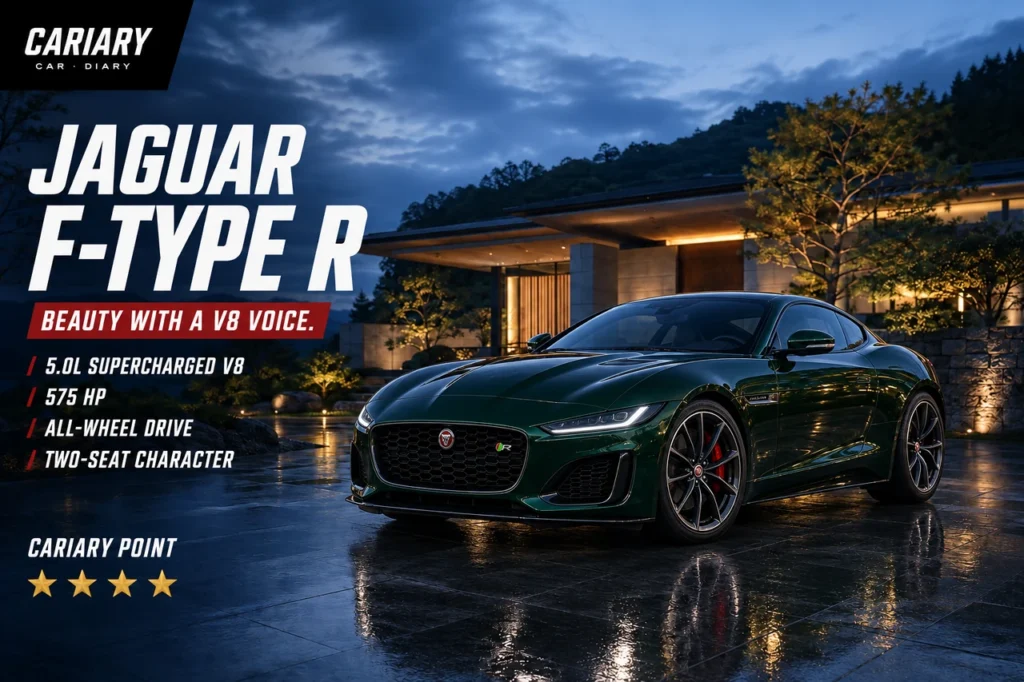
CARIARYCAR · DIARY · PERSPECTIVE
Cover: AI-generated Cariary editorial illustration, visually checked against the specified vehicle. It is not road-test photography.
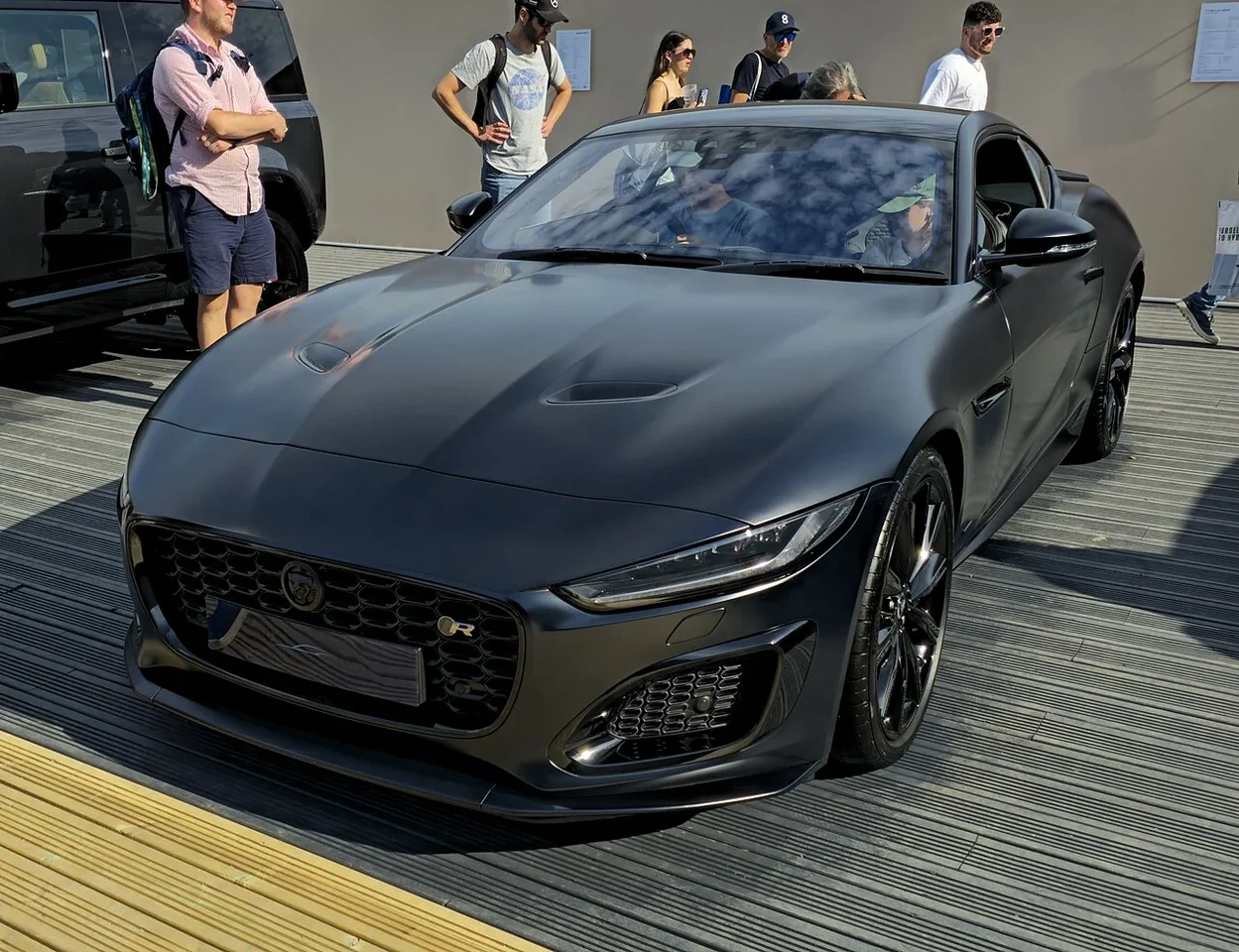
This Jaguar F-TYPE R review is about the point where a beautiful shape becomes a serious buying decision. The long hood, compact cabin and broad rear shoulders make a strong argument before the engine starts. A supercharged V8 gives that shape a convincing reason to exist.
Cariary is interested in this car because it offers a clear alternative to buying a sports car mainly for its reputation or lap-time standing. The F-TYPE R appeals to the person who wants to look back at a parked coupe and still feel something, then have the engine provide a second reason to take it out.
That is worth four stars, with an important condition: the romance must survive a careful inspection and an honest ownership budget. A used luxury sports car can become affordable to purchase long before it becomes inexpensive to maintain.
Scope: facelift 2021–2024 F-TYPE R Coupe, using the final 2024 U.S. R75 as the equipment and output reference. Overseas photographs are identified in their captions. This is a research-based buyer review, not a Cariary road test.
An appealing V8 coupe for a buyer who prioritizes design, engine character and two-person journeys. Buy condition and service history before chasing the final-edition badge.
Jaguar F-TYPE R Review: Key Specifications
| Reference model | 2024 U.S. F-TYPE R75 Coupe; facelift R family |
|---|---|
| Engine | 5.0-liter supercharged V8 |
| U.S. output / torque | 575 hp / 516 lb-ft |
| Transmission / drive | Eight-speed Quickshift automatic / AWD |
| Body / seating | Two-door Coupe / two seats |
| Final model-year context | 2024; R75 commemorative specification |
| Historical starting MSRP | R75 Coupe: $113,000, plus $1,275 destination at launch |
| Infotainment distinction | Touch Pro generation; wired Apple CarPlay / Android Auto for the U.S. 2024 F-TYPE |
Jaguar F-TYPE R Review: Understand the R75 Context
The facelift matters because this is not a review of every engine and appearance that wore the F-TYPE badge. Earlier cars, V6 models and lower-output V8s need their own price and equipment comparisons. Confirm the exact version before using any review to judge a listing.
Jaguar’s 2024 U.S. model-year announcement identifies the R75 as the final-year, 575-hp AWD version. The 75 designation celebrates Jaguar sports-car history; it does not mean that an R75 has an entirely different underlying purpose from the facelift R that preceded it.
The historical starting price is useful context, not a current used valuation. It shows the original market position and helps explain why expensive consumables and specialist work remain relevant after depreciation. A discounted purchase price does not rewrite the car’s engineering or parts requirements.
For a used buyer, an earlier facelift R with strong documentation may deserve more attention than a final-year car with unresolved questions. Compare condition, mileage, service continuity and equipment first. Pay extra for the commemorative identity only if that identity matters to you.
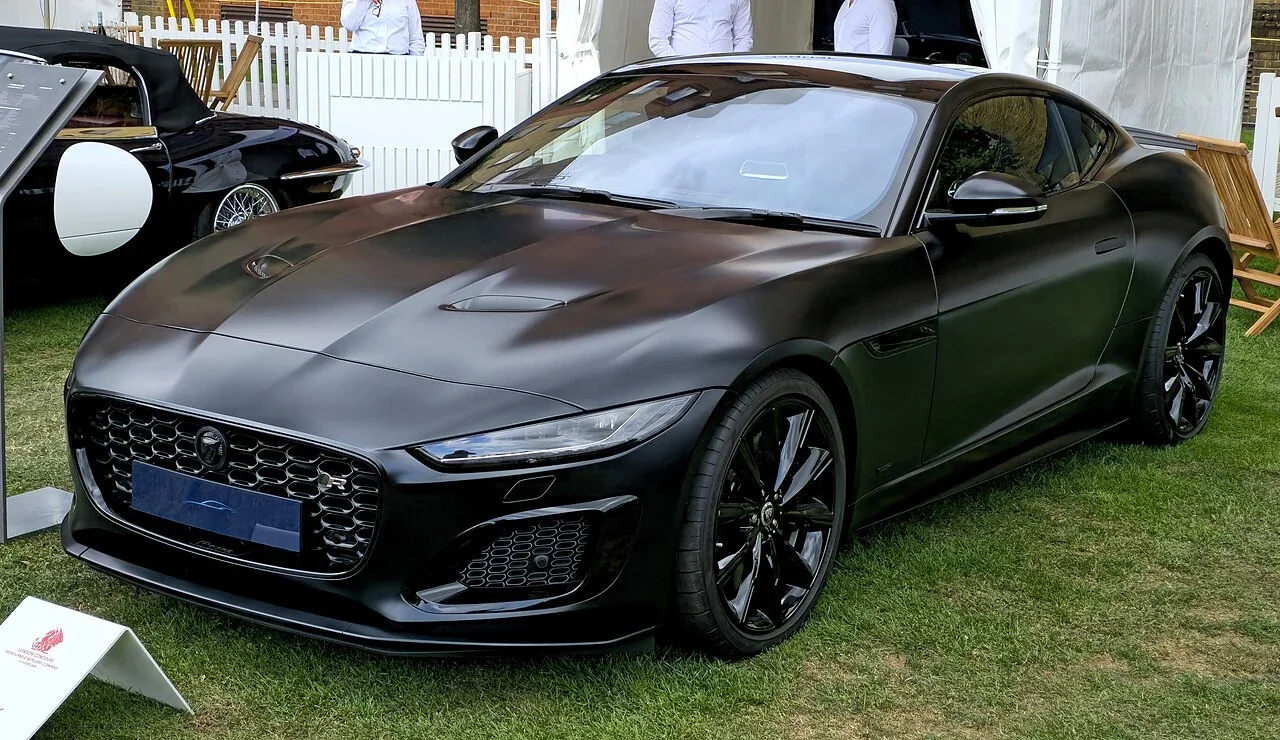
The Supercharged V8 Gives the Design a Voice
The U.S. R75 reference pairs 575 hp with 516 lb-ft. That is more than a decorative performance claim in a two-seat coupe. It makes the engine a central part of the ownership proposition, even for someone who has no interest in taking the car to a circuit.
A supercharger uses mechanical drive to help supply additional air to the engine. The relevant buyer question is how the engine responds during an ordinary road evaluation, not whether the word supercharged automatically guarantees a particular feeling to every driver.
The facelift launch description explains the eight-speed Quickshift transmission and a Quiet Start function for the V8 versions. The latter is worth understanding if the car will leave a quiet neighborhood early in the morning. Equipment, exhaust condition and modifications should be checked on the example being considered.
Cariary would favor an exhaust configuration that remains enjoyable over a whole journey. Loudness alone is not a measure of quality. During inspection, listen for unwanted resonance at a normal cruise and verify whether the exhaust remains original or has been changed.
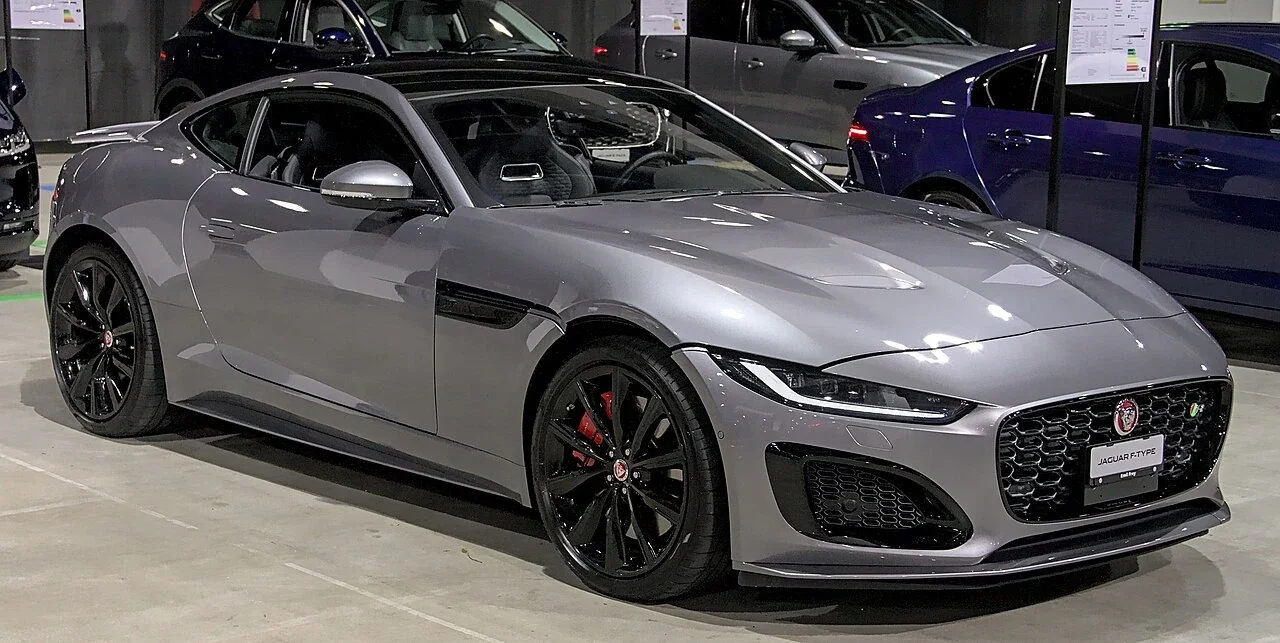
AWD and Chassis Hardware Do Not Remove Judgment
The R is an AWD proposition in this review. That should be distinguished from choosing another F-TYPE variant simply because it shares the body shape. The facelift also brought chassis revisions and recalibration described in Jaguar’s launch material; earlier impressions should not automatically be transferred to it.
In its 2021 U.S. Coupe test, Car and Driver appreciated the revised ride but found the steering responses somewhat nervous. The reviewer also found the cabin restrictive. That independent account gives a buyer concrete points to test rather than promising that the facelift suits every driver.
A drivetrain can help deploy power, but it does not make a powerful car indifferent to weather. Tire choice, temperature and surface conditions remain fundamental. Assess the car progressively and keep the evaluation focused on normal road behavior.
For the buyer, the useful test is whether the car gives confidence without requiring constant effort. Check steering response over uneven surfaces, brake feel, low-speed maneuvering and whether the ride suits the roads you actually use. A smooth demonstration route may hide the conditions that matter at home.
Do not mistake the ability to accelerate hard for permission to do so anywhere. The R has a much broader performance envelope than can responsibly be explored during a public-road purchase inspection. If a seller’s demonstration makes you uncomfortable, redirect it to the ordinary checks you need.
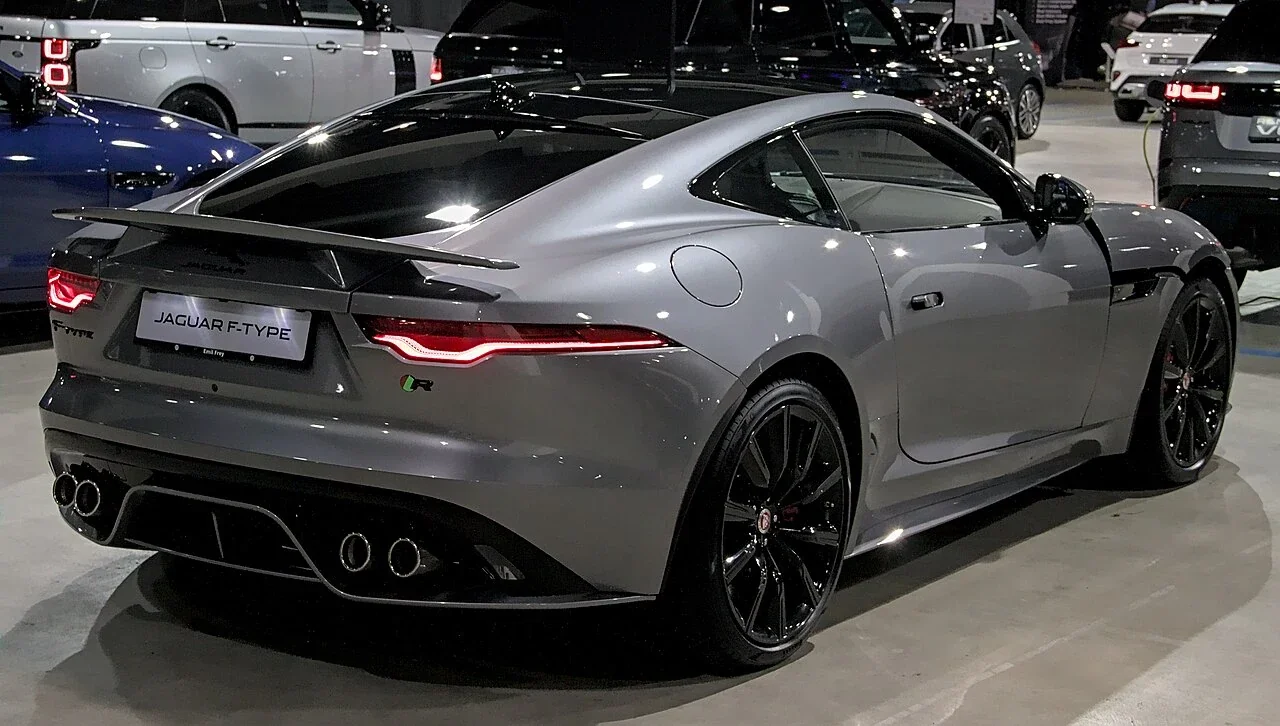
The Cabin Is a Two-Person Place, Not a Digital Lounge
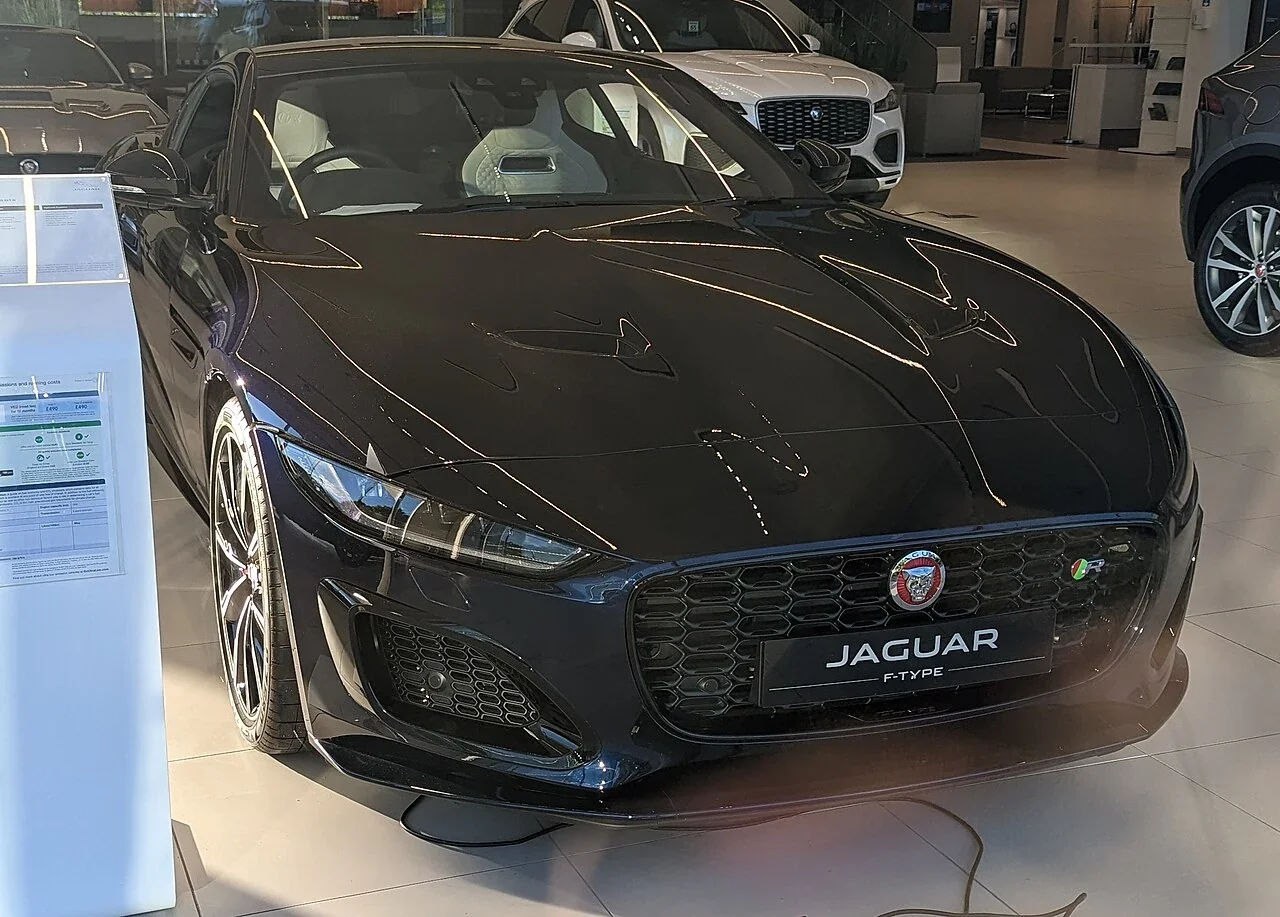
The facelift cabin uses a digital instrument display with physical controls around a compact center console. Its appeal lies partly in being a place to sit in a sports car, rather than an arrangement designed primarily around a large dashboard screen.
There is a specific equipment trap here. Jaguar’s 2024 U.S. announcement distinguishes the F-TYPE from other models receiving newer connected features: its Apple CarPlay and Android Auto connection is wired. Do not describe this car as having a universal Pivi Pro upgrade simply because another Jaguar of the same year has it.
Bring your phone, cable and usual navigation routine to the inspection. Test pairing, audio, climate controls and every seat adjustment. A feature list is less useful than knowing whether the actual interface is tolerable on a long journey.
Seating fit is equally personal. Check support with the steering wheel in your preferred position and ask your passenger to try the other seat for more than a minute. A cabin that looks intimate and attractive can become restrictive if either occupant cannot find a comfortable posture.
Coupe or Convertible: Choose the Journey You Want
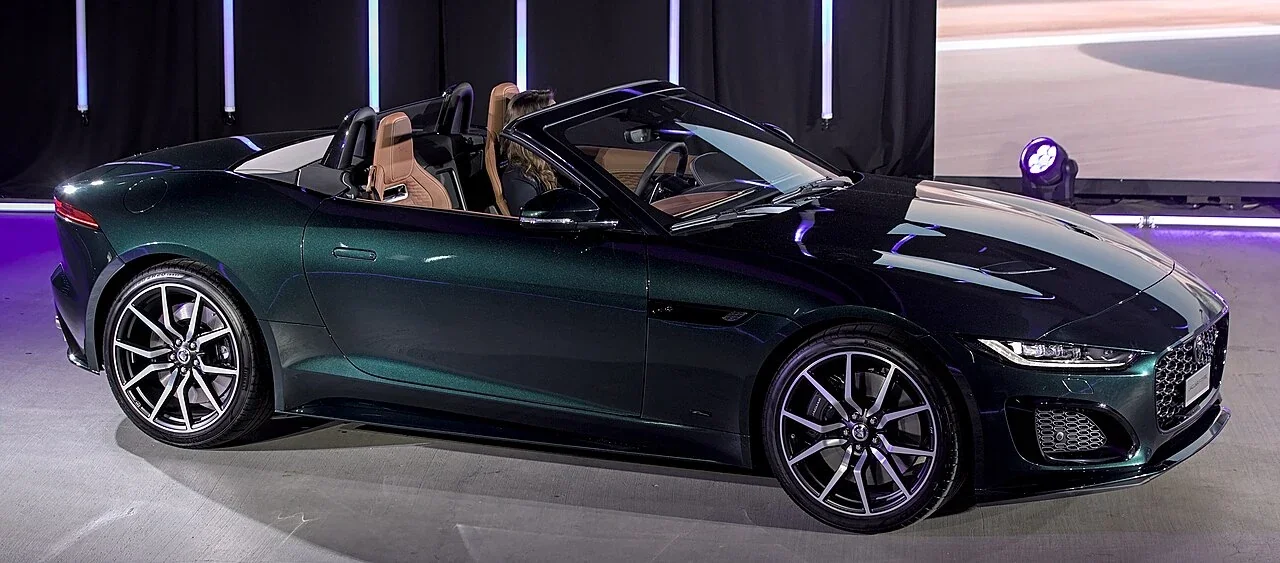
The Coupe is the main subject here, and its roofline is a large part of the attraction. The Convertible offers a different way to experience the same model family. It deserves a separate choice based on how often you would actually lower the roof, not a casual assumption that open-air automatically means better.
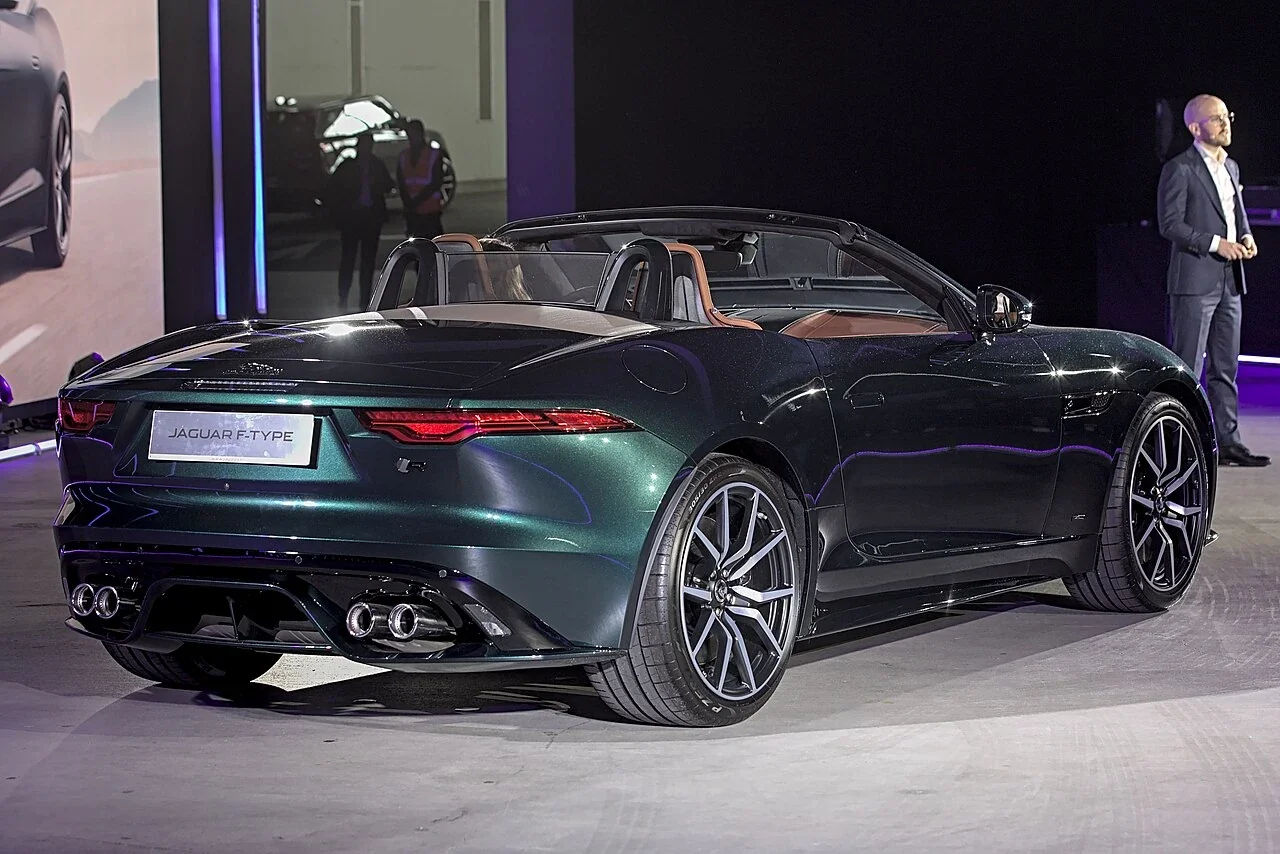
The Convertible photographs in this review are identified as such and are used for that body-style comparison. They do not establish the Coupe’s luggage volume or its exact cabin equipment. Treat photographs as visual evidence of what they show, not as a substitute for a build sheet.
For the Coupe, try the luggage opening with your regular weekend bags. Check access to items once the bags are packed and consider what must remain accessible inside the cabin. A two-person trip can work very differently from the same trip in a car with spare rear seats.
Parking deserves a similar real-world exercise. Try door opening in a confined bay, visibility during reversing and any steep entrance on your normal route. The best body style is the one whose compromises you accept often enough to use the car freely.
Ownership: Inspect the Car, Not the Brand Reputation
Broad stories about British cars are not a diagnosis of an individual F-TYPE. Cariary would not call one unreliable solely because of its badge, or reassure a buyer solely because a seller describes it as low mileage. Both shortcuts replace evidence with reputation.
Arrange a specialist inspection covering the cooling system, fluid leaks, suspension, brakes, drivetrain behavior and diagnostic faults. Ask the workshop to distinguish normal wear, urgent work and items worth monitoring. These are inspection categories, not a claim that each component has a proven fault on every car.
Review the service timeline and check recall status through the manufacturer or the appropriate official VIN service for your market. Keep the invoices rather than relying on a verbal claim that everything has been done. Verify any warranty terms against the specific car and its in-service date.
Obtain quotations for insurance, scheduled servicing and a tire set before committing. Add any work identified in the inspection to the purchase calculation. The cheapest listing can become the more expensive ownership choice if deferred work consumes the price difference immediately.
F-TYPE R, Lexus LC 500 or Porsche 911?
The Lexus LC 500 belongs in this conversation because design and a V8 are central to its appeal. It invites a buyer to think about the journey as a whole, including cabin atmosphere and cruising. The Jaguar’s more compact two-seat identity may be the stronger emotional fit for someone wanting a dedicated sports coupe.
The Porsche 911 is a useful reference for a different set of priorities. A buyer already drawn to the Porsche’s layout and established sports-car identity should not choose the Jaguar only because a used example seems like more horsepower for the money.
Compare actual candidates, not idealized reputations. Take the same passenger, use similarly demanding roads and request comparable condition reports. A worn car from a preferred brand is still a worn car; a well-kept alternative may be the more satisfying purchase.
The F-TYPE R makes the most sense when its own design and engine are positive reasons to buy. If the decision rests mainly on what the car once cost or how much attention it might attract, the argument is less durable than it first appears.
Cariary Perspective: Beauty Is a Valid Reason, With Limits
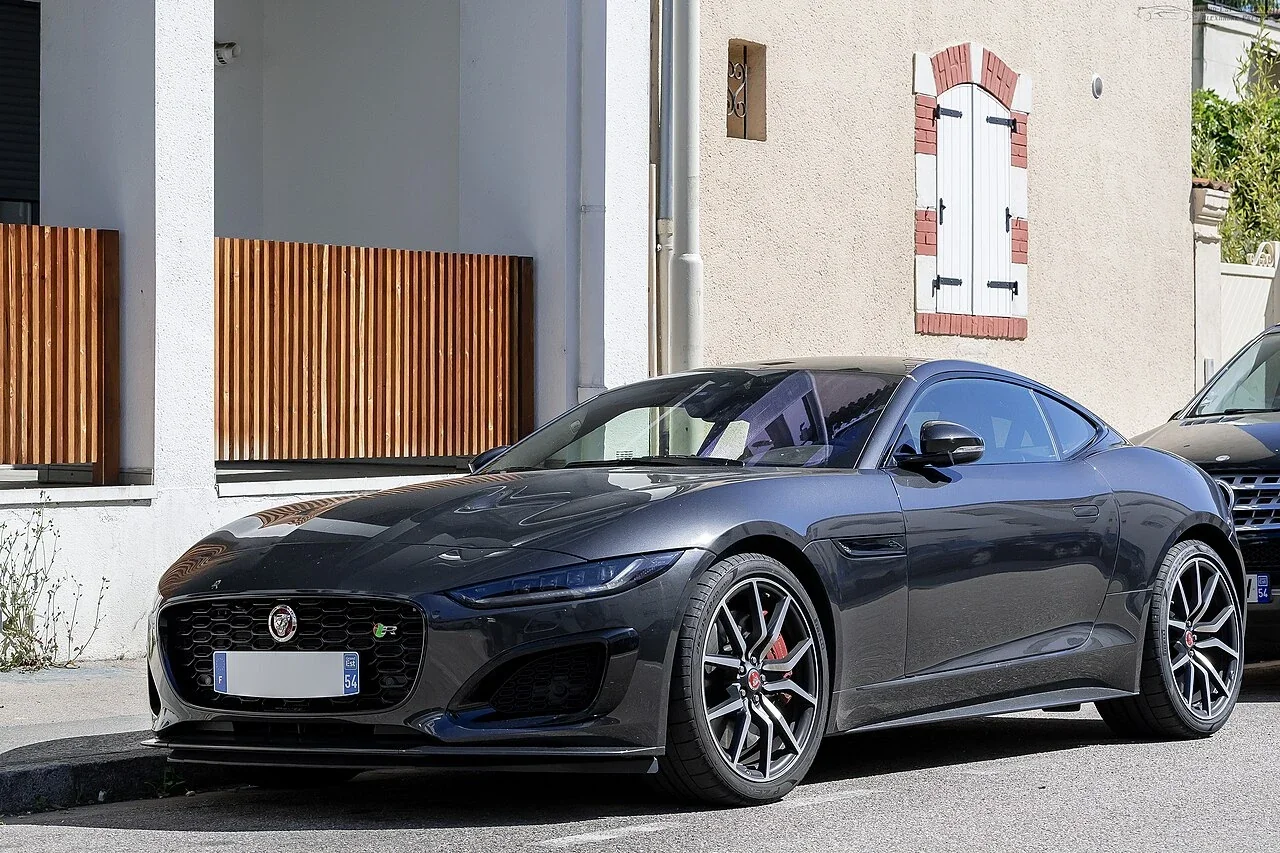
A car does not need to win every comparison to deserve affection. The F-TYPE R’s combination of proportions, a V8 and a two-seat cabin gives it a coherent identity. A buyer can reasonably prefer that identity even after accepting that another car would be easier to justify on a spreadsheet.
The discipline comes in separating emotional value from mechanical uncertainty. Wanting a particular shape is understandable. Paying for undocumented maintenance history because the shape is beautiful is a different decision, and usually a weaker one.
This Jaguar F-TYPE R review therefore lands at four stars. The car has a strong reason to be chosen and meaningful limitations: little flexibility for extra passengers, an older digital interface and an ownership budget that deserves attention. None of those points is erased by the final-model-year story.
Cariary’s preferred example would be the one whose condition allows the owner to enjoy the car without constantly renegotiating the purchase in their head. The right F-TYPE should remain a reason to plan a drive after the excitement of collecting it has passed.
Who Should Buy It?
Recommended For
A buyer who wants a dedicated two-seat V8 coupe for personal enjoyment, values the F-TYPE’s design and has access to competent maintenance support.
Not Recommended For
Someone who needs rear seats, the newest infotainment experience or an ownership budget that leaves no room for repairs and expensive consumables.
One-Line Verdict: Buy the F-TYPE R because its shape and supercharged V8 speak to you, then let the inspection decide which example deserves your money.
Frequently Asked Questions
What is the difference between an F-TYPE R and R75?
R75 identifies the final 2024 commemorative specification in this review. The facelift R remains the underlying high-output V8 proposition; compare each car’s actual equipment and condition rather than treating the suffix as a complete reinvention.
Does the F-TYPE R have a manual transmission?
The facelift R reviewed here uses an eight-speed automatic. A manual listing elsewhere in the model’s history does not establish a manual option for this R specification.
Is the F-TYPE R all-wheel drive?
Yes, the U.S. R75 reference uses AWD. Other versions of the wider F-TYPE range differ, so the model name alone is not enough when checking a used listing.
Does the 2024 F-TYPE have wireless Apple CarPlay?
Jaguar’s U.S. announcement specifies a wired connection for the F-TYPE. Test the actual car with your phone rather than transferring features from another Jaguar model.
Is an F-TYPE R a good used purchase?
It can be for the right buyer, provided the exact car has a convincing history and passes an independent inspection. A low advertised price is not sufficient evidence of good value.
Why is the Cariary rating four stars?
The design and V8 create a distinctive emotional appeal. Two-seat limitations, older technology and ownership responsibilities narrow the recommendation. The rating is editorial judgment, not a reliability statistic.
Further Reading and Data Reference
Data reference date: September 11, 2026. Specifications and attributed test observations are linked where discussed. Cariary Point is an editorial buyer-fit assessment, not an owner road-test score or reliability rating.
Explore more Cariary car reviews and buyer perspectives.

