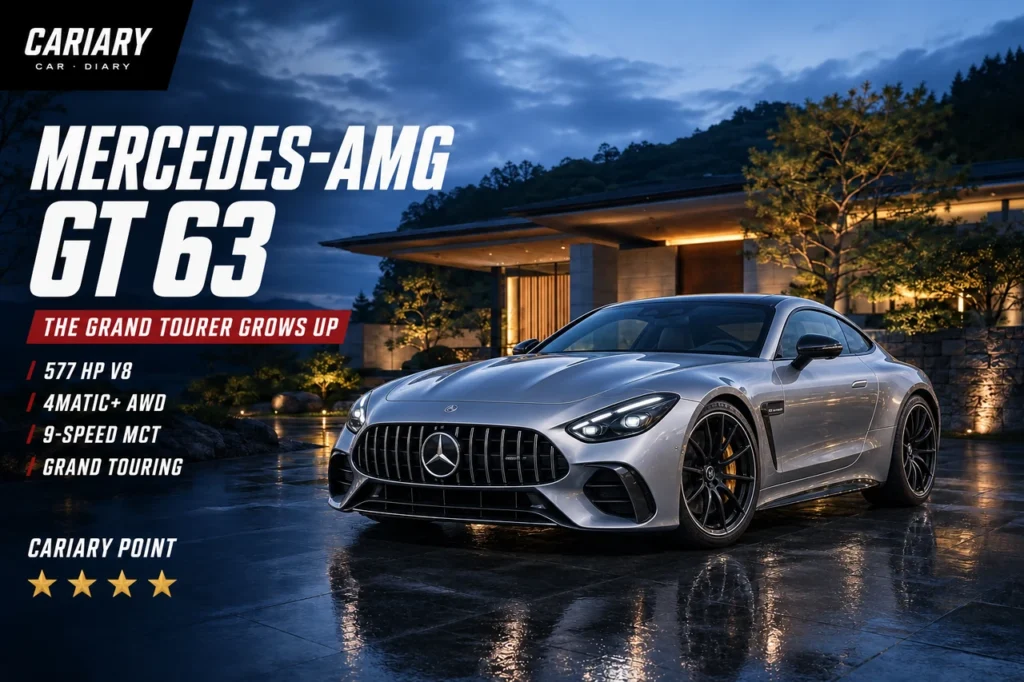
CARIARYCAR · DIARY · PERSPECTIVE
Cover: AI-generated Cariary editorial illustration, visually checked against the specified vehicle. It is not road-test photography.
This Mercedes-AMG GT 63 Coupe review considers a change in priorities. The second-generation two-door combines a substantial V8 with all-wheel drive and a more accommodating touring brief. The question is whether those changes make it a better car for the way you actually travel.
The attraction is easy to understand: a long hood, a low seating position and a cabin that still wants to feel like a Mercedes. It promises an occasion without asking every journey to become an endurance exercise. The additional size and complexity deserve just as much attention as that promise.
Cariary’s view is that this GT is most convincing as an ambitious road car for two. It can be driven hard, but its strongest ownership argument is the combination of performance and a reason to keep using it after the exciting road ends.
This research-based review covers the second-generation C192 GT 63 two-door Coupe, using the 2024 U.S. launch specification. It excludes the four-door GT, GT 63 PRO and S E PERFORMANCE hybrid. It is not a Cariary road test.
Four stars for V8 character and a broad touring brief. Size, cabin controls and expensive hardware make the recommendation conditional. The score is an editorial buyer-fit assessment, not an owner road-test rating.
Mercedes-AMG GT 63 Coupe Review: Key Specifications
| Reference | 2024 U.S. C192 GT 63 two-door Coupe |
|---|---|
| Engine | 4.0-liter twin-turbo V8 |
| Output | 577 hp / 590 lb-ft |
| Transmission | Nine-speed AMG SPEEDSHIFT MCT |
| Driven wheels | AMG Performance 4MATIC+ AWD |
| Manufacturer 0–60 mph | 3.1 seconds |
| Seating | Two; optional rear seats |
| Luggage reference | 11.3 cubic feet; U.S. specification |
Mercedes-AMG GT 63 Coupe Review: Two Doors, Clear Identity
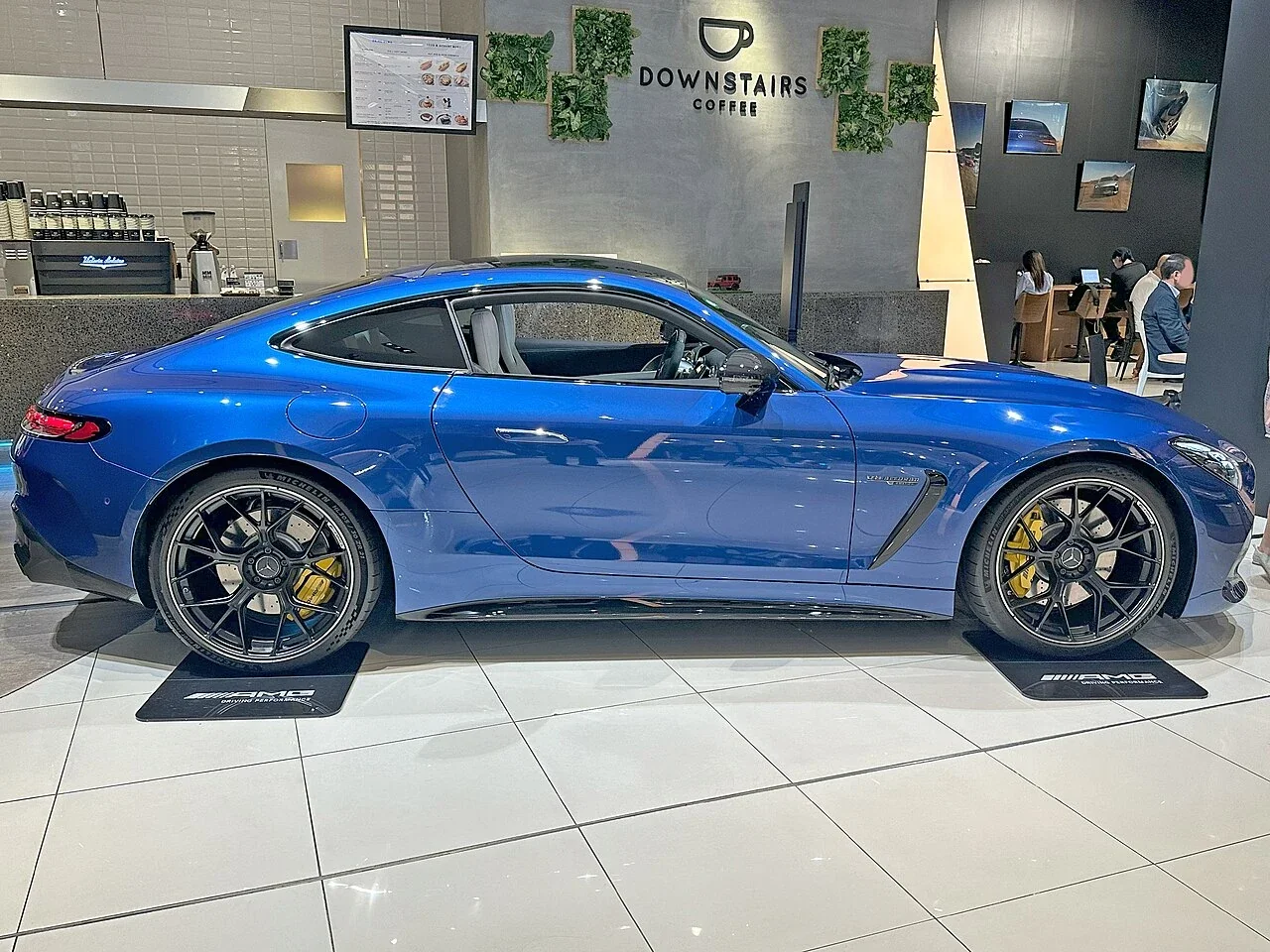
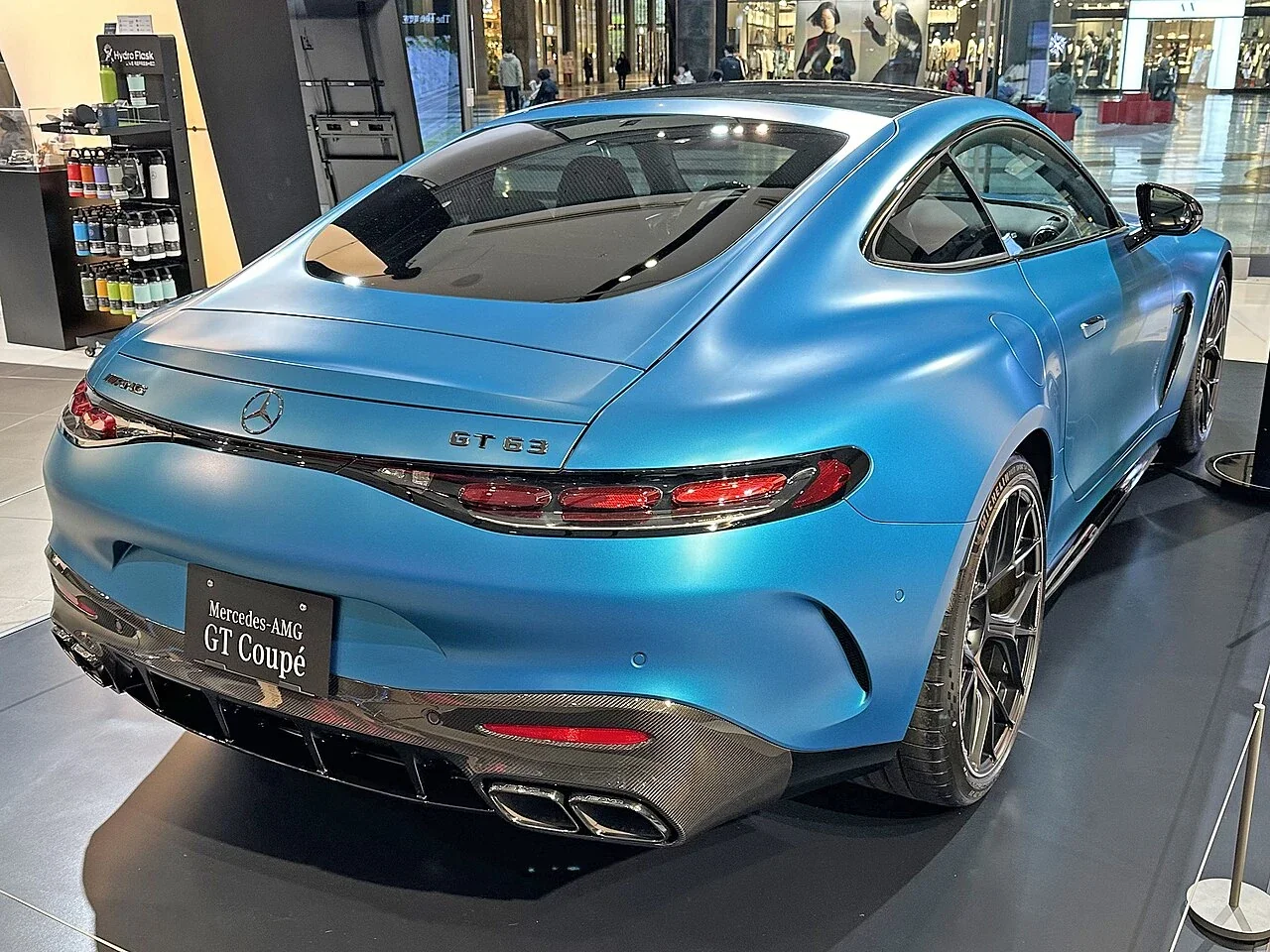
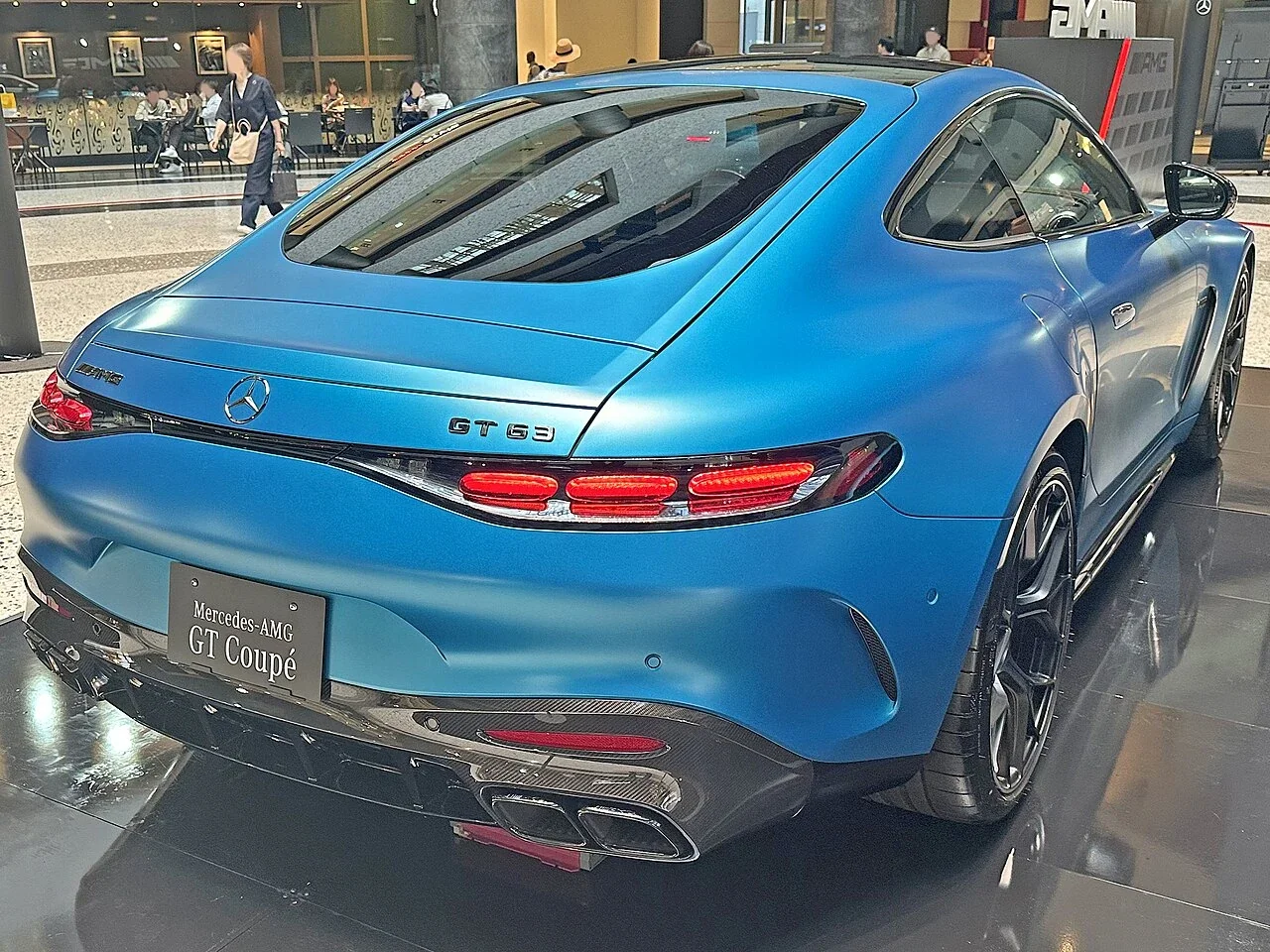
The name needs care. Mercedes has used GT terminology for different bodies, and a search result for a GT 63 can lead to a four-door car. The C192 reviewed here has two doors and a long fastback roof. Its specifications must not be borrowed from a similarly named sedan or hybrid.
The Mercedes-Benz U.S. launch information identifies the GT 55 and GT 63 V8 models, their automatic transmissions and standard all-wheel drive. The 63’s 577 hp and 590 lb-ft establish this review’s reference. They do not describe the separate S E PERFORMANCE.
This matters before a buyer even visits a car. Check the body, model year, engine specification and build information against the advertisement. Photographs of a grille or badge alone are not enough. Optional aero equipment can further confuse a quick visual comparison.
The two-door’s appeal comes from making a familiar grand-touring idea feel substantial and contemporary. It offers an expressive shape with an everyday support structure around the driver. The useful question is whether that structure makes the car easier to enjoy or simply adds things the owner will rarely use.
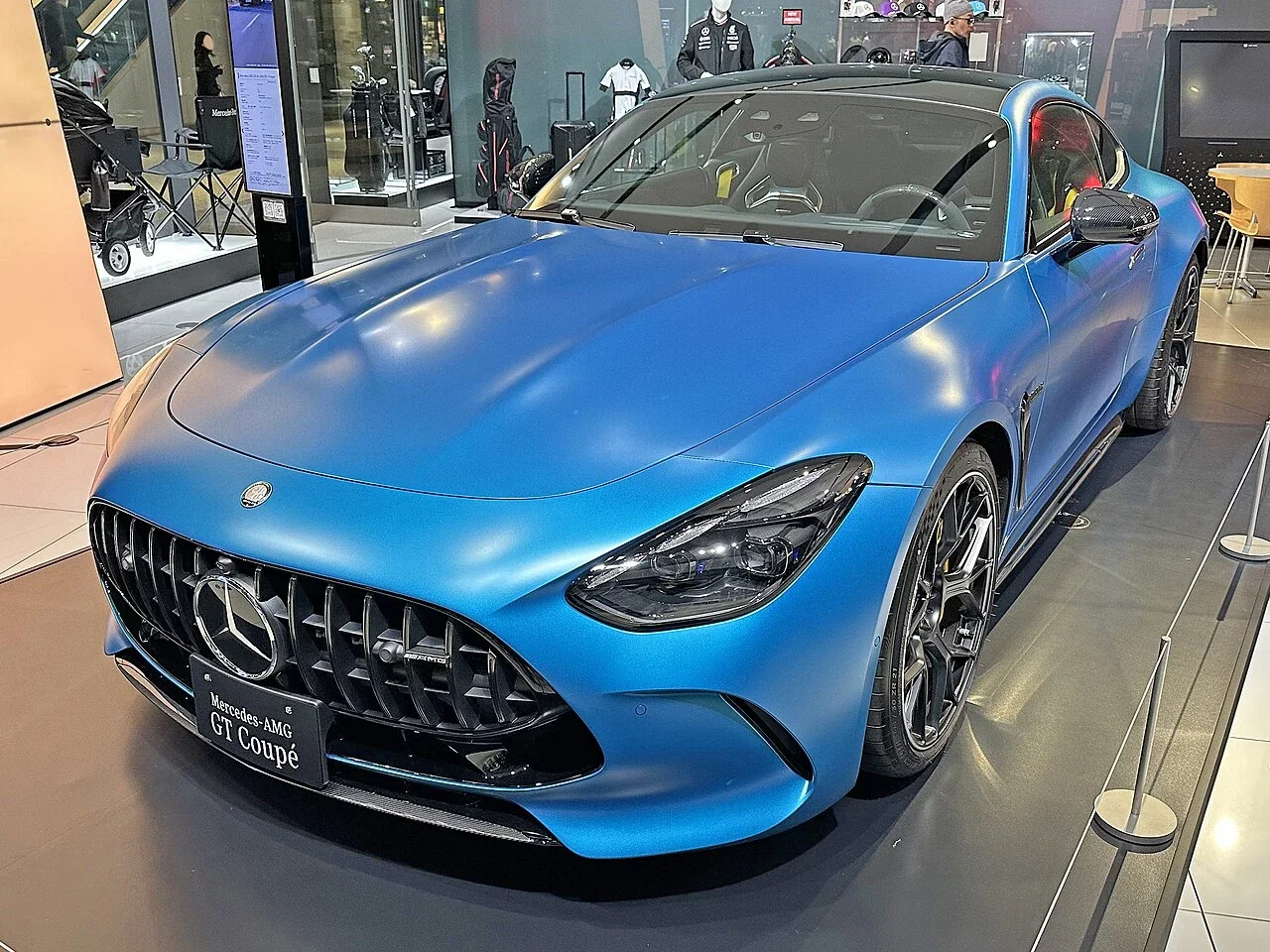
The V8 Gives the GT Its Center of Gravity
The 4.0-liter twin-turbo V8 is the reason many buyers will begin here. Its generous torque reserve can make performance available without requiring every acceleration to reach the top of the rev range. That suits a car expected to cover both an interesting road and the long motorway journey leading to it.
The nine-speed MCT transmission belongs to this new package. It should not be described as the previous car’s rear-mounted dual-clutch unit. Names and gear counts can look like minor details on a spec sheet, but the underlying arrangement changes the way the car is packaged and how a driver experiences its responses.
A demonstration should include gentle throttle application and slow maneuvering as well as a short, legal acceleration test. The engine’s headline output is already established. The unanswered question is whether the controls give you the response and smoothness you want during the majority of your driving.
Cariary would resist treating the most powerful version in the wider range as automatically the correct one. The ordinary GT 63 already has a demanding performance envelope. Choosing it for its V8 and touring balance is a coherent decision even when more extreme derivatives exist.
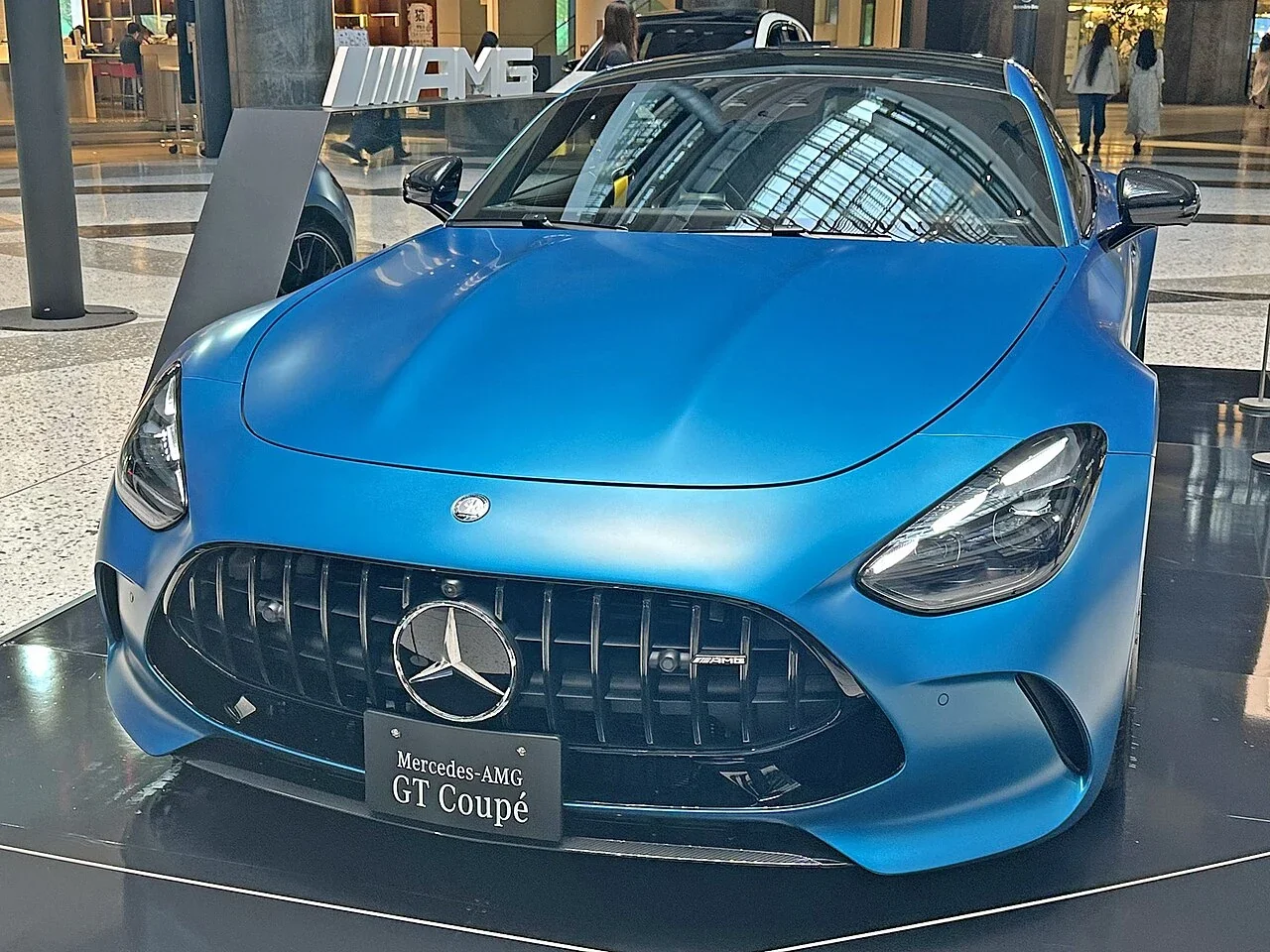
More Chassis Technology, a Different Driving Brief
The launch specification includes active roll control, rear-axle steering and a controlled rear differential. These systems address different tasks. Reducing body roll, changing the rear wheels’ steering angle and distributing drive torque are not interchangeable functions, even if a brochure groups them under handling technology.
The benefit has to be judged in the complete car. MotorWeek’s track test found useful traction and a luxurious road-going character, while also noticing a bigger, heavier feel and less of the predecessor’s nimbleness. Those are the test team’s observations, not a claimed Cariary driving impression.
That is a more helpful result than an unconditional declaration that the new generation is better. A buyer who wanted the earlier car’s more compact, playful personality may feel differently from someone seeking a broader touring experience. Progress can expand the audience while changing the reasons an existing fan liked the car.
For the road buyer, test how comfortably the car settles after a bump, how easily it changes direction and how natural the response feels in routine settings. Technology earns its value when it reduces effort or improves control. Its presence on an options list is only the starting point.
The Cabin Should Make the Long Journey Easier
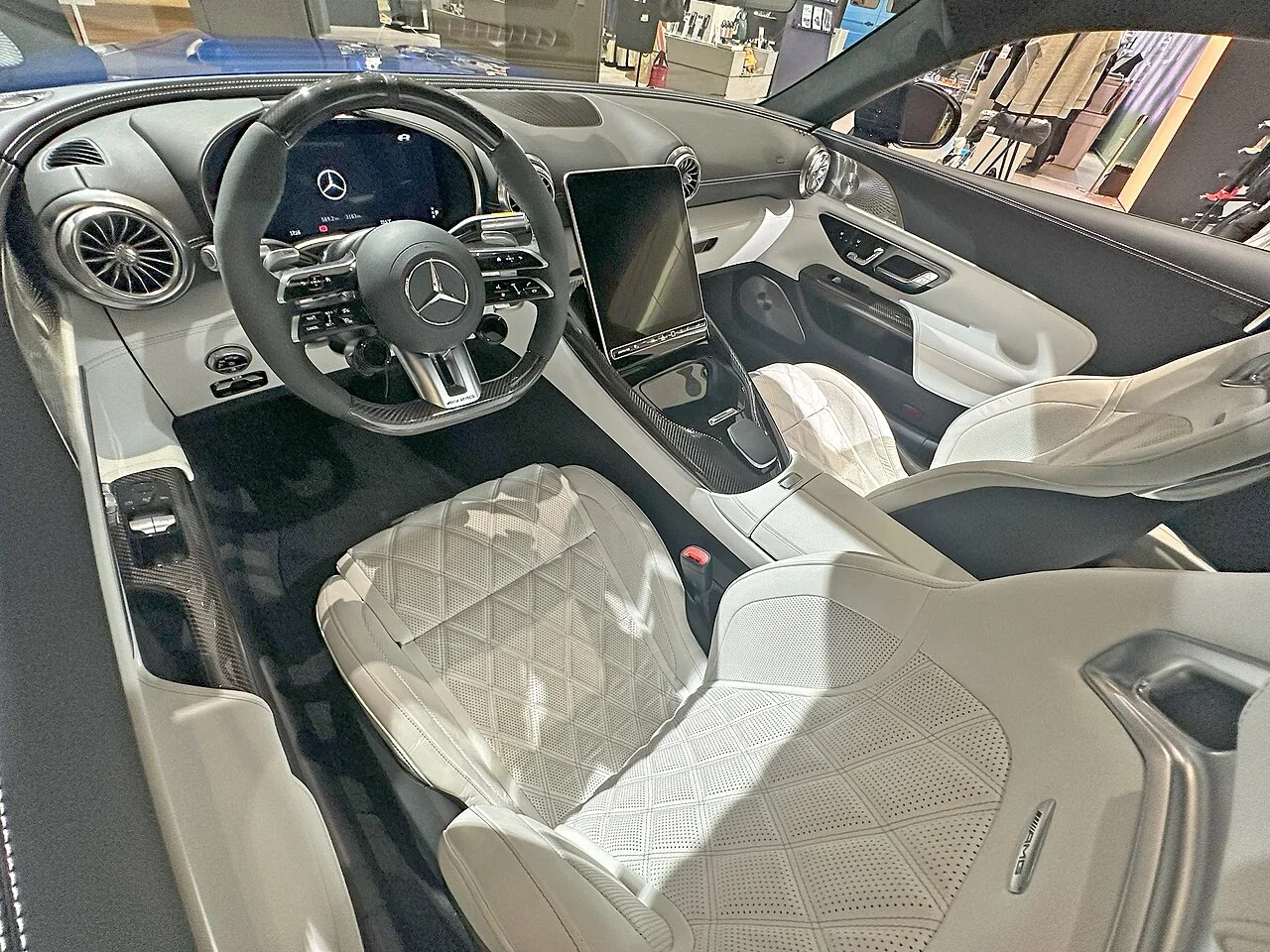
The real interior photograph shows the prominent central screen, low seat position and substantial center console. It also shows how much of the experience is organized around the driver and front passenger. The image is an overseas display car, so visible options should not be assumed standard in the United States.
Try the touch controls, climate functions, navigation and phone connection while parked. A large screen may look clear in a photograph, but the number of steps needed for a familiar task is easier to understand in person. Repeated small frustrations can matter more than a feature that is impressive once.
Seat selection is equally personal. Compare the available seats in the actual adjustment range you will use. Check pressure points, shoulder support and entry with the wheel positioned properly. A passenger should do the same; touring comfort is a shared experience rather than a driver-only specification.
The GT’s cabin promise is convincing only if it leaves you willing to take the longer route. For an owner who values simple controls above all else, the interface may need more consideration. There is no benefit in choosing a fast touring car whose ordinary operation already feels like work.
Optional Rear Seats Do Not Make It a Family Sedan
Mercedes lists two seats with an optional rear-seat arrangement for the GT 63. Treat those rear positions as a specific fit question, not a marketing shortcut to four-person practicality. The sloping roof and access through the front doors still govern how useful the space will be.
Bring the people or equipment that the car is expected to carry. If child-seat use matters, confirm the permitted installation and actual fit before deciding that the optional seats solve the problem. A capacity statement cannot establish headroom, foot space or how easy a task will be to repeat.
The U.S. specification lists 11.3 cubic feet of luggage room. That is a useful reference, but touring bags are not cubes. Test the opening and usable shape with real luggage, then consider where coats and smaller items will go. Easy loading can be more valuable than a small difference in quoted volume.
For regular rear-seat travel, a genuine four-door performance car deserves a separate comparison. The Lexus LC 500 offers another two-door interpretation, but its existence does not turn every coupe into equivalent transport. Begin with the job the car must do, then choose the shape.
Brakes and Wheels: Choose for Use, Inspect for Condition
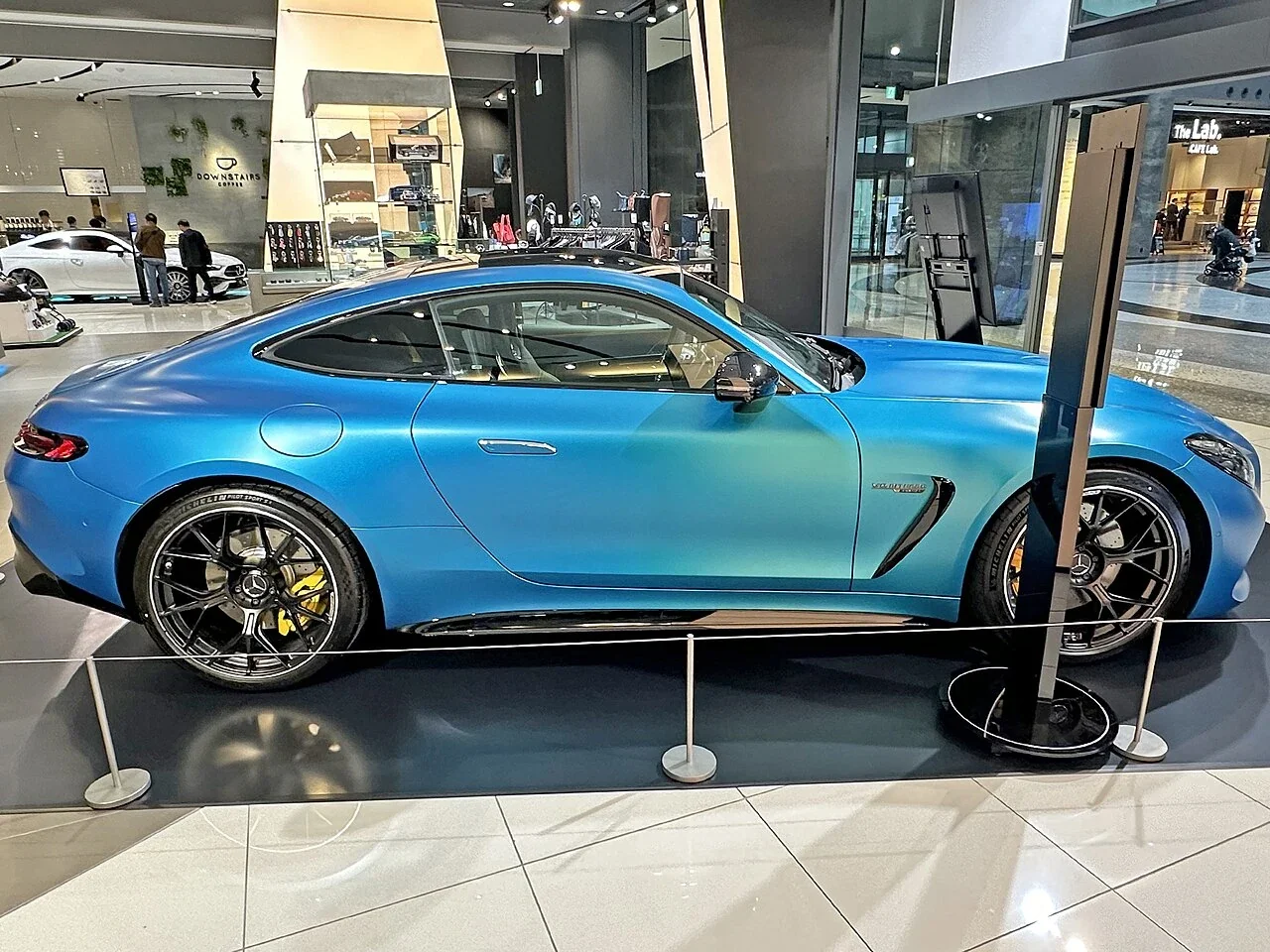
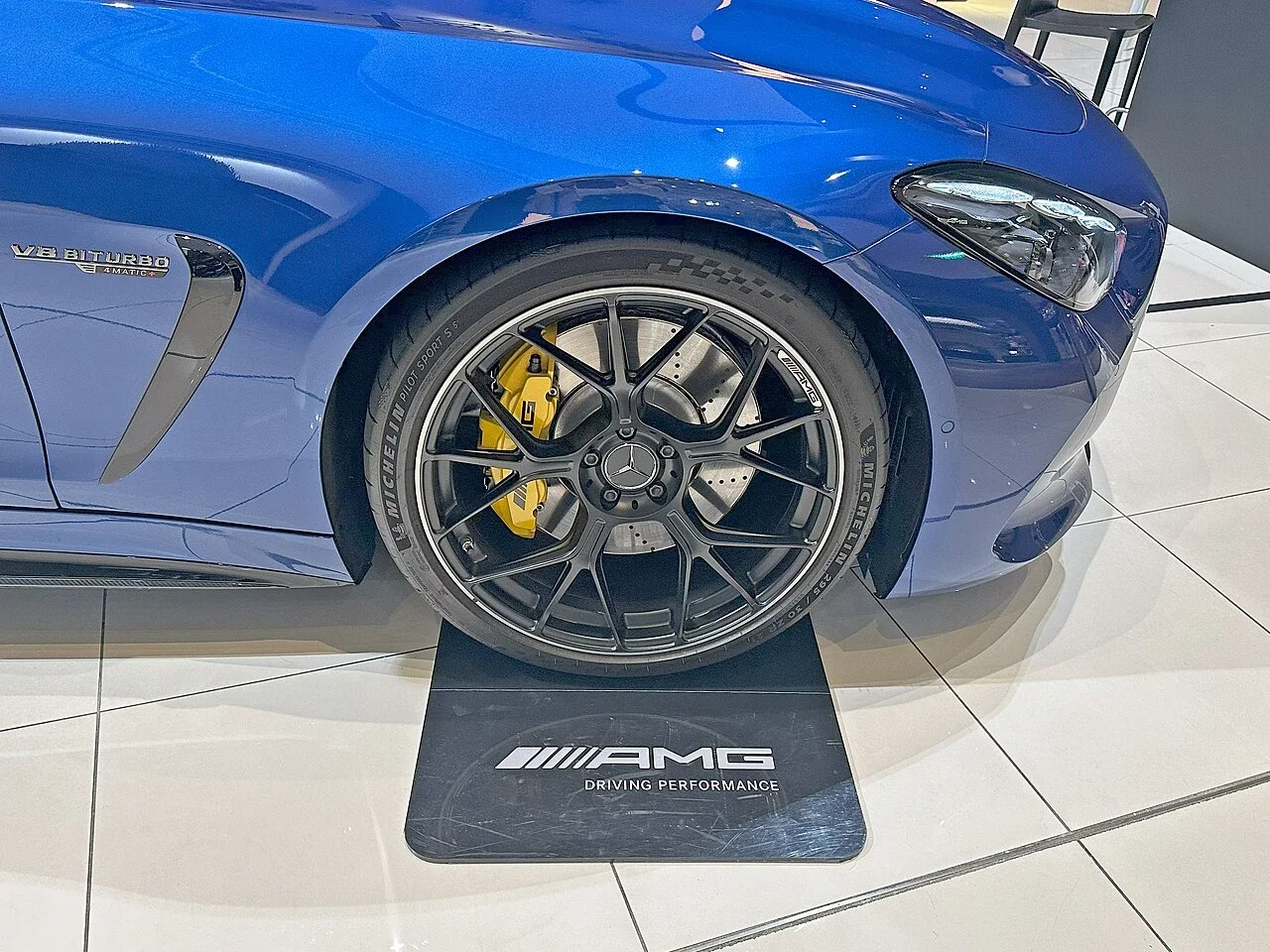
The wheel photograph below shows optional-looking high-performance hardware on the photographed display car. It illustrates why the build sheet matters. A buyer should identify the installed braking system and wheel specification rather than deducing everything from caliper color or a showroom description.
An expensive brake option is not automatically necessary for relaxed touring. Conversely, repeated demanding use can place different requirements on the system. Discuss intended use with a qualified specialist and price the consumables that belong to the actual car. The goal is a suitable package with known condition.
Inspect tires for age, correct specification, damage and uneven wear. Check wheel condition and ask whether repairs have been made. The vehicle’s ability to accelerate does not remove the need for tire grip during braking or standing-water management. All-wheel drive is one part of the car, not a substitute for appropriate tires.
This is where a promising used price can change quickly. A car needing tires, brakes and scheduled work immediately may cost more to put into service than a dearer, properly prepared example. Compare the ready-to-use total rather than stopping at the number in the advertisement.
A Serious Touring Car Needs a Serious Ownership Plan
Begin with the exact car’s warranty and service position in your market. Ask what remains covered, what maintenance is due and which local workshop can support the installed chassis systems. Do not assume coverage transfers unchanged between countries or that every used-car warranty treats all components alike.
Arrange an independent inspection that includes diagnostics, leaks, cooling, transmission behavior, suspension operation and evidence of previous repairs. These are inspection priorities, not a list of alleged common GT 63 defects. The aim is to replace uncertainty with evidence before the purchase.
A test route should also include your mundane constraints. Check the parking space, garage approach and visibility during a reverse maneuver. A car can be comfortable at speed yet stressful in the place where you use it every day. The substantial front bodywork makes this worth testing deliberately.
Running costs will depend on use, location and condition, so a single universal annual figure would give false precision. Obtain insurance and servicing quotations for the specific example. Set aside the cost of known work before treating any remaining budget as available for cosmetic options.
The Cariary Perspective: Grand Touring Is the Point
The Porsche 911 is a useful comparison because it asks a buyer to think carefully about the desired kind of sports car. The AMG’s V8 and substantial front-engine presence are reasons to choose it on their own terms. It does not need to win every abstract comparison to be desirable.
Similarly, the Aston Martin Vantage puts a different emphasis on its two-seat experience. Evaluate these cars with the same routine: access, seat comfort, controls, luggage and the roads you expect to drive. Comparing only power ignores most of the time you will spend with them.
Cariary’s four-star judgment favors the GT 63 for the owner who wants a forceful V8 coupe and intends to travel in it. The reservation is that size and complexity are real costs, even when they bring useful capability. Someone seeking the lightest, simplest response may prefer a different brief.
The strongest version of ownership is an ordinary road trip made more memorable by the car. If the GT makes that trip easier to choose and more enjoyable to complete, its broader personality has a purpose. That is the case for the second generation: a car whose performance can accompany the journey rather than define every minute of it.
Who Should Buy It?
Recommended For
A buyer seeking a distinctive V8 two-door for frequent trips with one passenger, who values touring comfort and has room for the car and its running costs.
Not Recommended For
A driver requiring regular adult rear-seat transport, compact-city convenience, minimalist controls or the lightest possible sports-car experience.
One-Line Verdict: The GT 63 makes its strongest case as a V8 grand tourer for two, with performance that enriches the journey.
Frequently Asked Questions
Is this the four-door AMG GT 63?
No. This review covers the second-generation C192 two-door Coupe. The four-door GT has a different body and specification.
Is this GT 63 a hybrid?
The 577-hp V8 version reviewed here is not the S E PERFORMANCE hybrid. Similar model names should be checked carefully.
Does it have all-wheel drive?
Yes. The U.S. V8 launch specification includes AMG Performance 4MATIC+ variable all-wheel drive.
Can four adults travel comfortably?
Do not assume so. Rear seats are optional, and actual passenger fit and access should be tested. This review primarily assesses the car for two-person touring.
Is the 3.1-second figure a Cariary test?
No. It is the manufacturer’s 0–60 mph claim. Cariary did not measure acceleration, and the linked MotorWeek test did not independently verify that figure.
Should a buyer automatically choose carbon-ceramic brakes?
No. Identify the car’s hardware, consider intended use and price maintenance with a specialist. An expensive option is not automatically the right choice for every road driver.
Further Reading and Data Reference
Data reference date: September 11, 2026. Specifications and attributed test observations are linked where discussed. Cariary Point is an editorial buyer-fit assessment, not an owner road-test score or reliability rating.
Explore more Cariary car reviews and buyer perspectives.

