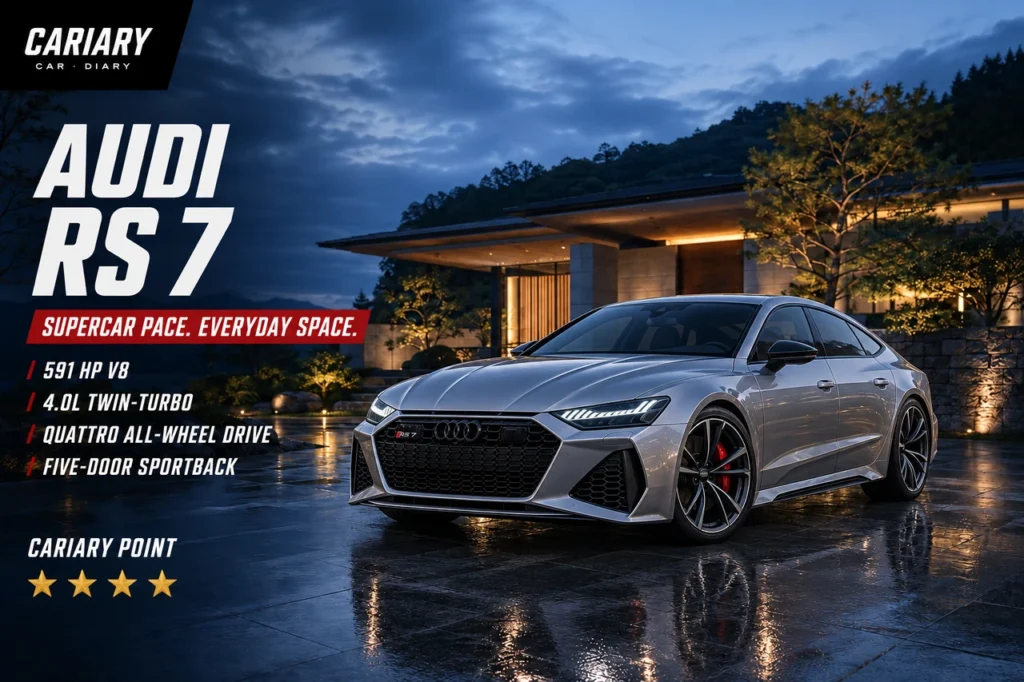
CARIARYCAR · DIARY · PERSPECTIVE
Cover: AI-generated Cariary editorial illustration, visually checked against the specified vehicle. It is not road-test photography.
This Audi RS7 review is about the appeal of having more than one kind of car in the driveway without actually owning several. The RS 7 promises an elegant arrival, useful luggage access and startling acceleration in a single low-roof body. The attraction is not difficult to understand.
The harder question is whether that combination is worth carrying every day. A large V8 performance car brings wide tires, expensive hardware and a substantial footprint even when the trip only involves shopping. Its usefulness needs to be real, rather than an excuse attached to a very desirable silhouette.
Cariary finds the early C8 especially interesting as a used purchase. There is enough performance to make the later version’s extra power a secondary issue, leaving condition, specification and your preference for the Sportback shape to do the important work.
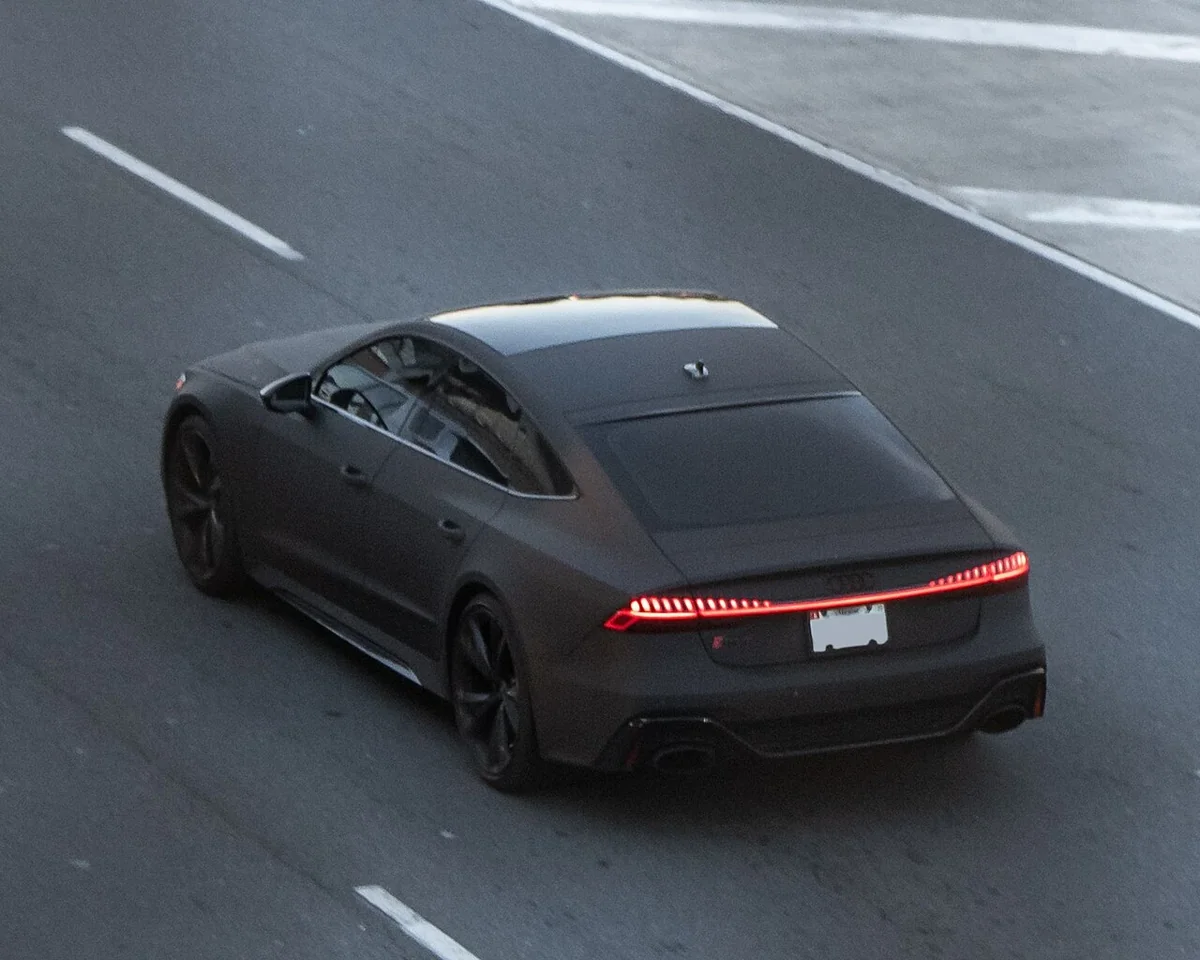
This research-based Audi RS7 review uses the 2021 U.S. C8 RS 7 Sportback as its main reference. The later Performance version is discussed separately using Audi’s German-market figures. Photographs show early C8 cars in several markets; this is not a Cariary road test.
Four stars for combining serious performance with a polished everyday character and useful hatchback access. The sleek roofline has a real emotional payoff, but an RS 6 remains the stronger starting point when maximum practicality is the priority.
Audi RS7 Review: Key Specifications
| Reference | 2021 U.S. C8 RS 7 Sportback |
|---|---|
| Engine | 4.0-liter twin-turbo V8 |
| Output | 591 hp / 590 lb-ft |
| Transmission | Eight-speed automatic |
| Driven wheels | quattro all-wheel drive |
| Body | Five-door fastback; verify the individual rear-seat layout |
| 0–60 mph | 3.0 seconds in Car and Driver testing, with rollout |
| Cargo reference | 25 cu ft quoted in the U.S. Car and Driver test |
Audi RS7 Review: The Shape Is Part of the Argument
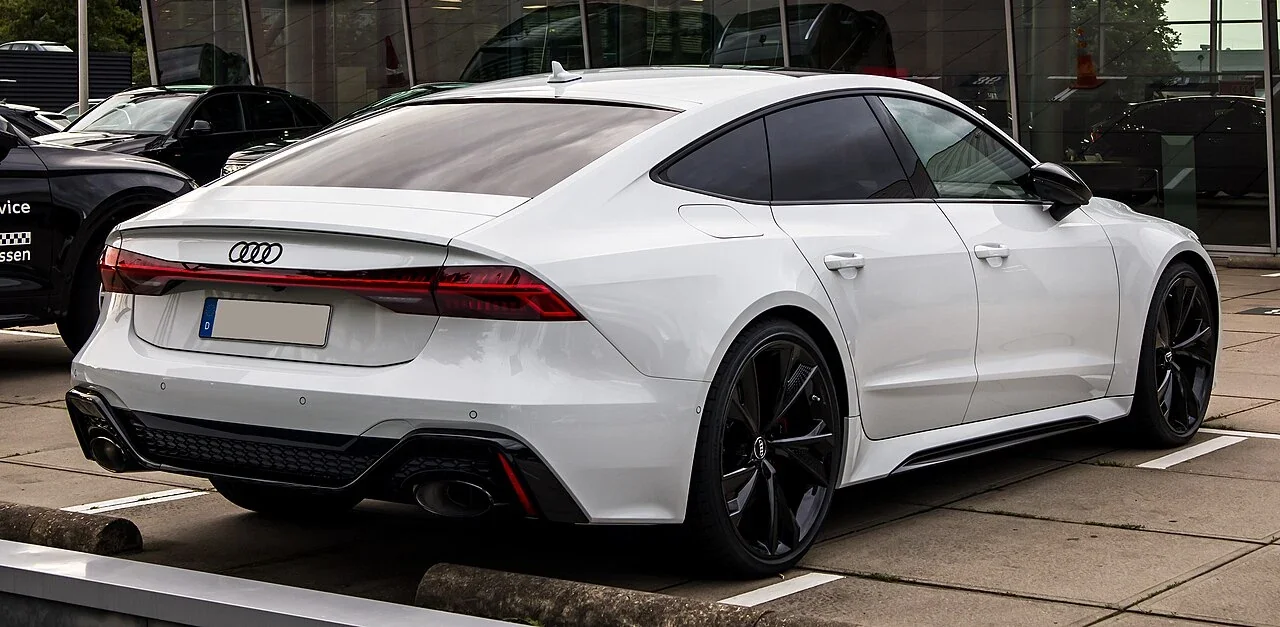
The roofline does much of the selling. A sedan normally makes a clear break between cabin and trunk; the RS 7 carries its upper line toward the tail in one long sweep. Its broad stance adds muscle without turning it into an SUV, and the large rear hatch gives that appearance a useful practical foundation.
That does not make the styling a free benefit. Sloping glass and a lower roof change how you enter the back and what you can load under the tail. The right comparison is not a drawing of a wagon next to a drawing of a fastback. It is your passengers and your luggage in the actual cars.
The RS 7 makes sense when its appearance gives you recurring pleasure and the remaining space is enough. There is no need to invent a practical victory over an estate car to justify liking it. Design is a legitimate purchase factor once the requirements have been checked honestly.
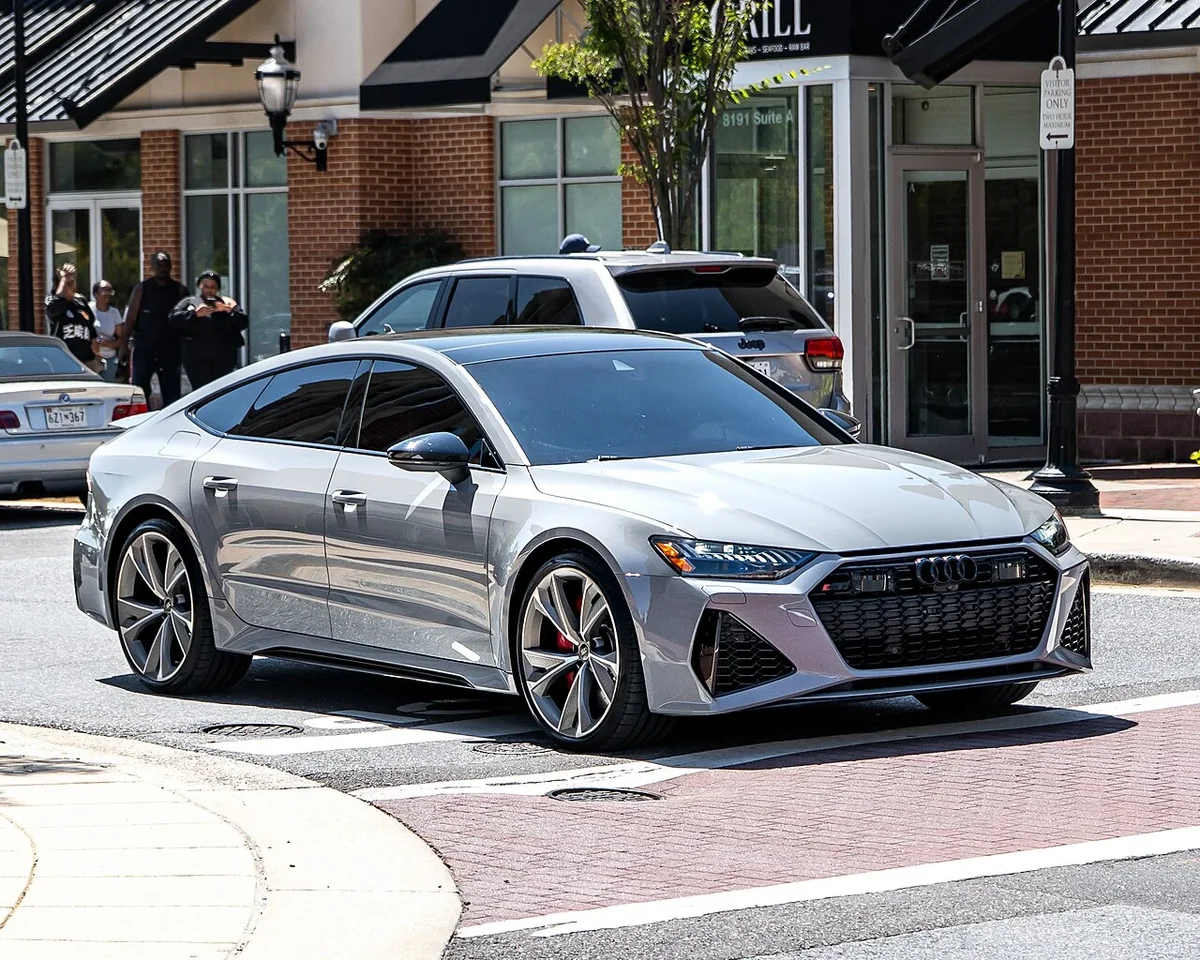
It is also worth seeing an example in an ordinary parking area. A photograph can make a low car look compact, especially beside a tall SUV. The C8 is still a substantial machine. Its silhouette promises speed more clearly than it communicates how much space you will need beside a wall or between parked cars.
A V8 That Does Not Need to Prove Itself Constantly
The reference model combines a 591-hp twin-turbo V8 with an eight-speed automatic and all-wheel drive, as documented in MotorWeek’s U.S. RS 7 road test. The appeal is the availability of performance across different tasks: joining a highway, passing at a legal opportunity or simply maintaining speed without constant gearbox activity.
That broad reserve can be more satisfying than a car that only feels special near the top of its rev range. It also creates a different emotional problem. If speed arrives with little effort and little drama, the owner may use less of the car than expected while still paying for its full mechanical capability.
For that reason, a good demonstration should include gentle throttle use and normal traffic. Notice whether the powertrain responds smoothly to small requests, whether it chooses an appropriate gear and whether the sound is enjoyable at the speeds you actually use. An explosive launch cannot answer those questions.
The phrase everyday performance should mean performance that fits everyday conditions. It should not imply that every journey must be made faster. Cariary’s preferred version of the RS 7 ownership story is a car whose reserves reduce effort while the driver remains deliberate about when and where to use them.
Fast Numbers, Heavy-Car Physics
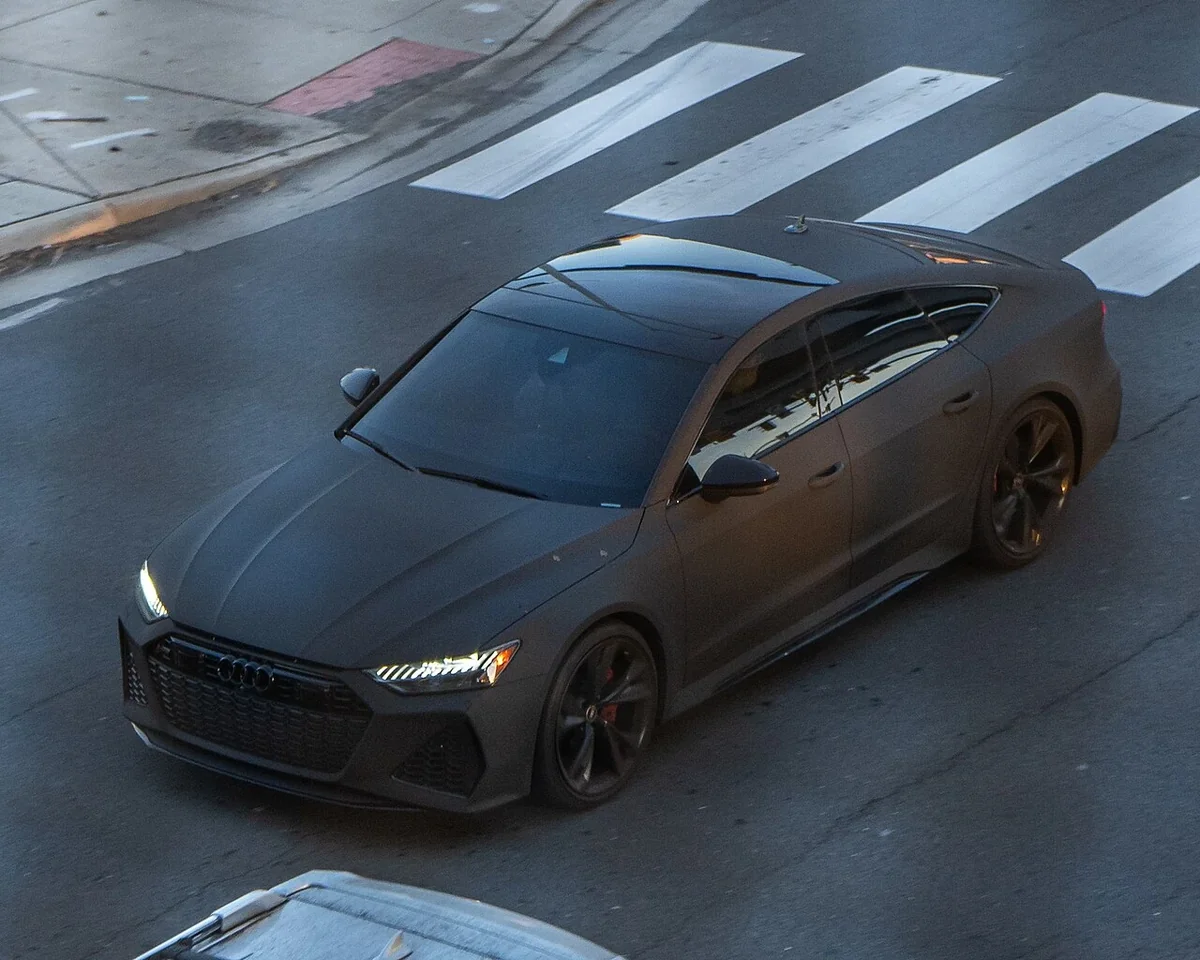
In Car and Driver’s instrumented 2021 test, the RS 7 reached 60 mph in 3.0 seconds with rollout and combined strong pace with a notably comfortable ride. The tested car weighed 4,947 lb. Those results belong to that vehicle and procedure, not every used RS 7 on every surface.
The weight matters even when the stopwatch looks excellent. Braking, tire temperature and repeated changes of direction place demands on the whole car. Electronic control and sophisticated suspension can make those demands less obvious to the driver, but they do not remove the underlying work being done.
All-wheel drive also needs to be understood correctly. It can help distribute propulsion across available tire grip. It does not create an extra reserve of braking grip merely because the car accelerates confidently. Cariary’s guide to bigger brakes and stopping distance explains why the tire-road relationship remains central.
A test route should therefore reveal composure, not merely acceleration. Pay attention to a sequence of bends, a rough section and a firm but sensible stop. Does the car remain easy to place? Does it settle after a bump? These are more useful ownership questions than trying to reproduce a magazine’s fastest number.
Comfort Depends on the Whole Specification
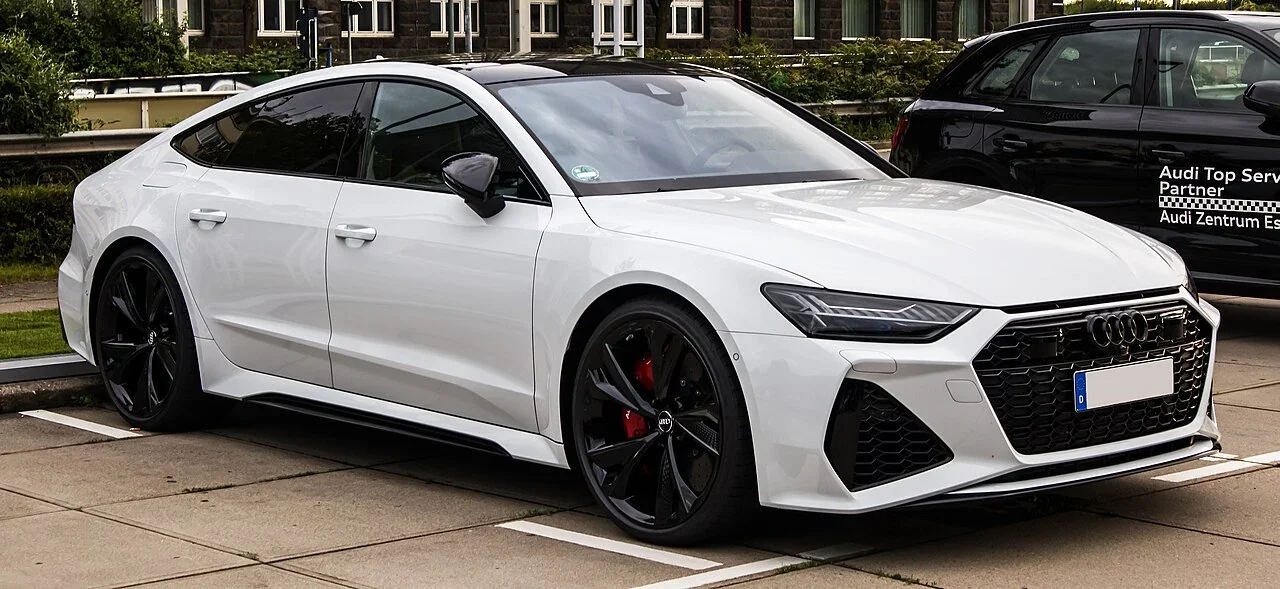
The RS 7’s promise is unusually attractive because a performance car can become tiring long before it becomes slow. A comfortable seat, controlled body movement and manageable noise can make a long journey enjoyable even when you use very little of the engine’s output.
However, do not transfer a favorable review of one suspension and wheel combination to every listing. Establish the fitted chassis hardware, wheel size and tire model. Inspect for modifications as well as damage. A car lowered for appearance may deliver a very different answer to the same everyday-use question.
Start the drive in the setting you would choose for a commute, then compare firmer settings on the same section of road if possible. That makes the difference easier to judge. The most aggressive mode is not the most honest baseline for a car whose attraction includes arriving relaxed.
Passenger feedback is valuable here. Someone who is not holding the wheel may notice a repeated vertical movement or a tire noise that the driver overlooks. A performance family car works best when its extra character is enjoyable to the people travelling with you, rather than a compromise they are expected to tolerate indefinitely.
A Useful Hatch Does Not Settle the Family Question
The rear opening is one of the RS 7’s strongest everyday arguments. It gives access to a broad load area without asking the owner to choose a taller vehicle. But usable space is a shape as well as a volume: height under the glass, the opening itself and the angle of a bulky object all matter.
Bring the items that decide the purchase. A stroller, two suitcases or the equipment for a regular hobby will reveal more than a cargo figure alone. Try loading without removing parts or arranging everything in a precise sequence. A practical car should not need a small puzzle solved whenever plans change.
Rear-seat layouts and market specifications also deserve attention. Do not infer five usable positions from the fact that the body has five doors. Check the individual car’s approved seating, belts and rear arrangement, then test headroom, entry and the fit of any child seats you plan to use.
This is where the Cariary RS 6 Avant perspective would be a natural comparison if space is the deciding factor. The broader point is simple: if a wagon’s roof and load shape remove recurring compromises, its less coupe-like appearance may become the more attractive design after a few months of ownership.
Technology Should Save Attention
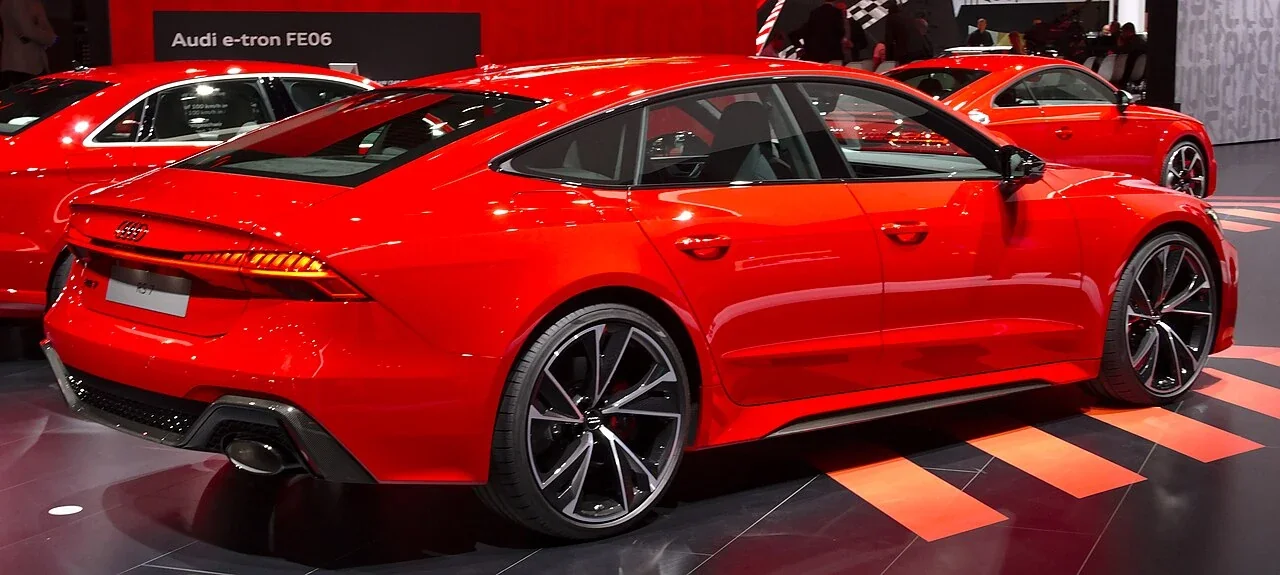
A sophisticated cabin is not automatically an easy cabin. Before committing to a used RS 7, work through the actual controls you will use: climate adjustments, route guidance, camera views, phone connection and the instrument presentation. Screen size and display count do not reveal how quickly you can complete those tasks.
There is value in configuring the car carefully at the beginning. Save a sensible everyday setup, learn the shortcuts and avoid changing several variables at once. Then ask whether the interface still feels natural after the novelty has passed. A feature earns its place by reducing effort or improving a decision.
MotorWeek’s original road test is useful context for the C8’s driving environment, but your own phone and preferred route should determine whether the used example’s software works for you. Connected services and subscriptions can change; a feature shown in a launch review is not a guarantee of present availability.
The same applies to driver assistance. Establish which options are installed and demonstrate them appropriately with the seller. Assistance should support a driver who understands its limits. It should not be used to turn an equipment list into a claim that the car is safer than another vehicle without comparable evidence.
Early C8 or Later Performance?
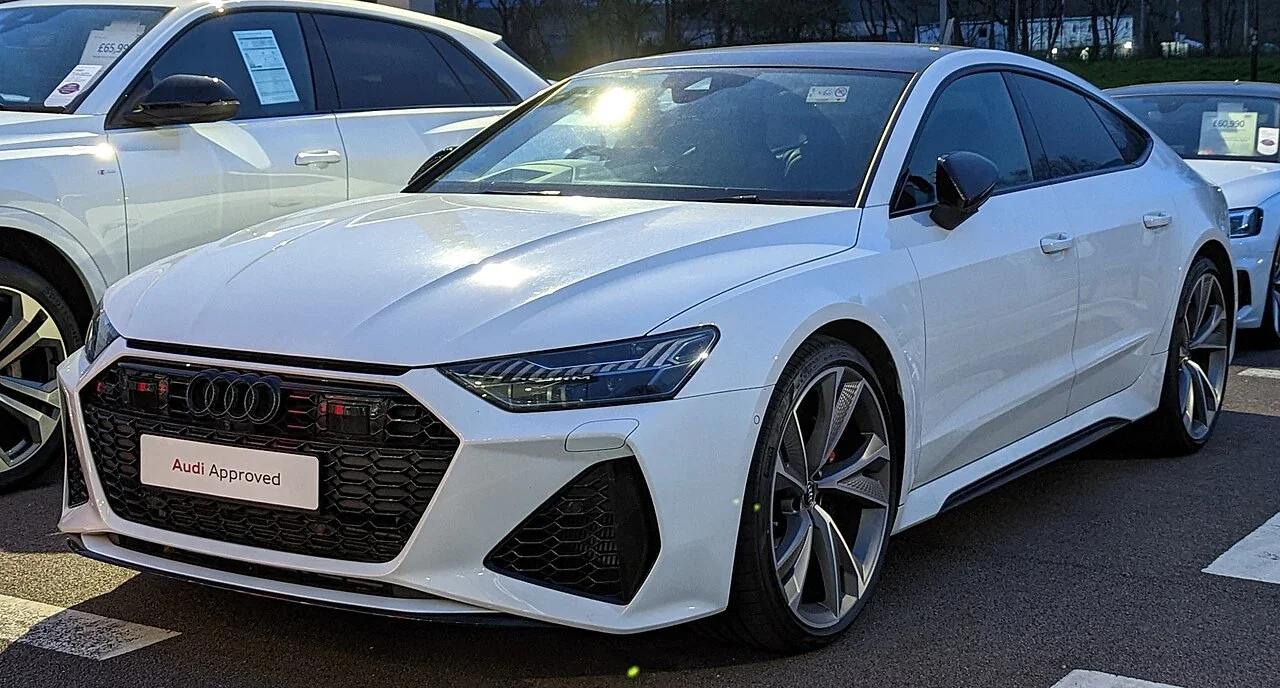
Audi’s German-market Performance announcement distinguishes the later version from the base C8: output rises from 600 PS and 800 Nm to 630 PS and 850 Nm, with other changes including a revised center differential and reduced insulation. These are metric-market figures, kept separate from the U.S. 591-hp reference above.
The word Performance therefore describes a real derivative, not merely a styling package. Equally, the early car’s ownership case does not disappear because the later one has a larger number. At ordinary speeds, condition and the response of the whole package can matter more than the difference between two already very powerful engines.
Compare the cars around what you want to feel. If a later example’s sound and responses make it substantially more enjoyable to you, that may justify its price. If your priorities are calm travel, an attractive body and occasional access to serious pace, an excellent early C8 deserves a place on the shortlist.
Do not pay for a badge without checking the build. Exterior trim can be changed, wheels can be swapped and a used-car description can be imprecise. Confirm the actual derivative and options from reliable vehicle documentation. The right version is the one whose specification matches the experience you intend to buy.
The Used-Buying Decision Is About Repeatability
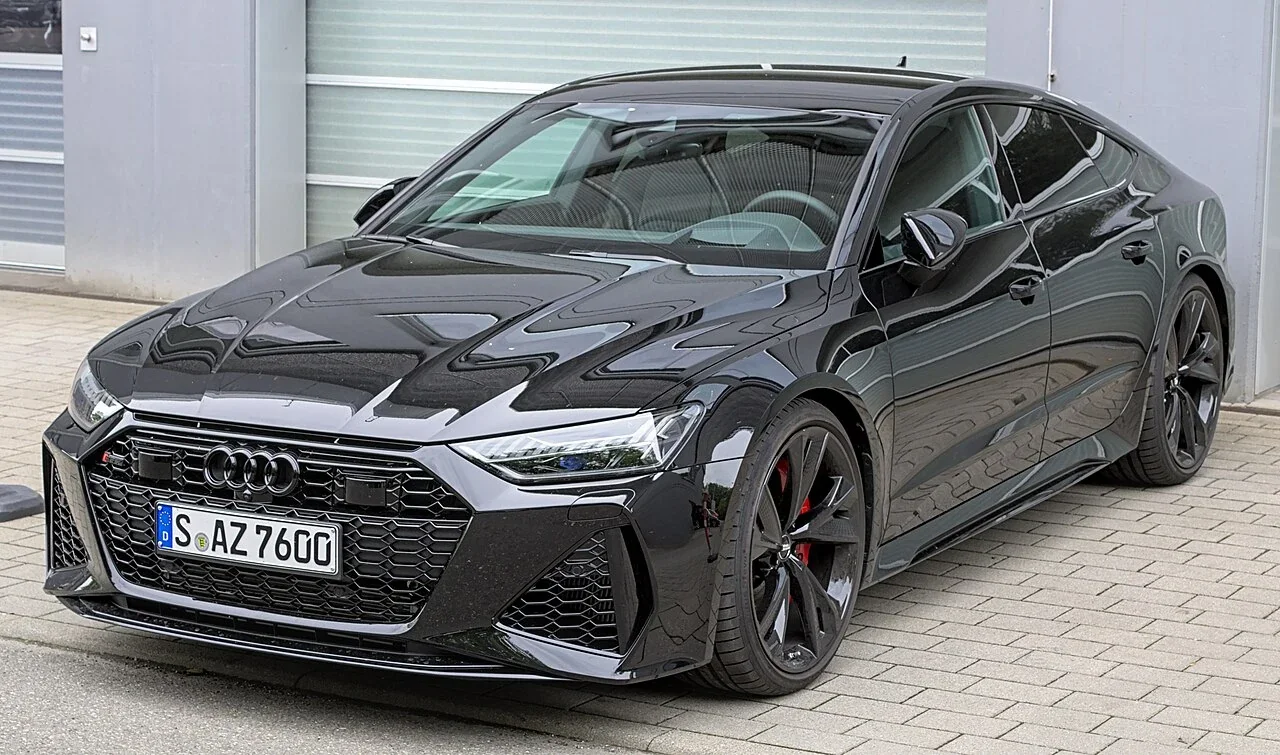
Ask for service records and arrange an inspection by someone familiar with this generation. Look beyond a clean engine bay: diagnostic history, tire wear, brake condition, suspension behavior and evidence of modifications all influence whether the car can deliver its impressive first impression repeatedly.
Get written local estimates for the work that is approaching, not an optimistic generic running-cost figure. A full set of appropriate tires, brake work or a suspension repair can change the value comparison between two listings. The lower asking price is not necessarily the lower cost of reaching the same condition.
This review does not establish a model-wide reliability rate or predict future resale values. Treat those as separate questions requiring better evidence than an enthusiast reputation. A carefully maintained performance car and a neglected one can share the same badge while representing very different ownership propositions.
Cariary’s four-star verdict is strongest when the owner has genuine use for the hatchback practicality and genuinely prefers the shape. The RS 7 then offers a coherent blend of occasion and utility. When bought mainly as a horsepower bargain, its size and expense can outlast the novelty that made the listing irresistible.
Who Should Buy It?
Recommended For
Drivers who want a dramatic fastback, useful luggage access and substantial performance without giving up a refined everyday brief.
Not Recommended For
Buyers who prioritize maximum load height, compact dimensions, inexpensive consumables or a light and deliberately raw driving experience.
One-Line Verdict: The RS 7 works when you want its shape every day and can actually use the practicality beneath it.
Frequently Asked Questions
Is the RS 7 a sedan or a hatchback?
It is a five-door fastback marketed as a Sportback. The rear glass lifts with the hatch, giving it a different loading arrangement from a conventional sedan trunk.
Does this review cover the later Performance model?
The main reference is the 2021 U.S. early C8. A separate section explains the later Performance changes using Audi’s German-market specifications.
Is it more practical than an RS 6?
Its hatch makes it useful, but a wagon’s roof and loading shape may better suit bulky cargo. Compare your real luggage and passengers rather than choosing from a single volume figure.
Does quattro make it equally capable in every season?
No. Tire specification, condition and temperature suitability remain essential. All-wheel drive helps propulsion but does not cancel the limits of tire grip.
Should I choose the largest wheels?
Choose the wheel and tire package after evaluating ride, noise and replacement costs on your own roads. Appearance alone cannot establish the best everyday combination.
Why only four stars?
The blend is compelling, but size, consumable costs and the existence of a more practical RS 6 keep the recommendation dependent on the buyer’s priorities.
Further Reading and Data Reference
Data reference date: September 11, 2026. Specifications and attributed test observations are linked where discussed. Cariary Point is an editorial buyer-fit assessment, not an owner road-test score or reliability rating.
Explore more Cariary car reviews and buyer perspectives.

