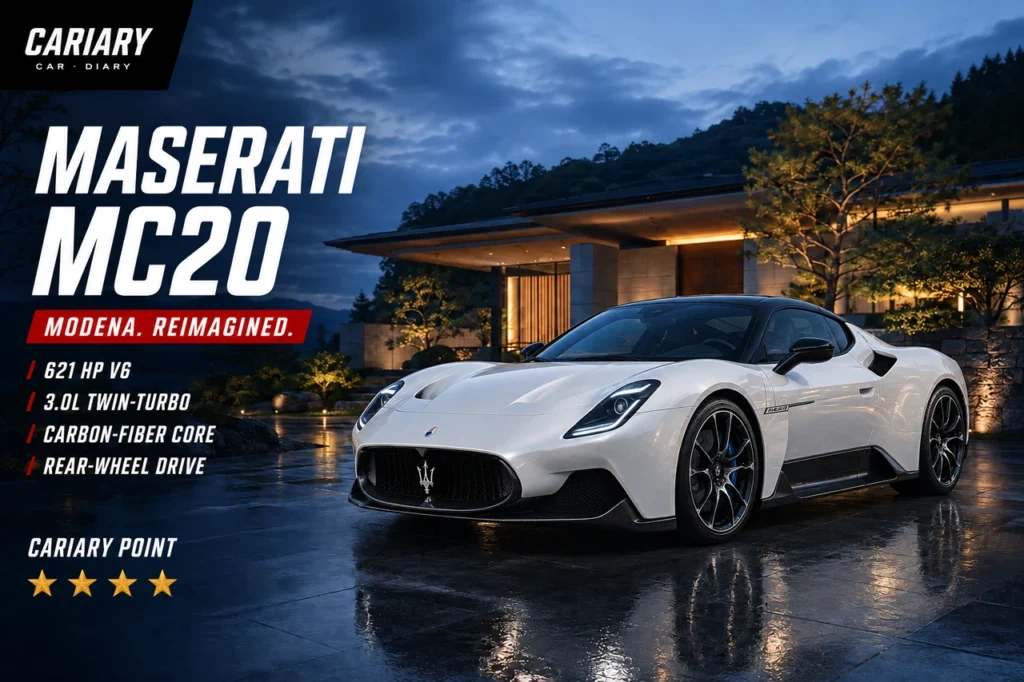
CARIARYCAR · DIARY · PERSPECTIVE
Cover: AI-generated Cariary editorial illustration, visually checked against the specified vehicle. It is not road-test photography.
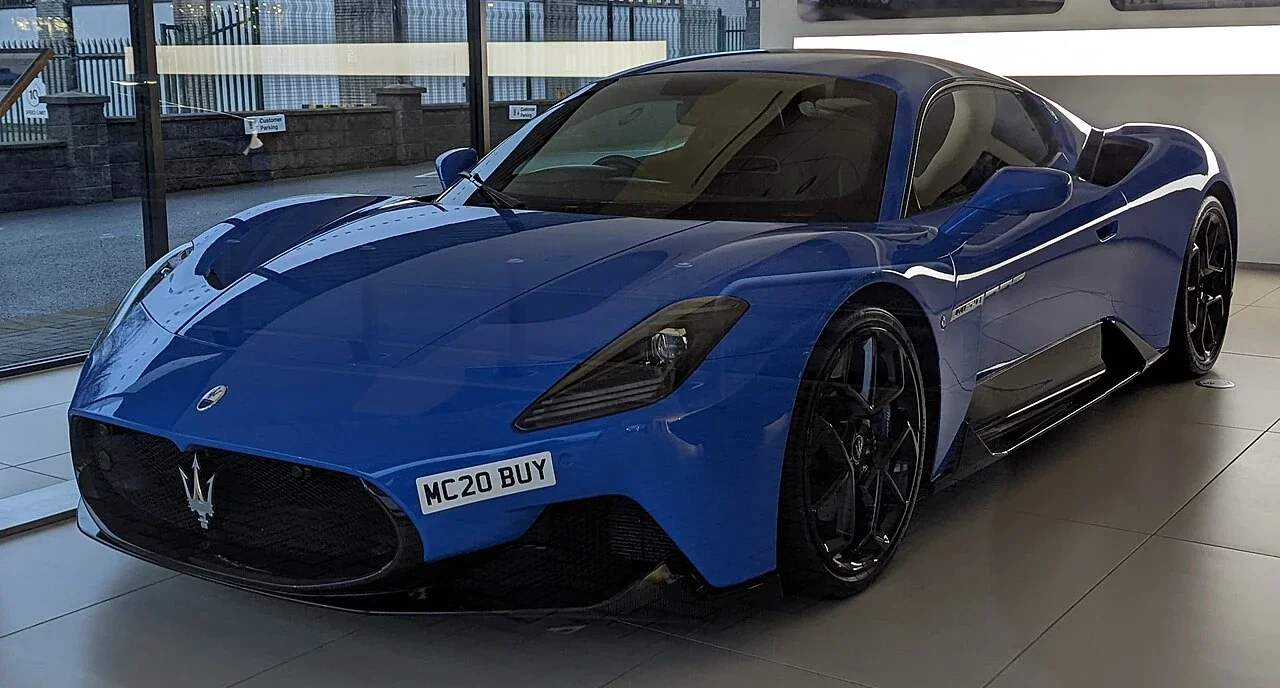
This Maserati MC20 review starts with the appeal of a clean sheet: a familiar Italian badge wrapped around a very different kind of car. Where a big Maserati grand tourer suggests a long dinner followed by a longer drive, the MC20 puts the occasion of driving much closer to the center of the purchase.
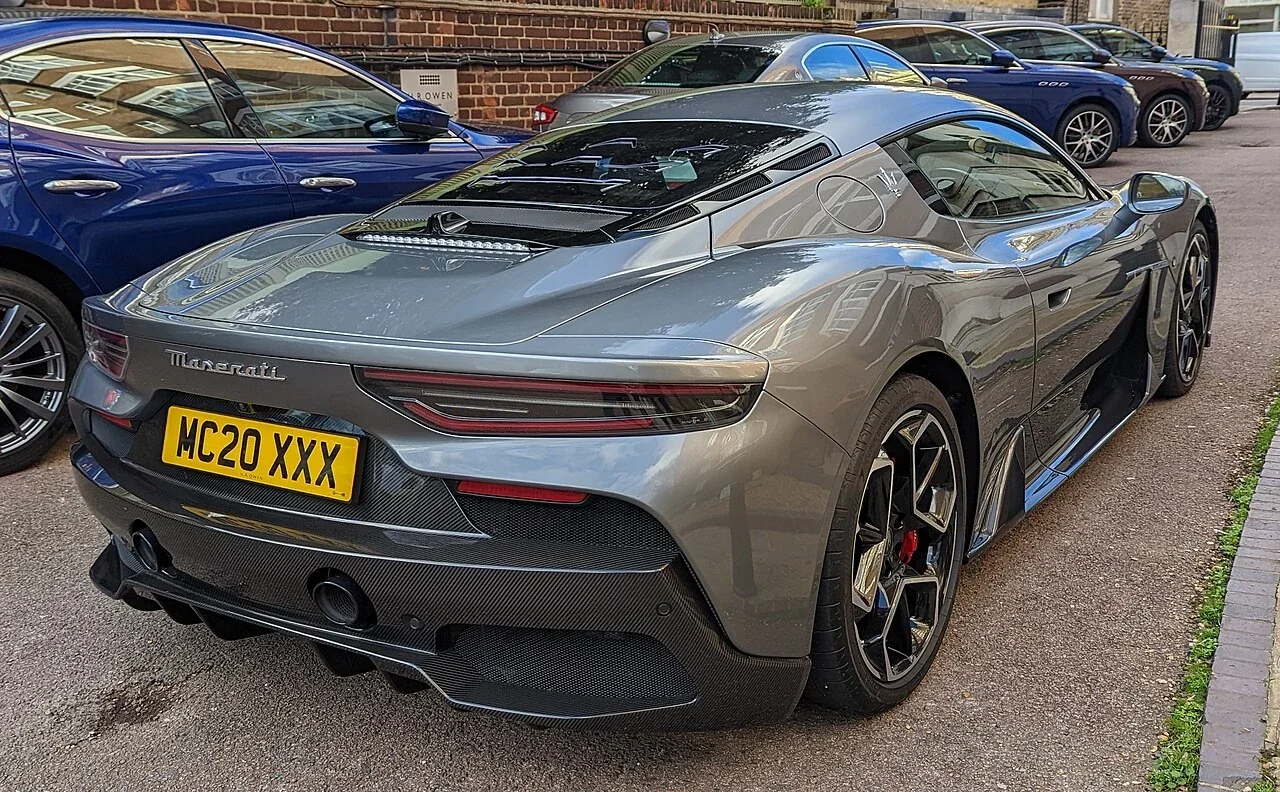
The silhouette makes that point without a huge wing or a forest of bodywork attachments. There is a low cabin, a broad rear body and enough empty surface to let the shape breathe. Open a door and the mood changes again. The MC20 can look restrained in a photograph and theatrical when someone actually gets into it.
Cariary’s interest is in whether that sense of occasion will remain satisfying after the first month. The unusual engine is a strong reason to keep looking. The questions are more ordinary: whether the car fits your routes, whether your passenger likes it, and whether you have access to the support that a specialized machine deserves.
This research-based Maserati MC20 review covers the original fixed-roof road coupe, using the 2022 U.S. model as its main reference. Overseas display photographs are identified below. Cielo, GT2 Stradale and the later MCPURA are separate versions; this is not a Cariary road test.
Four stars for distinctive engineering and a clear visual identity. The MC20 makes an emotional case without borrowing a V12 soundtrack, but limited everyday flexibility and specialist ownership make it a deliberate choice rather than an easy default.
Maserati MC20 Review: Key Specifications
| Reference | 2022 U.S. original MC20 coupe |
|---|---|
| Engine | 3.0-liter twin-turbo Nettuno V6 |
| U.S. output | 621 hp / 538 lb-ft |
| International equivalent | 630 CV / 730 Nm; different units, not a separate tune |
| Transmission | Eight-speed dual-clutch automatic |
| Layout | Mid-engine, rear-wheel drive, two seats |
| Manufacturer performance | 0–60 mph under 2.9 seconds; top speed over 202 mph |
| Review scope | Original road coupe; no Cielo, GT2 Stradale or MCPURA specification substitution |
Maserati MC20 Review: Beautiful Without Shouting
The original coupe’s appeal begins with how little decoration it needs. Its nose and side openings have a purpose, yet they do not dominate the entire shape. The result is a supercar that can be enjoyed as an object before a conversation turns to lap times, options or the next faster model.
Maserati’s original U.S. press kit identifies a carbon-composite central structure, butterfly doors and an eight-speed dual-clutch transmission. These are meaningful architectural choices. They explain why this car deserves to be judged separately from the brand’s front-engine luxury models, rather than as their smaller and more expensive cousin.
For a buyer who prefers understatement, the important distinction is visual restraint versus actual anonymity. A low mid-engine coupe with rising doors still attracts attention. Choose it because you enjoy its proportions, not because you expect to disappear into traffic. There is a difference between a clean design and an inconspicuous car.
The best specification may be the one that lets those proportions do the work. Before paying for contrasting carbon pieces or a dramatic finish, compare the whole car in daylight. An attractive detail in a configurator can become one more competing shape on a body that already has a strong identity.
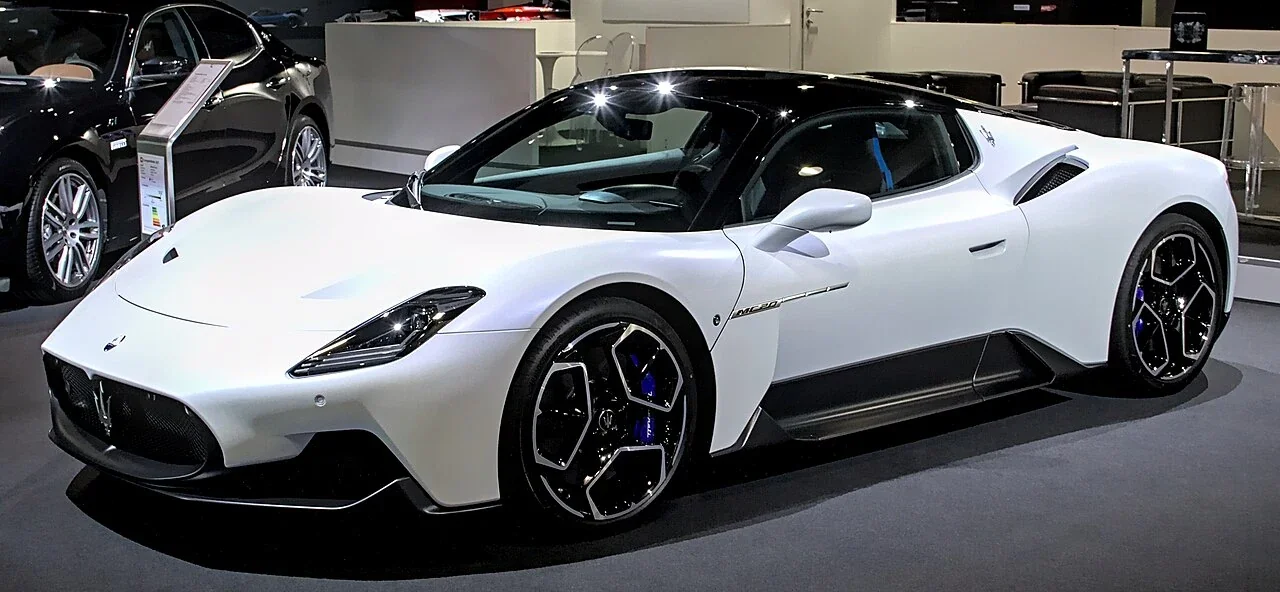
Nettuno: What the Small Chamber Actually Does
Maserati’s Nettuno technical announcement describes a small pre-chamber linked to the main combustion chamber through passages, with a second conventional spark plug supporting operation where that arrangement is not needed. It also specifies both port and direct injection. This is a combustion strategy inside the V6, not an electric assistance system.
A useful way to picture the principle is to start with where ignition begins. The pre-chamber gives combustion a prepared starting area, and the connecting passages allow it to influence the larger chamber. That explanation is conceptual: it does not establish the exact hole geometry, flow pattern or control calibration of an individual engine.
The genuine display-engine photograph below shows how much hardware surrounds a compact engine assembly. It does not show combustion taking place, and it cannot reveal every internal passage. An external engine image should be read as a physical reference, with the manufacturer’s description supplying the explanation of the hidden mechanism.
For an owner, the interesting result is individuality. The car offers something to understand and appreciate beyond the badge. That does not make the engine immune to wear or justify skipping ordinary maintenance. Advanced combustion technology and the need for competent diagnosis can coexist; one is not evidence against the other.
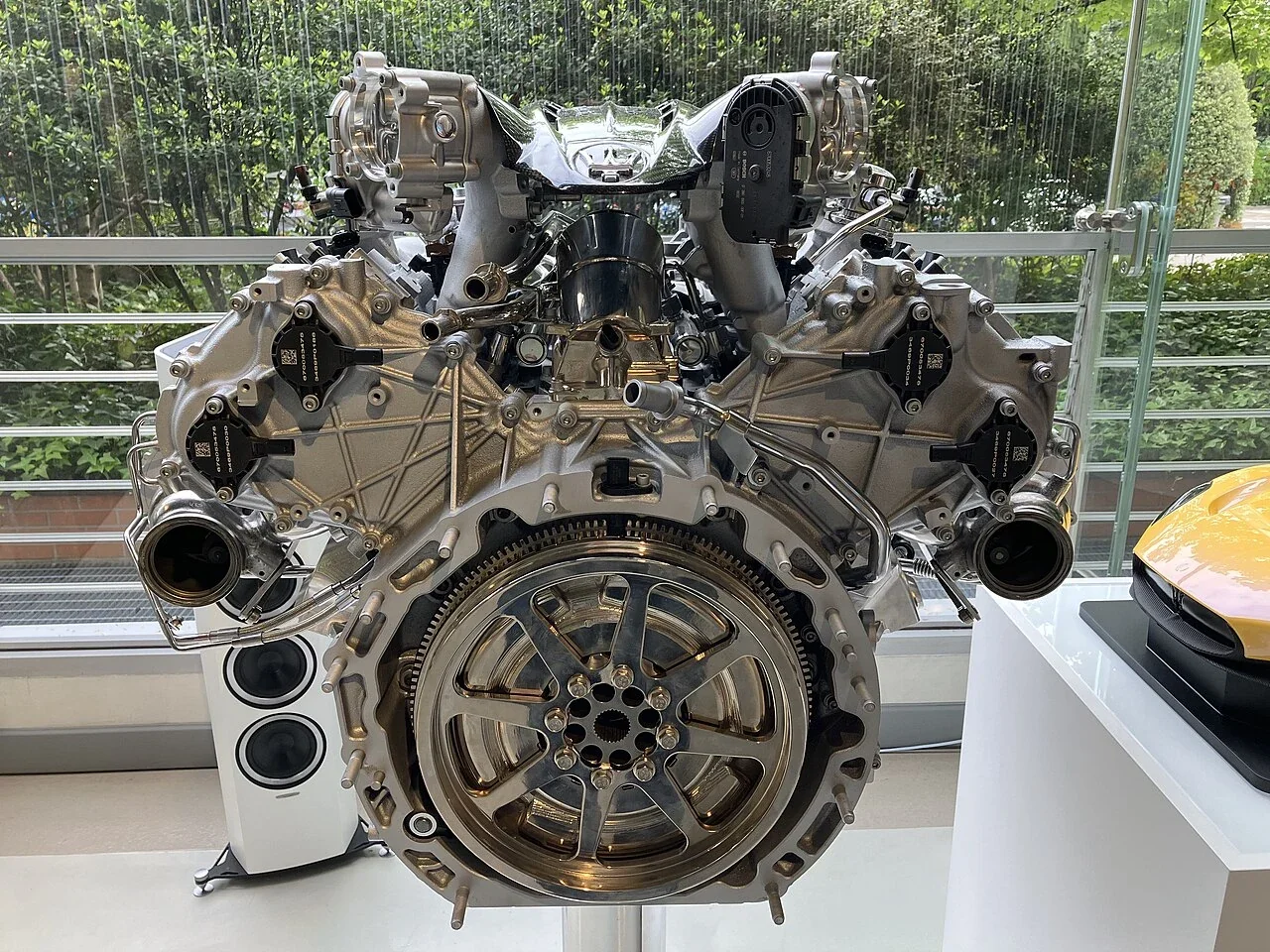
A Carbon Structure Is a Starting Point, Not a Scale Reading
Maserati worked with Dallara on the MC20’s composite monocoque. The manufacturer also describes dry-sump lubrication for Nettuno, using a separate oil reservoir rather than treating the bottom of the engine as the entire storage system. Both choices make sense within a car designed around demanding acceleration and cornering.
It is tempting to turn a construction material into a verdict. Carbon fiber sounds light, and light sounds agile. But the road car also needs seats, glazing, cooling equipment, sound control and fluids. The complete vehicle, its equipment and the measurement definition all matter when comparing a published weight with a rival.
Cariary therefore would not buy an MC20 because an early lightweight claim appears next to a horsepower number. Ask what is included in that figure, then consider the experience you want. A specification can help explain the design, but it cannot replace checking how the car feels to you at realistic road speeds.
The same restraint applies to repair history. A beautiful exterior is not proof that the underlying structure has never needed attention. A specialist inspection should establish the condition of the actual car and the quality of any documented work. Treat vague assurances about a carbon tub with the same skepticism as vague assurances about a steel body.
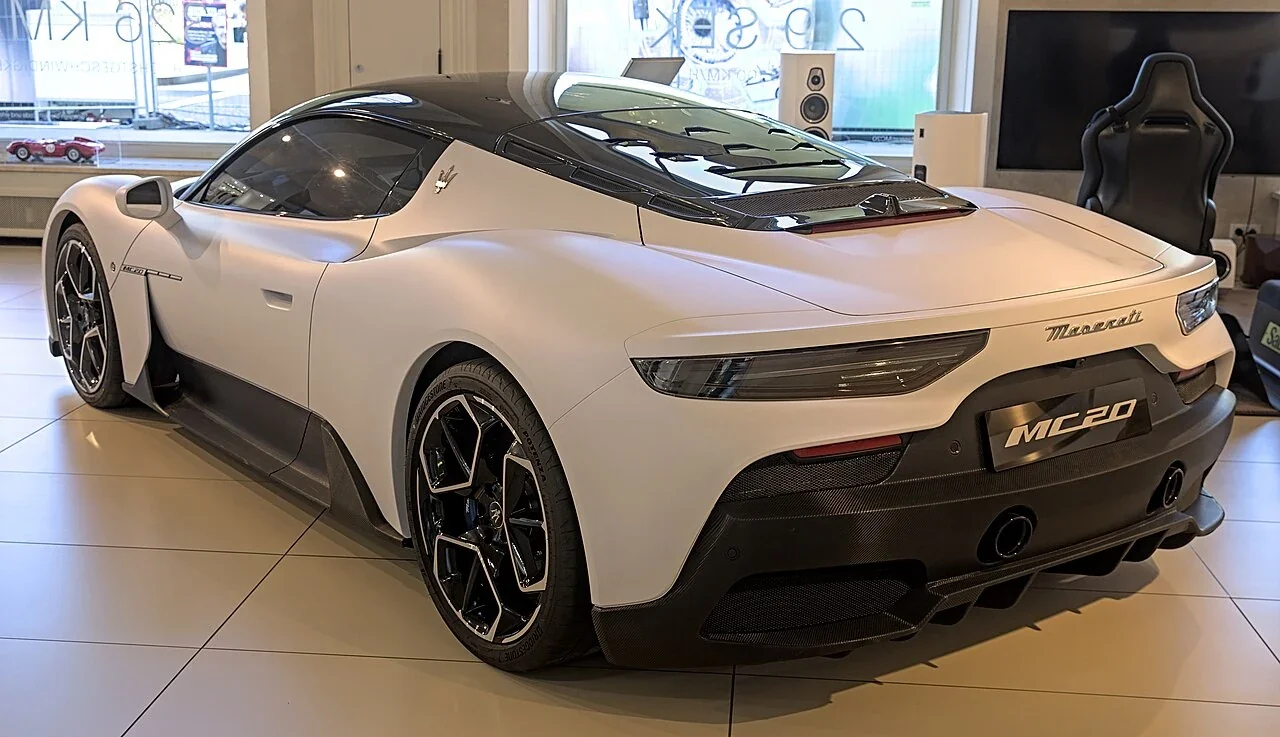
Performance Needs Context Beyond a Launch Time
In its instrumented test of a 2022 MC20, Car and Driver recorded 3.2 seconds to 60 mph and 3,757 pounds on its scales. It praised the engine and found the independently adjustable softer damping useful, while criticizing brake-pedal response. These are observations of that test car, not Cariary measurements or a verdict on every example.
Those findings suggest useful questions for a demonstration drive. Pay attention to the first part of the brake pedal, the response to a modest accelerator input and the way a gear change interrupts or continues your intention. You will encounter these details more often than you will reproduce a full launch-control start.
A supercar can be appealing without winning every acceleration comparison. The question is whether its response feels understandable and satisfying in the conditions where you drive. A more dramatic car that constantly makes you hesitate may be less enjoyable than a calmer car whose controls encourage a clear, confident rhythm.
For that reason, compare like situations. A warm test track, prepared tires and an experienced tester do not reproduce a cool morning on an unfamiliar road. Published numbers are evidence of capability under stated conditions. They should not become a promise about what your first drive will deliver.
Butterfly Doors: The Occasion Includes Getting In
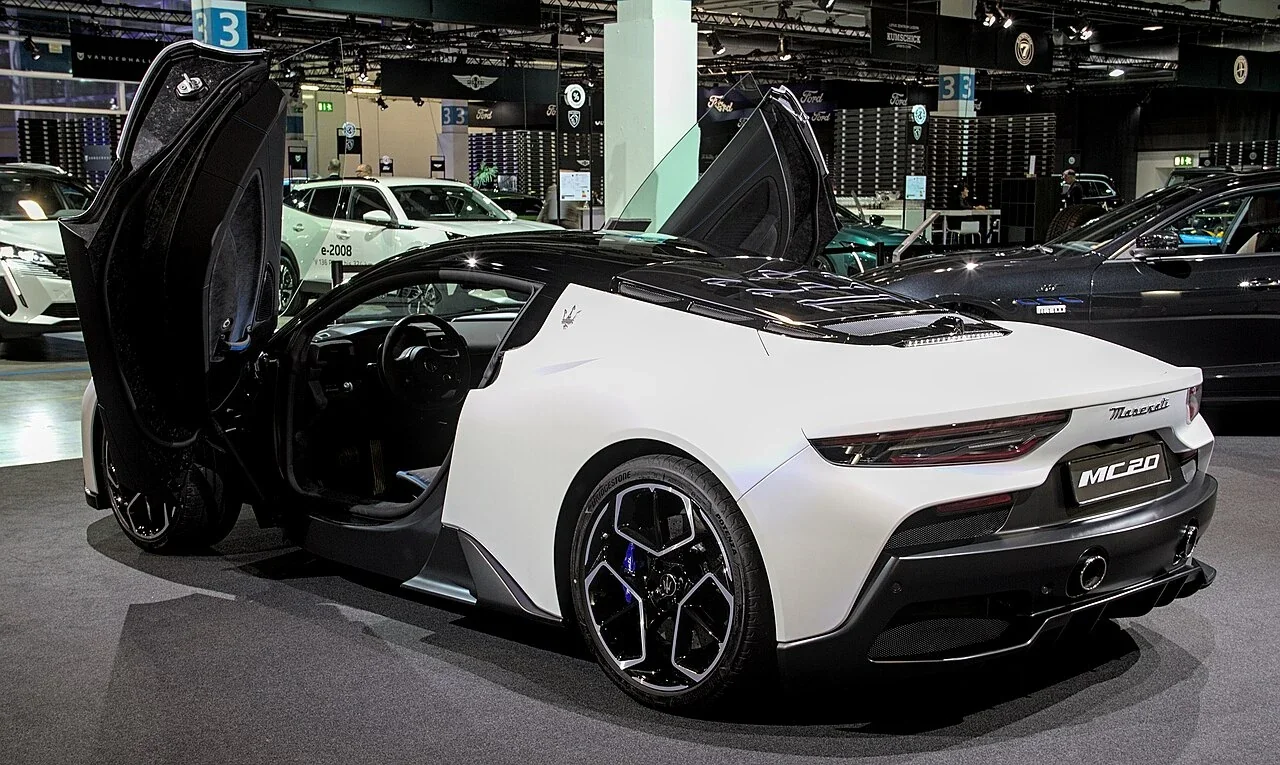
The doors are part of the MC20’s personality, but the ownership test happens in a parking space. Stand beside the actual car and observe its opening arc. Then get in and out at an unhurried pace, in normal clothing, carrying the things you usually carry. Repeat the exercise on the passenger side.
A door that rises can solve one clearance problem while creating another. Do not infer universal garage compatibility from a dramatic showroom photograph. Check the ceiling, adjacent storage, the space beside the sill and your own movement. A single successful entry is less informative than deciding whether the process will remain welcome twice a day.
The photograph is especially useful here because it connects the sculpted body to a real access opening. Look at the sill and where you would put your feet. The car may fit your body perfectly and still be awkward for a regular passenger; that is a purchasing consideration rather than a criticism of the design.
Cariary would draw a firm distinction between enjoyable ceremony and recurring inconvenience. If opening the door makes every outing feel special, it adds value. If you already feel impatient while trying the car, there is little reason to assume that enthusiasm will cure the inconvenience after purchase.
Choose the Cabin Around Your Actual Journey
An MC20 should be evaluated as a two-person sports car before it is evaluated as a substitute for a larger grand tourer. Take a realistic weekend packing list to the inspection. The point is not to set a luggage record; it is to find out whether the journey you imagine is compatible with the space provided.
Try the driving position with the steering wheel, mirrors and seat adjusted for you. Then use the basic functions while stationary: navigation, phone connection, audio volume and temperature. A beautiful cockpit is most convincing when the everyday actions inside it are equally clear. Check the equipment fitted to that specific model year and market.
A short sales appointment can hide how a seating position develops over time. If possible, spend long enough in the car for pressure points, visibility preferences and passenger reactions to emerge. Do not let the rising doors and low roofline become a substitute for deciding whether you actually feel comfortable inside.
Our Maserati GranTurismo review offers a useful contrasting brief: a front-engine touring car can suit a different kind of day. Verify the available space and seating in each actual car rather than treating the shared badge as a promise of the same ownership experience.

Original MC20 or Later MCPURA?
Maserati’s July 2025 MCPURA announcement describes an evolution concentrating on exterior design, cabin materials and finishes while retaining the 630-CV Nettuno engine. That makes model identity important when browsing photographs or listings. A later nose or interior treatment should not be used to illustrate the equipment of an early MC20.
The original coupe has a case of its own. Someone attracted to its simpler visual treatment may actively prefer it. Someone who wants the newest interpretation should compare the later car directly. The existence of an update does not automatically make the earlier shape less attractive or the later one worth any price difference.
Keep the Cielo and GT2 Stradale separate too. Roof design and track-oriented changes can affect the reason to buy the car, not just its name. An advertisement that mixes photographs, badges and specifications deserves clarification before it deserves a deposit. Start with the vehicle identity and build information.
Current asking prices are not provided here because they depend on date, location, mileage, equipment and condition. Compare contemporary local examples after matching those factors. A large difference from an original list price is a reason to investigate the market and the individual car, not evidence of either a bargain or a problem.
Buy the Car and the Support Plan Together
Before committing to an MC20, identify who will maintain it and how you will get it there. Ask about ordinary servicing, parts ordering, diagnostic access and transport arrangements. The useful answer is a practical plan for your location. General statements about Italian cars, good or bad, will not supply that plan.
Inspect records for dates, mileage and the work actually performed. Have a qualified specialist assess fluid leaks, cooling-system condition, tires, brakes and any modifications. Request clear documentation for repairs rather than assuming an expensive car must have received careful attention throughout its life. Price and care are separate variables.
Build a realistic first-year allowance using local quotes. Include insurance, tires, routine maintenance and any work identified during inspection. This is an exercise in deciding whether ownership stays enjoyable, not a prediction that a particular component will fail. A car that consumes the entire purchase budget can make small surprises unnecessarily stressful.
The MC20’s strongest argument remains that it feels like a distinct idea. Buy it if that idea makes you want to understand the car and use it. If you mainly want a recognizable badge or the easiest route to a dramatic acceleration number, there are other ways to satisfy that preference with different compromises.

Who Should Buy It?
Recommended For
A buyer who wants the original MC20’s clean shape, an unusual non-hybrid V6 and a deliberate two-seat sports-car experience. It makes most sense with realistic expectations about access, luggage and specialist support, and with enough interest in the machine to enjoy its differences rather than merely tolerate them.
Not Recommended For
A buyer who needs frequent rear-seat use, generous luggage capacity or a carefree substitute for a conventional luxury coupe. It is also a poor match if the purchase depends on a guaranteed resale story, a particular launch time or the assumption that every Maserati shares the same touring character.
One-Line Verdict: The MC20 is most convincing as a distinctive machine you want to understand and use, rather than a badge you hope will explain itself.
Frequently Asked Questions
Is the MC20 a hybrid?
The original road coupe discussed here is powered by a twin-turbo gasoline V6. Its pre-chamber combustion system is not hybrid assistance.
Why do some sources say 621 hp and others 630 CV?
They use different horsepower units. This review uses the U.S. 621-hp figure and identifies the corresponding international 630-CV rating rather than presenting a power upgrade.
Does the engine photograph show the pre-chamber?
No. It is an actual display engine viewed externally. The explanation of the hidden combustion arrangement comes from Maserati’s technical description.
Is this review also about the Cielo?
No. Its main reference is the fixed-roof coupe. Open-roof access, mechanisms and specification should be evaluated separately.
Should I buy an MC20 instead of MCPURA?
Compare the exact cars, their condition, equipment and price. The earlier design can be a positive preference; this article does not assume the newest version is the right answer for every buyer.
Why four Cariary stars?
The design and engineering create a strong individual appeal. The recommendation remains conditional on practicality, comfort and access to specialist support; it is not a reliability score.
Further Reading and Data Reference
Data reference date: September 11, 2026. Specifications and attributed test observations are linked where discussed. Cariary Point is an editorial buyer-fit assessment, not an owner road-test score or reliability rating.
Explore more Cariary car reviews and buyer perspectives.

