CARIARYCAR · DIARY · PERSPECTIVE
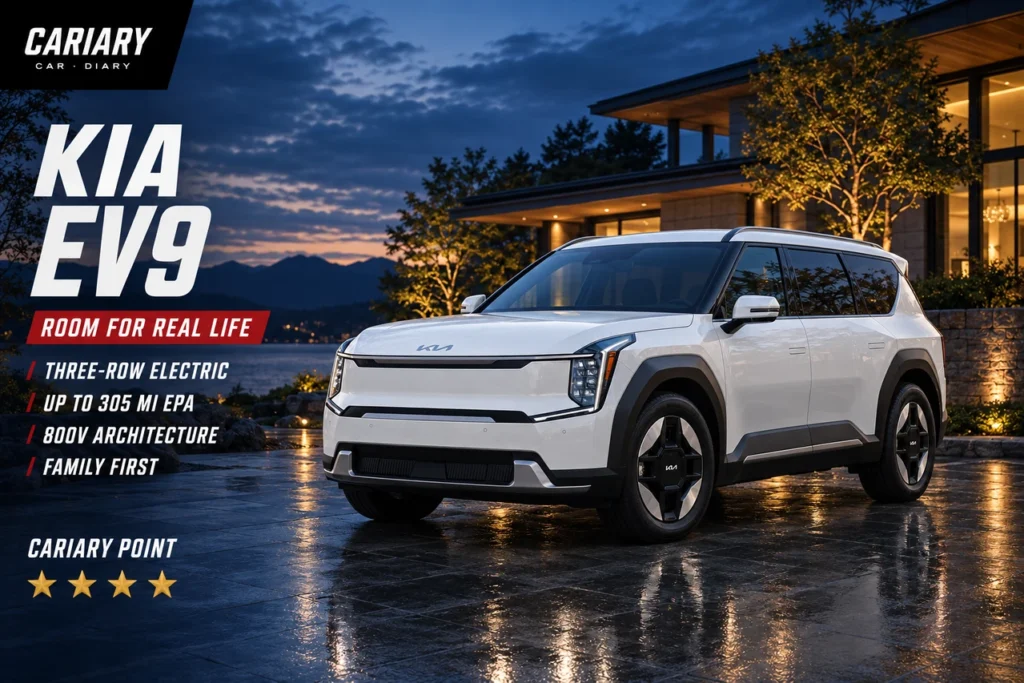
Cover: AI-generated Cariary editorial illustration, checked against the specified vehicle. It is not road-test photography.
This Kia EV9 Review asks whether an electric SUV can win a family over through usefulness rather than spectacle. The 2026 U.S. model has the range, charging hardware and imposing shape to attract attention. Its more important job is making the second and third rows feel like part of the plan.
Cariary’s interest is in the shift of emphasis. So much EV discussion starts with a launch time or a battery number. The EV9 invites another question: what changes when the clever engineering is used to carry people and their belongings more thoughtfully?
Scope: U.S. MY2026 EV9 Light RWD, Light Long Range RWD, Wind AWD, Land AWD and GT-Line AWD. GT-Line is not the separate EV9 GT. Earlier and overseas photographs are labelled as design references. This is a research-based buyer review, not a first-hand Cariary road test.
Four stars for bringing a convincing three-row family brief to an electric platform. Its size, purchase cost and dependence on a suitable charging routine require more thought than the handsome shape alone suggests.
Kia EV9 Review: Key Specifications
| EPA-estimated range | Light RWD 230; Light Long Range RWD 305; Wind/Land AWD 283; GT-Line AWD 280 miles |
|---|---|
| Battery | 76.1 kWh Light RWD; 99.8 kWh other listed trims |
| AWD output | 379 hp; 443 lb-ft Wind/Land, 516 lb-ft GT-Line or eligible Boost configuration |
| Charging | 800V architecture; built-in NACS port for MY2026 |
| Seating | Six or seven depending on trim and second-row configuration |
| Cargo | 20.2 cu ft behind third row; 81.7 cu ft maximum with rear rows folded |
| Starting MSRP | $54,900 before destination, taxes, options and dealer charges |
| Reference | Kia’s 2026 U.S. EV9 page |
1. Kia EV9 Review: A Family Car With Architectural Confidence
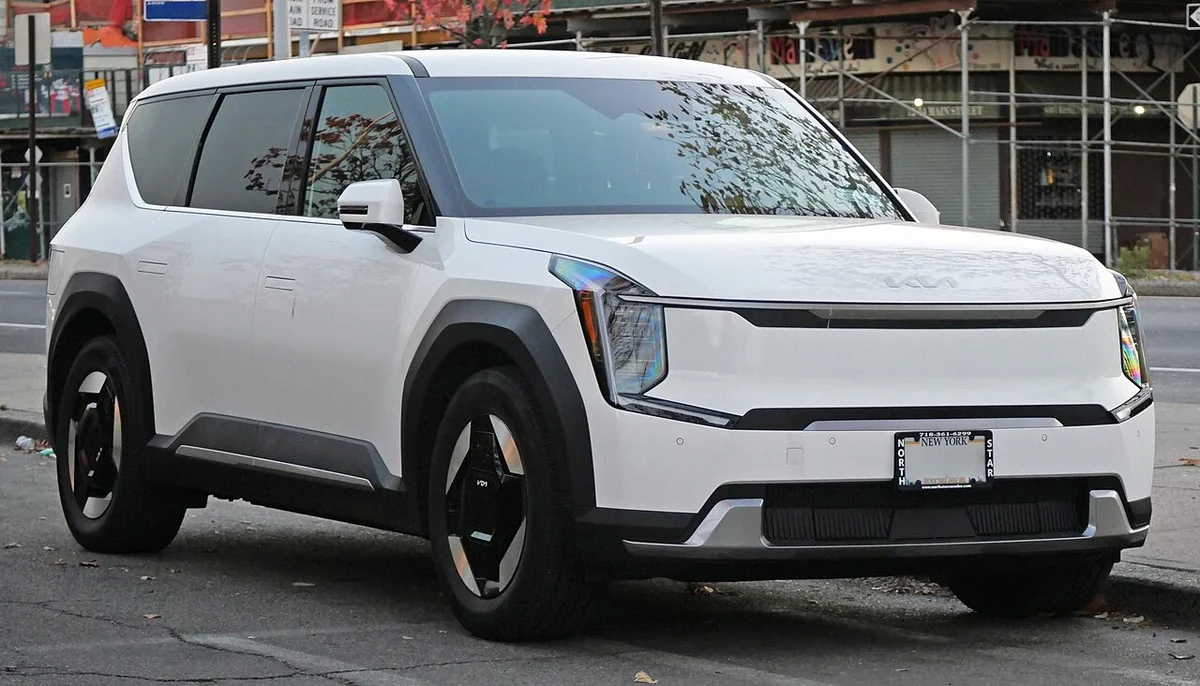
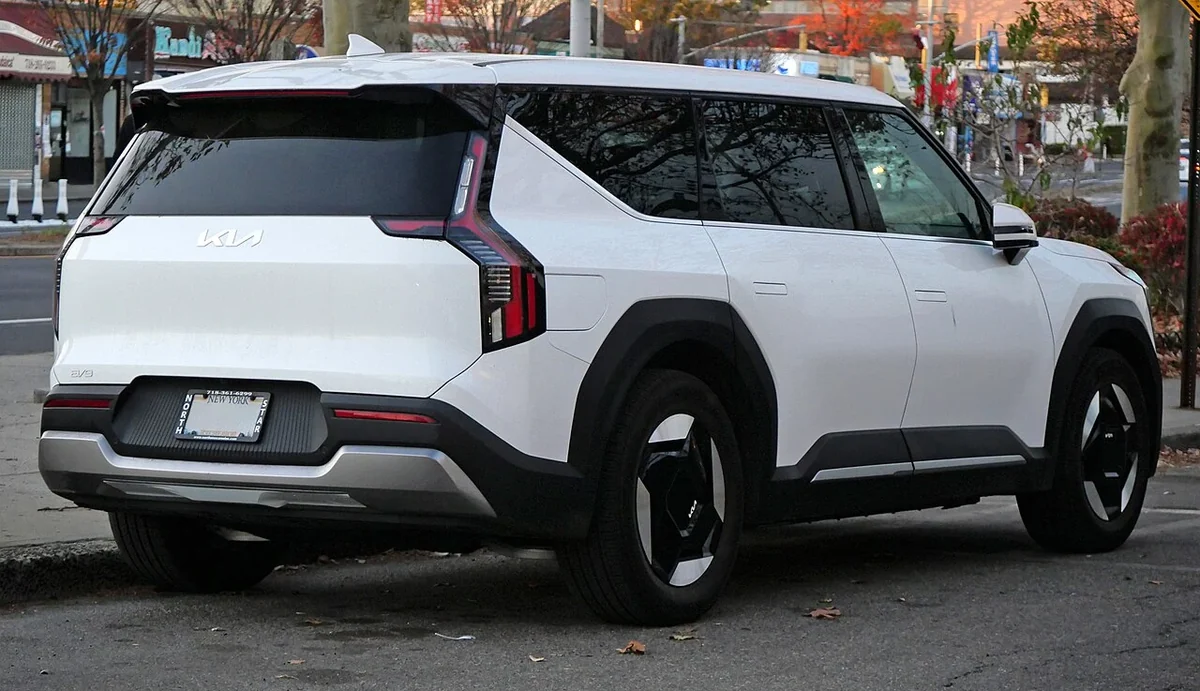
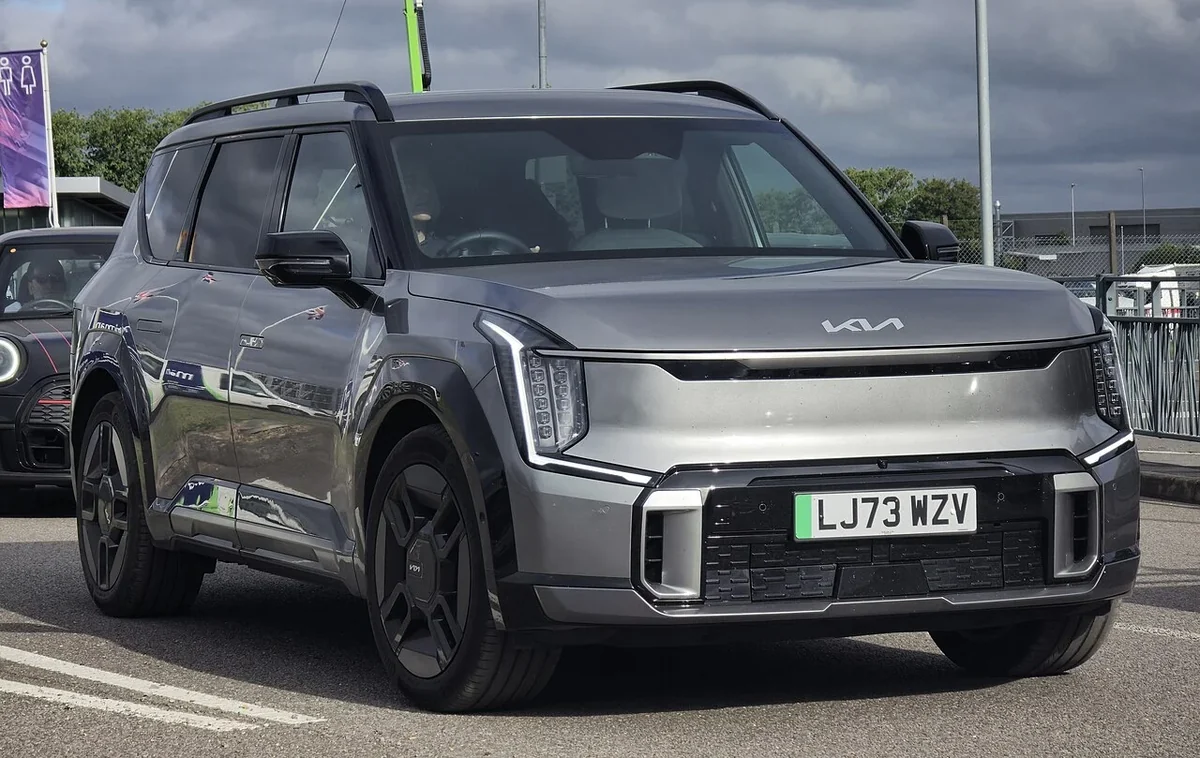
The EV9’s visual confidence comes from volume. It has a long, upright cabin and deliberately squared surfaces rather than pretending a three-row SUV is a low sports coupe. Cariary finds that honesty attractive: the shape signals that the people in the back are allowed to matter.
That does not prove every passenger will be comfortable. It establishes the design’s priorities. When you choose a family vehicle, the useful distinction is often between a car that tolerates carrying people and one whose whole identity is built around doing so. The EV9 looks firmly committed to the latter.
Its electric platform is relevant because it supports that brief, not because the letters on the brochure are fashionable. The review should therefore begin with the seats you will actually use. A family that rarely needs the third row may not need this much vehicle, however appealing the design.
2. The Longest-Range Trim Is Not the Most Expensive
Kia’s 2026 U.S. EV9 page lists 305 EPA-estimated miles for Light Long Range RWD. Wind and Land AWD are rated at 283, while GT-Line AWD is 280. The entry Light RWD uses a smaller 76.1-kWh battery and is rated at 230 miles. These are MY2026 figures; older range tables should not be mixed into them.
The interesting consequence is that spending more does not automatically buy more distance. Higher trims add equipment, performance or a particular look, while the long-range rear-drive version makes its own practical argument. Choose the trade-off rather than assuming the range improves as the price climbs.
This Kia EV9 Review treats range as travel flexibility. A family trip involves weather, passengers, luggage and stops that may not align with the ideal charging map. Leave a reserve and plan around suitable sites. The longest advertised number helps, but it does not replace the route you will actually drive.
3. NACS Makes Access Easier, Not Every Stop Equally Fast
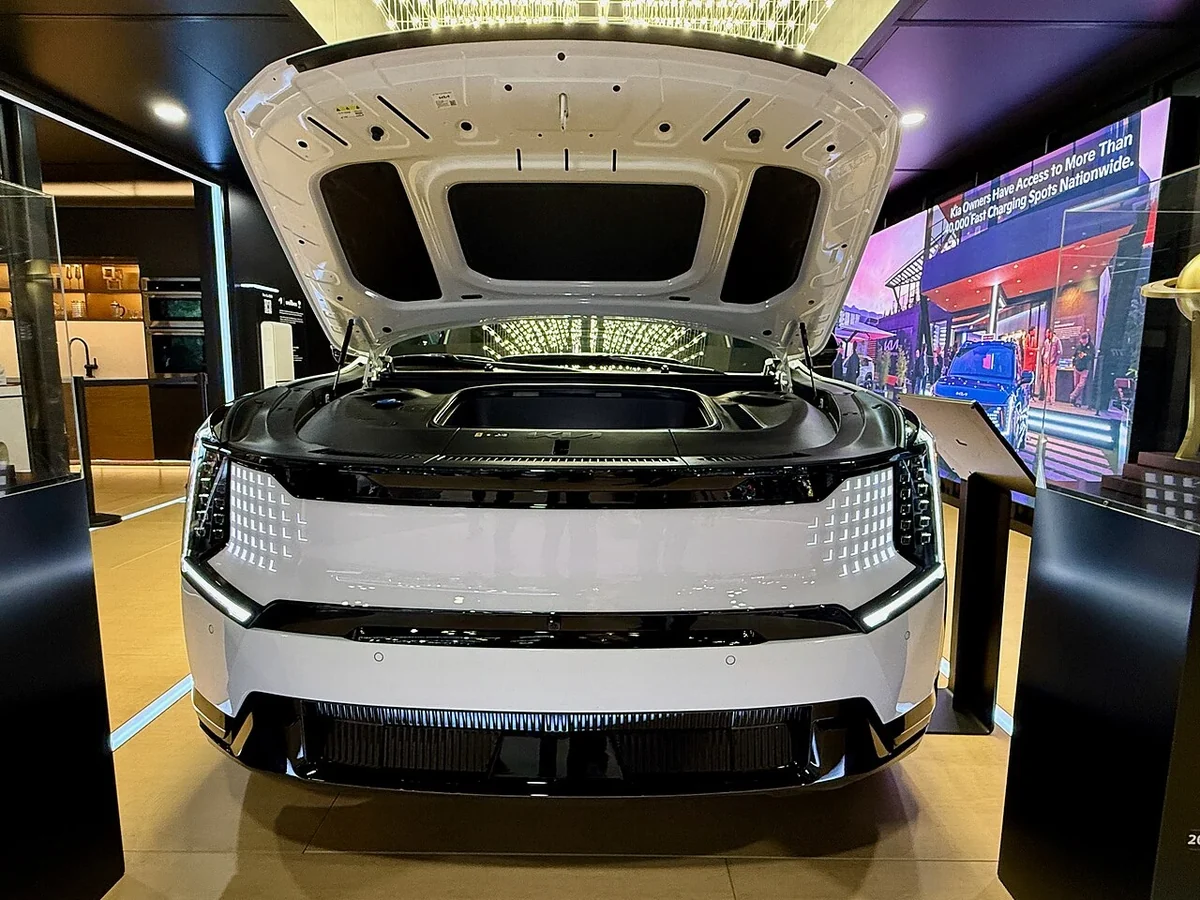
MY2026 brings a built-in NACS port, while Kia retains an 800V charging architecture. Kia’s 2026 U.S. EV9 page advertises 10–80% in as little as 24 minutes using a suitable 350-kW DC charger. That conditional figure is not a promise for every Tesla Supercharger or every battery temperature.
Connector compatibility and charging performance are separate questions. Check the specific site, its availability to your vehicle and any required approved adapter. A charger’s large power label does not establish the rate the EV9 will sustain; the vehicle, charger and conditions have to work together.
For this Kia EV9 Review, home charging remains the most important convenience question. A large family EV can be easy to live with when it replenishes overnight. If every charge needs a separate outing, consider that errand honestly. The family members who never chose the car will still share the waiting time.
4. Judge the Third Row With the Rest of the Family Aboard
Kia’s published cargo figures make a useful distinction: 20.2 cubic feet behind the third row versus 81.7 with the rear rows folded. Both can be true, but they describe very different lives. The maximum number is least relevant on the holiday when every passenger seat is occupied.
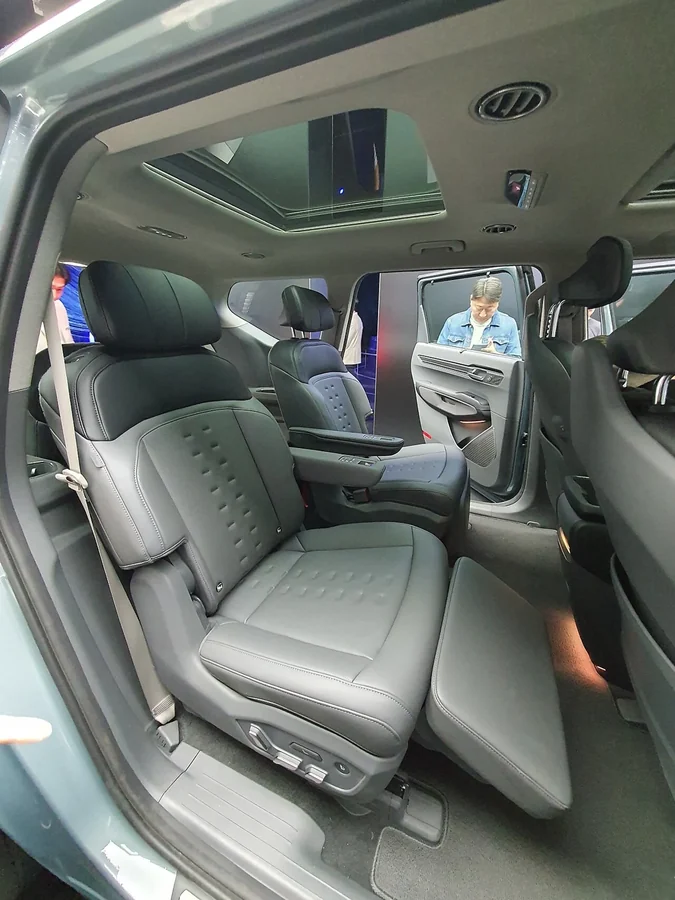
Try the second-row position and third-row access together. A generous middle-row setting can leave a different experience behind it, and a child seat can change the route people use to enter. Bring the passengers, the child seats and the bags that matter rather than judging an empty display car.
Seating is also a trim decision. The U.S. page lists a seven-seat bench for Wind, six-seat captain’s chairs for GT-Line, and configuration choices on other versions. Verify the exact order, because a comfortable pair of captain’s chairs cannot carry an occasional seventh person. The Kia EV9 Review priority is a workable seating plan before a decorative upgrade.
5. Luxury Is More Convincing When Everyone Benefits
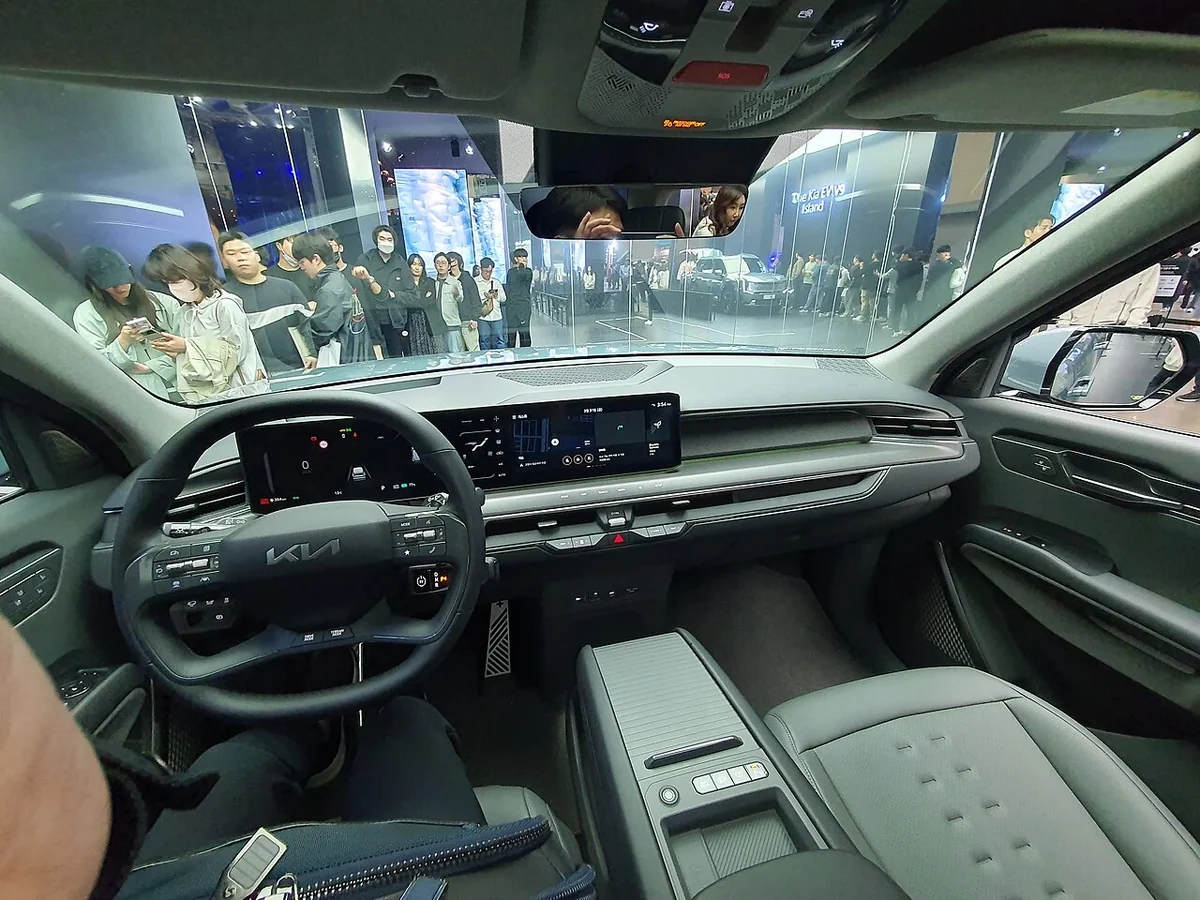
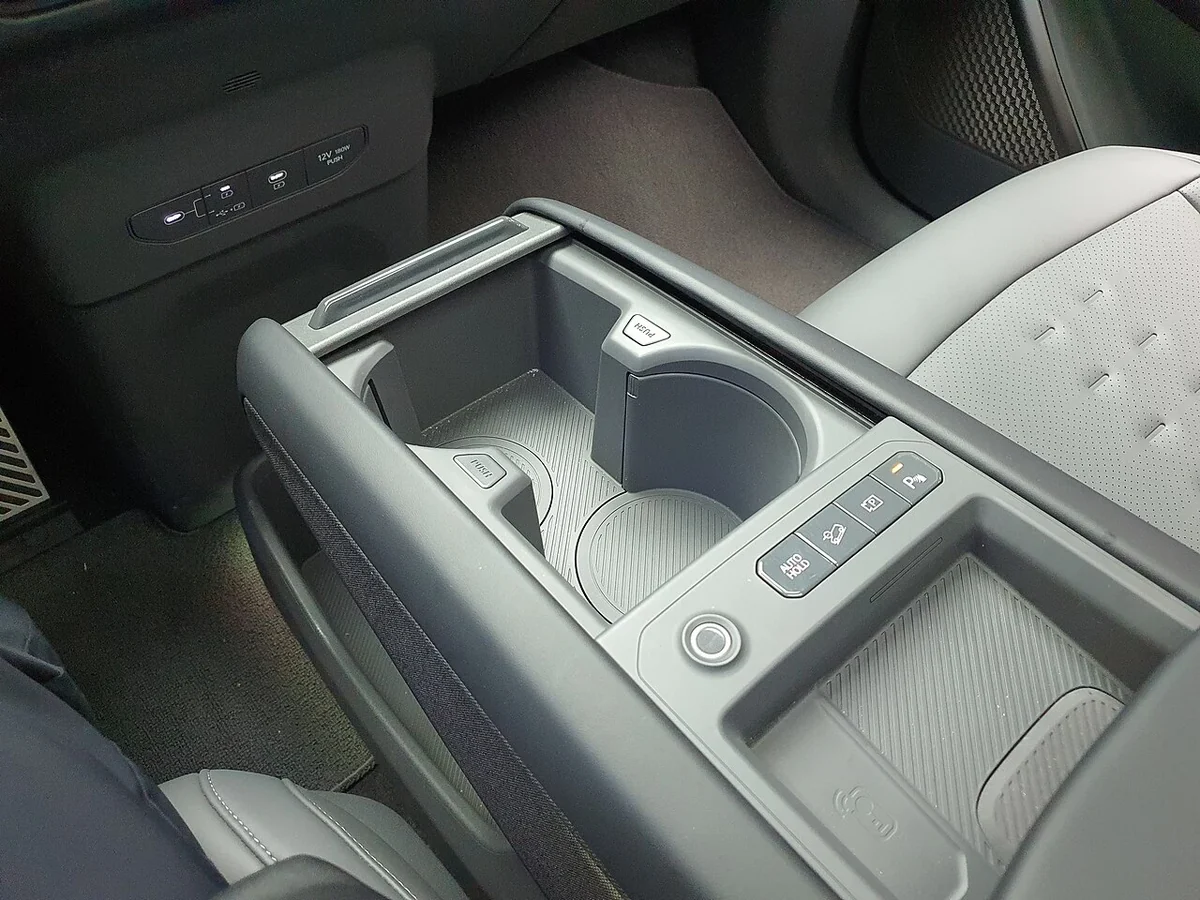
There is a good argument for defining family luxury as fewer small frustrations. Useful storage, accessible charging sockets and a comfortable seat can matter more over a journey than a spectacular start-up animation. The EV9’s cabin invites that broader interpretation of what an expensive car should provide.
The nearly 30-inch combined digital display should not be imagined as one uninterrupted television. Check the information layout and whether the climate functions are easy to see from your seating position. The real interior photographs below are there to show the arrangement, not to imply all overseas equipment comes with every U.S. trim.
Available second-row comfort features make the higher trims tempting, but ask who will actually use them. If the back seats are occupied by child seats most of the time, some of the upgrade may go unnoticed. This Kia EV9 Review would put daily seat comfort and access ahead of a feature that impresses only during the demonstration.
6. Strong AWD Output Should Serve the Load
The mainstream AWD models have 379 hp. Kia’s 2026 U.S. EV9 page distinguishes Wind and Land’s 443 lb-ft from GT-Line’s 516 lb-ft, with eligible Boost upgrades also available. Do not silently apply the highest torque figure to every EV9, and do not confuse GT-Line with the performance-focused GT.
For a family buyer, the most useful outcome is unstrained response with passengers and luggage aboard. A large SUV need not become a sports car to feel reassuring during a legal overtake. At the same time, output cannot erase the responsibility of managing a substantial vehicle through narrow streets or a crowded car park.
Try the braking response and low-speed control as carefully as the acceleration. The driver needs to be comfortable with repeated stop-start tasks, and passengers experience every abrupt input. Cariary values performance that reduces effort; a launch demonstration alone says little about whether the family will enjoy an hour in the car.
7. Start With the Household, Then Choose the Badge
Light Long Range deserves attention if maximum stated range is the priority and rear-wheel drive suits the use. Wind adds AWD and keeps a seven-seat bench. Land and GT-Line move further into comfort and presentation, with different seating and wheel choices. This is a set of distinct compromises rather than a simple good-better-best ladder.
The base MSRP is $54,900 before additional charges, and the live page lists GT-Line at $71,900 before those charges. Compare complete quotes and equipment, not a base advertisement with a loaded demonstration car. Include charging installation, insurance and replacement tires in the budget. Do not assume an old incentive mentioned in a launch article still applies.
The GT-Line exterior can be a legitimate reason to prefer it. Enjoying the way your car looks is part of ownership. Our Kia EV9 Review only asks that you recognize what the extra spending buys—and that you do not lose the seat configuration or range priority that brought you to the model in the first place.
8. Cariary Perspective: The Back Seats Change the Story
The EV9 earns four stars because its purpose feels clear. It makes electric propulsion part of a family vehicle rather than requiring the family to become supporting characters in a technology demonstration. That is a meaningful kind of progress even without claiming it beats every rival in every measurement.
The missing fifth star reflects the conditions attached to the recommendation. A large footprint and charging dependence are manageable when they match your home and journeys. They are not minor details if they do not. The right owner can see a thoughtful, distinctive family car; the wrong fit can turn the same equipment into daily work.
For a different approach to carrying a family, our Audi Q7 review offers a conventional premium-SUV perspective. The useful comparison is philosophical before it is numerical: do you want familiar refueling or an electric routine that can begin at home? The final Kia EV9 Review answer belongs to that routine.
Who Should Buy It?
Recommended For
Families who genuinely use three rows, can arrange dependable charging and value a substantial, practical electric SUV; buyers willing to choose seating and range before appearance packages.
Not Recommended For
Households with tight parking, unpredictable long-distance charging access, or no real need for a vehicle this large; buyers assuming every trim has seven seats or the highest torque.
One-Line Verdict: The EV9 makes electric innovation more interesting by giving the people in the back a central role in the buying decision.
Frequently Asked Questions
How far can the 2026 EV9 go?
The U.S. EPA estimates range from 230 miles for Light RWD to 305 for Light Long Range RWD. Wind/Land AWD are 283 and GT-Line AWD is 280; actual conditions change results.
Does every EV9 seat seven?
No. Six- and seven-seat configurations depend on trim and options. Confirm the actual second-row arrangement before ordering.
Does NACS guarantee the fastest charge?
No. NACS describes connector compatibility. The charger, battery conditions and vehicle compatibility determine the charging result.
Is GT-Line the same as GT?
No. This Kia EV9 Review covers the mainstream range including GT-Line, not the separate high-performance GT.
Why four stars?
The family packaging and electric brief are persuasive, but charging access, cost and size make buyer fit essential.
Further Reading and Data Reference
Data reference date: October 3, 2026. Official specifications and attributed test observations are linked where discussed. Cariary Point is an editorial buyer-fit assessment, not an owner road-test score or reliability rating.
Explore more Cariary car reviews and buyer perspectives.