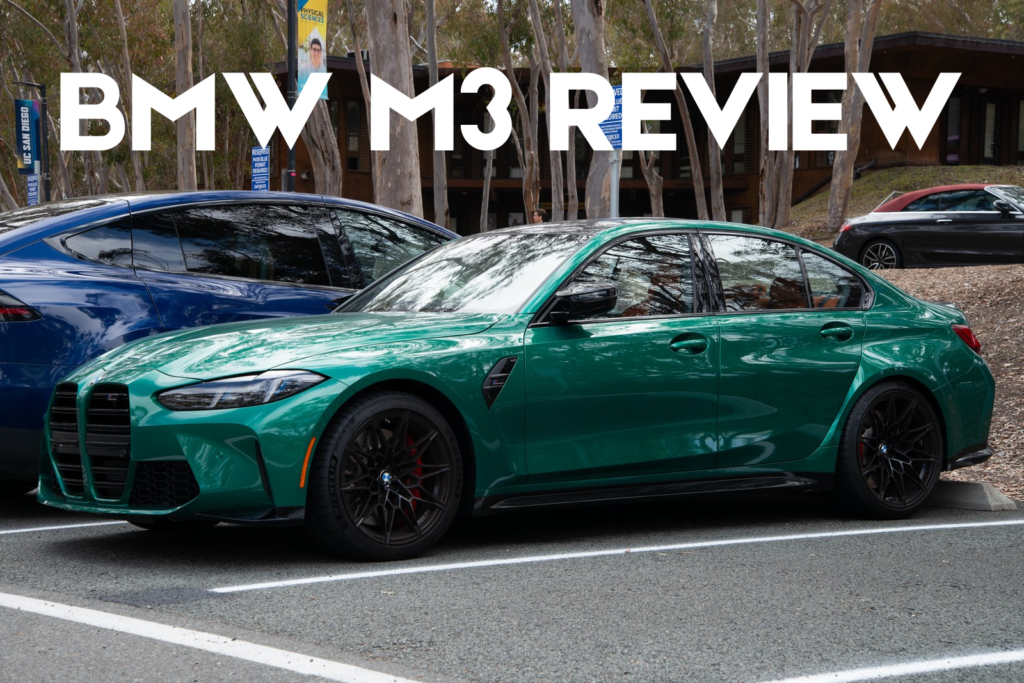
The BMW M3 is not just the fast version of the 3 Series.
It is one of the cars that taught the world what a sports sedan could be: usable during the week, serious on a back road, and credible enough on track that the badge still means something decades later.
The modern M3 is bigger, heavier, more powerful, and more digital than the original E30. But the question is still the same:
Can BMW make an ordinary sedan feel like a driver’s car without turning it into something impossible to live with?
Quick Take
The BMW M3 is for buyers who want performance, precision, and daily usability in one car.
The current M3 is no longer the small, lightweight machine it once was. But it still carries the M philosophy better than almost anything else in BMW’s lineup. It is not the most dramatic German performance sedan, and it is not always the easiest design to love, but it remains one of the clearest answers for buyers who care about chassis balance and driver control.
What Is It?
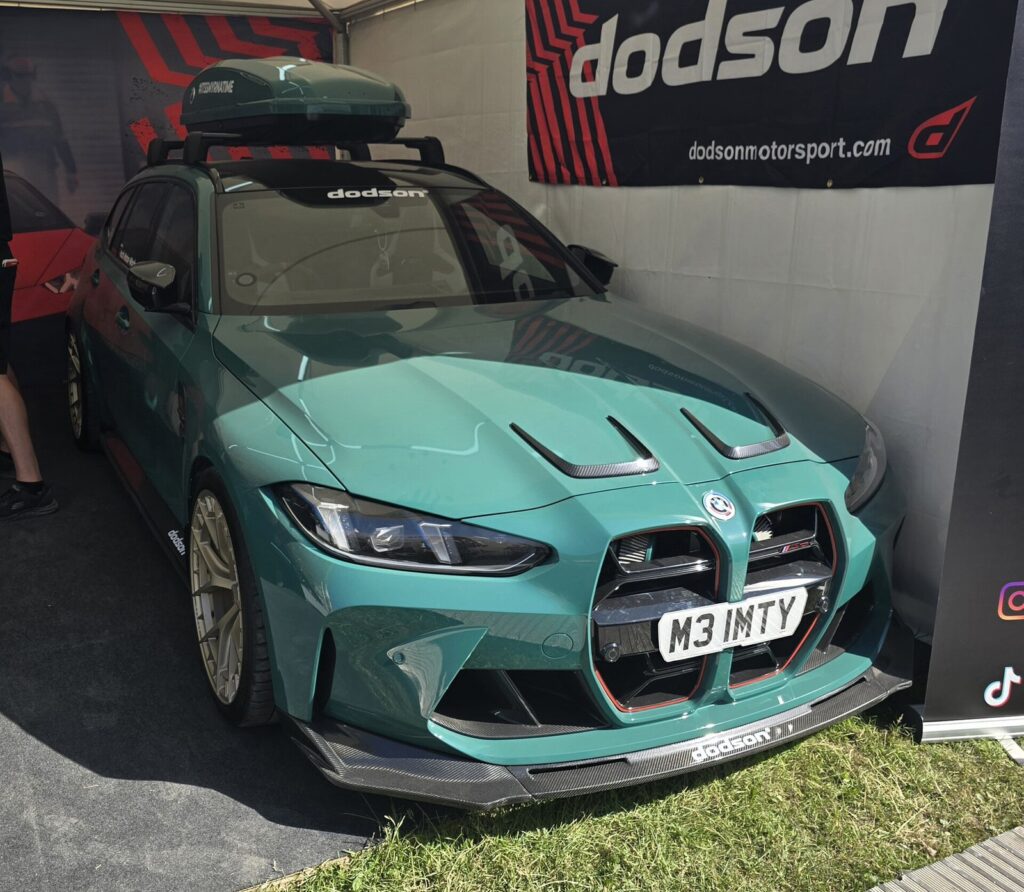
Credit Image: Calreyn88, CC BY-SA 4.0, via Wikimedia Commons
The BMW M3 is the high-performance version of the BMW 3 Series sedan.
As of BMW USA’s current 2027 listing, the M3 lineup includes a 473 hp rear-wheel-drive model with a 6-speed manual transmission, a 503 hp M3 Competition with an 8-speed M Steptronic automatic, and a 523 hp M3 Competition xDrive with all-wheel drive.
That range explains the modern M3 clearly. BMW still gives purists a manual rear-drive version, but the mainstream performance choice has moved toward automatic shifting, massive torque, and all-weather traction.
A Short History of BMW M
BMW M began as BMW Motorsport GmbH in 1972. Its original purpose was racing, not luxury branding.
That matters because the M badge did not begin as a styling package. It came from motorsport work, homologation cars, touring-car racing, and the idea that a road car could be shaped by track engineering.
The first M3, the E30, arrived in the 1980s as a homologation car for touring-car competition. That origin is important. The M3 did not begin as a luxury sedan with more horsepower. It began as a racing requirement turned into a road car.
The Evolution of the M3
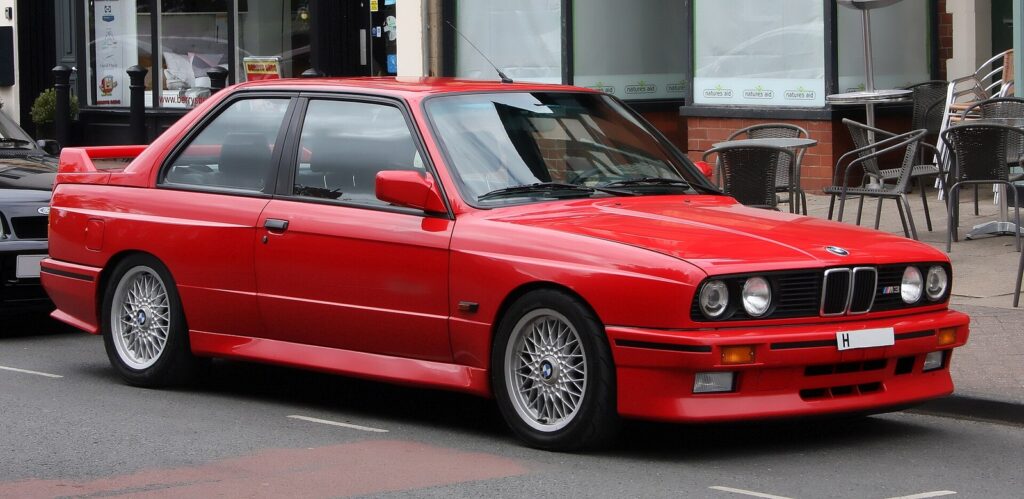
Credit Image: Calreyn88, CC BY-SA 4.0, via Wikimedia Commons
The E30 M3 is the foundation. Boxy arches, a rear wing, a high-revving four-cylinder engine, and a compact body made it feel more like a race car adapted for the road than a normal sedan upgraded for performance.
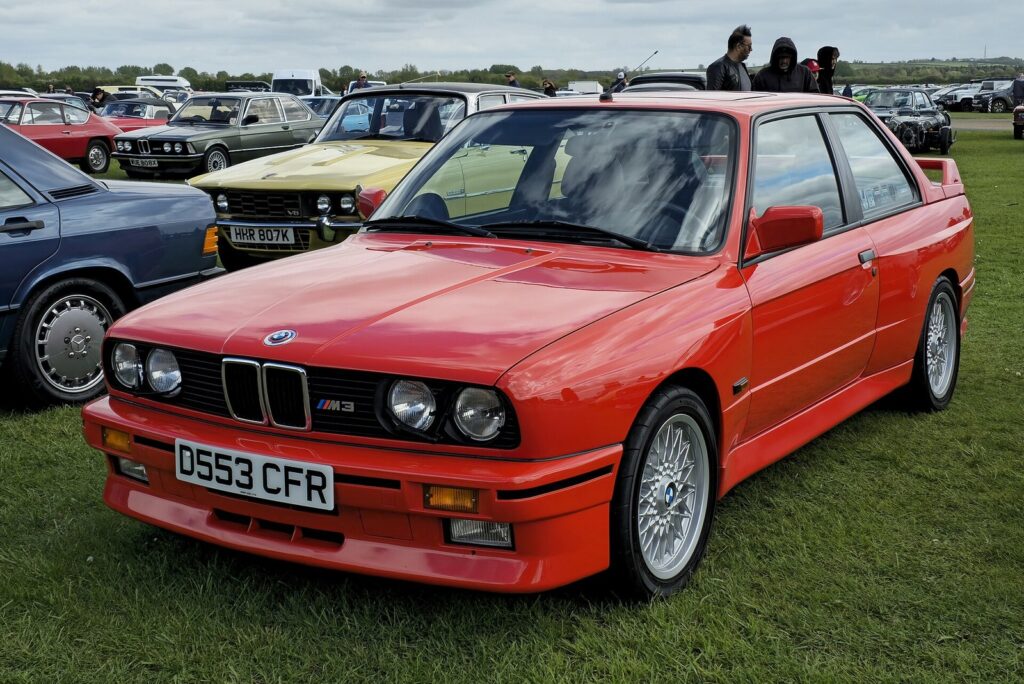
Credit Image: Calreyn88, CC BY-SA 4.0, via Wikimedia Commons
The E36 M3 changed the formula. It became smoother, more mature, and more usable. It also helped establish the straight-six engine as a central part of M3 identity.
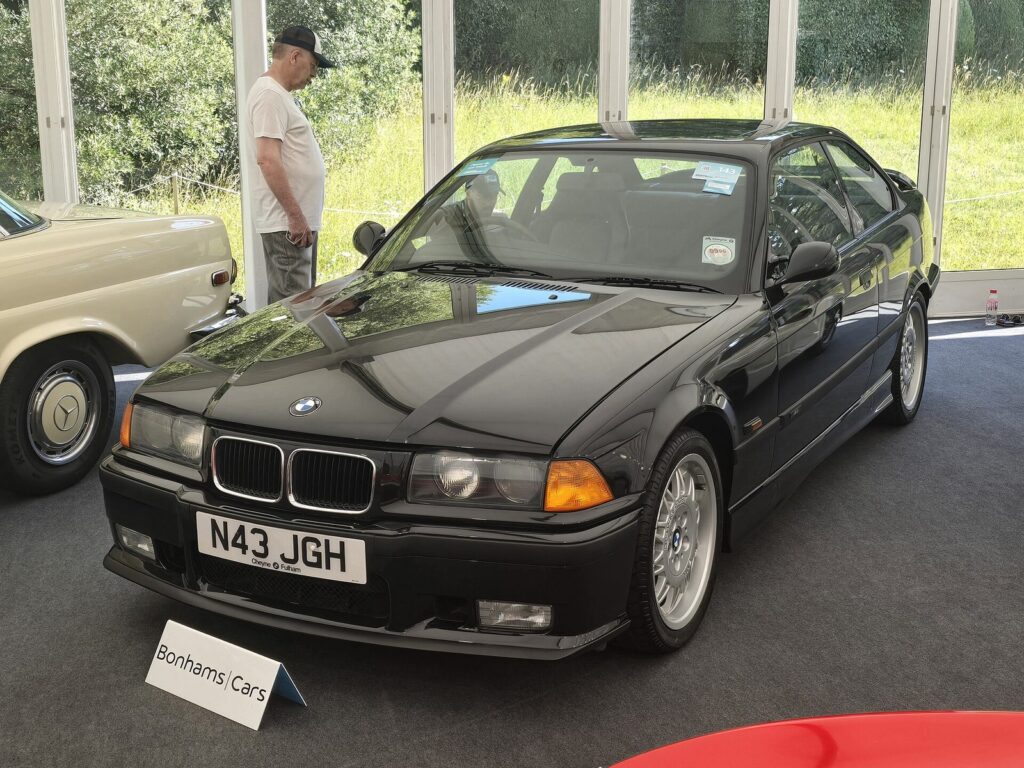
Credit Image: Calreyn88, CC BY-SA 4.0, via Wikimedia Commons
The E46 M3 may be the emotional center of the M3 story for many enthusiasts. It had the right size, the right stance, and the right engine character. The S54 inline-six was not just powerful; it made the car feel alive.
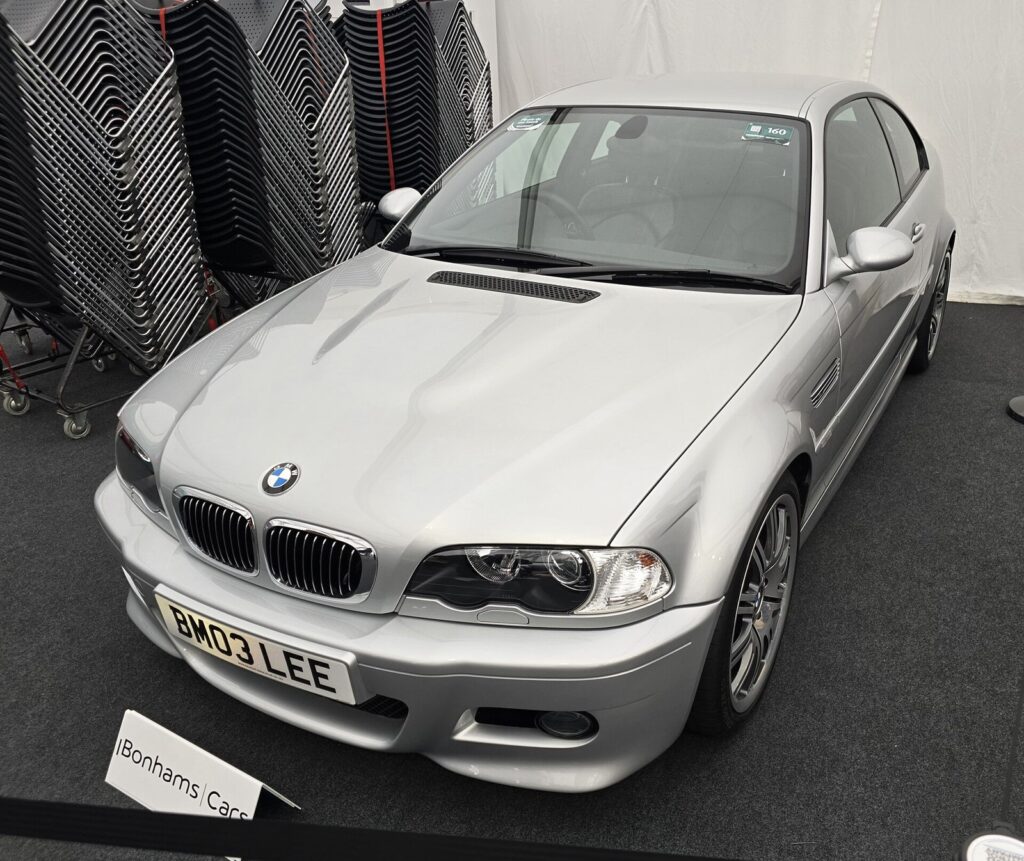
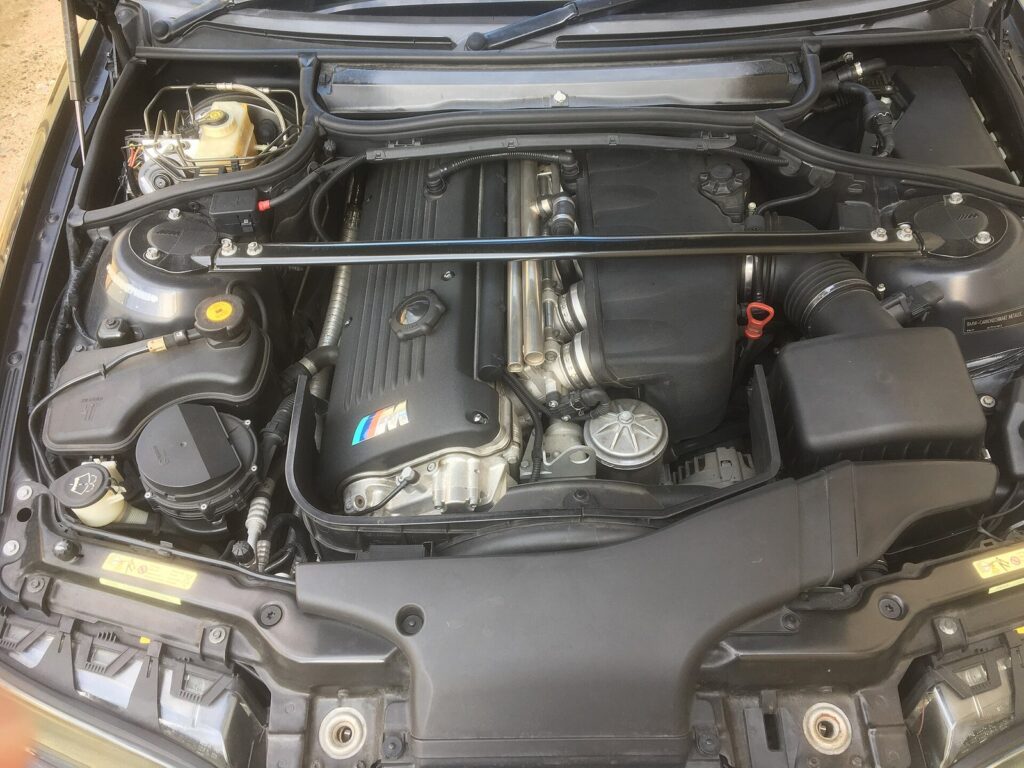
Credit Image: Calreyn88, CC BY-SA 4.0, via Wikimedia Commons
The E46 M3 CSL pushed the car further toward lightweight focus. It showed that BMW M was not only about adding power. It was also about removing weight, sharpening response, and making the car feel more concentrated.
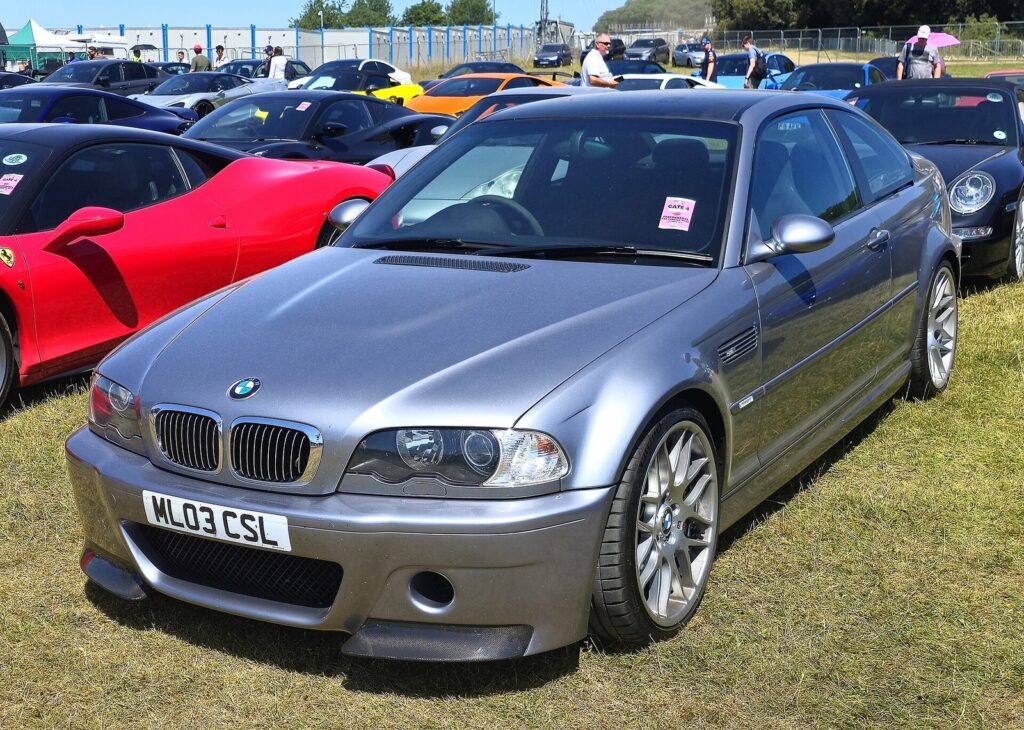
Credit Image: Calreyn88, CC BY-SA 4.0, via Wikimedia Commons
The E90 and E92 generation brought the only V8 era in M3 history. That car felt special because it was so different: high revs, a unique sound, and a more exotic engine character than any M3 before or after.
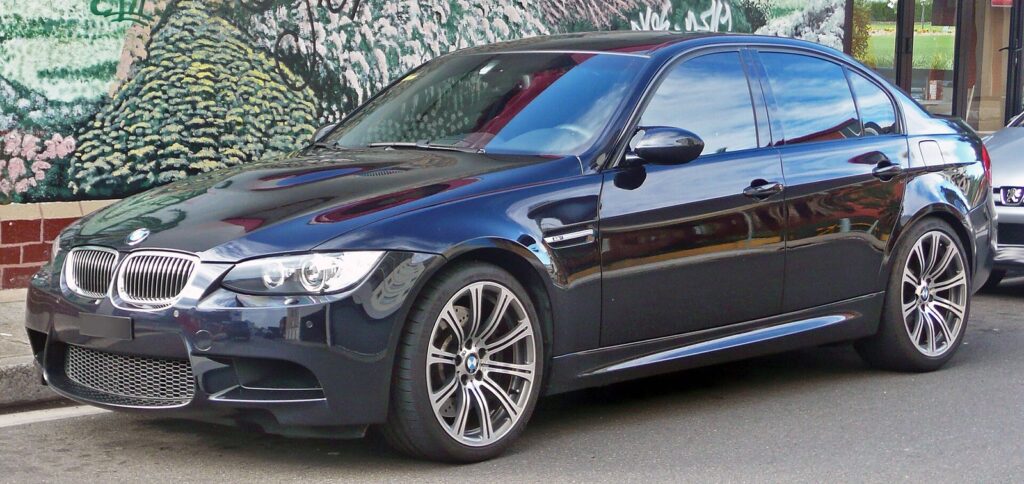
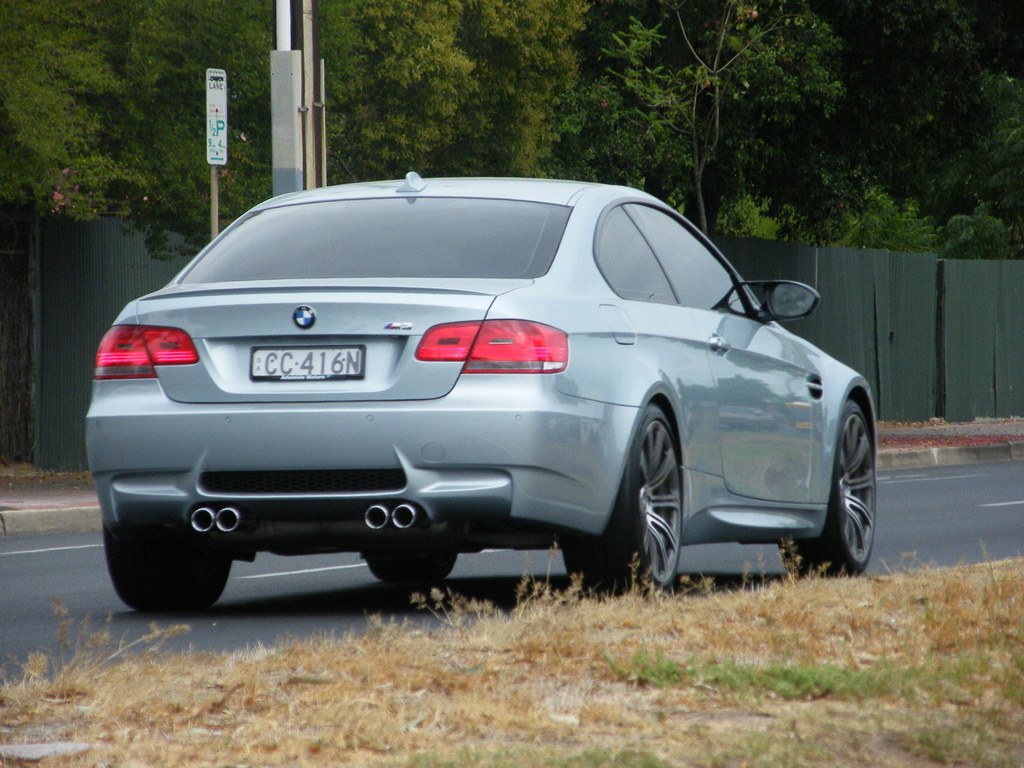
Credit Image: Calreyn88, CC BY-SA 4.0, via Wikimedia Commons
The F80 M3 moved into turbocharging. Some purists missed the natural response of older engines, but the F80 made the M3 much faster in the real world. Torque became a major part of the experience.
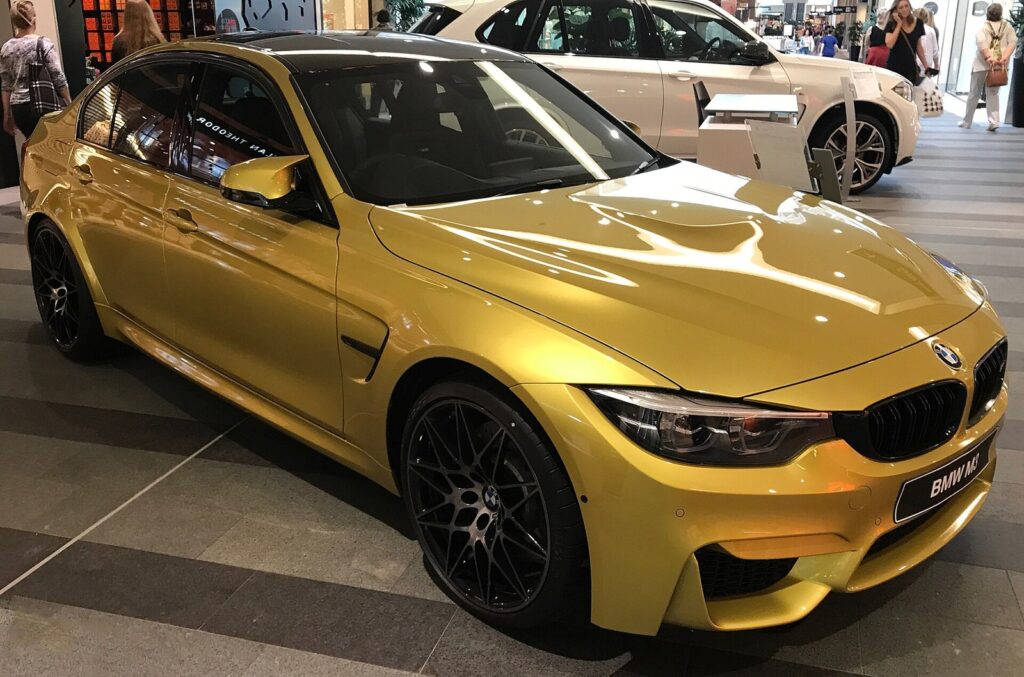
Credit Image: Calreyn88, CC BY-SA 4.0, via Wikimedia Commons
The current G80 M3 is the most powerful and most controversial version. It is heavier, more aggressive, and visually louder. But it also gives buyers serious speed, optional xDrive traction, and a level of configurability older M3s never had.
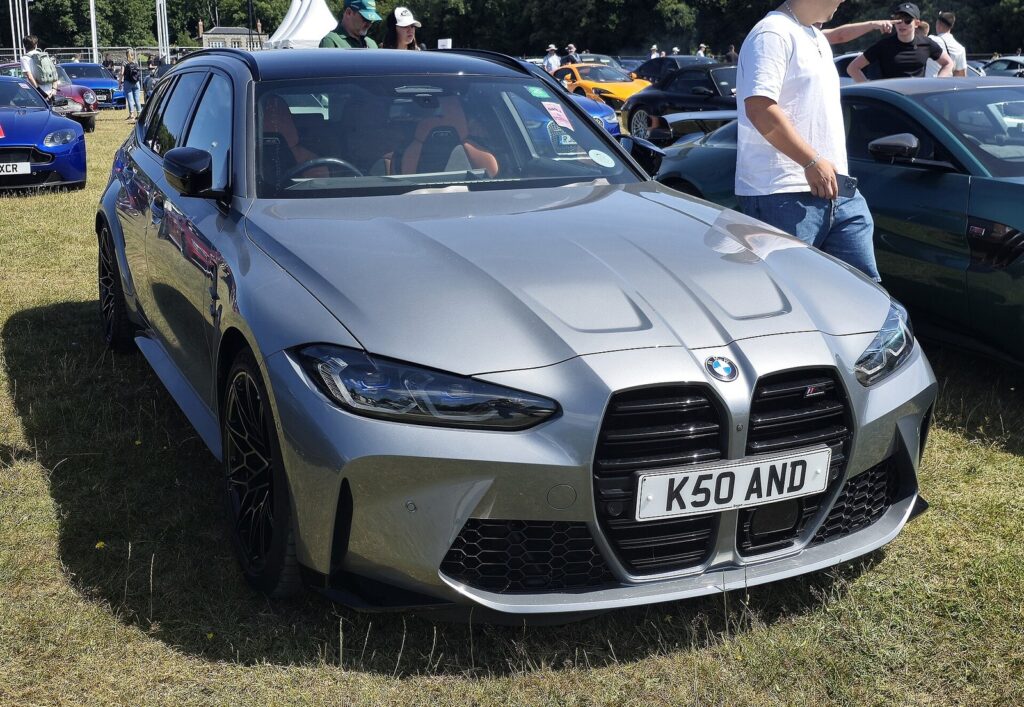
Credit Image: Calreyn88, CC BY-SA 4.0, via Wikimedia Commons
What Does BMW M Want Compared With AMG and RS?
Mercedes-AMG, Audi RS, and BMW M all make fast German performance cars, but they do not chase the same feeling.
AMG often feels more emotional and theatrical. The engine, sound, and sense of drama are usually central to the car’s personality.
Audi RS usually feels more controlled and all-weather capable. Quattro traction, stability, and fast point-to-point pace are often the main strengths.
BMW M traditionally sits between them, but with a different priority: balance and driver control.
M cars are not supposed to be only powerful. They are supposed to feel adjustable. The best M cars let the driver sense weight transfer, throttle response, steering load, and rear-axle behavior. That is why the M3 has always mattered. It is not only a horsepower car. It is a calibration car.
50:50 Weight Distribution and Why It Matters
BMW has long emphasized near 50:50 front-to-rear weight distribution.
In simple terms, this means the car’s weight is spread close to evenly between the front and rear axles. That helps the car feel more predictable when turning, braking, and accelerating.
A front-heavy car can feel like the nose is doing too much work. A rear-heavy car can feel more nervous if the driver is not careful. A balanced car gives both axles a clearer job.
In the M3, this matters because the car is powerful enough to overwhelm its tires if the chassis is not disciplined. Good weight distribution helps the front tires turn in cleanly and gives the rear tires a more natural role when powering out of corners.
Modern M3s also rely heavily on electronics, adaptive suspension, differential tuning, and tire technology. So 50:50 balance is not magic by itself. But it is still part of why BMW M cars often feel more natural when driven hard.
M Transmission Character
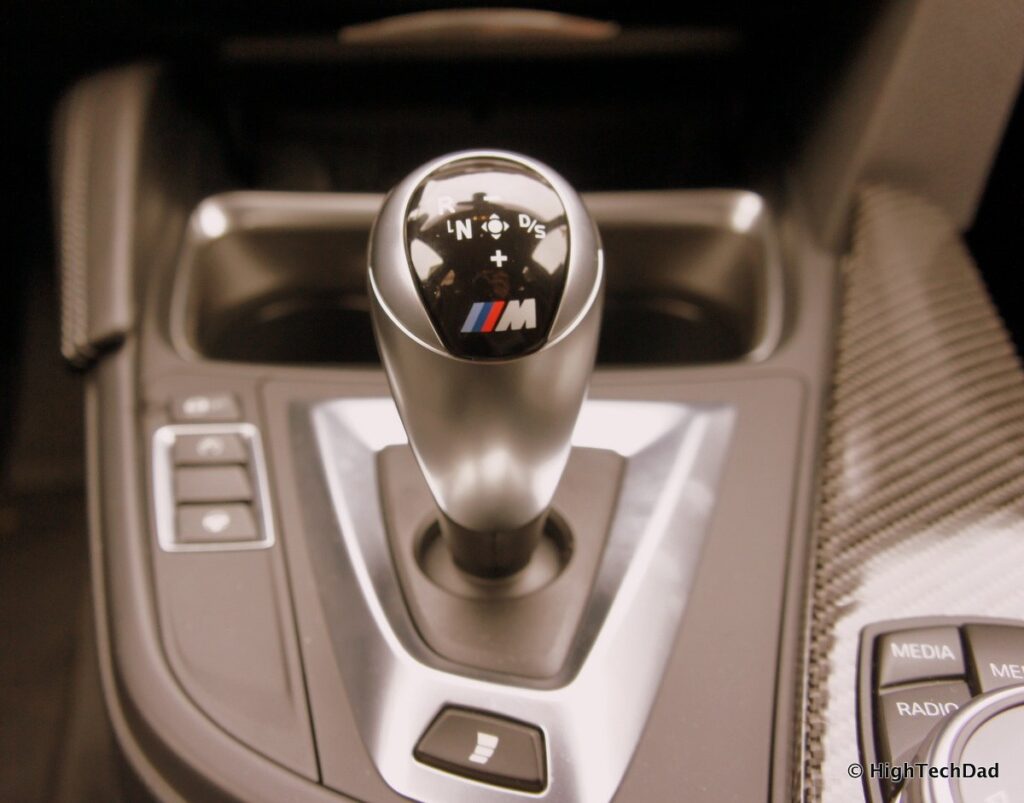
Credit Image: Calreyn88, CC BY-SA 4.0, via Wikimedia Commons
BMW M has always treated the transmission as part of the driving experience.
Older M3s were famous for manual gearboxes. The E46 and E9X generations also helped make BMW’s automated performance transmissions part of the M story, especially the M DCT era.
The modern M3 still keeps a 6-speed manual in the base rear-wheel-drive model. That is important. In a market where many performance cars have abandoned manual shifting, BMW still gives buyers a direct mechanical option.
The Competition models use an 8-speed M Steptronic automatic with Drivelogic. That system is not just about convenience. It allows the driver to change how aggressively the transmission shifts. In other words, BMW lets the gearbox become part of the car’s personality.
That is very M: not only fast, but adjustable.
Interior and Daily Use
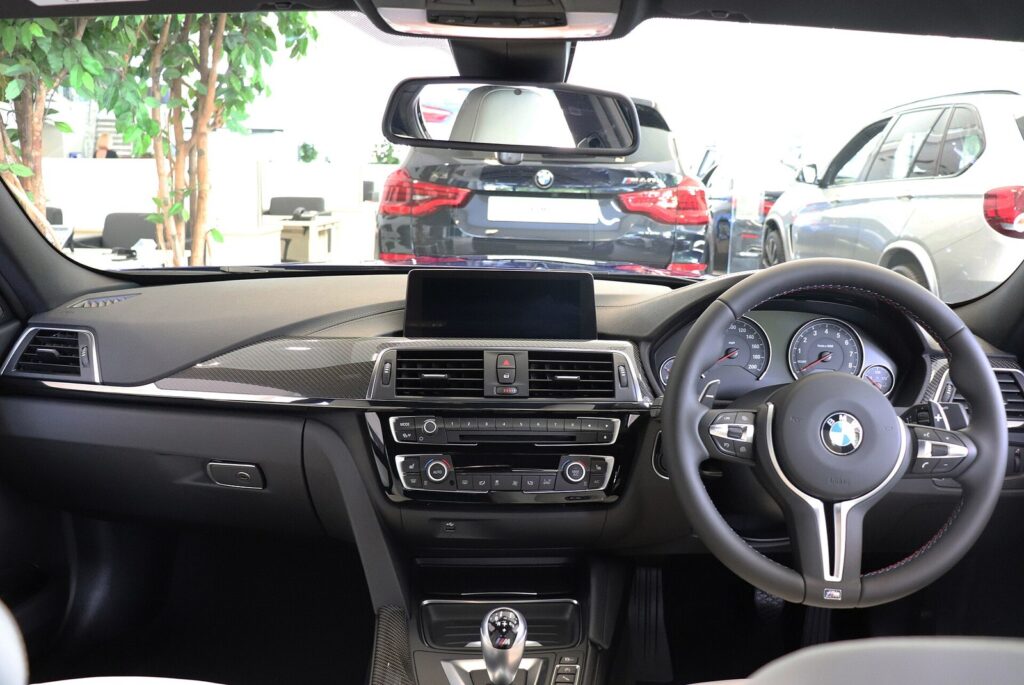
Credit Image: Calreyn88, CC BY-SA 4.0, via Wikimedia Commons
The M3 works because it is still a sedan.
You can use it for commuting, school runs, grocery trips, road trips, and bad weather if you choose xDrive. That practicality is not a side note. It is the reason the M3 became more than an enthusiast toy.
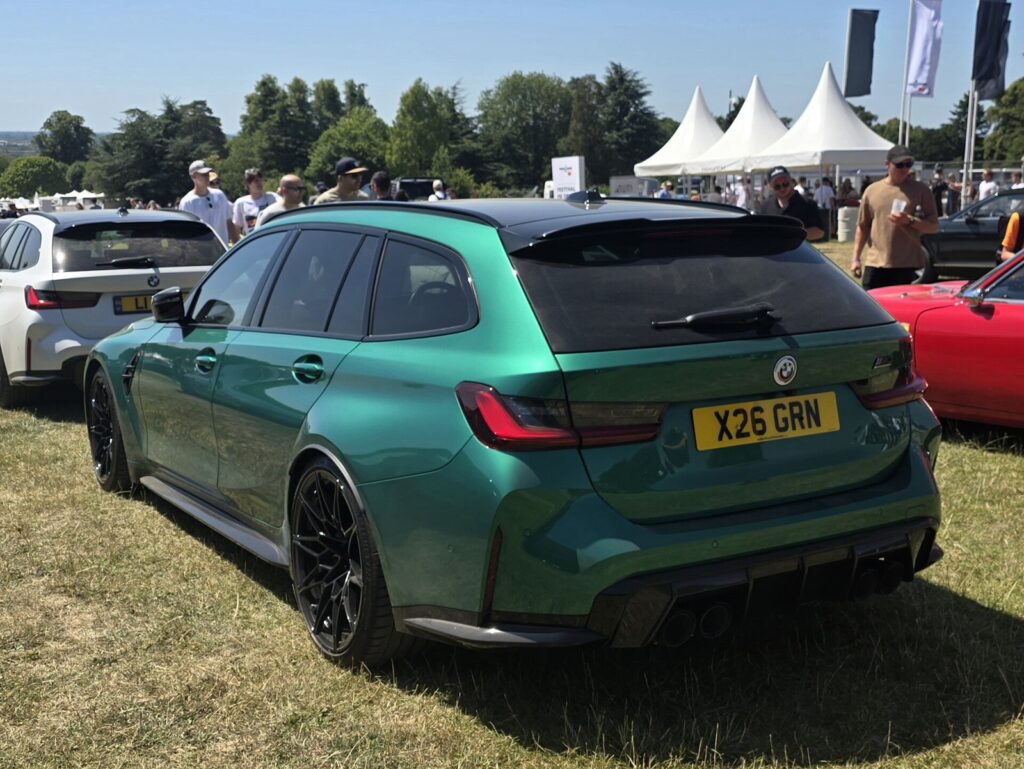
Credit Image: Calreyn88, CC BY-SA 4.0, via Wikimedia Commons
The M3 Touring makes this even clearer. A wagon version of the M3 would have sounded strange decades ago, but today it fits the M philosophy well: performance should not require giving up your life.
That said, the current M3 is not a soft luxury sedan. The ride can be firm, tire costs are real, and the aggressive styling may not suit every buyer. This is a car for someone who wants performance every day, not someone who wants quiet comfort with occasional speed.
Price-to-Value Judgment
The M3 is expensive, but its value is not simply horsepower.
What you are paying for is a complete performance system: engine, cooling, suspension, brakes, differential, transmission tuning, steering feel, body control, and brand history.
A cheaper fast sedan may match some numbers. An EV may accelerate harder. A luxury sedan may be more comfortable. But few cars combine daily usability and driver involvement as consistently as the M3.
The best-value version depends on the buyer.
The manual M3 is the emotional choice. The M3 Competition is the easier daily performance choice. The Competition xDrive is the fastest and most usable in poor weather.
Competitor Comparison
The Mercedes-AMG C63 S E Performance is more complex and more electrified. It offers huge performance, but its four-cylinder hybrid layout has changed the emotional character of the AMG C-Class. Choose it if you want technology, torque, and AMG drama in a new form.
The Audi RS5 Sportback is calmer and more all-weather focused. It is easier to drive quickly without thinking too much, but it does not feel as adjustable or as driver-centered as the M3.
The Cadillac CT4-V Blackwing is the purist alternative. It offers a manual transmission, sharp chassis tuning, and a more old-school performance-sedan feel. It may be less premium inside, but it understands driver emotion very well.
The Alfa Romeo Giulia Quadrifoglio is the romantic choice. It feels lighter and more emotional than many German rivals, but ownership confidence and dealer support may be bigger concerns.
Recommended For
Buy the BMW M3 if you want a serious performance sedan that still works in daily life.
It is especially good for buyers who care about steering, balance, transmission behavior, track credibility, and the history behind the badge.
The manual model is for purists. The xDrive Competition is for buyers who want maximum real-world speed.
Not Recommended For
Do not buy the M3 if you mainly want comfort.
Do not buy it if tire costs, insurance, fuel, and maintenance will become stressful.
Do not buy it if you want subtle styling. The current M3 is not shy.
And do not buy it only because it is the most powerful 3 Series. The M3 makes the most sense when you care about how a car responds, not just how quickly it accelerates.
Buyer Verdict
The BMW M3 is still the benchmark because it understands the sport sedan better than almost anyone else.
It has changed a lot. It is no longer small. It is no longer naturally aspirated. It is no longer visually understated. But it still carries the essential M idea: take a practical BMW and turn it into something that rewards a serious driver.
Cariary Perspective
The M3 is important because it shows what BMW M is supposed to mean.
AMG may shout louder. Audi RS may feel more secure. But M is at its best when it makes the driver feel connected to the car’s balance.
The current M3 is not the prettiest M3, and it is not the purest. But it is probably one of the most capable. It gives buyers manual or automatic, rear-wheel drive or xDrive, sedan or Touring in some markets, and enough performance to make the car feel special every day.
The one-sentence memory is simple: the M3 is the sports sedan that still tries to make performance feel like a conversation between the driver and the chassis.
One-Line Verdict
The BMW M3 is still the defining M car because it turns a practical sedan into a serious driver’s machine without forgetting where the badge came from.
FAQ
What does BMW M stand for?
M originally comes from BMW Motorsport. The division began in 1972 to support BMW’s racing activity and later became responsible for BMW’s high-performance road cars.
Is the BMW M3 better than the Mercedes-AMG C63?
It depends on what you want. The M3 is more focused on balance and driver control. The AMG C63 is more about drama, technology, and power delivery.
Is the BMW M3 available with a manual transmission?
Yes. BMW USA currently lists the base M3 with a 6-speed manual transmission. Competition models use an 8-speed M Steptronic automatic.
Why is 50:50 weight distribution important?
It helps the car feel more balanced when turning, braking, and accelerating. It does not make a car automatically great, but it gives the chassis a strong foundation.
Which M3 generation is the most iconic?
The E30 is the historical icon. The E46 is the emotional favorite for many enthusiasts. The current G80 is the most capable modern version.
Related Cars
- Mercedes-AMG C63 S E Performance
- Audi RS5 Sportback
- Cadillac CT4-V Blackwing
- Alfa Romeo Giulia Quadrifoglio
- BMW M4
Data reference date
June 25, 2026