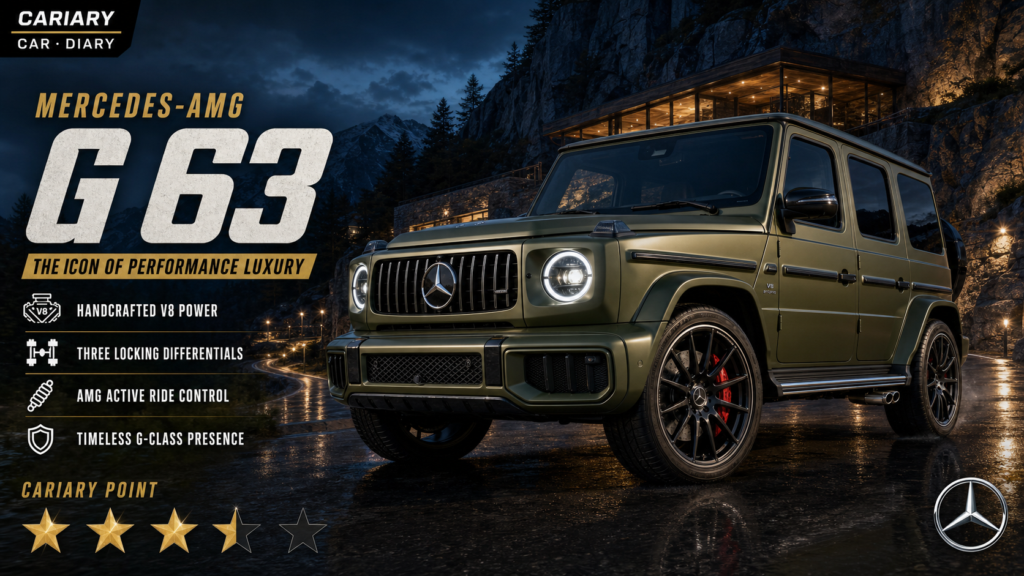
Quick Take
The Mercedes-AMG G 63 is not a normal luxury SUV.
That is the first thing buyers need to understand.
If you want comfort, space, silence, and smoothness, there are easier answers. Mercedes-Benz itself will sell you a GLS. BMW has the X7. Audi has the Q7. Range Rover has built an entire identity around quiet luxury and soft road presence.
But the G 63 is different.
It is expensive, loud, heavy, upright, fuel-thirsty, and not especially graceful in the way modern luxury SUVs usually try to be. Yet that is exactly why people want it. The G 63 is not popular because it behaves like every other luxury SUV. It is popular because it refuses to.
What Is It?
The Mercedes-AMG G 63 is the high-performance AMG version of the Mercedes-Benz G-Class, often called the G-Wagen.
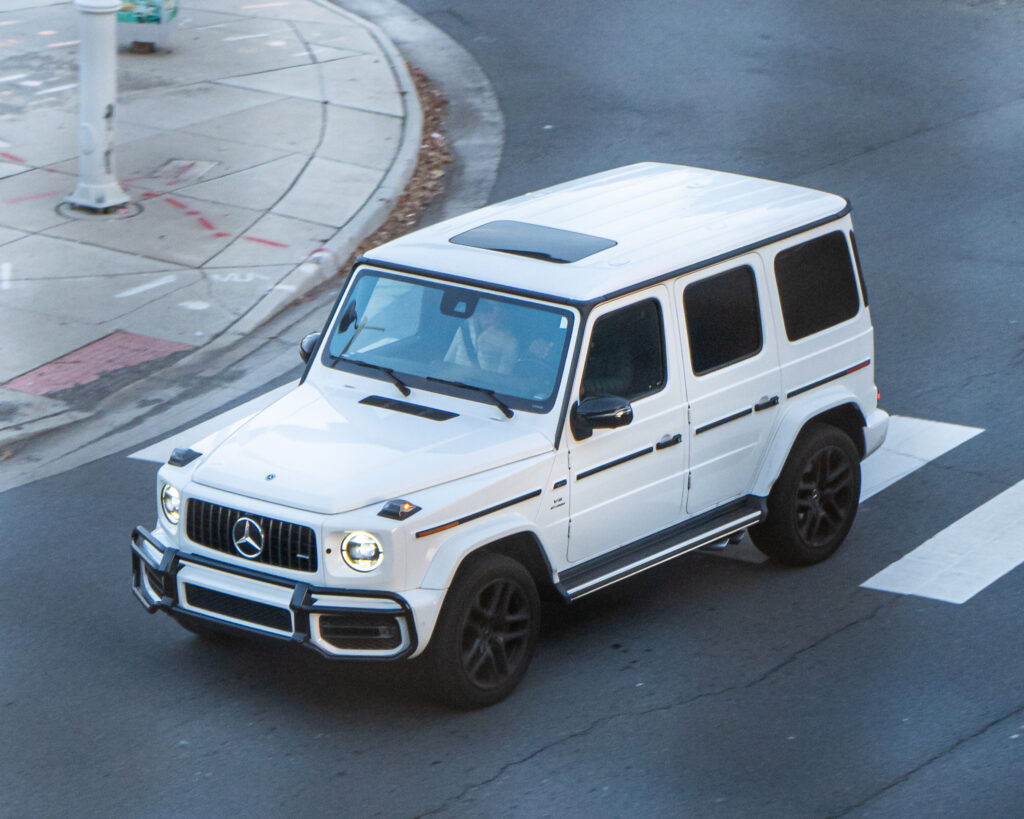
Image: OWS Photography, CC BY 4.0, via Wikimedia Commons
The current 2026 Mercedes-AMG G 63 uses a handcrafted AMG 4.0-liter V8 biturbo engine with hybrid assist. Mercedes-Benz USA lists output at 577 hp and 627 lb-ft of torque, with 0-60 mph in 4.2 seconds.
Those numbers are strange when you remember what the G-Class looks like.
This is a tall, boxy, old-school-shaped SUV with a rear-mounted spare wheel and an almost vertical windshield. It is not shaped like a sports car, not shaped like a modern crossover, and not shaped like a wind tunnel had much say in the final design.
That contradiction is the point.
The G 63 is a luxury performance SUV built on an identity that started long before luxury performance SUVs became fashionable.
Why This Car Exists
German luxury brands often move in parallel.
When Mercedes-Benz has the C-Class, BMW has the 3 Series and Audi has the A4. The E-Class faces the 5 Series and A6. The S-Class has the 7 Series and A8. In SUVs, Mercedes-Benz has the GLC, GLE, and GLS, while BMW answers with the X3, X5, and X7, and Audi covers similar ground with Q models.
Most of the time, the German three create direct rivals for each other.
The G-Class is where Mercedes made the move nobody else could properly copy.
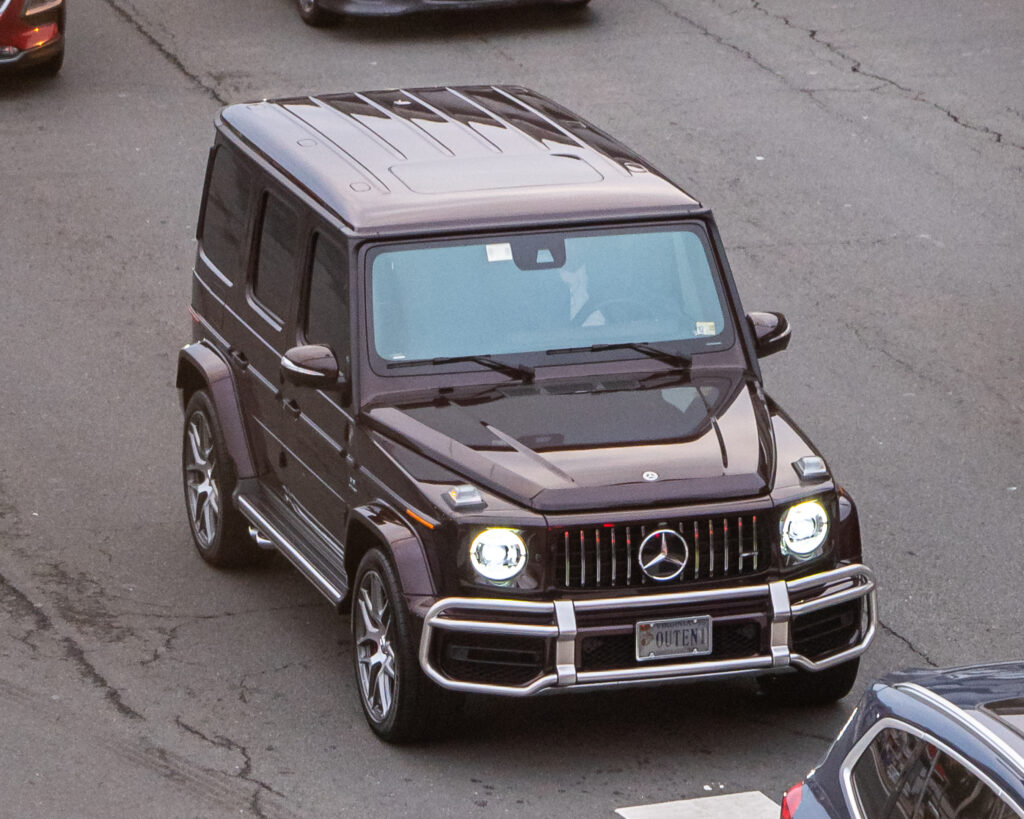
Image: OWS Photography, CC BY 4.0, via Wikimedia Commons
BMW does not have a true G-Wagen. Audi does not have a true G-Wagen. Even Land Rover, with all its off-road history, does not sell something that feels exactly like a G 63. A Range Rover may be more comfortable. A Defender may feel more openly adventurous. But neither replaces the strange, expensive, square, AMG-powered presence of the G 63.
That is the G-Class advantage.
It is not just a model. It is a separate cultural object inside the Mercedes-Benz lineup.
The G-Wagen Origin Story
The G-Class did not begin as a fashion SUV.
Mercedes-Benz traces the G-Class story back to cooperation between Daimler-Benz and Steyr-Daimler-Puch in the 1970s, with the first production G-Model arriving in 1979. The original mission was not to create a luxury status symbol. It was developed as a serious off-road vehicle for demanding use, including commercial, governmental, and military-type applications.
That history still matters because the G-Class never fully abandoned its original shape.
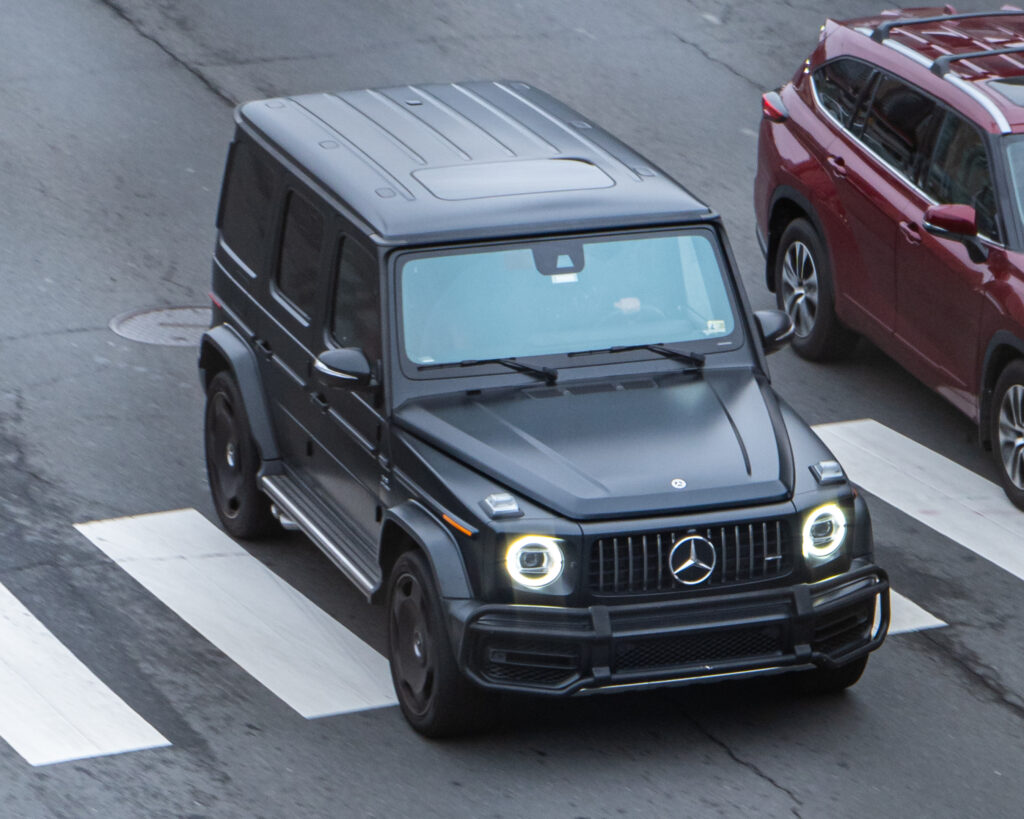
Image: OWS Photography, CC BY 4.0, via Wikimedia Commons
The upright body, exposed hinges, flat sides, rear-mounted spare tire, and almost stubborn boxiness are not random retro styling. They are the reason the G-Class feels different from ordinary luxury SUVs.
Modern Mercedes has added leather, screens, AMG power, adaptive suspension, and enormous personalization. But the basic visual promise remains the same: this is not a soft crossover pretending to be rugged.
It is a luxury product built around an old off-road silhouette.
Key Specs and Real-World Meaning
The 2026 Mercedes-AMG G 63 is rated at 577 hp and 627 lb-ft of torque in the U.S. It uses a 9-speed AMG SPEEDSHIFT TCT transmission and permanent all-wheel drive with a 2-speed transfer case. Mercedes-Benz USA lists curb weight at 5,842 lb and fuel economy at 14 mpg city and 16 mpg highway.
The power is real.
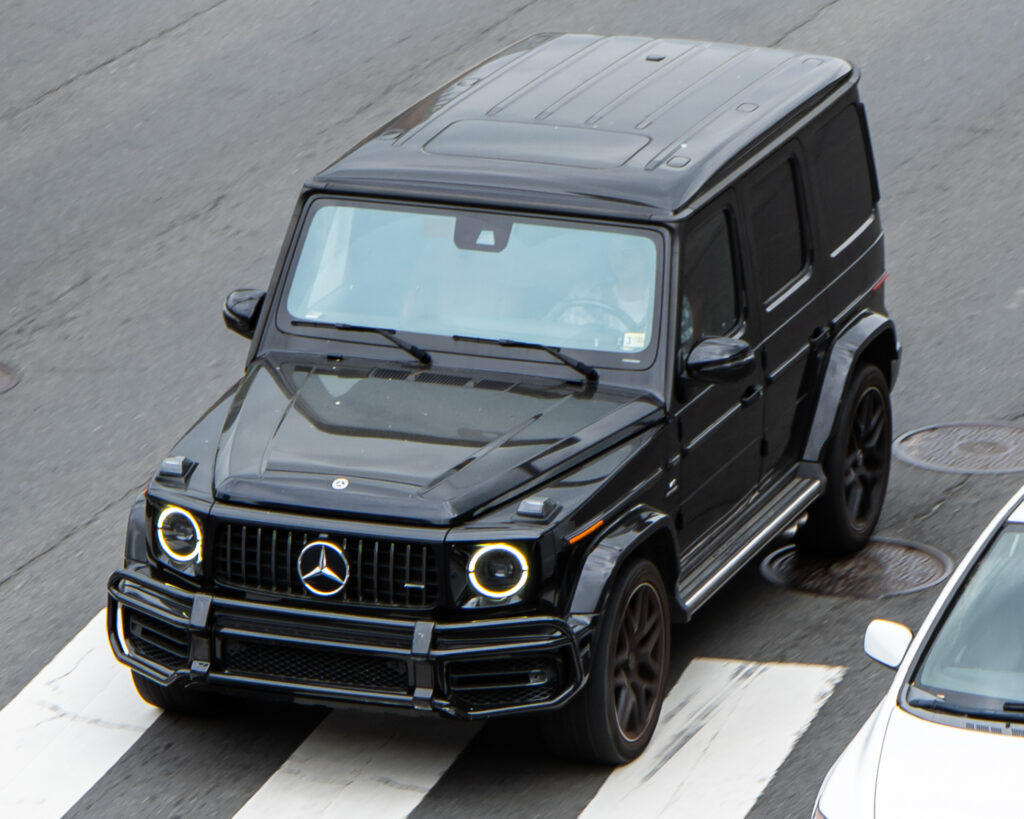
Image: OWS Photography, CC BY 4.0, via Wikimedia Commons
A 0-60 mph time of 4.2 seconds in something shaped like this is absurd in the best possible way. The G 63 does not feel fast because it is light or aerodynamic. It feels fast because AMG forces a huge amount of power and torque through a vehicle that was never visually designed to be graceful.
That is also why buyers should not expect efficiency.
This is a V8 biturbo AMG SUV with the aerodynamic profile of a brick and the weight of a serious luxury off-roader. If fuel cost matters, the G 63 is already the wrong conversation. Owners should know where the next gas station is, and they should be at peace with visiting it often.
Design and Identity
The G 63 is proof that design identity can be more valuable than design beauty.

Image: Damian B Oh, CC BY-SA 4.0, via Wikimedia Commons
It is not sleek. It is not elegant in the usual Mercedes sedan sense. It does not flow like an S-Class or sit calmly like a GLS. The G 63 is almost completely square, and that is its greatest strength.
Most SUVs today are designed to look smoother, quieter, and more aerodynamic. The G 63 does the opposite. It uses flat panels, a tall roof, sharp corners, and a visible spare wheel. It looks expensive because it looks unchanged, not because it looks futuristic.
That is rare.
The V8 sound also matters. The G 63’s visual toughness would not feel complete without the deep AMG exhaust character. The boxy shape gives the car presence. The engine gives it drama.
Together, they create the dream-car image.
Interior and Daily Use
Inside, the modern G 63 is far more luxurious than its old military-rooted appearance suggests.
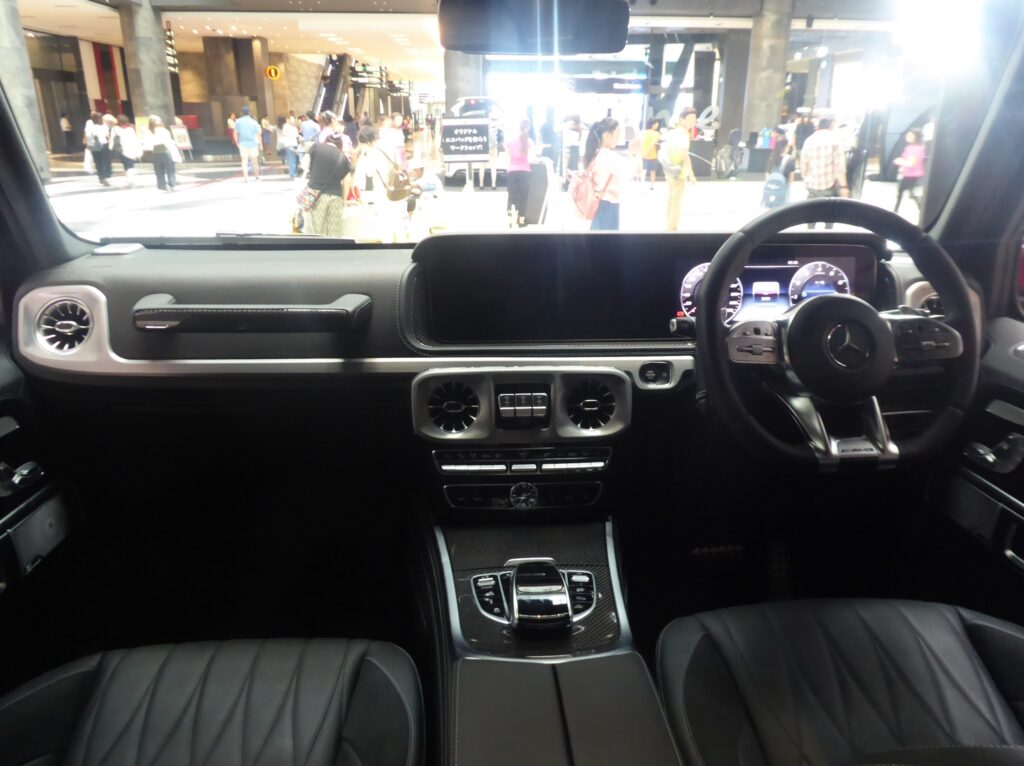
Image: Tokumeigakarinoaoshima, CC BY-SA 4.0, via Wikimedia Commons
It has modern Mercedes technology, premium materials, large displays, and enough comfort features to justify its luxury positioning. But the seating position is still upright, the body still feels tall, and the doors still remind you that this is not a normal SUV.
That door experience is part of the G-Class mythology.
Many modern luxury cars make closing a door almost effortless. Some offer soft-close doors that pull themselves shut. The G-Class does not give that same delicate feeling. The doors have a mechanical, old-school action, and they often need to be shut with real intention.
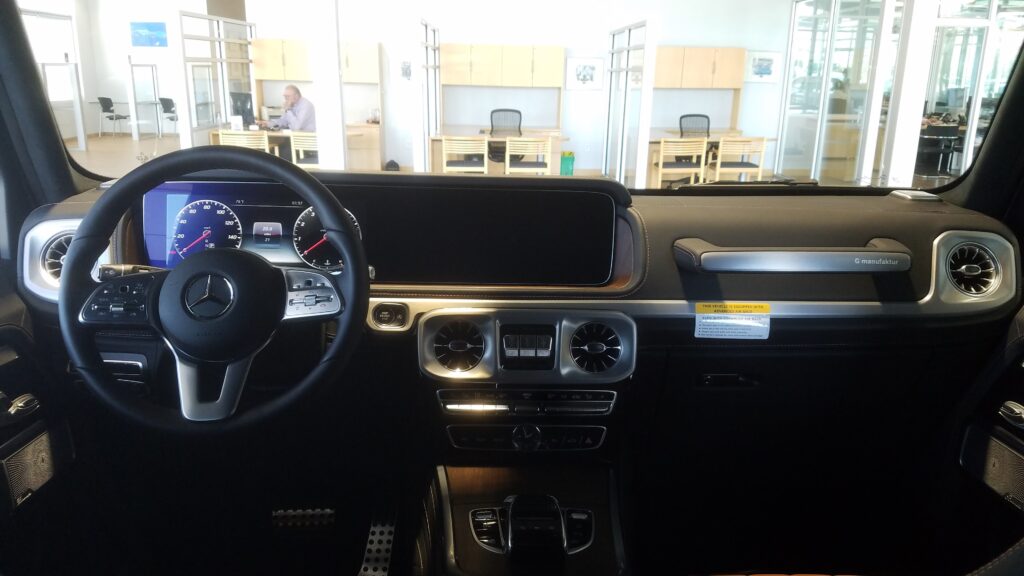
Image: deathpallie325, CC BY-SA 4.0, via Wikimedia Commons
Some buyers will find that annoying. G-Class buyers often find it charming.
That is the difference between a flaw and a character trait.
Ride Comfort and Ownership Reality
The G 63 is not the SUV you buy because you want the smoothest ride.
Many owners say the same thing: it is not especially comfortable compared with softer luxury SUVs. It sits high, feels upright, and has a more truck-like personality than a GLS or Range Rover.
But again, that is part of the appeal.
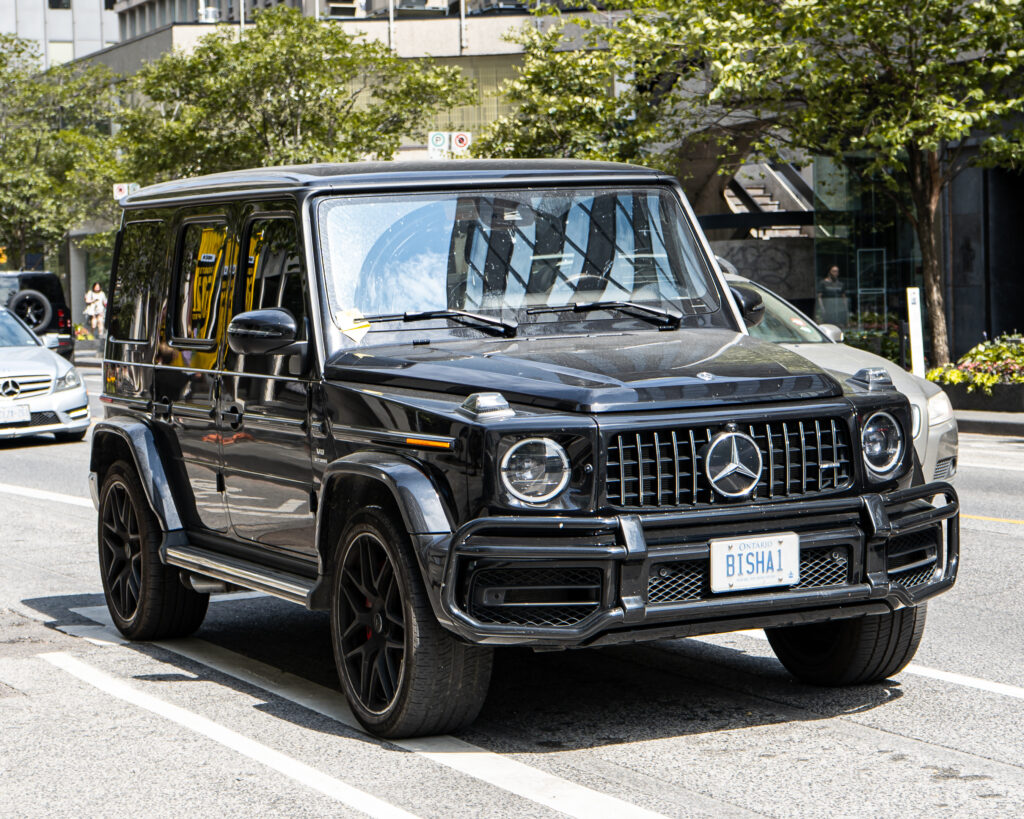
Image: OWS Photography, CC BY 4.0, via Wikimedia Commons
Comfortable alternatives are everywhere. Mercedes-Benz GLS, BMW X7, Audi Q7, Range Rover, Lexus LX, Cadillac Escalade, and other large luxury SUVs all offer different versions of comfort, space, or road calm.
The G 63 offers something else.
It offers the feeling that you are driving a machine with history, theater, and stubborn character. It is not always rational, but it is memorable in a way many smoother SUVs are not.
G 450 d vs G 63 AMG
In some markets, buyers can consider diesel G-Class models such as the G 450 d. That kind of G-Class may make more practical sense for long-distance driving, torque, and fuel use.
But the G 63 is the version that most clearly expresses what the modern G-Wagen has become.
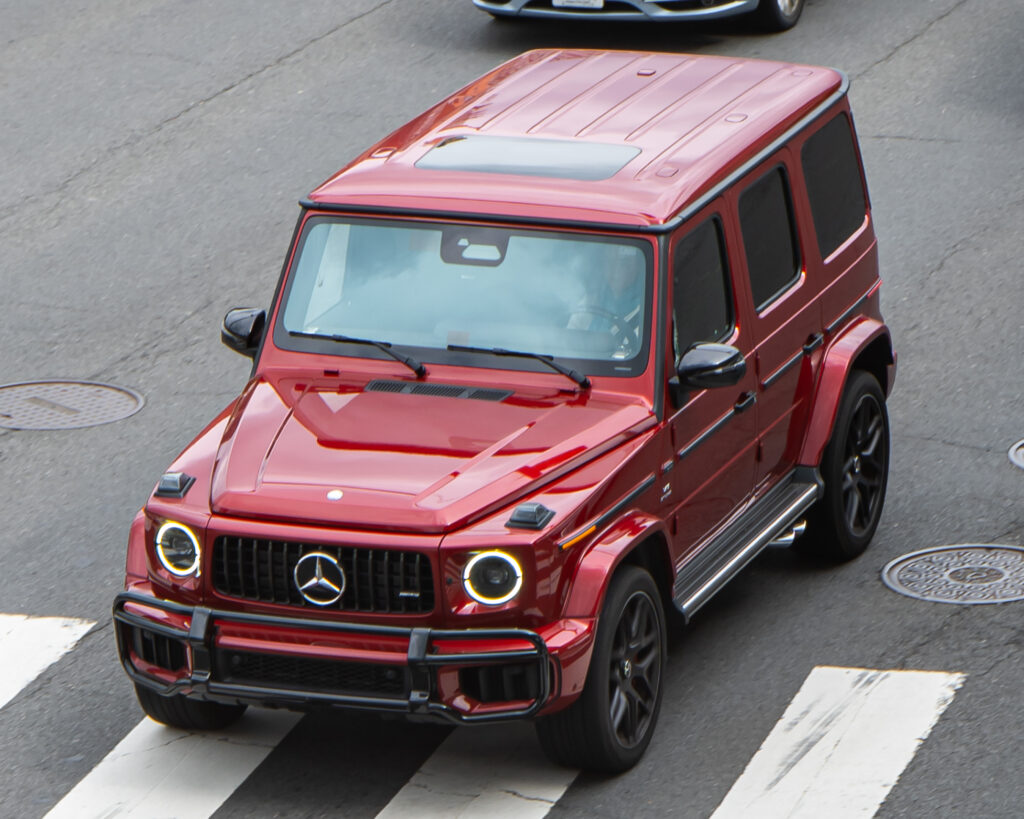
Image: OWS Photography, CC BY 4.0, via Wikimedia Commons
The diesel G-Class may be the more reasonable G. The AMG G 63 is the poster car.
The V8 sound, AMG grille, aggressive stance, and sheer absurdity of making this square off-roader accelerate like a performance car are what turn the G-Class from a luxury SUV into a dream object.
If the question is “Which G-Class makes the most sense?” the G 63 may not be the answer.
If the question is “Which G-Class feels most like the legend?” the G 63 is the obvious one.
Price-to-Value Judgment
The 2026 Mercedes-AMG G 63 starts at about $195,500 in the U.S. before options.
That price is difficult to justify by normal SUV logic.
For less money, a buyer can get a more comfortable luxury SUV, a roomier family SUV, a more efficient SUV, or even a faster performance SUV. A Mercedes-AMG GLE 63 S is quicker to 60 mph. A GLS is more spacious. A Range Rover is more relaxing. A Cadillac Escalade gives more visual size and interior drama.
But the G 63 does not sell because it wins those normal comparisons.
It sells because there is no direct substitute. The buyer is not just paying for horsepower, leather, technology, or cargo space. The buyer is paying for the one SUV that still feels like a military-derived design accidentally turned into a luxury icon.
That is expensive, but it is also unusually defensible.
Competitor Comparison
The Range Rover is the comfort alternative. It feels softer, calmer, and more luxurious in the traditional sense. If the buyer wants to arrive quietly and be carried in comfort, the Range Rover is the better answer.
The Mercedes-Benz GLS is the rational Mercedes alternative. It gives more space, more family usability, and a smoother luxury SUV experience. But it does not have the G 63’s emotional pull.
The BMW X7 is the German luxury SUV rival for buyers who want three-row comfort and technology. It competes with the GLS, not really with the G 63.
The Lexus LX offers body-on-frame durability and off-road credibility, but it does not have AMG drama or the same cultural status.
The Land Rover Defender is closer in spirit because it also has heritage and boxy design, but it feels more adventure-focused and less jewelry-like than the G 63.
That is why the G 63 is difficult to compare. Many SUVs can beat it in specific areas. Almost none can replace what it represents.
Recommended For
The Mercedes-AMG G 63 is recommended for buyers who want an SUV with real identity, road presence, V8 character, and cultural weight.
It makes sense for someone who already understands that comfort and efficiency are not the main point. It also makes sense for buyers who want a vehicle that feels special every time they open the door, start the engine, and hear the AMG V8.
If you want a dream SUV that does not blend into the normal luxury SUV crowd, the G 63 is one of the strongest choices in the world.
Not Recommended For
The G 63 is not recommended for buyers who want the smoothest luxury ride, the best fuel economy, the most cargo space for the money, or the most rational SUV purchase.
It is also not ideal for people who dislike attention. The G 63 is not subtle, even in a quiet color. It carries a social meaning before anyone sees the spec sheet.
And if the buyer simply wants a comfortable Mercedes SUV, the GLS will probably make more sense.
Buyer Verdict
The Mercedes-AMG G 63 is not the best SUV by normal measurements.
It is not the most comfortable. It is not the most efficient. It is not the most practical for the price. It is not the easiest luxury SUV to recommend to a purely rational buyer.
But it may be the most irreplaceable luxury SUV on sale.
The G 63 works because it has no true equivalent. Mercedes-Benz turned a military-rooted off-roader into a luxury performance icon without sanding away the shape that made it famous. The result is imperfect, expensive, loud, and deeply memorable.
That is why people want it.
Cariary Perspective
Cariary sees the G 63 as one of the smartest decisions Mercedes-Benz ever made.
Not because it is rational. It is not. Not because it is comfortable. Many owners openly admit it is not. Not because it is efficient. Nobody should expect that from a V8 AMG G-Wagen.
The genius of the G 63 is that Mercedes created an SUV no rival can neatly answer. BMW and Audi can match Mercedes sedan for sedan, crossover for crossover, and flagship for flagship. But they do not have a G-Wagen.
That is the G 63’s true product strength.
Comfortable SUVs are everywhere. Fast SUVs are everywhere. Expensive SUVs are everywhere. But a square, loud, AMG-powered luxury off-roader with this much history and image is not everywhere.
That is why the G 63 still matters.
One-Line Verdict
The Mercedes-AMG G 63 is not the most rational luxury SUV, but it is one of the few SUVs with no real substitute.
FAQ
Is the Mercedes-AMG G 63 comfortable?
It is luxurious, but not especially soft compared with SUVs like the GLS, Range Rover, or X7. The G 63 has a more upright, truck-like feel, and many owners accept that as part of its character.
Is the G 63 good for daily driving?
It can be daily driven, but it is large, heavy, thirsty, and attention-grabbing. Buyers should expect high fuel costs and a driving feel that is less relaxed than many modern luxury SUVs.
What engine does the 2026 Mercedes-AMG G 63 use?
The 2026 AMG G 63 uses a handcrafted AMG 4.0-liter V8 biturbo engine with hybrid assist, rated at 577 hp and 627 lb-ft of torque in U.S. specification.
Why is the G 63 so expensive?
The G 63 is expensive because it combines AMG performance, Mercedes luxury, hand-built heritage, extreme personalization, and a design identity that has no direct replacement in the market.
Is the G 63 better than a Range Rover?
It depends on what the buyer wants. The Range Rover is usually better for comfort and quiet luxury. The G 63 is better for presence, AMG character, and emotional identity.
Is the G 63 fuel efficient?
No. Mercedes-Benz USA lists the 2026 AMG G 63 at 14 mpg city and 16 mpg highway. Buyers should not expect fuel economy to be a strength.
Related Cars
Mercedes-Benz GLS
Range Rover P530
BMW X7
Lexus LX
Land Rover Defender
Cadillac Escalade
Data Reference Date
August 4, 2026