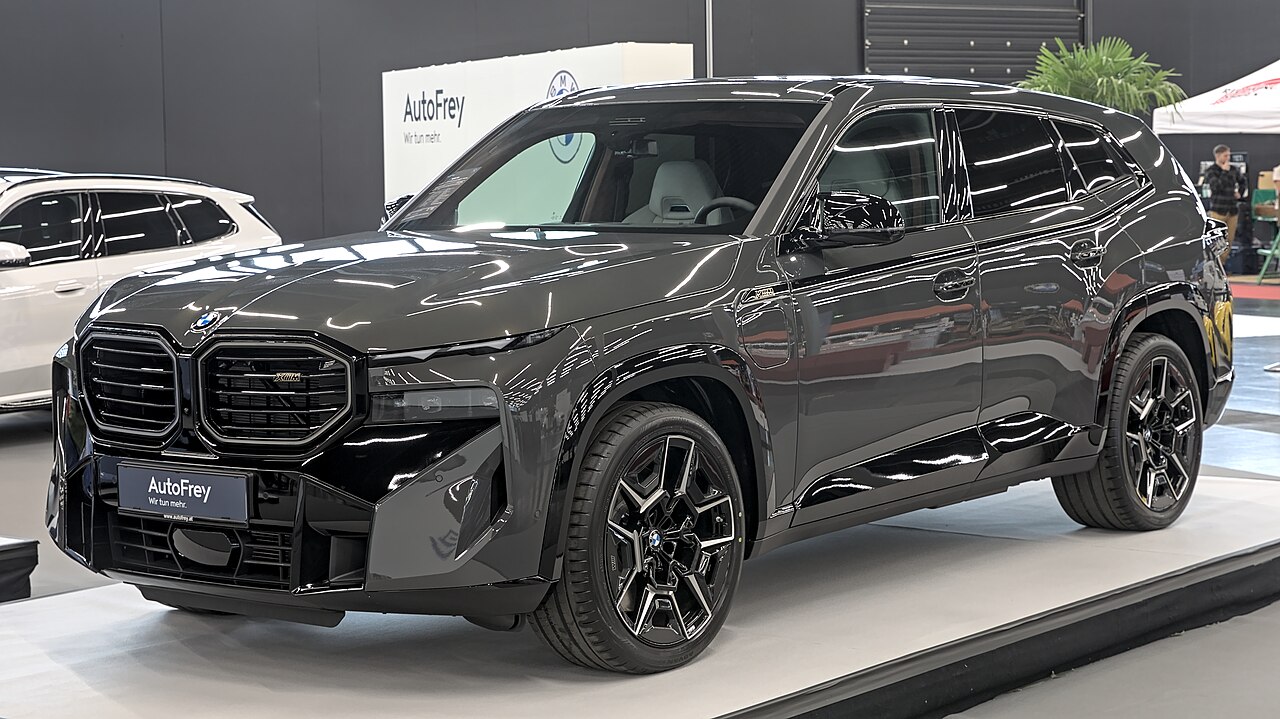
Core summary
The G09 XM combines plug-in-hybrid propulsion with a large five-seat SUV body. The V8 XM and Label differ from the six-cylinder XM 50e offered in selected markets.
The G09 XM is a plug-in-hybrid performance SUV with five seats. Its large body can invite comparison with the X7, but the seating brief is different. The original V8 XM and the selected-market six-cylinder XM 50e must also be kept separate; not every XM is a V8.
History & generations
BMW presented the original XM in 2022 as a distinct BMW M model. The later 50e expanded the range with a different combustion engine, while Label represents a higher-output derivative. Therefore a broad XM description should identify which variant supplies each number instead of treating later names as cosmetic packages.
Body, platform & design
The body’s visual size does not indicate a third row. This matters for buyers moving from a large family SUV: the XM’s rear area is a five-seat luxury proposition, not an additional-passenger solution. Its dimensions should be justified by the desired experience, rather than by a presumed capacity advantage.
_China_(2).jpg)
Engine & drivetrain
The original US XM pairs a 4.4-litre twin-turbo V8 with an electric motor for a stated 644 hp system output. BMW’s spring 2024 description of the XM 50e instead specifies a 3.0-litre inline-six and a transmission-integrated motor. Those engines have different identities even though both use plug-in-hybrid propulsion.
Trim differences
Distinguish XM, Label and 50e before comparing prices or performance. Market availability is part of the specification. A Label photograph cannot establish the output of another derivative, and the 50e’s six-cylinder configuration should not be described as a V8 with a reduced software rating.
Interior & seating
The five-seat layout puts the emphasis on the second row rather than a third-row access route. For a buyer attracted by the exterior, the cabin should still be tested as a passenger space. The comparison with an X7 becomes particularly revealing when the household sometimes needs six or seven seats.
Efficiency & range
Plug-in operation requires charging to make use of the electric-driving capability. Weighted official fuel figures combine assumptions about electric and combustion use; they should not be read as a guarantee for sustained travel without charging. Model both the ordinary charged week and a long journey after the battery’s usable electric range is spent.
Safety & equipment
Performance and all-wheel drive do not remove the need to account for vehicle size and tyre condition. Assistance equipment should be identified for the actual derivative and market. The presence of hybrid hardware is not a safety rating, and this profile makes no claim about the condition of an individual high-voltage system.
Strengths
The distinctive combination is a dedicated performance-SUV identity with externally rechargeable propulsion. For a buyer who wants that combination and charges regularly, it answers a specific brief. It is less persuasive as a purchase made solely to obtain the biggest BMW SUV or the most passenger seats.
The XM is a five-seat performance statement, not a three-row family substitute. Its plug-in system should be part of the owner’s routine rather than an unused feature behind a high power figure.
Considerations
The two propulsion systems make charging checks as relevant as combustion-engine checks. Verify the charging equipment and applicable battery documentation rather than focusing only on engine servicing. Also distinguish system output from the output of the engine alone when interpreting a seller’s claims.
Recommended use
Consider it for luxury performance travel with five-seat requirements and a workable charging routine. If the main need is three-row family transport, start elsewhere. If charging is impractical, assess whether the plug-in proposition still serves a purpose before buying primarily for its specification-sheet performance.
Rivals & related
A Porsche Cayenne E-Hybrid is a relevant plug-in performance-SUV comparison, with derivative matching essential. The BMW X7 M60i tests a different choice: V8 performance with three rows but without the XM’s plug-in brief. A purely electric SUV offers another route if avoiding combustion use is the actual priority.
FAQ
Q: Is every XM a V8?
A: No. The selected-market 50e uses an inline-six.
Q: Does the XM have three rows?
A: No. This is a five-seat SUV.
Q: Is the quoted system output the engine output alone?
A: No. It describes the combined hybrid system under the manufacturer’s rating.
What makes the BMW XM different?
The XM is a five-seat performance statement, not a three-row family substitute. Its plug-in system should be part of the owner’s routine rather than an unused feature behind a high power figure.
Who should consider it?
Luxury performance travel with regular charging
Sources & updates
Manufacturer references: BMW: original US XM introduction; BMW: XM 50e spring 2024 technical distinction. Direct links are listed below. These dated references identify the model years and markets discussed; they do not establish a universal specification.
Comparisons and suitability judgements are Cariary editorial analysis, not a first-hand road test. Photograph credits and captions identify illustrative vehicles; photographs alone do not verify trim or equipment.
- BMW: original US XM introduction →Dated manufacturer specification; editorial analysis distinguished in text.
- BMW: XM 50e spring 2024 technical distinction →Dated manufacturer specification; editorial analysis distinguished in text.
- Official model information →
View all official references (3 more)
- Manufacturer media archive →
- Photograph — Grey BMW XM G09, front three-quarter view →Alexander-93; CC BY-SA 4.0
- Photograph — BMW XM G09 at a Chinese display, rear three-quarter view →Dinkun Chen; CC BY-SA 4.0
Last editorial review: September 20, 2026 — vehicle-specific editorial revision. Specifications remain market- and model-year-specific.