Core summary
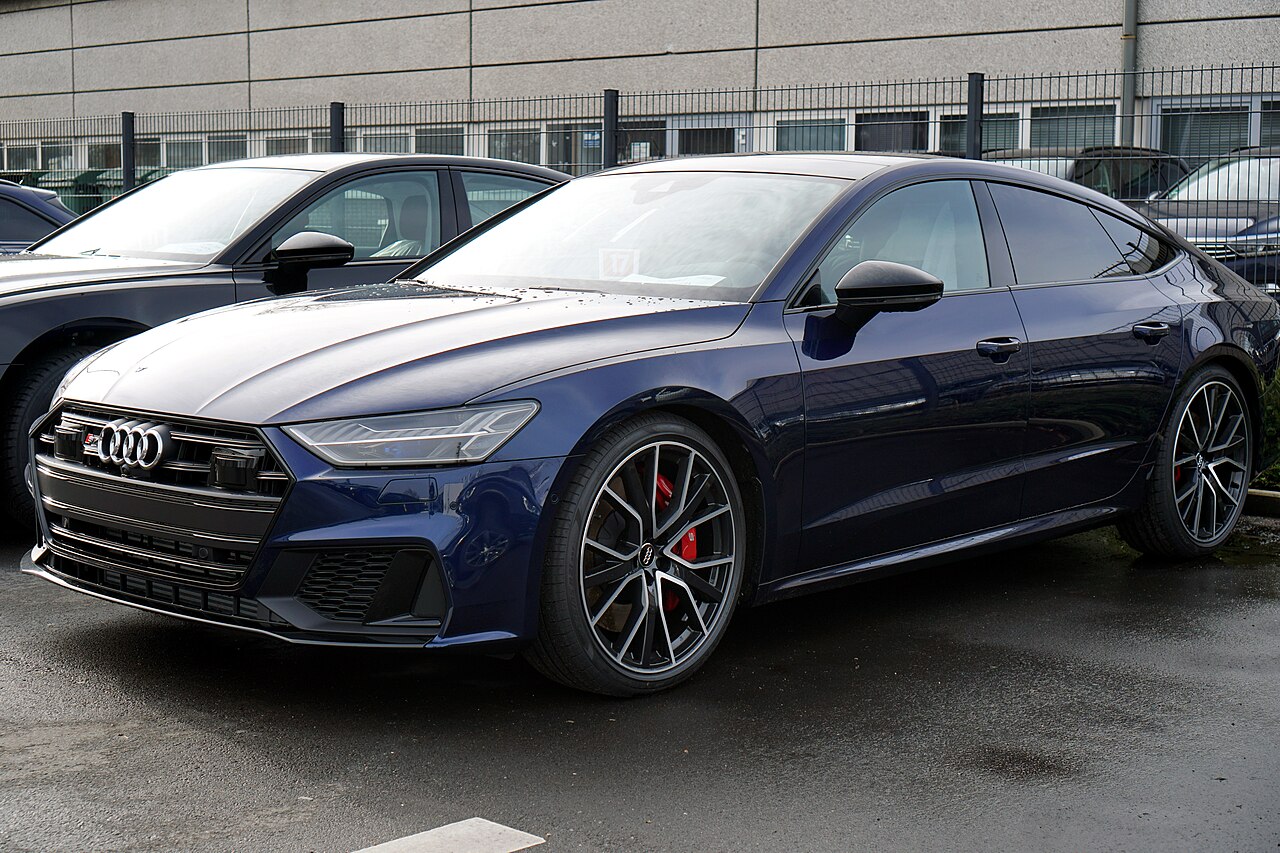
The C8 S7 Sportback combines a large liftback with quattro traction. European diesel and US petrol versions have materially different engines; an exterior photograph cannot identify the specification by itself.
The C8 S7 is a performance-oriented five-door Sportback with a large rear hatch. Its most important specification distinction is geographical: European TDI and other-market TFSI versions use different V6 engines. A single global engine description would erase the feature that most changes its ownership case.
History & generations
Audi’s 2019 introduction set out a diesel S7 for Europe and a 2.9 TFSI petrol version for markets including the United States. Later ratings should be tied to a dated technical sheet. This profile concerns the C8, not the earlier S7 whose engine specification is sometimes copied into newer-car listings.
Body, platform & design
Sportback describes the sloping rear body with hatch access. That opening makes the S7 different from a conventional sedan when loading bulky objects, but the roofline still matters for rear passengers. Its practicality should be judged with the rear seats occupied, not solely with the cabin folded into maximum-cargo mode.

Engine & drivetrain
The European C8 uses a 3.0-litre TDI V6; the petrol alternative uses a 2.9-litre twin-turbo TFSI V6. Audi’s 2024 TDI sheet lists 700 Nm. Fuel type, output and emissions equipment must therefore be matched to the particular vehicle, even when two S7s look almost identical.
Trim differences
An A7 with S line styling is not an S7, and an S7 is not an RS7. These are different product choices, not simply ascending appearance packages. Within the S7 search, resolve the TDI/TFSI distinction before comparing cosmetic options or interpreting a seller’s performance claim.
Interior & seating
The five-door format is useful for buyers who dislike the loading restriction of a separate boot. Rear headroom and access remain separate questions, especially for adults. The cabin should be considered as a long-distance passenger environment rather than assuming that performance branding makes rear accommodation unimportant.
Efficiency & range
The diesel’s ownership calculation is different from the petrol car’s. For sustained longer journeys, compare the TDI’s fuel use and local diesel rules; for the TFSI, use the applicable petrol specification. Neither should inherit the other’s economy figure simply because the model name and body are shared.
Safety & equipment
Confirm the assistance equipment of the selected S7 rather than borrowing a fully optioned A7 or RS7 specification. Quattro traction does not replace suitable tyres or attentive braking. No crash rating is inferred here from the performance badge or from the presence of all-wheel drive.
Strengths
The distinctive proposition is performance combined with a large liftback body. It can serve a buyer who needs luggage access but does not want an SUV. That advantage remains relevant whether the powertrain is diesel or petrol, although the appropriate journey pattern can differ substantially.
An S7 comparison starts with fuel type and market. The shared Sportback body does not make the European diesel and the petrol version mechanically interchangeable.
Considerations
Imported cars deserve special attention to original market and fuel system. The correct service requirements follow the actual engine, not a generic S7 search result. Resolve this before pricing maintenance or buying parts; otherwise even apparently model-specific advice can concern the wrong car.
Recommended use
Consider the S7 for longer-distance travel where a hatch is genuinely useful and performance remains a preference. A diesel-oriented motorway assignment and a petrol enthusiast purchase can both be reasonable, but they are not the same brief. Choose the version around the brief rather than the badge alone.
Rivals & related
A Porsche Panamera and Mercedes-AMG GT 4-Door provide alternative performance-liftback approaches. An ordinary A7 is the internal test of whether S-level performance is needed. Compare engines and body utility separately; a compelling hatchback layout does not by itself justify the more expensive drivetrain.
FAQ
Q: Are all C8 S7s petrol cars?
A: No. Europe received a TDI version.
Q: Is A7 S line mechanically equivalent?
A: No. Styling designation and performance derivative are different.
Q: Can the same engine figures be used worldwide?
A: No. Match fuel type, market and model year.
What makes the Audi S7 Sportback different?
An S7 comparison starts with fuel type and market. The shared Sportback body does not make the European diesel and the petrol version mechanically interchangeable.
Who should consider it?
Long-distance performance with liftback practicality
Sources & updates
Manufacturer references: Audi: European S6 and S7 TDI introduction and other-market TFSI distinction; Audi: S7 TDI technical data, March 2024. Direct links are listed below. These dated references identify the model years and markets discussed; they do not establish a universal specification.
Comparisons and suitability judgements are Cariary editorial analysis, not a first-hand road test. Photograph credits and captions identify illustrative vehicles; photographs alone do not verify trim or equipment.
- Audi: European S6 and S7 TDI introduction and other-market TFSI distinction →Dated manufacturer specification; editorial analysis distinguished in text.
- Audi: S7 TDI technical data, March 2024 →Dated manufacturer specification; editorial analysis distinguished in text.
- Official model information →
View all official references (4 more)
- Manufacturer media archive →
- Audi S7 TDI official technical data →
- Photograph — Blue Audi S7 C8, front three-quarter view →Sestmedia; CC BY-SA 4.0
- Photograph — Grey Audi S7 C8 Sportback, rear three-quarter view →Alexander Migl; CC BY-SA 4.0
Last editorial review: September 20, 2026 — vehicle-specific editorial revision. Specifications remain market- and model-year-specific.