Core summary
The SX2 Kona Electric is not the turbocharged petrol Kona. Battery size and charging access are the meaningful choices in this compact front-drive EV.
This page covers the second-generation SX2 Kona Electric, using the 2024–2025 US range as a dated specification reference. It has a front electric motor and no petrol engine. The similarly named gasoline Kona must not contribute engine, all-wheel-drive or MPG data to this profile.
Cariary would choose the battery version before the trim. A smaller battery can be entirely adequate for predictable local use, but an attractive purchase price loses meaning if it creates inconvenient charging stops on a route you drive every week.
History & generations
The SX2 generation arrived after the original Kona Electric and brought a larger cabin and cargo area. US second-generation sales began with the 2024 model year. Registration dates, launch dates and model years are different labels; check the original documents when comparing inventory.
This guide does not claim that every subsequent US model year has identical availability or charging hardware. Its dated reference avoids presenting an old specification as a newly confirmed model.
Body, platform & design
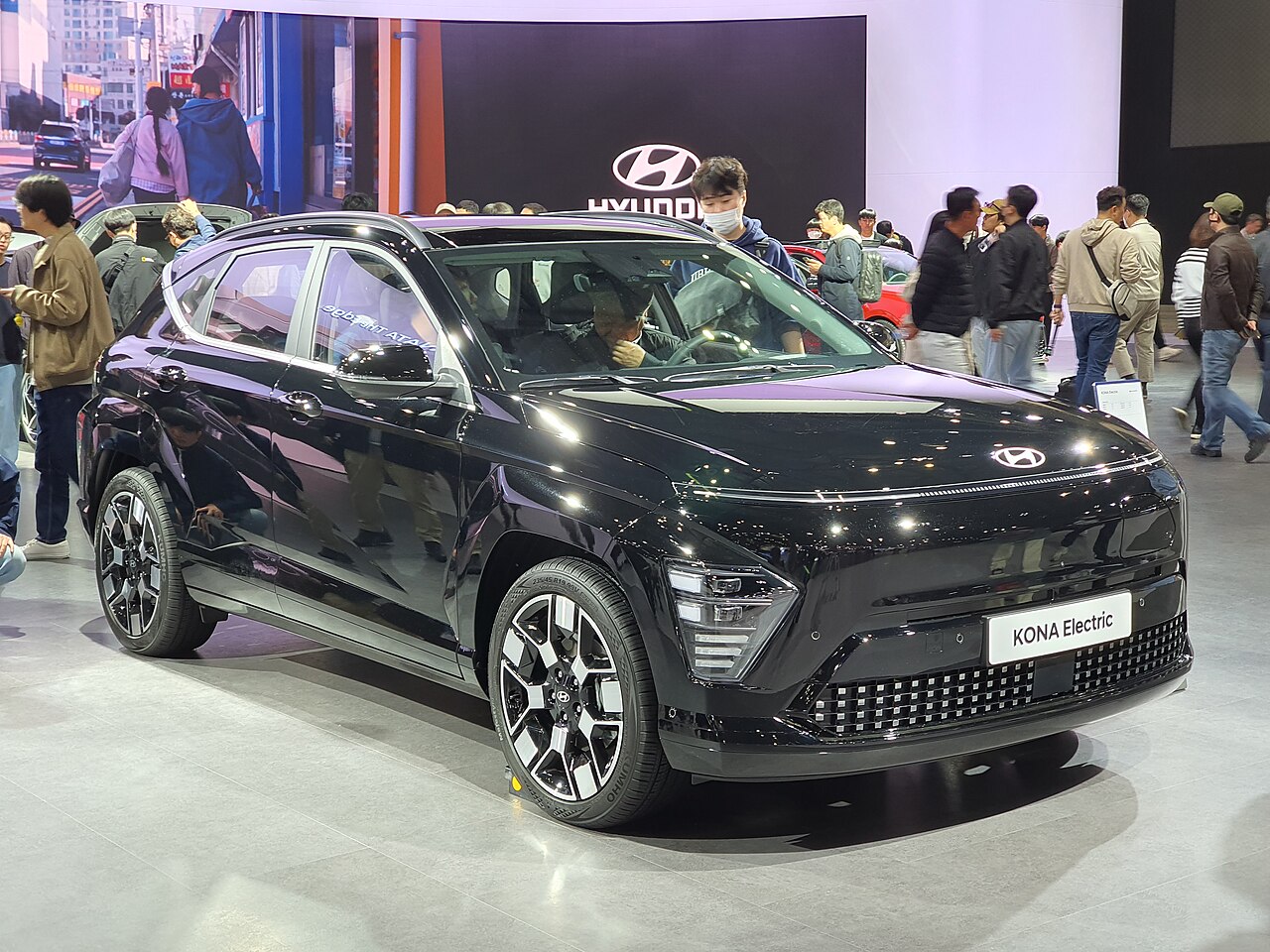
The front light strip and pixel-like lower details distinguish the electric car's presentation. The gallery shows Korean-market SX2 examples, including a separately identified N Line cabin. Their appearance illustrates the generation, not an exact US equipment list.
Inspect rear-seat space with the driver's seat set normally. Also test your usual luggage under the parcel shelf; a quoted cargo volume is less useful than knowing whether a stroller or bulky work bag fits without folding a seat.
.jpg)
Engine & drivetrain
The cited US range separates a 133-hp standard-range version from a 201-hp long-range version. Both drive the front wheels through a single-speed reduction gear. For the 2025 reference, battery capacities are 48.6 and 64.8 kWh respectively.
Do not substitute the 65.4-kWh or 160-kW numbers found in some European material without stating that market. The electric version is also not a 1.6-litre turbo or 2.0-litre gasoline model, however similar the exterior badge may appear.
.jpg)
Trim differences
Choose battery capacity, then compare comfort and assistance equipment. Hyundai's 2025 US charging information groups SE with the smaller battery and SEL, N Line and Limited with the larger pack. N Line appearance does not by itself mean a different drive layout.
Price the exact wheels and tyres. The best-looking demonstrator may not be the version with the range or replacement cost most suitable for your use.
Interior & seating
The photographed N Line cockpit has a column-mounted selector and a broad display arrangement. Try the selector, climate controls and navigation with the car stationary, then consider whether their operation feels natural. Market-specific trim and software can differ from the image.
Check rear access and child-seat installation rather than assuming a small crossover automatically solves family packaging. If adults regularly travel in back, have them sit there for the assessment.
Efficiency & range
Compare electric range and energy consumption, not gasoline MPG. The US launch advertised up to 261 EPA-estimated miles for an eligible configuration; that is not a promise for every trim, season or motorway speed.
Home charging changes the ownership calculation. Establish the available supply, installation cost and overnight window before purchase. If you rely on public DC charging, rehearse a typical route and compare total stop time, including detours and queues, with faster-charging alternatives.
Safety & equipment
Check the precise assistance equipment on the original build sheet and demonstrate its menus. Inspect charging-port condition and obtain service and campaign records by VIN. For a used EV, request a meaningful battery-health assessment rather than treating the dashboard's estimated range as a capacity test.
Strengths
The Kona Electric's strongest argument is fitting electric commuting into a relatively compact vehicle. It does not require buying the size or performance of a large dual-motor SUV merely to avoid daily petrol use.
For owners who charge at home, modest daily mileage can make the smaller-battery version worth considering. The right answer depends on the longest routine trip, not the longest trip you might imagine taking once.
A sensible small-EV shortlist candidate when home charging and compact dimensions matter more than all-wheel drive or the fastest motorway charging stops.
Considerations
Do not assume Kona Electric shares the IONIQ 5's high-power charging proposition. Charging architecture, station compatibility and battery temperature all affect a stop. Ask for a demonstration with your intended charging method.
Imports need particular care: connector standards, connected services and warranty coverage may differ. The existence of a local Hyundai dealer does not automatically establish support for every overseas specification.
Recommended use
Shortlist it for commuting, errands and smaller-family duties with dependable charging. It is less persuasive if your life requires all-wheel drive, frequent towing or repeated long motorway journeys with tightly limited stop time.
A practical comparison should include parking, rear accommodation and charging access on the same day. These factors distinguish a useful EV from a merely appealing specification sheet.
Rivals & related
The Kia Niro EV is a close everyday-use comparison. The larger Hyundai IONIQ 5 asks whether extra space and a different charging proposition justify its footprint and cost. Also compare a conventional hybrid if dependable charging is unavailable.
Match battery size and equipment when comparing prices; a base small-pack car and a loaded long-range example are not direct equivalents.
FAQ
Does Kona Electric have a petrol engine? No. Is all-wheel drive part of the cited US electric range? No, it is front-wheel drive.
Can European battery figures be used for a US car? Only with an explicit market distinction. This article uses dated US specifications and separately labels the photographed market examples.
What makes the Hyundai Kona Electric different?
A sensible small-EV shortlist candidate when home charging and compact dimensions matter more than all-wheel drive or the fastest motorway charging stops.
Who should consider it?
Daily commuting with convenient overnight charging
Sources & updates
Manufacturer references identify the dated specifications used here. Cariary buying assessments are editorial analysis, not a claimed first-hand road test or a diagnosis of an individual vehicle. Photographs carry individual source and licence credits. Confirm the exact build, market and equipment before purchase; photographs of another trim do not establish your car’s specification.
- Hyundai US 2024 Kona Electric launch specifications →
- Hyundai USA 2025 Kona Electric →
- Hyundai global second-generation Kona introduction →
View all official references (3 more)
- Photograph — Black second-generation Hyundai Kona Electric →Damian B Oh; CC BY-SA 4.0
- Photograph — Hyundai Kona Electric N Line cockpit and column selector →Damian B Oh; CC BY-SA 4.0
- Photograph — Yellow Hyundai Kona Electric with front charging flap →Damian B Oh; CC BY-SA 4.0
Last editorial review: September 20, 2026. Specifications remain market- and model-year-specific.