Core summary
The second NEXO is an electric-drive SUV that refuels with hydrogen. Its decisive ownership specification is the station network you can actually use.
The NH2 NEXO is a fuel-cell electric vehicle, not a gasoline hybrid and not an ordinary plug-in battery EV. Hydrogen feeds a fuel-cell system, and an electric motor drives the front wheels. The distinction matters because a public electricity charger cannot substitute for a hydrogen filling station.
Cariary's first screening question is geographical: can you refuel reliably near home, work and the journeys you actually make? If the answer depends on a single fragile option, the attractive vehicle specifications do not solve the ownership problem.
History & generations
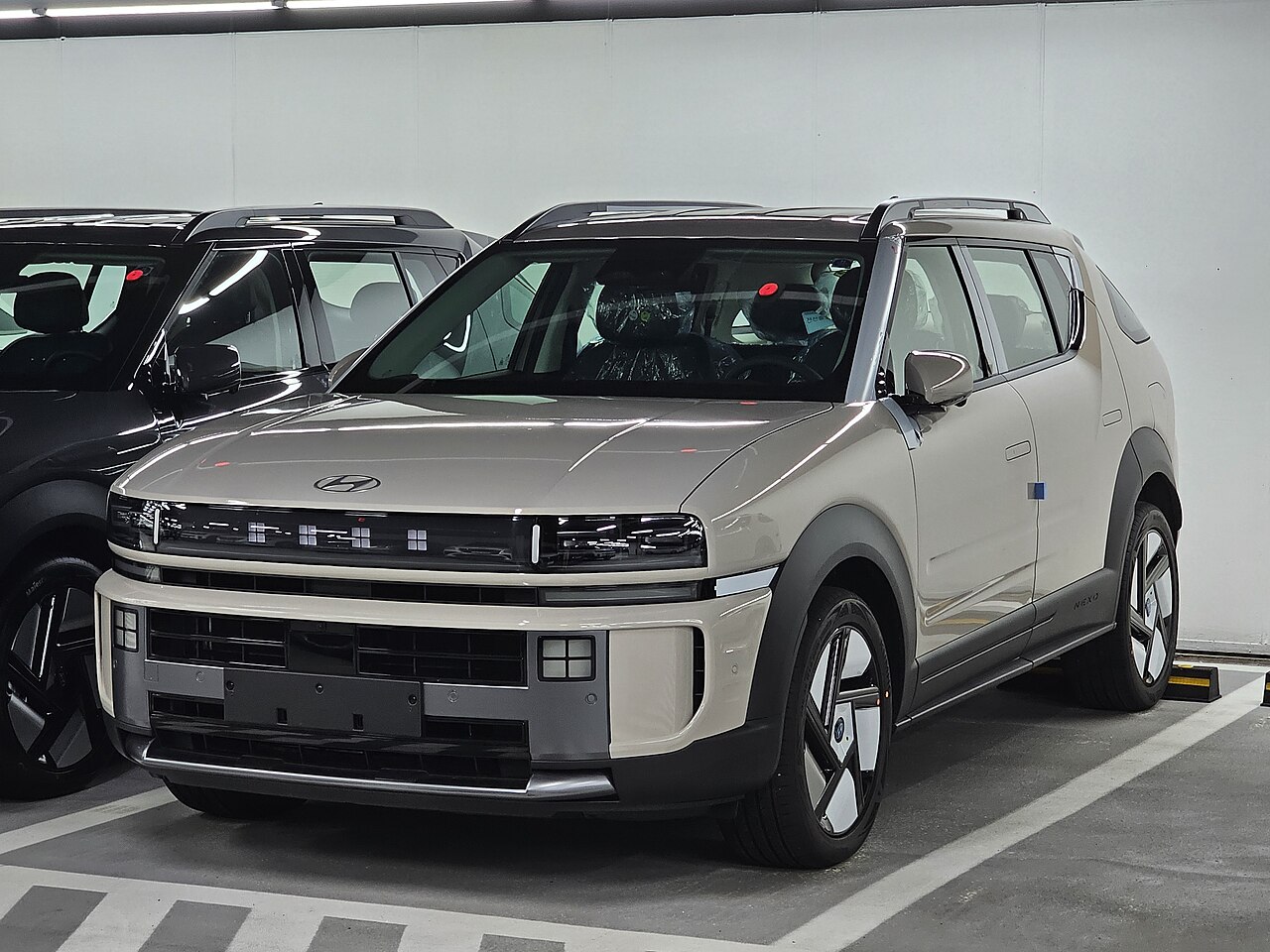
This is the second-generation model, launched in Korea in 2025 with global rollout from 2026. It is not the earlier FE-generation NEXO. The gallery contains NH2 examples with the new, more upright body and rectangular lighting treatment.
A global announcement does not confirm a particular US sales specification. Verify local ordering, warranty and service support before treating an international launch as an offer in your country.
Body, platform & design
The squared-off nose and tall rear distinguish this NEXO from its predecessor. The photographs show both front and rear shapes, including separate display vehicles. They should be used to understand the body, not infer that every mirror or wheel option is standard everywhere.
Open the tailgate and test the luggage arrangement yourself. Hydrogen packaging makes it especially important to judge the actual load floor and usable space rather than borrowing a number from another measurement method.
.jpg)
Engine & drivetrain
Hyundai lists a 150-kW front drive motor and hydrogen storage of up to 6.69 kg. The manufacturer's quoted 7.8 seconds is a 0–100 km/h figure under its stated test conditions, not an independently measured 0–60 mph time.
Do not confuse the drive motor's output with the separate ratings for the fuel-cell stack, battery or combined electrical supply. Those components perform different roles. Adding their ratings together does not produce a valid wheel-power figure.
.jpg)
Trim differences
The Korean launch sheet distinguishes equipment packages including wheel and comfort choices. Compare those with the actual local specification rather than using a Korean trim name as a worldwide standard.
If a car has digital mirrors or unusual display equipment, try them in realistic light and check local legality and support. Sophisticated options are useful only when they suit the driver and remain serviceable where the vehicle will live.
Interior & seating
The five-seat arrangement targets ordinary passenger use despite the unusual fuel. Test rear entry, child-seat access and luggage space in the same way as a conventional SUV. Do not let the novelty of the powertrain distract from whether the cabin fits the family.
During the handover, learn the hydrogen-level display, refuelling procedure and normal warning messages. Clear familiarity with these controls is more valuable than merely pairing a phone before driving away.
Efficiency & range
Hyundai's November 2025 briefing projected 826 km WLTP range for an eligible European model on 18-inch wheels. Treat that as the explicitly qualified claim it is, not a guaranteed route distance or a US EPA result. Refuelling time also depends on station and ambient conditions.
Calculate cost per journey from hydrogen price per kilogram and realistic consumption. Include detours to stations. A quick refill is less convenient if it requires a long drive away from your route.
Safety & equipment
Use the manufacturer's refuelling procedure and qualified service facilities; the high-pressure hydrogen system is not a DIY maintenance project. For any used example, obtain inspection records, campaign status and the applicable tank-service requirements.
The launch material's intention to achieve strong crash results is not itself a crash-test award. Check an actual applicable assessment rather than converting a development objective into a claimed rating.
Strengths
The NEXO offers an alternative way to obtain electric propulsion without routine plug-in charging. In an area with dependable hydrogen supply, that may fit a driver whose parking situation makes overnight charging difficult.
The key attraction is therefore conditional convenience. The car and the fuel network should be evaluated as one purchase decision, not as unrelated subjects.
Technically interesting and potentially convenient in the right location. Do not buy it on range or refuelling-time claims before checking station availability, fuel cost and a realistic backup route.
Considerations
Visit or check the stations you would rely on before ordering, including operating hours, payment access and a second practical location. Ask what happens during an outage and whether any fuel allowance expires.
Also investigate resale and service options without assuming future infrastructure growth. A promised expansion should not be treated as an existing facility when judging today's ownership risk.
Recommended use
Consider NEXO when a reliable hydrogen network already fits your routine and local support is clear. It is much harder to recommend for someone who travels widely through areas without compatible stations.
Make a map of normal weekly trips and at least one longer journey, then test the backup-refuelling plan. This is a more useful exercise than comparing range headlines alone.
Rivals & related
A Toyota Mirai is a fuel-cell comparison where sold, although its body and passenger packaging differ. A battery-electric SUV such as the Hyundai IONIQ 5 offers a different infrastructure solution. A conventional hybrid remains relevant when neither charging nor hydrogen access is dependable.
Compare the whole energy arrangement, not just the vehicle's purchase price.
FAQ
Can NEXO use a normal EV fast charger instead of hydrogen? No. Is 150 kW the same as the fuel-cell stack rating? No; it is the drive-motor rating.
Does this page confirm US availability? No. It describes the NH2 generation with explicitly identified Korean and European manufacturer references.
What makes the Hyundai NEXO different?
Technically interesting and potentially convenient in the right location. Do not buy it on range or refuelling-time claims before checking station availability, fuel cost and a realistic backup route.
Who should consider it?
Electric driving where reliable hydrogen refuelling is available
Sources & updates
Manufacturer references identify the dated specifications used here. Cariary buying assessments are editorial analysis, not a claimed first-hand road test or a diagnosis of an individual vehicle. Photographs carry individual source and licence credits. Confirm the exact build, market and equipment before purchase; photographs of another trim do not establish your car’s specification.
- Hyundai second-generation NEXO technical briefing, November 2025 →
- Hyundai Korea NEXO launch price and equipment sheet, June 2025 →
- Hyundai NEXO Korean technical catalogue →
View all official references (3 more)
- Photograph — Second-generation Hyundai Nexo front and side →Damian B Oh; CC BY-SA 4.0
- Photograph — Copper-coloured second-generation Hyundai Nexo Prestige rear →Damian B Oh; CC BY-SA 4.0
- Photograph — White second-generation Hyundai Nexo front →Damian B Oh; CC BY-SA 4.0
Last editorial review: September 20, 2026. Specifications remain market- and model-year-specific.