Core summary
The refreshed EV6 pairs a low crossover shape with larger battery choices. GT-Line is not GT, and the standard-range car must not disappear from the specification.
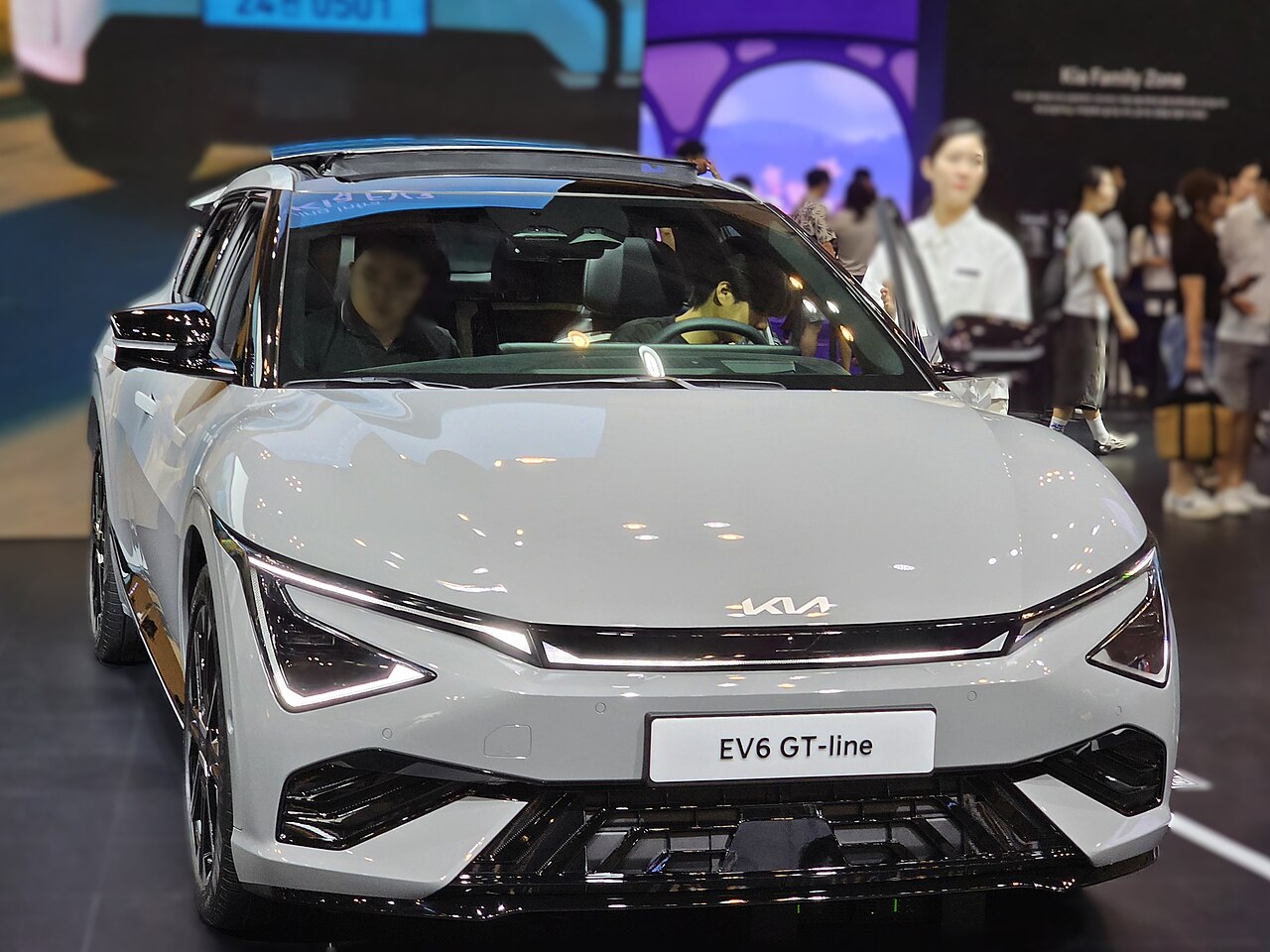
This guide focuses on the refreshed EV6, using the 2025 US regular range as its numerical reference. The separate GT performance model is identified rather than blended into every version. The gallery shows facelift GT-Line examples, not GT cars.
Cariary would shortlist the EV6 for drivers who want an EV with a relatively low, car-like silhouette and a strong charging proposition. Its suitability still depends on actual chargers and passenger space, not merely the platform's headline voltage.
History & generations
The original EV6 launched in 2021, with US sales for model year 2022. The later refresh is still part of that first generation, but battery and exterior changes mean an earlier used example should not automatically receive the new specification.
Check the original model year and charging equipment. A late registration date or an updated infotainment screen does not prove that a car has the larger refreshed battery.
Body, platform & design
The refreshed front lamps create a different face from the original EV6. The low roof, long passenger compartment and curved rear light treatment remain central to its shape. The separate rear photograph also shows why it should not be assessed like a tall, square-backed SUV.
Try loading tall items beneath the sloping hatch. A wide opening can help with bags while still limiting the height of a bulky object.
.jpg)
Engine & drivetrain
Kia's 2025 US data lists a 63-kWh standard-range rear-drive version at 167 hp. The 84-kWh regular models provide 225 hp with rear-wheel drive or 320 hp with dual-motor all-wheel drive. Omitting the 167-hp entry car would misdescribe the range.
GT is a separate high-performance derivative; GT-Line is not shorthand for that drivetrain. Compare the exact version and avoid applying launch-mode power to a car that does not have it.
.jpg)
Trim differences
Battery size and drive layout are the first decisions. A long-range rear-drive car and an all-wheel-drive car can answer different needs even when they share a trim name. Then compare seat, lighting and assistance equipment.
The Korean GT-Line cabin photograph illustrates an equipment example, not a guarantee for a US Wind or Light model. Ask for a build-specific feature list and try the seats rather than ordering from the display image.
Interior & seating
The interior view shows a low centre console with a rotary selector and broad screen arrangement. Test the climate and media controls carefully, including how their functions are selected. Make sure the interface suits you rather than assuming every new display is easier to use.
Rear passengers should assess the floor-to-seat relationship and headroom. If a panoramic roof or particular seat option changes comfort, that can matter more than a performance upgrade.
Efficiency & range
Kia's charging claims depend on suitable hardware and battery conditions. A short ideal 10–80 percent session is not the time for charging from empty to full, nor a promise at every charger.
The 2025 US update also changes charging-port arrangements on regular models. Check connector compatibility, adapter requirements and usable stations on your route before purchase. Do not use an overseas photograph of the port location to settle the specification of a US car.
Safety & equipment
Have outstanding service campaigns checked by VIN and ask for documentation of completed work, including charging-system updates where applicable. Demonstrate both AC and DC charging if evaluating a used example and practical access permits it.
Check tyres for appropriate specification and uneven wear. All-wheel drive and strong acceleration do not make a heavy EV immune to braking-distance or poor-weather limitations.
Strengths
The EV6 combines a distinctive low crossover body with a choice of rear- and all-wheel-drive electric systems. For a buyer who does not need a tall SUV, that is a worthwhile alternative to choosing size merely for the sake of an electric powertrain.
The charging proposition is most valuable when compatible stations are on journeys you actually take. At home, convenient overnight charging can be a larger benefit than the maximum DC figure.
A useful road-trip EV candidate when compatible charging is on your routes. Decide battery and drivetrain first, then test the low roof and rear seating against your real passenger needs.
Considerations
Separate early and refreshed cars when comparing battery sizes and connectors. Also separate GT-Line styling from GT performance. These two distinctions prevent many misleading used-car comparisons.
Try tight parking and hatch access. The EV6's shape can look compact in isolation, but the space it needs at home is best measured rather than guessed from photographs.
Recommended use
The long-range versions merit attention for mixed commuting and longer trips with reliable charging. The standard-range car can make sense for a predictable local routine, provided its actual range margin remains comfortable in poor weather.
If frequent rear passengers prefer a more upright seating position, compare a taller EV before deciding that the sportier-looking body is automatically the best all-rounder.
Rivals & related
The Hyundai IONIQ 5 is the most useful contrasting body-style comparison within the wider platform family. The Tesla Model Y offers another route to electric family transport. A Kia Niro EV may suit buyers who prioritise a smaller footprint over the EV6's charging proposition.
Compare seats, charging access and insurance on like-for-like versions rather than deciding from acceleration alone.
FAQ
Is GT-Line the same as GT? No. Does the refreshed regular US range begin at 225 hp? No; the cited standard-range car has 167 hp.
Does an ideal fast-charge claim apply to every station? No. Charger capability, temperature, battery state and compatibility all affect the result.
What makes the Kia EV6 different?
A useful road-trip EV candidate when compatible charging is on your routes. Decide battery and drivetrain first, then test the low roof and rear seating against your real passenger needs.
Who should consider it?
Electric commuting and planned long-distance travel
Sources & updates
Manufacturer references identify the dated specifications used here. Cariary buying assessments are editorial analysis, not a claimed first-hand road test or a diagnosis of an individual vehicle. Photographs carry individual source and licence credits. Confirm the exact build, market and equipment before purchase; photographs of another trim do not establish your car’s specification.
- Kia US refreshed 2025 EV6 launch →
- Kia US 2025 EV6 technical specifications →
- Kia UK EV6 battery and charging information →
View all official references (3 more)
- Photograph — Grey facelift Kia EV6 GT-Line front →Damian B Oh; CC BY-SA 4.0
- Photograph — Facelift Kia EV6 GT-Line rear on a street →Damian B Oh; CC BY-SA 4.0
- Photograph — Facelift Kia EV6 GT-Line cockpit →Damian B Oh; CC BY-SA 4.0
Last editorial review: September 20, 2026. Specifications remain market- and model-year-specific.