Core summary
2020 European launch specification, 992.1 911 Turbo. Source-based specification and buying analysis.
The useful Turbo question is not whether a faster 911 exists. It is whether this particular performance level and body style suit the journeys and maintenance budget you have in mind.
History & generations
Porsche introduced this 992-generation Turbo in July 2020. The reference is the Turbo, not the separately specified Turbo S or a later update.
Body, platform & design
Both Coupe and Cabriolet versions were announced. The cabin retains a 2+2 seating layout rather than four equally sized passenger places.

Engine & drivetrain
Its 3,745-cc twin-turbo flat-six delivers 427 kW, 580 PS and 750 Nm through an eight-speed PDK transmission.
Trim differences
A sports chassis and sports exhaust were optional. Confirm fitted hardware before borrowing impressions or prices from a differently equipped example.
Interior & seating
Test the seats with the people who will actually travel. Treat the rear places as a packaging question to verify, not a reason to skip a practical inspection.
Efficiency & range
Budget from expected mileage, insurance and replacement consumables. The purchase discount on a used Turbo can be misleading if an overdue maintenance bill is omitted.
Safety & equipment
Keep any performance exploration within legal conditions and the driver's ability. A buying inspection can establish condition without attempting the advertised acceleration.
Strengths
The strongest case is a conscious preference for this Turbo configuration rather than buying the highest specification affordable on the day. Reserve funds for keeping it properly maintained.
The strongest case is a conscious preference for this Turbo configuration rather than buying the highest specification affordable on the day. Reserve funds for keeping it properly maintained.
Considerations
Have a Porsche specialist review service history, diagnostics, repairs and modifications. A clean exterior cannot resolve whether a tuned vehicle still matches the standard reference.
Recommended use
For touring, test luggage and cabin fit on a longer ordinary journey. For occasional leisure use, plan storage, charging support for the battery and service access.
Rivals & related
Compare Turbo with Turbo S only after pricing equivalent condition and options. Decide what additional capability you would use instead of treating the suffix as an automatic upgrade.
FAQ
Porsche quotes 0–100 km/h in 2.8 seconds and a 320-km/h maximum for this reference. These are manufacturer figures, not measurements from this guide.
What makes the Porsche 911 Turbo different?
The strongest case is a conscious preference for this Turbo configuration rather than buying the highest specification affordable on the day. Reserve funds for keeping it properly maintained.
Who should consider it?
High-performance road and grand touring
Sources & updates
Reference scope: 2020 European launch specification, 992.1 911 Turbo. Research-based guide; no hands-on road test is claimed. Manufacturer specifications are distinguished from Cariary buying interpretation. Text reviewed 15 October 2026. Sources for the revised text:
https://newsroom.porsche.com/en_AU/2020/products/porsche-new-911-turbo-coupe-cabriolet-premiere-21504.html
- Manufacturer reference — 2020 European launch specification, 992.1 911 Turbo →Source used for the stated historical model-year specification; not a claim of a current range.
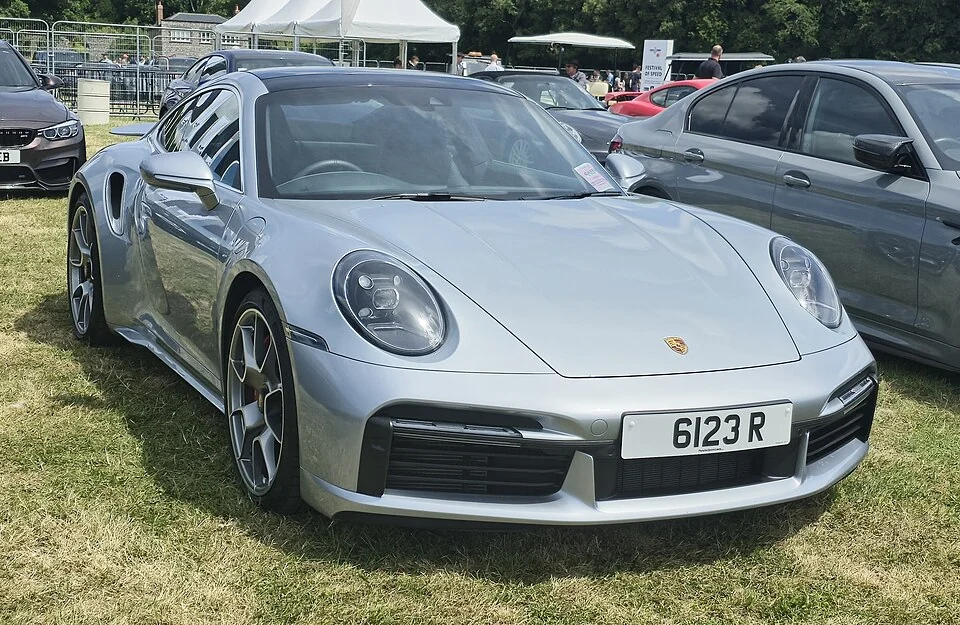
- Photo 1 — Calreyn88 →Resized and encoded as WEBP; original composition retained. Front exterior. Porsche 911 Turbo 992.1, not Turbo S, photographed in the UK; later examples illustrate the body, not the exact 2020 launch specification.
- Photo 2 — Calreyn88 →Resized and encoded as WEBP; original composition retained. Rear exterior. Porsche 911 Turbo 992.1, not Turbo S, photographed in the UK; later examples illustrate the body, not the exact 2020 launch specification.
View all official references (1 more)
- Photo reuse terms — CC BY-SA 4.0 →Applies to the photographs carrying this license above.
Last editorial review: October 15, 2026. Specifications remain market- and model-year-specific.