Core summary
The refreshed petrol Cayenne ranges from a V6 daily-use SUV to specialised V8 derivatives. This page does not mix it with the E-Hybrid or the separate electric Cayenne.
This profile covers the third-generation E3 petrol Cayenne, focusing on the refresh introduced for the 2024 US model year. SUV and Coupe body styles require separate practical checks. Plug-in E-Hybrid versions and the electric Cayenne are outside this page's powertrain scope.
Cariary's view is that the Cayenne should first work as the family vehicle it is being bought to replace. Performance can add enjoyment, but it cannot compensate for the wrong seating arrangement, poor visibility or an uncomfortable wheel specification.
History & generations
The E3 generation began in 2017 and received a substantial update in 2023. A refreshed vehicle is not automatically an entirely new generation. Model-year descriptions also vary by market, so establish build date and specification together.
The change is especially important when researching a Cayenne S. The refreshed S uses a V8, whereas an earlier E3 S can have a V6. A search result for one should not be copied into the other car's specification.
Body, platform & design
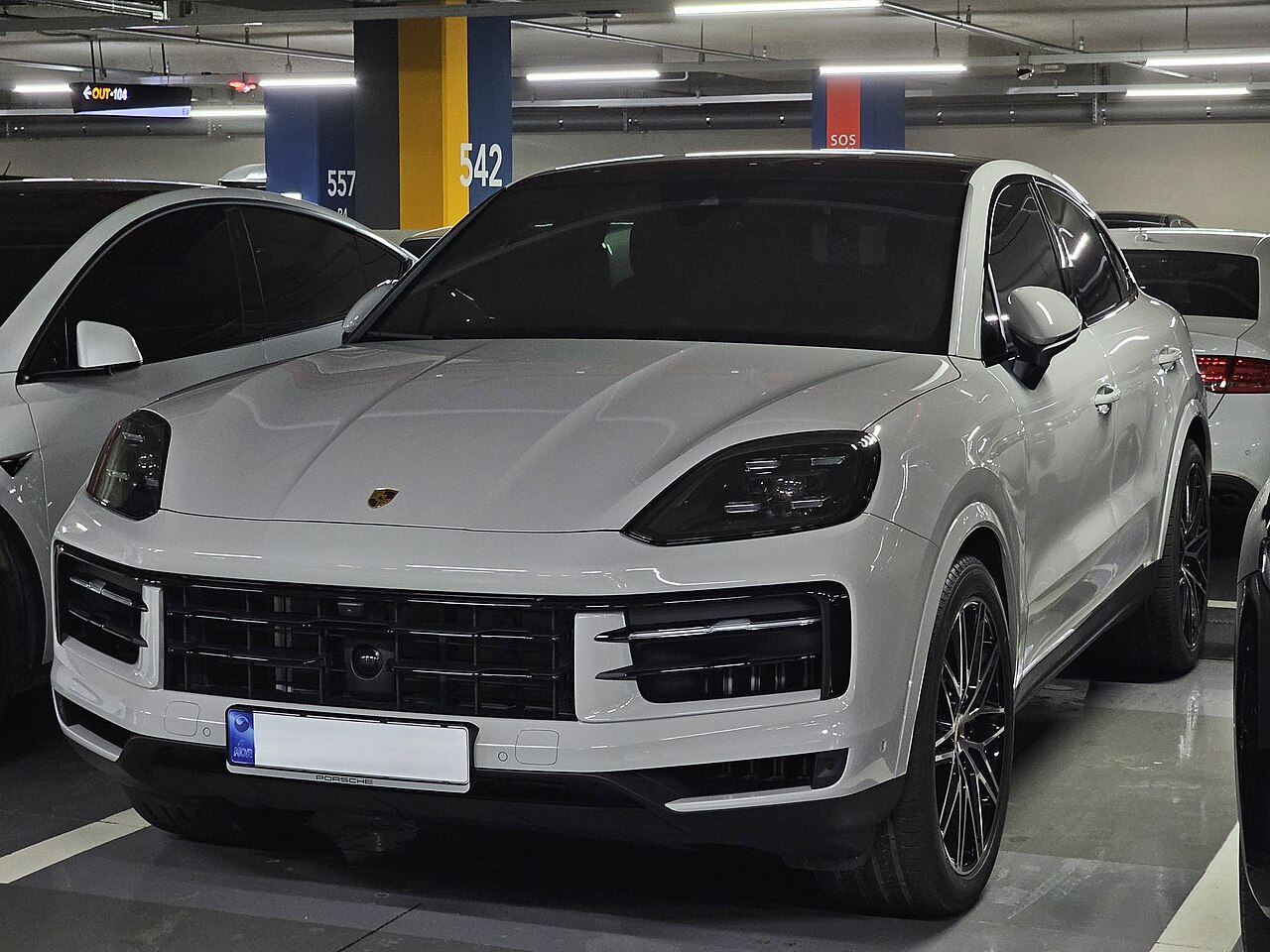
The photographs show a refreshed Cayenne Coupe, including front and rear three-quarter views. They are not images of the taller-roof SUV, a GTS or an electric model. The rear view helps explain the Coupe's different roof and hatch shape.
Choose the body after trying rear-seat entry and normal luggage. A shape that looks preferable outside may make an awkward load more difficult to place inside. Verify the Coupe's actual seating arrangement instead of assuming it matches the SUV.
.jpg)
Engine & drivetrain
In the cited US 2024 launch specification, the base Cayenne has a 3.0-litre turbo V6 rated at 348 hp and 368 lb-ft. The refreshed S moves to a 4.0-litre twin-turbo V8 with 468 hp and 442 lb-ft. Both belong to the petrol range discussed here.
The 2025 GTS uses a V8 rated at 493 hp and 487 lb-ft. Its eight-speed Tiptronic S is an automatic transmission; do not describe it as the Panamera's dual-clutch PDK.
Trim differences
The base model, S and GTS are not just upholstery levels. Engine and chassis differences should be weighed against the intended driving. Porsche offers the GTS in SUV and Coupe forms, so the sporty derivative does not force one roof style.
The Turbo GT is a more specialised Coupe derivative with market restrictions. Do not use its performance as a normal Cayenne claim. Build sheets are also necessary for suspension, lighting, seats and assistance options.
Interior & seating
The refreshed cabin changes the driver's control and display environment. Before buying, practise the functions used daily, including climate adjustment, parking views and phone connection. An impressive display count does not tell you whether those tasks are comfortable.
Try the rear seats with real passengers and the front seats properly adjusted. If purchasing for a family, test child-seat installation and luggage together. This gallery contains exterior photographs, so it does not establish a particular cabin option package.
Efficiency & range
A petrol Cayenne requires a fuel-cost assessment, not a charging-range calculation. Use the official consumption label for the exact engine, body, wheels and market rather than borrowing an E-Hybrid figure. Short urban journeys and longer steady-speed trips can produce very different results.
For towing or carrying substantial luggage, confirm the individual vehicle's permitted ratings and fitted equipment. A broad model-family maximum does not establish what a particular used example may tow.
Safety & equipment
Check the operation and specification of assistance systems individually. Parking cameras and warning functions are valuable on a substantial SUV, but their presence should be demonstrated rather than assumed from a trim name.
A specialist inspection should cover tyres, brakes, suspension, leaks and service records. A powerful SUV used for towing or hard driving warrants a different conversation from one that has mainly covered gentle motorway miles. Neither history can be inferred reliably from mileage alone.
Strengths
The petrol Cayenne offers a useful spread between a V6 family vehicle and more distinctive V8 derivatives. Its two body styles let buyers trade visual preference against their own loading and passenger requirements.
The refreshed S is particularly relevant to someone intentionally seeking a V8 without jumping to the most specialised model. That is a meaningful mechanical choice rather than merely a decorative trim upgrade.
Start with the base V6 and an equipment list that fits your family. Move to S or GTS for a deliberate engine and chassis preference, not because every Cayenne needs a V8.
Considerations
Performance tyres, large brakes, suspension equipment and optional features can make two similarly priced used cars very different ownership propositions. Obtain costs for the actual specification before choosing the cheaper advertised example.
Do not treat a Coupe photograph as evidence of SUV luggage space, or a GTS review as a test of the base model's ride. This family is broad enough that derivative-specific information matters.
Recommended use
The base V6 is a sensible starting point for mixed family and long-distance use. Compare it on the same roads with an S if engine character is an important part of the purchase.
A GTS deserves consideration when its chassis intent is genuinely part of the appeal. For predominantly congested urban use, prioritise parking, ride, running costs and the body style before selecting a performance badge.
Rivals & related
The BMW X5 and Mercedes-Benz GLE are useful SUV comparisons for passenger comfort, luggage and local support. Coupe-style alternatives should be compared separately if the roofline is central to the decision.
Within Porsche, consider the smaller Macan only after checking space requirements. The E-Hybrid Cayenne may also be relevant to a driver with charging access, but requires its own powertrain and ownership analysis.
FAQ
Is every third-generation Cayenne S a V8? No. The refreshed S described here differs from the earlier E3 S.
Are the gallery cars electric? No. They show a refreshed conventional Cayenne Coupe.
Does the Coupe always seat five? Confirm its configured seating; do not assume the SUV's layout.
Is this a road-test verdict? No. It is a sourced model profile with editorial buying considerations.
What makes the Porsche Cayenne different?
Start with the base V6 and an equipment list that fits your family. Move to S or GTS for a deliberate engine and chassis preference, not because every Cayenne needs a V8.
Who should consider it?
Performance-focused family travel and longer journeys
Sources & updates
Manufacturer references identify the dated specifications used here. Cariary buying assessments are editorial analysis, not a claimed first-hand road test or a diagnosis of an individual vehicle. Photographs carry individual source and licence credits. Confirm the exact build, market and equipment before purchase; photographs of another trim do not establish your car’s specification.
- Porsche US 2024 Cayenne introduction →
- Porsche US 2025 Cayenne GTS introduction →
- Porsche Cayenne technical information →
View all official references (2 more)
- Photograph — Refreshed Porsche Cayenne Coupe front and side →Damian B Oh; CC BY-SA 4.0
- Photograph — Refreshed Porsche Cayenne Coupe rear →Damian B Oh; CC BY-SA 4.0
Last editorial review: September 20, 2026. Specifications remain market- and model-year-specific.