Core summary
Mazda3 offers sedan and hatchback bodies, but US turbo, manual and AWD choices cannot be freely combined. The 2026 base engine is rated at 186 hp.
The BP-generation Mazda3 is a compact sedan or hatchback. This guide uses the 2026 US powertrain range, while the gallery deliberately identifies earlier BP examples from several markets.
Cariary's starting point is the body choice. The hatchback's appearance and the sedan's more conventional shape create different visibility and luggage-access questions. Decide which works before being drawn into the engine and equipment ladder.
History & generations
The fourth generation arrived for 2019 and has continued with specification changes. A shared BP body does not mean every model year has the same output or standard equipment.
Regional differences are especially important. The photographed UK 2.0-litre manual cabin is useful for understanding the generation's design, but it should not be presented as evidence of a 2026 US 2.5-litre specification.
Body, platform & design
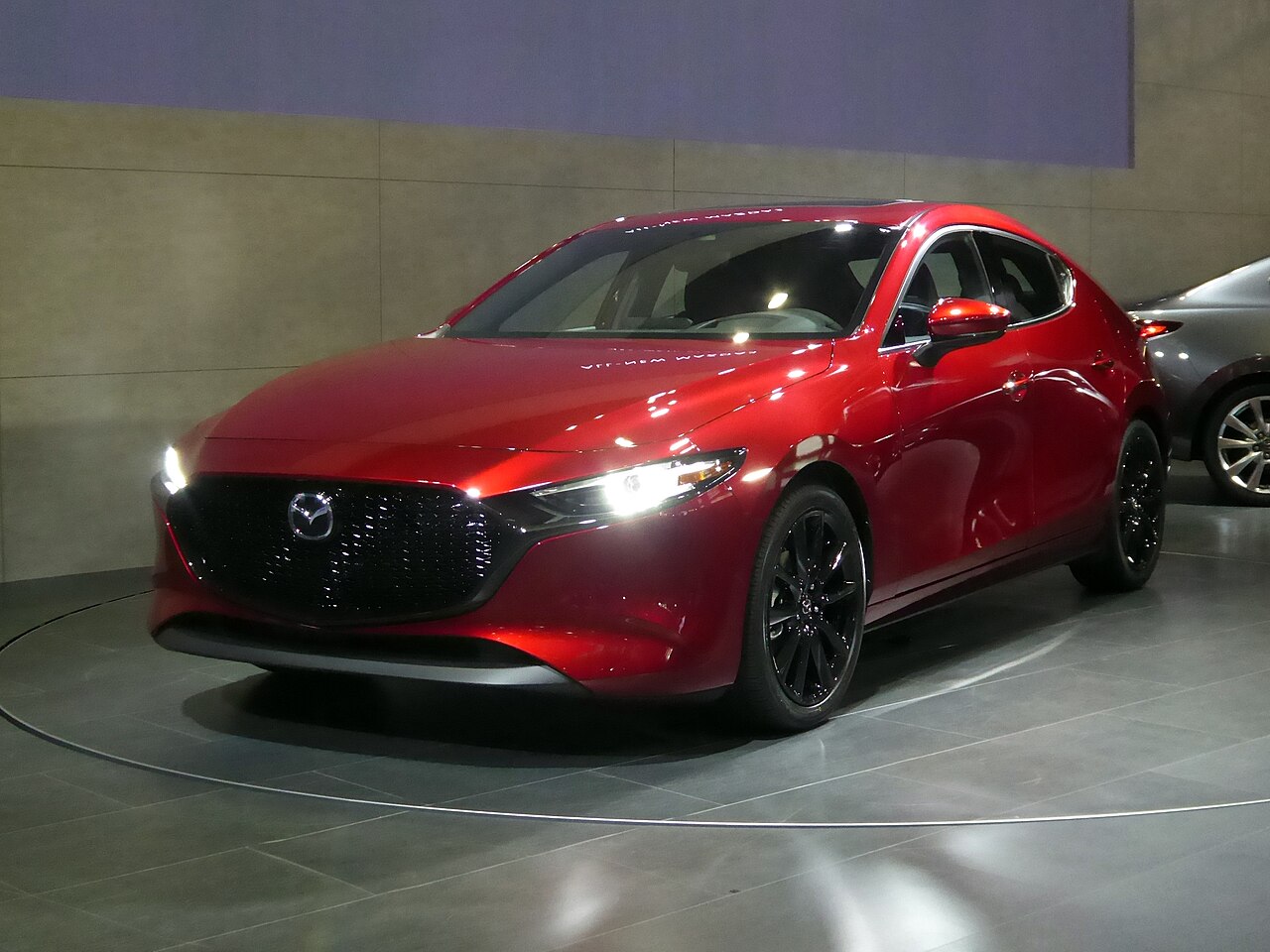
The gallery contrasts a red hatchback front view, a white US hatchback rear, a Japanese sedan rear and a UK interior. This makes the body-style difference explicit rather than treating all Mazda3 photographs as interchangeable.
Check rear-quarter visibility in the hatchback and the sedan's boot opening with normal luggage. Attractive surfacing alone cannot tell you which body is easier to live with in a tight car park.

Engine & drivetrain
Mazda's 2026 US announcement rates the naturally aspirated 2.5 at 186 hp and 186 lb-ft. The turbo reaches 250 hp and 320 lb-ft on 93-octane fuel; its output depends on fuel grade.
The turbo uses AWD and a six-speed automatic in this range. The available manual belongs to a naturally aspirated hatchback configuration, not a turbo-AWD combination. Verify the specific trim before searching for an impossible specification.

Trim differences
Start with the body and driven wheels you need. A naturally aspirated car can be the better value if the turbo's performance is rarely used, while AWD should be evaluated against climate and tyre plans rather than treated as an automatic requirement.
Compare seating, audio and assistance equipment on the exact trim sheet. A used example with premium-looking wheels may still lack a comfort feature that matters to you.
_rear.jpg)
Interior & seating
The earlier UK cabin photograph shows the generation's restrained dashboard and manual controls, with right-hand drive clearly visible. It is not a claim that the photographed equipment is standard on every new US car.
Try the rear bench with the front seats set normally. Also test the interface with your own phone and the way you prefer to navigate; a showroom demonstration by someone else is less revealing than completing common tasks yourself.
Efficiency & range
Use the official rating for the exact sedan or hatchback, drivetrain and engine. Comparing a naturally aspirated FWD figure with a turbo AWD purchase would understate the ownership difference.
If maximum turbo output matters to you, account for the specified fuel grade. A realistic annual budget should include tyres and insurance as well as fuel, especially when comparing a higher-performance trim with a regular commuter version.
Safety & equipment
Check the assistance and parking features actually fitted to the car. Visibility and driver comfort should still be assessed directly; cameras and alerts do not erase every blind spot or replace careful observation.
For used vehicles, inspect service history, tyre matching on AWD examples and evidence of accident repair. Test the transmission, infotainment and all supplied keys during the inspection rather than focusing only on cabin condition.
Strengths
Mazda3 offers a clear alternative for buyers who prefer a conventional compact car to a crossover. Its sedan and hatchback choices allow different styling and luggage-access preferences within the same model family.
The cabin design may be a major reason to choose it, but that is strongest when the seating and controls genuinely suit you. A premium impression should support, not replace, everyday practicality.
Choose body style and rear-seat needs first. Then select from the combinations Mazda actually offers rather than imagining a turbo-AWD manual that is not in the US range.
Considerations
Rear space and hatchback rear-quarter visibility deserve particular attention during a test. A buyer carrying adults frequently may value a roomier alternative more than the exterior shape.
The powertrain menu is also constrained. Manual, turbo and AWD are not independent boxes that can all be selected together, so establish the available combinations before comparing advertised prices.
Recommended use
Choose Mazda3 when a compact sedan or hatchback meets your needs and you value its cabin approach. Try both body styles if visibility and luggage access are uncertain.
The manual hatchback appeals to a specific buyer, while the turbo AWD automatic serves a different brief. Treat them as distinct choices rather than assuming one is simply the complete version of the other.
Rivals & related
Honda Civic and Toyota Corolla are useful compact-car comparisons, with hybrid options creating a different fuel-economy proposition. Volkswagen Golf is relevant where its local range and availability fit the budget.
Subaru Impreza offers another AWD hatchback route. Compare passenger room, service costs and the exact local powertrain instead of judging the group solely by peak horsepower.
FAQ
Is the 2026 US base engine still quoted at 191 hp? Mazda's cited announcement gives 186 hp.
Can the US turbo be ordered with a manual? Not in this range.
Are all gallery cars 2026 models? No; captions identify earlier BP examples.
Does every Mazda3 have AWD? No.
What makes the Mazda3 different?
Choose body style and rear-seat needs first. Then select from the combinations Mazda actually offers rather than imagining a turbo-AWD manual that is not in the US range.
Who should consider it?
Compact daily driving with a strong cabin-design emphasis
Sources & updates
Manufacturer references identify the dated specifications used here. Cariary buying assessments are editorial analysis, not a claimed first-hand road test or a diagnosis of an individual vehicle. Photographs carry individual source and licence credits. Confirm the exact build, market and equipment before purchase; photographs of another trim do not establish your car’s specification.
- Mazda USA 2026 Mazda3 pricing and packaging →
- Mazda3 sedan US overview →
- Photograph — Red Mazda3 BP hatchback at Osaka Auto Messe 2019 →Tokumeigakarinoaoshima; CC BY-SA 4.0
View all official references (3 more)
- Photograph — White 2021 Mazda3 Premium hatchback rear →Kevauto; CC BY-SA 4.0
- Photograph — Right-hand-drive 2019 Mazda3 GT Sport manual cabin →Vauxford; CC BY-SA 4.0
- Photograph — Mazda3 BP sedan 20S rear in Japan →Tokumeigakarinoaoshima; CC BY-SA 4.0
Last editorial review: September 20, 2026. Specifications remain market- and model-year-specific.