Core summary
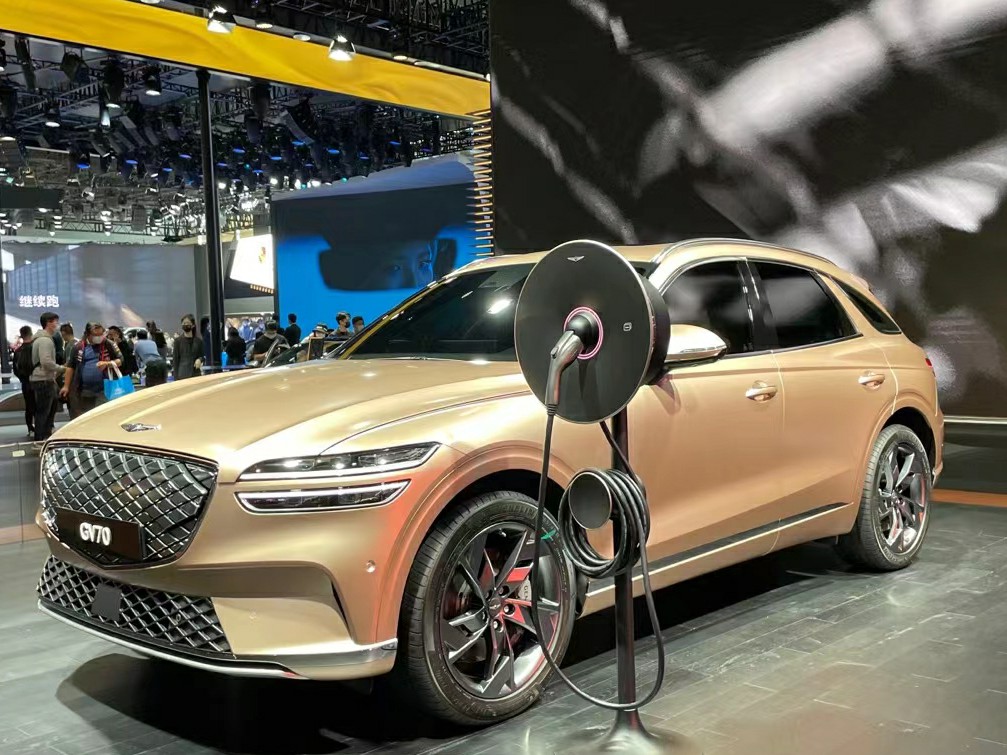
The Electrified GV70 uses front and rear electric motors rather than the petrol GV70 powertrain. Charging access and model-year battery changes deserve as much attention as its temporary Boost output.
Electrified GV70 means a battery-electric vehicle, not a petrol GV70 with a small hybrid system. Front and rear motors provide all-wheel drive. This distinction changes servicing, energy planning and the relevance of specifications: petrol-engine and automatic-gearbox claims cannot simply be carried across from the combustion model.
History & generations
The updated US 2026 product guide is the main reference here. It marks an 84 kWh battery and a 27-inch OLED display as changes for that model year. Earlier Electrified GV70 examples must be assessed against their own specification rather than receiving the updated battery and cabin description by default.
Body, platform & design
The electric version retains the recognisable GV70 SUV format instead of adopting a completely unrelated silhouette. That can appeal to a buyer wanting electric propulsion without a radically different visual identity. It does not prove that every interior dimension or luggage detail is identical to a petrol GV70.

Engine & drivetrain
The 2026 guide specifies two 160 kW motors, one at each axle. Normal combined output is 320 kW, approximately 429 hp; the ten-second Boost mode raises this to 360 kW, approximately 483 hp. Boost is a temporary operating condition, not the continuous rating and not a separate engine option.
Trim differences
The US guide distinguishes standard, Advanced and Prestige equipment. Advanced adds items including a surround-view monitor and Highway Driving Assist 2; Prestige adds further comfort and convenience features. A photograph of a high-spec cabin should not be used to imply those additions are fitted to every Electrified GV70.
Interior & seating
The 2026 widescreen presentation is a substantive cabin change, not simply a trim colour. For a used comparison, first identify which interface is fitted, then evaluate it alongside seating comfort. The EV has five seats; it is not a solution for an owner seeking the GV80’s selected-market third-row option.
Efficiency & range
Genesis’ guide gives approximately 19 minutes for a 10–80 percent charge on a suitable high-power charger under its stated conditions, but 73 minutes at 50 kW. This illustrates why the charger matters. The faster figure is not a promise at every public station, in every temperature or at every battery state.
Safety & equipment
Separate assistance packages from electric drivetrain hardware. The base and Advanced equipment lists are not interchangeable. For a used vehicle, high-voltage damage or charging faults require qualified assessment; an ordinary petrol-car inspection alone does not establish the health of the battery and charging system.
Strengths
Its strongest idea is combining a conventional luxury-SUV experience with the ability to charge while parked at home or work. That routine can be more significant than occasional maximum acceleration. The temporary Boost function is best understood as extra capability, not the central justification for choosing this EV.
The Electrified GV70 combines a familiar luxury-SUV format with fully electric propulsion. Its charging routine and model-year specification are more important ownership decisions than the ten-second Boost headline.
Considerations
Do not interpret a range estimate on the dashboard as a battery-health report. Obtain the applicable warranty and battery documentation, and identify the connector and charging equipment for the vehicle’s market. An attractive imported example can still be inconvenient if the local charging arrangement has not been established.
Recommended use
It is a convincing shortlist candidate for a household with dependable charging and five-seat needs. To assess longer journeys, use the chargers along the actual route and retain a reserve. Planning around a realistic stop is more useful than applying the fastest advertised charging time to an entire trip.
Rivals & related
The BMW iX3 and Audi Q6 e-tron provide electric-SUV comparisons, but their generation and drivetrain specifications must be matched carefully. The petrol GV70 is the closest internal reference for a buyer still deciding whether charging fits daily life. The larger GV80 answers a different space requirement.
FAQ
Q: Is this a plug-in hybrid?
A: No. It has fully electric propulsion.
Q: Is 483 hp the normal continuous output?
A: No. The cited guide assigns that figure to ten-second Boost operation.
Q: Is the 2026 battery specification valid for earlier cars?
A: No. Identify the model year before using it.
What makes the Genesis Electrified GV70 different?
The Electrified GV70 combines a familiar luxury-SUV format with fully electric propulsion. Its charging routine and model-year specification are more important ownership decisions than the ten-second Boost headline.
Who should consider it?
Premium electric commuting and touring
Sources & updates
Manufacturer references: Genesis: US 2026 Electrified GV70 product guide. Direct links are listed below. These dated references identify the model years and markets discussed; they do not establish a universal specification.
Comparisons and suitability judgements are Cariary editorial analysis, not a first-hand road test. Photograph credits and captions identify illustrative vehicles; photographs alone do not verify trim or equipment.
- Genesis: US 2026 Electrified GV70 product guide →Dated manufacturer specification; editorial analysis distinguished in text.
- Official model information →
- Manufacturer media archive →
View all official references (1 more)
- Photograph — Genesis Electrified GV70 displayed beside a charging stand →Zoerides; CC BY-SA 4.0
Last editorial review: September 20, 2026 — vehicle-specific editorial revision. Specifications remain market- and model-year-specific.