Core summary
The V295 EQE 300 is a rear-wheel-drive electric sedan focused on comfort rather than flagship performance. Its ownership case depends on dependable charging and the routes you actually drive.
This is the V295 EQE sedan, not the EQE SUV. The 300 derivative is a rear-drive electric entry point into that sedan range. Its suitability rests on a repeatable charging routine and the cabin’s fit for its occupants; a premium badge cannot compensate for inconvenient charging on every working day.
History & generations
EQE naming covers more than one body and several powertrain derivatives. This profile uses the early V295 sedan and a January–March 2024 Irish manufacturer brochure as its dated specification reference. Later battery or motor changes in the EQE range should not be assumed to apply to an earlier 300.
Body, platform & design
The rounded sedan roofline is a defining part of the design, but a buyer should examine the boot opening separately from the overall body size. The rear-seat position also deserves an in-person check. A large exterior footprint and an electric drivetrain do not, on their own, establish whether a particular passenger will be comfortable.

Engine & drivetrain
The EQE 300 uses electric propulsion rather than an engine with hybrid assistance. Its rear-wheel-drive specification should not be confused with a 4MATIC EQE derivative. When comparing advertisements, obtain the model-year technical sheet rather than borrowing the battery or motor figures from a 350+, an AMG or the SUV.

Trim differences
The cited Irish brochure lists both Electric Art and AMG Line exterior versions of the EQE 300. That exterior choice does not turn the car into a Mercedes-AMG EQE. Separate styling from the equipment that affects use, including charging capability and seat functions, and establish what is actually included in the particular vehicle.
Interior & seating
Try the driving position and rear bench on the same visit, with the usual occupants. The floor and roof relationship matters more than a generic claim that electric cars are spacious. Demonstrate everyday screen tasks while parked, including entering a charging destination, instead of judging the cabin only by its appearance.
Efficiency & range
The dated Irish brochure lists a 613 km WLTP figure for its EQE 300 specification. That is a test-cycle reference, not a promised motorway distance or a guarantee for another year. For ownership planning, leave a reserve and model the longest recurring journey around usable charging stops, not around reaching the brochure maximum.
Safety & equipment
Before buying, distinguish standard assistance from optional equipment and inspect the relevant vehicle’s history. For an EV, the charging connection and high-voltage system need appropriate professional assessment if there is evidence of damage or faults. This is not a claim of a model-wide defect, and no crash rating is assigned here.
Strengths
Its clearest advantage is the possibility of replacing routine fuel stops with a regular charging habit while retaining a sedan format. That benefit is strongest where charging can happen while the car is already parked. A buyer dependent on inconvenient detours for every charge may experience the same vehicle very differently.
The EQE 300 is a charging-and-comfort decision before it is a horsepower decision. Establish the charging routine, then judge whether the sedan body serves the journeys you make.
Considerations
Check battery-health information, applicable warranty terms and charging performance for the individual car. A dashboard range estimate is not a battery-health certificate. Also confirm which charging cables and account-dependent services transfer with the vehicle; the seller’s ability to charge it does not automatically establish the new owner’s setup.
Recommended use
Shortlist it for predictable commuting and longer trips with accessible charging. A useful pre-purchase exercise is to plan one ordinary week and the longest regular journey in detail. If the plan requires awkward compromises before the car is bought, the attractive cabin is unlikely to remove those compromises afterwards.
Rivals & related
The BMW i5 is a relevant electric-sedan comparison, while a Tesla Model S offers a different size and ownership proposition. A combustion E-Class is a useful internal reference if charging access is the unresolved issue. Compare journey time and charging convenience alongside range; a larger number alone does not settle the choice.
FAQ
Q: Is this the EQE SUV?
A: No. This page covers the V295 sedan.
Q: Does AMG Line identify an AMG powertrain?
A: No. The exterior line is distinct from a Mercedes-AMG EQE.
Q: Will it always travel 613 km between charges?
A: No. That is the cited Irish brochure’s WLTP reference, not a real-world guarantee.
What makes the Mercedes-Benz EQE 300 different?
The EQE 300 is a charging-and-comfort decision before it is a horsepower decision. Establish the charging routine, then judge whether the sedan body serves the journeys you make.
Who should consider it?
Quiet commuting with reliable charging access
Sources & updates
Specification reference: Mercedes-Benz Ireland: EQE Saloon, January–March 2024 brochure. The linked manufacturer material identifies the edition used here; specifications are not universal across years or countries.
The buying comparisons and suitability judgements are Cariary editorial analysis, not claims from a road test. Existing photograph credits identify the photographed generation and any unverified trim; an illustrative photograph is not proof of equipment.
- Official model information →
- Manufacturer media archive →
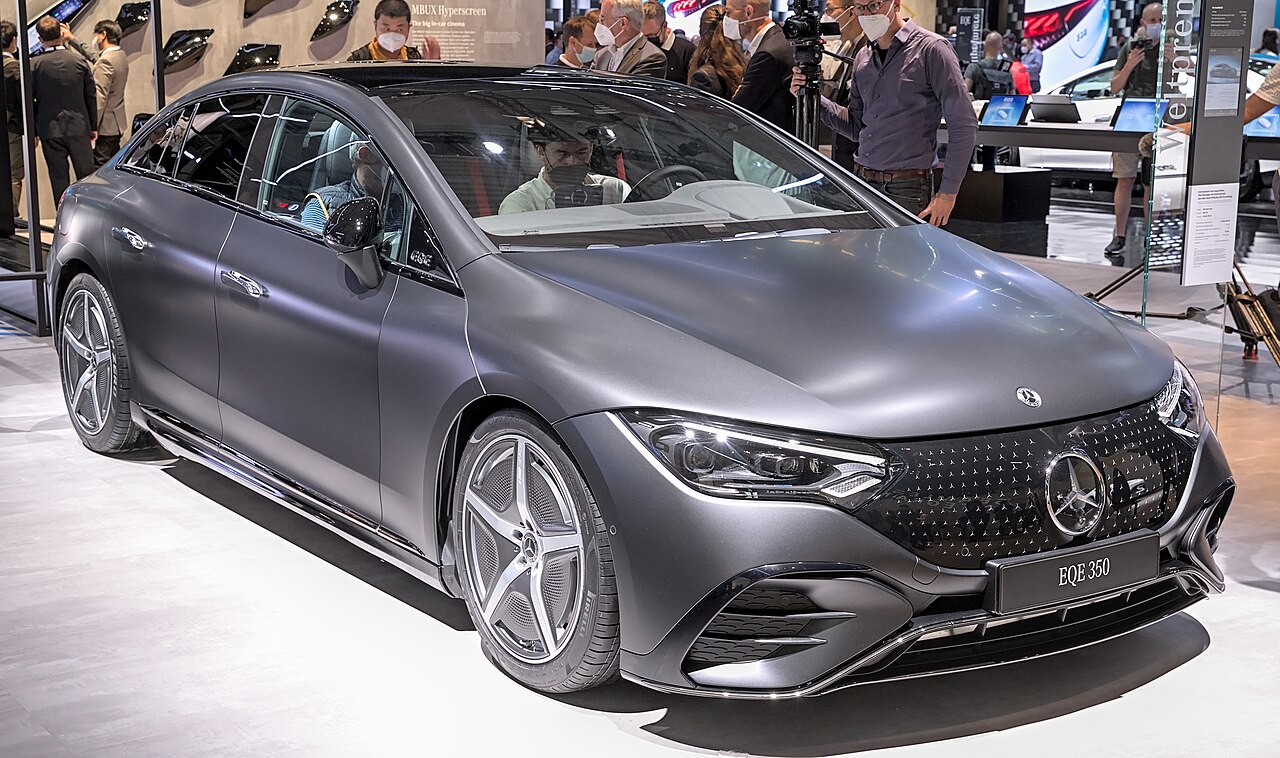
- Photograph — Mercedes-Benz EQE 350 V295 at IAA 2021, front three-quarter view →Alexander Migl; CC BY-SA 4.0
View all official references (3 more)
- Photograph — Mercedes-Benz EQE 350 V295 with its boot open →Alexander Migl; CC BY-SA 4.0
- Photograph — Mercedes-Benz EQE V295 dashboard at IAA 2021 →Alexander Migl; CC BY-SA 4.0
- Mercedes-Benz Ireland: EQE Saloon, January–March 2024 brochure →Dated specification reference; suitability comments are editorial analysis.
Last editorial review: September 20, 2026 — vehicle-specific editorial revision. Specifications remain market- and model-year-specific.