Core summary
The X247 GLB 200 d combines an upright, space-efficient cabin with a diesel powertrain. Optional third-row seats are for occasional use and do not turn it into a full-size seven-seat SUV.
The X247 GLB 200 d combines a compact SUV format with diesel power. Its practical attraction is the upright body rather than a sporting brief. This page refers to the original X247 generation and its launch-era diesel specification; a newer GLB with a familiar badge should not be assumed to share it.
History & generations
Mercedes introduced the GLB in 2019 with an emphasis on family use and available extra seating. The 200 d occupied the lower-output diesel position beside the 220 d. The generation distinction is important when shopping later listings: this article is not a specification guide to every subsequent vehicle sold under the GLB name.
Body, platform & design
The upright shape invites a practical assessment of rear access and luggage stacking. Try the household’s pushchair or travel cases rather than judging the car from an empty boot photograph. A compact outer footprint can be useful, but it means seating and luggage demands need to be considered together.

Engine & drivetrain
The launch specification gives the GLB 200 d a four-cylinder diesel rated at 110 kW/150 PS and 320 Nm, with an eight-speed dual-clutch transmission. Front-wheel-drive and 4MATIC versions are distinct. The 220 d’s higher output should not be attributed to a 200 d because the bodies look similar.
Trim differences
Determine whether the car has five seats or the optional third row before comparing prices. Then establish whether it is front-wheel drive or 4MATIC. Those two choices affect the ownership proposition more than a styling line, and neither should be guessed from exterior photographs or the generic description “family SUV”.
Interior & seating
Treat the extra row as a space question rather than simply adding two to the seat count. Try the access route, the intended passengers and the remaining luggage room. If all seats are used regularly with holiday luggage, compare a larger vehicle instead of assuming the optional row solves every family-travel requirement.
Efficiency & range
The diesel case depends on the journey pattern. Longer recurring journeys make a more convincing reason to choose a 200 d than occasional trips surrounded by short local errands. Compare local fuel and running costs with a petrol GLB under the same use pattern; do not import a consumption figure from a different drivetrain.
Safety & equipment
For family use, inspect the child-seat fitting positions and the exact seat configuration against the handbook. Check the assistance equipment of the individual example rather than assuming every GLB has the same package. Seat count and SUV styling are not substitutes for checking how the intended occupants will be secured.
Strengths
Its strongest idea is practical cabin use without immediately moving into a much larger SUV. For a household carrying fewer passengers most days and needing extra flexibility occasionally, that can be valuable. The diesel derivative adds a specific long-distance rationale rather than changing the fundamental space available.
Choose the GLB 200 d for a useful cabin and regular longer journeys. Occasional extra seats are a bonus, not a reason to ignore the space needed by the passengers and their bags.
Considerations
A seven-seat advertisement can distract from the remaining luggage capacity and passenger fit. Resolve those issues before considering cosmetic upgrades. On a used diesel, have the emissions system and service history assessed, especially if the seller’s recorded use has been almost entirely short-distance.
Recommended use
Consider the 200 d for school-and-work routines that also include substantial longer driving, not purely because diesel once had a reputation for economy. If the vehicle spends most of its life on very short trips, reassess the powertrain choice even when the body is exactly right.
Rivals & related
The petrol GLB 250 is the clearest internal comparison because it tests the engine choice without changing the basic body concept. A BMW X1 can test whether the third-row option is genuinely needed. A larger family SUV is the relevant alternative when all seats and considerable luggage must be carried together.
FAQ
Q: Does every GLB 200 d have seven seats?
A: No. Check whether the optional third row is fitted.
Q: Does the diesel badge imply all-wheel drive?
A: No. The cited range includes separate driven-wheel specifications.
Q: Is this the 220 d engine rating?
A: No. The quoted 150 PS is the launch 200 d rating.
What makes the Mercedes-Benz GLB 200 d different?
Choose the GLB 200 d for a useful cabin and regular longer journeys. Occasional extra seats are a bonus, not a reason to ignore the space needed by the passengers and their bags.
Who should consider it?
Economy-led family and long-distance travel
Sources & updates
Specification reference: Mercedes-Benz: X247 GLB launch and diesel range. The linked manufacturer material identifies the edition used here; specifications are not universal across years or countries.
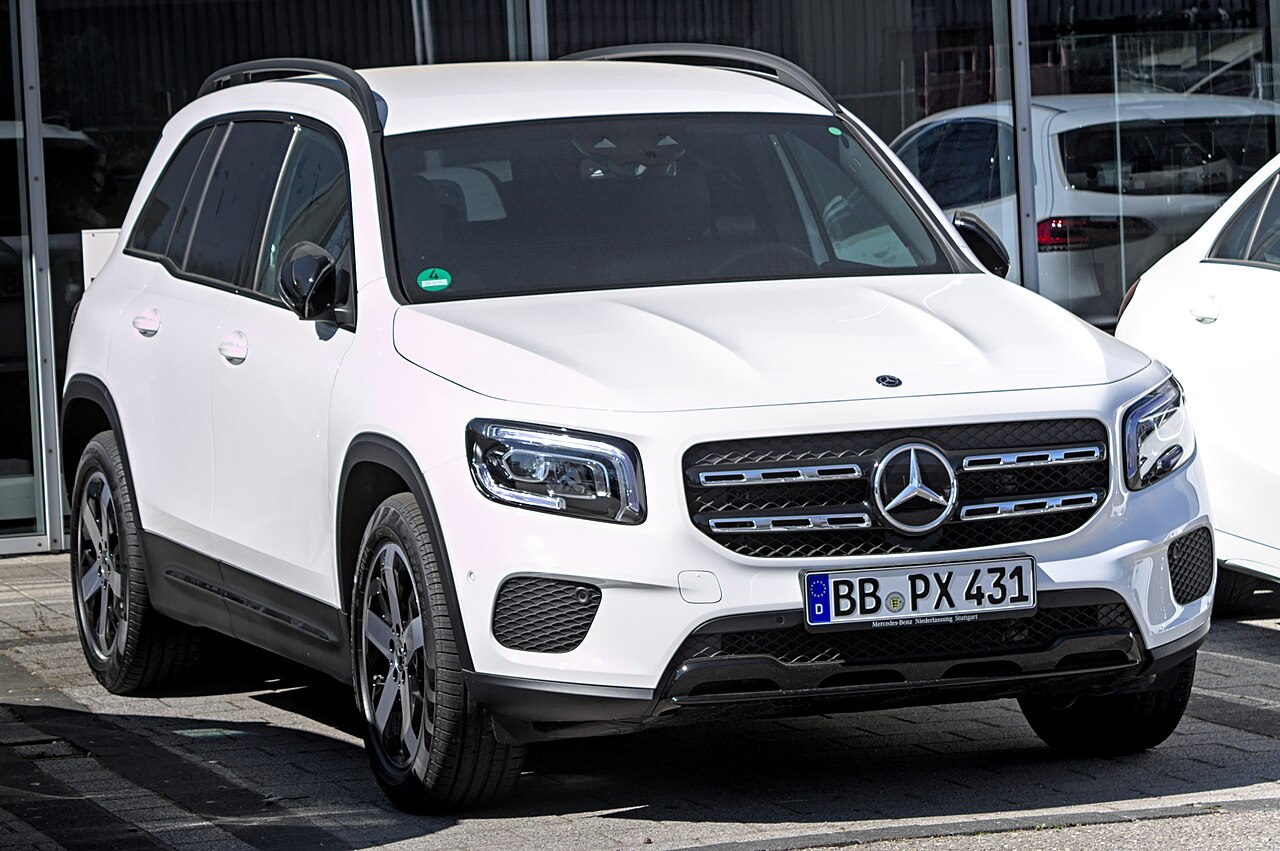
The buying comparisons and suitability judgements are Cariary editorial analysis, not claims from a road test. Existing photograph credits identify the photographed generation and any unverified trim; an illustrative photograph is not proof of equipment.
View all official references (3 more)
- Photograph — White Mercedes-Benz GLB X247, front three-quarter view →Alexander Migl; CC BY-SA 4.0
- Photograph — White Mercedes-Benz GLB X247 viewed from the front and side →Alexander Migl; CC BY-SA 4.0
- Mercedes-Benz: X247 GLB launch and diesel range →Dated specification reference; suitability comments are editorial analysis.
Last editorial review: September 20, 2026 — vehicle-specific editorial revision. Specifications remain market- and model-year-specific.