Core summary
The EQA with dual-motor traction, without the EQA 350’s extra performance premium.
The EQA 300 4MATIC occupies a useful middle position in Mercedes-Benz's compact electric SUV family. It adds a second driven axle to the EQA idea without moving to the higher-output EQA 350. Its central proposition is a familiar compact SUV format with electric propulsion and all-wheel drive, rather than maximum range or sports-car acceleration. The distinction matters when comparing used examples: an EQA badge alone does not identify motor configuration, battery specification or equipment. This guide covers the H243 EQA 300 and separates its original European specification from the later update. It is a researched ownership overview, not a claim that Cariary has road-tested this particular vehicle.
History & generations
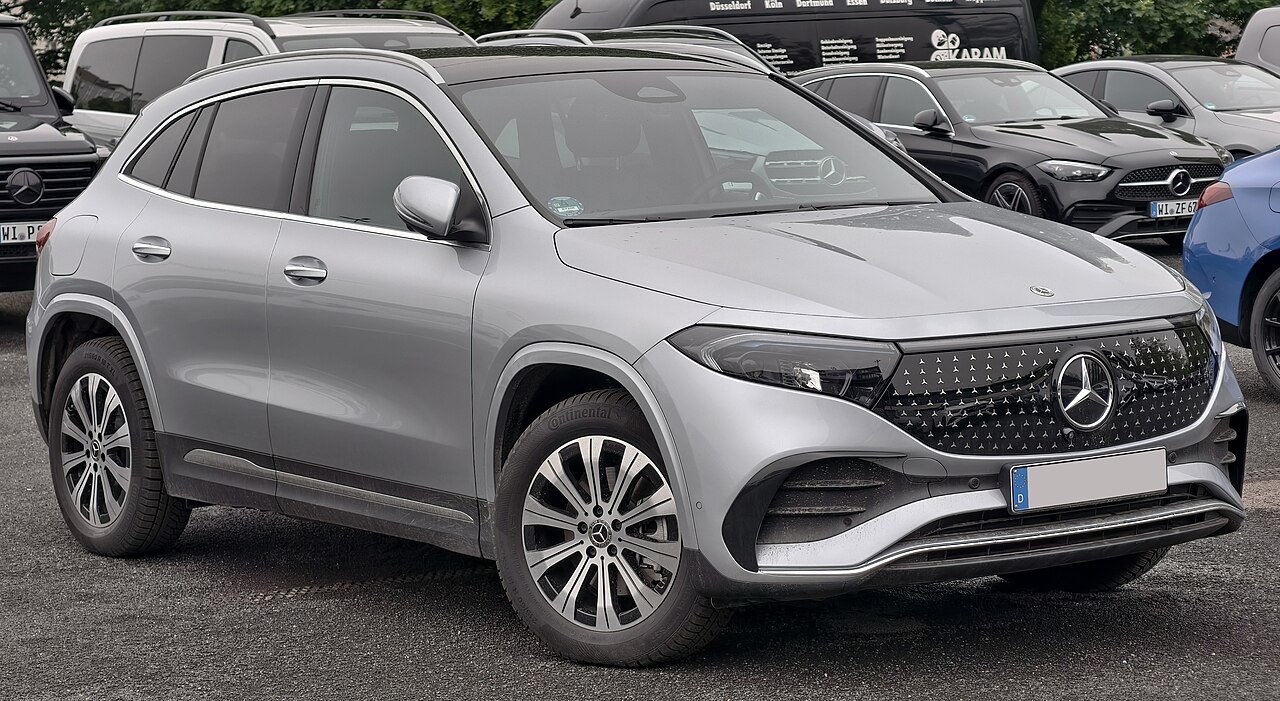
The EQA family appeared in 2021, and the 300 and 350 4MATIC versions expanded the original front-wheel-drive offering during that year. Both belong to the H243 generation. Mercedes announced the updated European EQA range in 2023, with deliveries beginning in early 2024. The photographs here show a facelift EQA 300 AMG Line, so their exterior details should not be applied to a 2021 car. Registration year and production specification can differ, particularly with imports or late dealer stock. For a used purchase, identify the build month and original sales country before choosing a brochure or comparing equipment. The 300 name remained useful across the update, but the name alone does not settle every specification.
Body, platform & design
The EQA uses a tall hatchback-style body with a rear liftgate, contrasting with the separate boot of a conventional sedan. The silver facelift AMG Line example illustrates the later front treatment and the broad rear light signature. Its AMG Line appearance is an equipment choice, not evidence of a separate AMG performance powertrain. Assess the car's actual wheel diameter and tire condition before deciding whether the styling is worth a firmer ride or higher replacement cost. Check clearance at a familiar driveway and try the hatch with your usual bags. A compact exterior can be convenient in a city while still requiring compromises in rear-seat posture and cargo shape; those are best tested with passengers present.
_%E2%80%93_h_05052026.jpg)
Engine & drivetrain
At the May 2021 European introduction, Mercedes rated the EQA 300 at 168 kW and 390 Nm, with a 7.7-second 0–100 km/h time. The front asynchronous motor works with a rear permanent-magnet synchronous motor. A 66.5 kWh usable battery and up to 100 kW DC charging were specified at that launch. These are dated European figures, not a guarantee for every later market version. On a demonstration drive, check smooth low-speed response, predictable braking and the absence of drivetrain warnings. All-wheel drive can help apply power when grip is limited, but it does not remove the need for suitable tires or reduce the driver's responsibility on a slippery descent.
Trim differences
Compare EQA 300 listings by factory equipment, not by the length of a seller's advertisement. AMG Line appearance, wheel packages, seat upholstery, panoramic roof, audio and assistance equipment can change the experience without altering the motor badge. The later European ordering range used packages including Progressive, Electric Art and AMG Line, but names and contents should not be transferred unquestioningly between countries. Ask for the original build sheet, then operate the features that matter to you. A working parking camera and a comfortable seat may add more daily value than a costly wheel upgrade. If considering an imported car, confirm that navigation, connected services and charging hardware suit the country where it will actually be used.
Interior & seating
The EQA 300 is a five-seat car, not the optional seven-seat EQB. Its raised seating position may appeal to drivers who dislike lowering themselves into a sedan. That does not make the rear bench automatically comfortable for every adult: set the front seat first, then assess foot space, thigh support and headroom behind it. Bring child seats rather than assuming that nominal seating capacity proves an easy installation. Test the infotainment interface, climate controls, phone connection and seat adjustments on the actual build year. The exterior gallery does not document its cabin options. Inspect cargo-floor access and cable storage, because a charging cable buried beneath holiday luggage is a small inconvenience repeated on every journey.
Efficiency & range
The updated European EQA 300 announcement quoted a 412–459 km WLTP range, depending on specification. Treat that as a comparison figure for the updated version, not a winter motorway promise or an original-car battery-health measurement. Your regular route, speed and charging access deserve more attention than the top of a brochure range. Before buying, map a normal working week and identify where charging can happen without a special journey. On a longer trip, allow for arrival reserve and charging stops rather than planning to exhaust the battery. Compare the front-wheel-drive EQA 250+ if range is the primary goal; the 300's extra driven axle answers a different need.
Safety & equipment
A safe purchase begins with the individual car's history and fitted systems. Confirm which lane, distance and parking assistance features are installed, and have warning messages investigated rather than dismissed as a low battery or software quirk. Examine glass, bumpers and camera areas for repairs that could affect sensor alignment. Have an EV-qualified technician inspect the underside if there are signs of impact near the battery enclosure. Do not touch damaged high-voltage components yourself. Check recall status using the VIN with Mercedes-Benz in the relevant market. A dual-motor badge is not a safety rating, and assistance systems are not a substitute for attentive driving or tires appropriate to local weather.
Strengths
The EQA 300's appeal is its balanced position rather than a single headline number. It combines a familiar Mercedes compact-SUV layout with electric response and a second driven axle. For someone who already wants this body size, the step from a front-wheel-drive version can be easier to justify than paying for the 350's stronger acceleration. Used buyers may also find that equipment and condition vary enough to matter more than nominal model hierarchy. Cariary's view is to value a well-specified, well-documented 300 above a neglected higher-output car. Its suitability becomes clearer when the charging routine works naturally; without that routine, the appeal of the badge cannot solve the inconvenience.
Choose the EQA 300 for its useful middle-ground powertrain, but make charging access, seat comfort and the actual car’s condition the deciding factors.
Considerations
Battery condition, remaining warranty and charging performance should be investigated as carefully as paint and interior wear. Ask what battery-health evidence is available and what the local warranty actually covers, rather than treating displayed range as a diagnostic report. Demonstrate an AC charging session and, where practical, a DC session, watching for repeated errors. Inspect the charge-port flap and latch, and confirm the supplied cable is appropriate and undamaged. Budget for insurance and tires using the exact wheel size. If the price difference to an EQA 250+ is substantial, decide whether all-wheel drive solves a real need. If extra acceleration is the goal instead, compare the 350 directly rather than expecting a software menu to make the 300 equivalent.
Recommended use
This version is most convincing for an owner with dependable home or workplace charging, ordinary family duties and a genuine preference for all-wheel drive. Test it over the roads used every day, including a rough section and the parking space at home. The useful question is not whether the vehicle feels impressive for five minutes, but whether seating, visibility, cable handling and cargo space remain convenient over a year. A household that regularly carries more than five people should look elsewhere. Someone doing frequent long motorway journeys should compare charging stops and real route requirements before choosing the 300 simply because its official range looks sufficient.
Rivals & related
Within Mercedes, the EQA 250+ is the range-focused alternative, the EQA 350 emphasizes acceleration, and the EQB offers a more upright family-oriented body. Outside the brand, compare a BMW iX1 or Volvo EX40 in the relevant battery and drivetrain version. Do not compare a base single-motor advertisement with a heavily equipped dual-motor EQA as though price alone settles value. Use the same practical test for each: adult rear-seat comfort, luggage fit, charging access, warranty and insurance. The preferred car may be the one that performs a routine task more easily rather than the one with the strongest specification sheet.
FAQ
Q: Is the EQA 300 a plug-in hybrid?
A: No. It is battery electric, with no petrol engine.
Q: Does 4MATIC mean it seats seven?
A: No. It denotes all-wheel drive; the EQA has five seats.
Q: Are all EQA 300 cars visually identical?
A: No. The facelift and appearance packages differ. The gallery is a facelift AMG Line example.
Q: Is the 350 simply a different trim package?
A: No. It is a higher-output powertrain version; compare equipment separately.
What makes the Mercedes-Benz EQA 300 4MATIC different?
Choose the EQA 300 for its useful middle-ground powertrain, but make charging access, seat comfort and the actual car’s condition the deciding factors.
Who should consider it?
Everyday electric driving where all-wheel drive is useful
Sources & updates
The linked Mercedes releases distinguish the original 2021 dual-motor launch from the updated European range announced in October 2023. Use the original-market owner's manual and VIN-specific documents for an individual car. The two gallery photographs are separately credited, licensed views of an identified EQA 300 facelift, with their Commons source pages linked. No unrelated trim photographs are presented as this model. Buying recommendations are Cariary's editorial interpretation of the vehicle's role, not manufacturer promises or a hands-on road-test verdict.
- Mercedes-Benz — May 2021 EQA 300 and 350 European launch →
- Mercedes-Benz — October 2023 updated EQA and EQB range →
- Mercedes-Benz — EQA technical background →
Last editorial review: September 20, 2026. Specifications remain market- and model-year-specific.