Core summary
The diesel G20 is a distance-oriented 3 Series, not simply a petrol model with a different fuel label.
The G20 BMW 320d is the diesel choice for buyers who use a compact executive sedan for substantial mileage. Its role differs from a 320i even though the bodies look similar: route length, emissions-system condition and local diesel suitability belong near the top of the decision. It can be a rational long-distance car, but a low advertised fuel figure is not enough to make it the right answer for repeated short trips. This guide covers the G20 sedan rather than earlier E90 or F30 cars. The gallery has been restricted to G20 320d examples, and the recommendations are researched editorial guidance, not claimed Cariary road-test observations.
History & generations
The seventh-generation 3 Series sedan arrived as the G20 for 2019, carrying the established 320d name into a newer body and cabin. Early cars and later examples should not be treated as one unchanging specification. BMW introduced 48V mild-hybrid assistance to relevant automatic 320d variants in spring 2020, while subsequent visual and interface updates created further differences. A 2019 photograph therefore cannot establish the dashboard or electrification of a later car. Ask for production information as well as registration year, particularly with imports or unsold dealer stock. G20 identifies the sedan; Touring versions use a different body code and should not supply cargo claims for this profile.
Body, platform & design
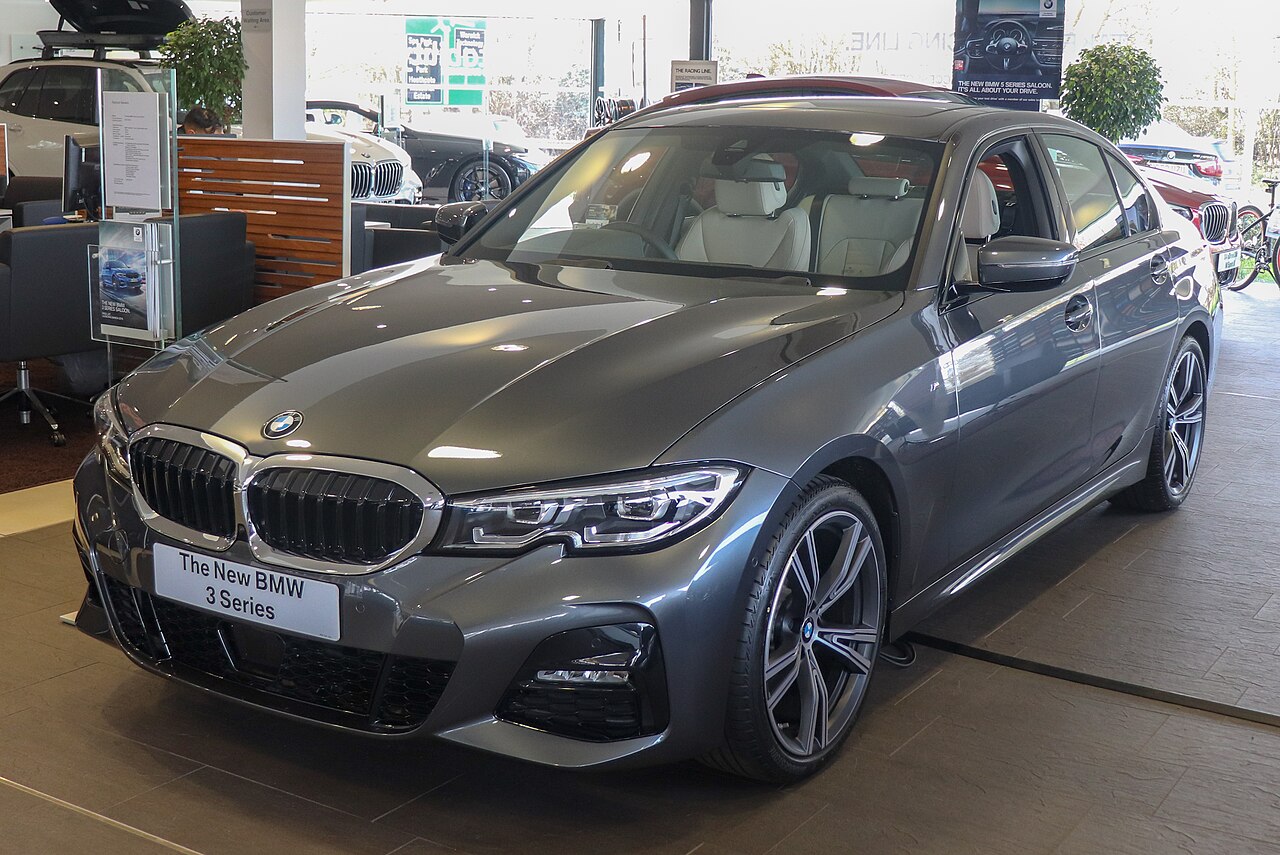
The 320d has the G20's separate boot and conventional three-box sedan proportions. The photographs show both M Sport and Luxury Line treatments, demonstrating why bumper shape or wheel design is not a reliable engine identifier. The Dravit Grey and Sunset Orange examples also make clear that colour and appearance line are separate choices from diesel power. Inspect wheels, tire shoulders and the underside of the bumpers for damage before valuing a sporty package. Try the boot opening with the luggage you use most often. A sedan can offer useful volume while remaining less accommodating to tall, awkward objects than an estate or hatchback. Fold-down seat availability should be confirmed on the actual car.

Engine & drivetrain
BMW's original UK G20 launch listed the 320d at 190 hp and 400 Nm from a 2.0-litre four-cylinder diesel. Rear-wheel drive and xDrive versions were offered, with transmission choices depending on specification. Later 48V assistance is a mild-hybrid system, not an externally rechargeable plug-in drivetrain. Identify exactly which version is for sale before comparing performance. Arrange a cold start and a fully warmed drive, checking idle, warning lights and consistent transmission behaviour. A professional diagnostic inspection should accompany the service record. Diesel powertrain and emissions-system repairs can overwhelm a modest fuel saving, so a smooth brief demonstration is not a substitute for documented condition.

Trim differences
The 320d badge does not settle whether a car has M Sport suspension, upgraded seats, cameras or particular assistance systems. The showroom example pictured is an xDrive M Sport, while the orange car illustrates Luxury Line styling. Match each listing against the factory build sheet rather than assuming that all examples share either package. Seat comfort and the chosen wheel-and-tire combination matter greatly on the longer journeys that suit this model. Check navigation, phone connection, parking equipment and all seat adjustments in person. A well-maintained modestly optioned car can be preferable to a heavily equipped one with expensive faults. Confirm both drivetrain and equipment separately; xDrive is not another name for M Sport.
.jpg)
Interior & seating
The interior photograph shows an early right-hand-drive G20 with beige seats, separate dashboard displays and physical controls. It should not be mistaken for the later curved-display cabin. Try the seating position with realistic steering reach and then assess the rear bench behind it. The centre rear position deserves its own comfort check if five people regularly travel. Test climate control, window operation, screen response and phone pairing before purchase. For a long-distance diesel, lumbar support, seat adjustment and cabin noise over a sustained drive may matter more than a larger wheel or decorative trim. Check wear on the seat bolsters and controls against the claimed mileage without treating appearance alone as proof of history.
.jpg)
Efficiency & range
A diesel's appeal depends on how it is used, not simply on its official combined consumption. Frequent longer journeys are a more natural reason to shortlist the 320d than repeated short, cold errands. Build an annual cost comparison using your mileage, local fuel prices, insurance, servicing and the exact car's condition. Consult the manual for emissions-system operation and any AdBlue requirements, and have warning messages properly diagnosed. Do not buy a car with deleted or defeated emissions equipment. Local access restrictions and taxes can change, so verify the current rules for your own location rather than assuming that an older brochure's emissions category settles every future journey.
Safety & equipment
A used 320d should be assessed as an individual car, not as a badge with a guaranteed set of driver aids. Verify installed assistance features, check for fault messages and ask about calibration after windscreen or front-end repairs. Inspect tires for uneven wear and confirm correct sizes and ratings; xDrive does not make tire mismatch irrelevant. Obtain recall and service-campaign status using the VIN. A suspension or braking inspection is particularly worthwhile on a high-mileage car. Driver-assistance functions remain support tools and should be demonstrated only in safe conditions. The vehicle's history, restraint condition and repair quality are more important than a seller's assertion that all warning lights are currently off.
Strengths
The 320d gives a clear alternative to the petrol 3 Series for a driver whose life involves regular distance. Its useful mid-range torque and sedan format can make it a plausible single car for work travel and family duties. The availability of different appearance lines and drivetrains also allows buyers to prioritize understated comfort or a sportier presentation. Cariary's view is that this breadth is valuable only after the route fits a diesel. The strongest used example is not necessarily the cheapest or the one with the lowest odometer reading, but the one with credible maintenance, suitable equipment and a documented operating history.
A 320d earns its place through regular longer journeys; choose by route suitability and maintenance evidence, not a low fuel-consumption claim alone.
Considerations
Ask an independent workshop to evaluate engine, transmission and emissions-system condition, with attention to stored faults and evidence of tampering. Review invoices rather than relying only on a stamped book. Check whether scheduled work and campaigns have actually been performed. If most of your driving is a few kilometres at a time, compare a petrol or appropriately used plug-in option before committing to the diesel. Budget for premium-car tires, brakes and diagnostics even if fuel costs look attractive. On a used xDrive example, confirm drivetrain maintenance and tire compatibility. A low purchase price does not remove the financial consequences of buying an unsuitable or poorly maintained diesel.
Recommended use
The G20 320d belongs on the shortlist for frequent intercity trips, substantial commuting mileage and drivers who specifically want a sedan. Before buying, reproduce a typical trip rather than only a short dealer loop. Assess the seat after sustained time, the ease of maintaining a comfortable speed and the practical value of fitted assistance. It is not the default recommendation for every urban driver. If home charging is available and the regular trip is short, a 330e may serve a different, more suitable routine. If trips are brief and charging unavailable, a petrol 320i deserves comparison. The correct drivetrain follows the route.
.jpg)
Rivals & related
Start with the G20 320i and 330e because they reveal whether diesel is necessary for your use. The 320i avoids choosing diesel solely for an economy headline; the 330e requires a charging routine to make its electric capability useful. Outside BMW, an Audi A4 diesel or Mercedes-Benz C-Class diesel of a comparable year can be alternatives where offered. Compare local emissions eligibility, service evidence, passenger comfort and the total purchase budget on equal terms. A newer-looking dashboard should not outweigh mechanical condition. If luggage shape is the main problem, compare estate bodies directly instead of asking a sedan to perform a different job.
FAQ
Q: Is every G20 320d a mild hybrid?
A: No. Early versions predate the relevant 2020 48V update. Confirm the build specification.
Q: Can the 48V system be plugged in?
A: No. It is not the 330e plug-in system.
Q: Does 320d always mean xDrive?
A: No. Rear-wheel-drive versions exist.
Q: Is the gallery an older E90?
A: No. These are G20 320d images, including an early G20 cabin.
What makes the BMW 320d different?
A 320d earns its place through regular longer journeys; choose by route suitability and maintenance evidence, not a low fuel-consumption claim alone.
Who should consider it?
Frequent longer journeys where a diesel suits the route
Sources & updates
BMW's original UK launch, spring 2020 update and dated technical sheet distinguish the early diesel from later mild-hybrid versions. They do not establish the equipment or service condition of an individual used car. Each photograph has a separate Commons source link, creator credit and licence. The captions identify appearance lines and viewpoints rather than claiming that a body photograph proves mechanical condition. Ownership advice is Cariary's interpretation of the model's role. Confirm current local rules and VIN-specific documentation before a transaction, and obtain an independent inspection rather than treating this profile as a condition report.
- BMW UK — original G20 3 Series launch, 2019 →
- BMW — spring 2020 model updates and 48V introduction →
- BMW — 320d technical data, February 2020 →
Last editorial review: September 20, 2026. Specifications remain market- and model-year-specific.