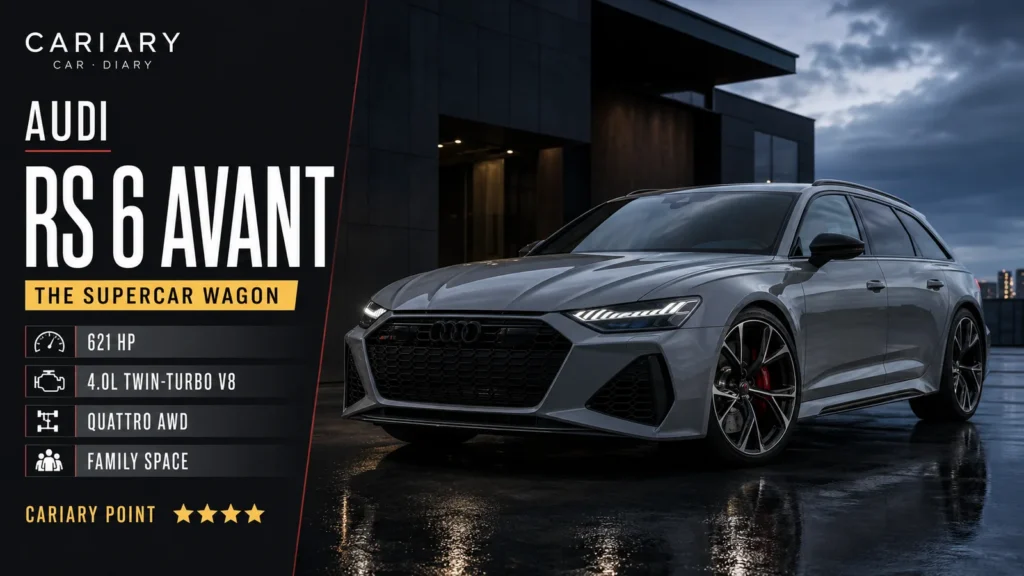
CARIARYCAR · DIARY · PERSPECTIVE
Cover: AI-generated Cariary editorial illustration, checked against the current RS 6 Avant performance. It is not road-test photography.
This Audi RS6 Avant Review examines the car that made “family wagon” and “supercar pace” feel like compatible ideas. The long roof and five-seat cabin are real, but so are a 621-hp twin-turbo V8, quattro all-wheel drive and Audi’s official 3.3-second 0–60 mph claim.
The appeal is broader than a drag-race number. An RS 6 can carry people and luggage without advertising its ability as loudly as an SUV or two-door supercar. It is also large, heavy, expensive and thirsty. The question is whether that breadth makes it a brilliant one-car garage or simply a very costly way to avoid choosing between a sports car and a wagon.
This is a research-based buyer review of the C8-generation 2026 U.S.-market RS 6 Avant performance. Cariary has not road-tested this car. Manufacturer figures are identified as official claims, and independent test results and driving impressions are attributed to their sources.
Audi RS6 Avant Review: Quick Verdict
CARIARY POINT: ★★★★ — 4/5. The RS 6 earns four stars for its explosive yet flexible V8, confident all-weather traction, genuinely useful cargo shape, understated long-roof design and extraordinary breadth. The missing star reflects its six-figure price, firm low-speed ride, high mass, 16-mpg combined EPA estimate and the running-cost exposure created by 22-inch tyres, complex chassis hardware and enormous brakes.
- Best use case: a buyer who needs one car for commuting, family trips, bad weather and serious performance.
- Best specification: 21-inch wheels and the standard adaptive air suspension if road comfort matters more than visual impact.
- Think carefully about: Dynamic Ride Control, carbon-ceramic brakes and cosmetic carbon packages; each can sharpen a specific quality while raising cost or reducing comfort.
- Look elsewhere if: you want delicate steering feel, low operating costs or a truly plush luxury-car ride.
Table of Contents
- Why it is a wagon, not a hatchback
- The 621-hp V8
- Quattro, rear differential and steering
- Air suspension or Dynamic Ride Control?
- Space and everyday use
- Cabin and technology
- Price and ownership costs
- Used-buying checklist
- What the RS 6 Avant GT changes
- Rivals and alternatives
- Cariary Perspective
- Buyer questions
It Is a Wagon, Not a Hatchback
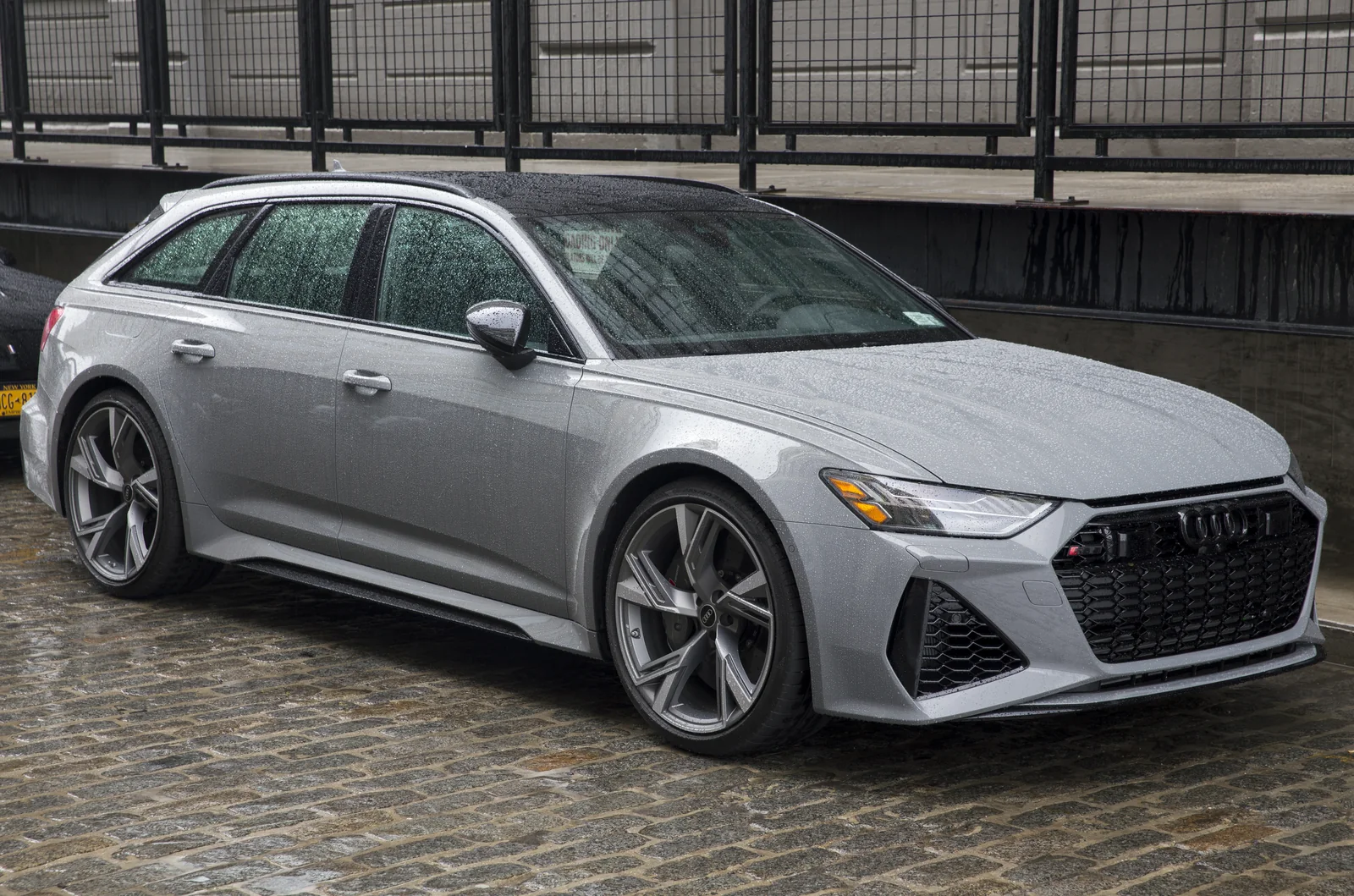
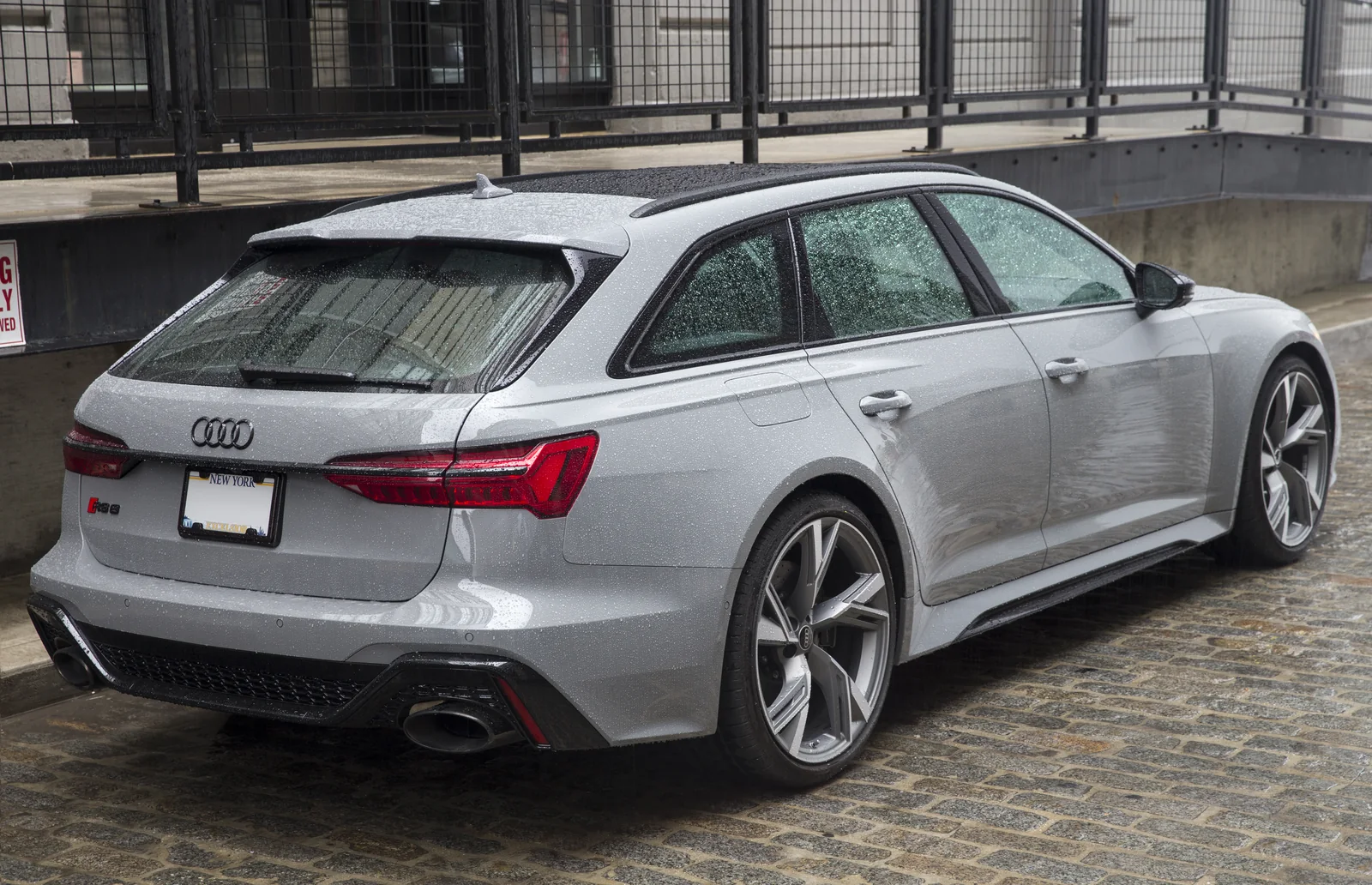
The RS 6 Avant has a rear hatch, but its body type is a wagon. The distinction comes from its long roof, extended cargo area and near-vertical tail behind a conventional four-door passenger compartment. A hatchback normally has a shorter rear overhang and a more compact roofline. “Avant” is Audi’s name for this estate or wagon format.
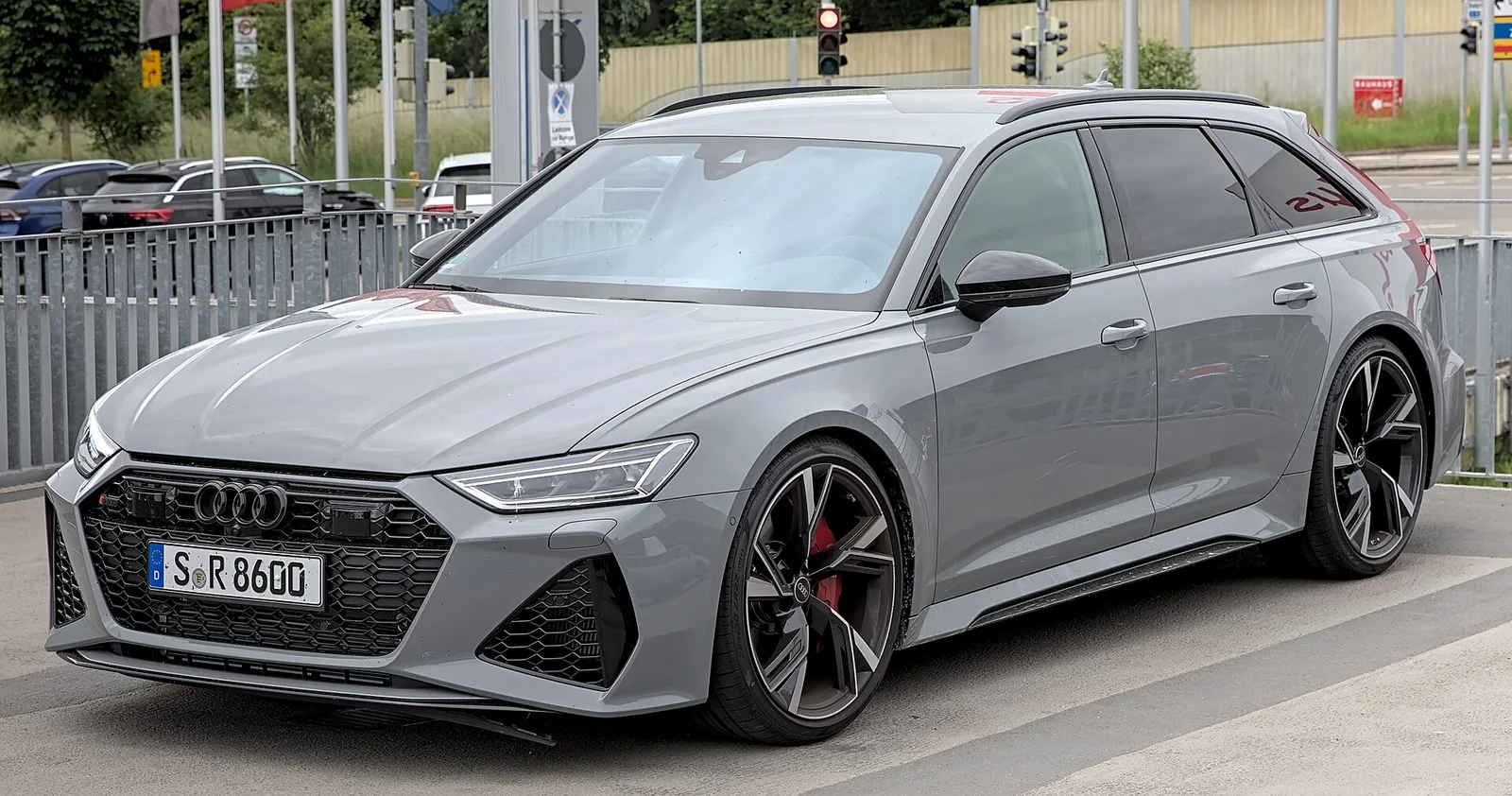
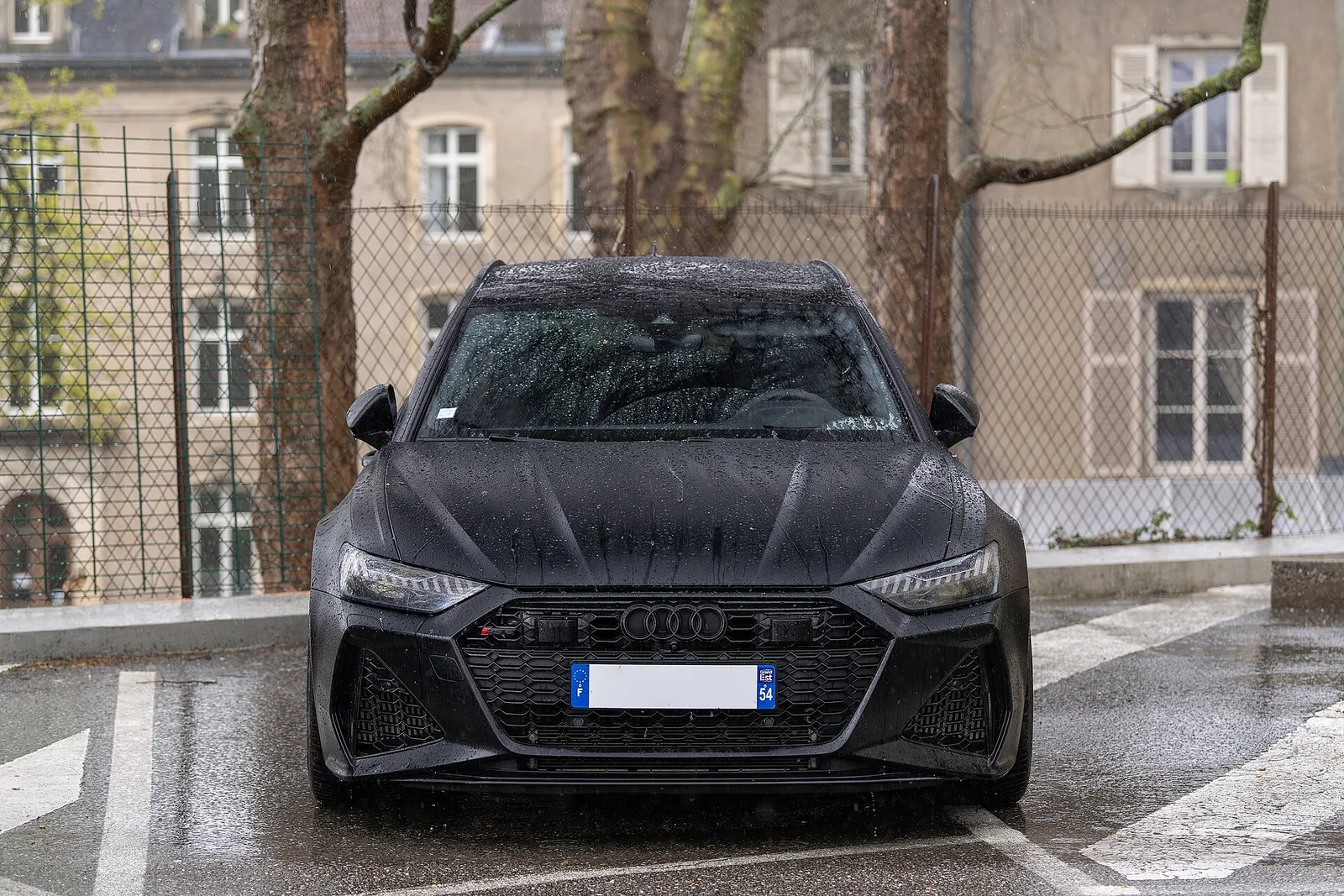
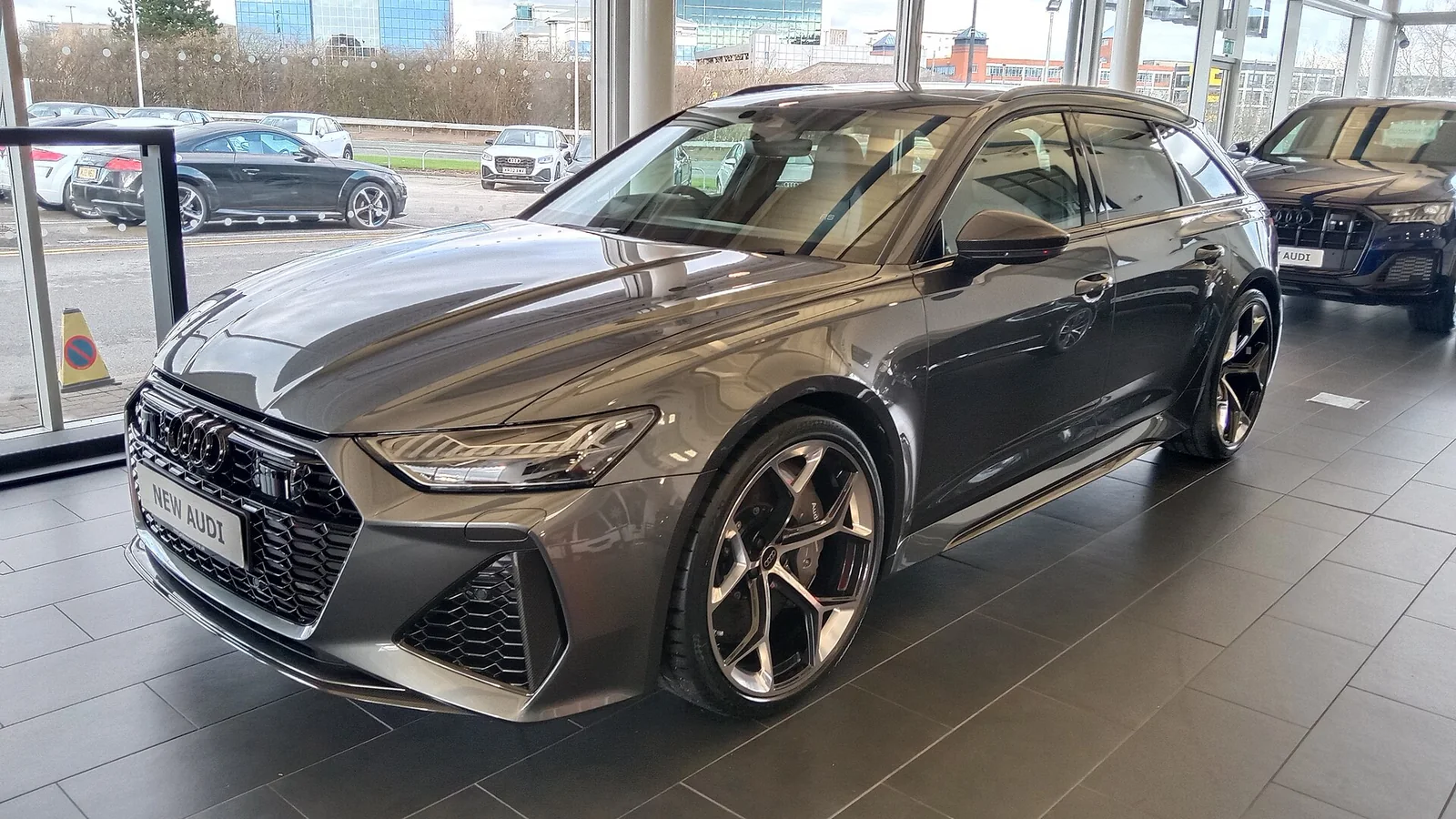
The current car is 196.7 inches long on a 115.3-inch wheelbase, according to Car and Driver’s measurements. More important is the width: 76.8 inches before the mirrors. The RS-specific body is visibly broader than an ordinary A6, with large arches that accommodate equal-width 285-section tyres. It looks compact in photographs because the roof is low and the surfacing is clean, but it occupies serious road and garage space.
That footprint creates the visual tension people love. The roof rails and long glasshouse suggest holidays and school runs; the huge intakes, oval exhausts and filled wheel arches suggest something else entirely. Unlike many performance SUVs, the RS 6 keeps its mass close to the road and preserves the elegant horizontal proportions of a fast estate.
The 4.0-Litre V8 Makes Speed Feel Effortless
Audi’s 3,996 cc twin-turbocharged V8 produces 621 hp and 627 lb-ft in the RS 6 Avant performance. An eight-speed Tiptronic automatic sends power to quattro all-wheel drive. The U.S. specification lists a 155-mph governed top speed and requires premium fuel.
The “performance” update added 30 hp and 37 lb-ft over the earlier 591-hp C8 RS 6. Audi also removed some sound insulation and fitted a lighter, faster-acting center differential. Those changes matter because this is not a lightweight car. Car and Driver measured its test example at 4,857 pounds with 55.1 percent over the front axle.
Despite that mass, independent numbers are supercar serious. Audi claims 0–60 mph in 3.3 seconds; Car and Driver recorded 3.2 seconds and an 11.5-second quarter-mile at 121 mph. Those figures were produced under controlled test conditions. Public-road traction, temperature, tyres, fuel and surface all change the result, and acceleration of this level demands a large safety margin.
The deeper achievement is the range between idle and full load. The V8 can settle into a quiet highway rhythm, then deliver huge mid-range torque without needing a dramatic downshift. Cylinder deactivation and a 48-volt mild-hybrid electrical system reduce waste in light-load situations, but they do not turn it into an efficient car. The EPA estimate remains 14 mpg city, 21 highway and 16 combined.
Quattro Is More Than Launch Traction
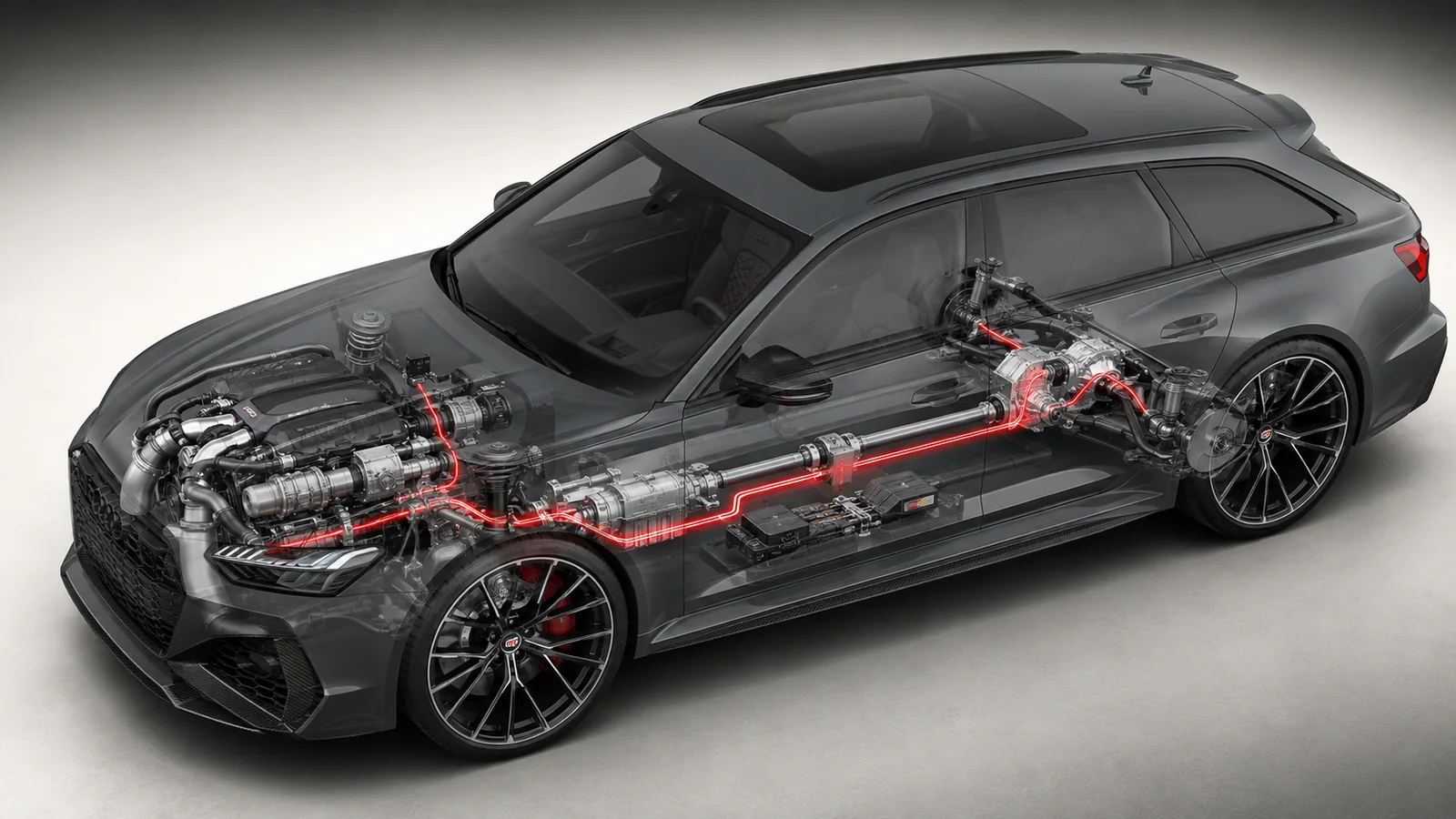
The standard mechanical center differential normally distributes torque between both axles and can redirect it as grip changes. The RS sport rear differential then varies torque between the rear wheels. All-wheel steering turns the rear wheels opposite the fronts at low speed to improve agility, then in the same direction at speed to support stability.
Together, these systems fight the two problems suggested by the specification sheet: a heavy nose and a long body. Car and Driver reported little understeer on its skidpad and measured 1.00 g of lateral grip on Continental SportContact 7 tyres. The equal 285-section tyre size at both ends gives the front axle more support than a narrower front setup would.
That does not make the RS 6 feel like a small rear-drive sports car. The steering is accurate and the chassis can rotate under power, but the driver is working with layers of hardware that manage considerable mass. Its talent is confidence and pace over distance, especially when the weather is imperfect. A lighter car will communicate more delicately; the Audi covers ground with less drama.
Air Suspension Is the Sensible Road Choice
RS adaptive air suspension is standard in the U.S. It changes ride height and damping across the drive modes, giving the car a useful split between highway control and aggressive body management. Optional RS sport suspension plus with Dynamic Ride Control uses steel springs and diagonally linked dampers to resist pitch and roll without relying on air springs.
Dynamic Ride Control can make the car feel more tied down during repeated hard cornering, but it also gives away compliance on broken roads. Large wheels amplify the difference. Audi lists 21-inch wheels as standard and offers 22-inch designs; the larger wheel fills the arch beautifully, yet leaves less tyre sidewall to absorb potholes.
Independent reviews consistently describe the performance model as controlled rather than plush. Car and Driver found the body well isolated but the underlying ride firm. That is the correct expectation. Comfort mode makes the RS 6 viable for long trips; it does not transform 285-width performance tyres and a near-2.2-tonne wagon into an A8 limousine.
The Practicality Is Real, With a Performance-Car Floor
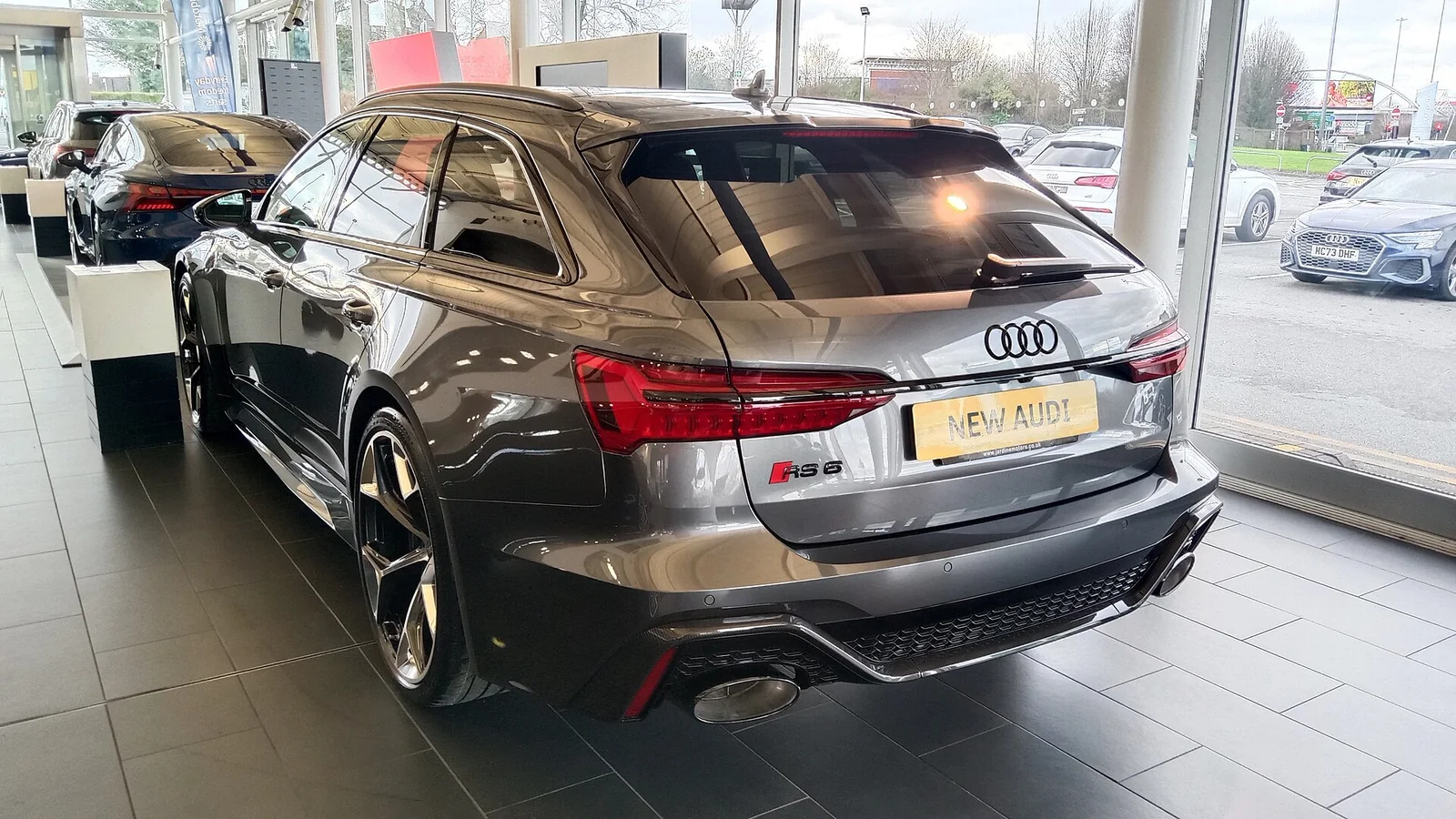
Five seats and a 40/20/40 split-folding rear bench make the RS 6 far more adaptable than a coupe. Top Gear lists 565 litres of luggage space with the seats up and 1,680 litres with them folded. The low loading height, square opening and long floor matter more in daily use than a headline volume alone.
A stroller, dog crate, bicycles with preparation or a family holiday load can fit without turning every trip into a packing exercise. Rear passengers have proper doors and adult-usable space. Roof rails also allow external carriers, although the vehicle’s roof-load limit and any accessory speed restriction must be checked before use.
The compromises come from the same hardware that creates the performance. The body is wide in urban garages, the turning circle still needs attention despite rear steering, and optional 22-inch wheels are vulnerable to kerbs and potholes. A fully loaded car also asks more of tyres and brakes. Practical shape does not cancel performance-car consumables.
The Cabin Is Excellent to Use, but Its Age Shows
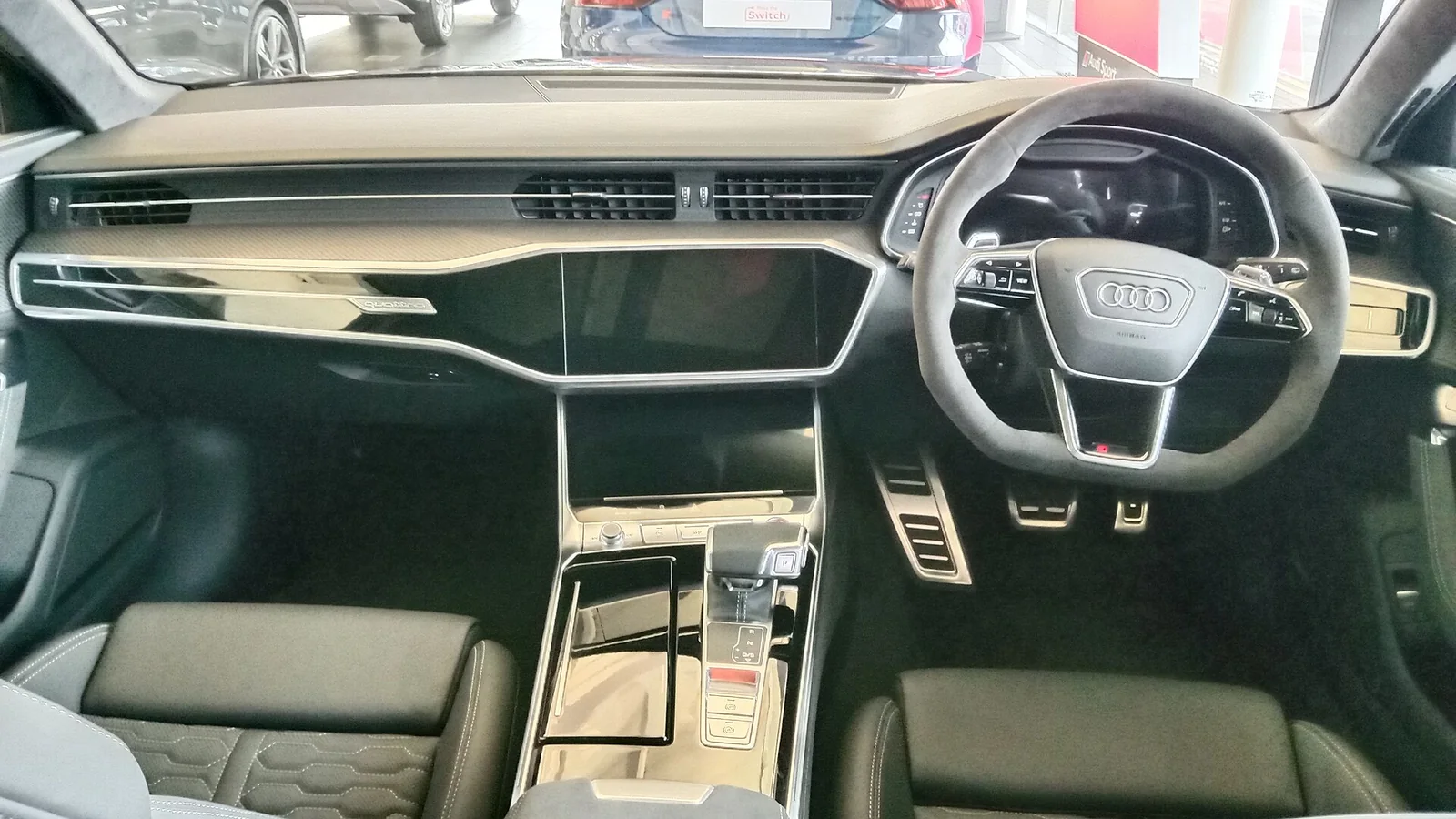
Audi’s 12.3-inch Virtual Cockpit puts navigation, speed and RS performance displays directly ahead of the driver. Wireless Apple CarPlay and Android Auto are standard, and the available Bang & Olufsen Advanced system uses 19 speakers and 1,820 watts. The Executive package adds a head-up display, heated rear seats, soft-close doors, remote parking assistance and extended leather.
The driving position, material quality and screen resolution still feel premium. The lower touchscreen also gives direct access to climate functions without burying them several menus deep. The drawback is glossy black glass. Fingerprints are obvious, and haptic screen presses demand more attention than well-shaped physical controls when the road is rough.
Car and Driver also noted that the cabin now feels older beside newer rivals. That is partly a design-cycle issue rather than poor execution. Buyers who value a coherent instrument layout may prefer it to a single giant display, but anyone expecting the latest voice assistant or newest Audi software architecture should use the system carefully before ordering.
The $130,700 Price Is Only the Starting Point
Audi’s 2026 U.S. configurator starts the RS 6 Avant performance at $130,700 before a $1,395 destination charge. Options quickly change the number: the Bang & Olufsen system is listed at $4,900, the Matte Carbon package at $7,650, the Executive package at $3,050, Night Vision at $2,500 and the RS sport exhaust at $1,000 on Audi’s dated build sheet.
Running costs deserve the same attention as the purchase. Premium fuel and a 16-mpg combined estimate create frequent stops. A set of 285-width 21- or 22-inch performance tyres is expensive, and mismatched wear matters on an all-wheel-drive car. Standard front brakes use ten-piston calipers; optional carbon-ceramic discs can tolerate repeated heat better and reduce unsprung mass, but replacement cost can be severe.
Insurance, registration and depreciation vary too much by driver and market for one honest figure. Obtain quotes using the exact VIN and intended annual mileage. Owners should also budget for wheel damage, alignment, brake fluid, battery health and diagnostic work rather than treating scheduled oil service as the complete cost.
A Used RS 6 Needs a Specialist Inspection
C8 RS 6 Avants arrived in the U.S. for the 2021 model year. They combine a hot-V engine, 48-volt electronics, all-wheel steering, adaptive suspension and multiple cooling circuits. That complexity does not prove unreliability; it means a casual visual inspection cannot establish condition.
- Identity and history: decode the VIN, confirm options and market specification, and demand invoices rather than a stamped booklet alone.
- Cold start and diagnostics: scan all control modules, watch for warning messages and check that the 48-volt and 12-volt systems report healthy voltage and charging behavior.
- Cooling and engine: inspect for dried coolant residue, oil seepage, damaged radiators and evidence of overheating or undocumented tuning.
- Transmission and quattro: test reverse, low-speed maneuvering and hot shifts; listen for vibration or binding on full steering lock.
- Suspension and steering: verify every ride-height mode, look for overnight sag and inspect DRC dampers for leakage where fitted.
- Brakes: measure iron-disc thickness and condition. Carbon-ceramic discs require specialist assessment, not a glance through the wheel.
- Tyres and wheels: check dates, correct load and speed ratings, inner sidewalls, buckles and even circumference across the system.
- Body and driver assistance: inspect the wide arches, low bumper, undertrays, cameras and radar calibration after any repair.
- Recall status: run the VIN through Audi and the relevant national recall database on the day of purchase.
A modified car can be excellent, but software tunes, exhaust changes and suspension alterations should be documented and declared to the insurer. A standard example with complete evidence is easier to value and diagnose. Buy condition and history before colour or carbon trim.
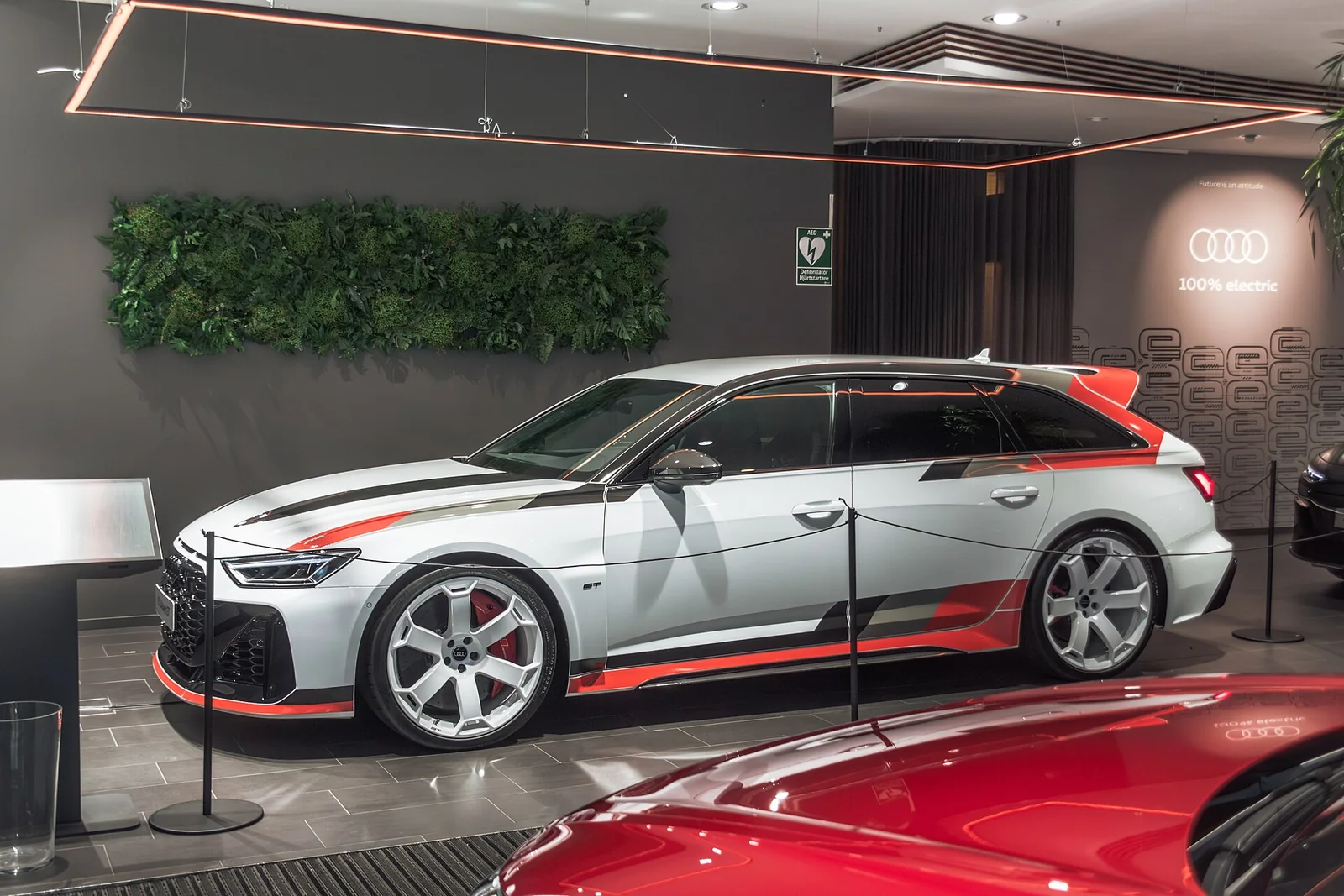
RS 6 Avant GT Is the Collector Branch
The RS 6 Avant GT was a limited final expression of the C8 formula: 660 cars globally, with Car and Driver reporting 85 allocated to the United States. Output remained 621 hp, but Audi used carbon body parts, manually adjustable coilovers, a more rear-biased differential calibration, lightweight wheels and specific Continental tyres.
Its appeal is rarity, visual connection to Audi’s 90 quattro IMSA GTO and sharper chassis focus. It is not the logical daily-driver choice. The U.S. price was $200,195, and the coilover setup gives away the height flexibility that helps an ordinary RS 6 handle varied roads and loads. Collectability is possible, never guaranteed.
The BMW M5 Touring Is the Direct Rival
The current BMW M5 Touring is the clearest alternative. Its plug-in-hybrid V8 provides short electric operation and even greater system output, while Car and Driver has measured the wagon at 3.1 seconds to 60 mph. It is also heavier and brings a different layer of powertrain complexity. The BMW is the technology-heavy answer; the Audi’s non-plug-in V8 is simpler to understand and visually more discreet.
The Porsche Panamera offers sharper driver focus and a more coupe-like liftback body, but it is not as square or as useful behind the rear seats. A used previous-generation Mercedes-AMG E 63 S wagon brings louder rear-biased character and a similarly cult-like following. Availability and warranty coverage depend strongly on market.
An Audi Q7 is the better family tool if a third row, higher seating position or towing matters. The A6 allroad preserves the wagon shape with more ground clearance, lower running costs and much less performance. The smaller Audi RS 3 is more playful and easier to place, but it cannot match the RS 6’s rear-seat and cargo breadth.
Cariary Perspective: The One-Car Garage Has a Price
Recommended: RS 6 Avant performance with adaptive air suspension, the smaller wheel choice and a disciplined option list. That specification protects the reason to buy the car: it can perform an ordinary journey without feeling like compromised track equipment.
Choose Dynamic Ride Control if: repeated hard cornering and body control matter more than poor-road comfort. Choose carbon-ceramic brakes if your use can create sustained brake heat and you accept their inspection and replacement demands. Neither is mandatory for a fast road car.
Choose a rival if: you need three rows, regular electric commuting, the newest cabin software or delicate sports-car feedback. The RS 6 is broad rather than perfect. Its weight, width and fuel appetite remain present even when the suspension and electronics disguise them.
The RS 6’s lasting trick is emotional camouflage. It looks like a handsome wagon, behaves like a secure grand tourer and accelerates like a supercar. Many expensive cars do one of those things better. Almost none combine all three without forcing the owner to explain why practicality had to look practical.
One-line verdict: The Audi RS 6 Avant is the supercar wagon that still makes sense—if you can afford every meaning of “supercar.”
Audi RS6 Avant Review: Buyer Questions
Is the Audi RS 6 Avant a hatchback?
No. It has a rear hatch, but its long roof, extended cargo body and estate proportions make it a wagon. Audi uses the name “Avant” for this body style.
How fast is the 2026 Audi RS 6 Avant performance?
Audi claims 0–60 mph in 3.3 seconds. Car and Driver recorded 3.2 seconds and an 11.5-second quarter-mile at 121 mph under controlled test conditions.
How much cargo space does the RS 6 have?
Top Gear lists 565 litres with the rear seats raised and 1,680 litres with them folded. The 40/20/40 rear bench and square hatch make the space easy to use.
Is the RS 6 comfortable?
Standard adaptive air suspension provides real long-distance usability, but the ride remains firm. Optional 22-inch wheels and Dynamic Ride Control can reduce compliance on broken roads.
What fuel economy does it get?
The 2026 U.S. specification lists EPA estimates of 14 mpg city, 21 highway and 16 combined on premium fuel. Aggressive driving can produce a lower result.
Is a used RS 6 reliable?
No article can predict an individual car. Its complex engine, 48-volt system, air suspension, steering and drivetrain make a specialist inspection, full diagnostic scan and documented history essential.
Data reference date: September 6, 2026. Core specification and pricing come from Audi USA and its dated 2026 build sheet. Independent performance and road impressions reference Car and Driver; cargo figures reference Top Gear. Manufacturer claims were not independently verified by Cariary. Prices, equipment and availability can change.

