Core summary
The G30 540i is the six-cylinder petrol step above the 530i, not a V8. It appeals when engine character matters as much as cabin equipment.
The G30 540i sits between the four-cylinder petrol 5 Series and the V8 M550i. Its central attraction is the turbocharged inline-six rather than a radically different cabin. This profile covers the saloon, not a Touring or a later-generation 540i.
Cariary's assessment is that the 540i makes most sense for an owner-driver who actively wants the six-cylinder package. If the purchase is primarily about space and screens, a better-equipped 530i may use the same budget more effectively.
History & generations
The 540i joined the G30 launch range in 2017. The name had appeared on V8 BMWs in earlier generations, which makes old reviews particularly easy to misapply. The G30 version discussed here is a six-cylinder.
The 2020 facelift brought further changes, with electrification and specifications depending on market and model year. Keep an early 2018 car, a later facelift car and a new-generation 540i in separate research folders rather than treating their badges as technical equivalence.
Body, platform & design
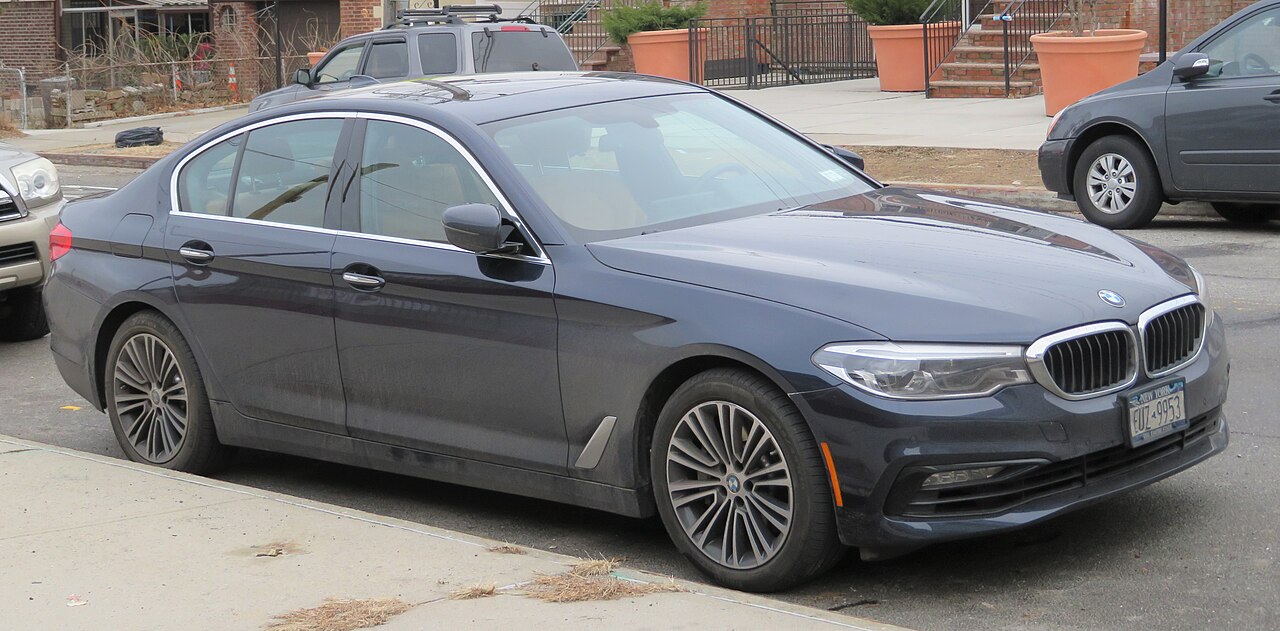
The photographs show an early G30 540i xDrive from the front and rear. Its relatively restrained appearance is part of the appeal for someone wanting performance without the visual statement of an M5. Rear badging identifies the photographed all-wheel-drive example.
Appearance packages can conceal how differently two cars are specified underneath. Check wheel size and the actual suspension options. The car with the most dramatic wheels is not necessarily the one that makes a long journey more pleasant.

Engine & drivetrain
BMW's 2017 global table lists 2,998 cc, 250 kW/340 PS and 450 Nm, with an eight-speed automatic. Those figures identify the early reference car; other markets and later years need their own specification.
Test progressive acceleration as well as low-speed response. The reason to choose a 540i should survive ordinary driving, not just a brief full-throttle demonstration. Ask whether engine or gearbox software has been altered and require documentation for any claimed return to standard.
Trim differences
A 540i can be rear-driven or xDrive depending on the market. The gallery car is xDrive, but that does not establish the drivetrain of an advertisement elsewhere. M Sport and M Performance are also different concepts: the 540i is not an M550i simply because it has an M steering wheel.
Use the VIN equipment record to confirm adaptive dampers, steering options and assistance packages. An attractive used-car price should be compared after accounting for the features you would otherwise miss.
Interior & seating
The 540i shares the G30's practical executive-saloon cabin concept with less powerful models. That means the engine upgrade does not automatically bring better seats, upgraded audio or every convenience feature. Inspect those individually.
Try the rotary controller and touchscreen, rear ventilation, seat memory and phone connection. If you regularly carry passengers, have them assess the rear seat during the test drive; the driver cannot judge every aspect of comfort from the front alone.
Efficiency & range
A six-cylinder petrol saloon can be bought for long-distance travel without pretending it is the cheapest way to cover that distance. Work from your annual mileage, likely fuel consumption and local fuel requirements rather than a best-case trip-computer photograph.
The 530e is only a meaningful efficiency rival when charging is practical. The 520d serves a different journey pattern. Compare total ownership costs alongside the engine experience that attracted you to the 540i in the first place.
Safety & equipment
Performance makes tyre and brake condition particularly important. Check for uneven wear, non-matching tyres and evidence of repeated hard use. On xDrive cars, ask a specialist to assess whether the tyre set meets the vehicle's requirements.
Confirm the fitted driver-assistance functions through the menus and equipment list. Look into any calibration work following accident repairs, and check manufacturer campaigns by VIN. No assistance feature changes the driver's responsibility for speed and stopping distance.
Strengths
The 540i provides a distinct reason to move beyond the four-cylinder model while retaining a conventional saloon format. It is an appealing middle ground for someone who wants a six-cylinder petrol BMW but does not want to commit to a V8 performance model.
A discreet specification can make that proposition particularly coherent. Spend on a sound example and comfortable equipment before adding cosmetic changes intended to imitate an M5.
Pay the premium for the straight-six because you value it, not because the larger badge must be better. An unmodified car with clear history is the stronger starting point.
Considerations
Used examples may have attracted power upgrades. A seller's assertion that a tune is harmless does not establish its effect on warranty, insurance, emissions compliance or drivetrain condition. Ask for records and have the car inspected independently.
Also budget for the executive-car hardware around the engine. A low purchase price cannot turn adaptive chassis equipment, large tyres or accident repairs into small-car expenses. Avoid using an engine's reputation as a substitute for inspecting the whole vehicle.
Recommended use
The strongest use case is an owner-driven saloon for mixed daily travel and longer journeys, where the six-cylinder character is a conscious preference. The 540i is less necessary for someone who mainly wants a rear-seat transport appliance or spends every journey in congestion.
Test it against a 530i on comparable tyres if possible. That isolates what the engine upgrade contributes and helps decide whether the remaining budget would be better spent on condition or equipment.
Rivals & related
An Audi A6 55 TFSI or an appropriate six-cylinder Mercedes-Benz E-Class provides a useful cross-brand comparison where available. Match age, drivetrain and equipment rather than assuming identical numerical badges indicate equal specifications.
The BMW M550i is the more powerful V8 alternative, but it brings a different cost commitment. The 530i remains the rational internal benchmark if the six-cylinder distinction is not important to you.
FAQ
Q: Is this 540i a V8?
A: No. The G30 uses a turbocharged inline-six.
Q: Is xDrive standard everywhere?
A: Availability depends on market and year; check the individual car.
Q: Is a 540i M Sport an M5?
A: No. Styling equipment does not change its model identity.
Q: Should I buy a tuned example?
A: Only after understanding the modifications, documentation and inspection findings; extra advertised power is not proof of better value.
What makes the BMW 540i different?
Pay the premium for the straight-six because you value it, not because the larger badge must be better. An unmodified car with clear history is the stronger starting point.
Who should consider it?
Six-cylinder executive touring
Sources & updates
The manufacturer references below identify the dated generations and specifications used in this profile. Buying assessments are Cariary editorial analysis, not a claimed first-hand road test or a diagnosis of an individual vehicle. Photographs carry separate credit and licensing information. Confirm exact equipment, ratings and campaign status for the car’s production date and original market.
- BMW — G30 launch specifications (2017) →
- BMW — 5 Series update (2020) →
- Photograph — Blue-grey early G30 BMW 540i xDrive front view →Kevauto; CC BY-SA 4.0
View all official references (1 more)
- Photograph — Blue-grey BMW 540i xDrive rear three-quarter view →Kevauto; CC BY-SA 4.0
Last editorial review: September 20, 2026. Specifications remain market- and model-year-specific.