Core summary
The G30 520d is a journey-pattern decision before it is a badge decision. Its diesel proposition is different from a petrol 530i or rechargeable 530e.
The 520d is the four-cylinder diesel entry in this G30 group. It is intended to be understood separately from the six-cylinder 530d and petrol 520i. For used buyers, that distinction affects fuel, maintenance checks and the suitability of the car for everyday routes.
Cariary's view: first decide whether a diesel matches your life, then choose the best 520d available. A low-mileage example used only for very short trips is not automatically a better proposition than a properly maintained car with documented longer-distance use.
History & generations
The G30 arrived in 2017 and was facelifted in 2020. Earlier F10 520d material is not an adequate specification source for it. The estate belongs to the G31 family and should not be used to illustrate a saloon's boot or rear body.
There were mechanical updates during the generation, including market-dependent mild-hybrid versions. The registration year alone cannot settle the specification. Check production data before interpreting a seller's description of an EfficientDynamics or electrified model.
Body, platform & design
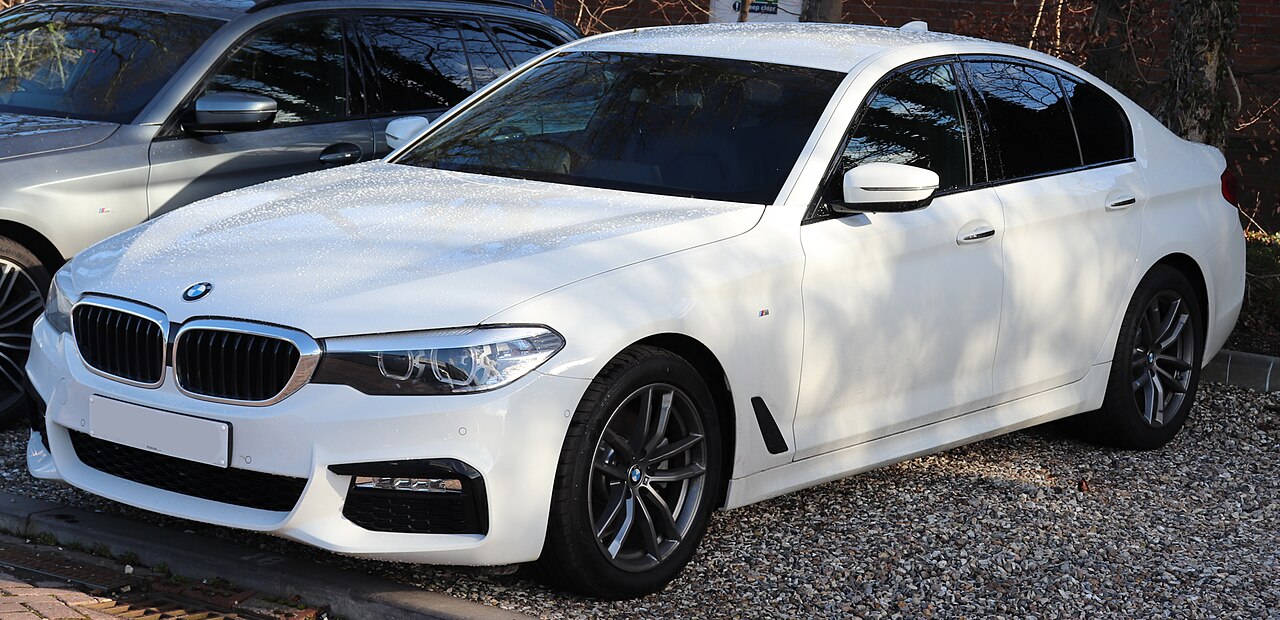
The photographs show the G30 saloon rather than the Touring. Its separate boot suits conventional luggage, while an estate is worth considering for regular bulky loads. Inspect the rear opening and load height with the things you actually transport.
M Sport wheels and bumpers may look appealing, but this remains a diesel executive car rather than an M5. For a long commute, ride comfort and tyre replacement cost deserve at least as much attention as the appearance package.
_520d_(2017)_(53327037455).jpg)
Engine & drivetrain
The 2017 global reference lists a 1,995 cc diesel four-cylinder producing 140 kW/190 PS and 400 Nm. Gearbox and drivetrain choices varied: do not assume that every early 520d was automatically an eight-speed xDrive car.
Ask to start the engine from cold and test it fully warm. Have a qualified workshop investigate warning lamps or irregular operation instead of accepting an instruction to drive harder until a fault disappears. This is a purchase check, not a diagnosis of an unseen vehicle.
_(54842021913).jpg)
Trim differences
Distinguish the regular 520d, xDrive and any EfficientDynamics designation in the actual market brochure. An efficiency-oriented version is not necessarily equipped like the sport-styled car in a listing.
For high-mileage use, seats, lights, parking equipment and functioning cruise control may be more valuable than decorative upgrades. Record the factory options, and confirm whether advertised assistance systems really appear and operate in the car's menus.
Interior & seating
The G30 cabin can make a daily commute feel less tiring, but seat specification is not determined by the diesel badge. Try lumbar and cushion adjustments and check whether the driving position remains comfortable over more than a few minutes.
Inspect the driver's bolster, pedals and frequently used controls alongside the documented mileage. Wear alone does not prove tampering, but discrepancies deserve questions. Rear passengers should test their space behind the driver's normal seat position.
Efficiency & range
The reason to consider a 520d is sustained use where its diesel arrangement makes practical sense, not a promise of identical fuel savings on every route. Repeated cold starts and short journeys are a different task from a warm motorway run.
Compare real fuel expenditure, servicing and any local emissions-zone restrictions with a 530i. If most trips are short and charging is available, a 530e may deserve consideration instead. Avoid comparing an old NEDC number directly with a later WLTP figure.
Safety & equipment
Check tyres and brakes with the same care as the engine. A commuter car may accumulate substantial wear without looking dramatic in photographs. Driver-assistance hardware also needs checking after windscreen or front-end repairs.
Ask BMW to check the VIN for outstanding campaigns, including any relevant diesel-system campaigns. Do not conclude that a particular vehicle is affected or unaffected from its badge alone. A documented campaign history belongs in the purchase file.
Strengths
The 520d can be a coherent executive-car choice when the owner covers regular longer distances and values cabin comfort more than maximum power. It offers a clear alternative to paying for a larger engine simply to obtain the 5 Series body.
Its appeal grows when the specific car has good seats, appropriate tyres and complete service history. Those details support the intended commuting role more directly than an aftermarket performance badge.
Shortlist it for regular longer journeys, with documented emissions-system maintenance and a comfortable specification. Do not choose it solely for a low advertised fuel figure.
Considerations
Diesel particulate-filter and emissions-control condition should be assessed by a competent inspector, along with the car's previous use. Ask about fault repairs and do not buy a car with emissions equipment removed or software used to conceal problems.
A bargain with incomplete records may leave little financial room for repairs. Price a proper inspection and a maintenance reserve into the decision. These checks are more useful than assuming that every diesel is economical merely because the fuel gauge moves slowly on one trip.
Recommended use
The best fit is a driver making frequent longer journeys who wants a conventional executive saloon. It is less persuasive for someone using the car mostly for brief local errands.
Before shopping, write down a typical week's trips, not an imagined annual holiday. Compare that pattern with a petrol car and, where feasible, a plug-in alternative. Choosing the right fuel type is more consequential than choosing black or chrome trim.
Rivals & related
A comparable Mercedes-Benz E 220 d or Audi A6 40 TDI makes a relevant diesel comparison, subject to local versions. Evaluate seats, emissions compliance, history and warranty terms as carefully as fuel consumption.
Within BMW, a 530d offers six-cylinder diesel character, while a 530i removes the diesel-specific use-case question. The 520d should win on suitability and condition rather than on being the cheapest badge in a search result.
FAQ
Q: Is the G30 520d a six-cylinder?
A: No, it is the four-cylinder diesel covered here.
Q: Is every 520d a mild hybrid?
A: No; equipment depends on build date and market.
Q: Is it ideal for short trips?
A: Do not assume so. Evaluate your route pattern and compare petrol or plug-in alternatives.
Q: Does an M badge make it an M5?
A: No. Confirm the VIN and original model specification.
What makes the BMW 520d different?
Shortlist it for regular longer journeys, with documented emissions-system maintenance and a comfortable specification. Do not choose it solely for a low advertised fuel figure.
Who should consider it?
Regular longer-distance diesel commuting
Sources & updates
The manufacturer references below identify the dated generations and specifications used in this profile. Buying assessments are Cariary editorial analysis, not a claimed first-hand road test or a diagnosis of an individual vehicle. Photographs carry separate credit and licensing information. Confirm exact equipment, ratings and campaign status for the car’s production date and original market.
- BMW — G30 launch specifications (2017) →
- BMW — 5 Series update (2020) →
- Photograph — White early G30 BMW 520d M Sport front three-quarter view →Vauxford; CC BY-SA 4.0
View all official references (2 more)
- Photograph — Black early G30 BMW 520d side and rear on the road →Charles from Port Chester, New York; CC BY 2.0
- Photograph — White G30 BMW 520d rear view on a cobbled street →Charles from Port Chester, New York; CC0
Last editorial review: September 20, 2026. Specifications remain market- and model-year-specific.