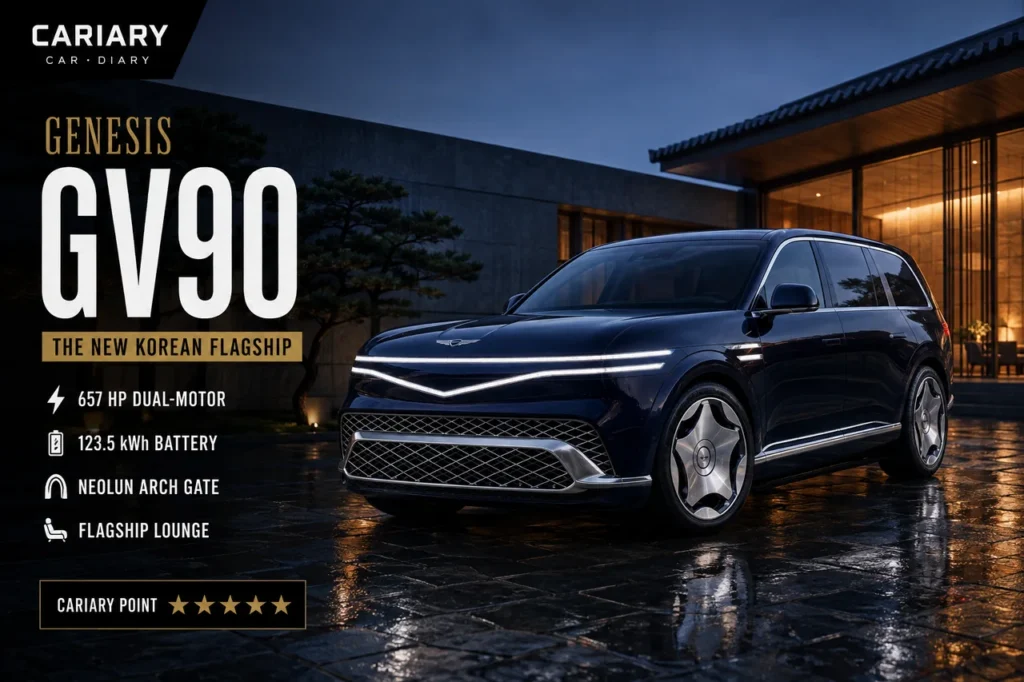
CARIARYCAR · DIARY · PERSPECTIVE
Cover: AI-generated Cariary editorial illustration, checked against official production Genesis GV90 references. It is not road-test photography.
This Genesis GV90 review examines a rare kind of flagship gamble: a 657-hp electric SUV whose most important engineering story may be its doors. The Neolun model removes the visible center pillar and uses independently operated coach doors. That creates a spectacular opening, but also forces Genesis to rethink hinges, door movement and the structure that normally carries crash loads.
The GV90 is real, but it is still too new for an honest final driving verdict. Genesis revealed the production vehicle in August 2026, U.S. customer cars are expected in early 2027, and neither final U.S. pricing nor EPA-certified range had been published when this article was prepared. Cariary has not driven it. What follows is a research-based first-look review built from the production reveal, official technical information and independent reporting.
Genesis GV90 Review: Quick Verdict
The standard GV90 looks like the sensible flagship: a huge seven-seat electric SUV with conventional doors, a 123.5-kWh battery, serious performance and the chassis technology expected at this price level. The GV90 Neolun is the statement car. Its pillarless coach-door opening, lounge-focused cabin and available executive seating give Genesis a recognizable idea that is more ambitious than simply adding leather and screens to a large SUV.
The engineering is the reason to take it seriously. Genesis says the Neolun’s rear doors first move slightly outward and then rotate rearward through a newly developed dual-motion hinge. The rear doors can operate independently of the fronts. High-strength beams inside the doors and a heavily reinforced passenger-cell frame replace much of the work normally done by a fixed B-pillar. This is not decorative theater; it is a complex structural and kinematic problem.
The reasons to wait are equally clear. Price, EPA range, production weight, real charging consistency, long-term door alignment and independently verified crash performance remain unanswered. The GV90 deserves attention now and judgment after production testing.
Table of Contents
- Why the GV90 Exists
- Standard GV90 vs. GV90 Neolun
- Why the Coach-Door Hinge Matters
- Replacing the Visible B-Pillar
- Size, Cabin and Practicality
- Power, Battery and Charging
- What It May Feel Like to Drive
- Buyer Risks and Ownership Questions
- Cariary Perspective
Cariary previously covered the reveal in a concise Genesis GV90 news brief. This article goes deeper into the door engineering, model choice and the questions a buyer should answer before placing an order.
Why the GV90 Exists
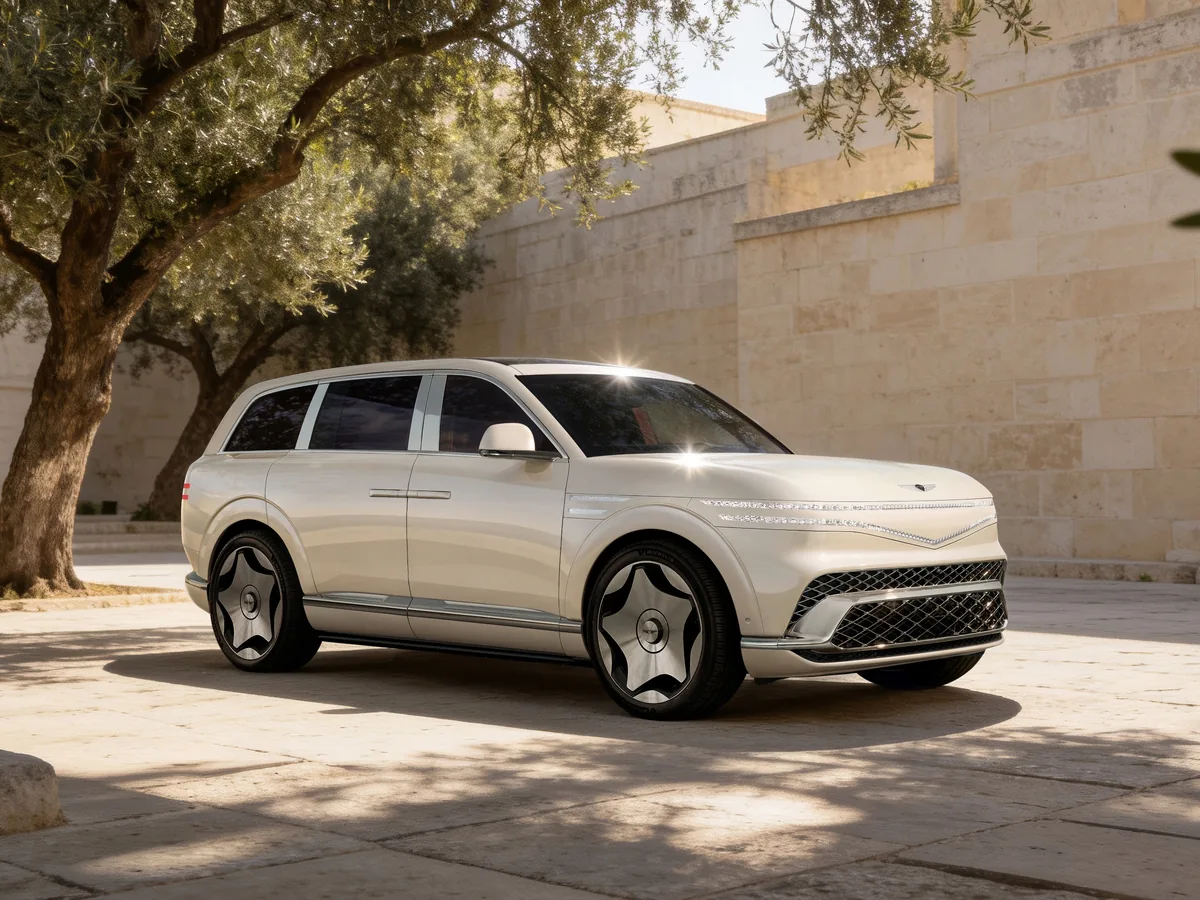
Genesis has built convincing sedans and midsize SUVs, but a modern luxury brand also needs a vehicle that defines its ceiling. The GV90 is that car: Genesis’ first full-size flagship SUV and a chance to show that Korean luxury can create its own rituals rather than imitate established European ones.
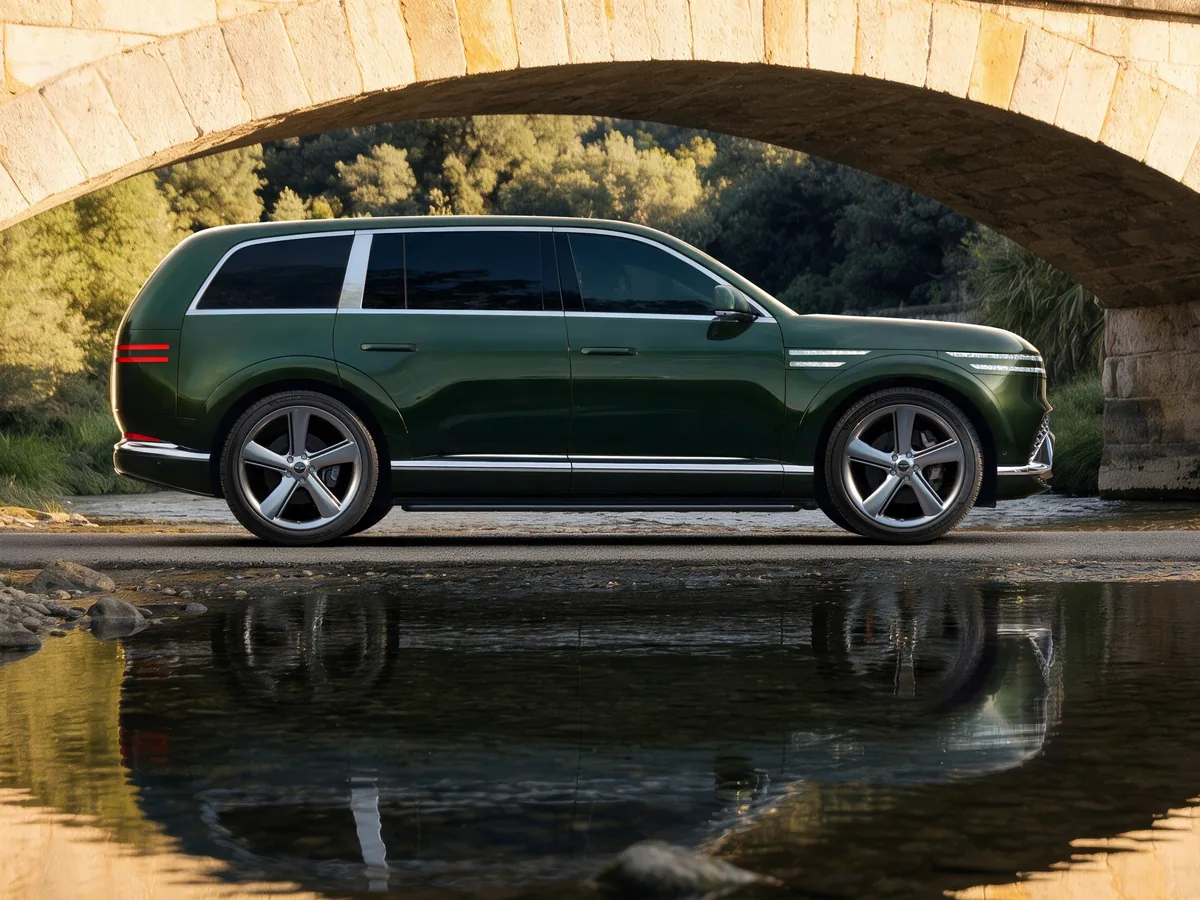
Its proportions establish the hierarchy. Genesis lists a length of 5,285 mm, width of 2,030 mm and a 3,245-mm wheelbase. Height is 1,815 mm on 22-inch wheels or 1,825 mm on 24-inch wheels. This is a large vehicle by any normal standard, designed for three rows in standard form and extravagant second-row accommodation in the most expensive configurations.
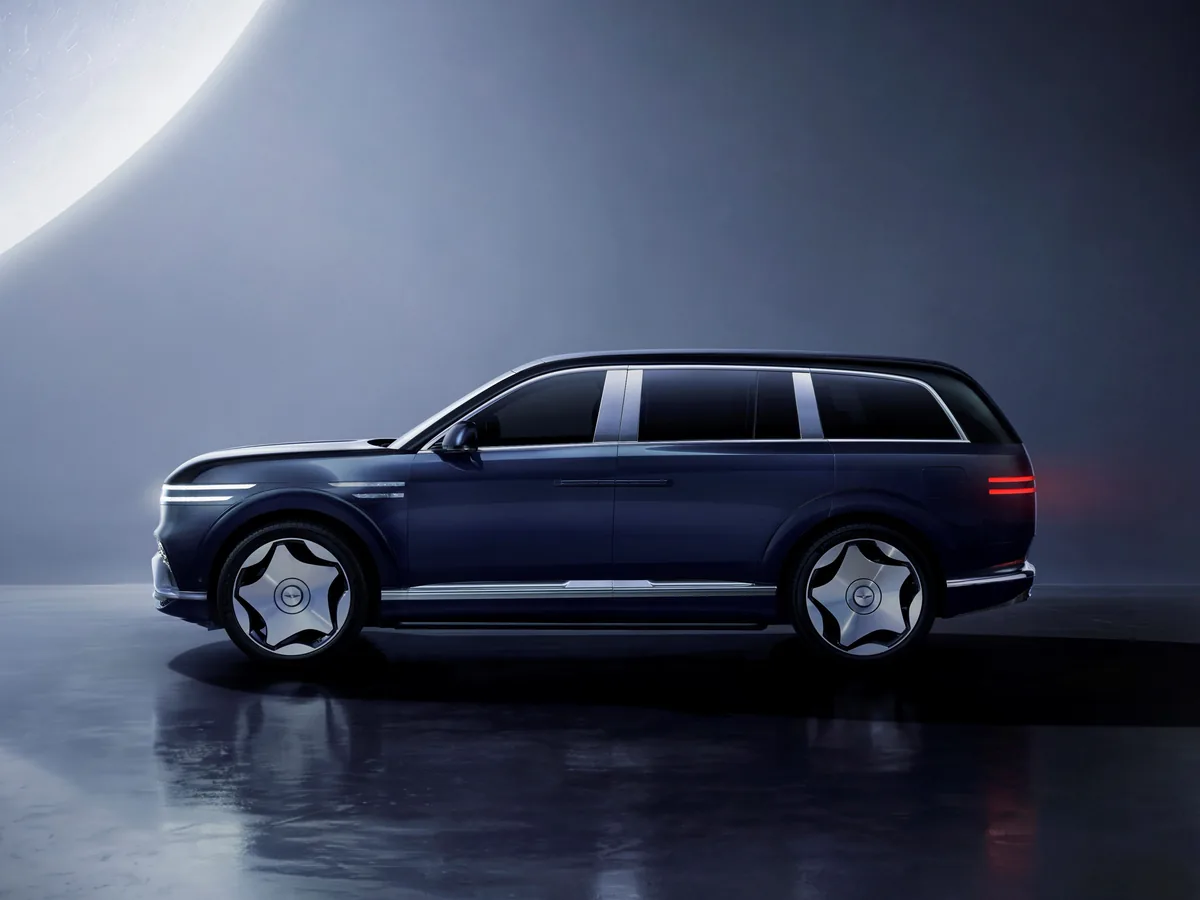
The restrained body surfacing helps. Two-line lighting, a low crest-shaped nose and a long, clean side profile give the GV90 presence without covering it in vents. The standard model is easier to imagine as a family flagship; Neolun turns the same basic shape into an arrival event.
Standard GV90 vs. GV90 Neolun
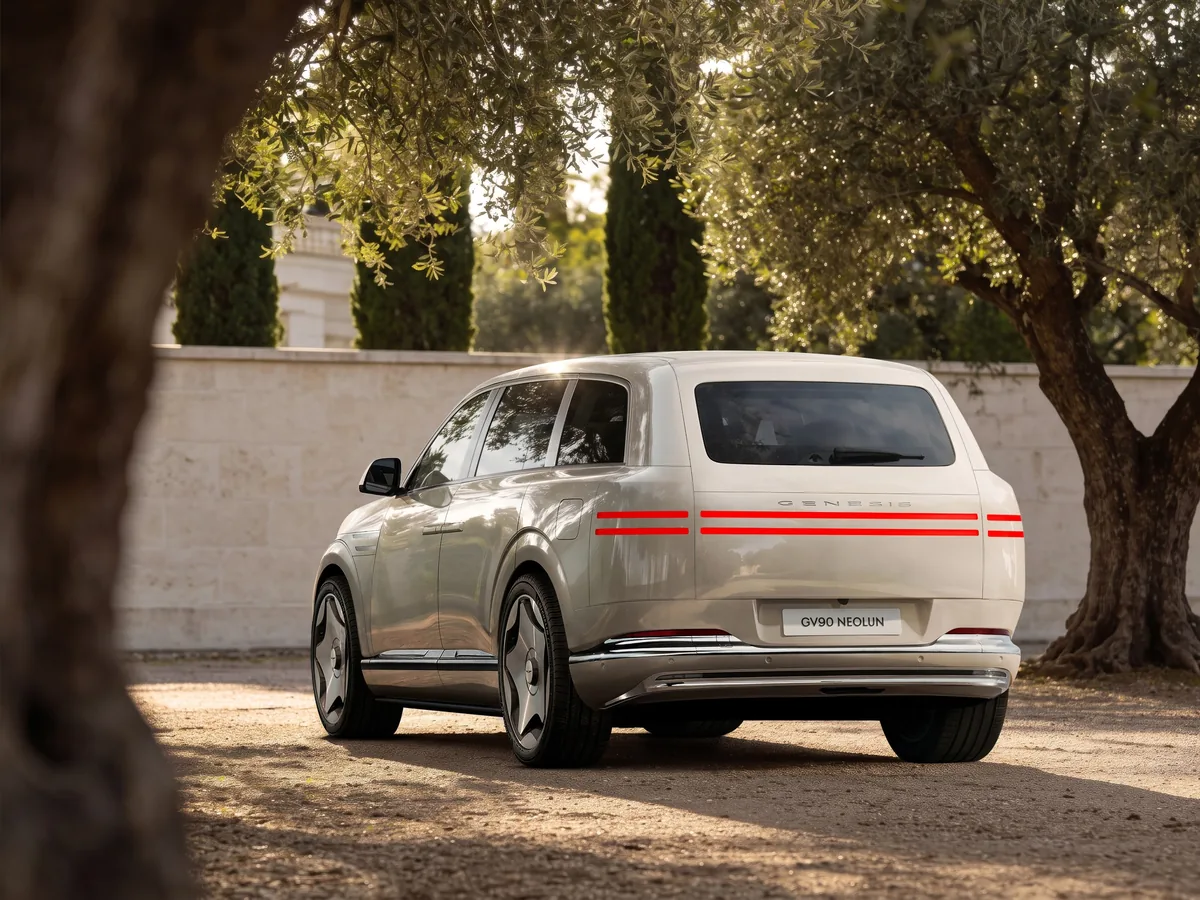
This Genesis GV90 Review starts with a distinction more important than a trim badge. The standard GV90 has conventional front-hinged rear doors and can be configured for up to seven occupants. It should be the easier answer for owners who regularly use tight parking spaces, child seats or all three rows.
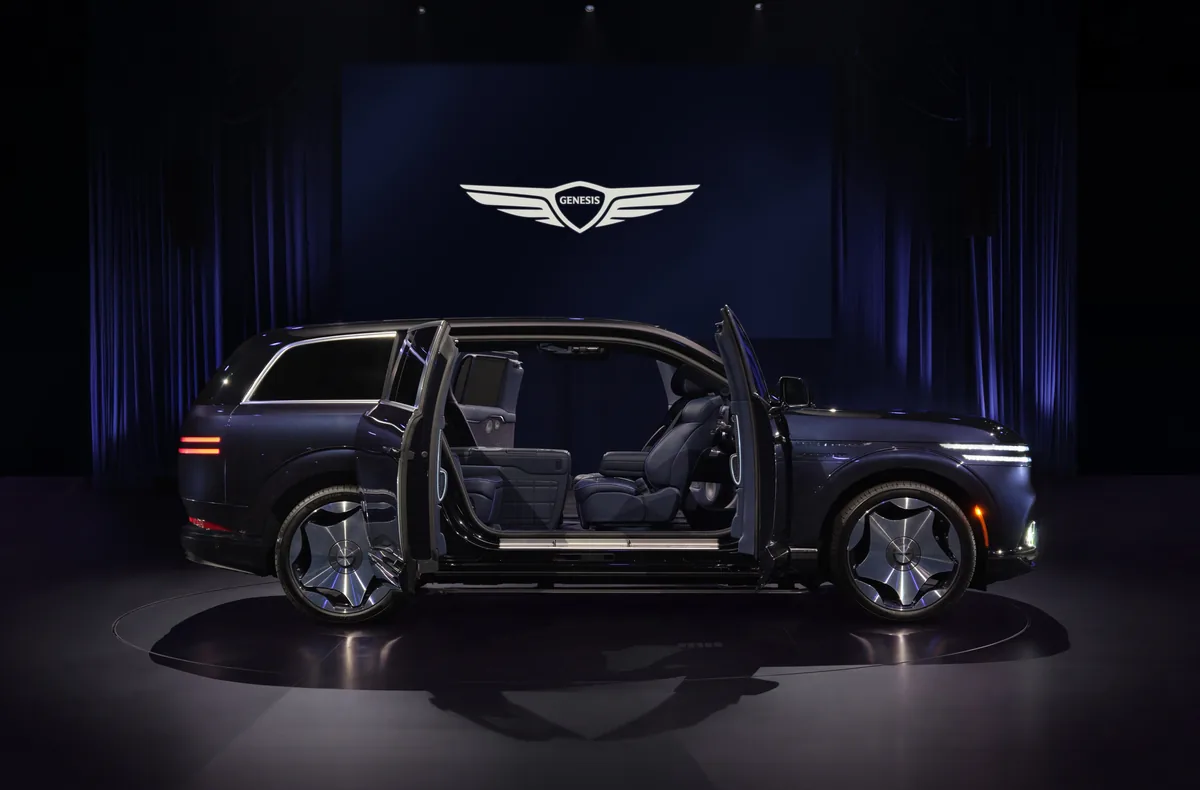
The GV90 Neolun introduces what Genesis calls the Neolun Arch Gate: opposing coach doors, no visible fixed B-pillar and a broad side opening. Neolun also pushes the cabin toward a lounge, with more elaborate second-row arrangements and a First Edition above it. Genesis presents all three as distinct expressions rather than a simple equipment ladder.
Why the Coach-Door Hinge Matters
This is the part of the GV90 story that deserves more than a glamorous photograph. A conventional rear door rotates around a fixed hinge attached to a strong body pillar. The Neolun rear door has no visible pillar in front of it, yet it must clear the front door, open on command, seal against wind and water, resist sagging over years of use and close precisely enough for the body structure to work as intended.
Genesis’ answer is a newly developed dual-motion hinge. The rear door does not simply swing backward. It first slides a short distance outward and then rotates open. That initial translation creates clearance between the opposing doors. It also allows the rear door to open independently, rather than forcing occupants to open the front door first as on some older pillarless coach-door designs.
That sequence sounds simple when described in one sentence. Engineering it into a heavy luxury-SUV door is not. The hinge has to control two different paths while keeping the door surface flush when closed. Motors, latches, position sensing and anti-pinch logic must agree on exactly where the door is. The seals must compress consistently, and the system has to tolerate slopes, temperature changes and body movement. These durability considerations are engineering inferences from the mechanism; Genesis has not published a service-life test or a detailed factory hinge drawing.
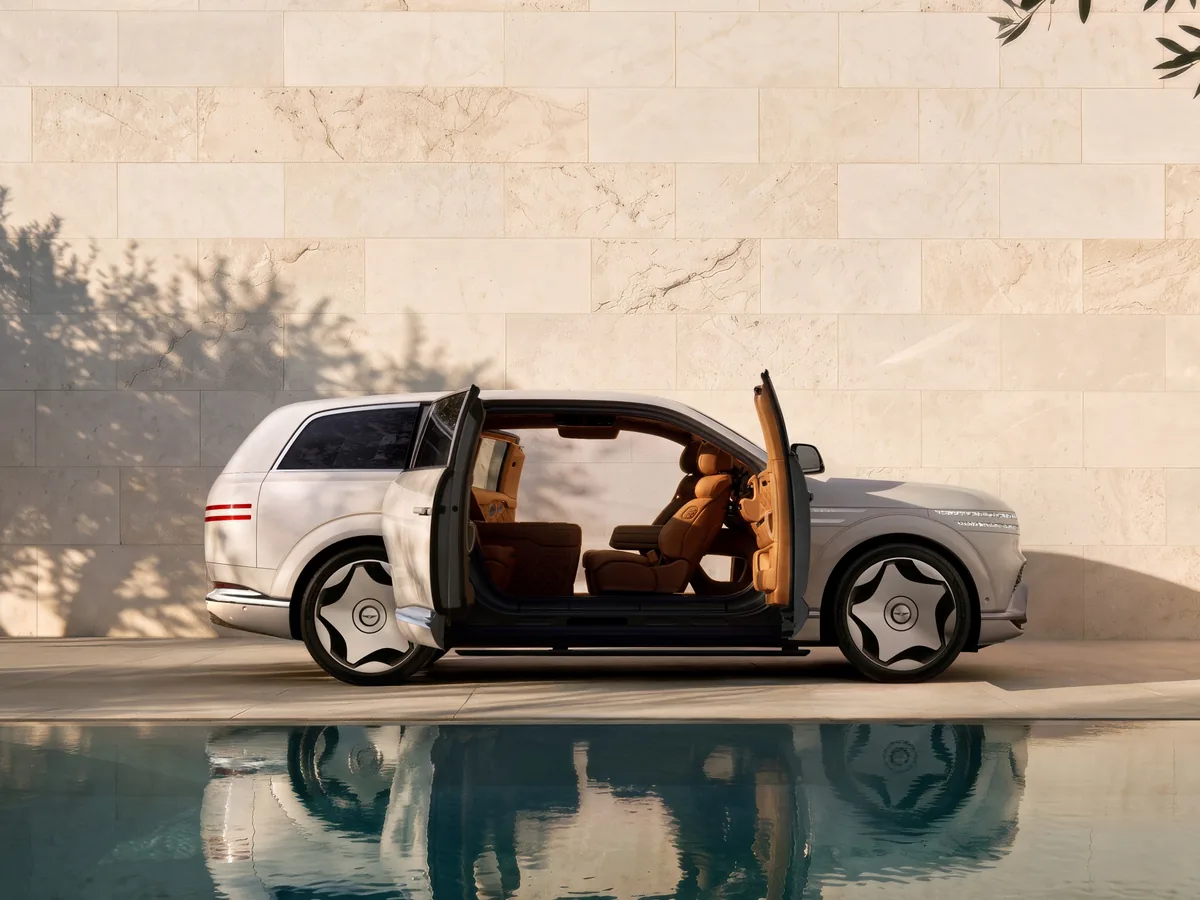
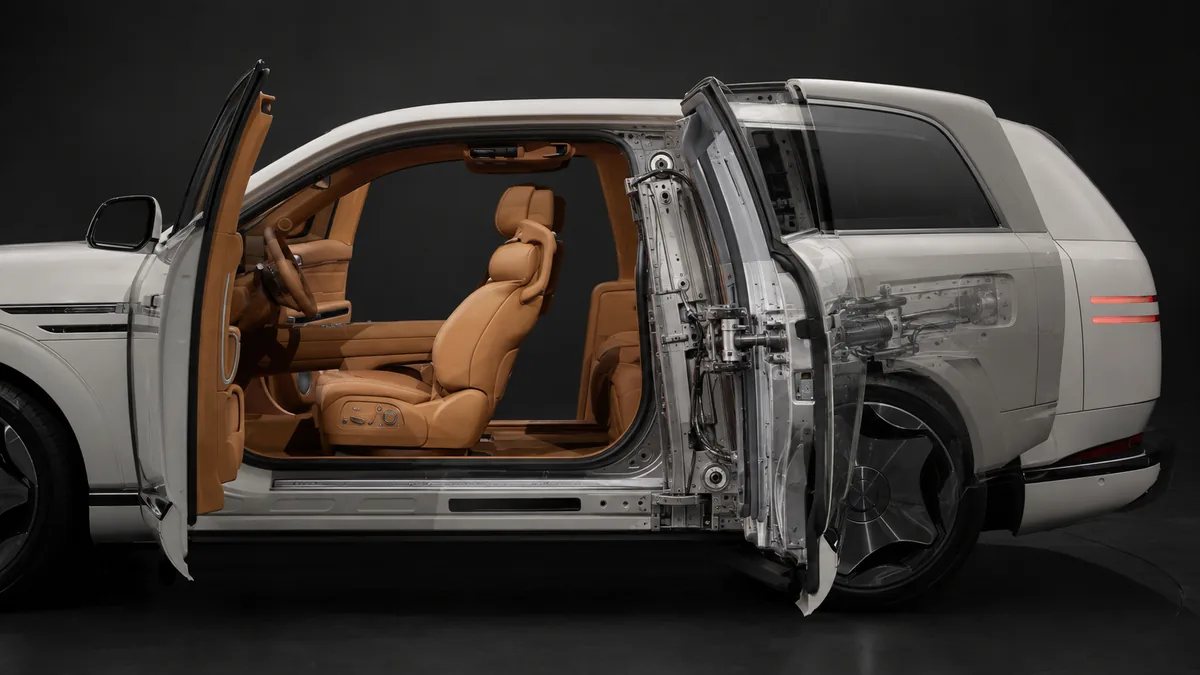
MotorTrend’s first look helps explain why the achievement matters: fixed center pillars have been central to modern side-impact and roof structures for decades. Removing the visible pillar turns the doors from closures into active parts of the safety architecture. That is why the hinge, latch and surrounding reinforcement deserve as much attention as the dramatic opening itself.
Replacing the Visible B-Pillar
The missing visible pillar does not mean the GV90 abandons the pillar’s job. Genesis says high-strength dual steel beams are integrated into the doors. When the doors are closed and latched, those beams help create the vertical load path that a conventional fixed B-pillar would provide.
The company also says the passenger-cell frame is 1.5 times thicker than on conventional vehicles and combines high-strength steel tubes with structural foam, forming what it describes as a concealed roll cage. Genesis claims crash-safety performance equivalent to a conventional B-pillar vehicle. That is a meaningful claim, but buyers should distinguish manufacturer engineering targets from independent public crash-test results, which were not yet available.
This architecture shows why the researchers and development engineers deserve credit. The showpiece required coordinated work across body structure, hinges, door controls, seals, latches and safety electronics. Any one of those systems can spoil the experience if it ages poorly. The design is impressive because the complexity is hidden when the doors are closed.
A Cabin Designed Around Arrival
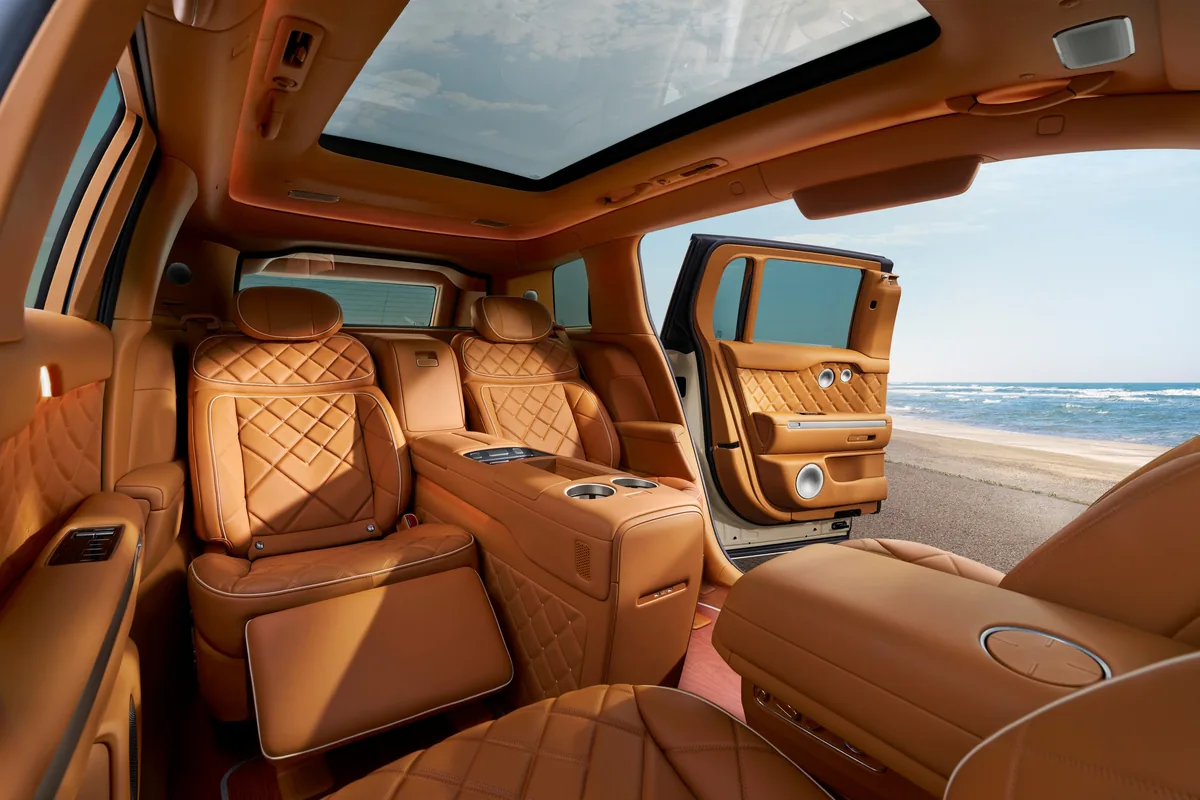
The door opening changes how the interior is experienced. Without a visible pillar between the apertures, the Neolun cabin reads as one continuous room. It should make entry more graceful for second-row passengers and create space for attendants or parents to help occupants. The advantage will be greatest at hotels, private driveways and valet areas with generous side clearance.
Real life may expose limits. Two long opposing doors can demand more lateral space than sliding doors, and powered mechanisms may be slower than impatient families expect. The standard model therefore remains the better fit for crowded garages and routine seven-seat use.
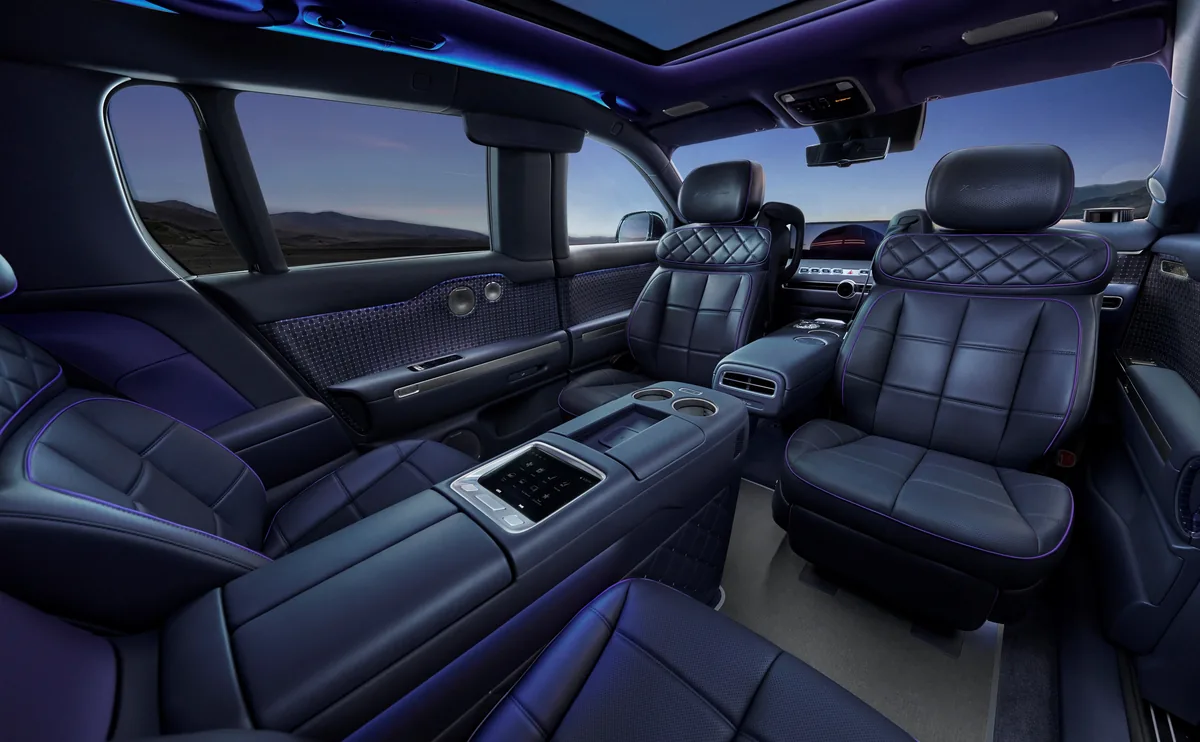
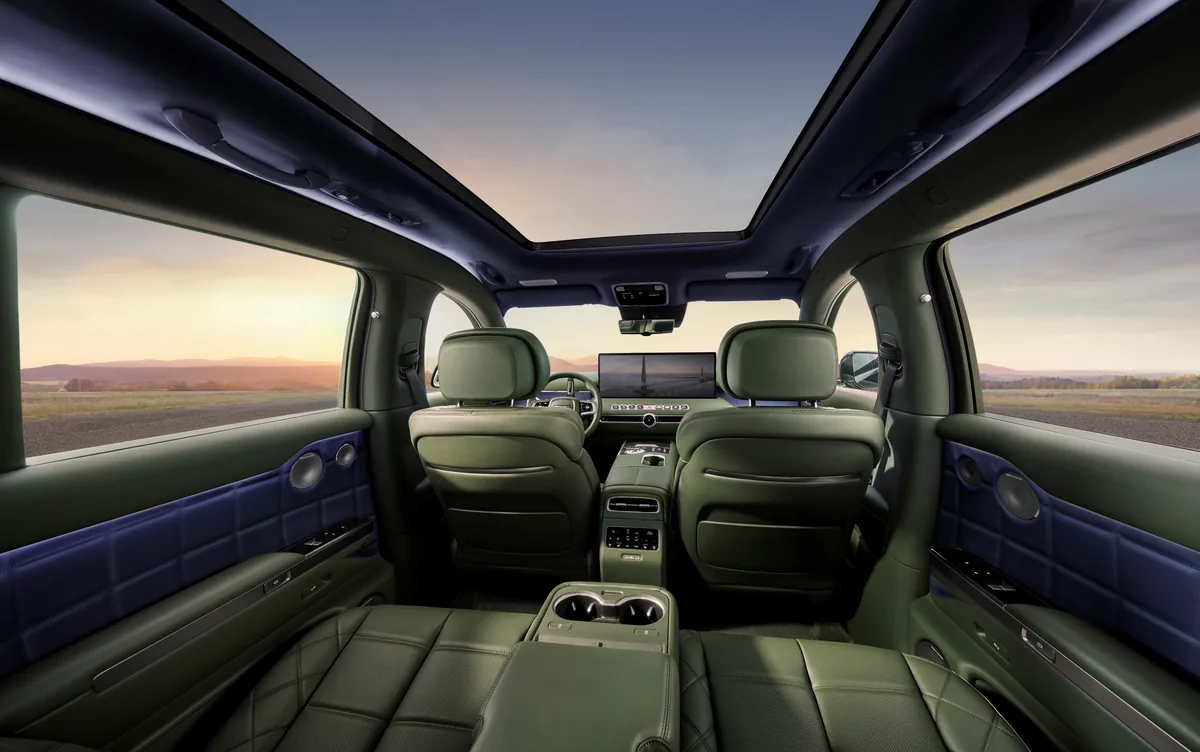
Genesis pairs that architecture with familiar luxury signals: calm surfaces, hidden air vents, layered materials and available executive seating. A 25-speaker Bang & Olufsen system and the Pleos Connect interface aim to make the cabin feel technologically current without resembling a rolling electronics store.
Displays Without Permanent Clutter
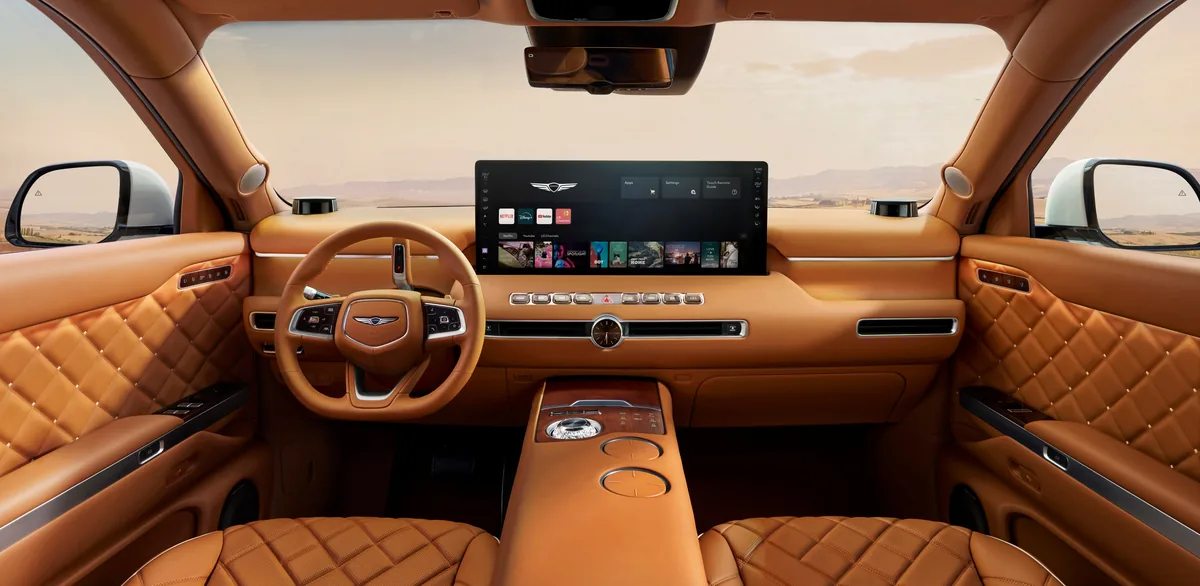
The main driving display measures 23.6 inches in its normal low position and can rise to 24.6 inches when parked. The approach is more thoughtful than simply fitting the tallest possible panel in the driver’s sightline. The remaining test is software: response speed, menu logic, update support and reliable integration matter more than the diagonal measurement.
657 HP, 123.5 kWh and the Numbers That Need Context
Genesis lists a 240-kW front motor producing 350 Nm and a 250-kW rear motor producing 450 Nm. Combined output is 490 kW and 800 Nm, approximately 657 hp. That should make the GV90 effortlessly quick, though the final curb weight and acceleration figures will determine how dramatic it feels.
The 123.5-kWh battery is equally substantial. Genesis estimates roughly 500 km for the seven-seat version under its internal research-and-development standard. That figure is useful as a target, not a U.S. range rating. The EPA result will be the number American buyers should compare.
On a sufficiently powerful 350-kW DC charger, Genesis claims a 10-to-80-percent session in 22 minutes. Peak input is only part of the experience. The charging curve, battery temperature, station reliability and repeated-session performance will determine whether the GV90 is relaxed on a long journey.
What the GV90 May Feel Like to Drive
No one should turn a specification sheet into a road test. Still, the hardware signals Genesis’ priorities. Dual electronic limited-slip differentials can manage torque at both axles. Rear-wheel steering operates up to five degrees, reducing the effective turning circle at low speed and improving stability at higher speeds. A multi-chamber air suspension gives the chassis more freedom to separate body control from bump absorption.
The likely result is calm speed rather than sports-SUV aggression. The greatest challenge will be mass. A battery this large, a heavily reinforced Neolun body, powered coach doors and an executive cabin all add weight. Good software can disguise inertia during normal driving, but it cannot remove it in emergency maneuvers or on rough roads.
The Questions a Buyer Should Ask
1. Do You Want the Engineering Statement or the Easier Family Car?
Choose the standard GV90 if three-row flexibility, conventional operation and simpler long-term ownership matter most. Choose Neolun because the doors and rear cabin are the point, not because it is automatically the best practical version.
2. How Will the Doors Behave After Years of Use?
The dual-motion hinge is the feature to test repeatedly. Open each door separately and together. Try it on a slight slope. Listen for changes in motor effort and wind noise. Ask about manual release procedures, collision repair, hinge calibration and warranty coverage. A spectacular mechanism becomes frustrating if service support is vague.
3. What Is the Real U.S. Range?
Wait for the EPA label and compare highway range at the wheel-and-tire size you plan to buy. Large 24-inch wheels can improve presence while reducing efficiency, comfort and replacement-tire affordability.
4. Has Independent Testing Confirmed the Structure?
Genesis’ reinforcement strategy is credible and technically interesting. Public testing from IIHS or NHTSA will provide the independent evidence buyers need, especially for the hidden-pillar Neolun architecture.
5. Does the Price Leave Room for First-Year Complexity?
Final U.S. pricing was not available at publication. The standard car must make sense against established full-size luxury SUVs. Neolun will ask buyers to pay for rarity, door engineering and a more ceremonial rear compartment. Early adopters should budget attention as well as money.
Who Should Buy It?
Recommended for: buyers who want a quiet, technology-rich full-size electric flagship; owners who value rear-seat comfort; Genesis loyalists ready for the brand’s most ambitious product; and Neolun customers who understand that its coach doors are a defining feature with added complexity.
Wait or look elsewhere if: you need proven winter range, confirmed towing figures, mature nationwide service experience or independent crash results today. Families who constantly park in narrow spaces should compare the standard GV90 before choosing Neolun.
Cariary Perspective: Five Stars for the Ambition
CARIARY POINT: ★★★★★ (5/5)
The Genesis GV90 Review five-star point reflects Cariary’s response to the production design and the seriousness of the engineering revealed so far. It is especially a vote for the researchers and development teams who made independently operating coach doors possible without leaving a visible fixed B-pillar. The outward-then-rotate hinge, door-integrated beams and reinforced passenger cell turn an old luxury gesture into a modern structural project.
Cariary has not driven the GV90, so this is not a final road-test score. The point should be revisited when production vehicles can be tested for ride quality, real range, door durability and safety performance. For now, Genesis has earned five stars for creating a flagship with a memorable idea and doing the difficult engineering needed to make that idea believable.
Genesis GV90 FAQ
When will the Genesis GV90 reach the United States?
Genesis USA presents it as the 2028 GV90 and says arrival is planned for early 2027. Exact dealer timing may vary.
Do all GV90 models have coach doors?
No. The standard GV90 uses conventional doors. The GV90 Neolun and Neolun First Edition use the hidden-pillar coach-door system.
How do the Neolun rear doors open?
A newly developed dual-motion hinge first moves the rear door slightly outward, then rotates it rearward. That clearance allows the rear door to operate independently of the front door.
Is the pillarless body safe?
Genesis says door-integrated high-strength beams and a heavily reinforced passenger-cell frame deliver crash performance equivalent to a conventional B-pillar vehicle. Independent public crash results were not available when this article was prepared.
What is the GV90’s range?
Genesis gives an internal estimate of about 500 km for the seven-seat model. U.S. buyers should wait for the official EPA figure.
Has Cariary driven the GV90?
No. This is a research-based first-look review of the production vehicle, not a road test.
Data Reference
- Genesis Newsroom: GV90 production reveal and technical specifications, August 20, 2026.
- Genesis USA: 2028 GV90 future vehicle page, accessed September 7, 2026.
- MotorTrend: 2028 Genesis GV90 First Look, August 20, 2026.
- Ars Technica: Genesis joins the giant electric SUV class, August 20, 2026.

