Core summary
The G11 730i is a four-cylinder luxury saloon, not the older six-cylinder 730i. Its engine may be smaller, but the car around it remains a 7 Series.
The G11 730i offers a smaller petrol engine within BMW's luxury-saloon family. The most important clarification is that this generation's 730i is a turbocharged four-cylinder. Older 730i material can describe a six-cylinder engine and should not be applied here.
Cariary's assessment: the 730i is a comfort-led purchase rather than an attempt to obtain flagship acceleration cheaply. It can make sense for someone who values the cabin and does not specifically want a six- or eight-cylinder engine.
History & generations
The G11/G12 generation began in 2015 and received its conspicuous facelift in 2019. G11 denotes the standard-wheelbase body, while G12 belongs to the long-wheelbase family. The 730Li needs to be distinguished where that designation is used.
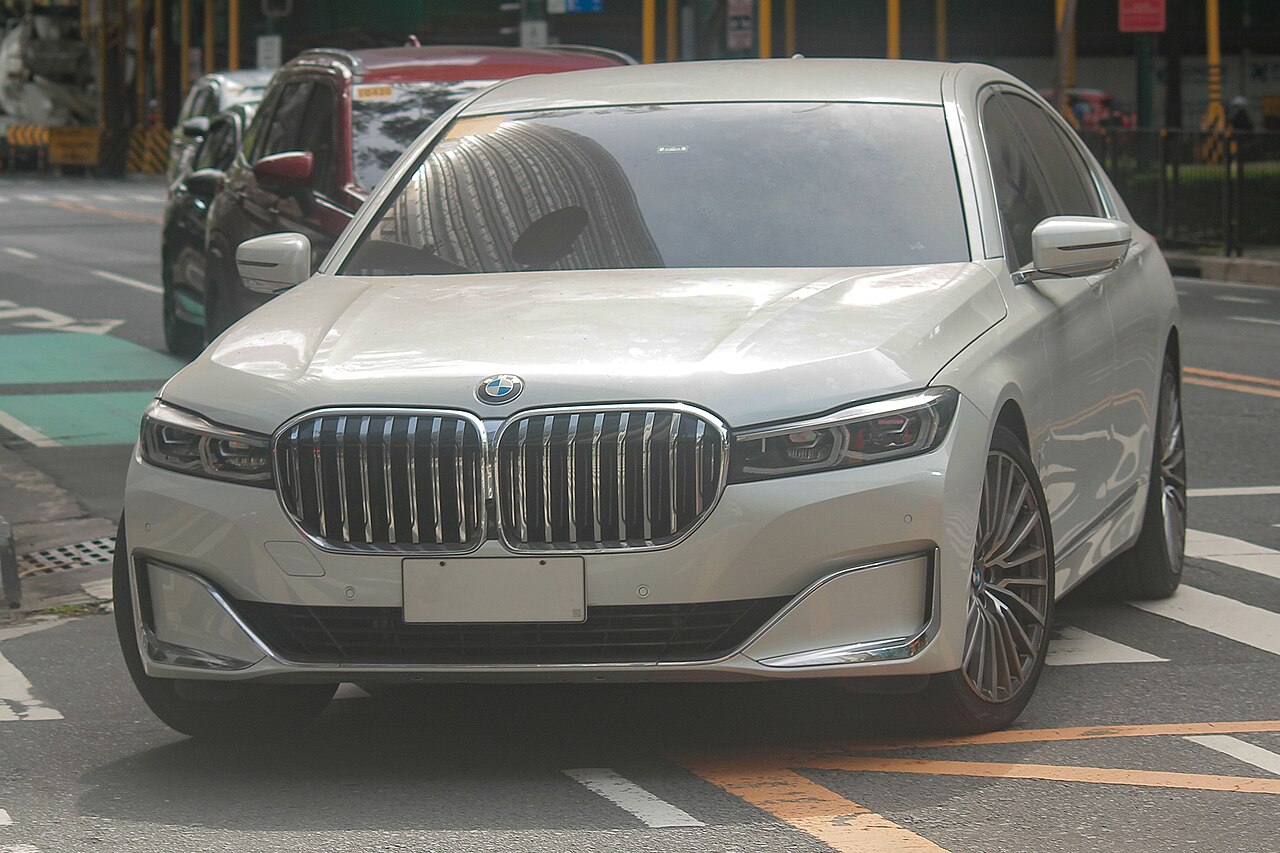
The gallery shows a facelift 730i, while the linked regional technical table is an earlier generation reference. This separation is deliberate: a newer-looking photograph does not update every technical figure in an older brochure.
Body, platform & design
The white facelift car illustrates the larger grille and revised exterior presentation. Its 730i rear badge is visible, but the appearance should not be treated as proof of every option. Wheels and exterior trim can vary between markets and owners.
Measure the parking space and consider how widely the doors need to open. A smaller engine does not shorten the luxury saloon around it. If a long-wheelbase car is being considered, verify that distinction before assuming it will fit like a standard G11.

Engine & drivetrain
BMW's regional G11 table lists the 730i with a 1,998 cc four-cylinder petrol engine, 258 PS and 400 Nm, an eight-speed automatic and no xDrive in that referenced configuration. These are not the figures of the older six-cylinder 730i.
Assess acceleration with the load you expect to carry and listen to the engine at ordinary road speeds. The correct question is whether it meets your needs, not whether four cylinders sound sufficiently prestigious in an advertisement. Later local specifications should be checked separately.
Trim differences
The 730i was not sold in every market, so a UK or US range summary may not describe it. Imported cars need their original-market specification and local support considered explicitly.
A lower engine badge does not establish a bare interior, and it does not guarantee that costly options are fitted either. Confirm seat configuration, lighting, audio, cameras and chassis equipment from the factory record. Distinguish 730i from 730Li and petrol from diesel before comparing prices.
Interior & seating
The purpose of choosing this car is largely inside it. Spend time with the seats, controls, rear ventilation and noise levels on the routes you use. A showroom inspection with the engine off cannot reveal every aspect of comfort.
Test every fitted electric adjustment and convenience feature. If rear passengers are the priority, let them assess the seat behind the driver's normal position. Do not assume that a standard-wheelbase 730i duplicates the rear accommodation of a long-wheelbase executive configuration.
Efficiency & range
A smaller petrol engine may be part of the appeal, but it does not make the 730i a compact economy car. Short trips, vehicle mass, tyres and traffic still influence consumption. Use a realistic annual budget rather than a best-case brochure figure.
Compare with a 740i on purchase price and running costs together. If the price gap is small, the six-cylinder car may deserve a test; if comfort is the only priority, spending the difference on condition may be more useful.
Safety & equipment
Check the operation of cameras, sensors and fitted assistance systems, particularly after body or windscreen repairs. A large luxury car relies on good visibility and correctly functioning parking equipment in tight spaces.
Have a workshop inspect tyres, brakes and chassis condition, and ask BMW to check campaigns by VIN. The specification of a top-of-range 7 Series is not a safe assumption for every 730i.
Strengths
The 730i's argument is straightforward: retain the luxury-saloon format while choosing the smaller petrol powertrain. It is a potentially coherent choice for a comfort-focused buyer who does not consider cylinder count an end in itself.
Its value depends heavily on the particular example. Good seats, clean history and functioning equipment can make a stronger case than a more powerful car with neglected systems.
Consider it when cabin comfort matters more than cylinder count. Buy by condition and specification, with a luxury-car maintenance reserve rather than a small-engine budget.
Considerations
The chassis, electronics and body remain those of a 7 Series. Budget for luxury-car maintenance regardless of the engine size. Ask an inspector to check suspension operation, fluid leaks, diagnostic faults and evidence of accident repair.
For an imported example, confirm parts and service support, language and navigation functionality, and the original specification. Do not let a rare local badge turn unanswered questions into assumptions.
Recommended use
The 730i suits a buyer prioritising a large, comfortable petrol saloon over maximum performance. It deserves a loaded test drive if regular travel includes several passengers and luggage.
It is not a shortcut to inexpensive motoring simply because the engine is two litres. If the main need is modest running cost and easy parking, a smaller car may serve it more directly. Choose the 7 Series dimensions and complexity consciously.
Rivals & related
A six-cylinder 740i is the closest internal comparison for someone deciding whether engine character justifies a premium. A same-era Mercedes-Benz S-Class or Audi A8 offers another luxury-saloon approach, but local engine availability may prevent an exact displacement match.
Also compare a well-equipped 5 Series if you drive yourself and rarely use the rear seats. A smaller saloon with stronger condition can be more useful than the least expensive flagship available.
FAQ
Q: Is this 730i a six-cylinder?
A: No. The G11 reference here is a turbo petrol four-cylinder.
Q: Is it the same as a 730Li?
A: The Li designation identifies the long-wheelbase version where used.
Q: Was it available everywhere?
A: No; check original-market documentation.
Q: Does the small engine mean cheap maintenance?
A: No. The surrounding car is still a luxury 7 Series.
What makes the BMW 730i different?
Consider it when cabin comfort matters more than cylinder count. Buy by condition and specification, with a luxury-car maintenance reserve rather than a small-engine budget.
Who should consider it?
Luxury-saloon space with the smaller petrol engine
Sources & updates
The manufacturer references below identify the dated generations and specifications used in this profile. Buying assessments are Cariary editorial analysis, not a claimed first-hand road test or a diagnosis of an individual vehicle. Photographs carry separate credit and licensing information. Confirm exact equipment, ratings and campaign status for the car’s production date and original market.
- BMW — G11/G12 regional equipment and technical tables →
- BMW — G11/G12 introduction (2015) →
- BMW UK — 7 Series update (2019) →
View all official references (2 more)
- Photograph — White facelift BMW 730i front three-quarter view →Ethan Llamas; CC BY-SA 4.0
- Photograph — White facelift BMW 730i rear view →Ethan Llamas; CC BY-SA 4.0
Last editorial review: September 20, 2026. Specifications remain market- and model-year-specific.