Core summary
The 730d is the six-cylinder diesel 7 Series. It should be chosen for a suitable travel pattern, not confused with the four-cylinder petrol 730i.
The G11 730d combines a diesel inline-six with the luxury-saloon format. It is mechanically different from the petrol 730i despite the shared number, and it should also be distinguished from the more powerful 740d.
Cariary's view: the 730d makes its clearest case for regular longer-distance travel. A large diesel saloon selected for occasional short errands is a different proposition, and the attractive used price should not prevent an honest assessment of that mismatch.
History & generations
The G11/G12 family began in 2015 and received its facelift in 2019. Diesel specifications changed during the generation, so one output figure should not be applied to every registration year.
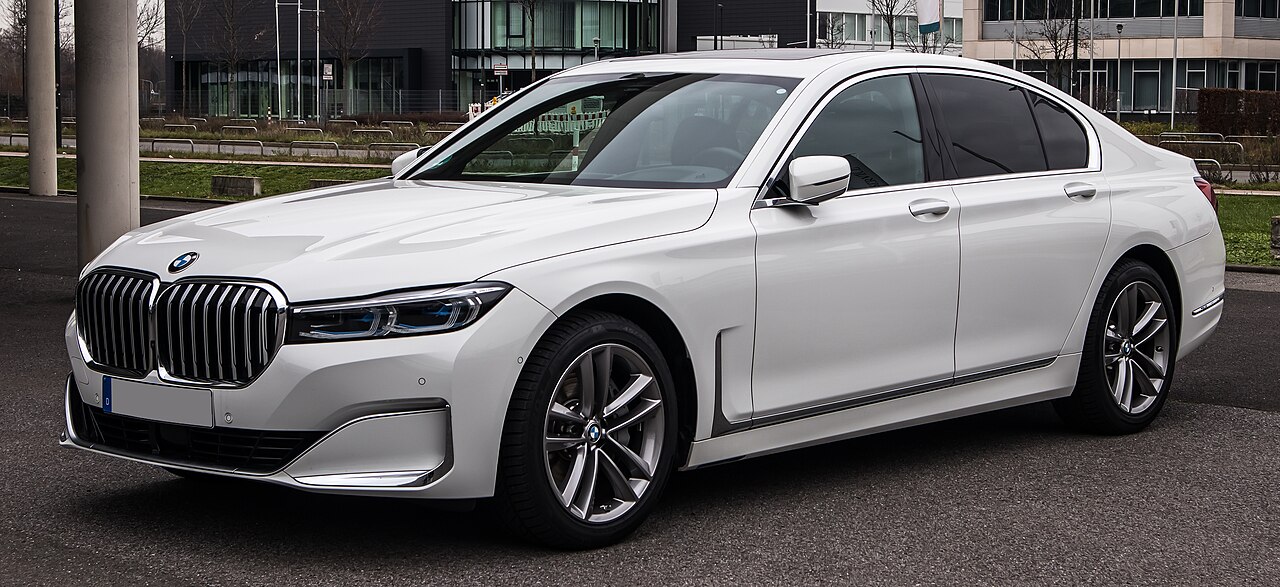
The G11 standard-wheelbase 730d and longer 730Ld need separating where those badges are used. The pictured facelift car illustrates the later appearance; its photograph does not turn an earlier technical reference into the specification of every later car.
Body, platform & design
The white facelift 730d in the gallery shows the large grille, four-door saloon body and visible rear model badge. It offers a useful exterior reference without suggesting that every 730d has the same wheels or equipment.
Test the rear-door access, parking clearance and boot opening. A diesel engine does not make the 7 Series smaller, and a long-distance touring plan still has to work in the narrow spaces at either end of the journey.
_%E2%80%93_h_16012021.jpg)
Engine & drivetrain
The 2019 UK reference lists a 3.0-litre diesel inline-six with 265 PS and 620 Nm, using an eight-speed automatic. Rear-drive and xDrive versions were offered. Later revisions and other markets require separate verification.
Ask for a cold start and a fully warm test, followed by a competent diagnostic inspection. Smooth operation during a short demonstration does not establish the condition of the emissions system or the history of fault repairs.
Trim differences
Separate the engine badge from wheelbase, xDrive and equipment packages. A 730d with M Sport presentation is not a 740d, and a longer body is not just an interior trim choice.
For the intended touring role, prioritise comfortable seats, suitable tyres, working lights and useful assistance. Confirm optional chassis equipment from the build record and test it. Avoid paying for a list of features copied from another car's advertisement.
Interior & seating
Long-distance comfort should be checked with the actual seats and passengers who will use the car. Try the driving position over a meaningful period and have rear passengers assess space behind it.
Inspect wear and operation of controls alongside the service record. A well-travelled executive car can remain presentable, while an apparently pristine interior may conceal neglected systems. Neither mileage nor appearance should be considered in isolation.
Efficiency & range
Diesel fuel use is only one part of the ownership calculation. Consider the weekly trip pattern, local emissions rules and maintenance requirements before deciding that a 730d will save money over a 740i.
Compare like-for-like consumption measurements. An early laboratory figure and a later WLTP result are not directly interchangeable. For your budget, representative journeys and documented expenditure are more useful than an isolated best-case display reading.
Safety & equipment
Check tyres, brakes, suspension and fitted assistance equipment. A large saloon doing frequent long trips can accumulate wear that is not obvious from a polished body. Investigate warning messages rather than assuming they are normal for an older luxury car.
Have BMW check the VIN for outstanding campaigns, including relevant diesel-related work. Confirmation belongs to the individual vehicle; a generic model discussion cannot establish whether a particular campaign has been completed.
Strengths
The 730d offers a six-cylinder diesel alternative for someone who wants flagship accommodation and regularly covers distance. Its role is different from buying a petrol performance model for its soundtrack or a plug-in for daily charging.
A comfortable, well-maintained example can be a coherent travel tool. The specification should support that task: good seats and appropriate wheels are more directly useful than decorative changes that make it look like a different engine version.
A credible long-distance shortlist choice when condition, emissions-system history and route suitability are established. Do not treat the diesel badge as a universal economy guarantee.
Considerations
Request a specialist assessment of emissions-control condition and maintenance history. Avoid cars with removed emissions hardware or software intended to hide faults. Short-trip history and incomplete records deserve investigation, not a confident diagnosis from a photograph.
The surrounding luxury-car systems also require a budget. Suspension, electronics and body repairs do not become inexpensive because the engine uses diesel. Keep a reserve and identify competent local support before purchase.
Recommended use
This version is best considered by drivers making frequent longer journeys who want a large, comfortable saloon. If most use is a few kilometres at a time, compare a petrol or an appropriately used plug-in model.
For chauffeured work, compare the long-wheelbase version explicitly and check passenger needs. For owner-driving, also test a 530d: it may provide the desired diesel experience in a more manageable body if flagship rear space is unnecessary.
Rivals & related
A comparable Mercedes-Benz S 350 d or Audi A8 50 TDI provides a relevant luxury-diesel comparison, with attention to year and local specification. Compare service evidence and emissions compliance alongside comfort.
Within BMW, the 740d adds another diesel performance level, while the 740i changes the fuel-type proposition. Neither should replace a sound 730d on the shortlist merely because its badge is higher.
FAQ
Q: Is the 730d a four-cylinder like the 730i?
A: No. This 730d uses a diesel inline-six.
Q: Is every example xDrive?
A: No; rear-drive versions exist.
Q: Does a facelift photo prove the exact engine output?
A: No. Verify the production specification.
Q: Is it automatically best for low running costs?
A: No. Route suitability, maintenance and local restrictions matter.
What makes the BMW 730d different?
A credible long-distance shortlist choice when condition, emissions-system history and route suitability are established. Do not treat the diesel badge as a universal economy guarantee.
Who should consider it?
Frequent long-distance luxury travel
Sources & updates
The manufacturer references below identify the dated generations and specifications used in this profile. Buying assessments are Cariary editorial analysis, not a claimed first-hand road test or a diagnosis of an individual vehicle. Photographs carry separate credit and licensing information. Confirm exact equipment, ratings and campaign status for the car’s production date and original market.
- BMW — G11/G12 regional equipment and technical tables →
- BMW — G11/G12 introduction (2015) →
- BMW UK — 7 Series update (2019) →
View all official references (2 more)
- Photograph — White facelift BMW 730d front three-quarter view →© M 93; CC BY-SA 3.0 de
- Photograph — White facelift BMW 730d rear three-quarter view →© M 93; CC BY-SA 3.0 de
Last editorial review: September 20, 2026. Specifications remain market- and model-year-specific.