Core summary
The 745e replaced the earlier four-cylinder plug-in concept with an inline-six. It is not a renamed 740e, and the 745Le xDrive is a distinct configuration.
The 745e is the facelift-generation 7 Series plug-in hybrid with a petrol inline-six and electric motor. That makes it different from both the earlier four-cylinder 740e and the non-plug-in 740i. Its ownership proposition combines luxury-car complexity with a charging routine.
Cariary's assessment: it is most convincing when the buyer wants this large saloon and can use its electric capability regularly. Without practical charging, the conventional six-cylinder petrol alternative deserves serious consideration.
History & generations
BMW introduced the 745e with the 2019 7 Series update. The change from the earlier plug-in model was more than a number on the boot: the petrol side became a six-cylinder arrangement.
Distinguish the standard 745e from the longer 745Le and 745Le xDrive where offered. They do not all share the same drivetrain or body dimensions. Newer 750e material belongs to another generation and should not supply this car's range or charging claims.
Body, platform & design
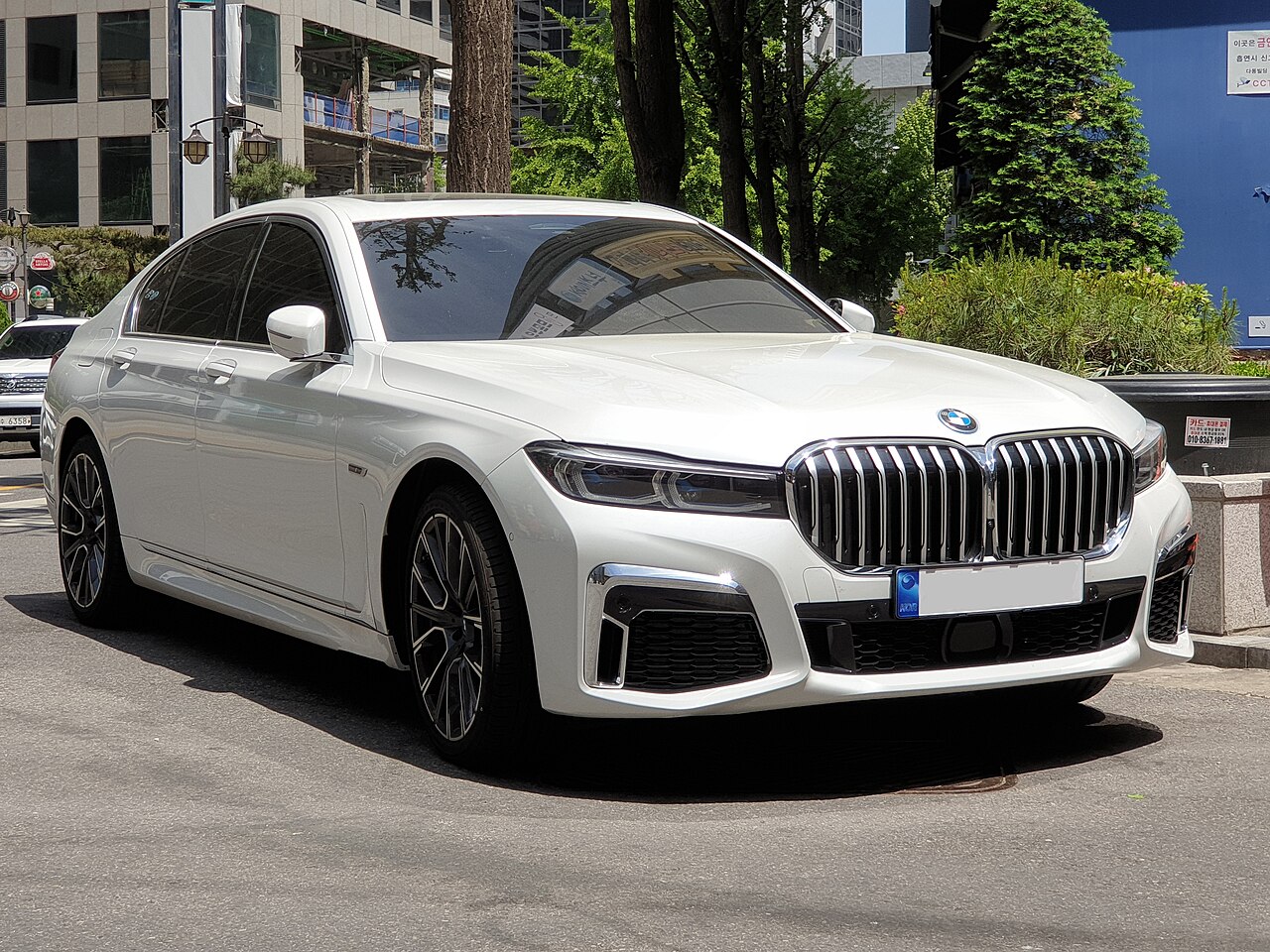
The gallery shows a white facelift 745e, including its front three-quarter and side views. The charging flap ahead of the front door helps identify the plug-in installation, while the large grille belongs to the facelift presentation.
Inspect the luggage compartment with your actual bags. Hybrid packaging means a conventional petrol 7 Series is not an adequate substitute for checking usable space. Cable storage and the reach to your planned charging point also belong in the practical evaluation.
.jpg)
Engine & drivetrain
The 2019 UK reference describes a petrol inline-six and electric motor, with maximum combined output of 394 PS available in SPORT and up to 600 Nm. Engine-only output is not the combined rating, and component peaks should not simply be added.
The 745e reference is rear-wheel drive; the 745Le xDrive is a different version. Test electric operation, petrol operation, charging and transitions between modes. A hybrid inspection must cover both propulsion sources rather than accepting one quiet electric drive as proof of overall health.
Trim differences
Read the complete badge and build record. The L and xDrive distinctions affect more than cosmetic presentation. Then check the comfort and assistance options on the individual car.
Confirm the included charging cable, local compatibility and any remaining battery coverage in writing. A warranty described for another country or a newer BMW is not automatically applicable. Seat configuration and luggage requirements should be checked before paying for an executive-style package.
Interior & seating
The 745e retains a luxury-saloon environment while adding energy and charging information. Learn what the displays actually report: predicted electric range is not a direct measurement of battery health.
Test the climate system in normal use, the seats and every fitted rear control. If passengers are the reason for buying the car, take them on the test drive. Battery condition and cabin comfort are separate checks, and both need to pass.
Efficiency & range
Low weighted petrol-consumption figures assume use of electrical energy and are not the expected fuel consumption of every long journey. Record petrol and charging electricity together when comparing costs with a 740i.
For a used car, test a representative route and obtain an appropriate battery assessment. Weather, speed, heating and battery condition affect usable electric distance. Do not borrow a newer-generation BMW's range claim or treat one full-charge dashboard estimate as a guaranteed commute distance.
Safety & equipment
High-voltage inspection and repair require appropriately trained personnel. Ask for diagnostic findings, charging checks and any applicable campaign history. Do not attempt to investigate high-voltage components as a casual DIY purchase check.
Inspect tyres, brakes, underbody condition and repairs near charging hardware. Confirm driver-assistance operation and any calibration work after accidents. The hybrid label does not replace ordinary roadworthiness checks.
Strengths
The 745e offers a combination that a conventional petrol 7 Series cannot: regularly chargeable electric travel with a six-cylinder petrol engine available for longer journeys. For the right routine, that is a meaningful ownership difference rather than a decorative badge.
It also allows a buyer to retain a saloon rather than choosing an SUV to obtain a plug-in powertrain. The value comes from how the system is used and maintained, not from the mere presence of a charging socket.
Consider it when charging is dependable and the complete hybrid system passes inspection. Choose it for the electrical use you will actually make, not an unrealistic fuel headline.
Considerations
There is both luxury-car hardware and a complete hybrid system to support. An attractive used price should leave money for specialist inspection and maintenance. Ask for service records on the petrol engine as well as the electrical side.
Check charging performance and battery condition with evidence, not promises. Also consider packaging and the availability of competent support near home. A seller unable to demonstrate charging leaves a central part of the car unverified.
Recommended use
The strongest fit is an owner with dependable charging, regular local travel and a genuine need for a large luxury saloon. Occasional longer trips then use the petrol side without making every journey dependent on public charging.
If charging will rarely happen, compare a 740i. If a smaller car meets the same passenger needs, a 530e or another plug-in saloon may be a more proportionate choice. The right body size should be decided before the powertrain badge.
Rivals & related
A same-era Mercedes-Benz S-Class plug-in is a relevant luxury comparison, but battery generations and body configurations must be matched carefully. Compare charging, luggage space and support as well as advertised system power.
The BMW 740i removes external charging from the routine, while the 745Le xDrive changes wheelbase and drivetrain. The earlier 740e is not technically identical and should be researched separately if its lower price attracts you.
FAQ
Q: Is the 745e the same four-cylinder system as the 740e?
A: No. This 745e uses a petrol inline-six.
Q: Is every 745e all-wheel drive?
A: No. Distinguish the rear-drive 745e from the 745Le xDrive.
Q: Can I add the engine and motor ratings myself?
A: Use BMW's stated system rating instead.
Q: Is the displayed electric range a battery-health certificate?
A: No. It is an estimate; obtain a proper assessment and charging test.
What makes the BMW 745e different?
Consider it when charging is dependable and the complete hybrid system passes inspection. Choose it for the electrical use you will actually make, not an unrealistic fuel headline.
Who should consider it?
Chargeable luxury commuting with six-cylinder petrol travel
Sources & updates
The manufacturer references below identify the dated generations and specifications used in this profile. Buying assessments are Cariary editorial analysis, not a claimed first-hand road test or a diagnosis of an individual vehicle. Photographs carry separate credit and licensing information. Confirm exact equipment, ratings and campaign status for the car’s production date and original market.
- BMW UK — 7 Series update (2019) →
- BMW — G11/G12 introduction (2015) →
- Photograph — White facelift BMW 745e plug-in hybrid front view →Damian B Oh; CC BY-SA 4.0
View all official references (1 more)
- Photograph — White facelift BMW 745e saloon side profile →Damian B Oh; CC BY-SA 4.0
Last editorial review: September 20, 2026. Specifications remain market- and model-year-specific.