CARIARYCAR · DIARY · PERSPECTIVE
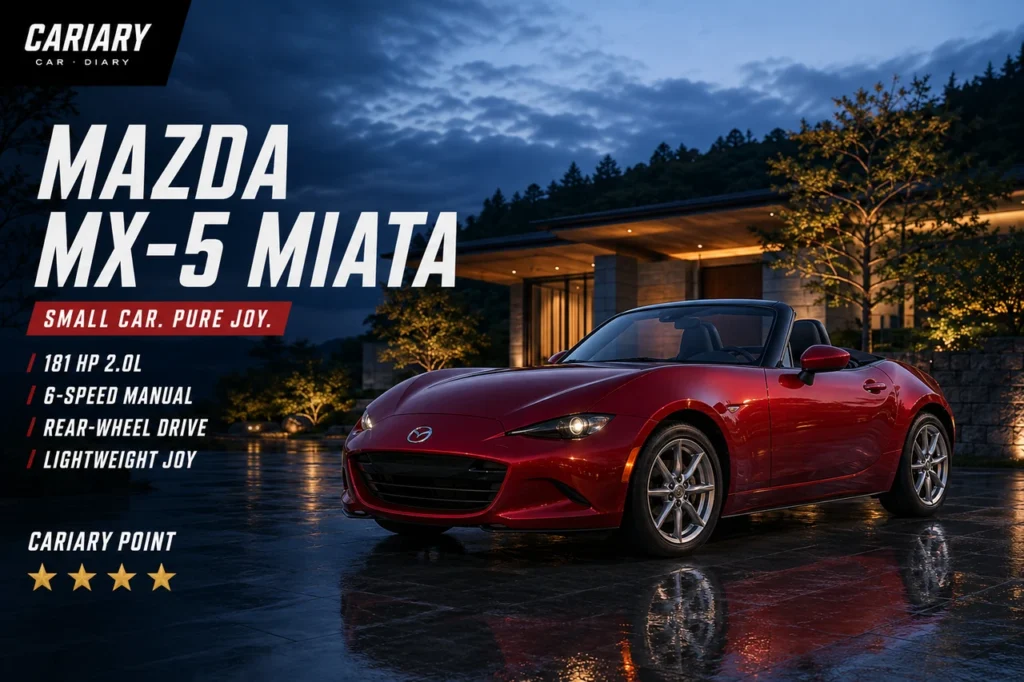
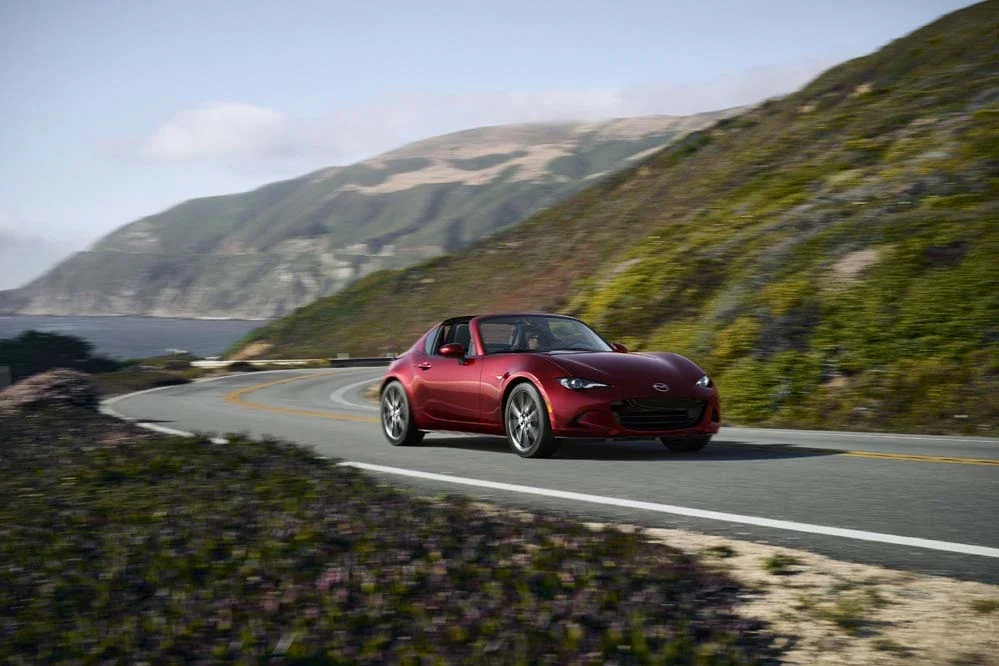
Cover: AI-generated Cariary editorial illustration, visually checked against the specified vehicle. It is not road-test photography.
This Mazda MX-5 Miata review is about a car that changes the question from how fast you can go to how much you can enjoy getting there. Its appeal survives in a world where ordinary family cars can produce impressive acceleration numbers. The Miata makes a smaller promise, then gives that promise a very clear shape.
The ingredients are easy to admire: a compact two-seat roadster, an engine that invites participation and a manual gearbox that makes the driver part of the process. The difficult part is deciding whether the limited cabin, luggage space and weather exposure fit your life. Cariary gives it four stars because the idea is exceptionally coherent, while the practical compromises remain substantial.
This research-based Mazda MX-5 Miata review uses the 2026 U.S. range, concentrating on the ND3 six-speed manual soft top. Attributed driving observations come from a 2024 ND3 test, not a Cariary drive. Mazda’s 2026 media gallery supplies 2024 reference photographs; market, body and trim differences are identified in captions.
Four stars: exceptional clarity of purpose and accessible involvement. The small cabin, limited carrying ability and open-car compromises mean buyer fit matters more than a universal recommendation.
Mazda MX-5 Miata review: Key Specifications
| Reference model | 2026 U.S. ND3 MX-5 Miata, manual soft top |
|---|---|
| Engine / output | 2.0-liter naturally aspirated four-cylinder / 181 hp |
| Torque | 151 lb-ft |
| Layout / seating | Rear-wheel drive / two seats |
| Manual grades | Sport, Club and Grand Touring |
| Soft-top base MSRP | Sport $30,430; Club $33,930; Grand Touring $35,730 |
| Delivery charge | $1,315 in the contiguous U.S.; taxes and other fees extra |
| Source | Mazda 2026 pricing and packaging, updated August 11, 2026 |
Mazda MX-5 Miata Review: Why Less Can Be Enough
A small sports car can make an ordinary route feel more eventful without needing to dominate it. That is the Miata’s strongest conceptual advantage. The driver has less car to manage, fewer seats to justify and a clear reason to take the more interesting road home.
This is not an argument that low power is automatically better. A buyer who regularly makes long, loaded highway journeys may reasonably prefer stronger effortless acceleration and a larger cabin. The point is that enjoyment and numerical superiority are different buying objectives.
Cariary would approach the Miata as a deliberate change in priorities. You trade broad capability for a concentrated experience. The value depends on whether that concentration makes you want to drive more, or simply makes you wish you had brought a different car.
That is why a useful Mazda MX-5 Miata review should spend as much time on the owner as on the specification sheet. The model makes unusually good sense for the right routine, and unusually obvious compromises for the wrong one.
181 HP Works Best When You Want to Participate
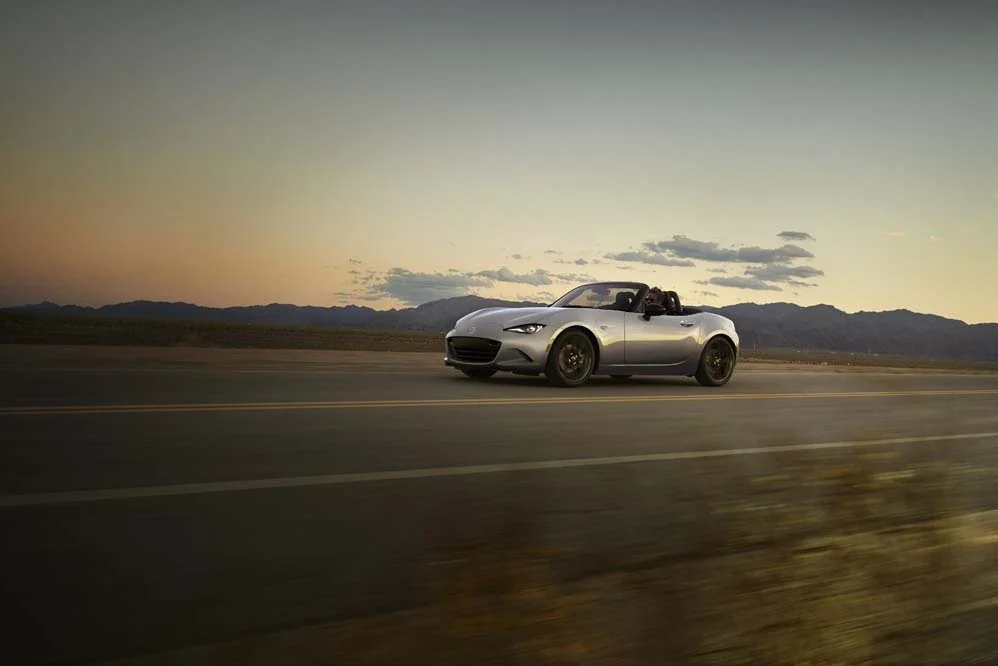
Mazda lists 181 hp and 151 lb-ft for the 2026 U.S. car. Its naturally aspirated engine and manual gearbox frame the experience differently from a turbocharged coupe that supplies a large surge with little preparation.
The buying appeal is the sequence of decisions. Select the gear, judge the available road and decide how much engine speed you want to use. A driver who enjoys that process may find the Miata more satisfying than a much more powerful car driven almost entirely below its capability.
Conversely, if you want immediate acceleration in whichever gear happens to be selected, this may not be your preferred approach. There is no benefit in treating a personal preference as a test of enthusiasm. A sports car should reward the way you enjoy driving.
This Mazda MX-5 Miata review favors the manual because participation is central to the car’s argument. Try the clutch, lever and pedal spacing before deciding. Smooth low-speed operation matters too: the trip to an interesting road still includes junctions, parking and ordinary traffic.
The ND3 Update Matters More Than a New Badge
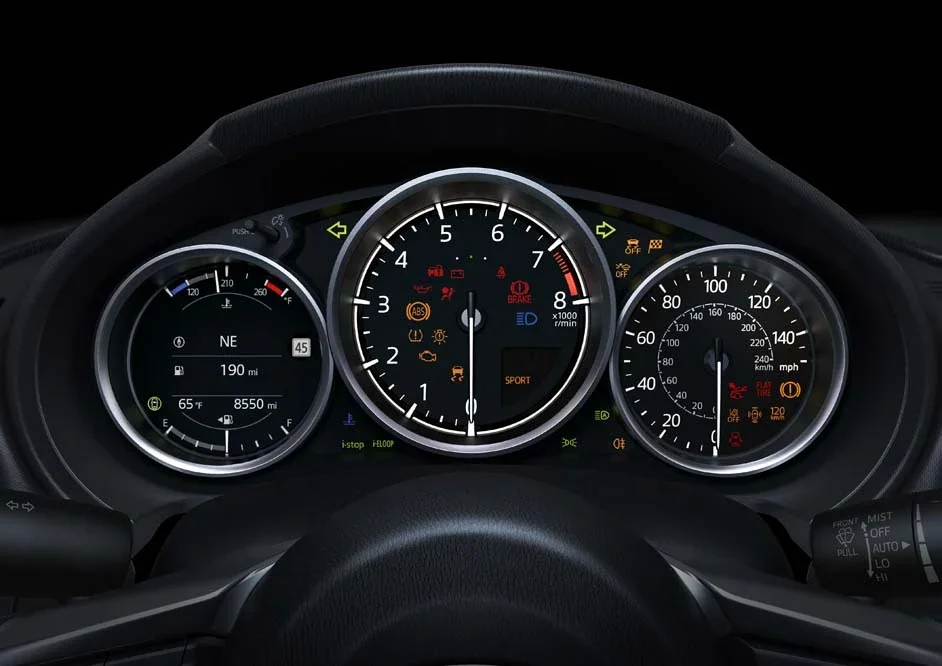
In The Drive’s 2024 ND3 first drive, Kyle Hyatt praised the revised steering’s reduced need for highway corrections and the manual driving experience. That is evidence from the 2024 update, not a direct test of a 2026 car. It supports looking closely at the revised model without pretending that Cariary has driven it.
For a buyer, consistency at everyday speeds can be more valuable than a headline improvement in a timed test. A steering system that suits your hands, predictable responses and a driving position that allows small, relaxed inputs are the details that remain relevant on every trip.
Try a route with several kinds of surface. A smooth demonstration road will tell you little about the commute. Likewise, a short drive with the roof down may distract from the noise or ride behavior you notice once the novelty settles.
Keep the electronic assistance appropriate to the setting. Track-oriented equipment is a reason to seek instruction and understand the car, not a suggestion that a public road should become a testing venue.
Club Versus Grand Touring: Read the Equipment Carefully
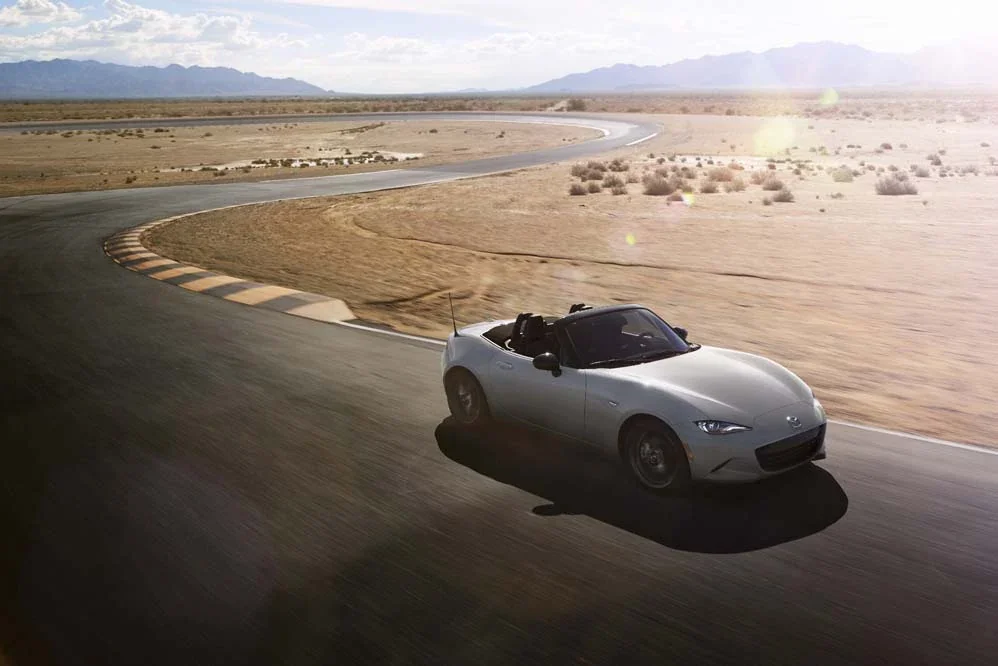
The 2026 manual Club has Bilstein dampers, a front shock-tower brace and an asymmetric limited-slip differential. Crucially, the manual Grand Touring also receives that performance hardware. It is therefore misleading to describe the Club as the only way to obtain the important chassis equipment.
The soft-top Club’s optional $5,050 Brembo/BBS/Recaro package adds another decision. The named brake upgrade applies at the front; red rear calipers should not be mistaken for the same upgraded hardware at all four corners. The RF Club includes this package, making a simple comparison of grade names or base prices incomplete.
On the published figures, a soft-top Club plus that package reaches $38,980 before delivery and other charges. RF Club starts at $41,900 before those charges. Compare those like-for-like configurations rather than assuming that the entire price difference is payment for a folding hard roof.
The Mazda MX-5 Miata review recommendation is to identify the seat and comfort features you actually want, then build the comparison. A cheaper starting figure may be less persuasive once the desired package is added. A more expensive grade may make sense if its standard equipment suits your routine.
Soft Top or RF: Choose the Version You Will Open
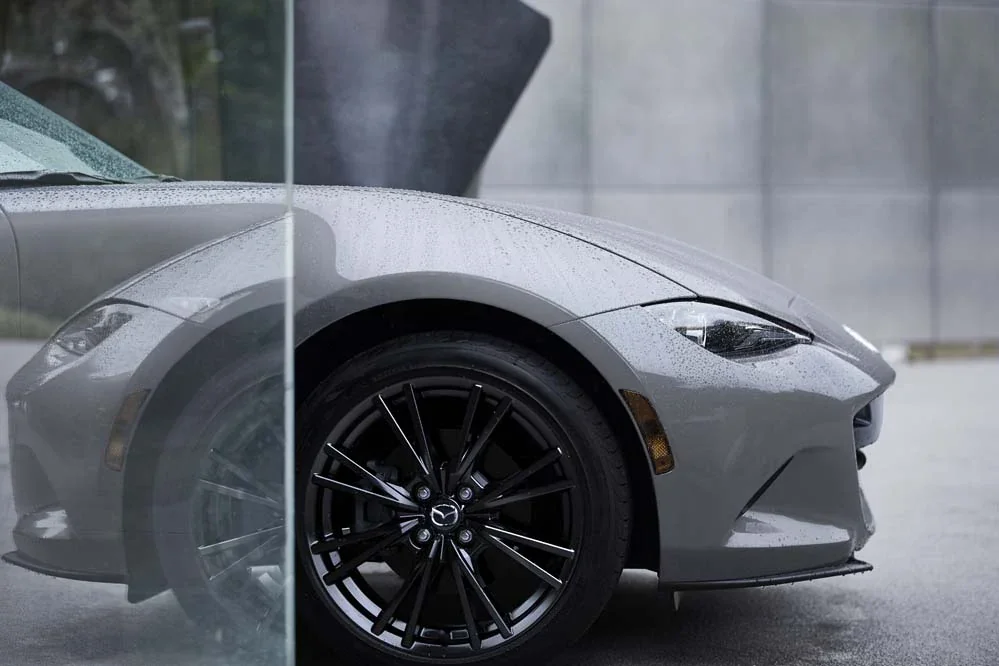
The soft top presents the Miata idea in its most direct form: a small roadster that invites an open-air journey. The RF offers a different silhouette and an electrically operated roof that Mazda says opens or closes in about thirteen seconds. It does not create extra seats or turn the car into a conventional spacious coupe.
The decision should start with behavior rather than appearance. Where will the car be parked? How often will you open the roof? Will you use it throughout the year? Do you prefer the soft top’s more open feeling, or the RF’s enclosed visual character?
Test both versions with the roof up as well as down. Listen at your normal cruising speed, check visibility at junctions and consider whether the roof mechanism fits the way you use the car. A showroom demonstration answers only one part of the question.
Cariary’s preference in this Mazda MX-5 Miata review is the manual soft top for its clear roadster purpose. The RF remains a legitimate choice for a buyer whose habits and aesthetic preference make it the version that will be used more often.
The Cabin Fit Test Is Non-Negotiable
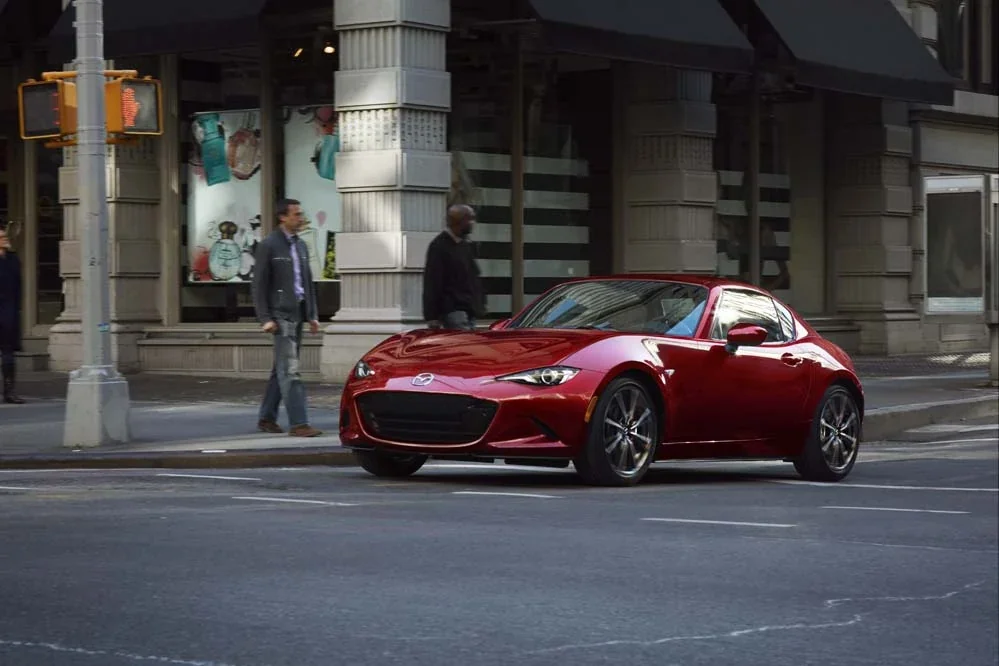
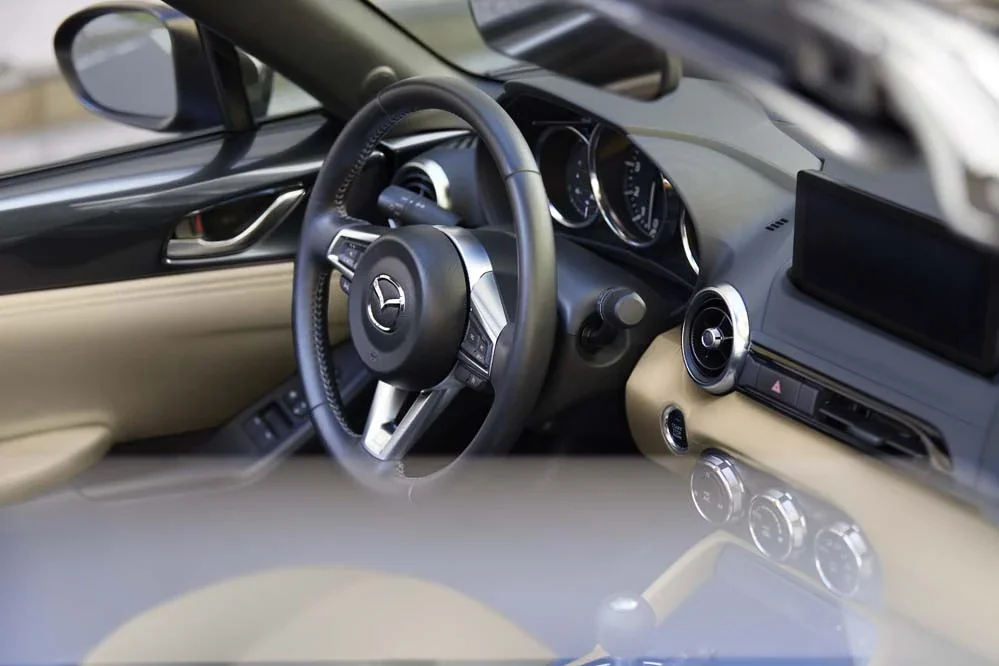
The dashboard combines an 8.8-inch display with physical climate controls, giving the cabin a mixture of modern connectivity and familiar adjustments. However, the most important piece of equipment is the space around the driver. No screen feature can compensate for a seating position that does not fit.
Spend enough time in the car to check legroom, steering-wheel reach and the relationship between your knees and the controls. Try it with the roof closed and with the footwear and jacket you commonly use. Taller drivers should assess the actual seat specification rather than relying on another owner’s height alone.
A passenger should perform the same exercise. A weekend car that is comfortable for only one member of a regularly traveling pair may end up being used less than expected. Bring a typical bag as well; the cabin has little room for improvisation.
The 2026 packaging includes small trim changes, including revised details for the optional Recaro package. Our cabin photographs are Mazda’s 2024 ND3 reference images, not proof of the exact upholstery in every 2026 configuration. Confirm colors and materials on the specific car.
Daily Use Is About Planning, Not Pretending
A convincing Mazda MX-5 Miata review should not claim that every inconvenience becomes charming. Shopping, luggage, poor weather and long journeys can expose the limits of a very small two-seater. The car works best when those limits are manageable within the household’s actual needs.
Try your normal weekend luggage before purchase. Consider secure parking, the condition of the roof and seals, and whether you can keep the cabin and drainage areas properly maintained. For a used example, ask a qualified specialist to inspect the underside, tires, brakes and any evidence of repairs or modifications.
These are inspection priorities rather than a claim of widespread faults. Age, use, storage and maintenance history are more useful than an unsupported declaration that a particular car is either bulletproof or fragile.
Keep a realistic running budget. A smaller engine does not make servicing, insurance and tires disappear. Our guide to brakes and tires helps separate the purchase price from the costs of keeping a performance-oriented car ready to enjoy.
Most importantly, be honest about the second-car question. If another vehicle absorbs the difficult jobs, the Miata’s specialization becomes easier to justify. If this will be your only car, test the awkward tasks before signing.
Mazda MX-5 Miata Review: Buy the Experience You Can Use
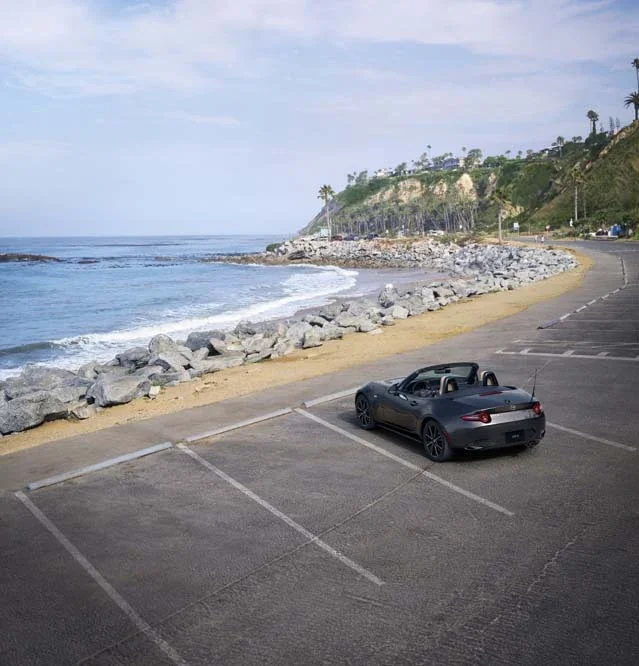
The Miata’s strongest rival is sometimes the idea of a more capable car. More power, more space and a quieter cabin are easy to defend on paper. Yet those improvements may not produce the experience that made you interested in a roadster in the first place.
A Porsche 718 Cayman offers a different route toward dedicated sports-car involvement. A Lexus LC 500 places much greater emphasis on occasion and grand-touring presence. Neither comparison needs a winner to be useful: they help clarify whether your priority is concentrated simplicity, performance or long-distance atmosphere.
Cariary would start with a well-specified manual soft top, confirm that the cabin fits and resist buying equipment simply because it sounds more serious. The best version is the one whose seat, roof and comfort features encourage regular use.
The final Mazda MX-5 Miata review verdict is warmly positive but specific. This car makes sense when the journey itself is something you want to practice and enjoy. It makes less sense when you need a sports-car image wrapped around the flexibility of a normal daily vehicle.
Four stars reflect that distinction. The Miata is not missing the extra seats and effortless carrying ability by accident; it is built around a different set of priorities. The buyer’s job is to decide whether those priorities match.
Who Should Buy It?
Recommended For
Drivers who enjoy manual interaction, can fit comfortably in the cabin and value an open-air journey more than power or carrying capacity.
Not Recommended For
Buyers who need rear seats, generous luggage room, a very quiet highway cabin or effortless acceleration without frequent gear selection.
One-Line Verdict: The Miata rewards the buyer who wants more involvement from less car—and has a life that can accommodate it.
Frequently Asked Questions
Is Club the only manual Miata with a limited-slip differential?
No. Mazda’s 2026 U.S. specification also gives the manual Grand Touring the asymmetric limited-slip differential and associated performance suspension hardware.
Can I buy an automatic 2026 Miata?
Yes, in Grand Touring specification. Sport and Club are manual-only in the U.S. range referenced here.
Are the photos of a 2026 car?
They are 2024 ND3 reference photographs supplied in Mazda’s official 2026 media gallery. They show the relevant updated generation, with captions identifying body and trim differences.
Does the RF Club price include the Brembo/BBS/Recaro package?
Yes. It is included on the 2026 U.S. RF Club, while the package costs extra on the soft-top Club. Compare configured prices, not only trim names.
Further Reading and Data Reference
Data reference date: September 7, 2026. Specifications and attributed test observations are linked where discussed. Cariary Point is an editorial buyer-fit assessment, not an owner road-test score or reliability rating.
Explore more Cariary car reviews and buyer perspectives.

