CARIARYCAR · DIARY · PERSPECTIVE
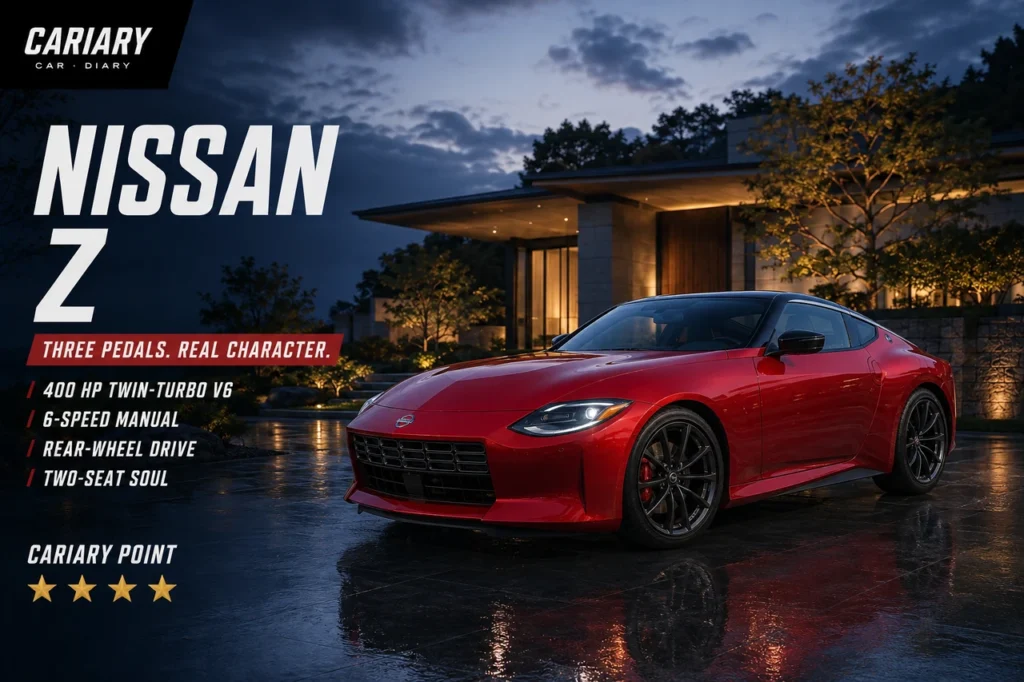
Cover: AI-generated Cariary editorial illustration, visually checked against the specified vehicle. It is not road-test photography.
This Nissan Z review is about the appeal of choosing a sports car for the relationship it creates with its driver. A long hood, two seats, rear-wheel drive and a manual gearbox still make a persuasive combination. The Z adds a muscular twin-turbo V6 and a shape that feels connected to its history without being a costume.
The question is whether those qualities are enough once you consider the cabin, road manners, price and condition of the actual car. An attractive coupe can be worth choosing without being the fastest or most polished option in every comparison. The Z needs that kind of honest assessment.
This research-based Nissan Z review covers the pre-refresh 2023–2026 U.S. Performance six-speed manual, using the 2026 brochure as its equipment reference. Early U.S. cars and clearly labeled overseas cabin references supply the photographs. The revised 2027 range is discussed separately. Cariary has not road-tested the car.
Four stars for a distinctive manual coupe with a clear emotional appeal. The recommendation depends on seating comfort, realistic pricing and careful inspection; the newer 2027 range is an important comparison before committing.
Nissan Z review: Key Specifications
| Reference | 2023–2026 U.S. Z Performance six-speed manual |
|---|---|
| Engine | 3.0-liter twin-turbo V6; 400 hp and 350 lb-ft |
| Drive | Rear-wheel drive; mechanical limited-slip differential |
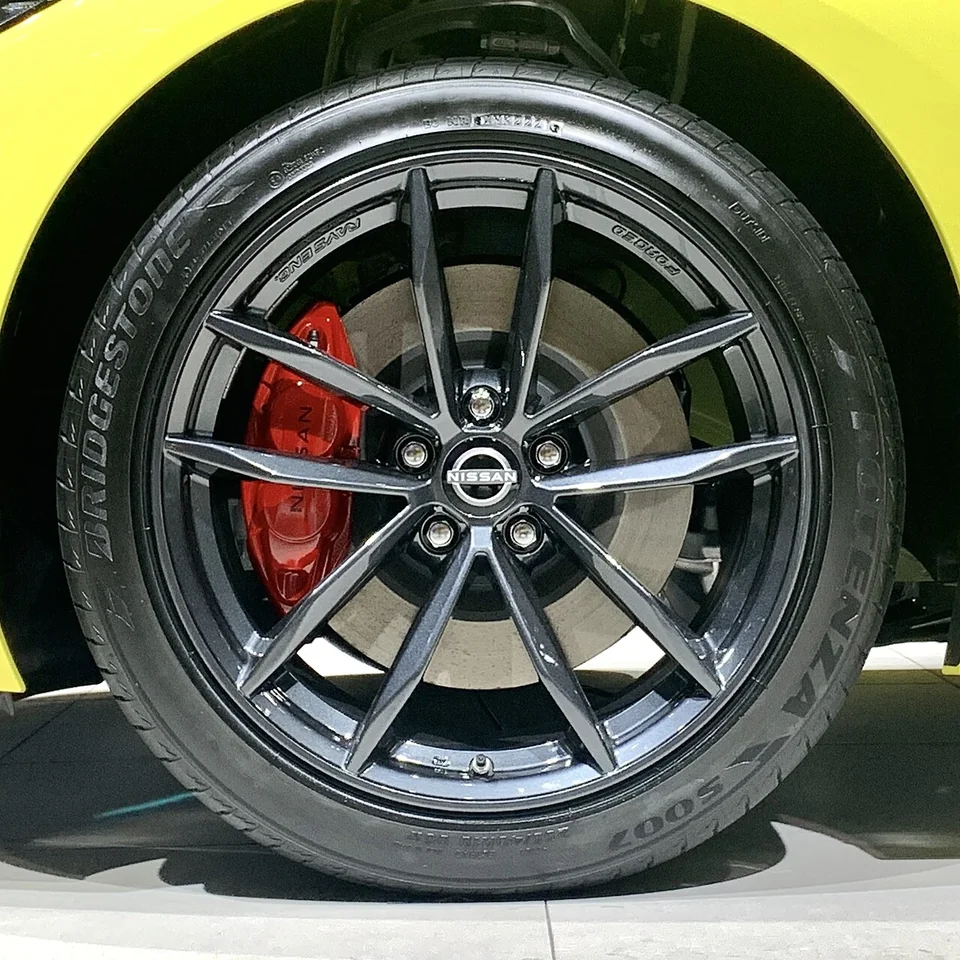
| Wheels / tires | 19-inch forged RAYS; 255/40R19 front and 275/35R19 rear |
| Brakes | Akebono four-piston front / two-piston rear; 14.0 / 13.8-inch discs |
| Seats / cargo | Two seats; 6.9 cubic feet |
| 2026 EPA estimate | 18 city / 24 highway / 20 combined mpg for the manual |
| Source | 2026 U.S. Nissan Z brochure; 2027 changes are separate |
The Z Looks Like It Knows What It Is
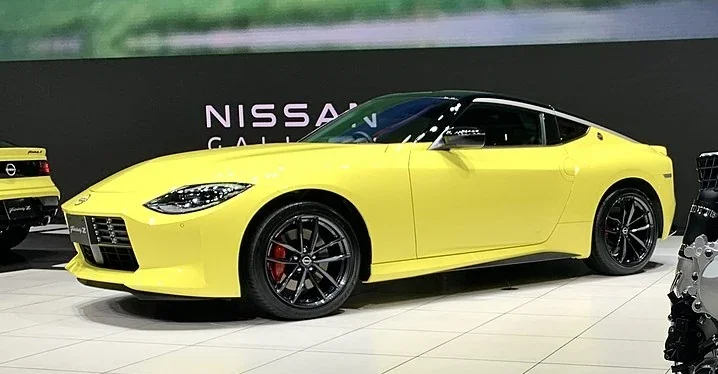
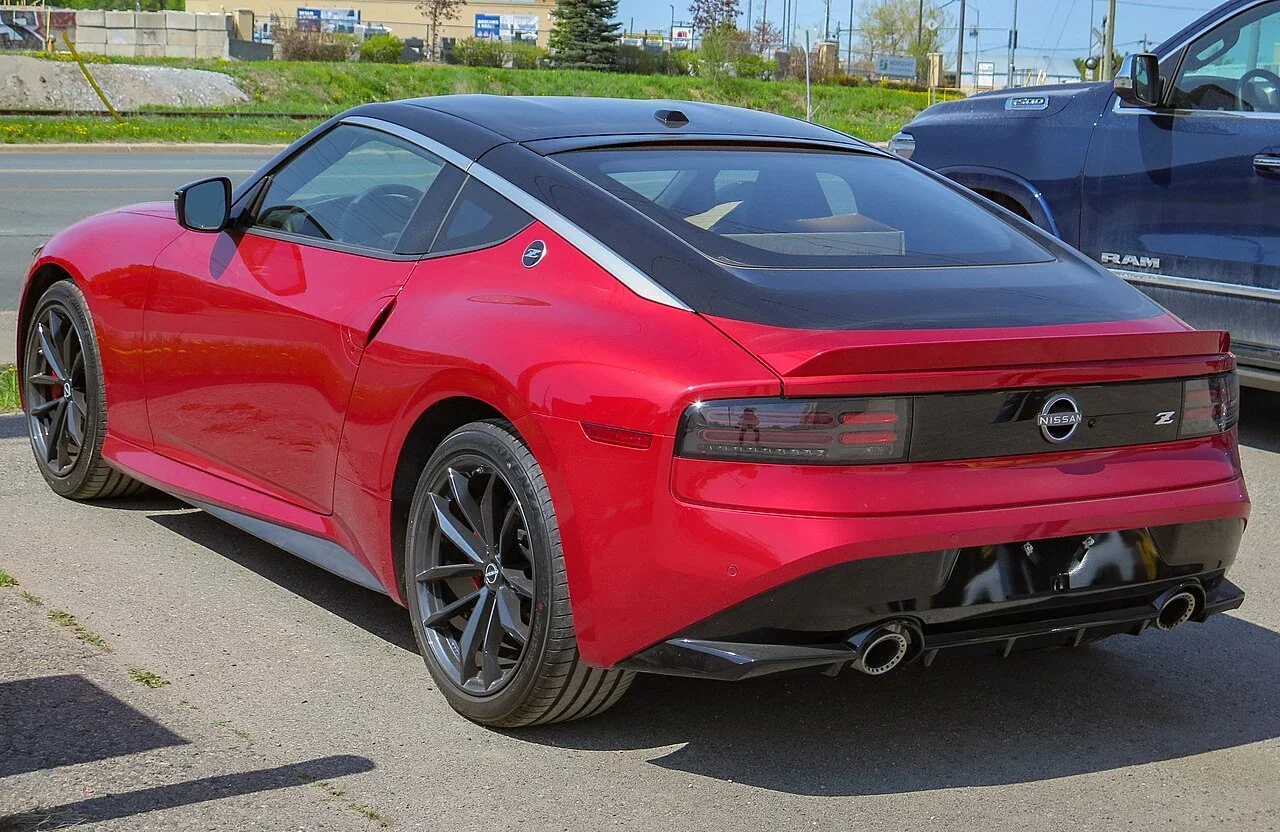
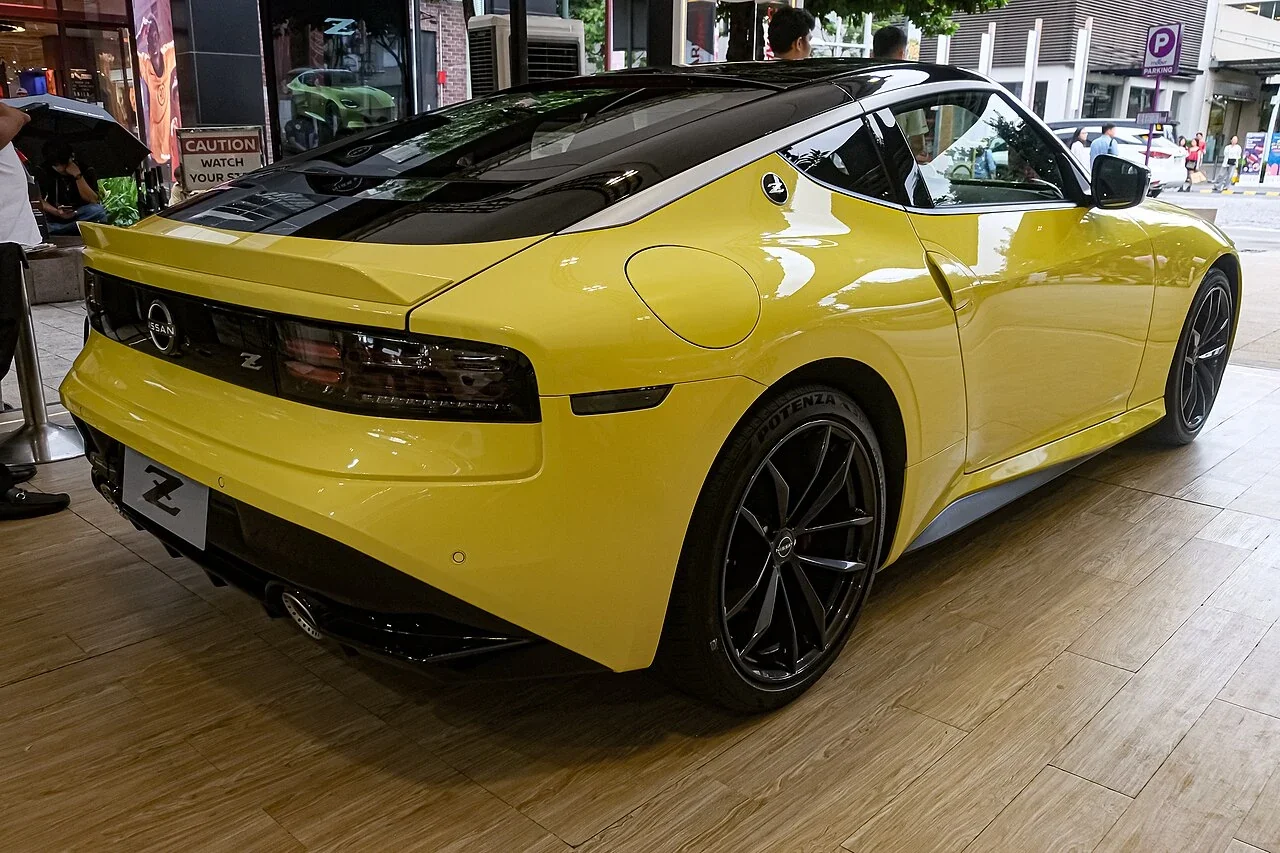
The pre-refresh Z’s long hood and short rear deck make its purpose immediately legible. It is a compact two-seat coupe with a relatively simple silhouette. The lamps and roof treatment give it a recognizable identity without requiring the viewer to understand the specification sheet.
That kind of design can retain its appeal after a new model arrives. It does not guarantee future value, but it can matter to an owner who expects to keep enjoying the sight of the car rather than replace it whenever a quicker version appears. Emotional value is legitimate as long as it is not confused with an investment forecast.
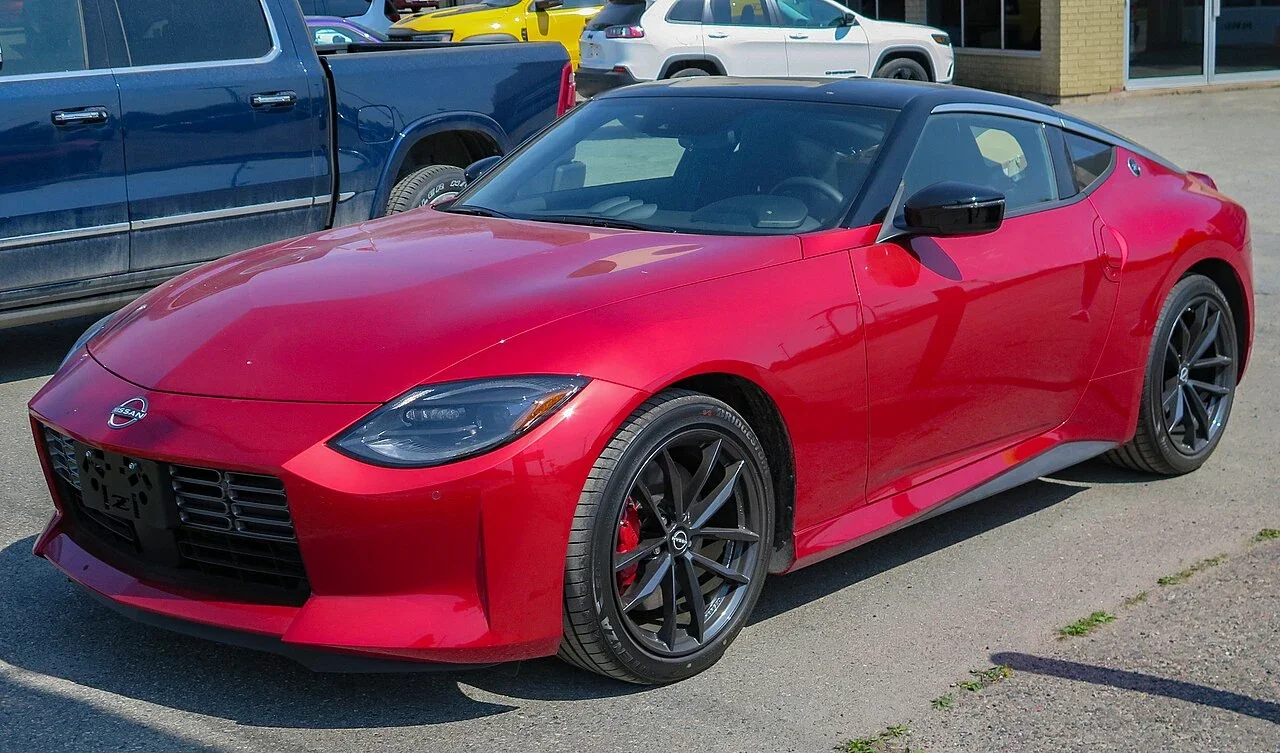
The large rectangular grille is specific to the version discussed here. Nissan revised the Sport and Performance nose for 2027, including a body-colored bar and a Z emblem. The early cars in these photographs should therefore not be mistaken for images of the refreshed front end.
Inspect a used example with the same care you give its appearance. Panel alignment, repair quality and the condition of the low front bodywork matter. A striking color and carefully polished paint are pleasant; neither tells you what happened underneath or whether modifications were installed properly.
400 HP Is Plenty; The Delivery Matters More
The 2026 U.S. brochure specifies a 3.0-liter twin-turbo V6 producing 400 hp and 350 lb-ft for Sport and Performance. The Performance manual drives the rear wheels through a six-speed gearbox and a mechanical limited-slip differential. This is a substantial amount of power in a compact two-seat body.
Turbocharged torque gives the engine a different personality from the naturally aspirated engines in older Z models. It provides useful acceleration without requiring every maneuver to take place near the top of the rev range. A buyer should still try the response at different engine speeds rather than assume the peak output describes the whole experience.
Car and Driver’s 2023 Performance manual test recorded 4.5 seconds to 60 mph and criticized aspects of the car’s handling response. That is an earlier test vehicle under its stated conditions, not a Cariary measurement or a universal result for every Z.
The useful lesson is to resist buying by horsepower alone. Check how naturally you can feed in power, whether the response feels predictable and whether the chassis gives you confidence at ordinary legal speeds. A car you enjoy using precisely can be more satisfying than one whose strongest quality is a number you seldom access.
Three Pedals Give the Driver a Job
The manual is the center of this recommendation. Choosing a ratio, matching the engine to the road and making a smooth shift can add satisfaction to an otherwise unremarkable journey. Those actions continue to matter even when there is no opportunity to use the full engine output.
Performance’s SynchroRev Match can help synchronize engine speed during shifts. It is a convenience within a manual experience, not a reason to avoid learning the controls. Try the pedal spacing, clutch effort and shift movement for yourself. A favorable review cannot make an uncomfortable reach or an awkward driving position disappear.
The automatic serves a different owner. It reduces the work in heavy traffic and may be the right choice if someone else regularly shares the car. It should be assessed as its own proposition rather than treated as a failure to appreciate a sports car. Buy the transmission you will enjoy on the journeys you actually make.
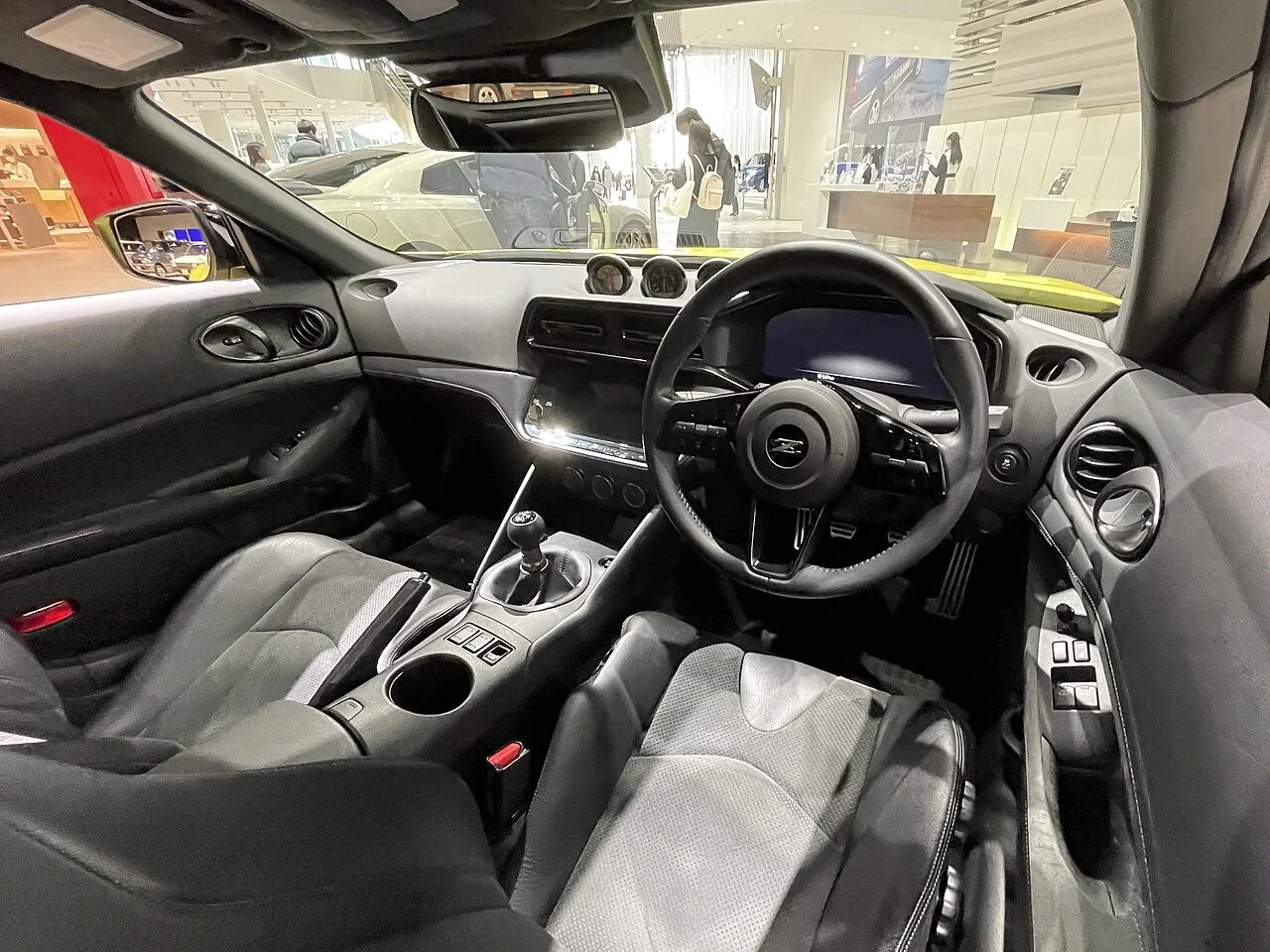
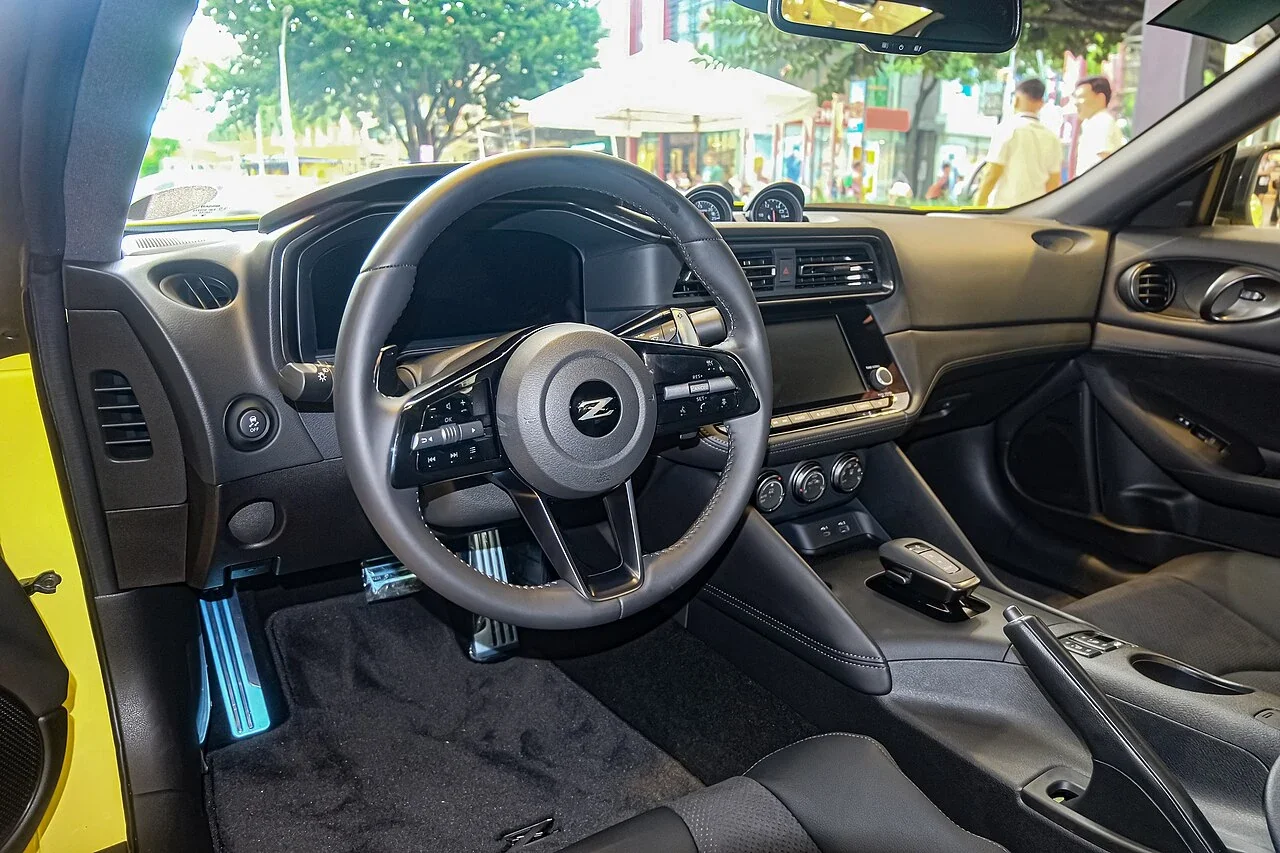
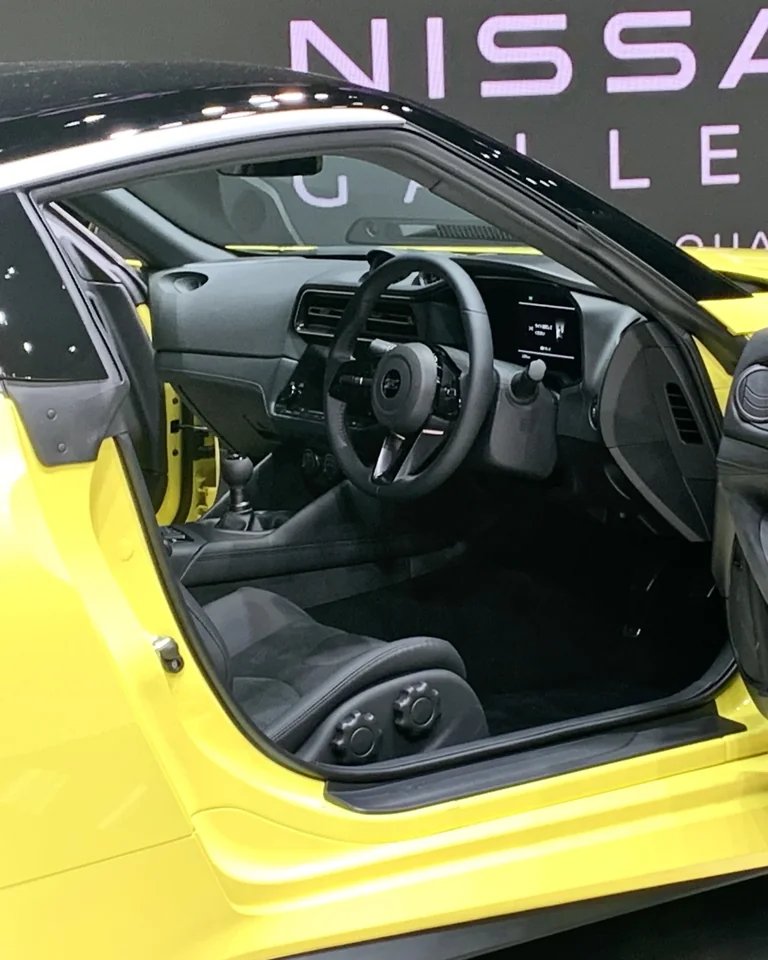
The manual cabin photograph is a right-hand-drive Fairlady Z reference, labeled accordingly. It shows the actual manual lever and cabin arrangement rather than substituting an automatic interior. U.S. steering position and market equipment must still be confirmed on the actual car.
Why Performance Is More Than a Trim Badge
The Performance grade adds hardware that is relevant to the driving proposition: a mechanical limited-slip differential, forged 19-inch wheels and larger Akebono brakes. Those changes deserve attention before cosmetic packages because they concern how the car uses its power and manages repeated braking.
A limited-slip differential helps manage the difference in behavior between the driven rear wheels. It does not create unlimited traction. Tire condition, temperature and road surface still determine what can be transmitted. The same caution applies to larger brakes: heat capacity and repeatability are different questions from a single stopping-distance claim.
Our drivetrain explanation and brake and tire guide help put those components in context. A sensible buyer evaluates the complete package rather than assuming that one branded part guarantees a superior result in every situation.
For a used car, establish whether the original specification remains intact. Wheel size, offset, tire choice, suspension changes and engine tuning can materially change the experience. Ask for documentation and have an appropriate specialist inspect unfamiliar modifications. A stock-looking car and a genuinely stock car are not necessarily the same thing.
The Cabin: Intimate Can Become Inconvenient
The Z’s cabin is built around two people. Its close seating position and central console help create the sense of being in a dedicated coupe, but also set firm limits on storage and flexibility. There is no occasional rear seat for a passenger, bag or child seat.
The 2026 Performance equipment includes a 9-inch central display and a 12.3-inch digital instrument panel. The important ownership questions are simpler than screen dimensions: can you see the information in sunlight, connect your own phone reliably and adjust common functions without taking too much attention from the road?
Physical climate controls and the manual lever make the cabin’s main tasks easy to identify. Try them while seated naturally, then check where your elbow, knee and charging cable end up. Small conflicts that seem trivial in the showroom can become irritating during a long drive.
The photographs include overseas automatic and manual cabins for clearly identified comparisons. They do not establish every U.S. equipment detail. If you are considering a particular car, assess its seat condition, display operation, switch wear and the fit of its interior trim rather than accepting a generic equipment list as proof.
Everyday Use Is the Real Commitment
The official luggage figure is 6.9 cubic feet. A hatch opening can make that space accessible, but the load area remains limited. Soft bags may be easier to arrange than rigid cases. Bring the luggage you use and check whether it fits without compromising visibility or forcing the hatch against it.
Parking deserves a proper trial. The low seating position, long doors and sloping rear body all influence how the car works in a tight bay. Try getting out beside another vehicle and reversing into an ordinary space. The pleasure of a compact sports car should not depend on always finding an unusually generous parking spot.
Nissan’s 2026 estimate for the manual is 18 mpg city, 24 highway and 20 combined. That is a standardized comparison figure. Short journeys, traffic and enthusiastic use can produce a different result. Use your expected mileage and local fuel price when comparing costs, and follow the car’s fuel requirements.
This is also a useful point to assess noise and ride for the passenger. A driver may forgive a compromise because the steering and gearbox are enjoyable, while the person beside them experiences only the compromise. Shared enthusiasm is helpful; honest agreement about how the car will be used is more important.
Buying Now Means Comparing the 2027 Changes
The 2027 refresh announced by Nissan changes the purchase context. Sport and Performance receive a revised front design, Performance gets larger-diameter dampers, and the range receives a revised fuel-tank design intended to support more consistent fuel delivery during sustained cornering. These are changes to the newer car, not equipment to assume on a pre-refresh example.
The most consequential addition for some enthusiasts is a six-speed manual for NISMO. The older statement that Z NISMO is automatic-only no longer describes the complete current range. The 2027 NISMO also receives revised front brake rotors and associated chassis tuning.
The current U.S. configurator lists 2027 Performance at $54,480 before its $1,295 destination charge, tax and options. That is a new-model reference, not a price claim for a used 2023–2026 car. Get actual quotations before deciding what discount makes an earlier example attractive.
A pre-refresh Performance can still be a satisfying purchase when its condition, price and familiar shape appeal to you. The right comparison includes warranty time, tire condition, maintenance needs and financing, not just the difference between two advertised prices. Do not pay a nostalgia premium simply because someone describes every manual coupe as a future collectible.
Nissan Z Review: The Cariary Perspective
The Toyota GR Supra is an obvious cross-shop for someone seeking a compact rear-drive coupe. Compare the exact transmissions and specifications, then pay attention to seat fit, visibility and the way each car responds. The decision should survive beyond a conversation about which badge has the richer history.
The Porsche 718 Cayman offers a different mid-engine layout and seating experience, while the Mazda MX-5 Miata asks how much power and enclosed-coupe practicality you really need. Those alternatives help define the Z’s particular place rather than make it a universal winner or loser.
Before buying, arrange an independent inspection, verify recall status by VIN and review maintenance and modification records. Check clutch behavior, tires, leaks and evidence of body or underbody damage. These are inspection priorities, not a claim that every Z suffers the same faults.
Four stars recognize a car with a clear reason to be wanted: attractive proportions, useful V6 torque and direct manual involvement. The compromises are visible and should remain visible in the recommendation. Choose it when its specific character makes ordinary driving feel worthwhile and the actual example supports that promise.
Who Should Buy It?
Recommended For
Drivers who want a distinctive two-seat manual coupe and are willing to compare condition, fit and price carefully. Buyers who value participation and appearance without expecting a specification-sheet victory in every category.
Not Recommended For
Buyers needing rear seats, generous luggage capacity or effortless access in tight parking. Anyone buying an earlier car without comparing the refreshed 2027 options and the cost of required maintenance.
One-Line Verdict: The Z’s strongest argument is the drive you want to repeat, not the number you want to quote.
Frequently Asked Questions
Is the Z actually called the 400Z?
Nissan markets this generation as Z in the United States. The 400-hp output explains the informal nickname, but it is not the official U.S. model name.
Is NISMO available with a manual?
The 2027 NISMO adds a six-speed manual. Earlier NISMO models discussed in the 2026 brochure use an automatic, so model year matters.
Why consider Performance instead of Sport?
Its limited-slip differential, forged wheels and larger brakes support the sporting purpose. Compare actual prices and condition rather than choosing by trim name alone.
Are the photos of the 2027 refresh?
No. They show the pre-refresh model reviewed here, with overseas reference photographs labeled in their captions. The 2027 front design and equipment changes are described separately.
Is an older manual Z guaranteed to hold its value?
No. Future resale depends on condition, demand and the wider market. Buy it because the ownership experience suits you, with a budget that does not rely on appreciation.
Further Reading and Data Reference
Data reference date: September 7, 2026. Specifications and attributed test observations are linked where discussed. Cariary Point is an editorial buyer-fit assessment, not an owner road-test score or reliability rating.
Explore more Cariary car reviews and buyer perspectives.

