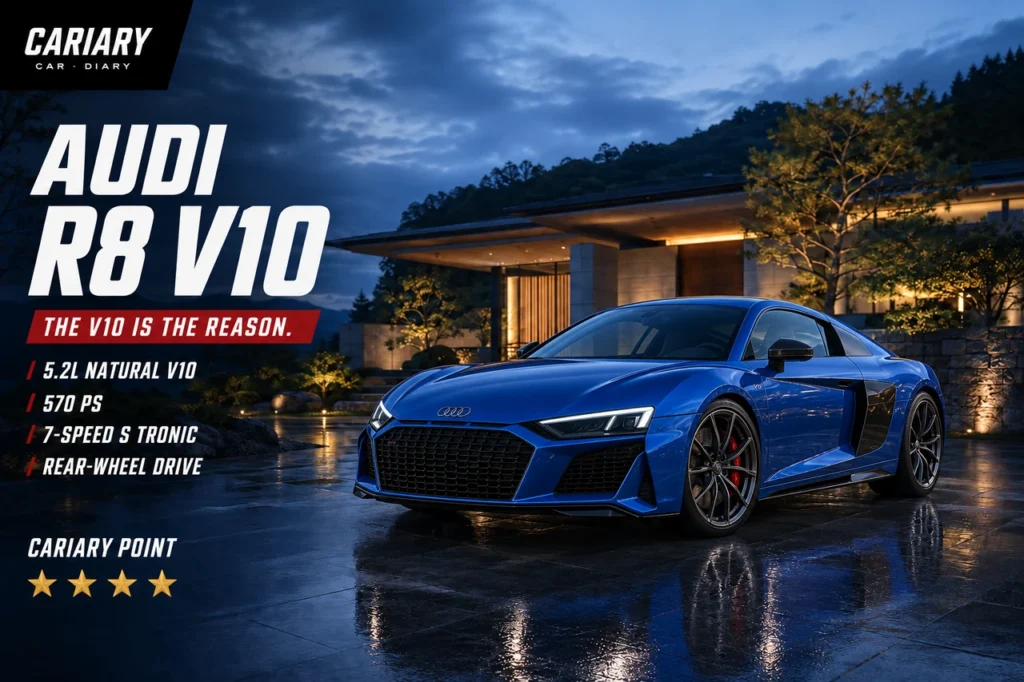
CARIARYCAR · DIARY · PERSPECTIVE
Cover: AI-generated Cariary editorial illustration, visually checked against the specified vehicle. It is not road-test photography.
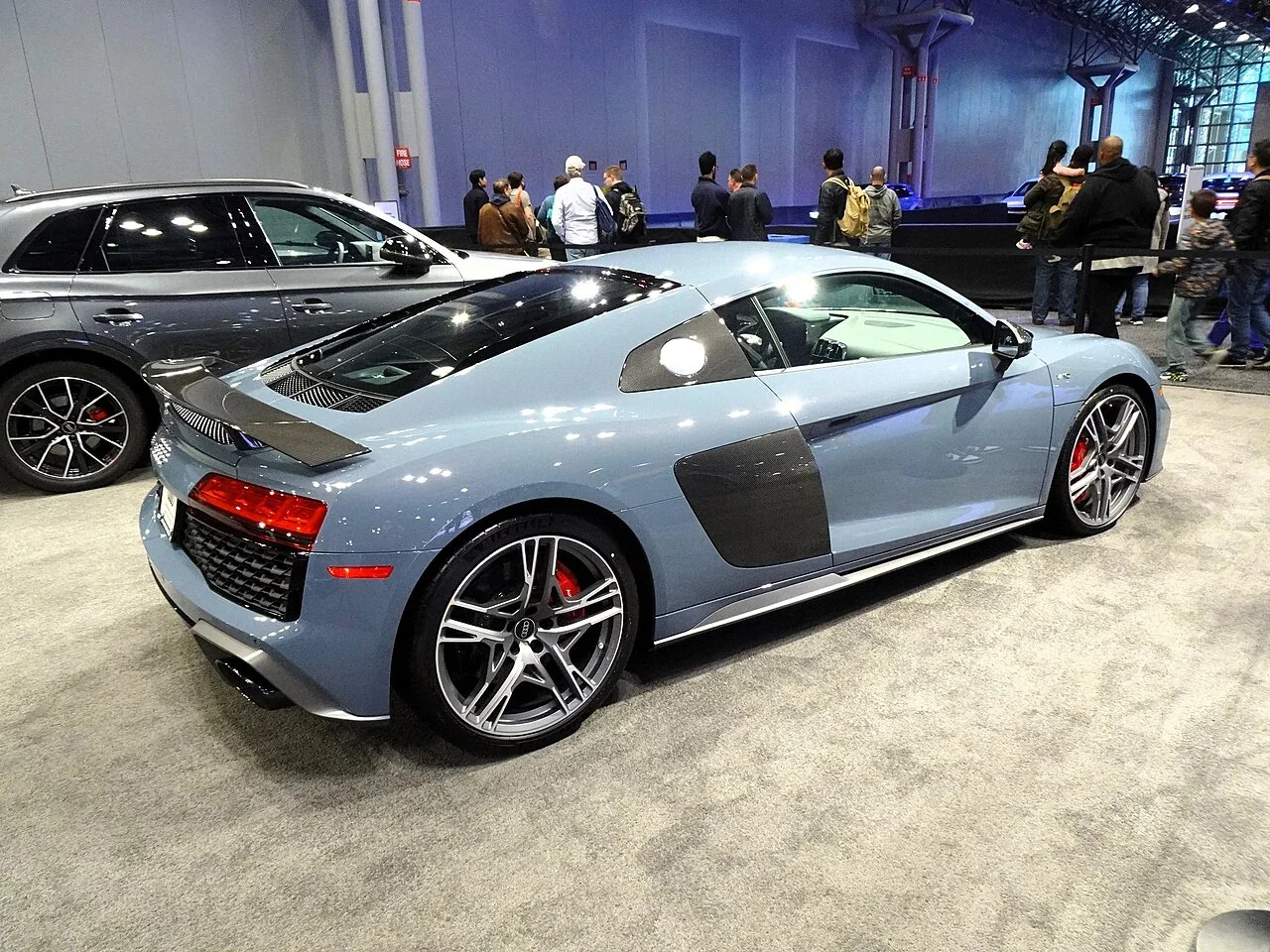
This Audi R8 V10 review starts with a question that acceleration figures cannot answer: how much is an engine experience worth to you? A late R8 is appealing because it puts a naturally aspirated ten-cylinder engine behind two seats, wraps it in a relatively restrained shape and lets that combination define the purchase.
There are faster ways to travel and easier ways to spend a large car budget. Neither observation removes the appeal. The R8 asks a buyer to value the shape of the experience: the engine layout, the view from a low seat, the ritual of choosing a road and the sense that an ordinary errand can become an occasion.
Cariary gives it four stars for that clear identity. The missing star reflects the narrow use case and the financial discipline an older supercar deserves. Admiring one is easy. Buying the right example requires more patience than buying the most dramatic color.
Scope: late second-generation R8 Coupe V10 performance RWD, particularly 2022–2023 examples. German/European launch specifications are the numerical reference; PS is metric horsepower, not U.S. SAE hp. This is a research-based buyer review, not a Cariary road test.
A compelling choice for a buyer who wants the V10 to be the main event and can accommodate a two-seat supercar. Condition, documentation and a suitable parking space matter more than the most impressive option list.
Audi R8 V10 Review: Key Specifications
| Reference model | R8 Coupe V10 performance RWD, late second generation |
|---|---|
| Engine | 5,204 cc naturally aspirated V10 |
| Output | 419 kW / 570 PS at 8,000 rpm |
| Torque | 550 Nm at 6,400 rpm |
| Transmission / drive | Seven-speed S tronic dual-clutch / rear-wheel drive |
| Manufacturer acceleration | 0–100 km/h: 3.7 seconds |
| Manufacturer maximum speed | 329 km/h; Coupe reference |
| Seats | Two |
| Availability context | R8 production ended in March 2024; assess individual used stock |
Audi R8 V10 Review: Buy the Right Version First
The name R8 covers substantially different cars. This article concerns the late performance RWD Coupe, not a first-generation manual, an earlier lower-output RWD, a quattro performance or the limited GT. A seller using the word performance in a headline is not sufficient evidence of the specification.
Audi’s German launch release identifies the 570 PS RWD configuration. Its archived model overview also confirms that R8 production ended in March 2024. That makes this a selection among individual cars, rather than a normal factory-order comparison.
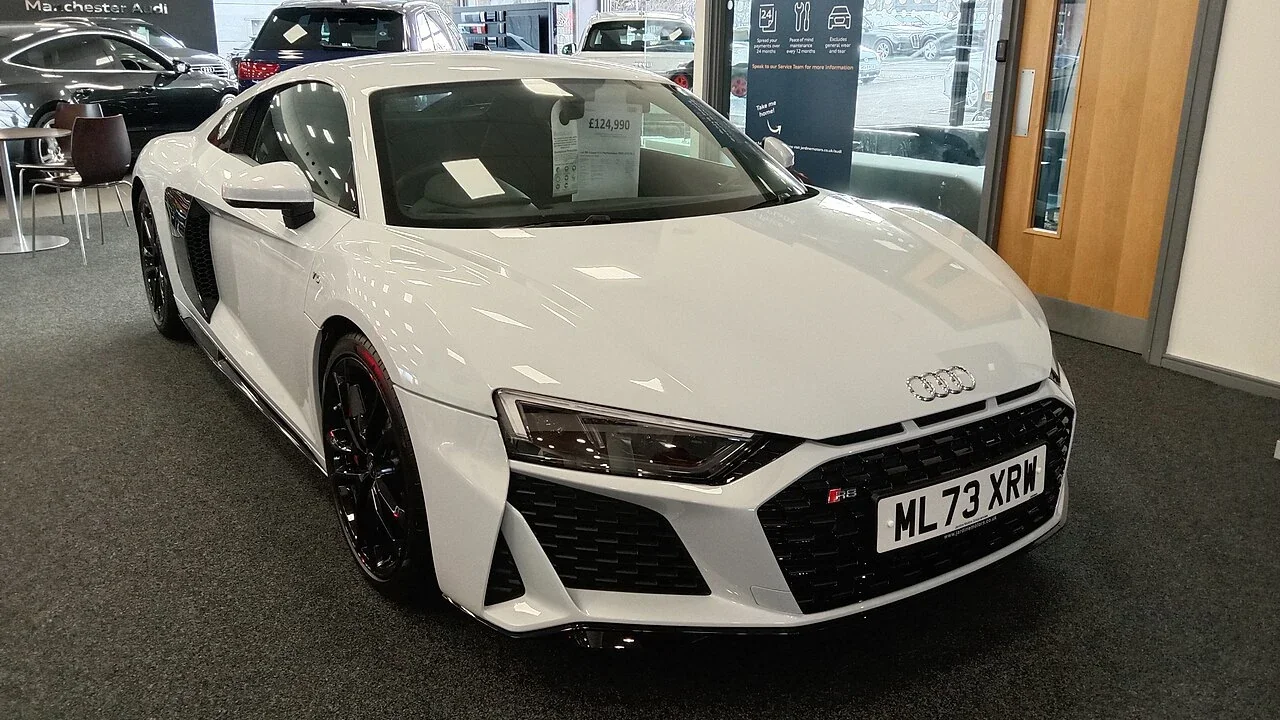
Start with the registration, original build specification and service invoices. Confirm steering position, market of origin, brake equipment and seat type before comparing prices. A photograph of a similar car cannot establish what is fitted to the one being sold.
An imported example can be attractive, but ownership support belongs in the comparison. Establish which workshop will maintain it, which documentation is accepted locally and how any remaining coverage works. A lower advertised price has limited meaning if those questions remain unanswered.
Why the Naturally Aspirated V10 Is the Main Event
The output arrives high in the rev range. This is an engine proposition built around using revs, not simply obtaining a large torque number at low speed. For an owner, that creates a reason to pay attention to the sequence of a drive rather than only the speed at its end.
Audi’s technical engine description specifies dry-sump lubrication and a separate oil tank, helping the engine sit low in the car. It also documents combined port and direct injection. These are useful explanations of the package, not reasons to assume the engine is immune to wear.
A dry sump needs the correct checking and servicing procedure. Have the inspecting specialist show how oil level should be checked on the exact car and confirm which service work is due. Do not transfer race-engine service intervals from a motorsport article to a road-going R8.
The emotional argument is therefore specific: buy this car if the V10 itself is something you want to experience repeatedly. If your interest is chiefly effortless low-speed thrust, the purchase becomes harder to justify against alternatives with a different power delivery and a broader daily-use brief.
Rear-Wheel Drive Requires a Deliberate Choice
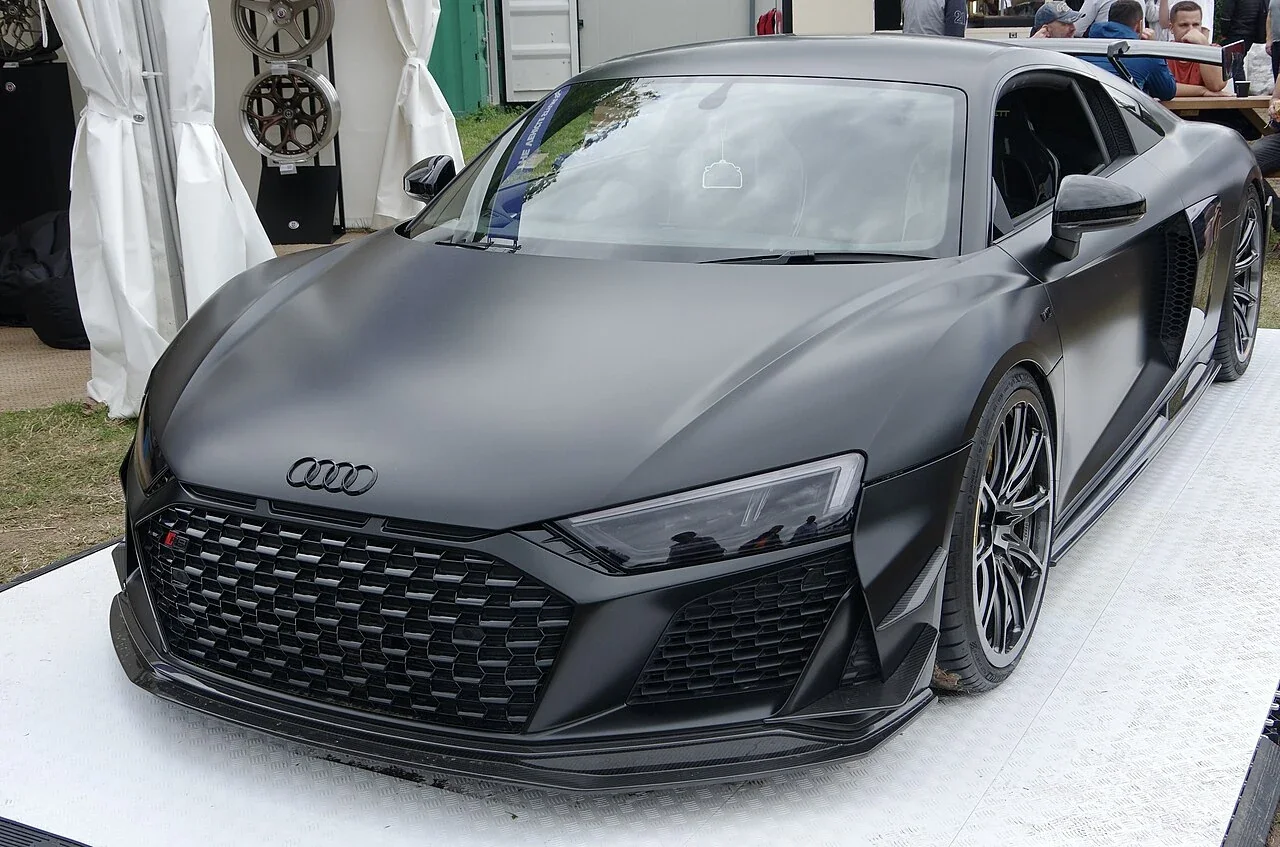
The RWD label is meaningful. Power goes to the rear wheels through a mechanical limited-slip differential; it is not a quattro car with a different badge. The absence of front-wheel drive changes the proposition, particularly for a buyer who expects to use the car across seasons.
In Car and Driver’s Spanish launch drive, Mike Duff found the optional Dynamic steering short on feedback despite a responsive front end. His report covered a road-driven Spyder and a Coupe on a circuit; it is useful context, not a universal verdict on every steering specification or a Cariary test.
It would be wrong to turn that into a promise that RWD is automatically more enjoyable for every driver. Experience, road surface, temperature and tires shape what a person can safely use. A careful test drive should establish whether the car feels approachable to you at ordinary road speeds.
Do not buy RWD solely because an enthusiast discussion calls it the purist specification. A quattro example deserves consideration if broader-weather confidence is central to your intended use. Neither drivetrain creates grip that the tires and road surface do not provide.
Keep stability systems engaged on a road evaluation. The useful questions are about visibility, brake response, steering effort and whether you can place the car confidently. Exploring a traction limit is a separate activity for a controlled venue with appropriate instruction.
A Driver-Focused Cabin With Passenger Compromises
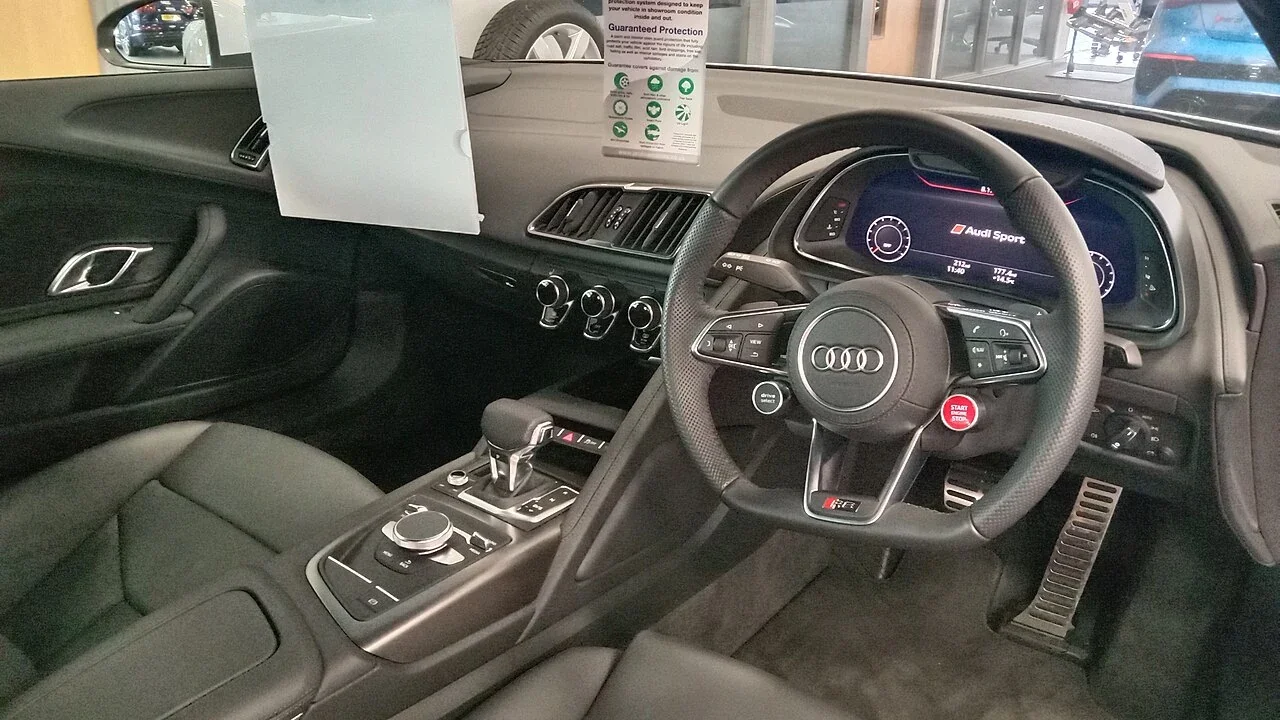
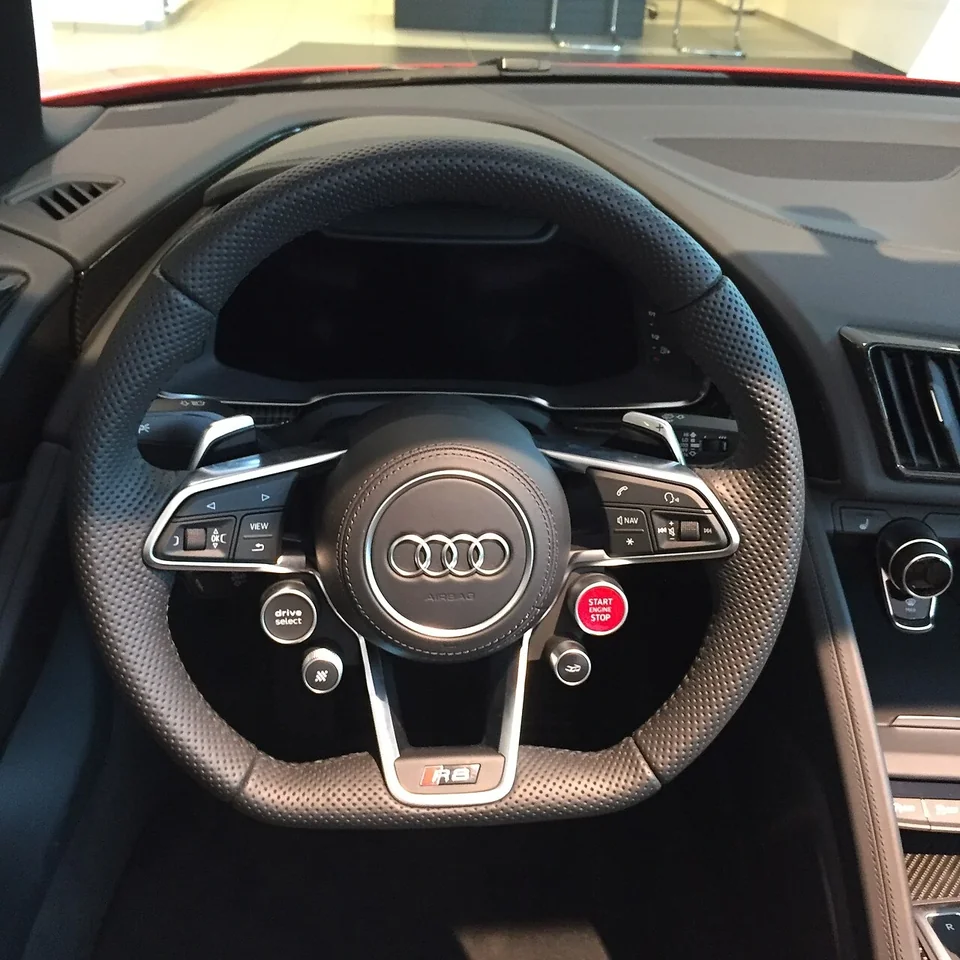
The R8’s cabin places its information around the driver. The Audi interior description identifies a 12.3-inch Virtual Cockpit and navigation displayed there. Physical climate controls remain an important part of the layout. This is a notably different approach from giving the center dashboard a large shared screen.
Cariary likes the clarity of that choice. A car purchased for an engine experience does not need to make the center display its visual centerpiece. The trade-off is that a passenger has less independent access to the main information interface. Bring your regular passenger when assessing whether that suits you.
Test your own phone connection and navigation needs rather than assuming a modern Audi interface is present. Also try the seat adjustment, climate controls and reversing assistance. Equipment varies, and the exact car matters more than a general brochure description.
The cabin should be evaluated with the door closed and your normal footwear on. Check thigh support, steering-wheel reach, shoulder room and the view around the mirrors. A seat that looks suitably exotic in a photograph can still be the wrong seat for your body.
The Everyday Test Is Mostly About Access
The practical test begins before the engine starts: can you enter and leave the car comfortably in your own parking space? Low seating, wide doors and surrounding walls deserve a real trial. Measure your garage and include the room needed to open the door, not just the width of the parked body.
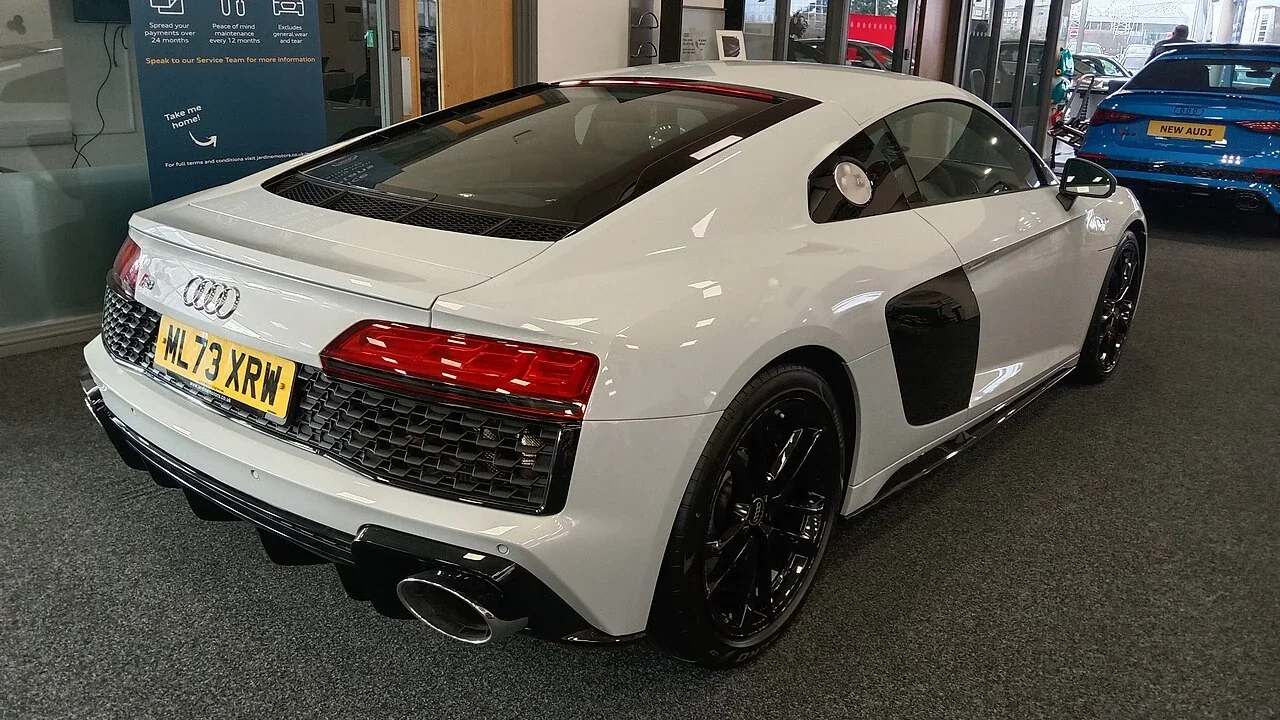
Audi lists a 112-liter front luggage compartment and additional storage behind the seats for the German reference. Those separate spaces should not be imagined as one conventional hatchback trunk. Bring the actual bags you use and establish what can be stowed securely.
A weekend with two soft bags is a different task from an airport collection with large hard cases. Think about where wet clothing, shopping and a passenger’s everyday belongings will go. The car becomes easier to enjoy when its limitations are accepted before purchase.
Route choice can also become part of ownership. Inspect the nose and underside for contact marks and check clearance on the driveways you regularly use. A car you avoid taking out because of access anxiety is a poor match, however attractive its specification may be.
Used-Buying Checks: Spend Time Before Spending Money
An independent pre-purchase inspection is central to this Audi R8 V10 review. Ask for a cold start, a diagnostic scan, a road evaluation and an underside examination by someone familiar with the model. These are proposed checks, not a claim that every R8 develops the same faults.
Request evidence of servicing and investigate gaps in the timeline. Have the workshop assess leaks, cooling-system condition, suspension components and gearbox operation. Invoices should show what was done, when it was done and which car received the work.
Brakes and tires deserve itemized attention. Confirm whether the car has steel or optional ceramic brakes, then obtain an assessment appropriate to that equipment. Inspect wheel damage, tire age and specification as well as remaining tread. A fresh polish does not resolve deferred mechanical expenditure.
Accident repairs, modifications and circuit use need documentation rather than automatic condemnation or blind reassurance. The important question is whether condition and maintenance are understood well enough to price the risk. Walk away if the seller will not allow a reasonable independent inspection.
R8, Huracán or a Different Kind of Sports Car?
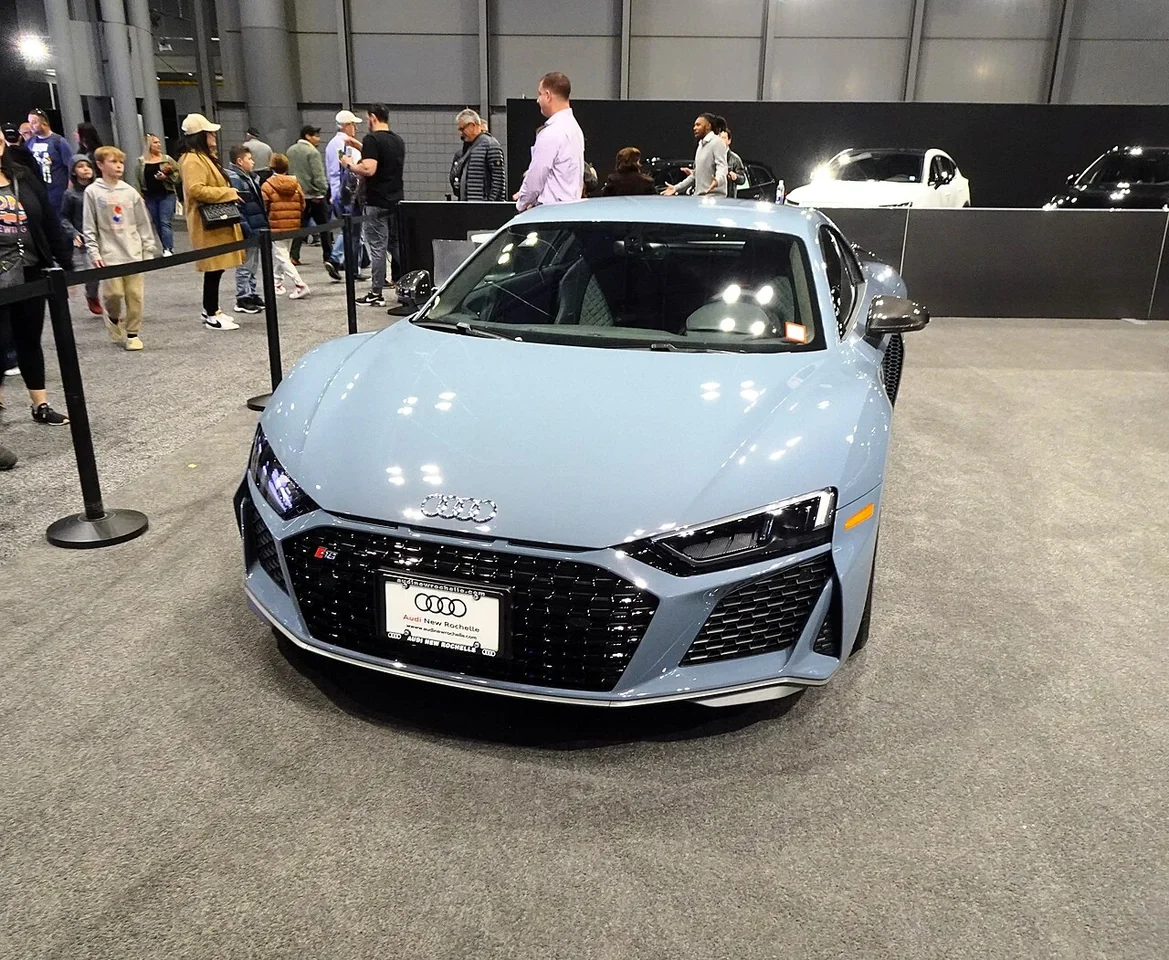
The Lamborghini Huracán is a natural companion to this discussion because a V10 is central to its appeal too. The buying question is partly visual: how much public theater do you want every time you arrive somewhere? The Audi’s more restrained presentation may suit a buyer who wants the engine experience without making the same design statement.
Do not reduce the choice to which badge attracts more attention. Sit in both cars if they are realistic candidates, compare access and obtain workshop and insurance quotations for the actual examples. A familiar-looking Audi badge does not turn supercar consumables into ordinary hatchback expenses.
The Porsche 911 represents a different starting point for a buyer seeking a sports car with a broader everyday role. Its appeal should be assessed on its own layout and usability, rather than as an unsuccessful attempt to provide a ten-cylinder soundtrack.
Used prices move with mileage, condition, market and specification. Cariary is not presenting an unverified price range as today’s market value. Compare documented local cars, include immediate work in the budget and decide what premium you personally place on the R8’s defining engine.
Cariary Perspective: Preserve the Reason You Want It
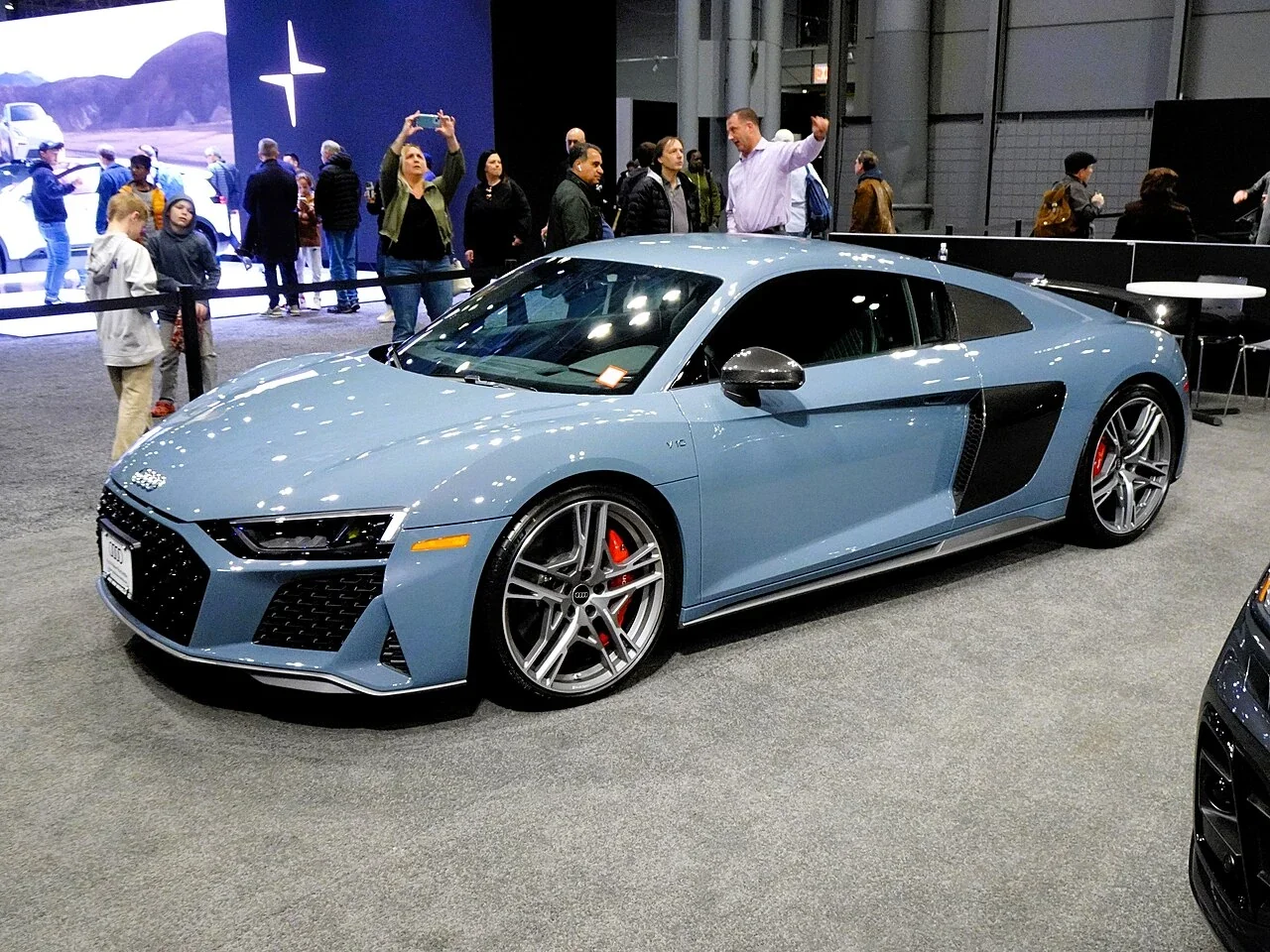
The most persuasive R8 purchase is one made with a clear purpose. Someone who has wanted a naturally aspirated V10 for years, has secure parking and can maintain the car properly is starting from a stronger position than someone chasing a depreciated list price.
There is also a risk in treating the end of production as an investment argument. Scarcity does not remove running costs or guarantee appreciation. Buy a car whose condition you understand and whose use you will enjoy, rather than depending on a future resale story to make the numbers work.
Four stars recognize a distinct and increasingly unusual experience. The rating is not a reliability forecast, a measured handling score or an assertion that the RWD is superior to every quattro. Its compromises are substantial, but they are also intelligible to the right buyer.
The best outcome is a well-chosen R8 that leaves the garage regularly. A slightly less fashionable specification with excellent documentation may deliver far more pleasure than a supposedly perfect one whose condition makes every journey an exercise in worry.
Who Should Buy It?
Recommended For
An enthusiast specifically seeking a naturally aspirated V10, with another solution for passengers and bulky luggage, secure parking and a realistic maintenance reserve.
Not Recommended For
A buyer needing one car for family travel, effortless access and predictable ordinary-car costs, or someone stretching the entire budget to meet the purchase price.
One-Line Verdict: The R8 performance RWD is worth considering when the V10 is the reason for buying, and the individual car survives a careful inspection.
Frequently Asked Questions
Is the late Audi R8 V10 a manual?
No. This review concerns the seven-speed S tronic dual-clutch car. First-generation gated-manual examples are a separate buying subject with different specifications and values.
Does 570 PS mean 570 U.S. horsepower?
No. PS is metric horsepower. The German reference is 419 kW or 570 PS; do not copy that number into a U.S. SAE-horsepower comparison without identifying the unit.
Is RWD better than quattro?
It depends on the intended use and the driver. The RWD has a distinct appeal, while quattro merits consideration for a different traction brief. Tires, weather and driver judgment remain essential either way.
Can an R8 be used every day?
Some owners may make its two-seat layout work, but access, luggage and parking are the first tests. Try your actual commute and parking arrangement before treating daily usability as a settled fact.
What matters most when buying a used R8?
A verified specification, documented maintenance and an independent specialist inspection. Price the brakes, tires and any immediate work before deciding whether an advertised bargain is genuinely affordable.
Why does Cariary give it four stars?
The V10 and focused layout create a strong reason to buy it. Limited practicality and the responsibilities of older-supercar ownership keep this from being a universal recommendation.
Further Reading and Data Reference
Data reference date: September 11, 2026. Specifications and attributed test observations are linked where discussed. Cariary Point is an editorial buyer-fit assessment, not an owner road-test score or reliability rating.
Explore more Cariary car reviews and buyer perspectives.

