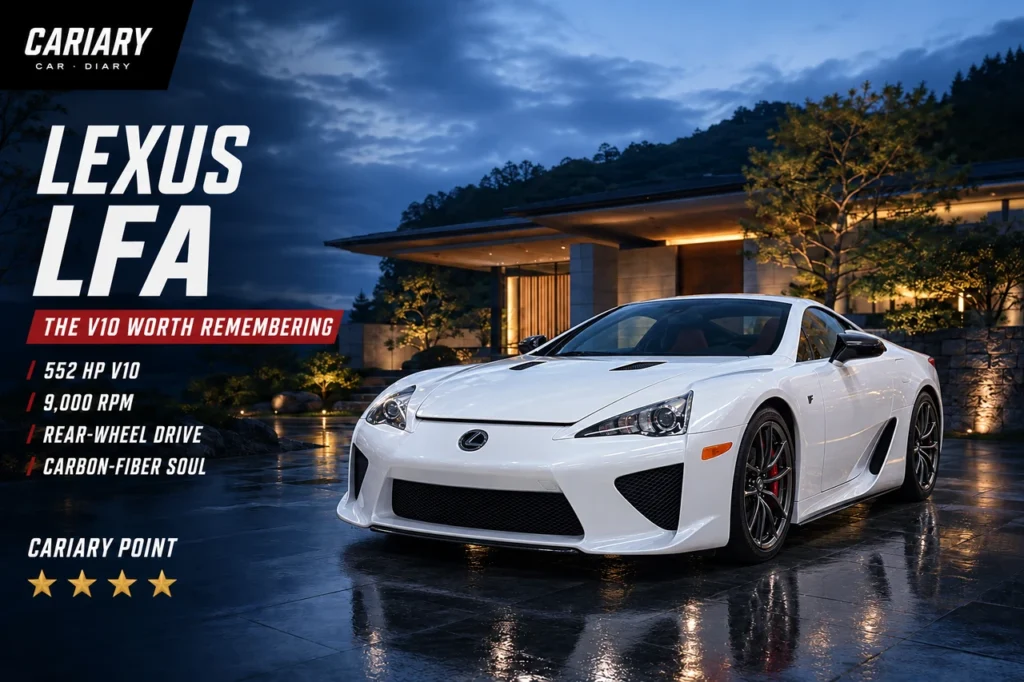
CARIARYCAR · DIARY · PERSPECTIVE
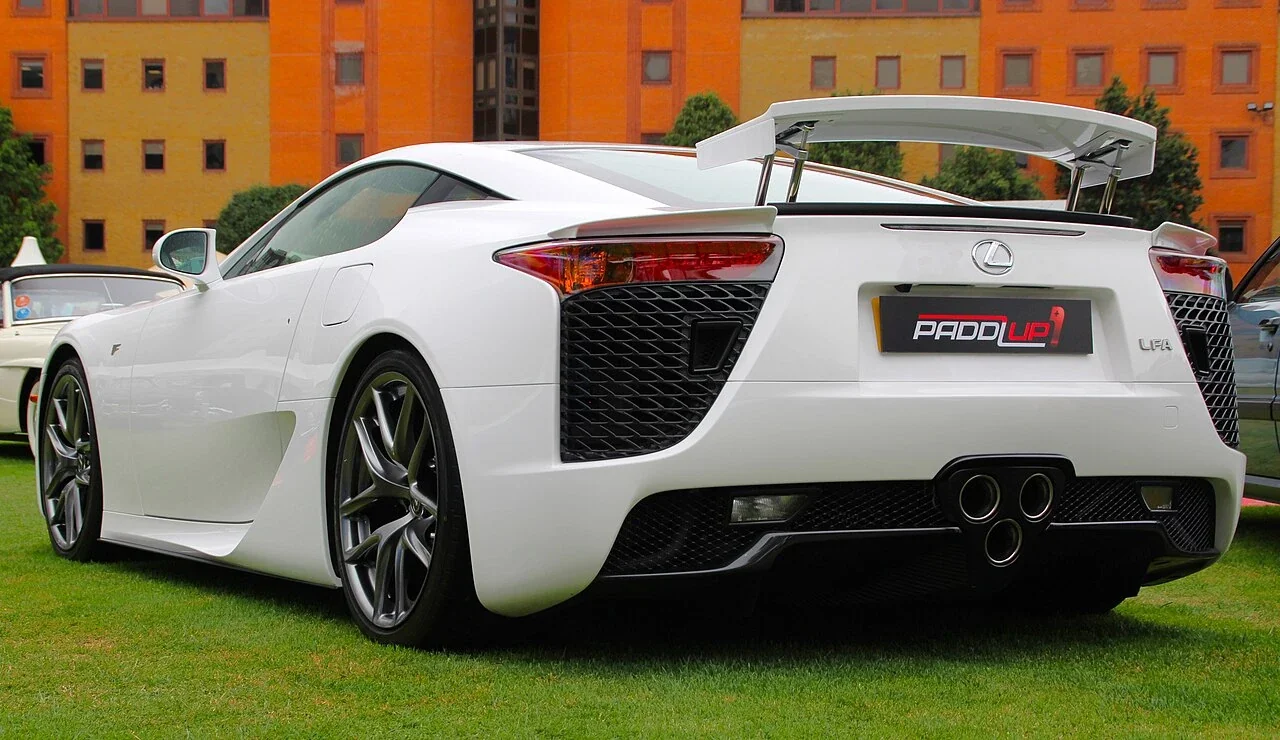
Cover: AI-generated Cariary editorial illustration, visually checked against the specified vehicle. It is not road-test photography.
This Lexus LFA review starts with the sound, because almost everything memorable about this car leads back to the engine. Yet the more interesting question is why Lexus built an entire car around making that experience possible.
A manufacturer associated with quiet cabins and low-effort ownership created a two-seat supercar that asks the driver to pay attention. That tension gives the LFA its appeal. It brings meticulous engineering to an unusually emotional purpose, without pretending that the resulting car is a sensible substitute for a normal Lexus.
Cariary sees it as an extraordinary occasional-use car with unusually demanding purchase conditions. Its mechanical individuality deserves admiration. Its rarity is a reason to inspect more carefully, rather than a reason to suspend judgment.
This research-based review concerns the original production LFA, using the standard 2012 U.S. specification as its reference. It is not a Cariary road test. Nürburgring Package cars and concept vehicles are separate specifications.
Four stars for the distinctive V10 experience and focused engineering. The deduction reflects the narrow buyer fit, older transmission behavior and specialist ownership demands. This is Cariary editorial judgment, not an owner-supplied driving score.
Lexus LFA Review: Key Specifications
| Reference | 2012 U.S. standard LFA coupe |
|---|---|
| Engine | 4.8-liter naturally aspirated V10 |
| Output | 552 hp / 354 lb-ft |
| Transmission | Six-speed Automated Sequential Gearbox |
| Driven wheels | Rear |
| Manufacturer 0–60 mph | 3.6 seconds |
| Seating | Two |
| Original U.S. base MSRP | $375,000; historical, not current value |
Lexus LFA Review: A Different Kind of Lexus
The LFA is easiest to misunderstand when it is treated as an expensive trim level. It was a dedicated engineering project, and its relationship with the rest of the brand is philosophical rather than practical. The care normally used to suppress mechanical disturbance was redirected toward producing a very particular kind of excitement.
That does not make every unusual decision automatically good. A driver still has to live with the seating position, controls, visibility and way the gearbox interrupts acceleration. The important distinction is that these compromises serve a coherent experience. Whether that experience suits you is a separate, personal question.
The original Lexus U.S. announcement identifies the 552-hp V10 and $375,000 base price. Those are period facts, not a current market quotation. Modern advertisements may use different units or describe special versions, so the specification should follow the individual car.
For a reader familiar with the Lexus LC 500, the distinction matters. The LC offers much of its appeal during an ordinary journey. The LFA asks you to organize a journey around the car. That is a meaningful difference in ownership, even before money enters the conversation.
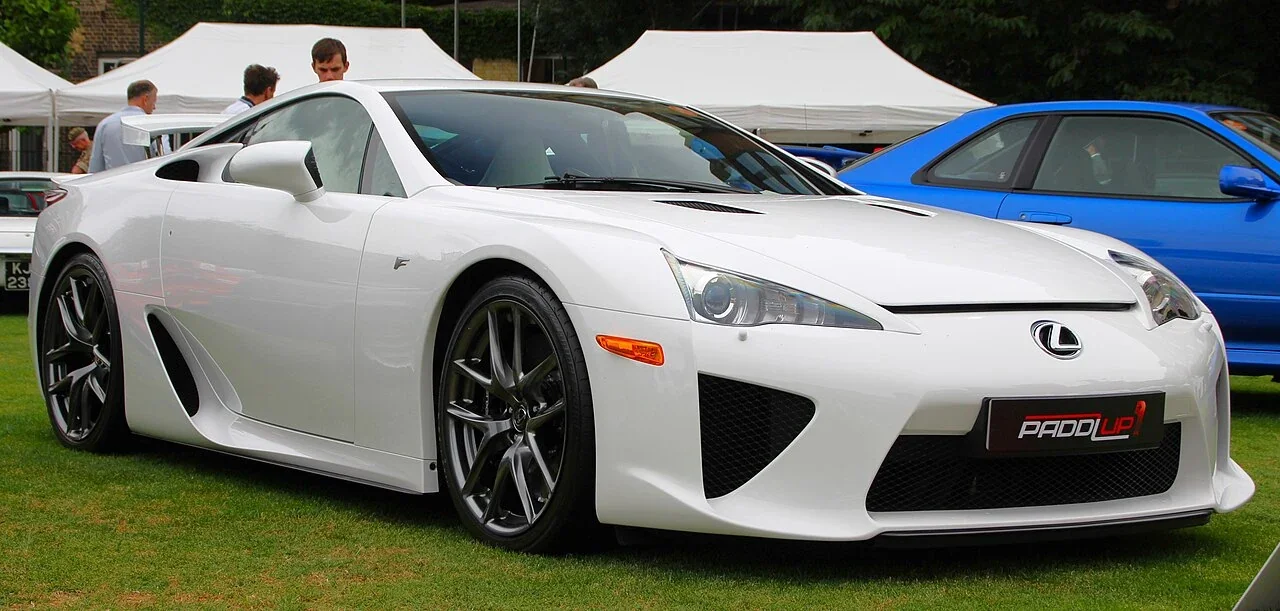
Why the V10 Deserves More Than a Horsepower Number
Peak output arrives high in the rev range, which changes the shape of the experience. A turbocharged engine can make a short burst of acceleration feel complete. The LFA encourages the driver to follow the engine through a longer progression of response and sound. Its attraction is the way the event develops, not simply the force at the first touch of the pedal.
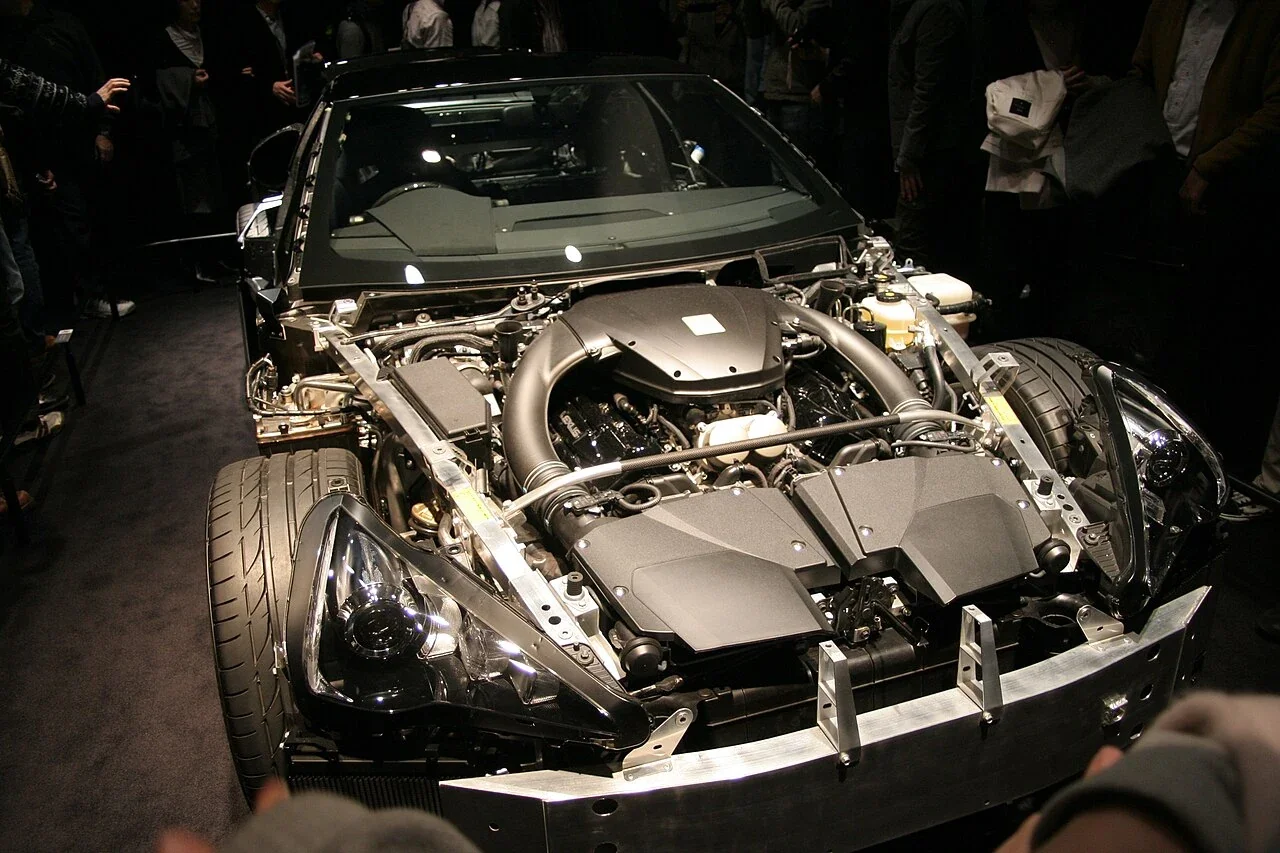
Lexus describes individual throttle bodies, dry-sump lubrication and a low engine installation in its original technical release. The separate oil reservoir arrangement helps packaging and oil supply during sustained cornering. It does not mean the engine is immune to neglect or that an old example can be driven hard without preparation.
The real display photograph below helps make that packaging visible. It shows the engine area with bodywork removed, rather than an imagined internal mechanism. A photograph can show where assemblies sit; it cannot establish their condition, oil pressure or service history.
For the buyer, the practical consequence is straightforward: this is a car whose most important feature must be healthy. An inspection should give the powertrain at least as much attention as paint originality. A beautifully presented car that cannot be used confidently has lost much of the reason to own an LFA.
The Sound Is an Engineered Part of the Car
Lexus explains the intake chambers, variable exhaust routing and cabin sound channels in its acoustic-engineering account. The sound reaching the occupants is therefore shaped by physical passages as well as the engine itself. Calling it simply a loud exhaust misses the work that gives it a changing character.
That is why an exhaust modification should be judged carefully. A louder recording is not proof of a better experience from the driver’s seat. Altering one part of an intentionally coordinated system can change the balance between intake, exhaust and cabin resonance. Originality has a functional argument here, beyond collecting preferences.
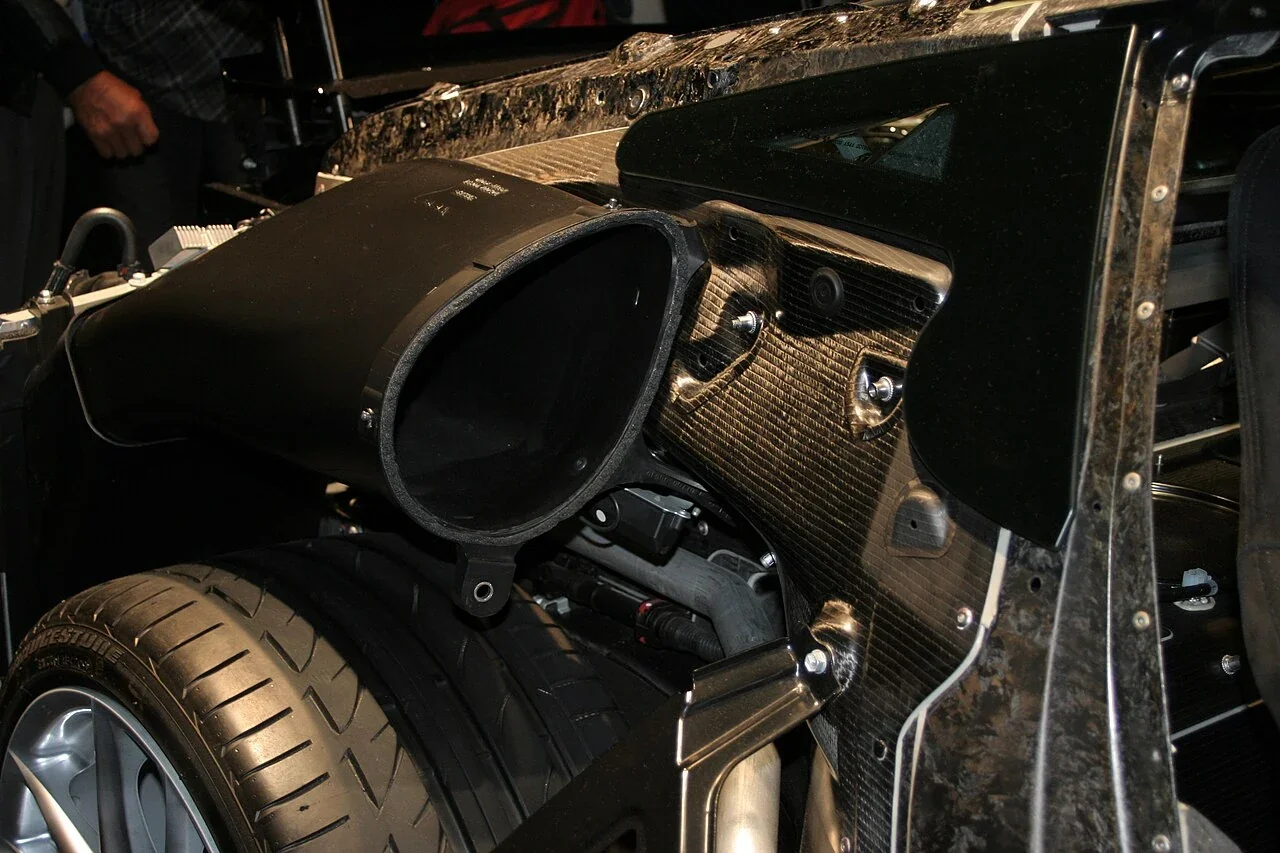
The nearby intake photograph is a real close-up of a display chassis. It is useful for understanding the hardware context, although it does not reveal every hidden acoustic channel. The article does not ask a generated cutaway to invent those details.
A video is a useful introduction, but microphones, compression and playback speakers reshape the result. Before purchase, listen from inside the car at ordinary speeds as well as under controlled acceleration. The useful question is whether the sound remains enjoyable over a whole outing, including the quieter parts.
Carbon Construction Changes the Ownership Conversation
Lexus developed its carbon-fiber construction capability in-house for the LFA. The company describes a carbon-intensive central structure with aluminum used elsewhere. The point is a purposeful combination of materials, rather than the assumption that every dark surface on the car is structural carbon.
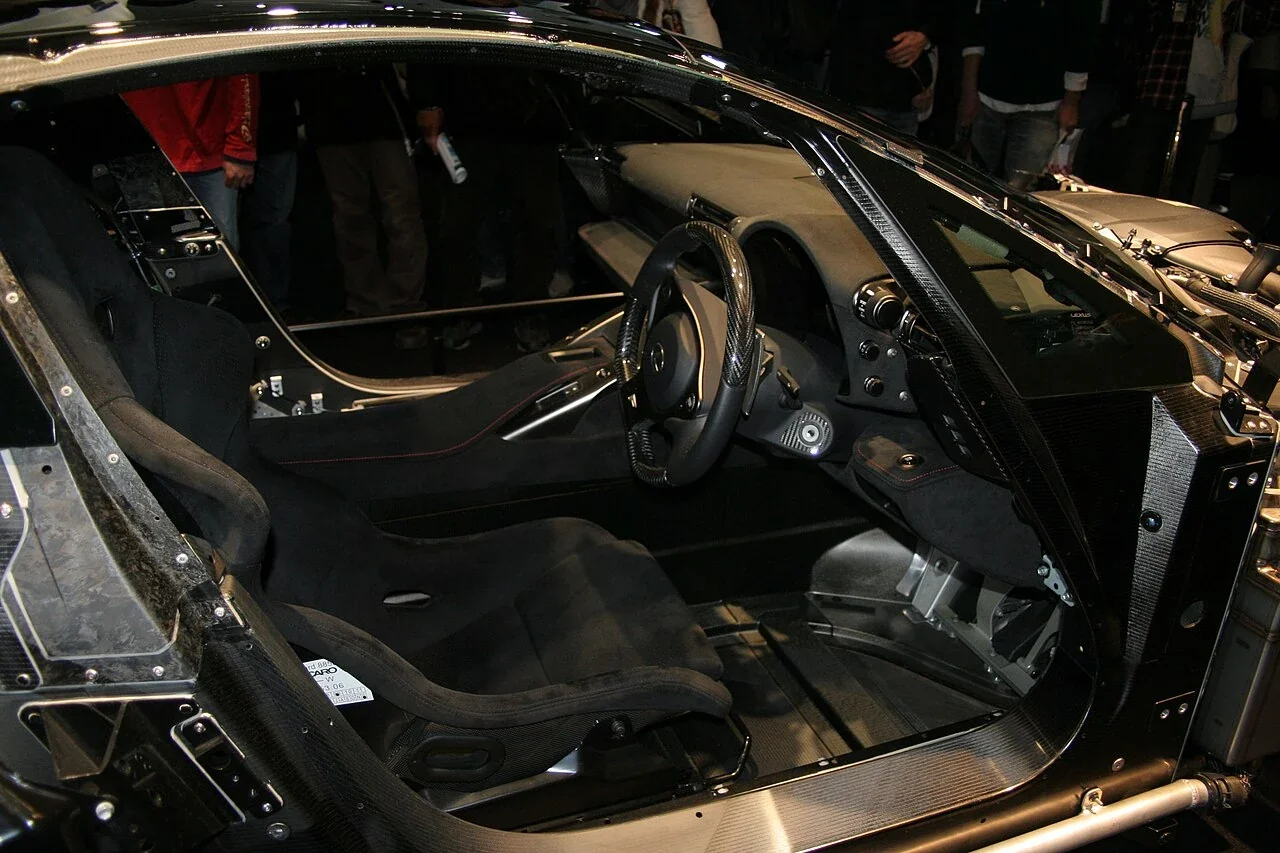
The display-cabin photograph below exposes parts of the structure normally covered by trim. It should be read as an educational exhibit. It is not a picture of a damaged customer car, and exposed components in a display do not prove that equivalent areas are easy to inspect on an assembled vehicle.
For ownership, the material choice makes documentation particularly important. Ask an appropriately qualified specialist how prior repairs can be assessed and which areas require specialist examination. A tidy panel gap is a useful observation, but it is not a structural certificate. Records and inspection need to support each other.
This does not justify assuming that every LFA has hidden damage. It means the downside of an incomplete inspection can be substantial. The time to establish who can assess and repair the structure is before buying, when walking away is still a simple option.
The Gearbox Is Part of the Character—and the Compromise
The LFA uses a single-clutch automated manual rather than a modern dual-clutch transmission. Car and Driver’s period test describes its adjustable shift character and unusual controls. Those observations belong to that test, not to a recent Cariary drive.
A pause or a distinct change in load can make a fast drive feel mechanical and eventful. The same behavior can feel less polished during low-speed traffic. Both reactions are reasonable. Describing every interruption as character is as unhelpful as dismissing the entire car because a newer automatic shifts more smoothly.
An extended demonstration should include a cold start, gentle maneuvering, normal acceleration and operation after the car is warm. Have a specialist distinguish expected behavior from faults. The existence of a single clutch does not make every judder normal, and a seller’s reassurance should not replace a proper assessment.
Cariary would choose the LFA for the total engine-and-transmission experience only after accepting its slower moments. If seamless response is essential in every situation, a newer performance car may make you happier. There is no obligation to enjoy a famous car on somebody else’s terms.
A Special Cabin Still Has to Fit Its Driver
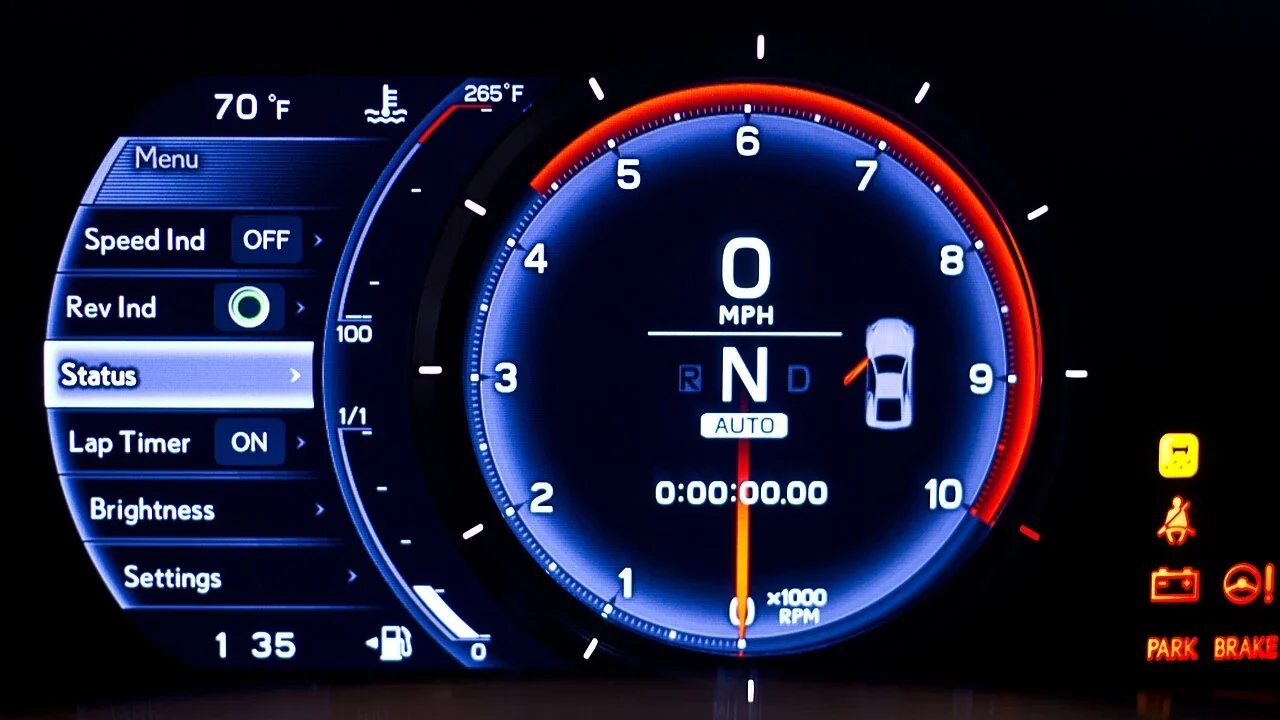
The driver display puts the engine at the center of attention. The real instrument photograph below shows that hierarchy clearly: the rev counter dominates, while other information supports it. This is a useful visual explanation of the car’s priorities without inventing a contemporary touchscreen interface.
The surrounding controls belong to their period. Do not assume the phone integration, navigation or connected services of a current Lexus. Check the actual installed equipment, what still functions in your market and whether any modifications affect originality or use. A sales description that says “fully loaded” explains very little.
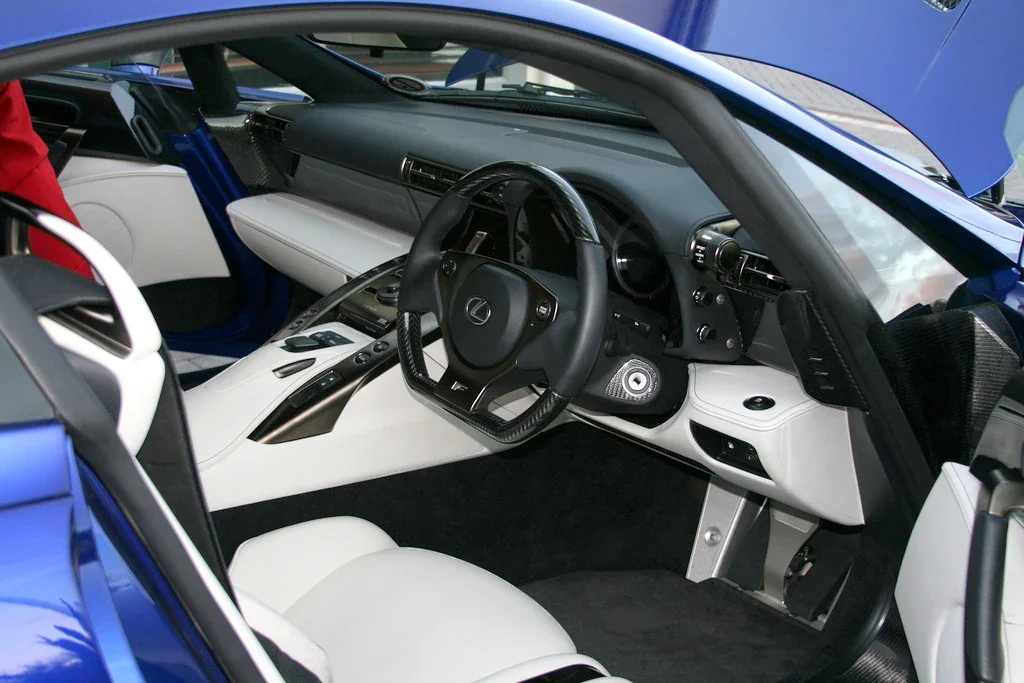
The seated position deserves a patient test. Check headroom, shoulder room, pedal reach and visibility with the seat adjusted for your own body. Then get out and repeat the process. Access that feels acceptable once at a showroom can become an irritation in a tight garage.
A rare supercar can be usable without being universally comfortable. Cariary’s standard is whether the owner can repeatedly enjoy its core purpose. If every departure requires elaborate preparation, the car may spend more time being admired than driven. That can be a legitimate collecting choice, but it should be deliberate.
Buying an LFA: Establish the Support Before the Price
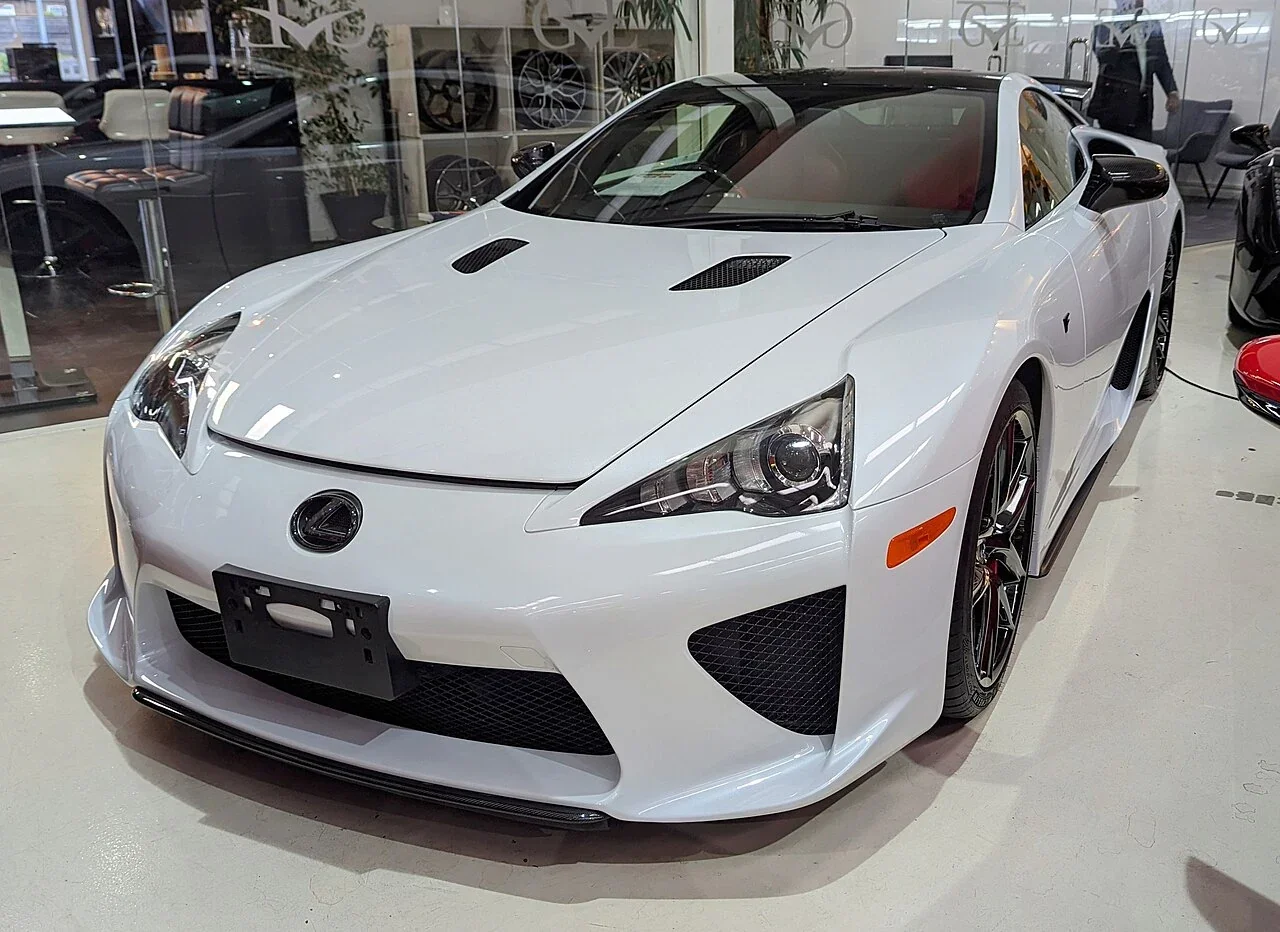
Start with the identity of the car, the specification and its history. Confirm whether it is a standard coupe or a documented Nürburgring Package example. A wing, wheels or badge alone do not settle that question. Match the paperwork to the vehicle and have any uncertain claims resolved independently.
Next, establish a realistic support route. Ask who will perform routine servicing, who can diagnose model-specific problems and how the car would reach them. Obtain estimates for the work already known to be due. Parts availability and labor plans should be confirmed for your location rather than borrowed from another owner’s old online invoice.
The inspection brief should cover stored faults, fluid leaks, cooling, gearbox operation, brakes, tire age, underbody evidence and previous repair work. This is an inspection agenda, not a claim that these are common LFA failures. The distinction matters because a small production run does not provide a simple basis for sweeping reliability statements.
Insurance, storage and transport arrangements also belong in the budget. A low odometer reading does not establish that all age-related maintenance is current. Equally, mileage should not automatically disqualify a well-documented car. The condition and evidence need to be evaluated together.
The Cariary Perspective: Use the Occasion
Lexus confirms that the final original LFA left production in December 2012. Its completed, limited run explains part of its special position. It does not provide a guarantee of future prices, liquidity or an effortless sale when an owner’s circumstances change.
That makes an investment-first argument less useful than an experience-first one. Ask how often the car can be driven, where it will be enjoyed and whether the owner is comfortable with the necessary specialist support. A rare machine can still be the wrong purchase if those answers remain vague.
A Lamborghini Huracán offers a different V10 interpretation, while the LC 500 serves a more relaxed brief. These are useful comparisons of purpose, rather than claims that either is a direct substitute for an LFA. Choose the kind of occasion you actually want.
The four-star verdict reflects that narrow fit. The LFA’s individuality is the reward; access, age and ownership complexity are the price of admission. For the right owner, accepting those demands can make sense. The strongest reason to buy one is still the intention to experience the car, not merely possess its reputation.
Who Should Buy It?
Recommended For
An enthusiast seeking a distinctive occasional-use V10 car, with access to qualified inspection and ongoing specialist support.
Not Recommended For
A buyer needing modern convenience, effortless traffic behavior, predictable low-cost maintenance or an assured financial return.
One-Line Verdict: The LFA turns meticulous engineering into an unforgettable occasion, provided its owner can support and actually enjoy it.
Frequently Asked Questions
How much power does the Lexus LFA have?
The standard 2012 U.S. announcement gives 552 hp and 354 lb-ft. This review follows that reference; special versions and different unit conventions should be checked separately.
Is the Lexus LFA a manual?
It has a six-speed automated sequential gearbox with paddle operation and a single clutch. It is not a three-pedal manual or a dual-clutch automatic.
Why does the Lexus LFA sound unusual?
Its high-revving V10 works with deliberately tuned intake, exhaust and cabin sound passages. Lexus describes the acoustic design in the linked technical material.
Are the engine images generated?
No. The body images are real photographs, including display-chassis and engine-area views. Only the labeled editorial cover is generated.
Is the LFA a good daily driver?
It depends on personal fit, but Cariary assesses it primarily as an occasional-use supercar. Test low-speed behavior, access and support arrangements before treating it as everyday transport.
Does rarity guarantee rising value?
No. Rarity is a production fact. Future demand, condition, transaction costs and the time needed to find a buyer remain separate questions.
Further Reading and Data Reference
Data reference date: September 11, 2026. Specifications and attributed test observations are linked where discussed. Cariary Point is an editorial buyer-fit assessment, not an owner road-test score or reliability rating.
Explore more Cariary car reviews and buyer perspectives.

