CARIARYCAR · DIARY · PERSPECTIVE
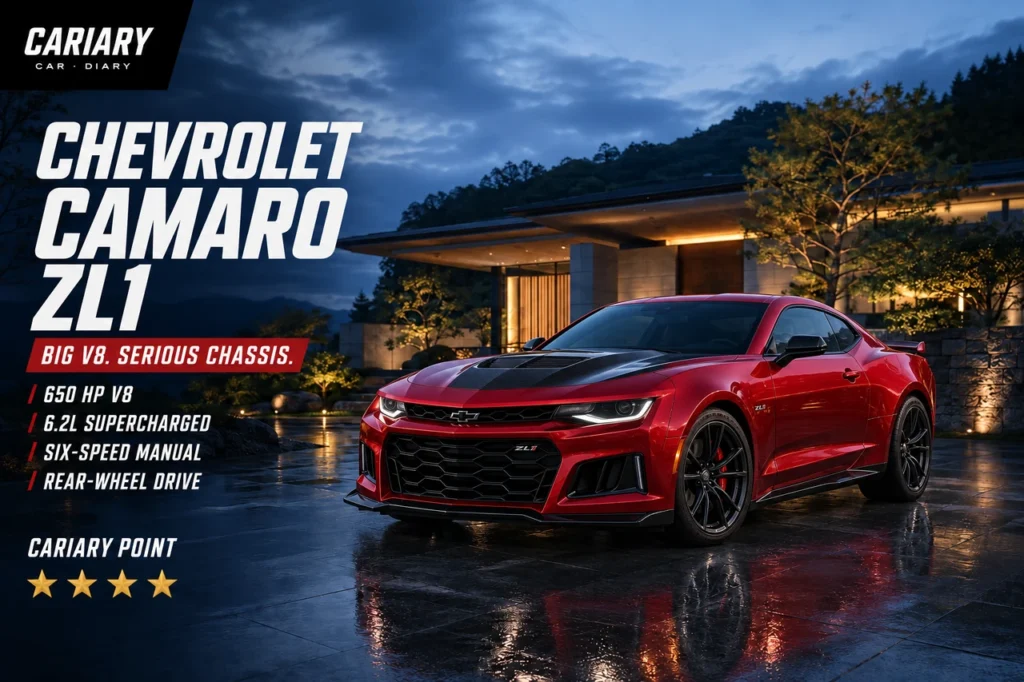
Cover: AI-generated Cariary editorial illustration, visually checked against the specified vehicle. It is not road-test photography.
This Camaro ZL1 review is about the part of the car that its horsepower figure can hide: the chassis deserves as much attention as the supercharged V8. The sixth-generation coupe is easy to approach as a muscle-car fantasy, with a broad nose, a low roof and enough engine output to dominate a conversation.
But the more useful buying question is what happens after the first burst of acceleration. A car that turns, communicates and withstands repeated demands can offer a different kind of enjoyment from one that mainly overwhelms a straight road. The ZL1 deserves to be considered as a complete performance car, with its practical limitations treated just as seriously.
Cariary sees the strongest case in a driver who actively wants this combination: an American V8, a low coupe body and a chassis worth learning. The weaker case is someone who wants an easy everyday car and assumes that enthusiasm will fix every inconvenience. The ZL1 can reward commitment, but it should be the right kind of commitment.
This research-based Camaro ZL1 review covers the sixth-generation coupe, using the 2024 U.S. specification for equipment and separately identifying a 2017 manual road test. Standard ZL1 and 1LE package photographs are distinguished in captions. This is not a Cariary road test.
Four stars for combining a strong V8 identity with substantial chassis capability and a manual option. Visibility, rear-seat access and the distinction between road and track specifications require a careful match to the buyer’s actual use.
Camaro ZL1 Review: Key Specifications
| Reference | 2024 U.S. sixth-generation ZL1 coupe |
|---|---|
| Engine | Supercharged LT4 6.2-liter V8 |
| Output | 650 hp / 650 lb-ft |
| Transmission | Six-speed manual standard; 10-speed automatic available |
| Driven wheels | Rear |
| Trunk capacity | 9.1 cubic feet, coupe; manufacturer figure |
| Standard brake detail | Brembo; six-piston front calipers and 390-mm front rotors |
| Separate package | ZL1 1LE adds a distinct track-focused chassis and aerodynamic brief |
Camaro ZL1 Review: More Than the Big Engine
The Camaro’s low roof and substantial shoulders make its intentions clear. That appearance can be part of its attraction, but it can also encourage a narrow reading of the car. Treating it only as an engine with seats attached misses why a carefully developed chassis matters to a driver who enjoys more than acceleration.
The 2024 Chevrolet specification sheet identifies the supercharged LT4, a standard six-speed manual and an available 10-speed automatic. It also gives the coupe a modest trunk rather than the space of a large touring car. These facts establish the basic bargain: serious performance in a body that asks for practical compromises.
A strong first impression is useful, but it should be followed by a slower inspection. Look at access, visibility and the dimensions of your usual parking space. The same low roof that makes the car look purposeful can influence how comfortably you see and move around inside it. Neither observation cancels the other.
For Cariary, the interesting buyer is someone who accepts the form because it contributes to the pleasure of ownership. That is different from tolerating the form because the horsepower seems cheap. The first owner is choosing a car; the second risks discovering that a number cannot make every part of daily use enjoyable.
Supercharging Gives the V8 Its Own Character
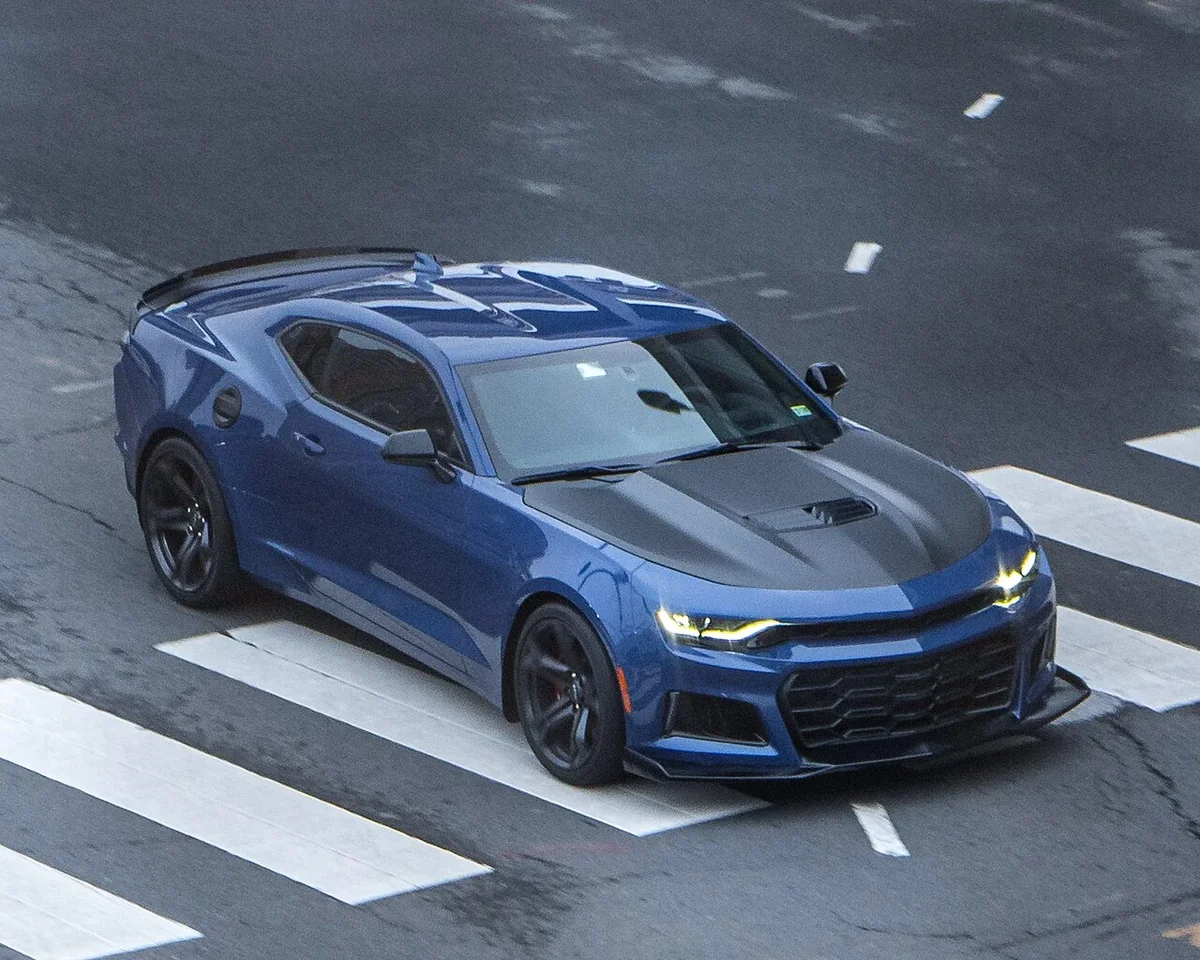
The LT4 uses a supercharger, not a pair of exhaust-driven turbochargers. The 650-hp rating and matching torque number are central to the ZL1’s identity, but they do not describe every moment at the accelerator. The relationship among gear choice, engine speed, tire grip and driver input remains part of the experience.
The basic distinction is straightforward: a mechanically driven supercharger takes energy from the engine to compress intake air. That is a different arrangement from using exhaust energy to drive a turbocharger. It is not a guarantee that every supercharged engine feels identical, nor does it remove the importance of cooling and calibration.
On a used car, begin by establishing what is still standard. Changes to pulleys, software, intake or exhaust can alter the package you thought you were evaluating. Ask for documentation and have a qualified specialist assess the work. A louder sound or an impressive claimed power figure is not evidence that a modification was well executed.
A buyer who wants the original ZL1 experience may prefer a carefully maintained factory specification to a more powerful alternative. That is an entirely reasonable choice. The objective is not to win an advertisement’s horsepower comparison; it is to own a car whose response and support requirements you understand.
Manual or Automatic: Choose the Work You Enjoy
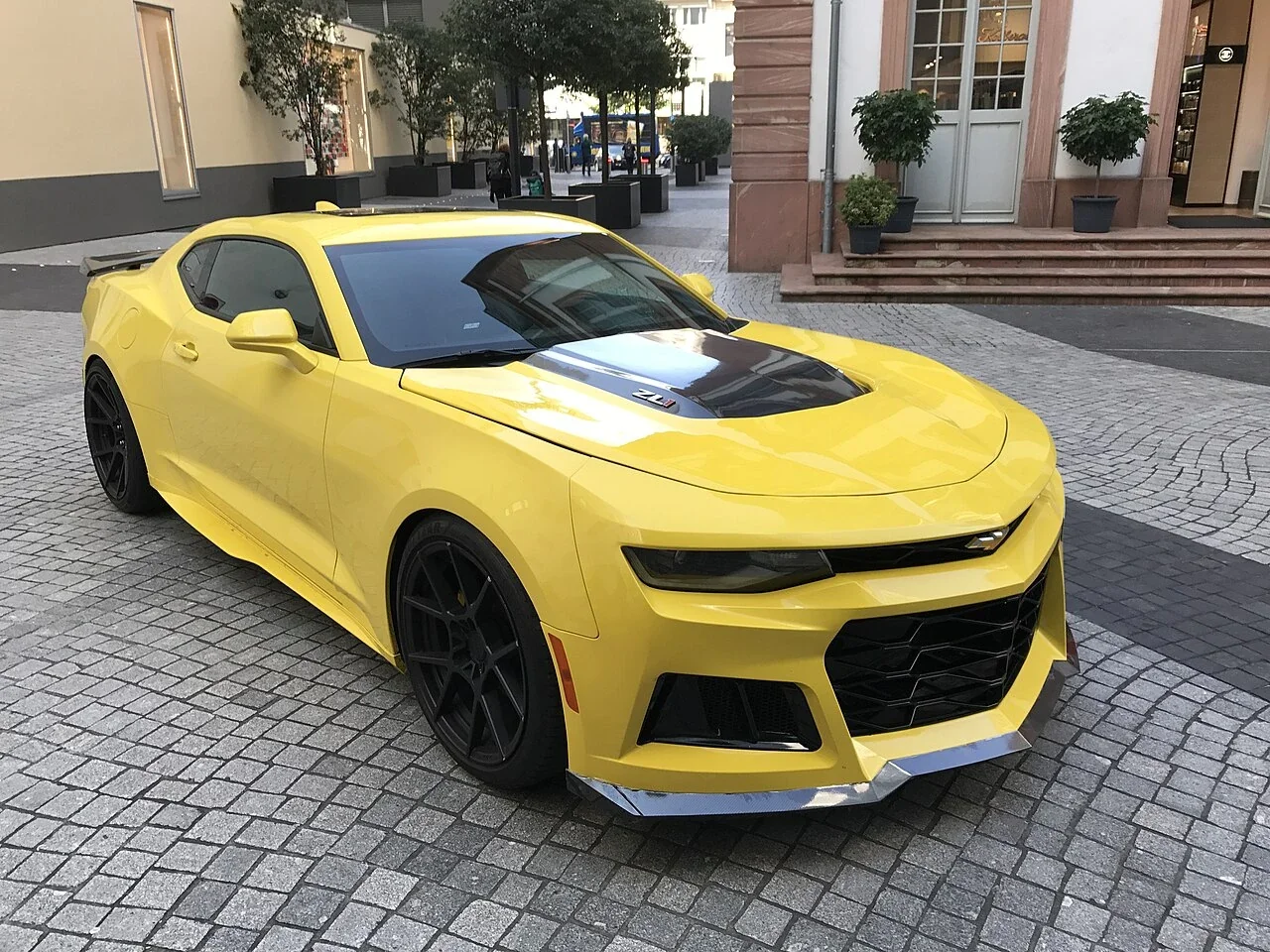
The manual and automatic offer different ways of participating in the same car. A manual makes gear selection and clutch control part of the journey. An automatic can reduce that workload in traffic and provide a different rhythm when driving quickly. Neither choice establishes how serious an enthusiast you are.
In its 2017 ZL1 manual test, Car and Driver recorded 3.7 seconds to 60 mph, praised steering feedback and cornering behavior, and criticized outward visibility. The manual required more launch technique than the automatic comparison. Those findings belong to that test and model year; they are not measurements of a 2024 car by Cariary.
The useful comparison happens on roads you recognize. Try low-speed maneuvering, a hill start where appropriate, a steady cruise and normal overtaking response within the law. Decide whether the extra actions of the manual make those situations more engaging or merely more tiring. A short open-road drive can flatter either transmission.
Do not buy the manual solely because someone says it will become collectible. Buy it because you want to use the clutch and gear lever. Equally, do not buy the automatic solely because it can produce a quicker result under particular conditions. The transmission is one of the features you will experience on every outing.
The Standard ZL1 and 1LE Have Different Jobs
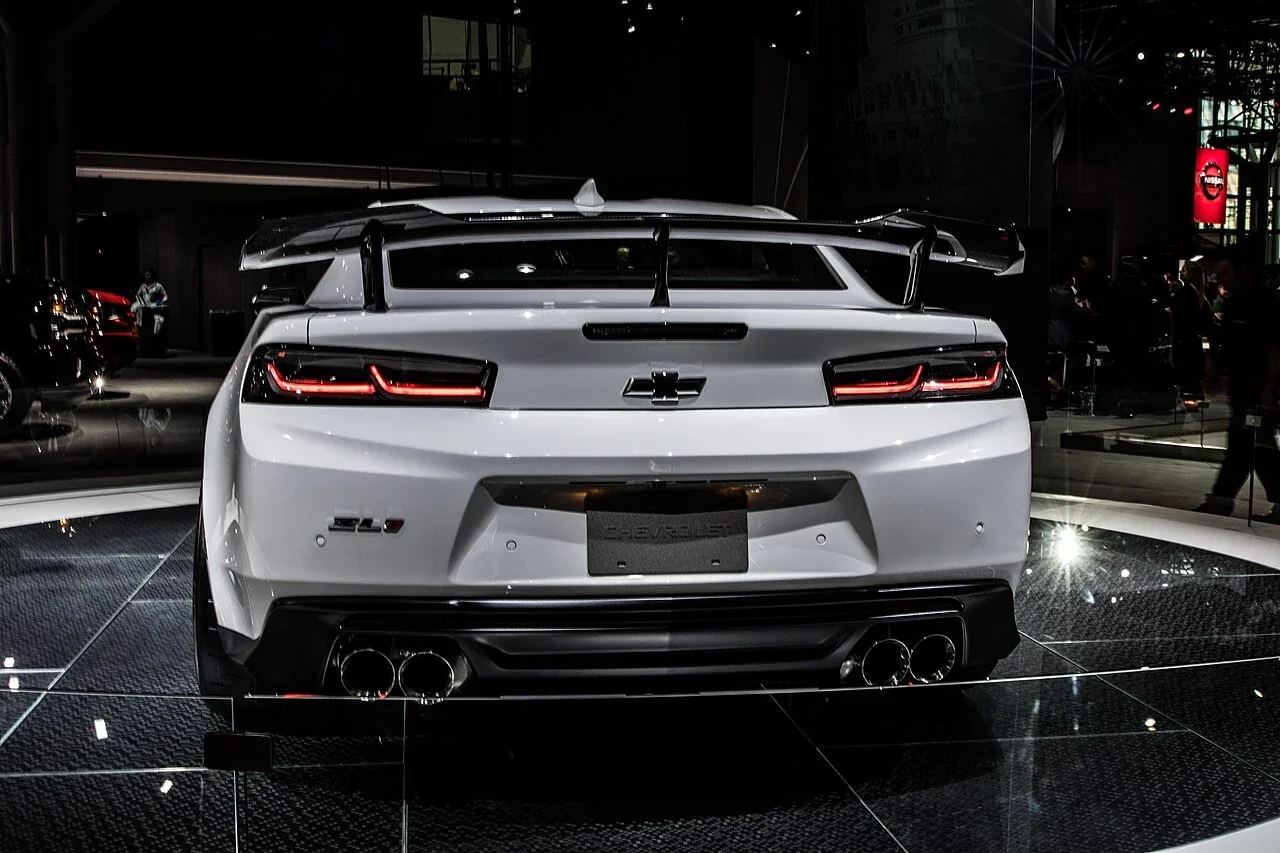
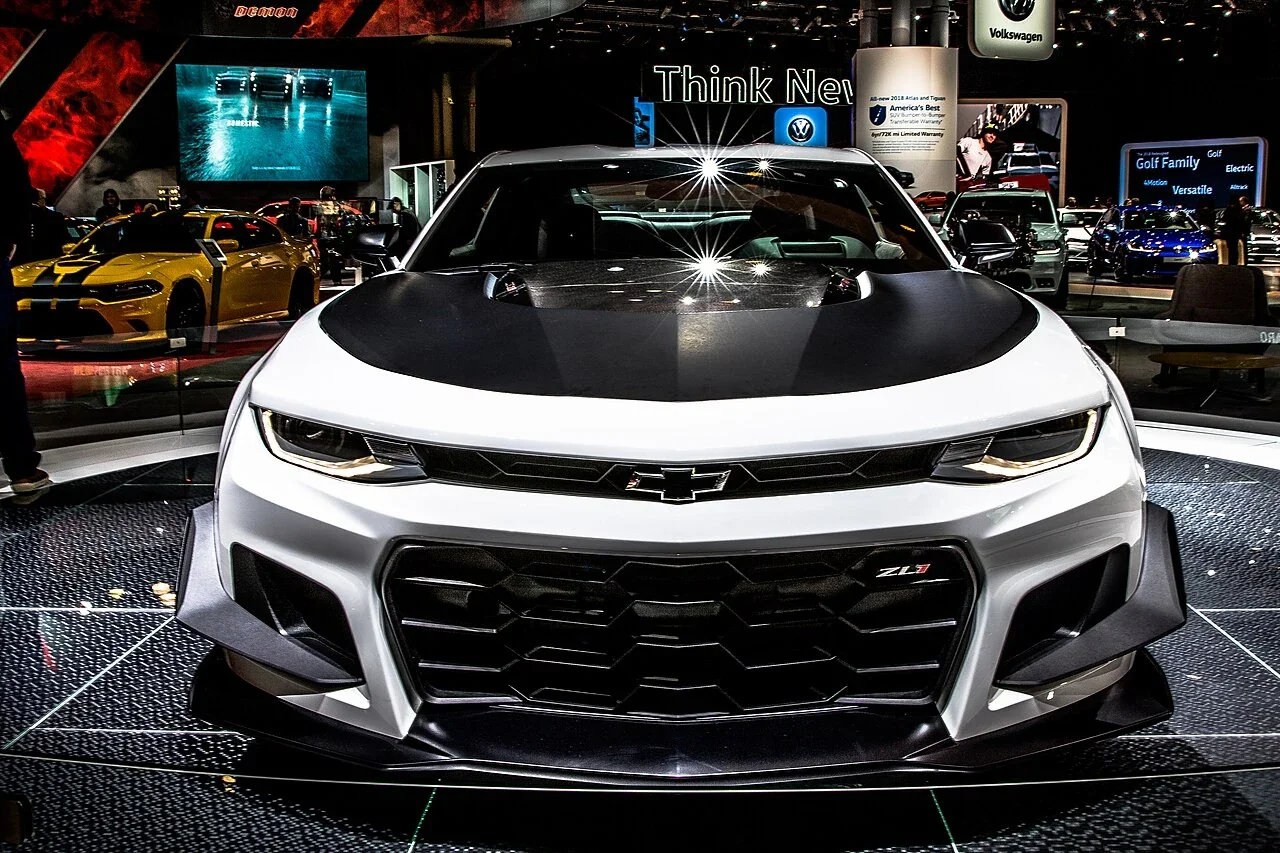
Multimatic’s account of the ZL1 1LE development identifies its spool-valve dampers and track-focused chassis. The 1LE is therefore more than a decorative wing package. Photographs of its large rear wing and front aerodynamic additions should not be presented as the standard ZL1’s appearance or specification.
The practical decision begins with how often you will use a circuit, what preparation you are willing to do and how the car must behave on the roads between those events. A more focused package can make excellent sense for that routine. It is less convincing when chosen only because it sits higher in an enthusiast hierarchy.
Compare the actual suspension, tire and alignment specification of a used candidate with its build information. Owners can change parts over time, and an exterior resemblance does not prove that the complete factory package remains present. A wing can be added far more easily than an entire vehicle specification can be verified.
Cariary would not assume that the most focused version is automatically the best road car for every driver. The right version is the one that delivers the type of use you want without creating avoidable friction. Be honest about the number of track days you will actually attend rather than the number you imagine while shopping.
Tires and Brakes Are Part of the Purchase
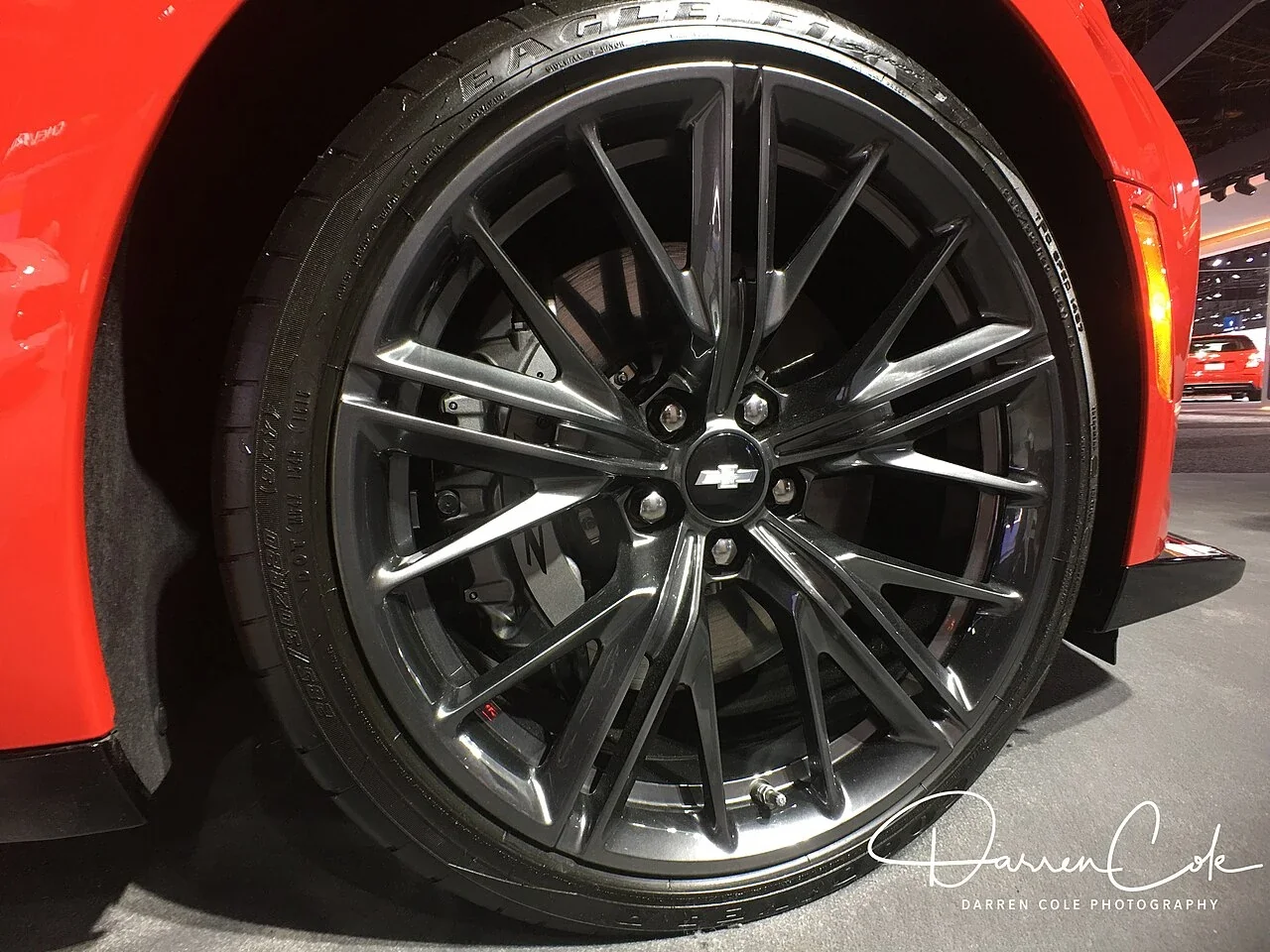
Chevrolet lists Brembo brakes and substantial front rotors in the 2024 specification, alongside summer-only performance tires. The important buyer lesson is that the parts touching the road and absorbing repeated braking loads are not secondary details. Their specification and condition help determine what the car can do.
Check tire age, matching specification, wear pattern and the conditions in which you intend to drive. Remaining tread alone is not a complete assessment. A car intended for warm-weather performance should not be assumed ready for every climate simply because it has legal tread depth and a traction-control button.
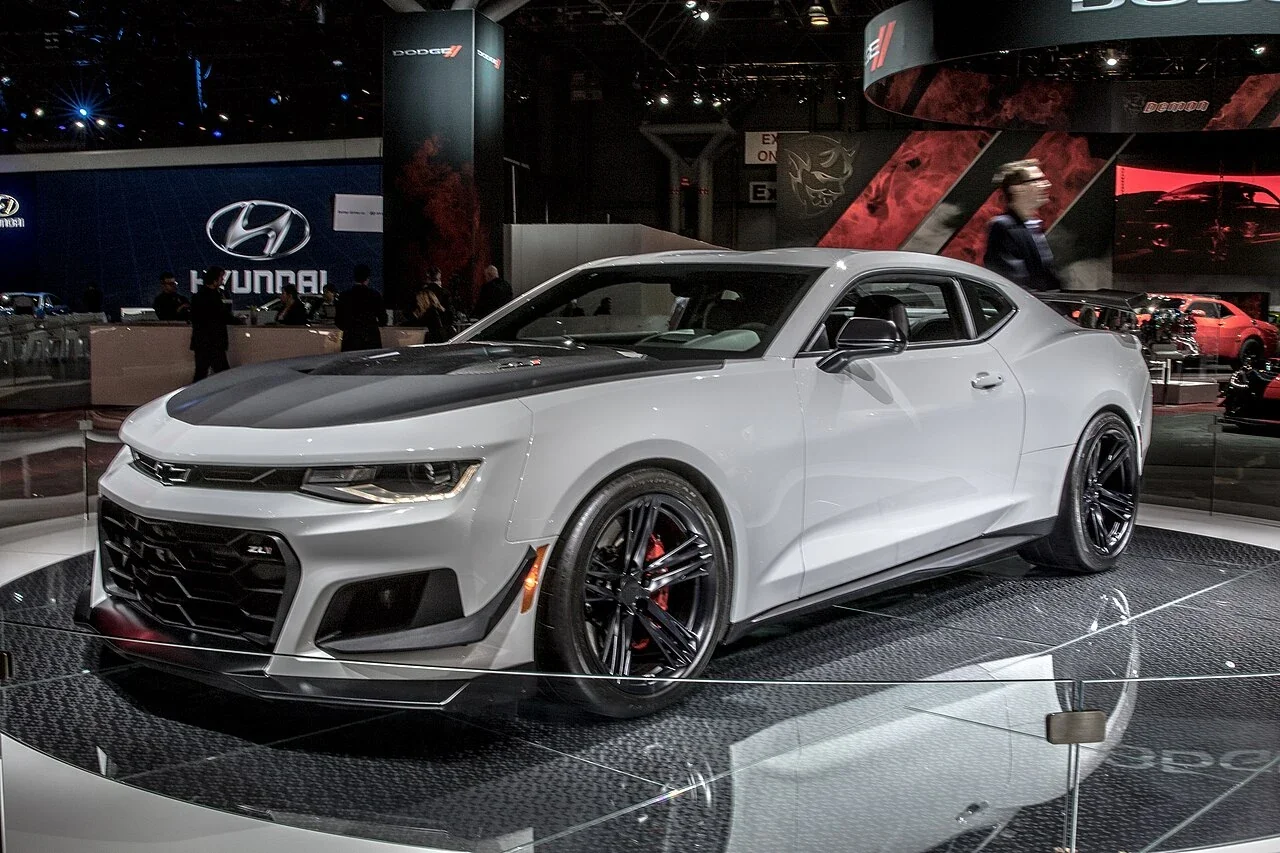
The actual wheel photograph below is an early show-car detail. It helps readers see the relationship among tire, wheel and brake hardware, but it does not identify every later car’s options. Use the build information and a physical inspection to establish what is fitted to the example you are considering.
Our explanation of larger brakes adds context to this part of the decision. Brake size should be considered alongside tires, heat management and intended use. A large caliper is not a substitute for correct servicing, and a clean-looking rotor does not by itself prove that the system needs no attention.
Visibility Is Something to Test, Not Argue Away
The Camaro’s outward view is part of the buying decision precisely because you use it continuously. Sit at your normal driving position, adjust the mirrors and assess the view at junctions and while reversing. Do this before deciding that a camera or a short period of adaptation will make every concern disappear.
Driver-assistance equipment also changes across model years and options. The 2024 sheet lists a rear camera and several assistance features, with an equipment-dependent exception for forward-collision alert. It would be misleading to apply that list to every earlier sixth-generation car. Confirm the exact functions on the candidate in front of you.
There is a difference between a limitation you notice and one you find unacceptable. Some owners may adapt comfortably to the low roof and restricted glass area. Others may continue to find the same environment tiring. Neither reaction needs to be turned into a universal claim about who is capable of driving the car.
Cariary’s preference is to resolve that uncertainty before purchase. A proper demonstration route should include the mundane situations that matter to you, not only an empty straight. A car that makes a routine parking maneuver stressful can gradually lose the appeal that felt overwhelming during a brief acceleration run.

A Coupe Can Be Usable Without Being Spacious
Test the rear seats with the front seats positioned for the people who will actually use them. Entry and exit matter as much as the available space once seated. If you need to carry adults regularly, a theoretical seating capacity is not enough to establish that the ZL1 suits the household.
The boot deserves the same practical test. Bring the bags or equipment you normally carry and check the opening, not just the published volume. A performance coupe can work very well for a particular routine while being frustrating for another. The exercise is to discover which routine matches yours.
Our Cadillac CT5-V Blackwing review offers a useful related question: would a powerful car with four doors give you more opportunities to enjoy the same broad enthusiasm? That does not make the sedan automatically better, but it helps separate a preference for the Camaro’s shape from a need for additional access.
If the ZL1 is a second car, some compromises may become easier to accept. If it is the only car, the same limitations occur more often. Evaluate it against the role it will actually fill. A review can describe the trade-offs, but only your schedule and passengers can determine how frequently they matter.
The End of Production Is Not a Value Guarantee
Chevrolet’s final Collector’s Edition announcement tied the end of the sixth-generation Camaro to the 2024 model year. It also described a limited ZL1 special edition. That history can add interest, but it should not be converted into a promise that an ordinary example or a special edition must appreciate.
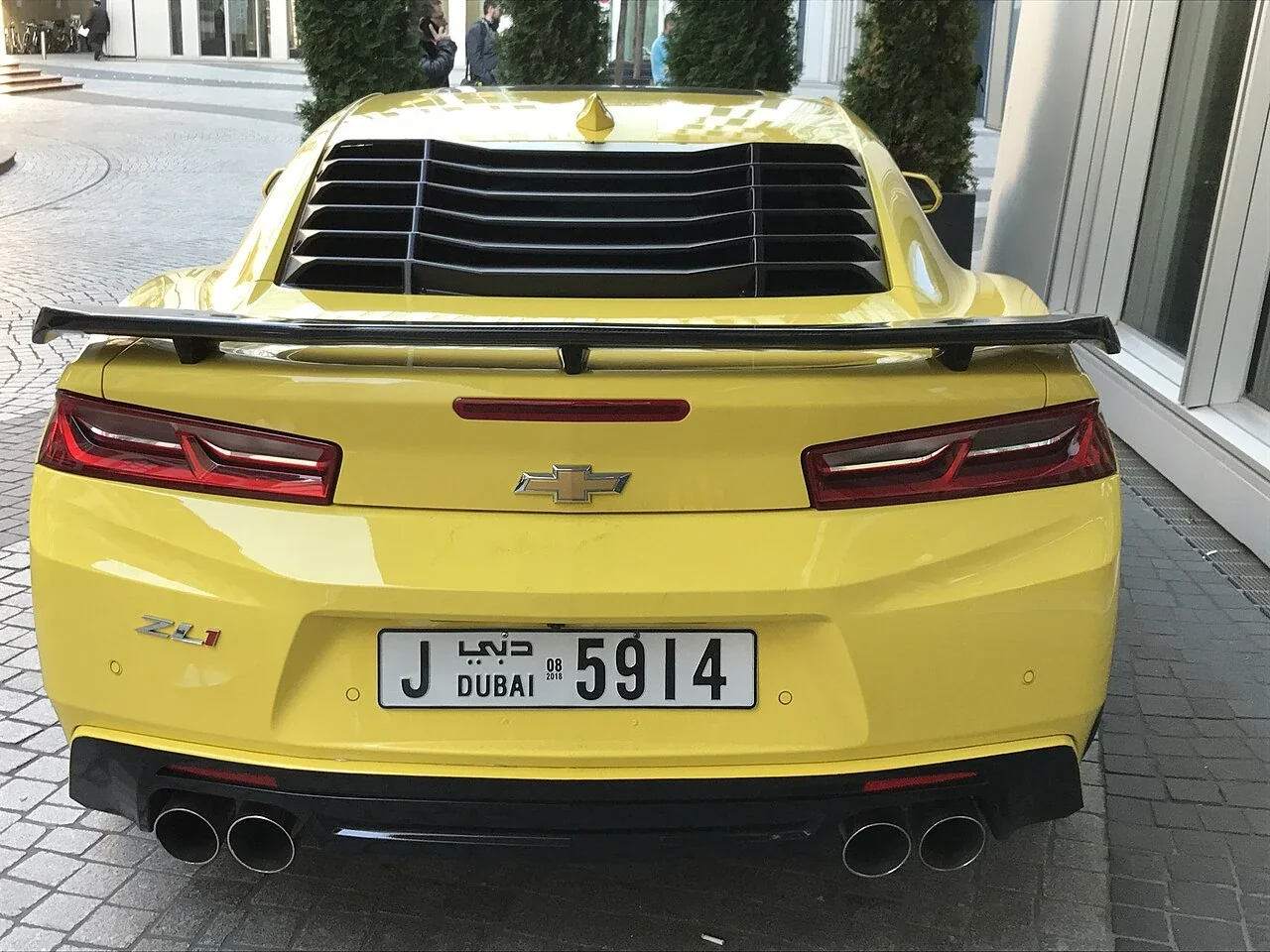
A used-buying inspection should prioritize identity, condition and documentation. Confirm whether the car is a standard ZL1, a genuine factory 1LE or a modified combination. Review service history and inspect the underbody, cooling system, brakes, tires and evidence of repairs with a specialist who understands the model.
Track use is not automatically disqualifying, and low mileage is not automatically reassuring. What matters is how the car was used, maintained, prepared and stored, together with its condition now. Ask for specific records rather than accepting either an enthusiast’s romantic account or a seller’s vague statement that the car was never driven hard.
The strongest reason to buy remains the complete driving proposition: V8 character, a choice of transmissions and a chassis worth learning. Choose the car that supports that experience within your budget and circumstances. A good ownership plan will contribute more to your enjoyment than a speculative story about the last of its kind.
Who Should Buy It?
Recommended For
Drivers who want a sixth-generation Camaro specifically, enjoy the V8 and coupe format, and are willing to assess visibility, tires and running costs carefully. The standard car deserves consideration for road use; a genuine 1LE makes most sense when its focused specification matches a realistic circuit-driving plan.
Not Recommended For
Buyers who need easy rear access, a broad unobstructed view or the lowest-effort daily transport. It is also a poor match for someone buying primarily on a claimed modified power figure or a guaranteed-investment story, without the budget and support to establish the car’s actual condition.
One-Line Verdict: The ZL1 earns attention through the way its chassis supports the V8, provided its everyday compromises fit the life you will give it.
Frequently Asked Questions
Is the standard ZL1 the same as a ZL1 1LE?
No. The 1LE package has a distinct track-focused chassis and aerodynamic specification. Confirm the factory build and any later modifications rather than relying on the wing alone.
Which engine powers the reference car?
The sixth-generation ZL1 uses the supercharged LT4 6.2-liter V8. This review does not substitute an earlier-generation engine photograph or specification.
Can I choose a manual?
The 2024 U.S. sheet lists a six-speed manual as standard and a 10-speed automatic as available. Check the actual car when shopping.
Does the 2017 test time describe every ZL1?
No. It is an attributed result for the tested manual car. Tires, conditions, transmission and measurement procedure affect acceleration results.
Are all the photographs standard ZL1s?
No. Captions explicitly identify 1LE package references and visible non-factory details. Those images illustrate a comparison rather than silently changing the main specification.
Why four Cariary stars?
The performance package has strong appeal, but outward visibility, access and ownership demands make buyer fit important. It is an editorial assessment, not a personal road test or a reliability guarantee.
Further Reading and Data Reference
Data reference date: September 11, 2026. Specifications and attributed test observations are linked where discussed. Cariary Point is an editorial buyer-fit assessment, not an owner road-test score or reliability rating.
Explore more Cariary car reviews and buyer perspectives.

