Car Design Evolution looks like a simple story until we park a rounded Jaguar E-Type beside an angular Lamborghini Countach. The older design is the curvier one. So why do so many modern cars combine swelling surfaces, deep recesses and sharply defined lines that seem difficult to make from metal?
That was the question I wanted to unpack. Better stamping and tooling are an important part of the answer, but a car’s shape also depends on glass, plastics, lighting, airflow, safety and the machinery hidden underneath.
The interesting story is not that designers eventually learned to draw curves. It is how new shapes became repeatable, affordable and useful, while fashion kept changing what people wanted those shapes to look like.
Quick Summary
- Curved cars existed long before modern digital tools. Angular styling was often a deliberate aesthetic choice.
- Making one beautiful body and making hundreds of thousands of interchangeable panels are different challenges.
- Better tooling, material knowledge and simulation expanded the combinations of curves and creases manufacturers could reproduce.
- Glass, molded bumper covers and compact lighting changed the surfaces between the metal panels.
- Safety, aerodynamics, sensors and electric powertrains added new opportunities and restrictions. More complex does not automatically mean better.
Were Old Cars Really More Angular?
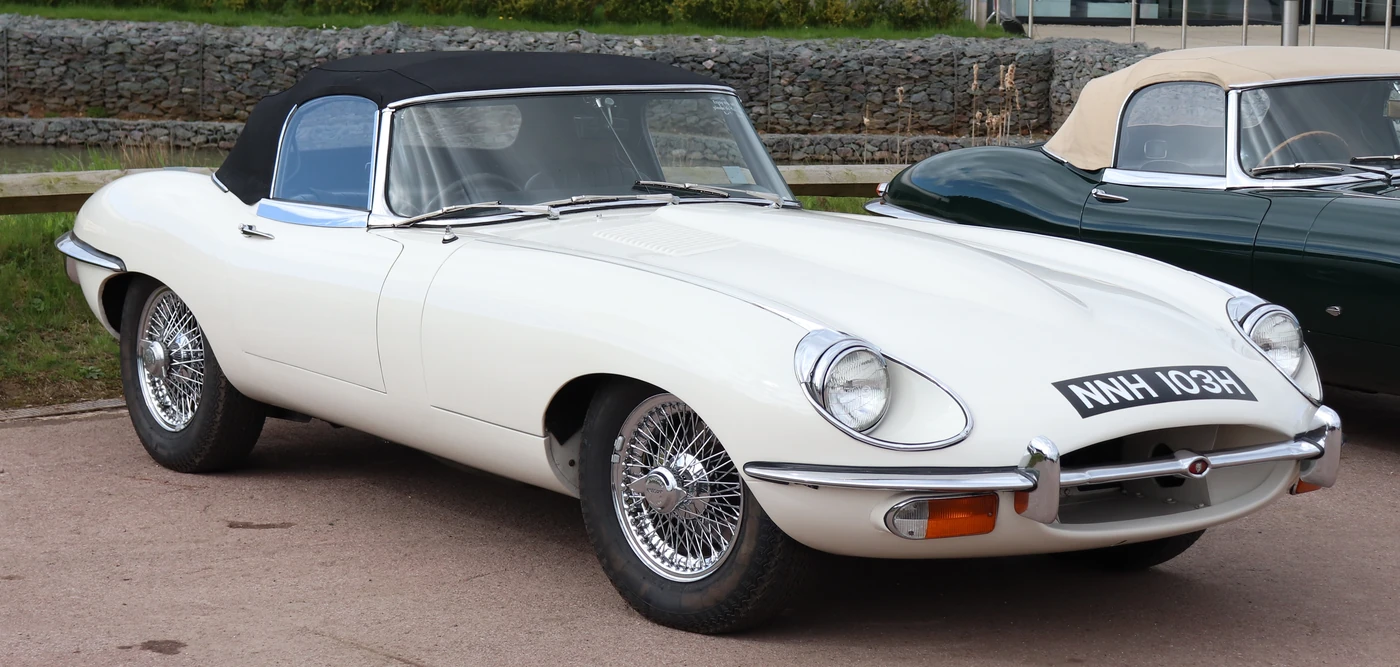
Look at the E-Type’s hood and wheel arches. These are substantial curved volumes, not a collection of flat boards. Jaguar introduced the E-Type in 1961; the photograph shows a later 1970 roadster, not the launch car. Jaguar’s history places that debut well before today’s digital development process.
The Porsche 356, Citroen DS and Ferrari 250 GTO also make the straight-to-curved explanation difficult to defend. Meanwhile, later wedge-shaped sports cars made edges and geometry look futuristic. Neither style represents every vehicle of its decade.
A more useful distinction is between overall shape and surface complexity. Overall shape is the silhouette we recognize from across a parking lot. Surface complexity is what happens within it: how a shoulder swells, a door scoops inward, or a crisp line changes the reflected light.
Modern production offers more ways to combine those effects. It does not require designers to use all of them. A restrained modern car can be technically sophisticated without wearing a crease on every panel.
From Mechanical Layout to Streamlining
Many early cars visibly inherited carriage proportions and construction habits. The engine, passengers, wheels and exposed mechanical equipment largely established the package. Separate lamps and fenders could look like objects attached to the vehicle rather than parts of one continuous body.
It would be unfair to say these cars had no design. Coachbuilders cared about proportion, finish and identity. The difference was the relationship between bodywork and machinery, not the absence of artistic judgment.

During the 1930s, streamlining became an influential direction. Roofs flowed into tails and body elements began reading as larger, more integrated volumes. The Tatra 87 is a useful example: Lane Motor Museum’s history describes Tatra’s aerodynamic experiments and the model’s 1930s origins.
Streamlined appearance and measured aerodynamic performance are not identical. A tail fin or rounded roof alone does not tell us how much drag a car produces. Still, the ambition is visible: treat the car as something moving through air, not merely a platform carrying an engine and seats.
A Hand-Built Curve Is Not a Mass-Produced Curve
Skilled metalworkers could create compound curves, meaning surfaces curved in more than one direction, using hammers, forming tools and an English wheel. An English wheel progressively shapes sheet metal between rollers. Joining and finishing smaller sections made complex bodies possible without forming everything in one enormous operation.
But a production factory asks another question: will this panel fit the next car, and the next one, without individual hand correction?
The outer skin has to meet adjacent parts, retain its appearance through joining and paint, and close with predictable gaps. Tolerance means the permitted variation in a dimension. Tiny variations across several parts can accumulate into a visibly uneven joint.
Hand finishing does not mean crude engineering, and production tooling does not eliminate craftsmanship. They solve different volume and repeatability problems. The factory must preserve the designer’s intended reflection across thousands of panels, not just perfect a single show car.
How Stamping Makes Complex Surfaces Repeatable
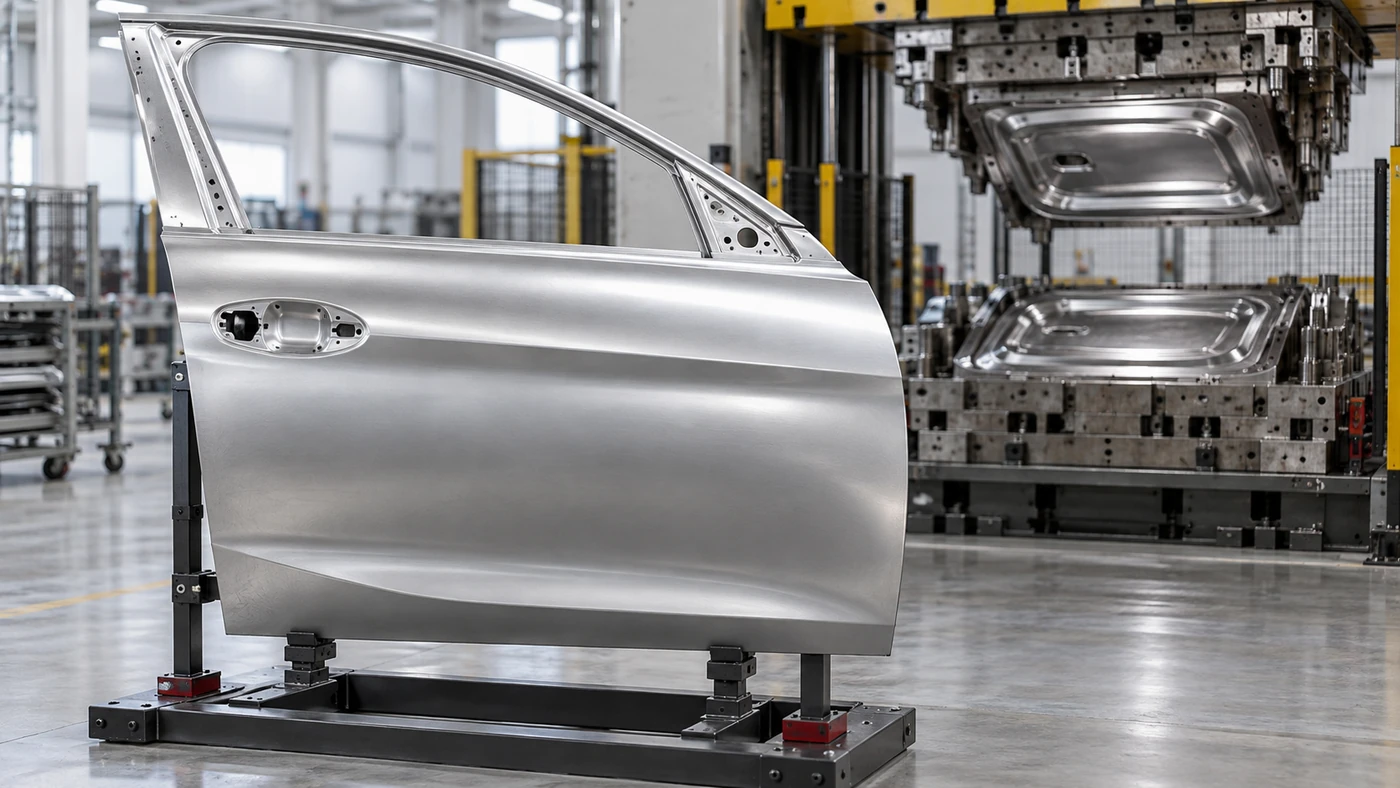
In stamping, a press forces sheet metal against shaped tools called dies. A flat starting sheet, or blank, is drawn and stretched into a three-dimensional part. Further operations may trim edges, make openings, form flanges and refine details before assembly.
The metal does not behave like liquid poured into a mold. It must move into the tool without stretching too far or bunching up. Excessive local stretch can cause thinning and tearing; poorly controlled material flow can cause wrinkles.
A third difficulty appears after the tool opens: springback, the sheet’s tendency to recover part of its shape elastically. Tooling may therefore need a deliberately adjusted shape so that the released part, rather than the part under load, meets the target.
AutoForm’s forming-simulation documentation describes analysis across forming, trimming and springback. Predicting these effects helps engineers refine a process before committing to repeated physical corrections. Simulation still needs suitable material data and validation.
Why a bigger press is not the whole answer
Adequate press capacity matters, especially for large panels, but force alone cannot rescue an unsuitable shape. Die accuracy, controlled material feed, lubrication, blank-holding force, tool finish and the sequence of operations all matter.
Material development is not simply a march toward softer, easier-to-form sheet. Stronger steels and different aluminum alloys bring their own forming and springback challenges. The material chosen for a visible outer panel may differ from the steel used in a crash structure underneath it.
That is why the useful advance is a better-controlled manufacturing system. Modern engineering can make a wider range of demanding surfaces economical, but every radius and recess still has limits.
Why the Wedge Era Was a Choice
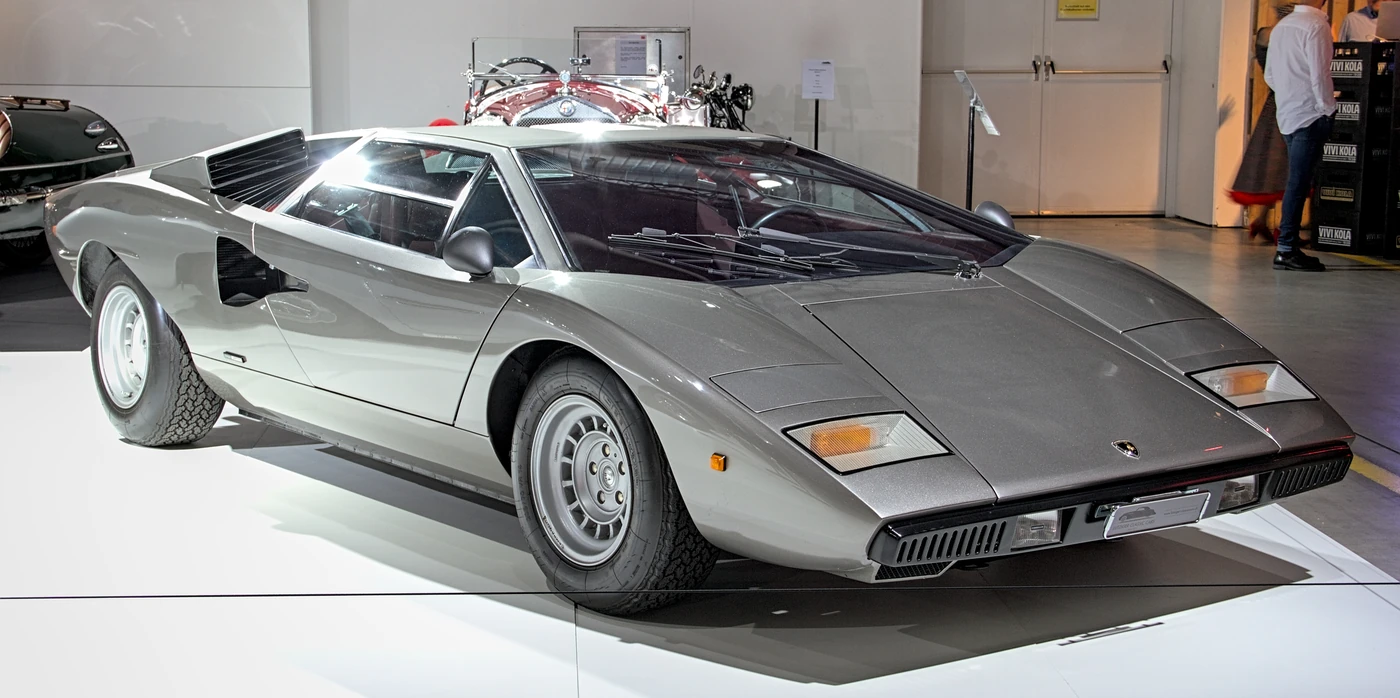
The Lamborghini Countach makes a very different visual statement from the E-Type. Its low nose, sloping windshield and geometric cabin suggest a machine pointed toward the future. Lamborghini credits Marcello Gandini and describes this geometry as a continuing influence on its design language. Its design retrospective is useful precisely because it discusses intent, not just tooling.
The Lotus Esprit, DeLorean and Alfa Romeo Carabo concept belong in a conversation about angular automotive futurism too. This was not proof that factories had forgotten how to make curves. Straight lines could communicate modernity in the same way that seamless light bars do for some cars today.
Simpler geometry can help manufacturing, but angular-looking does not automatically mean easy to build. A broad flat-looking panel may reveal tiny waviness, and a tight crease can be difficult to form. Low-volume sports cars also used different materials and construction methods from everyday stamped-steel sedans.
The lesson is to keep fashion and process separate before examining how they influence each other. A Countach is not a demonstration that every boxy family car was designed for the same reason.
Aerodynamics Returned to the Everyday Conversation
The energy pressures of the 1970s increased attention to fuel consumption, alongside other economic and regulatory changes. Aerodynamics had existed for decades; its value became harder to ignore as manufacturers pursued efficient high-speed travel.
Air resistance generally rises with the square of speed, with other conditions held constant. The power needed just to overcome that resistance rises more steeply. Smoothing airflow can therefore matter substantially on a highway without providing the same benefit in slow urban traffic.
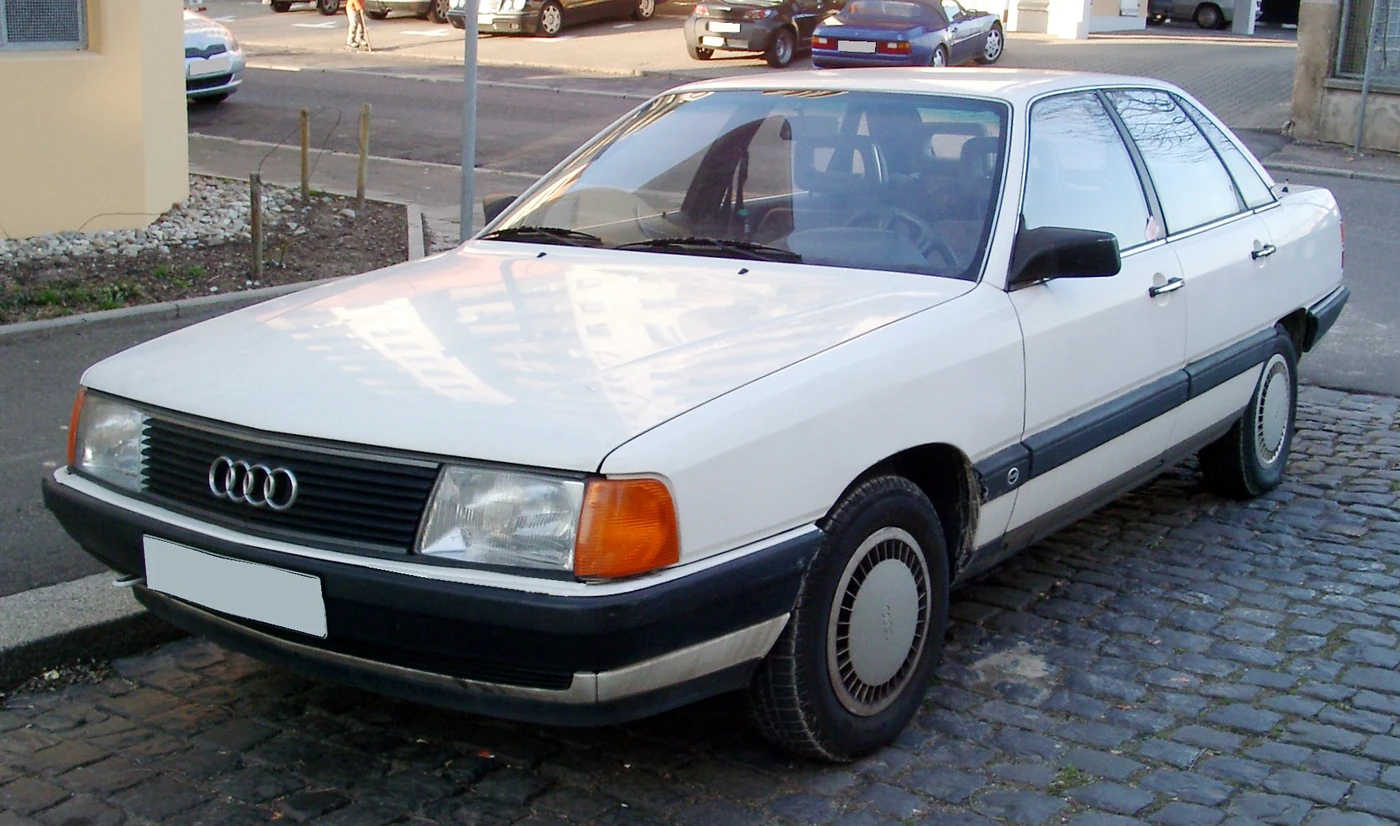
The third-generation Audi 100, introduced in 1982, is an important reminder that this shift predates the 1990s. Audi cites a drag coefficient of 0.30 for its historical aerodynamic benchmark. That is a manufacturer reference, not a measured result for the particular car photographed here. Audi’s aerodynamic history places the 1982 car in that longer development story.
Drag coefficient, usually written Cd, describes aerodynamic shape efficiency under specified test conditions. Actual drag also depends on frontal area and speed. A lower Cd alone does not establish that a larger car needs less energy to push through the air.
By the 1990s, rounded forms were common across many markets, sometimes nicknamed jellybean styling. Aerodynamic priorities, manufacturing improvements and fashion worked together. There was no single date when every square car became round, and no single computer program responsible for the change.
CAD Changed the Conversation, Not Just the Drawing
CAD means computer-aided design: representing and developing geometry digitally. CAM, computer-aided manufacturing, uses digital information to help make parts and tools. CAE, computer-aided engineering, supports analysis such as forming, airflow and structural behavior.
These tools developed over decades. They did not first appear in 1990, and clay did not disappear when computers arrived. BMW’s description of its design process combines sketches, virtual work, clay models, scanning and engineering checks. The BMW process shows a conversation between physical and digital models.
The important change is that teams can share a precise surface rather than repeatedly interpreting the same drawing. A proposed shoulder line can be checked against the door structure, manufacturing feasibility and nearby components before expensive tooling is finalized.
Digital tools also make it easier to compare alternatives. They do not decide whether a shape is beautiful or remove the need to look at it in real light. A smooth mathematical surface and a satisfying visual reflection are related, but not identical, judgments.
Glass and Plastic Changed the Spaces Between Panels
Curved glass is an optical problem too
A sculpted roof is not enough if the windshield cannot meet it cleanly. Glass must achieve its intended shape while allowing the driver to see through it without unacceptable distortion. Wipers, seals, water management and wind noise impose additional constraints.
Heated glass can be bent into shape, but windshield development is not a contest to create the strongest curve. Pilkington’s automotive glazing design guidance describes the simultaneous demands of shape and optical quality.
Curved windshields existed long before the 1990s. Improvements expanded what could be made consistently and integrated into the body. More flush glazing, with smaller steps between glass and surrounding surfaces, can support cleaner styling and airflow. It does not mean every pane is perfectly level with every adjacent panel, or that curvature always improves visibility.
A bumper cover is not the entire bumper
Older exposed metal bumpers often looked separate from the body. Many modern front ends use a large molded polymer cover that visually joins the grille, lights and corners. Behind it are reinforcement, energy-absorbing elements and other hardware.
Injection molding forces heated polymer into a tool cavity, where it cools into shape. It offers ways to form recesses, attachment features and complex corners that differ from sheet-metal stamping. Tool release, wall thickness, shrinkage, paint and impact performance still constrain the result.
Not every opening is a working duct, and an entire front end is not necessarily one molded piece. The distinction matters: a deeply sculpted bumper should not be used as proof that steel stamping alone achieved that shape.
Lighting Turned the Car’s Face Into a Graphic
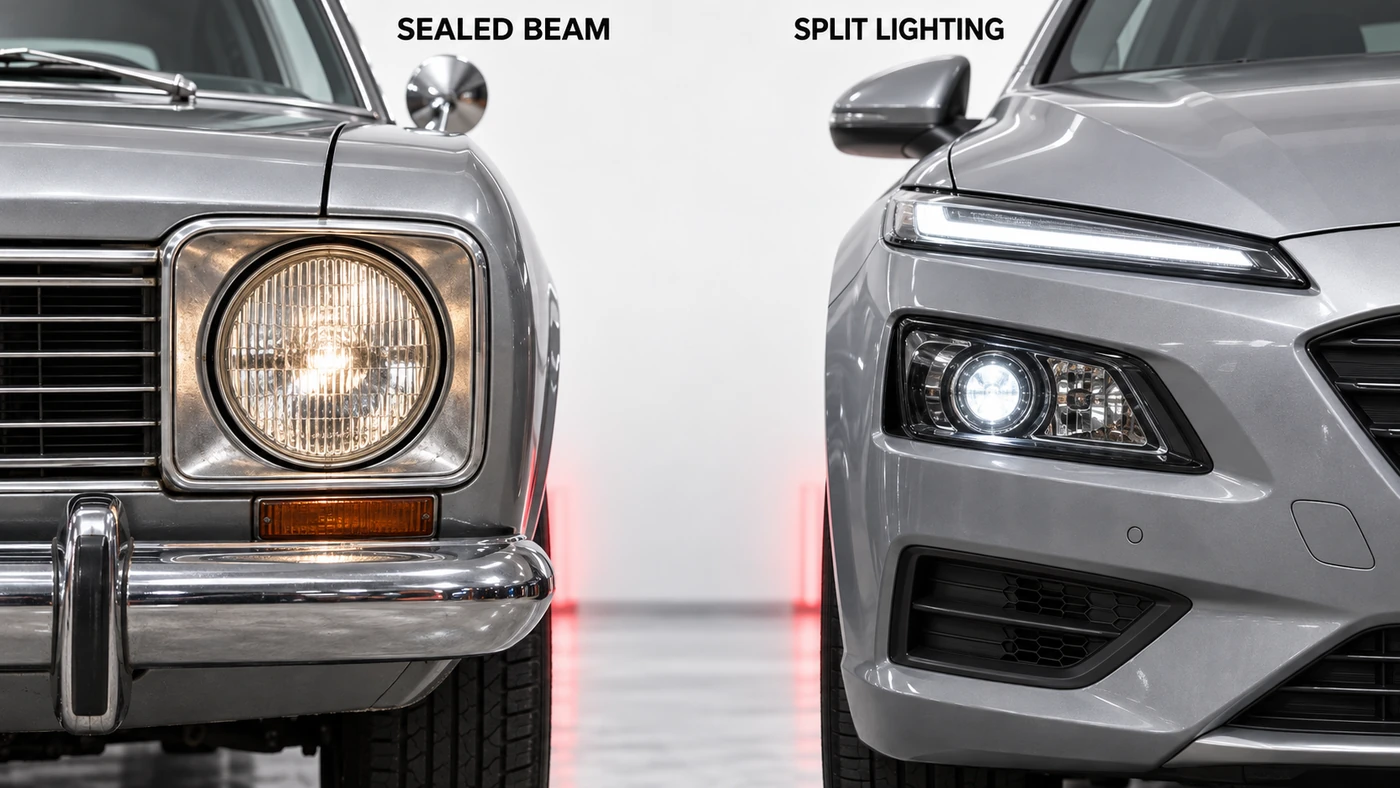
In markets and periods that required standardized sealed-beam headlights, designers worked around prescribed lamp formats. Other markets allowed different solutions, so one country’s lighting history should not stand in for the whole world.
Lighting development is also not a clean ladder from halogen to projector to HID to LED. Halogen, HID and LED describe light-source technologies; a projector describes an optical arrangement. Different sources can work with different optics.
Smaller light sources and refined optical modules gave designers more packaging options. LEDs also support distinctive signatures, while matrix systems can control groups of light elements. But electronics, cooling, legal beam patterns and optical depth still need space. HELLA’s technical explanation shows why an LED headlamp remains a complex assembly.
A thin strip is not necessarily the main headlight. In split-light arrangements it may be a daytime running light, with the road-illuminating unit positioned elsewhere. The comparison image deliberately shows both elements.
Porsche’s four-point motifs, Hyundai’s pixel treatment and Audi’s digital signatures illustrate the broader idea: a brand can now communicate through illuminated graphics as well as sheet metal. Attractive graphics do not, by themselves, establish better nighttime performance.
Safety Shapes Proportions Without Drawing the Whole Car
A production design must accommodate a protective structure, restraint systems and crash-energy management. Legal requirements and consumer testing both influence development, but they are not the same thing. For example, a small-overlap crash test is a test scenario, not a universal law prescribing one body shape.
Pedestrian protection makes the relationship between the hood and hard components underneath important. Space for deformation can help manage an impact. Some vehicles use an active hood that rises when triggered to create additional clearance. Euro NCAP explains the active-bonnet principle.
This does not mean every taller hood was mandated by pedestrian rules or that every car needs the same clearance. Powertrain height, styling, vehicle category, airflow and the particular protection system all contribute.
A-pillars, the supports beside the windshield, also perform several jobs. Structure, roof loads, seals, wiring, trim and restraint-system packaging can affect their visible size. Some curtain-airbag arrangements occupy the adjoining roof area; the entire visible pillar is not simply an airbag compartment.
Thicker-looking pillars can create a visibility trade-off, but thickness alone is not a safety rating. Our Car Structure Basics guide explores why the load paths and materials beneath the surface matter more than appearances.
Why Sharp Edges Can Help Aerodynamics
Good airflow is not achieved by rounding every edge. Engineers try to guide air around the front and sides, manage the wheels and underbody, and control where it separates at the rear.
In some rear-end designs, a defined edge helps establish a cleaner separation point. That can be useful even when the surrounding body is curved. The effect depends on the complete shape, not the mere presence of a sharp-looking lip.
Air curtains can guide flow around wheels; underbody panels can smooth the floor; spoilers and diffusers can change pressure and wake behavior. Active shutters adjust cooling airflow, while movable spoilers can change their position with operating conditions. Each solution has a purpose and potential trade-offs, rather than providing a guaranteed drag reduction everywhere.
For a real example of engineering working around geometric styling, Hyundai’s IONIQ 5 aerodynamic explanation discusses details beyond the car’s angular outline. We should read the whole vehicle rather than assume round equals efficient and square equals inefficient.
Electric Platforms Change the Starting Package
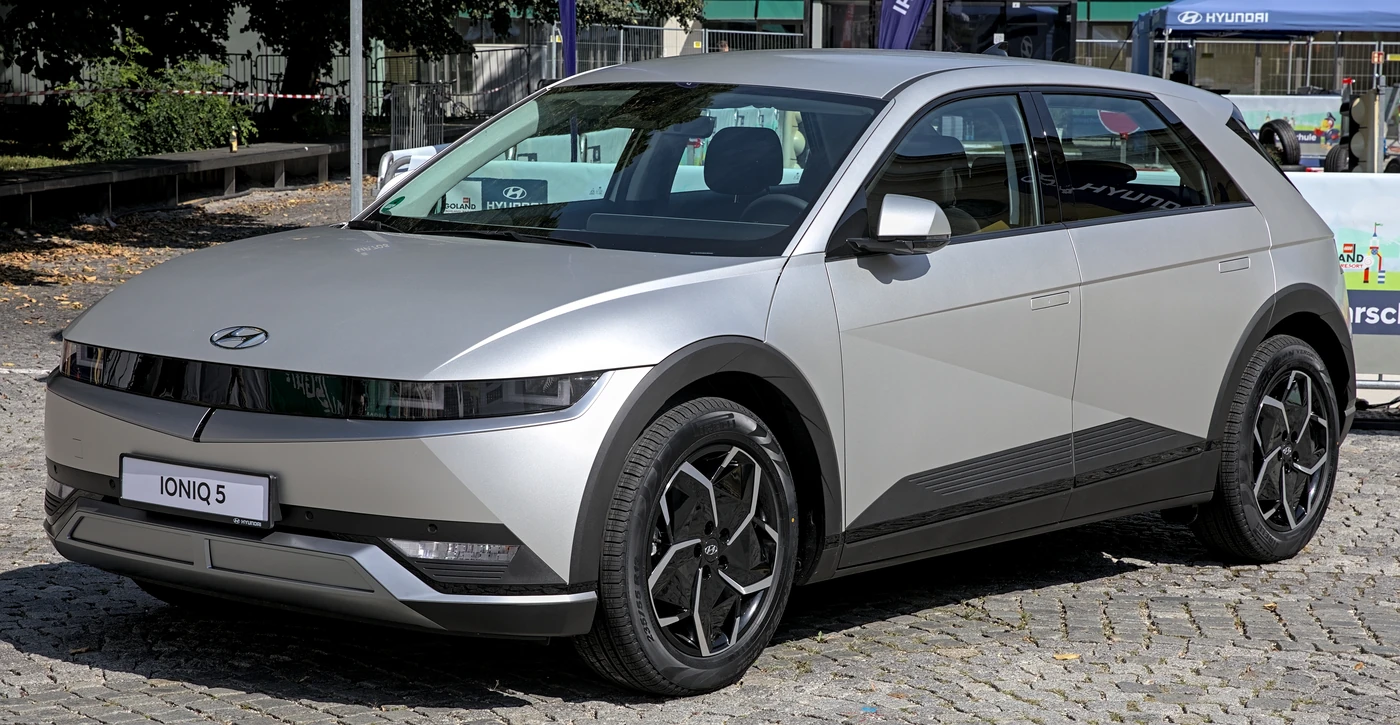
An engine, transmission, exhaust and fuel tank create one set of packaging demands. A battery pack, electric drive units and their cooling equipment create another. Neither arrangement is empty space waiting for a designer.
A dedicated electric platform can use a long wheelbase and relatively short overhangs to provide a different cabin-to-body relationship. Hyundai’s original IONIQ 5 launch material describes these opportunities with E-GMP and a 3,000 mm wheelbase. The launch explanation connects its proportions to the platform.
The battery can also raise the floor, and crash structures, suspension and cooling still take room. A converted combustion platform may retain familiar proportions. Electric propulsion enables possibilities; it does not make every EV equally spacious or require a short hood.
Cooling openings can change because the heat sources change. EVs still cool batteries, motors, power electronics and the cabin. A more closed nose does not mean cooling has become unnecessary.
A grille outline may remain as a brand graphic even when parts of it are closed. Some apparently decorative areas also conceal sensors or serve other functions. The visible opening and the brand’s traditional grille shape are no longer necessarily the same thing.
Sensors Add an Invisible Design Brief
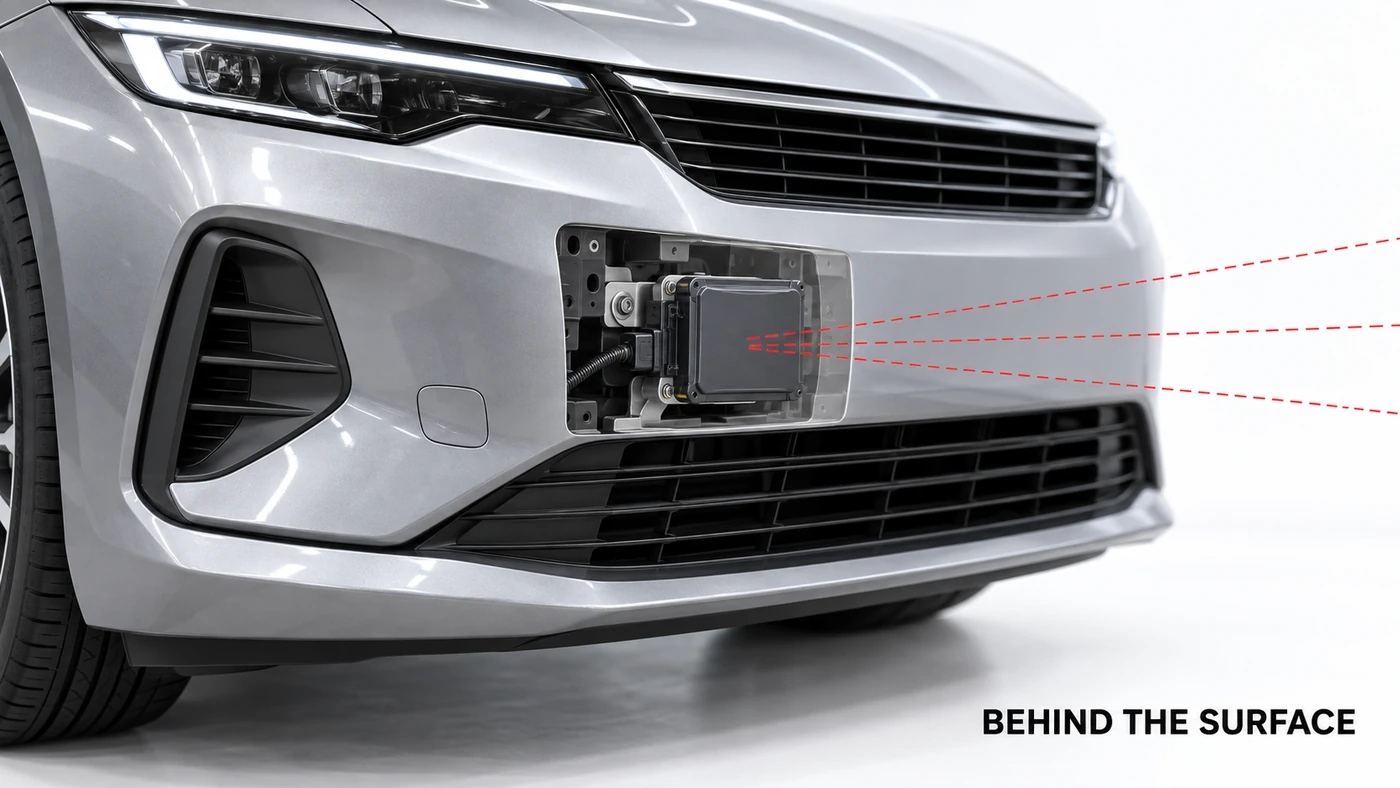
ADAS means advanced driver-assistance systems. Depending on the vehicle, cameras, radar, ultrasonic sensors and sometimes lidar need suitable positions and clear operating paths. They do not all see through the same materials.
A radar cover must transmit the relevant electromagnetic signals sufficiently well. Thickness, material composition, coatings, heating and contamination can influence that performance. An arbitrary metal ornament is not an acceptable substitute simply because it fits the bumper opening.
Covestro’s sensor-material guidance illustrates why exterior surfaces now have requirements beyond visible appearance. A camera needs an optical view; a radar-compatible painted cover solves a different problem.
This helps explain smooth panels, protected sensor windows and carefully located emblems on some vehicles. It also explains why a repair or repaint near a sensor can require model-specific procedures. Appearance alone cannot establish whether a repaired surface remains suitable for the system behind it.
Nine Changes Behind Modern Car Design
These are overlapping influences, not nine steps that every manufacturer followed in order.
| Change | What it made possible | What still limits it |
|---|---|---|
| Stamping, dies and material control | Repeatable combinations of volumes and creases | Tearing, wrinkles, springback and cost |
| CAD, CAM and CAE | Shared surfaces, analysis and tooling information | Model accuracy and real-world validation |
| Glass forming and integration | More coordinated roof and window surfaces | Optical quality, seals and wiper coverage |
| Molded polymers | Sculpted bumper covers and attachment details | Tool release, durability and repair |
| Lighting | Compact modules and distinctive light graphics | Optics, heat and regional requirements |
| Safety engineering | Structures and surfaces designed around impact behavior | Packaging and visibility trade-offs |
| Aerodynamic development | Controlled flow, separation and active devices | Cooling, stability and operating conditions |
| Dedicated EV architecture | New wheelbase, cabin and front-end possibilities | Batteries, crash space and thermal systems |
| Sensor integration | Assistance hardware within styled surfaces | Field of view, material transmission and contamination |
Car Design Evolution by Era
This is a reading guide to influential tendencies, not a classification of every car made in each period.
| Era | A useful visual theme | Important qualification |
|---|---|---|
| 1900s-1920s | Machinery and carriage-derived bodies | Craftsmanship and deliberate styling already existed. |
| 1930s-1950s | Streamlining and increasingly integrated volumes | Decorative streamlining was not always measured efficiency. |
| 1960s | Sculptural sports cars and varied family-car proportions | Curves were already well established. |
| 1970s-1980s | Geometry and the wedge alongside other styles | Angularity was a choice; aerodynamic sedans also emerged. |
| 1990s | Rounded, integrated forms in many markets | Digital tools and aerodynamic development predated the decade. |
| 2000s | More expressive surface sculpture | Restraint remained a valid design direction. |
| 2010s | Precise creases and prominent LED signatures | Visible sharpness still required practical manufacturing radii. |
| 2020s | Electric proportions, light graphics and sensor integration | Combustion cars, retro themes and varied silhouettes coexist. |
Why Modern Cars Sometimes Look Similar
Manufacturers often face similar demands for passenger room, efficiency, protection and production cost. Vehicles in the same category may converge on comparable proportions. Shared platforms and market preferences can contribute too.
Yet engineering does not uniquely determine the final shape. A long-wheelbase EV can look geometric, flowing or deliberately retro. Brands differentiate through lamps, grille graphics, roof treatments, wheel designs and how reflections move across the doors.
That leaves room for disagreement. A technically impressive surface can look busy, and a simple one can look confident. Neither reaction invalidates the engineering; it simply reminds us that complexity is a capability, not an aesthetic obligation.
Cariary Thoughts
I started with the idea that better presses explained modern curves. The more useful question turned out to be: what must happen for a designer’s line to survive into a production car?
Someone must form it, join it, paint it and align it with the next panel. Other teams must make the glass fit, the lamps work, the air behave and the structure protect people. More recently, some surfaces must also let sensors function through or around them.
That makes a quiet design more interesting too. The absence of visual drama does not mean an absence of difficult engineering. Sometimes the achievement is making all those requirements look effortless.
My takeaway is not that newer cars are prettier. It is that car design history becomes richer when we look at both the stylist’s choices and the factory’s capabilities. The shape is where those stories meet.
One-line Summary
Car design changed as technology expanded what could be made, repeated and integrated, while taste kept changing which possibilities felt right.
FAQ
Why did many older cars look boxy?
Geometric styling, packaging and production considerations all played a role. But plenty of older cars were rounded, and an angular appearance does not prove a panel was easy to manufacture.
Did better stamping make modern curves possible?
It made more demanding combinations of curves and creases repeatable at production scale. Curves themselves were possible much earlier through both industrial processes and skilled hand forming.
Why did cars become rounded in the 1990s?
Aerodynamic priorities, digital development, materials and integrated body components supported the trend, while fashion helped popularize it. The change began earlier and was never universal.
Did CAD replace clay models?
No. Physical and digital models can support each other. Digital precision is useful for engineering, while full-size models help teams judge proportion and reflections.
Are thin lights always the main headlights?
No. A narrow strip may be a daytime running light, with the main beam unit elsewhere. Light-source size is only one part of the optical and thermal package.
Are thicker A-pillars always safer?
Visible thickness alone cannot answer that. Structure, materials and the whole vehicle’s performance matter, while larger pillars can also affect sightlines.
Does good aerodynamics require a rounded tail?
Not always. A defined rear edge can help control separation in an appropriate design. Only the complete airflow behavior establishes whether it helps.
Why do EVs have different proportions?
Dedicated platforms can distribute batteries and drive units differently from combustion powertrains. They still need space for cooling, suspension, occupants and crash protection.
Does more complex styling mean a better car?
No. Complexity can express identity or serve a function, but can also add cost or visual clutter. It is not a substitute for engineering performance or coherent design.
Related Thoughts
- Car Basics for Enthusiasts: understand the systems beneath the shape.
- Car Structure Basics: explore load paths, rigidity and crash structures.
References
Data Reference Date: September 13, 2026. Historical tendencies are editorial synthesis; model examples and technical explanations are supported by the sources linked in their sections.
- Jaguar: origins and the E-Type debut.
- Lane Motor Museum: Tatra T87 history.
- Lamborghini: Countach design retrospective.
- AutoForm: forming and springback simulation.
- BMW: the design-development process.
- Audi: aerodynamic history and development.
- Pilkington: automotive glazing design.
- HELLA: LED headlamp technology.
- Euro NCAP: safety terminology.
- Hyundai: IONIQ 5 launch and packaging.
- Hyundai Motor Group: IONIQ 5 aerodynamics.
- Covestro: materials for automotive sensors.

