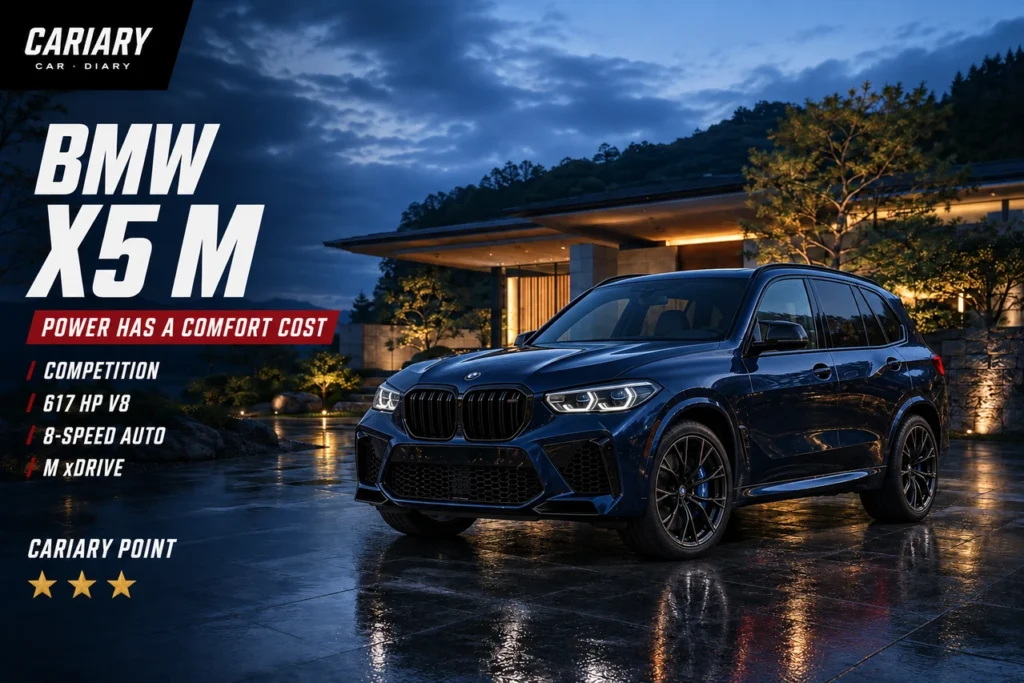
CARIARYCAR · DIARY · PERSPECTIVE
Cover: AI-generated Cariary editorial illustration, checked against the specified vehicle. It is not road-test photography.
This BMW X5 M Competition review asks whether an SUV can be too committed to the driver’s entertainment for the family role that makes it useful.
The attraction is easy to understand: a serious performance engine inside a vehicle with rear doors and room for luggage. It promises that growing responsibilities need not remove excitement from the garage. Cariary’s hesitation begins where the headline performance ends. The other people in the car experience the suspension every day, even when the driver never uses the full output.
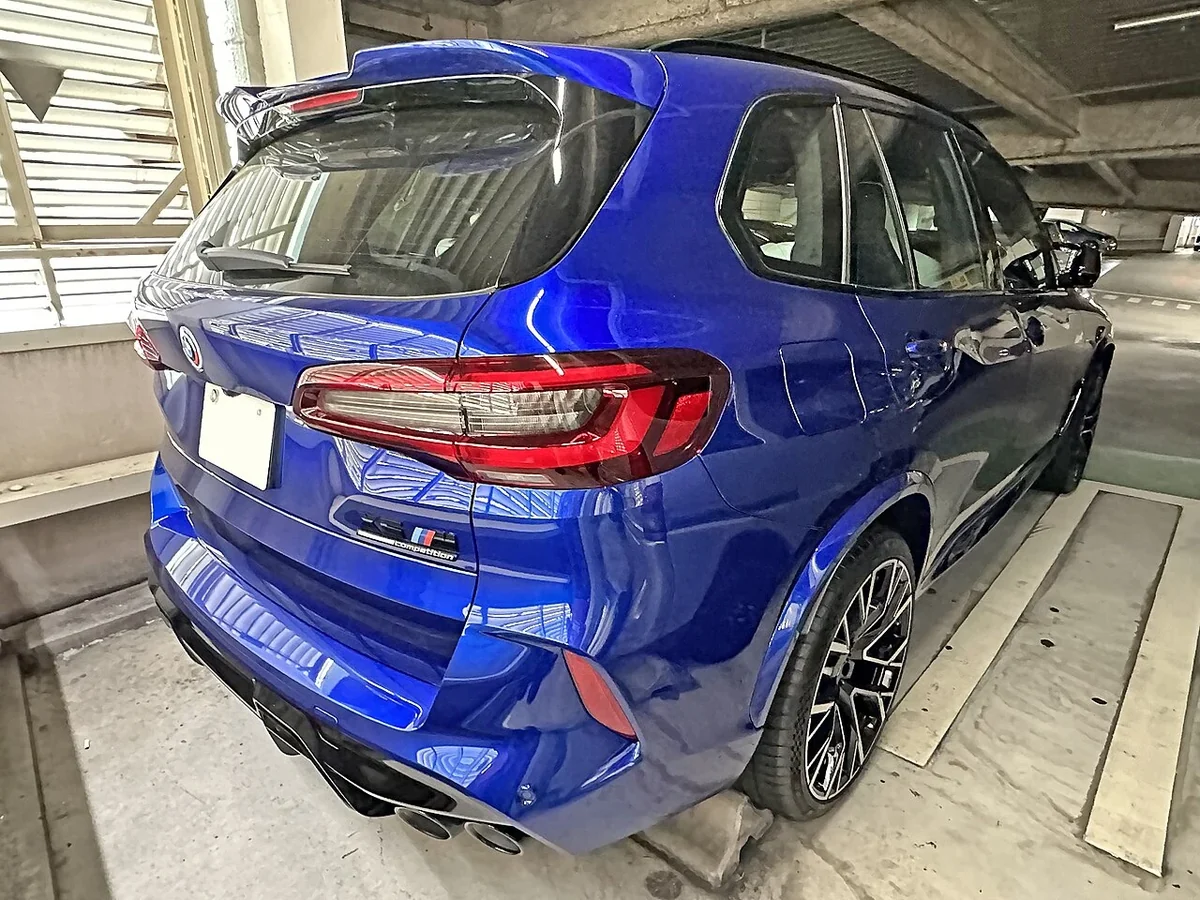
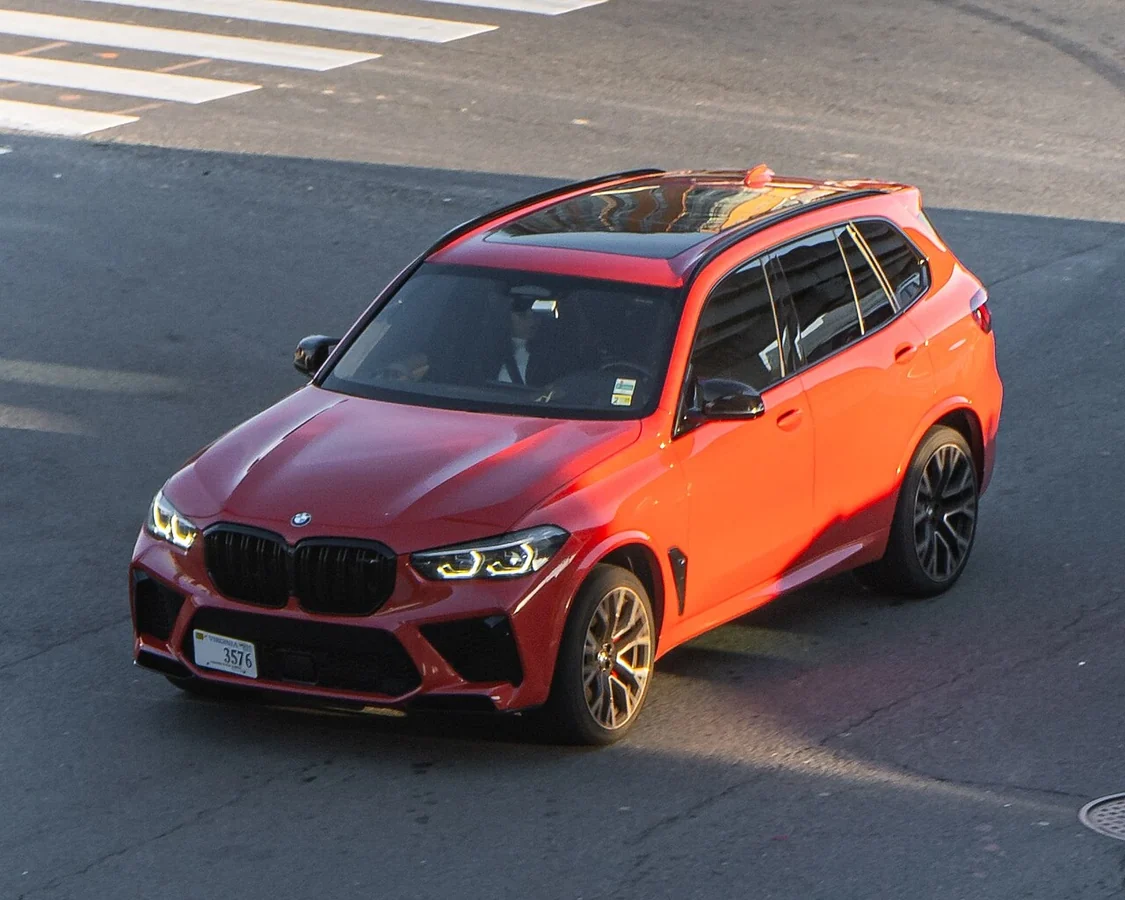
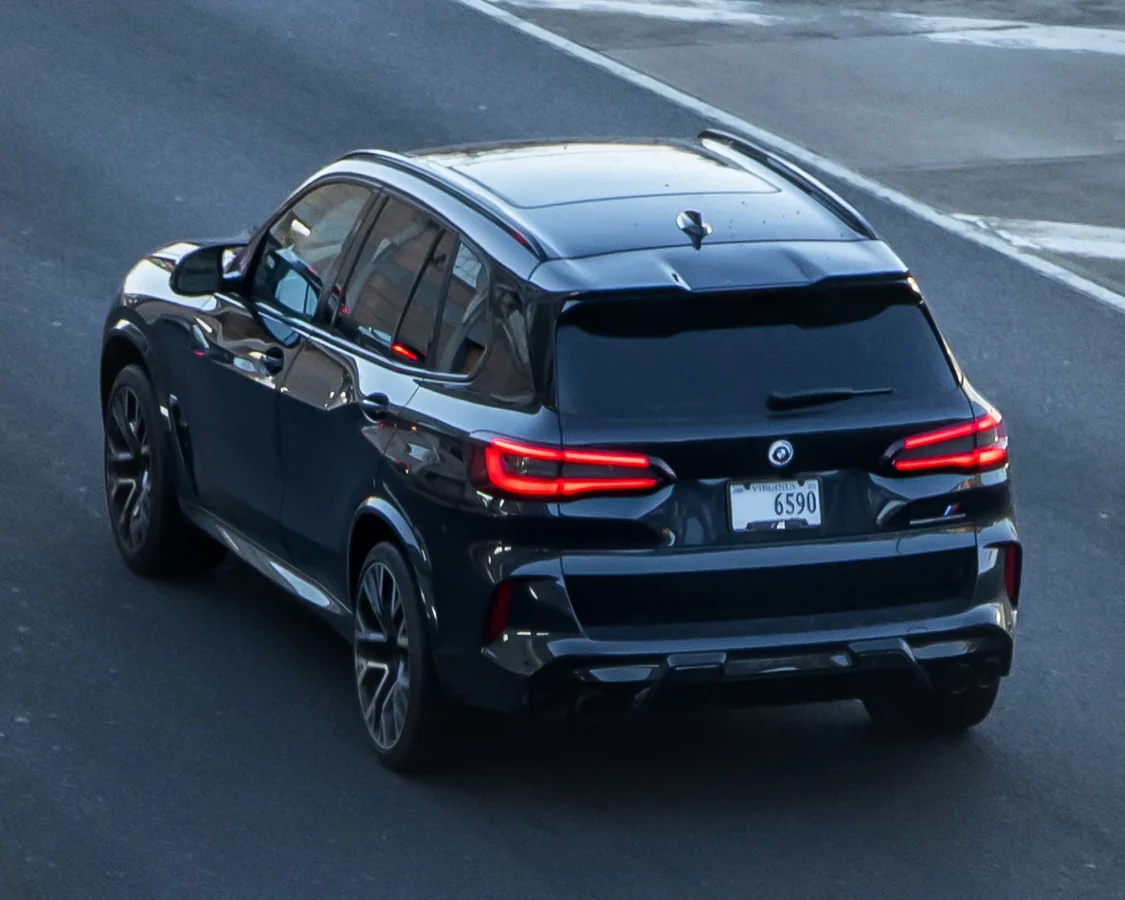
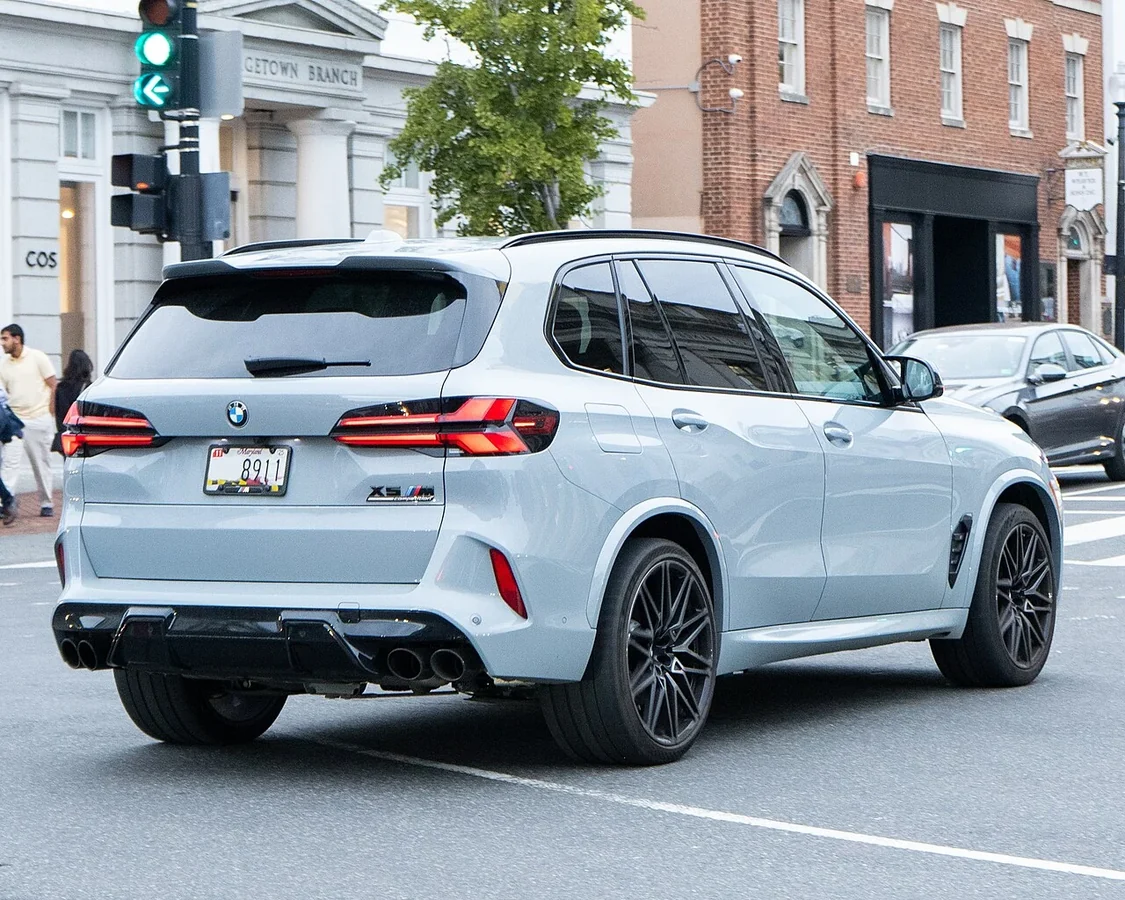
This research-based review covers the pre-facelift F95 BMW X5 M Competition, using the 2020 U.S. launch specification. It does not apply the later facelift’s engine or electronics to early cars. Cariary has not road-tested this vehicle. Where a photograph shows the wider F95 X5 M family, its caption says so.
3/5 from Cariary’s family-SUV perspective. The drivetrain and usable body are impressive, but the reported ride penalty affects the everyday job of carrying people comfortably. A driver who deliberately prioritizes full-M intensity may value it more highly; this is not a reliability score.
BMW X5 M Competition: Key Specifications
| Reference | 2020 U.S. launch model; pre-facelift F95 |
|---|---|
| Engine | 4.4-liter twin-turbo V8 |
| Output / torque | 617 hp / 553 lb-ft |
| Transmission / drive | Eight-speed automatic; M xDrive AWD |
| 0–60 mph | 3.7 seconds; manufacturer claim |
| Seats | Five |
| Cargo volume | 33.9 / 72.3 cu ft, rear seats up / folded; U.S. figures |
| Source | BMW’s original U.S. launch specification |
BMW X5 M Competition: More Than a Styling Package
The early F95 is not simply an ordinary X5 with an aggressive appearance package. BMW’s launch material specifies M-focused chassis hardware, drivetrain calibration and a Competition output of 617 hp. The body still performs the useful visual trick of looking familiar enough for ordinary life while signaling that this is a different proposition.
That matters when shopping. An M Sport badge on another X5 does not make it an X5 M, and an advertisement needs to identify Competition status accurately. Confirm the original specification from documentation rather than inferring it from black trim, replacement badges or wheels.
Cariary finds the idea appealing but refuses to treat the highest version as the automatic best purchase. More capability becomes valuable when it improves the way you use the vehicle. If the household mainly needs relaxed transport, full-M hardware can represent a different set of priorities rather than an uncomplicated upgrade.
V8 Performance: The Easy Part to Admire
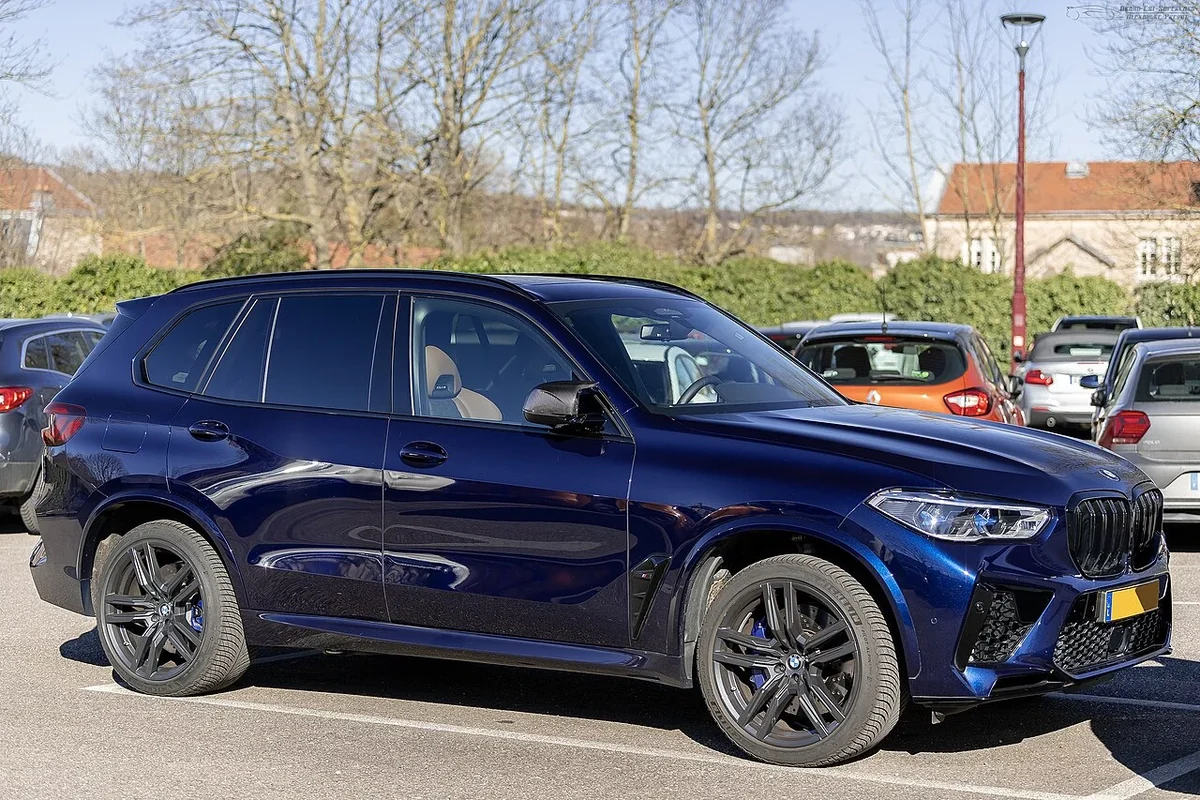
The BMW X5 M Competition has enough advertised performance to make its practical shape feel almost contradictory. Its turbocharged V8, eight-speed transmission and all-wheel-drive system are central to that appeal. BMW quotes 3.7 seconds to 60 mph for the launch model; that is a manufacturer claim, not a time measured by Cariary.
The sensible ownership question is how much of that capability you will use, and what you are willing to accept in return. A fast overtake or a satisfying response can be enjoyable. Neither requires making passengers uncomfortable or treating an ordinary road like a testing venue.
On a test drive, pay attention to modest inputs as well as stronger acceleration. Evaluate low-speed smoothness, the relationship between pedal movement and response, and whether the transmission’s normal setting suits your commute. The full-M experience should feel like something you actively want, not something you tolerate to obtain the badge.
BMW X5 M Competition Ride: The Decisive Family Question
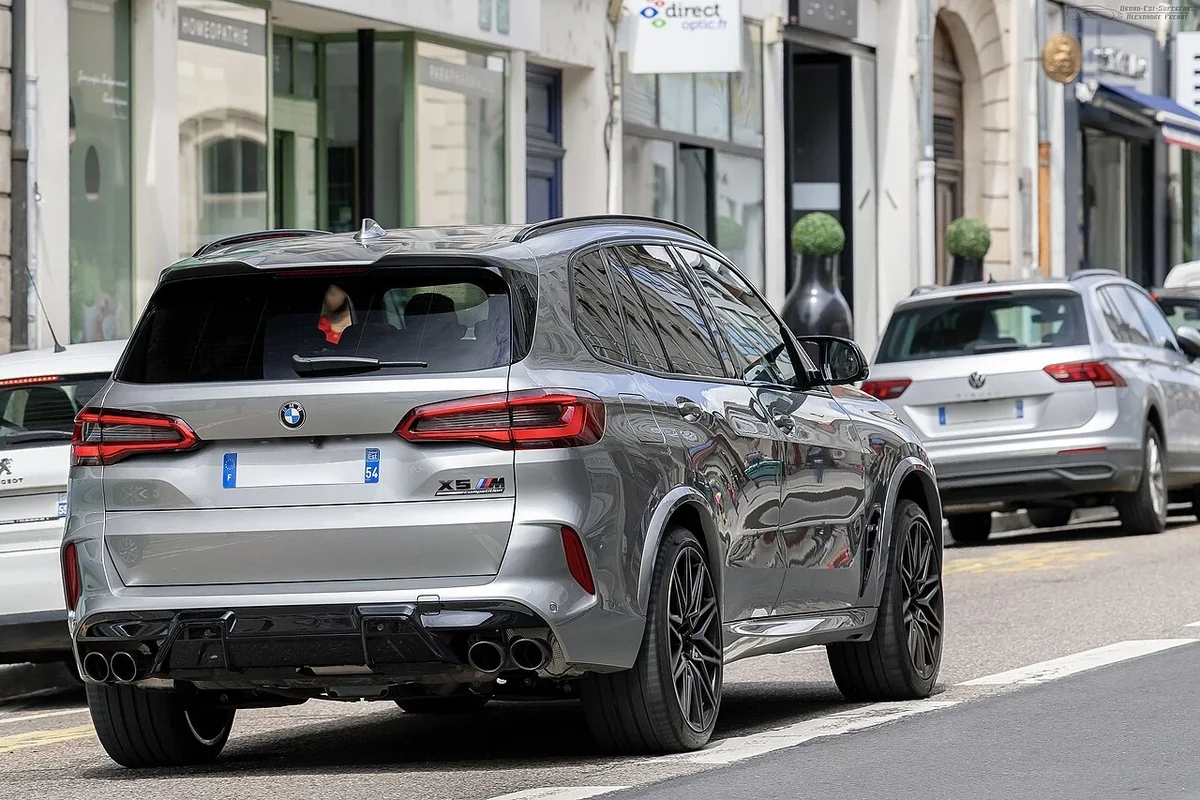
Car and Driver’s 2020 X5 M drive praised substantial grip but criticized the firm ride even in Comfort on the test route. It also found the steering less communicative than the performance suggested. Those are attributed impressions from that drive, not Cariary measurements or a verdict on every road surface.
For our family-oriented assessment, this criticism has unusual weight. The driver may enjoy the engine occasionally, while every occupant experiences the suspension continuously. That imbalance is the main reason the BMW X5 M Competition receives a more qualified recommendation here than its power figure might suggest.
Bring regular passengers to a proper test drive and include roads you use every week. Do not let a short, smooth dealer loop settle the matter. Sit in the rear yourself for part of the journey if possible. Comfort is not a weakness to explain away after purchase; it is a requirement to evaluate before it.
Five Seats and a Useful Body Still Matter
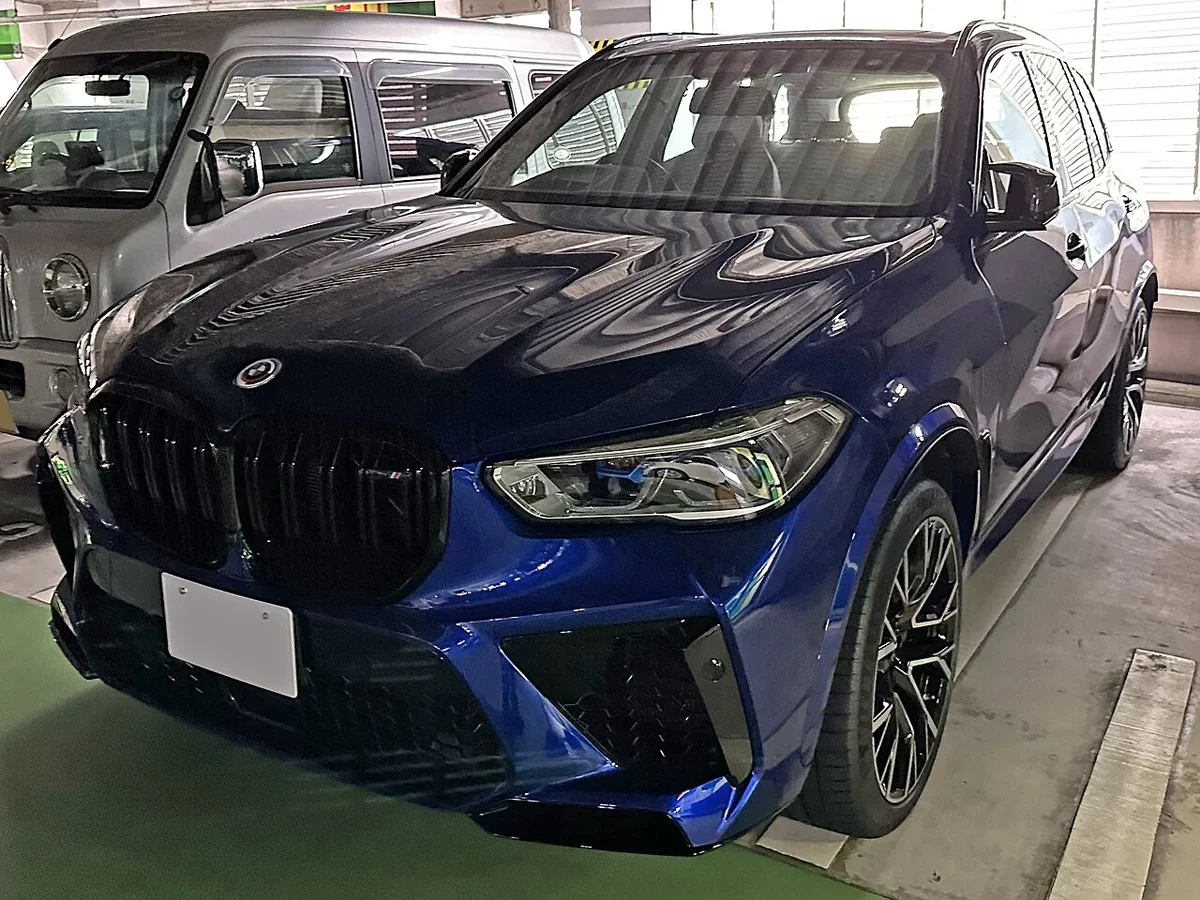
A performance SUV can offer a real household advantage over a low two-door car. Rear doors, a tall cargo opening and the ability to change the seating arrangement make it easier to combine enthusiasm with ordinary responsibilities. The X5 M’s practical body is therefore a meaningful part of its appeal, not just an excuse for the engine.
BMW’s U.S. launch figures quote 33.9 cubic feet behind the rear seats and 72.3 with them folded. Those numbers are reference measurements, not a promise that your stroller, dog crate or sports equipment will fit in the arrangement you need. Check the actual items and leave room for safe loading.
Also test access in realistic parking spaces. The ability to install a child seat or help a passenger depends on door opening space as well as cabin dimensions. A car can be spacious inside while demanding more room outside than your routine comfortably provides. That distinction deserves a practical trial.
Early F95 Cabin: Buy the Correct Generation
The original launch configuration uses BMW’s iDrive 7 with separate 12.3-inch displays and a rotary controller. That is a different dashboard environment from the later facelift. When browsing used listings, do not let photographs from one generation silently stand in for another.
The value of any interface lies in the tasks you repeat. Try setting a route, changing the temperature, selecting your preferred drive configuration and returning to an ordinary display. A system that gives many choices should also let you settle into a predictable routine without constant attention.
Seat adjustment and support are equally important. A performance seat can hold the driver securely yet feel different to a passenger with another body shape. Check both front seats and the rear bench. Cariary would rather see a household agree that the car works for everyone than watch the driver win an argument using an impressive specification sheet.
BMW X5 M Competition Running Costs: Budget for the Hardware
The launch Competition specification pairs 21-inch front wheels with 22-inch rear wheels. Large, staggered tires are not merely a styling decision; they shape the replacement budget and available choices. Ask a local tire supplier for a quote covering the correct sizes and appropriate specification before buying.
Treat brakes and suspension in the same practical way. Have a qualified inspector measure condition rather than accepting “plenty of life left” as a cost estimate. Check service records, diagnostic findings and evidence of modifications. This is not a claim that the model has a particular universal defect; it is a way to price the individual vehicle responsibly.
Include insurance, fuel and a repair reserve in your planning. A used purchase price can make an expensive performance vehicle look accessible while its maintenance requirements remain tied to the original hardware. The BMW X5 M Competition should be affordable to keep in good condition, not merely affordable to acquire.
Choose the Kind of SUV You Want
The Range Rover Sport is a useful starting point for thinking about a different balance of priorities. The Lamborghini Urus illustrates another route toward performance and visual theater. These links are broader buyer perspectives, not a claim that Cariary has conducted a same-day comparison test.
Make a list of the journeys that dominate your month. If those journeys are mostly family outings, rough urban roads and steady motorway travel, place comfort near the top. If you specifically want a full-M SUV and everyone who shares it accepts the firmness, the X5 M’s argument becomes stronger.
It is also reasonable to consider whether a less extreme SUV plus a separate enjoyable car would serve you better. That choice depends on parking, budget and how often each would be used. The point is to question the assumption that the most powerful single vehicle is always the most satisfying solution.

Cariary Point: Why the Rating Is Three, Not Five
The BMW X5 M Competition earns three stars in this review because the assessment gives substantial weight to its everyday family-SUV role. We admire the performance concept and practical body. We are less convinced that the reported ride compromise is a trade every household should make.
This is not a claim that BMW failed to build a capable performance vehicle. A committed M enthusiast can reasonably reach a different conclusion because that buyer assigns more value to the very intensity that creates our reservation. Cariary Point needs to expose that difference rather than hide it behind a universally flattering score.
Before buying, make the comfort test the deciding stage instead of a formality. If the regular passengers are happy and the ownership budget is secure, the car may fit you very well. If you find yourself asking them to overlook the ride because of the engine, that is useful evidence to choose a different balance.
Who Should Buy It?
Recommended For
A buyer deliberately seeking a full-M SUV, who has tested it with regular passengers and accepts its suspension character and running costs. Someone who needs the practical body and genuinely values the performance hardware.
Not Recommended For
A family whose first priorities are a soft ride, low operating costs or effortless comfort on poor roads. Buyers attracted mainly by the highest badge should test less extreme alternatives before assuming the Competition is the right answer.
One-Line Verdict: A compelling performance SUV for the committed driver, with a comfort bargain the whole family must accept.
Frequently Asked Questions
Which BMW X5 M Competition is covered?
The pre-facelift F95, using the 2020 U.S. launch specification. Later facelift cars have changes that should be researched separately. This article does not combine their specifications or cabin technology with the original model.
Is the 3.7-second acceleration figure a Cariary test?
No. It is BMW’s launch claim for 0–60 mph. Conditions and measurement methods matter, and this research-based article does not present manufacturer data as an independently measured result.
Why only three Cariary stars?
Because this assessment prioritizes the family-SUV role alongside performance. The cited ride criticism matters when several occupants share the car every day. The rating is a buyer-fit judgment, not a reliability score or a declaration that the vehicle lacks dynamic ability.
Is an X5 with M Sport the same thing?
No. An appearance or equipment package on another X5 should not be confused with an X5 M Competition. Confirm the exact model and original specification through documentation; wheels, badges and trim can be changed after manufacture.
What should the pre-purchase inspection emphasize?
The specific car’s service history, diagnostics, tires, brakes, suspension, body repairs and modifications. Obtain written estimates for any work identified and verify outstanding campaigns by VIN. A reassuring model reputation, positive or negative, is less useful than evidence about the car being offered.
Further Reading and Data Reference
Data reference date: September 13, 2026. Official specifications and attributed test observations are linked where discussed. Cariary Point is an editorial buyer-fit assessment, not an owner road-test score or reliability rating.
Explore more Cariary car reviews and buyer perspectives.

