
CARIARYCAR · DIARY · PERSPECTIVE
Cover: AI-generated Cariary editorial illustration, checked against the specified vehicle. It is not road-test photography.
This Suzuki Jimny review asks a simple question: do you want a small off-roader, or do you want a small car that looks like one? The difference matters here. Its square body and friendly scale can make the Jimny seem like an easy alternative to an ordinary city crossover, but the hardware underneath follows a different set of priorities.
Cariary likes that clarity. The Jimny does not need a huge engine or an imposing footprint to feel distinctive. Its attraction is a combination of useful compactness, recognizable design and genuine off-road equipment. The buying mistake is to admire those qualities without allowing for their consequences during the less glamorous parts of the week.
This research-based review concerns the 2018/2019 JB74 export-market 1.5-liter three-door Jimny. It excludes the Japanese 660 cc JB64, later five-door model and commercial conversions. UK launch observations are attributed separately; local equipment and availability must be checked for the individual car. Cariary has not road-tested it.
4/5 for a buyer who actually values compact dimensions and low-range off-road ability. Character and purposeful engineering earn the recommendation, while road manners, luggage room and the limitations of its 2018 safety result keep it from five stars.
Suzuki Jimny: Key Specifications
| Reference | 2018/2019 export JB74 three-door |
|---|---|
| Engine | 1.5-liter naturally aspirated K15B gasoline four-cylinder |
| Transmission | 5-speed manual or 4-speed automatic, market dependent |
| Drive | Part-time four-wheel drive with low range |
| Construction | Ladder frame; front and rear rigid axles |
| Seats | 4 in the passenger version |
| Safety context | 3 stars under the 2018 Euro NCAP protocol; rating now expired |
Suzuki Jimny: Choose the Job Before the Accessories
Suzuki’s 2018 launch announcement identifies the essentials: ladder-frame construction, three-link rigid-axle suspension and part-time four-wheel drive with low-range gearing. These are not decorative references to an adventurous lifestyle. They explain why the vehicle exists and why it feels different from a road-focused crossover.
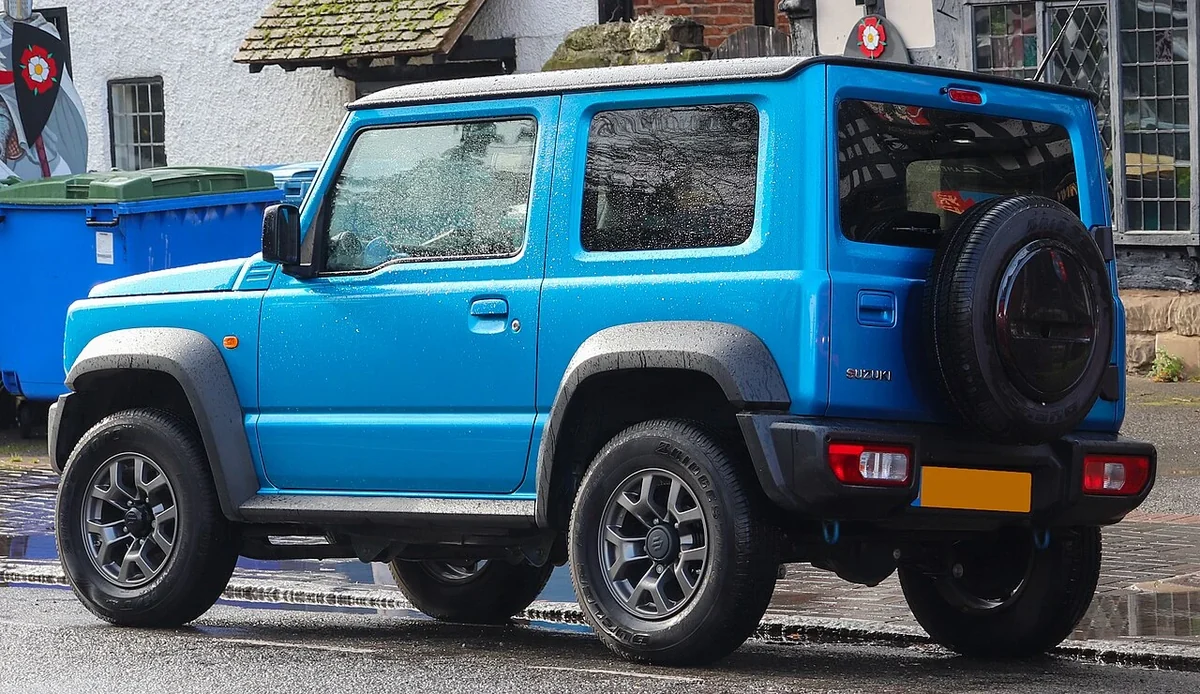
Start with a realistic route. A narrow access track, rough recreational route or compact parking space can make small dimensions genuinely useful. A long, fast commute with passengers and luggage is a different brief. The Jimny can be attractive in either photograph, but ownership satisfaction depends on matching the machine to the first kind of task often enough to justify its compromises. A roof rack and aggressive tires should follow that decision, not substitute for it.
A Ladder Frame and Rigid Axles Have a Purpose
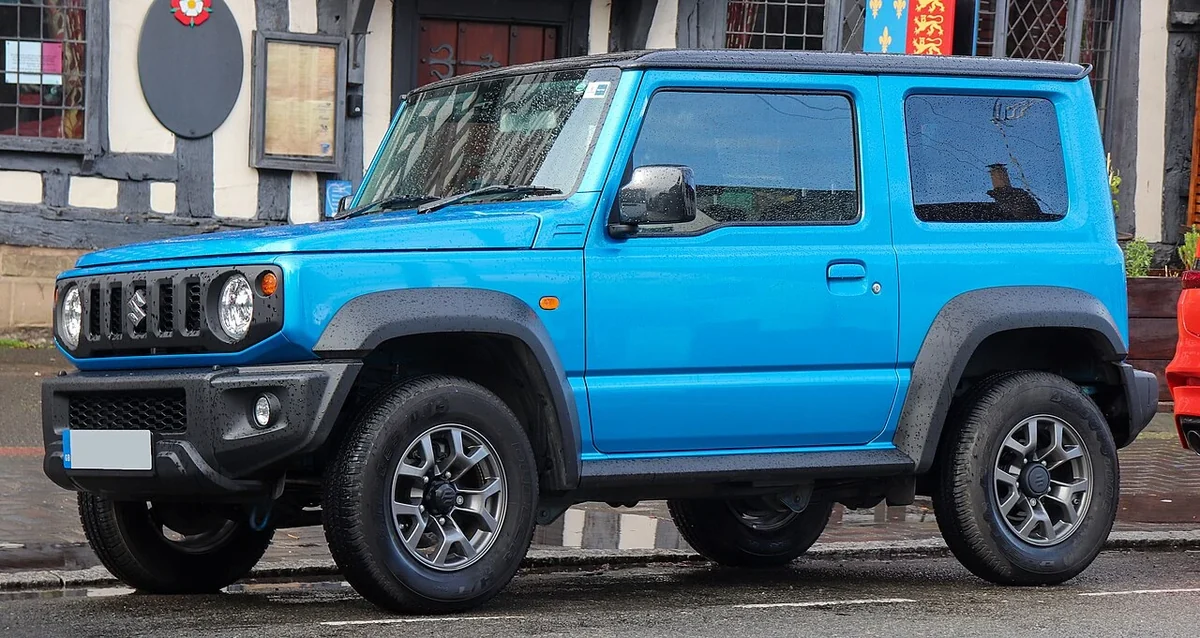
The separate frame provides the foundation for the Jimny’s off-road layout. Rigid axles connect the wheels on each axle through a shared assembly, rather than allowing the same independent wheel movement found in many road-oriented SUVs. The configuration is part of its durability and articulation strategy, but the name of the hardware alone does not establish how comfortably a particular road will be handled.
Low range reduces gearing for controlled progress at low speed. It is not a promise that every surface becomes safe or every obstacle becomes passable. Read the correct owner’s manual before selecting four-wheel-drive modes, understand the system’s surface restrictions, and learn with appropriate instruction. The useful appeal is controlled capability in a small package. Treating that capability as permission to improvise beyond your experience is a poor way to enjoy it.

Suzuki Jimny Engine: Enough for Its Brief, Not Every Brief
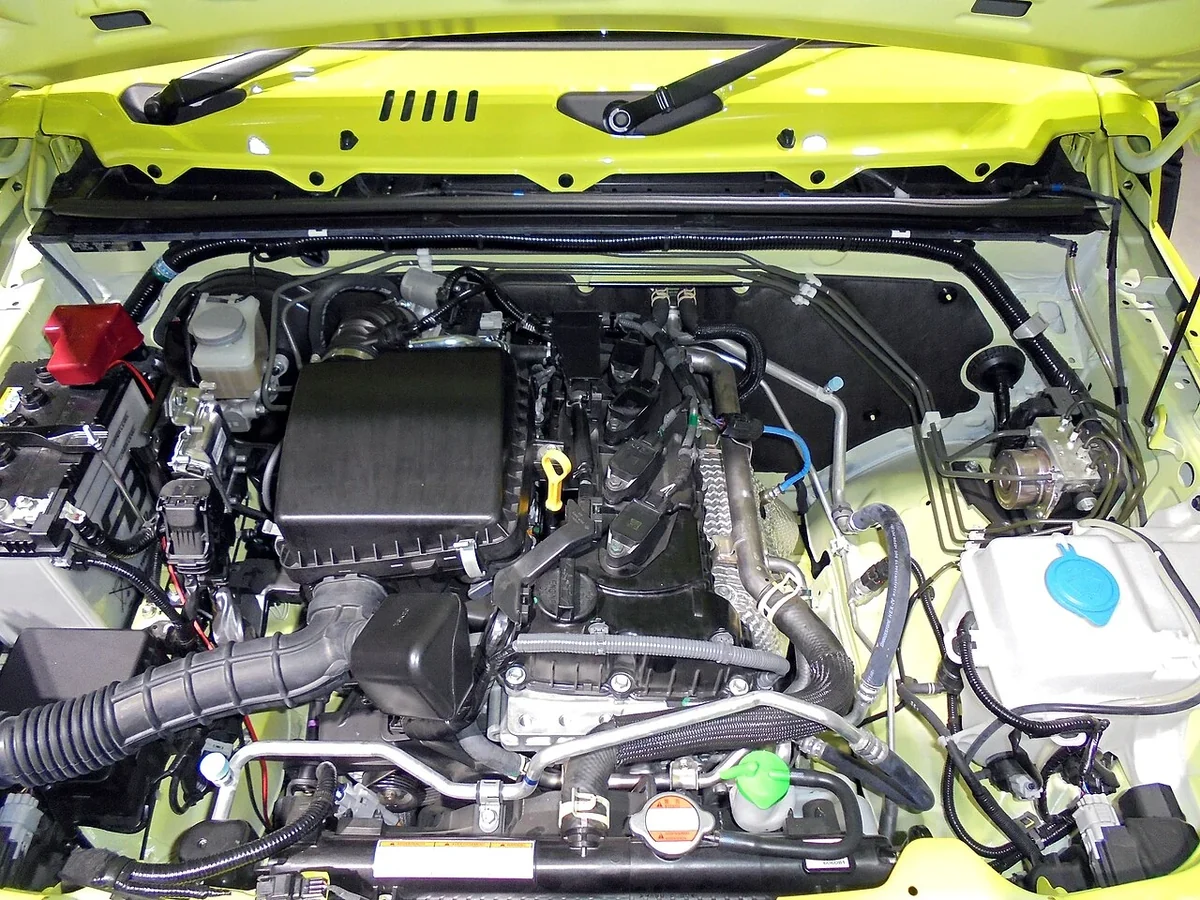
The export JB74 uses Suzuki’s naturally aspirated 1.5-liter K15B gasoline engine. Keep this distinct from the much smaller engine in the Japanese kei-market JB64: similar-looking bodywork does not make their specifications interchangeable. The manual and automatic also deserve separate test drives. Five manual ratios and four automatic ratios belong to a different performance proposition from the many-speed transmissions common in larger modern SUVs.
Consider gradients, overtaking opportunities and the speeds you regularly maintain. If your normal journey requires repeated acceleration with passengers, test that scenario rather than judging an empty car around a dealer’s block. A modest engine can suit a light, compact vehicle without feeling relaxed in every situation. Cariary would buy the Jimny for the work its gearing and dimensions enable, not because its shape suggests the effortless pace of a much more powerful luxury off-roader.
Road Manners: Listen Beyond the Charming Shape
James Attwood’s 2018 UK launch drive, published by Autocar India, praised its off-road ability but identified limited steering feedback and increasing wind noise at speed. Those are attributed test observations. They are useful prompts for a buyer’s own assessment, not evidence of a Cariary road test.
Include an open road, uneven urban surfaces and your usual parking maneuvers in a test drive. Pay attention to how much correction you make, whether conversation remains comfortable and how the passengers respond to the ride. Oversized tires, altered suspension and roof-mounted equipment can change the experience further, so do not transfer a review of a standard vehicle directly to a modified example. A short, entertaining drive is valuable; a representative drive is more valuable when the car will also handle ordinary obligations.
Four Seats Do Not Mean Four-Person Touring Space
The same 2018 UK review reports 85 liters of luggage room with the rear seats raised and 377 liters with them folded. These figures describe that launch-market passenger configuration, not every later version. More useful than the number is the physical exercise of loading your actual bags while leaving the seats in the positions you need.
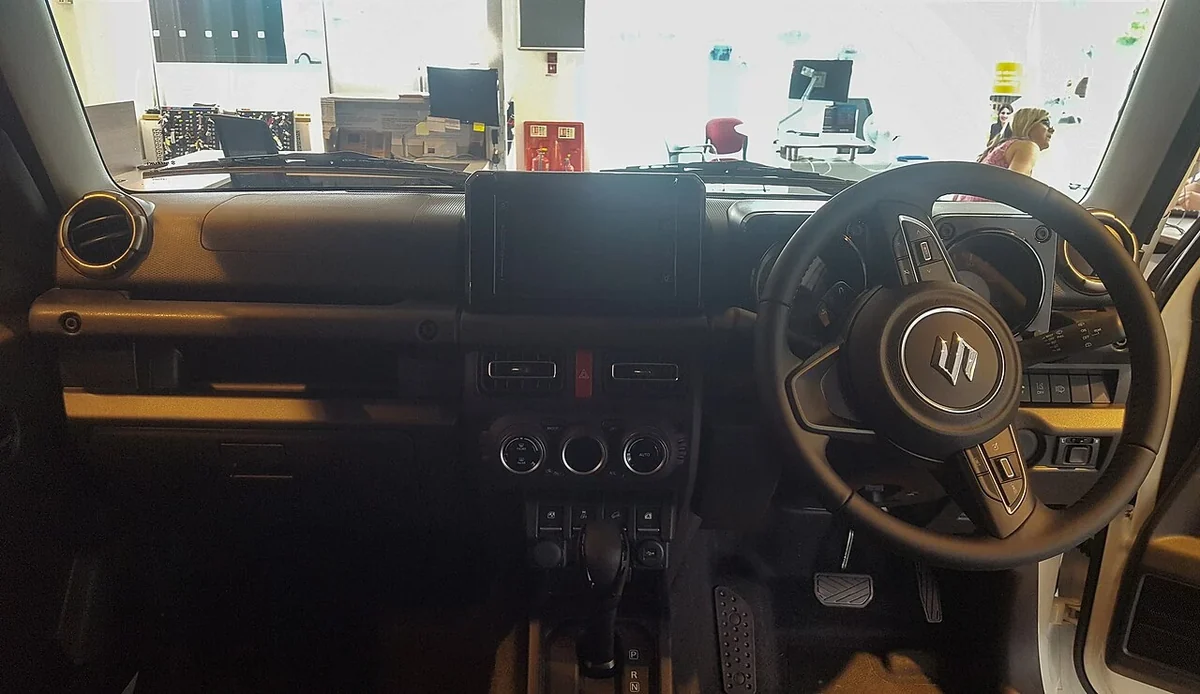
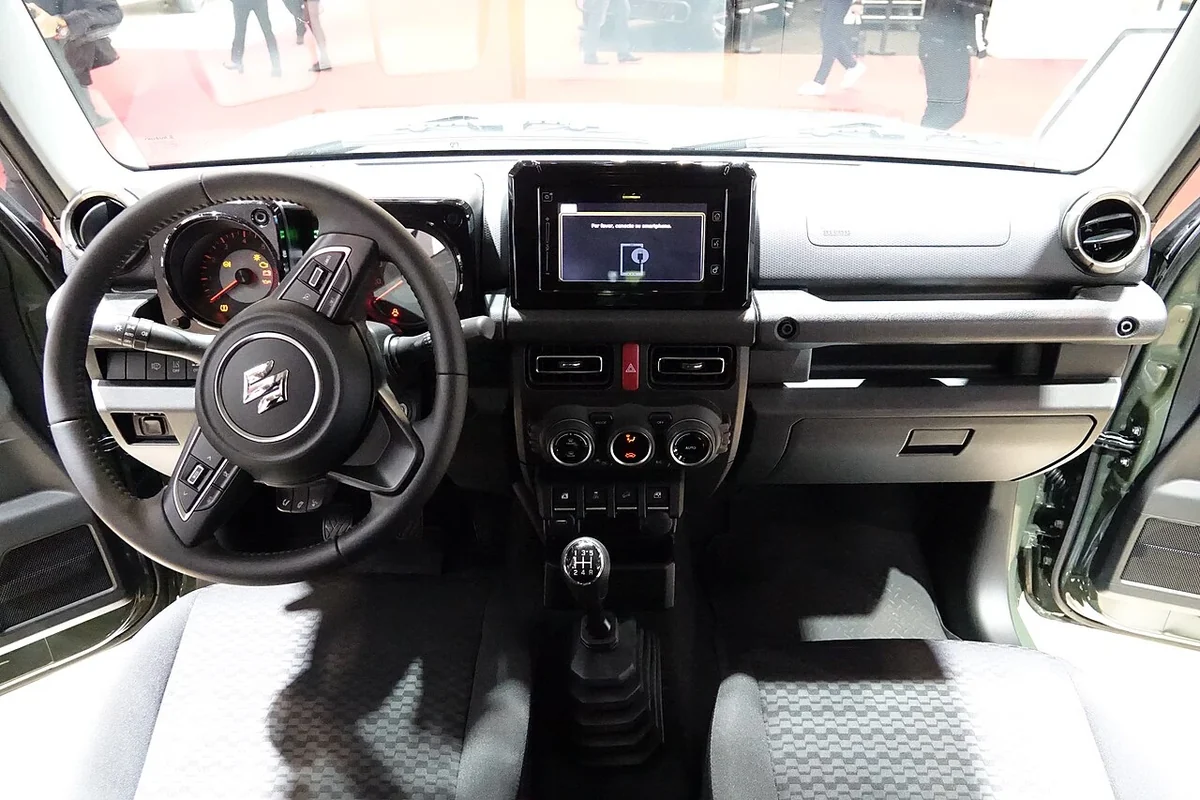
The cabin photographs here show market-specific left- and right-hand-drive layouts. They illustrate the basic design rather than establish a universal equipment list. Check the exact infotainment unit, safety equipment and storage arrangement on the car being considered. Try rear-seat access, seat-belt use and passenger legroom with real occupants. A couple who occasionally fold the rear seats may reach a very different conclusion from a family that needs all four places and a full set of luggage every weekend.
Suzuki Jimny Safety: Keep the Three-Star Result in Context
The official Euro NCAP assessment awarded the Jimny three stars under its 2018 test protocol; that rating is now marked expired. The assessment recorded an unstable passenger compartment in the frontal-offset test and concerns including weak driver chest protection. It should not be presented as a current-protocol result or softened into a vague statement that the car simply feels sturdy.
A ladder frame and an adventurous image do not answer a crash-protection question. Review the original assessment, identify the safety equipment fitted in your market, and decide whether the compromise fits your priorities. Cariary Point is a separate editorial recommendation for a particular buyer, not a substitute crash rating. If transporting family members is the main assignment, this is a central comparison point, not something to discover after choosing a color and accessories.
Used Suzuki Jimny Checks: Understand Its Previous Adventures
An off-roader’s history is not fully described by mileage. Have a competent workshop inspect the frame, underside, suspension, steering, driveline and signs of corrosion or impact. Ask how the vehicle was used and what work followed that use. Look for consistent records and explanations rather than assuming either that all off-road use is damaging or that the vehicle’s reputation excuses an incomplete inspection.
Modifications deserve their own inventory. Identify tire size, suspension changes, added electrical equipment and the quality of installation. Confirm compatibility, local requirements and insurance implications with the appropriate providers before purchase. Verify recalls and service requirements against the exact vehicle identification number through the relevant local channel. Keep the inspection proportionate but concrete: an attractive accessory list is not evidence that the mechanical condition or workmanship is sound.
Four Stars for a Small Off-Roader With a Clear Identity
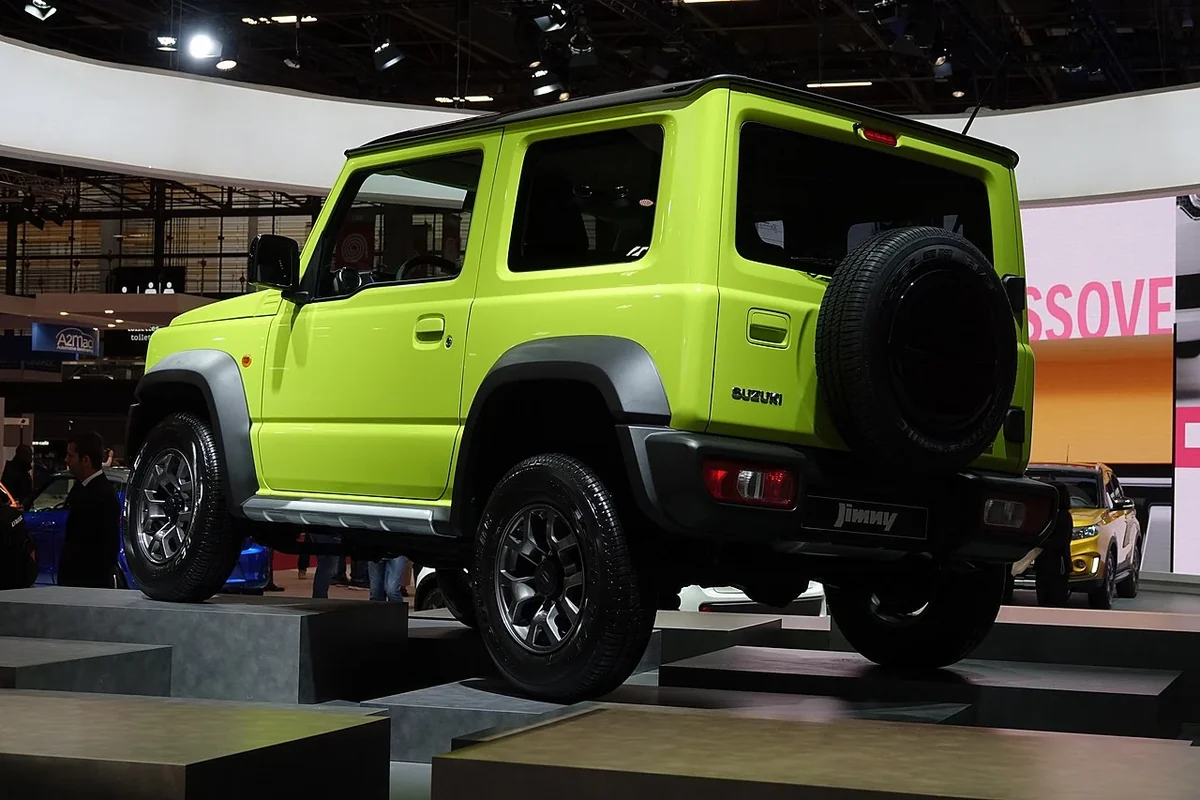
The Jimny earns four stars because its design and engineering tell the same story. It is small, recognizable and equipped for a kind of driving that many larger-looking crossovers do not prioritize. The missing star reflects the everyday limitations that remain after the charm has done its work: highway refinement, load space and the safety context all matter.
The Land Rover Defender offers another interpretation of off-road capability, while the Range Rover Sport puts much greater emphasis on luxury and road performance. Neither comparison makes the Jimny a miniature equivalent. For a more road-oriented everyday brief, compare the Toyota RAV4 instead. Cariary’s recommendation is strongest when the Jimny’s small size and specialized ability are genuinely useful, rather than simply visually appealing.

Who Should Buy It?
Recommended For
A buyer who wants a compact three-door off-roader, will use its low-range capability responsibly and accepts its road and space compromises.
Not Recommended For
A buyer whose priorities are quiet high-speed travel, generous four-person luggage capacity or a stronger modern crash-test proposition.
One-Line Verdict: Buy the Jimny because its particular abilities fit your life, and the charm becomes a bonus you can keep enjoying.
Frequently Asked Questions
Is this the five-door Suzuki Jimny?
No. The review covers the 2018/2019 export-market JB74 three-door passenger version.
Does every Jimny use the same engine?
No. The export JB74 1.5-liter and Japanese JB64 660 cc models must be distinguished.
Is the Jimny an ordinary all-wheel-drive crossover?
No. Its ladder frame, rigid axles and part-time four-wheel drive with low range reflect a specialized off-road brief.
Is the Euro NCAP score current?
No. It is a three-star result under the 2018 protocol and is now marked expired.
Why does Cariary give it four stars?
It has a compelling and useful identity for the right owner, but road refinement, luggage space and safety limitations prevent a universal recommendation.
Further Reading and Data Reference
Data reference date: September 13, 2026. Official specifications and attributed test observations are linked where discussed. Cariary Point is an editorial buyer-fit assessment, not an owner road-test score or reliability rating.
Explore more Cariary car reviews and buyer perspectives.

