Core summary
The G01 X3 30i is a four-cylinder, not a three-litre six. It adds performance without moving to the M40i’s different engine and cost proposition.
The X3 30i occupies an important middle position: more petrol performance than the 20i without moving into the six-cylinder M40i. It still serves the same family-SUV role, so its value depends on whether the engine difference matters in ordinary travel.
Cariary would compare a 30i and 20i with similar seats, wheels and condition. Otherwise a comfortable suspension specification or better tyres can be mistaken for a benefit of the engine badge, leading to an expensive but poorly understood choice.
History & generations
This guide covers the G01 X3 introduced in 2017 and updated in 2021. It does not import specifications from older X3 generations where a similar number could mean a different engine. Nor does it describe the later G45.
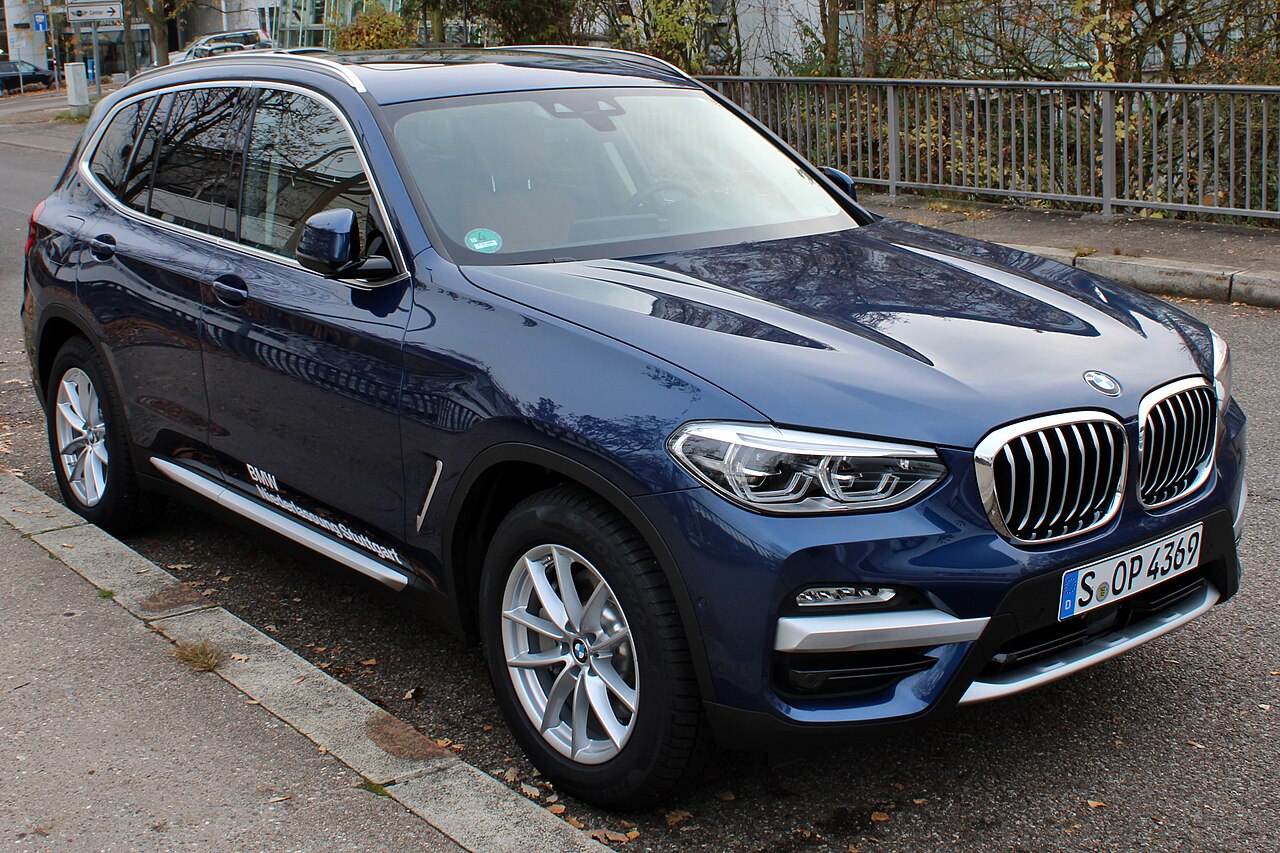
The gallery uses early G01 xDrive30i examples: a blue exterior car and a separate display-car interior detail. Facelift information in the text is identified by date rather than attributed to these earlier photographs.
Body, platform & design
The blue xDrive30i is shown from the front and rear, including its model badge. The upright tailgate and conventional roofline explain why the X3 is the practical reference point before looking at the related X4.
Check the cargo opening with the equipment you actually carry. A stroller, suitcase or dog crate tests the shape more effectively than a catalogue volume. Also try rear-door access in a narrow space if the car will be used for school or family duties.

Engine & drivetrain
The 2017 Netherlands introduction lists the xDrive30i at 185 kW/252 PS with a 2.0-litre turbo four and eight-speed automatic. The 2021 global facelift release quotes 180 kW/245 PS. Those dated metric ratings are not interchangeable with every national-market specification.
The 30i is not a three-litre straight-six. Test its response during a normal overtaking manoeuvre and ask about engine or transmission tuning. Any modification needs documentation, not just a claimed increase in power.
.jpg)
Trim differences
Check whether the individual car is sDrive or xDrive where both market versions exist. The photographs show xDrive but do not establish the drivetrain of every 30i sold worldwide. M Sport styling is separate from that choice and from the M40i model.
Look for the equipment that improves your journey: seats, parking assistance, lights and suitable suspension. An engine upgrade does not automatically include those features. Compare factory build lists rather than relying on trim names alone.
Interior & seating
The stronger engine does not add rear space over a G01 20i. Test the five-seat cabin with the driver's seat correctly positioned, then evaluate luggage access and seat folding. The centre rear place deserves its own test if it will be regularly occupied.
The additional photograph shows a brown-trimmed door panel from a separate early 30i display car. It illustrates one interior specification, not a promise of the same trim on the blue exterior example. Check actual materials and equipment at a viewing.
Efficiency & range
Budget the 30i as a petrol midsize SUV. A more powerful version can be attractive without being the cheapest commuting tool. Use realistic mileage, fuel requirements, insurance and tyre costs rather than focusing on a single laboratory consumption number.
If considering an X3 plug-in hybrid, include electricity and charging convenience in the comparison. If considering a diesel, account for the trip pattern and local requirements. The conventional petrol car may still be the better fit without winning every theoretical economy comparison.
Safety & equipment
Inspect brakes, tyre condition and alignment evidence before being reassured by a powerful engine and all-wheel-drive badge. On an xDrive example, confirm the tyre set is suitable and investigate vibration or driveline symptoms with a specialist.
Check the actual assistance package and campaign status by VIN. Ask about sensor calibration following repairs. Features advertised for the G01 range do not prove that a particular used example has them.
Strengths
The 30i offers a meaningful performance step while retaining a four-cylinder engine and the X3's conventional SUV body. That can be a coherent compromise for mixed family use and longer trips, particularly when the owner does not need the M40i's stronger engine proposition.
Its best argument is balance rather than a headline number. A well-kept car with appropriate wheels and comfortable seats may be more useful than a more powerful example that has consumed the entire maintenance budget.
A useful middle-ground X3 for buyers who need more performance than 20i. Verify year-specific output and drivetrain instead of trusting the numerical badge.
Considerations
Check for undocumented tuning and service gaps. A seller's assertion that the engine is common or robust does not establish the condition of the cooling system, gearbox, suspension or electronics on this specific car.
An independent inspection should include diagnostic faults, leaks, tyre wear and evidence of accident repairs. Ask for written findings and price necessary work before negotiating. These checks are more useful than treating either a reputation for reliability or a frightening internet anecdote as a complete diagnosis.
Recommended use
The strongest use case is a driver who needs the X3's family packaging and finds the 20i insufficient on their normal routes. That should be established through a comparison drive, ideally with a representative load rather than an empty-car sprint.
If the aim is six-cylinder character, the M40i is the relevant internal alternative. The 30i does not become that car because its name starts with a three. Buy its actual strengths, not an assumed engine configuration.
Rivals & related
Compare a petrol Audi Q5, Mercedes-Benz GLC or Volvo XC60 with a similar age and budget. Check drivetrain and electrification carefully because apparently equivalent model names can describe different ownership routines.
The BMW X4 30i is the style-led sibling, while a 330i Touring can be worth considering where available if SUV height is unnecessary. Rear access, luggage shape and parking needs should decide which body format belongs on the shortlist.
FAQ
Q: Is this a three-litre engine?
A: No. The G01 30i uses a 2.0-litre turbo four.
Q: Does every year have the same power?
A: No. The cited launch and facelift ratings differ.
Q: Is every 30i xDrive?
A: Check the original-market version and VIN.
Q: Is 30i M Sport an M40i?
A: No. The M40i is a different engine-model choice.
What makes the BMW X3 30i different?
A useful middle-ground X3 for buyers who need more performance than 20i. Verify year-specific output and drivetrain instead of trusting the numerical badge.
Who should consider it?
Family SUV with stronger four-cylinder petrol performance
Sources & updates
Manufacturer references below identify the dated generations and specifications used here. Buying assessments are Cariary editorial analysis, not a claimed first-hand road test or a diagnosis of an individual vehicle. Photographs carry their own credits and licences. Confirm exact ratings, equipment and campaign status for the production date and original market of the car you are considering.
- BMW X3 range introduction, Netherlands 2017 →
- BMW X3 and X4 facelift, global June 2021 →
- Photograph — Blue early BMW X3 xDrive30i G01 front three-quarter view →Alexander Migl; CC BY-SA 4.0
View all official references (2 more)
- Photograph — Blue early BMW X3 xDrive30i G01 rear with model badge →Alexander Migl; CC BY-SA 4.0
- Photograph — Brown-trimmed door panel of an early BMW X3 xDrive30i display car →Bindydad123; CC BY-SA 4.0
Last editorial review: September 20, 2026. Specifications remain market- and model-year-specific.