CARIARYCAR · DIARY · PERSPECTIVE
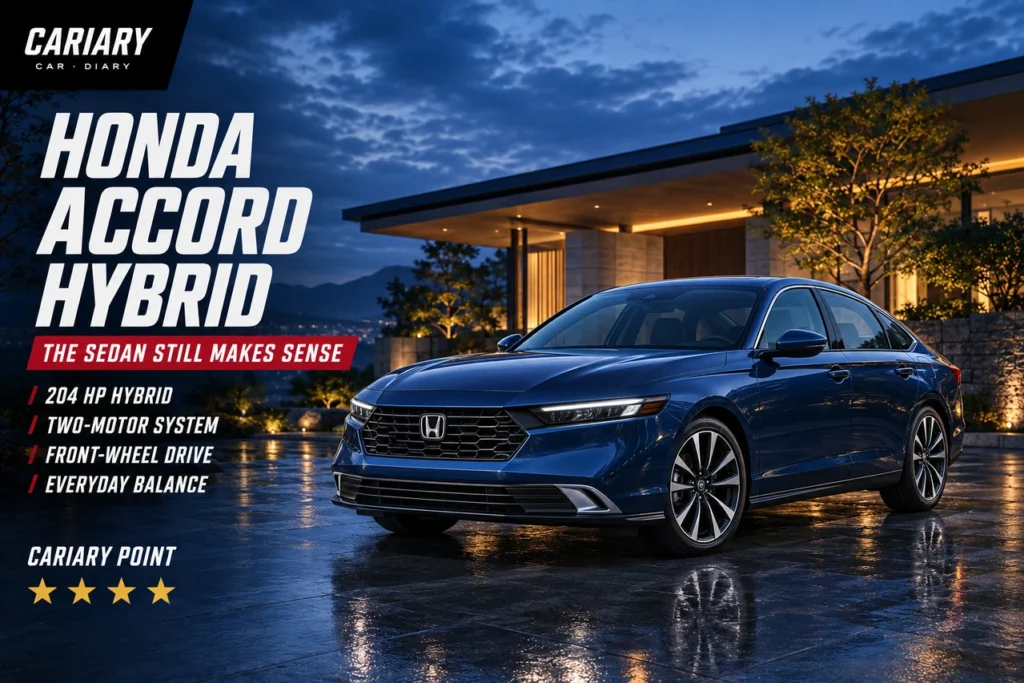
Cover: AI-generated Cariary editorial illustration, checked against the specified vehicle. It is not road-test photography.
This Honda Accord Hybrid review asks an unfashionable question: what if your next family car does not need to be an SUV? The Accord makes that question worth taking seriously. It offers a low seating position, a long passenger cabin and an electrified powertrain without asking the owner to reorganize life around a charging cable.
The attraction is not that sedans are automatically better. A large hatch and easier entry can be decisive advantages for a crossover. The point is that many households buy those advantages by default, even when their everyday journeys are better served by a well-proportioned car with four doors and a separate trunk.
For Cariary, the Accord is interesting because it tries to make rationality feel rewarding. It does not promise the drama of an old V6 or the strongest turbocharged predecessor. Instead, it asks whether smooth response, sensible controls and a composed-looking shape can create a different kind of affection. That is a more useful story than simply repeating its combined fuel-economy rating.
Scope: 2026 U.S. Honda Accord Hybrid, the continuing 11th-generation model. Same-generation 2023–2025 photos are labeled and are not presented as evidence of year-specific 2026 trim changes. This is a research-based review, not a Cariary road test.
Four stars for an efficient, driver-conscious family sedan with a clear daily purpose. Front-wheel-drive-only availability, a sedan’s loading limits and a powertrain that does not replace the old performance variants keep the recommendation conditional.
Honda Accord Hybrid: Key Specifications
| Hybrid system | 2.0-liter naturally aspirated Atkinson-cycle engine and two electric motors |
|---|---|
| Total output | 204 hp; motor torque is not the same measurement as combined system torque |
| Drive | Front-wheel drive; no plug-in charging |
| EPA combined efficiency | 48 mpg for EX-L; 44 mpg for Sport, Sport-L and Touring |
| Hybrid touchscreen | 12.3 inches; distinct from the 9-inch screen in 2026 gasoline LX/SE |
| Hybrid starting MSRP | $33,795 for Sport before $1,195 destination and other charges; Honda launch pricing |
| Body / seating | Four-door midsize sedan; five seats |
1. Why the Honda Accord Hybrid Still Matters
The sedan’s case begins with priorities rather than nostalgia. A driver who prefers sitting lower and looking along a hood may feel more naturally connected to an Accord than to a tall crossover. The vehicle does not have to be a sports car for its driving position and proportions to make the journey more satisfying.
Its long, restrained shape also resists the pressure to turn every family car into a visual statement. That can appear conservative in a showroom, but it is a quality some owners actively want. You can appreciate a car without asking it to dominate every parking space it enters.
Of course, the same low roofline can make entry less convenient, and a trunk has a more restricted opening than a hatch. Cariary sees the Accord as an argument for choosing deliberately. If you regularly load tall equipment or help someone into a higher seat, the SUV preference has a purpose. If not, the sedan deserves a fair comparison before it is dismissed as yesterday’s answer.
2. Two Motors Do Not Mean a Conventional CVT
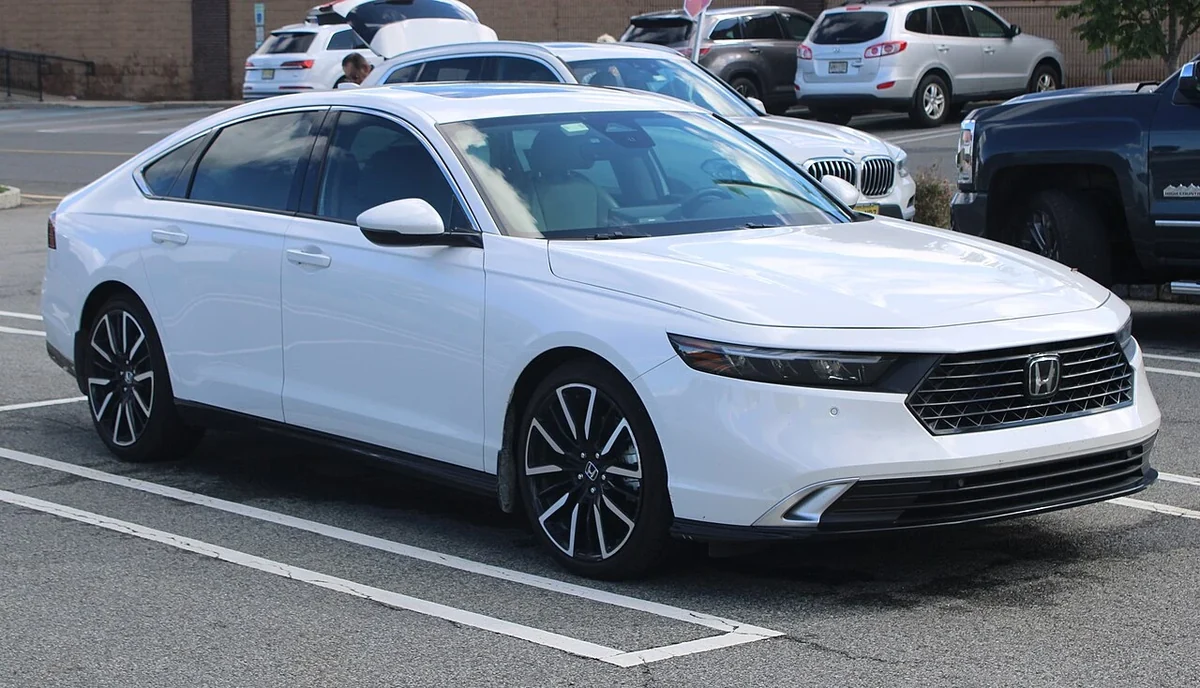
Honda explains the hybrid’s operation as a direct-drive arrangement that does not need the belt-and-pulley CVT of the gasoline Accord. Electric propulsion and engine operation are coordinated around efficiency and demand. The distinction matters because a familiar transmission label can make buyers imagine hardware that is not actually present.
In everyday terms, the interest is how readily the car responds to small requests. A family sedan spends far more time adjusting its pace around other traffic than launching from a standstill. Electrification can make those ordinary transitions an important part of the car’s appeal, rather than merely a means of improving a laboratory consumption figure.
The system still uses gasoline and still has to manage energy. It is not an EV with a guaranteed electric commuting range. Nor should its engine and motor horsepower be added together: their peak contributions do not occur in a way that makes arithmetic addition a valid system rating. The published total is 204 hp, which is the appropriate number for a straightforward comparison.
3. It Is a Different Answer From the Old Fast Accord
Enthusiasts may remember the Accord as a surprisingly quick family car, particularly in stronger earlier versions. That memory can create the wrong expectation here. The Honda Accord Hybrid’s role is to combine useful response with efficiency, not to reproduce every sensation of a large engine or a powerful conventional turbocharged drivetrain.
Car and Driver’s long-term 2023 Accord Hybrid test reported 39 mpg on its 75-mph highway economy test. That is an observation from an earlier example of this generation, not a 2026 EPA rating or Cariary result. It illustrates why a hybrid’s real-world consumption depends on the driving pattern and test conditions.
The more interesting buying question is whether you enjoy the car at the speeds you actually use. A satisfying steering response, a comfortable seat and predictable acceleration can matter more than a remembered performance statistic. But if rapid acceleration is central to the appeal, acknowledge that preference honestly. Efficiency is not a universal substitute for the emotional character of a different powertrain.
4. The Cabin Has an Understandable Hierarchy
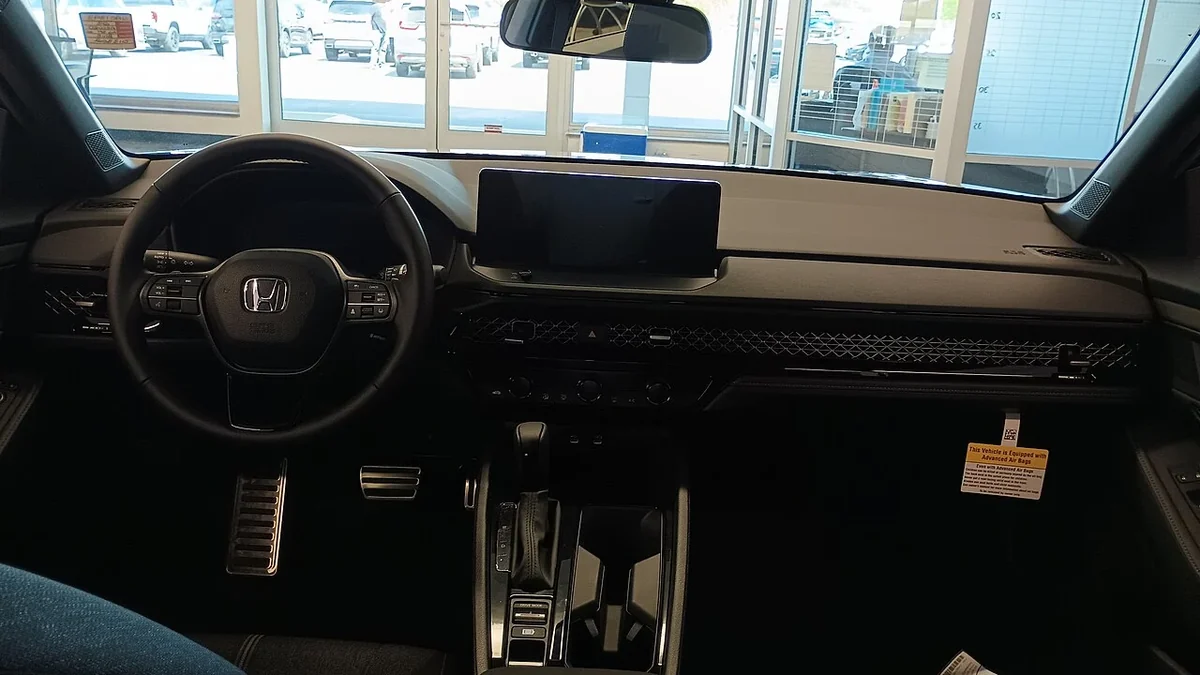
The 2026 specification table separates the Hybrid’s 12.3-inch touchscreen from the smaller display fitted to the gasoline LX and SE. This is easy to misread when a model-year announcement emphasizes an upgraded standard screen. The new base-car equipment does not mean that the Hybrid has suddenly gained that smaller display.
The Honda Accord Hybrid’s broad screen sits above a relatively restrained dashboard, with separate climate controls below. That arrangement allows the cabin to look modern while retaining recognizable places for repetitive tasks. A driver should not need to admire the display every time the temperature changes.
Equipment still varies by trim. Touring’s extra technology and comfort features can make sense for a frequent long-distance driver, but a feature should earn its place through use. During a showroom visit, check screen reach, phone connection and seat adjustment before counting options. The most appealing interior is the one that stays easy to use after the novelty has disappeared, including when a passenger is handling the navigation.
5. Rear-Seat Room and Cargo Flexibility Are Different Things
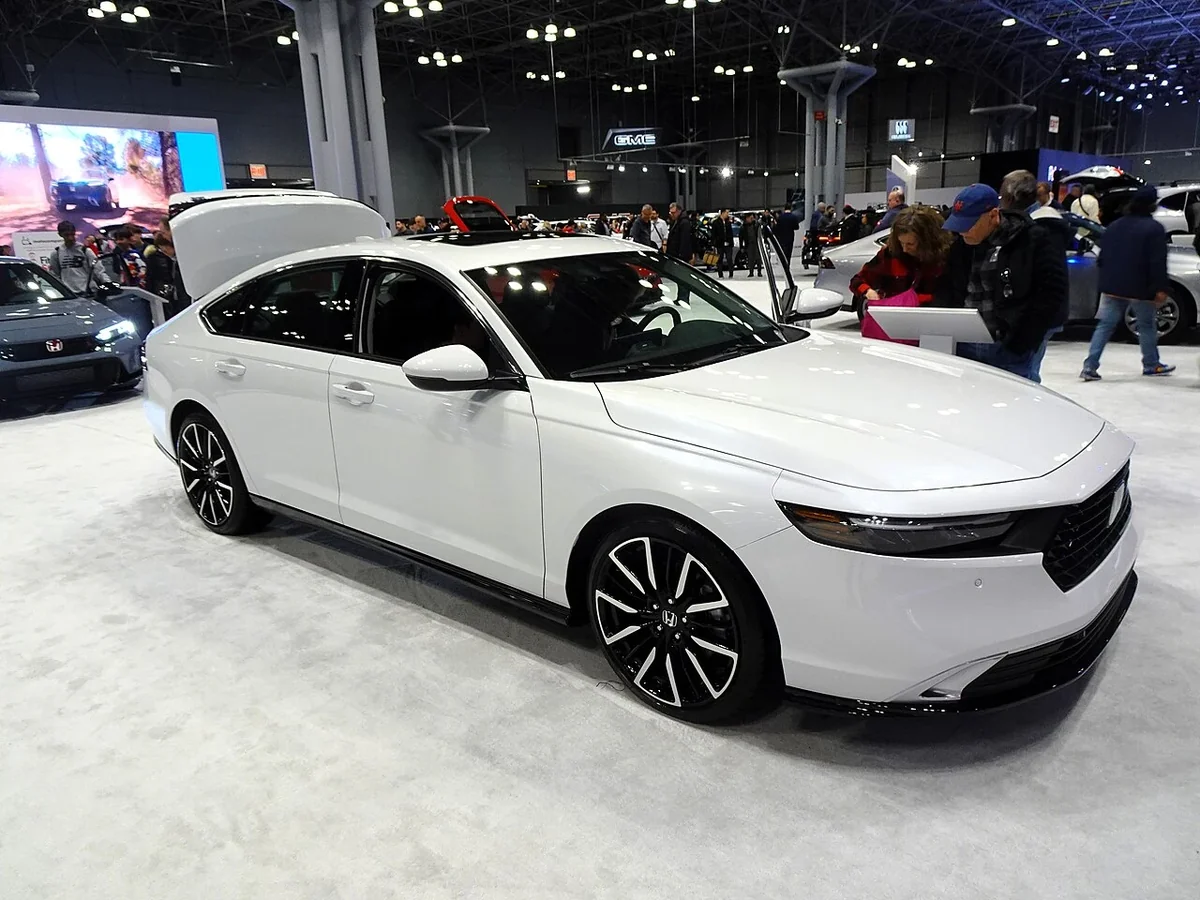
A midsize sedan can offer a useful passenger compartment without behaving like an SUV when it comes to luggage. The Accord’s long side profile suggests the distinction clearly: much of the visual length serves people and the separate trunk, rather than a tall cargo box stretching to the roof.
For adults traveling together, that can be an attractive balance. For someone loading a bulky stroller or an unusually shaped item, the trunk opening may become the deciding constraint. A generous capacity number does not guarantee that the object will pass through the opening or sit in the space without a complicated maneuver.
This is also why a family test should include the actual child seat and normal seating positions. A car that is comfortable for four adults can still be inconvenient for one household’s specific routine. Cariary would rather identify that mismatch early than let the phrase family sedan imply a universal solution. The Accord’s packaging is a strength when its shape matches the job, not because every family needs the same shape.
6. The Efficient Trim Is Not the Sportiest-Looking One
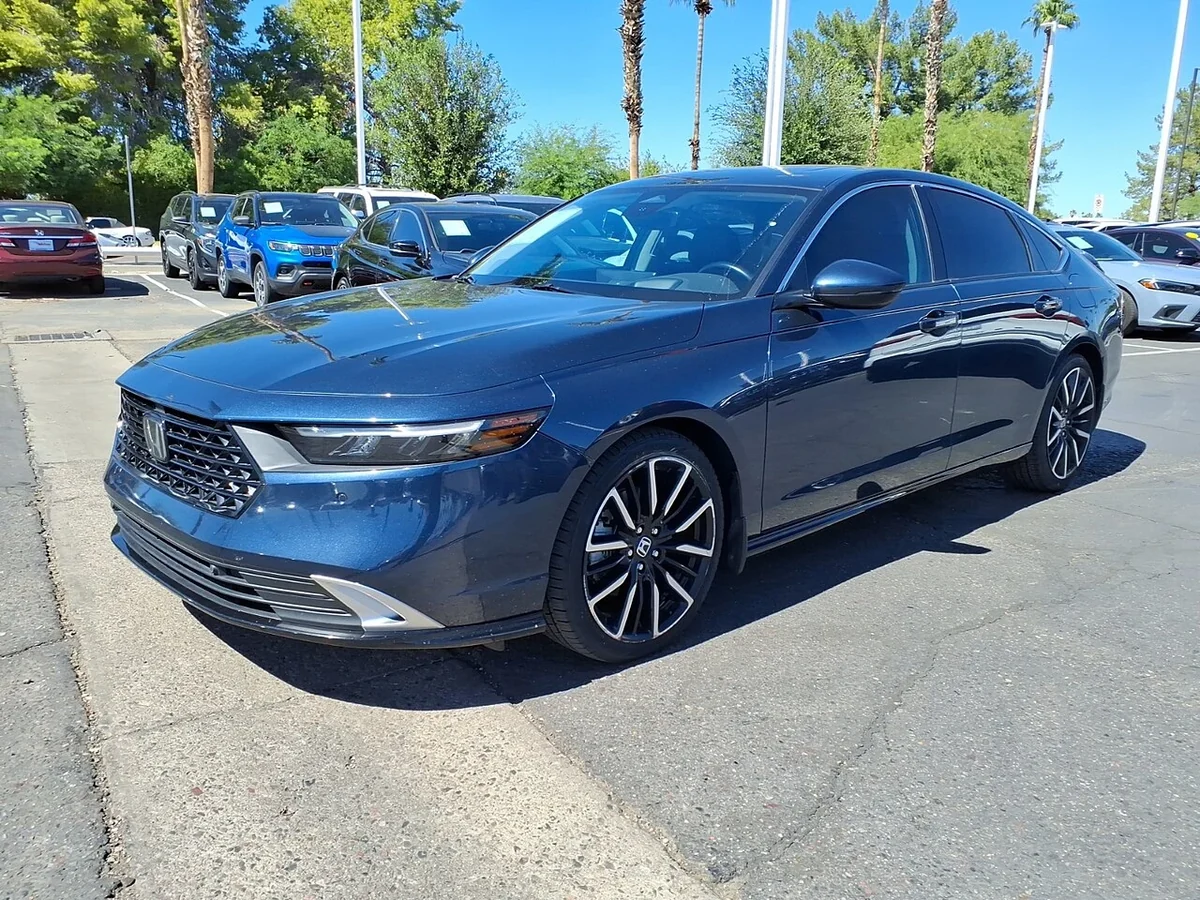
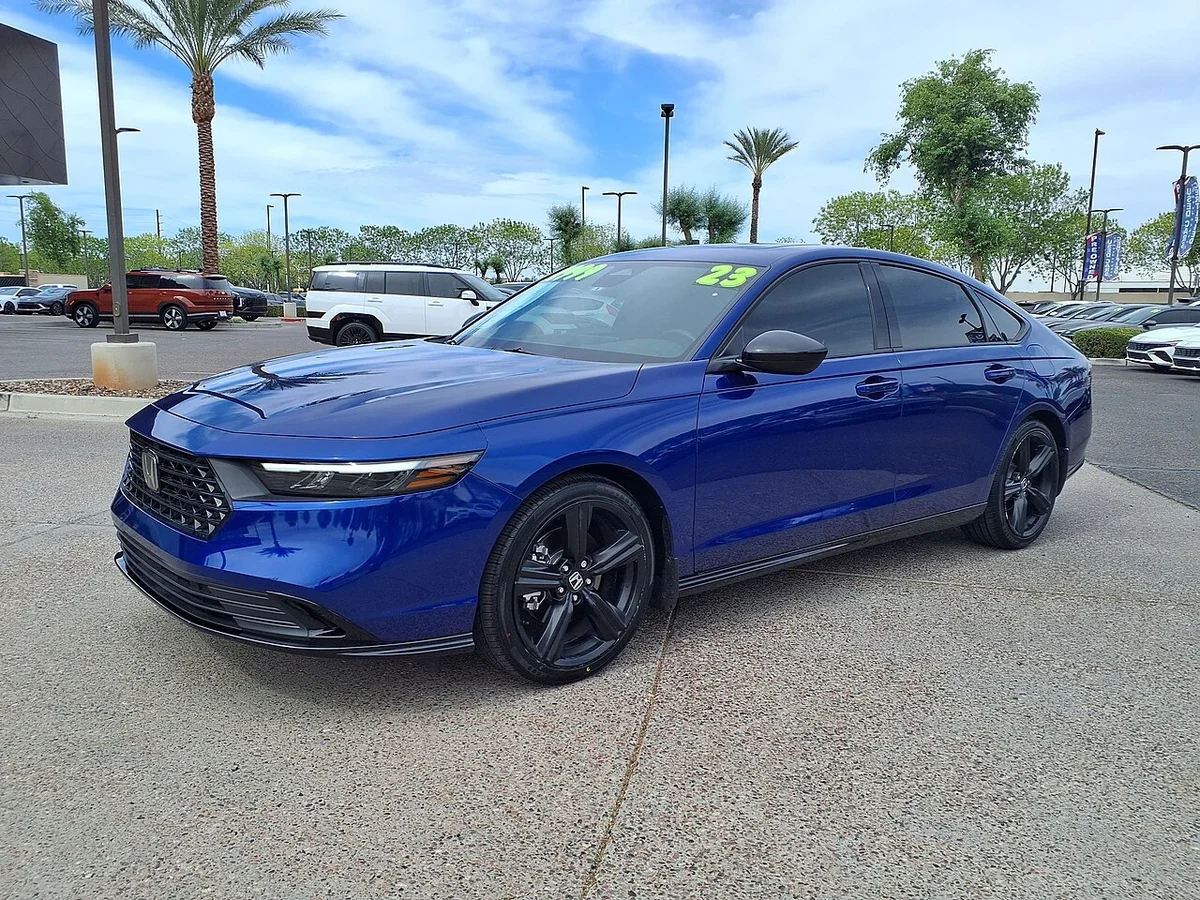
The Honda Accord Hybrid EX-L has a 48-mpg combined EPA estimate, while Sport, Sport-L and Touring are rated at 44 mpg combined. All use the same published 204-hp system output. That makes the trim decision more interesting than a simple progression from less car to more car.
EX-L uses 17-inch wheels; the other Hybrid trims use 19-inch wheels. The official ratings apply to complete configurations, so it would be too simplistic to attribute every difference to wheel diameter alone. Nevertheless, the equipment ladder clearly shows that the version with a stronger visual stance is not automatically the one that maximizes efficiency.
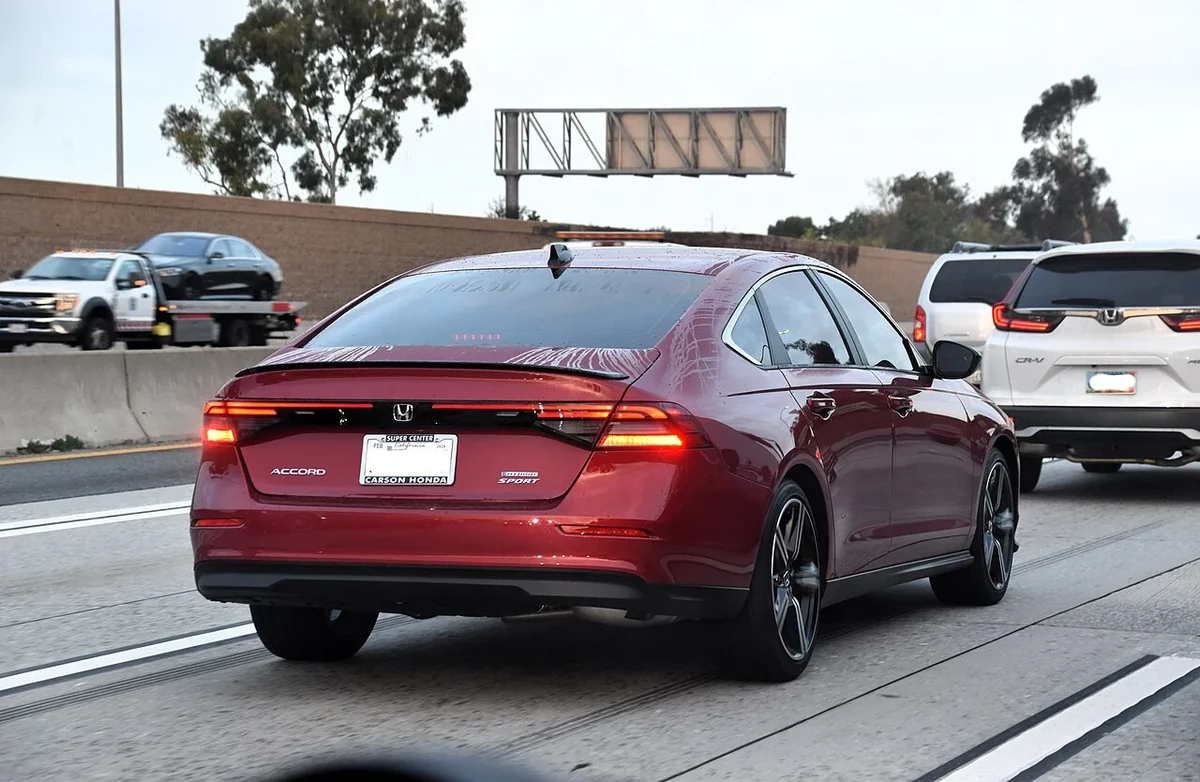
Cariary’s starting recommendation is EX-L for a buyer who values comfort equipment and fuel economy together. Sport-L is a styling preference, and Touring is a convenience-and-luxury preference. None is wrong, but the names should not obscure what you are buying. In particular, Sport does not indicate a more powerful hybrid system or turn the vehicle into a replacement for a dedicated performance sedan.
7. Camry Makes the Comparison More Interesting
The Toyota Camry is the most natural alternative, and Cariary already has a Camry review grounded in the owner’s own experience. The useful comparison is between two approaches to making daily transport satisfying, rather than a contest over which brand has the stronger reputation.
For the Honda Accord Hybrid, front-wheel drive is the only configuration in this U.S. range. That is an important boundary for someone who has decided AWD is essential. It is not proof that the car is unsuitable for every winter journey; tires, conditions and the driver’s choices remain fundamental. Our AWD explanation is a useful companion to that decision.
Compare seat support, visibility, rear access and the way the controls suit your habits. Then consider the actual trim prices. The better purchase may be the vehicle whose compromises bother you less, rather than the one with a small advantage in a single specification. Good family cars tend to reveal their differences through repetition, which is why an unhurried test drive matters more than a dramatic first impression.
8. What Changed for 2026, and Who Should Care?
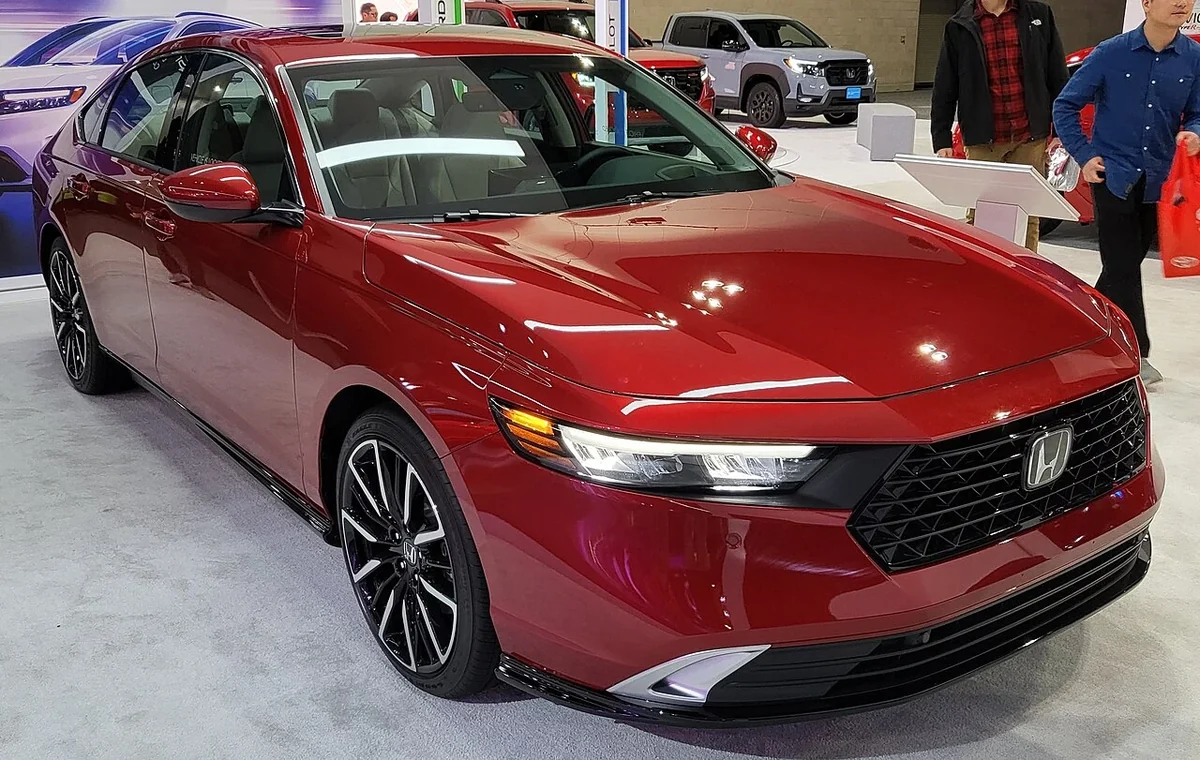
The 2026 update brings additional black exterior details to the Sport Hybrid models, while the gasoline LX and SE receive more standard cabin technology. This is a continuing generation, not an entirely new Accord. The distinction protects buyers from assuming that an updated model-year label automatically means a new platform or a redesigned hybrid system.
Published Hybrid MSRPs start at $33,795 for Sport, with EX-L at $35,095, Sport-L at $35,495 and Touring at $39,495, before destination and other charges. These are reference prices rather than dealer quotations. Since equipment and year-to-year changes vary, compare the exact vehicle offered rather than transferring every feature from one badge or older photograph.
Cariary’s four-star assessment comes from the clarity of the overall proposition. The Honda Accord Hybrid gives drivers a reason to stay with a sedan without pretending that practicality has only one form. Its efficient trims, straightforward cabin and balanced priorities are persuasive. The missing fifth star reflects the limits: no AWD here, less loading flexibility than a hatchback or SUV, and no promise of recreating the old high-performance Accord experience.
Who Should Buy It?
Recommended For
Drivers who want an efficient midsize family car, prefer a lower seating position and can use a sedan’s trunk without needing SUV-style loading access.
Not Recommended For
Buyers who require AWD, regularly carry tall bulky items, need a high seating position for easier entry or expect the performance character of the old 2.0T.
One-Line Verdict: A convincing reminder that a useful family car can still feel like a considered driving choice.
Frequently Asked Questions
Is the Honda Accord Hybrid a plug-in?
No. The 2026 U.S. Accord Hybrid manages its battery through normal driving and regeneration. It does not require an external charger and should not be bought as an electric-only commuter.
Which 2026 Honda Accord Hybrid has the best EPA rating?
EX-L is rated at 48 mpg combined. Sport, Sport-L and Touring are rated at 44 mpg combined. Actual results depend on conditions and use.
Does the Accord Hybrid offer AWD?
No. The verified 2026 U.S. Accord range is front-wheel drive. If AWD is a non-negotiable requirement, compare another model rather than assuming a higher trim adds it.
Is the Hybrid’s transmission the same as the gasoline Accord’s CVT?
No. Honda describes the Hybrid’s direct-drive two-motor arrangement as operating without a conventional belt-and-pulley CVT. The gasoline LX and SE use a conventional continuously variable transmission.
Why would Cariary consider EX-L before Touring?
EX-L combines useful comfort equipment with the strongest EPA efficiency rating in the range. Touring is attractive when its extra features are worth the price, but it does not deliver more total system horsepower.
Further Reading and Data Reference
Data reference date: October 2, 2026. Official specifications and attributed test observations are linked where discussed. Cariary Point is an editorial buyer-fit assessment, not an owner road-test score or reliability rating.
Explore more Cariary car reviews and buyer perspectives.