CARIARYCAR · DIARY · PERSPECTIVE
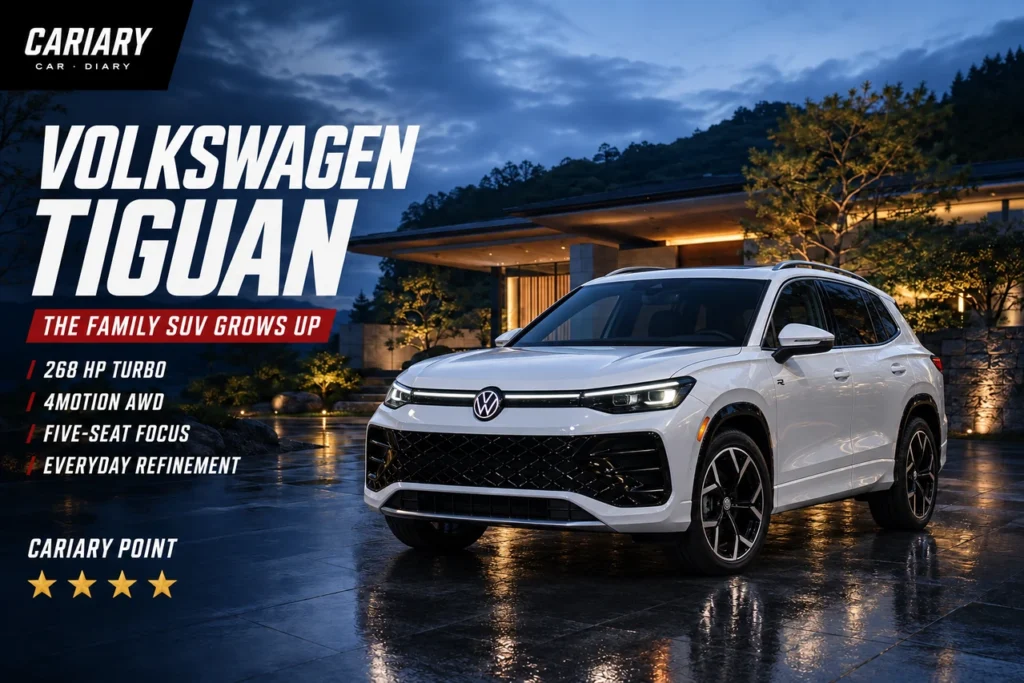
Cover: AI-generated Cariary editorial illustration, checked against the specified vehicle. It is not road-test photography.
This Volkswagen Tiguan Review asks a simple question: when a family SUV becomes more sophisticated, does it become a better everyday companion—or simply a more expensive one? The answer changes depending on the trim. The 2026 U.S. model offers both an ordinary family tool and a noticeably more ambitious flagship under the same name.
Cariary’s interest is in that tension. A car does not need a dramatic exhaust note to have a character. The way it balances useful space, power and the things you touch every morning can tell a more revealing story than its badge.
Scope: third-generation North American Tiguan, U.S. model year 2026, including SEL R-Line Turbo. European Tiguan powertrains and Canadian trim names are not U.S. specifications. This is a research-based buyer review, not a Cariary road test.
Four stars for a persuasive blend of family utility and upscale ambition. The flagship’s extra power is meaningful, but the best purchase may be a less expensive trim. Five stars would require fewer compromises in cost and everyday interface simplicity.
Volkswagen Tiguan Review: Key Specifications
| Engine | 2.0-liter turbocharged four-cylinder |
|---|---|
| Output | 201 hp in S, SE and SE R-Line Black; 268 hp / 258 lb-ft in SEL R-Line Turbo |
| Transmission | Eight-speed automatic |
| Drive | FWD or 4MOTION by trim; SEL R-Line Turbo has AWD |
| Seats / maximum cargo | Five / 69.8 cu ft with rear seats folded |
| Starting MSRP | $30,805; destination, taxes and other charges extra |
| Reference | Volkswagen’s U.S. Tiguan page; Volkswagen of America’s 2026 order guide |
1. Volkswagen Tiguan Review: A More Focused Family Identity
The important change is not the light bar. It is the decision to make the North American Tiguan a five-seat proposition. For a family that genuinely needs an occasional third row, that is a limitation. For everyone else, it makes the shopping question clearer: judge this car as a two-row SUV, rather than paying emotional credit for seats you rarely use.
There is something appealing about a mainstream Volkswagen that stops trying to win every category at once. Its job is to make the school run, weekend luggage and a long highway journey feel considered. That is a worthwhile ambition even if it will never create the poster-on-the-bedroom-wall excitement of an AMG.
2. The 268-HP Version Changes the Conversation
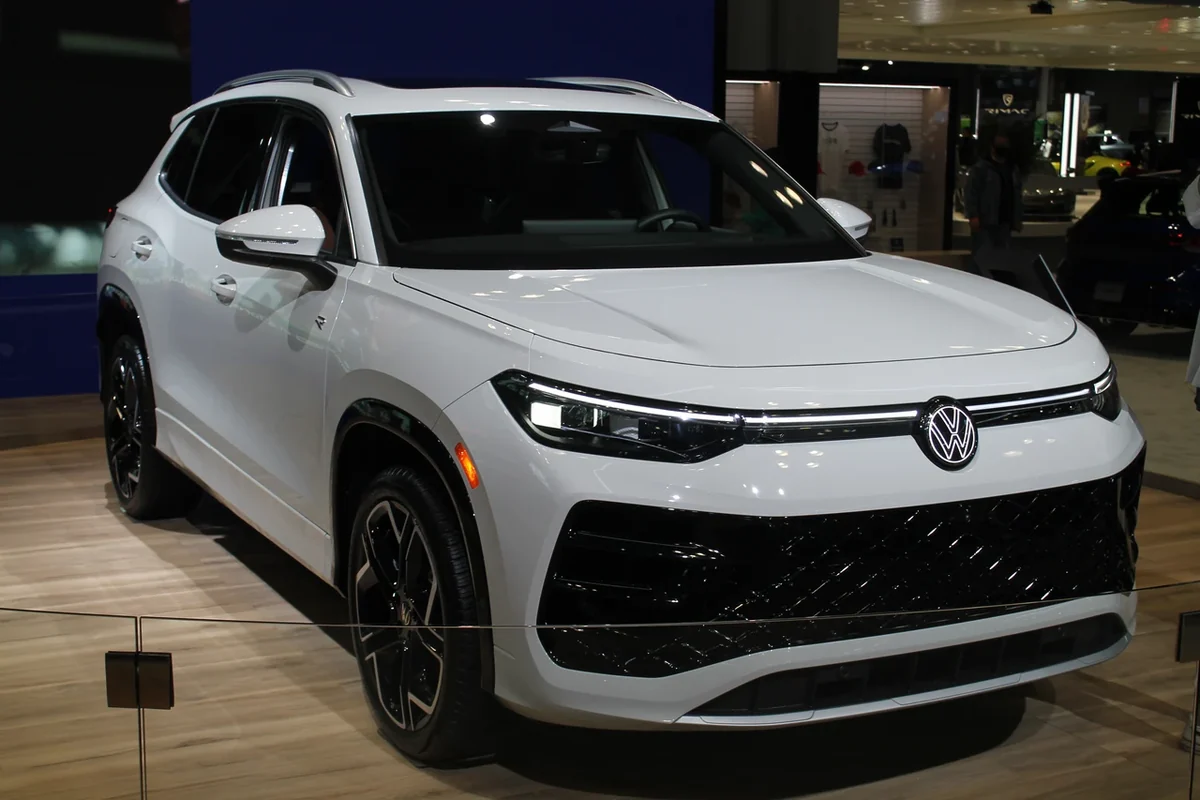
According to Volkswagen of America’s 2026 order guide, the ordinary trims have 201 hp while the SEL R-Line Turbo moves to 268 hp. All use an eight-speed automatic. That is a real powertrain distinction, not merely a sportier bumper and darker wheels.
Do not read 268 hp as a guarantee that this is a GTI on stilts. Weight, throttle calibration, gearing and tire choice still shape what reaches the driver. The more useful buyer question is whether the extra reserve makes loaded overtakes and short motorway entrances feel less effortful on your own test drive.
Our Volkswagen Tiguan Review treats the flagship as an option for drivers who want their family car to feel less strained, not as an automatic upgrade everyone should buy. If most of your driving is a short urban commute, paying for power you rarely ask for can be less satisfying than keeping the monthly cost comfortable.
3. Cabin Luxury Must Survive Monday Morning
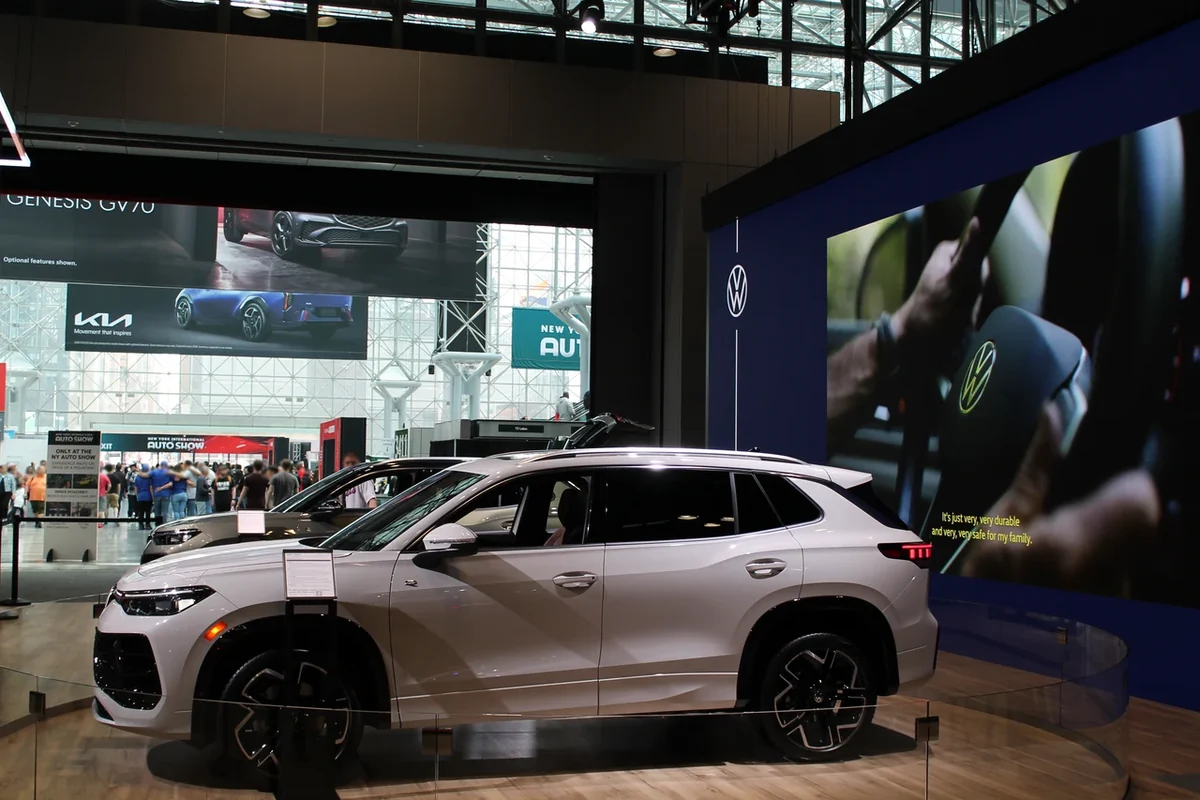
Volkswagen’s U.S. Tiguan page lists a standard 12-inch-class center display and an available 15-inch screen; the flagship also offers ventilated, massaging front seats. These features explain the Tiguan’s move toward a more expensive-feeling experience. They do not, by themselves, establish better ergonomics.
At a dealer, try the tasks you repeat without thinking: change temperature, select a familiar audio source, clear the windscreen and return to navigation. Do them while safely parked, without a salesperson guiding each gesture. A display that photographs beautifully can still ask for more attention than you want to give it.
The Volkswagen Tiguan Review verdict therefore gives technology credit only when it serves the routine. Seat comfort is equally personal. Spend more than two minutes in the actual seat and check thigh support, shoulder position and entry height. A feature count cannot tell you whether the cushion suits your body.
4. Space Is More Than a Maximum Cargo Number
Volkswagen quotes up to 69.8 cubic feet with the rear seats folded on Volkswagen’s U.S. Tiguan page. That is a useful capacity reference, but it describes a different situation from carrying four people and their bags. The shape of your stroller or suitcase matters more than a headline volume when the rear bench is occupied.
Bring the awkward item you actually transport. Check whether a child seat leaves enough room for the front passenger, whether the tailgate can open in your garage, and whether the load floor makes heavy bags easy to slide in. These small details are where a family SUV earns affection after the novelty has faded.
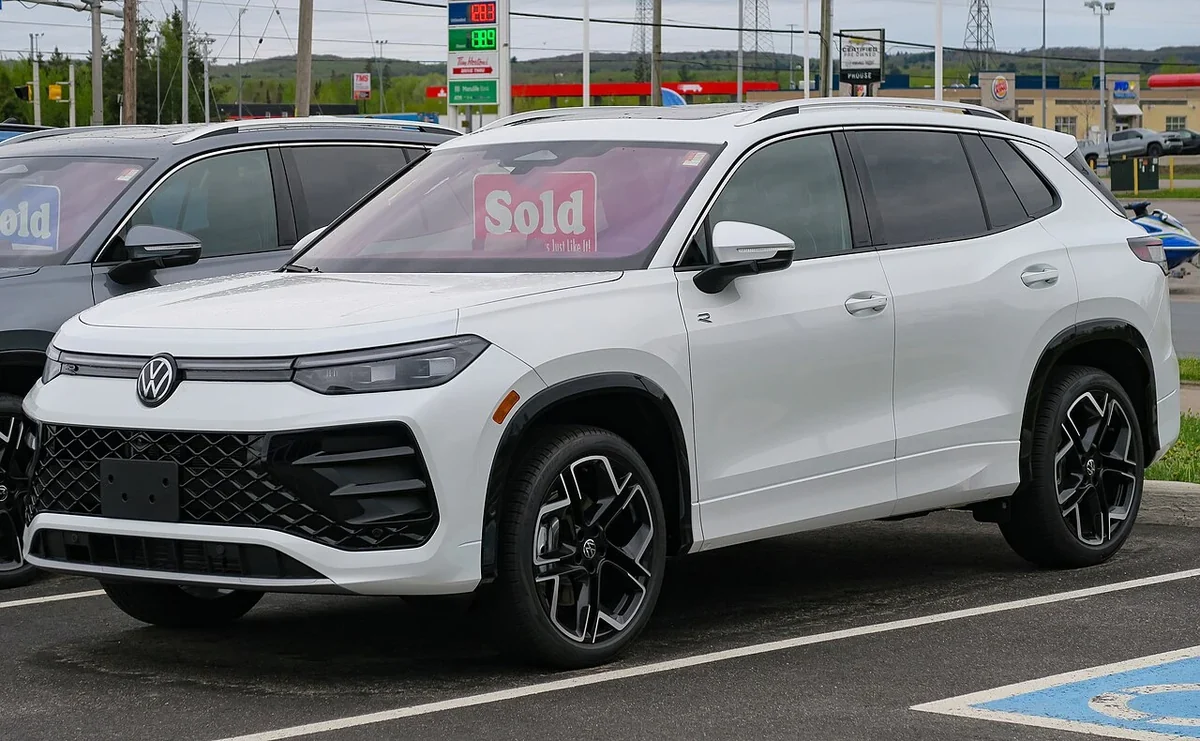
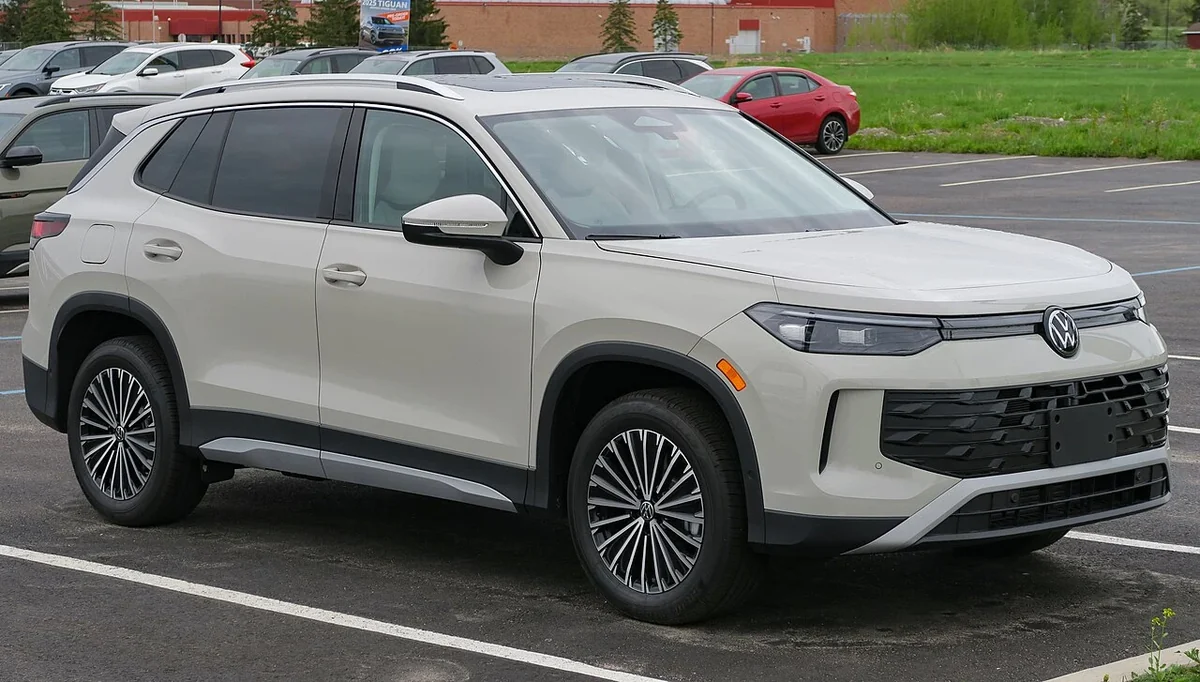
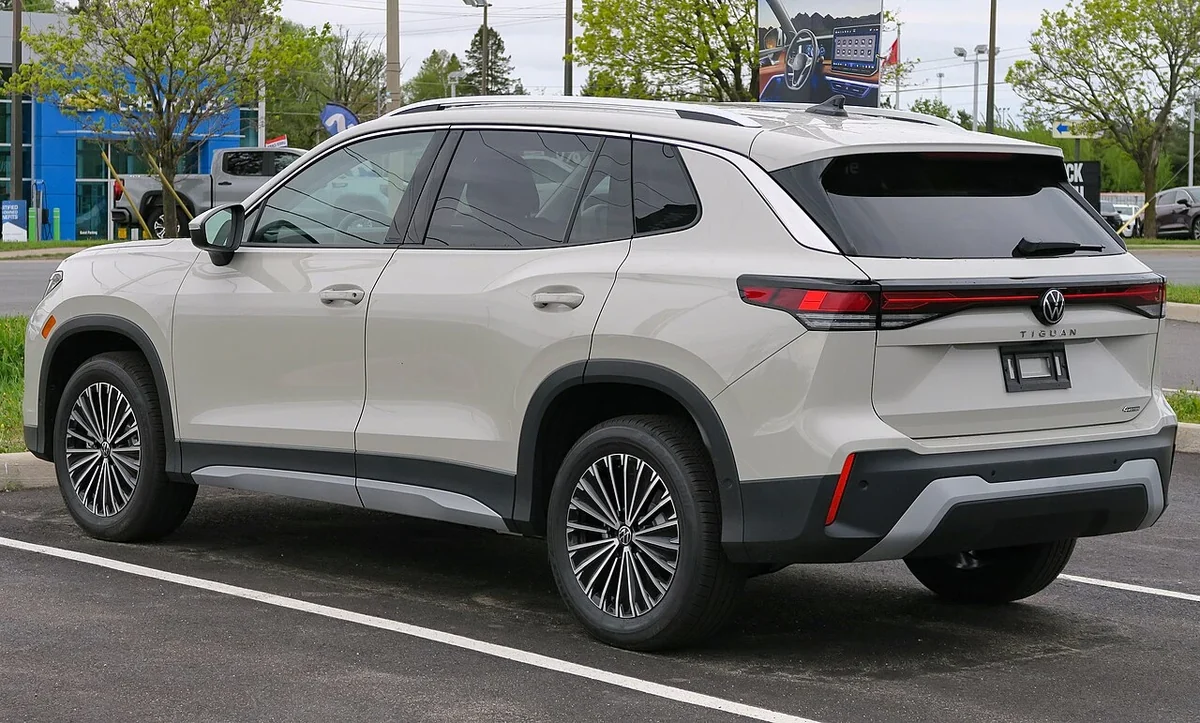
The Tiguan’s broad, relatively upright body suggests a car organized around people rather than a coupe-like silhouette. That is Cariary’s interpretation of its packaging and design, not a measured comparison of rear-seat comfort. A family car can be attractive without asking its passengers to pay for every styling decision.
5. R-Line Is Not One Single Promise
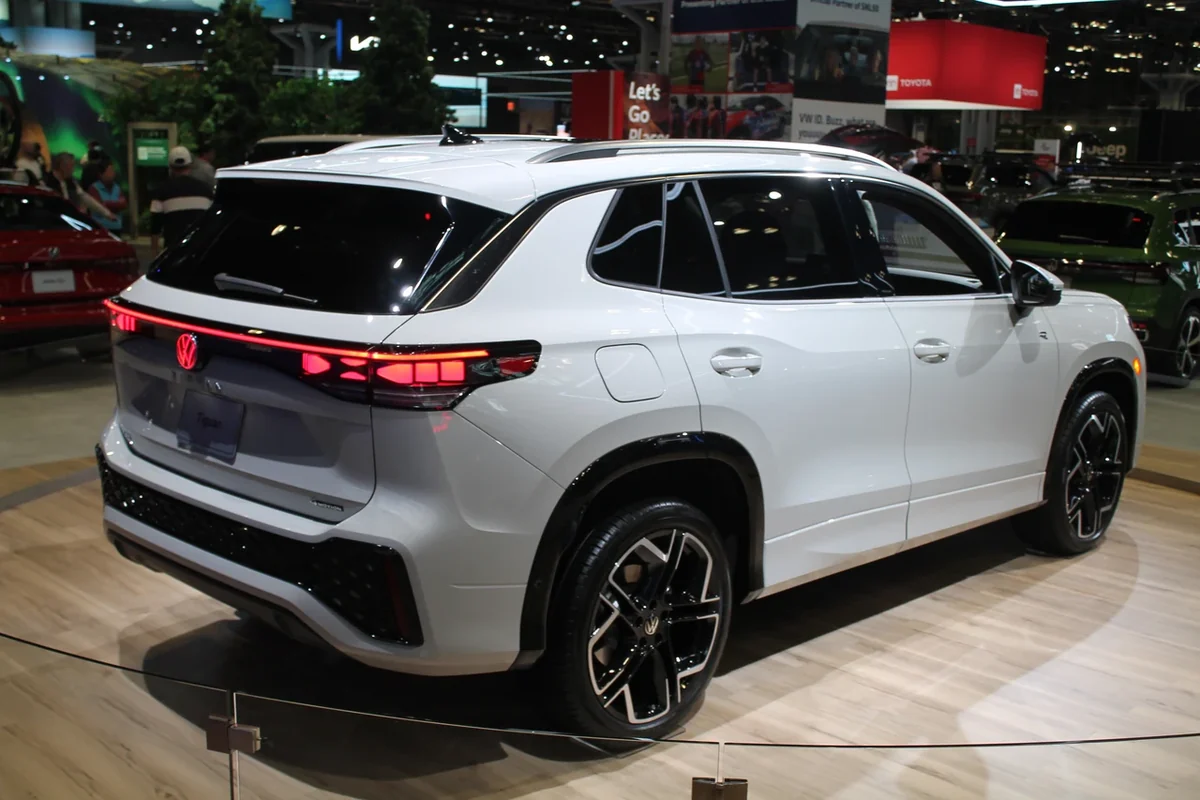
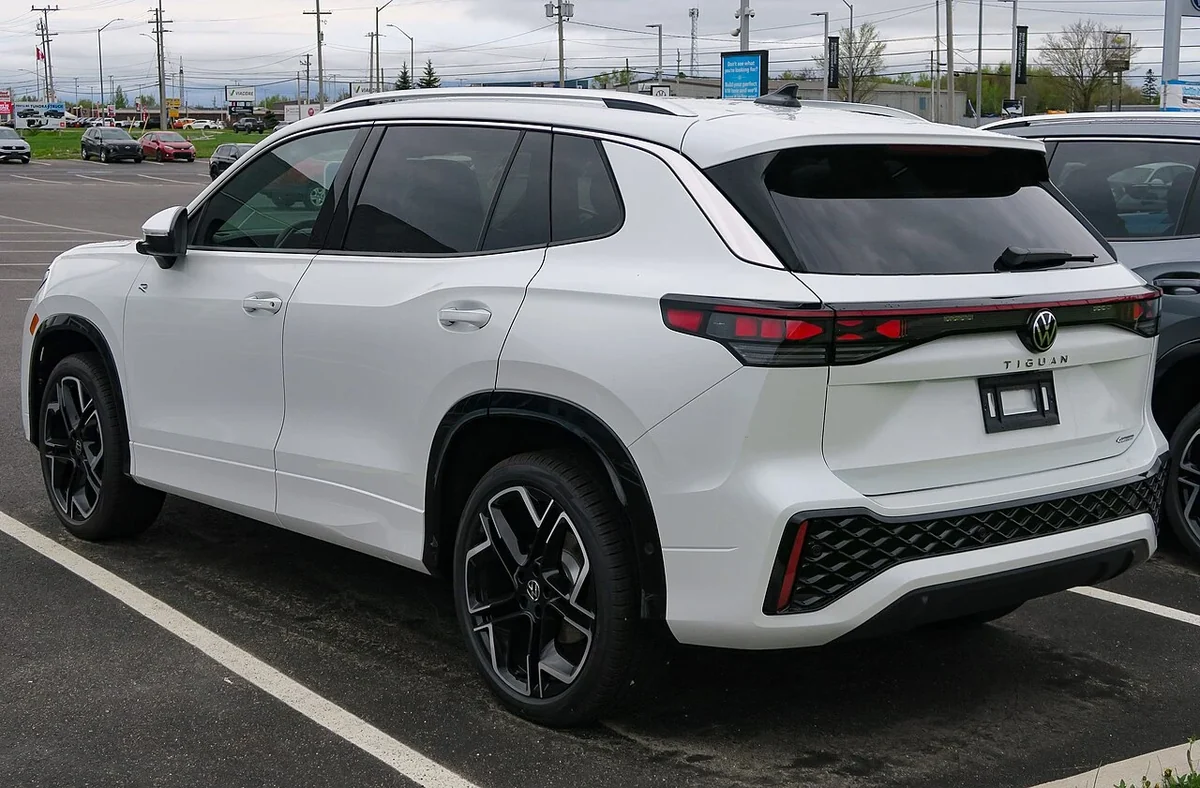
Read the full trim name. SE R-Line Black and SEL R-Line Turbo share the visual vocabulary of R-Line, but the latter is the one with the more powerful engine. Confusing them is an easy way to buy the appearance of the car you wanted while missing its mechanical appeal.
For the Volkswagen Tiguan Review shortlist, start with the least expensive specification that covers your daily needs. Then price the jump to the flagship as a complete package: power, seat features, wheels and the equipment you will actually use. Avoid evaluating one attractive option while mentally ignoring the rest of the price increase.
Larger wheels deserve a separate test over the same broken surface as a smaller-wheel car. Wheel size changes the tire sidewall available to absorb an impact, but it cannot predict the complete ride by itself. Tire model, pressure and suspension tuning matter too. The right decision is the one that feels acceptable on your local roads.
AWD Is a Tool, Not a Personality
Volkswagen of America’s 2026 order guide confirms standard 4MOTION on the SEL R-Line Turbo and availability on the other trims. For buyers regularly facing slippery gradients, that can be useful. It should not be treated as permission to travel faster in poor conditions.
Four driven wheels can help put engine torque down, but the tires still have to generate braking and cornering grip. If your winters are severe, budget for an appropriate tire strategy before congratulating yourself on the AWD badge. A car’s equipment list and the way it is prepared for a journey are separate things.
A front-wheel-drive Tiguan may remain the rational choice where conditions and usage do not justify AWD. This Volkswagen Tiguan Review is not trying to make the cheapest trim sound inadequate. The most satisfying ownership decision often starts with honestly describing your week.
What to Check Before You Commit
Compare written out-the-door quotes for the same equipment, rather than comparing an advertised entry price with a loaded demonstration car. Include insurance, replacement tire prices and the service schedule in that conversation. A modest difference in purchase price can hide a less modest difference in what you will spend later.
This is a new-generation vehicle; a polished cabin is not evidence of long-term durability. Check the exact VIN for outstanding campaigns and ask what the applicable warranty covers in your market. No long-term reliability score is implied by Cariary’s four-star assessment.
Against the hybrid-oriented shopping logic explored in our Toyota RAV4 review, the Tiguan invites a different priority: conventional turbo power and a deliberately upscale daily environment. The interesting comparison is not which badge wins, but which set of compromises you will notice least.
Cariary Perspective: Refinement Without Pretending
The strongest argument for this Volkswagen Tiguan Review is that ordinary driving deserves attention too. Most owners will spend far more time settling into the seat and carrying people than exploring the last fraction of its performance. A family car that makes those hours pleasant has accomplished something important.
Four stars reflect that coherent promise, with a clear condition: buy the specification that serves your life. The SEL’s additional power can be the finishing touch for the right driver. It should not become the excuse for turning a sensible family purchase into an uncomfortable financial commitment.
Who Should Buy It?
Recommended For
Families wanting a two-row SUV with useful load space and an upscale cabin; drivers interested in the flagship’s additional power after a proper back-to-back test.
Not Recommended For
Buyers who need a third row, want a U.S. Tiguan hybrid, or prioritize the lowest possible purchase and running costs above cabin features.
One-Line Verdict: The Tiguan grows up by taking everyday life seriously; the smartest version is the one whose extra equipment you will actually appreciate.
Frequently Asked Questions
Is the 2026 U.S. Tiguan a seven-seater?
No. This North American generation has five seats. Do not apply older-generation seating information to this car.
Does every R-Line have 268 hp?
No. The 268-hp engine belongs to the SEL R-Line Turbo. The SE R-Line Black has 201 hp.
Is this the same as the European Tiguan?
No. This Volkswagen Tiguan Review uses North American specifications. European powertrains, dimensions and equipment should not be substituted.
Why four Cariary stars?
The family-oriented package and available power are appealing, but cost, screen interaction and the need to choose the right trim keep the recommendation conditional.
Further Reading and Data Reference
Data reference date: October 3, 2026. Official specifications and attributed test observations are linked where discussed. Cariary Point is an editorial buyer-fit assessment, not an owner road-test score or reliability rating.
Explore more Cariary car reviews and buyer perspectives.