CARIARYCAR · DIARY · PERSPECTIVE
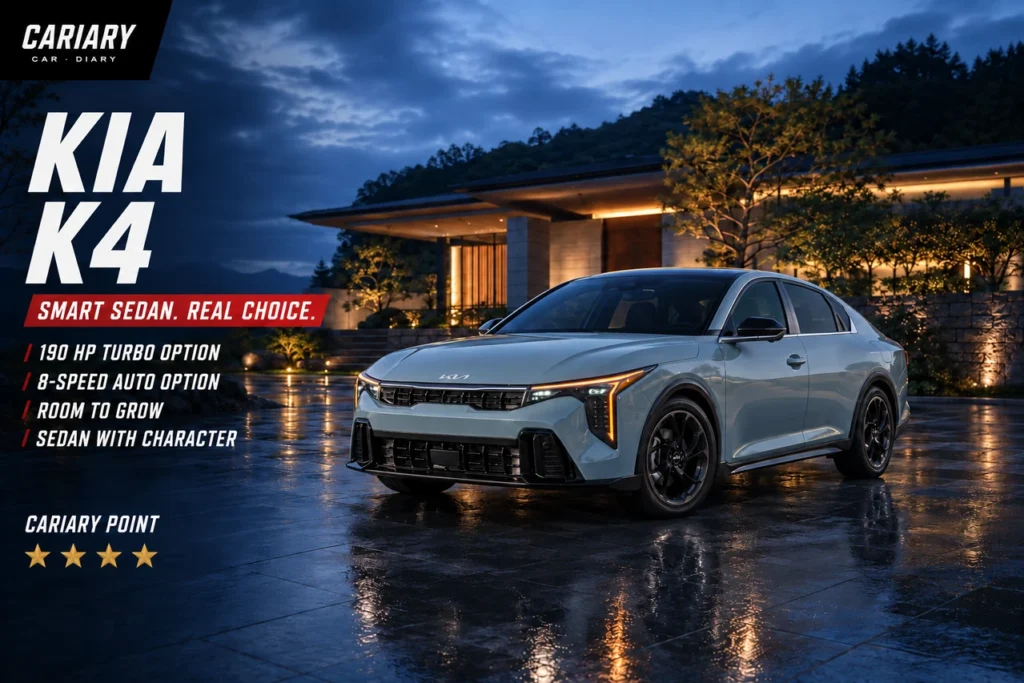
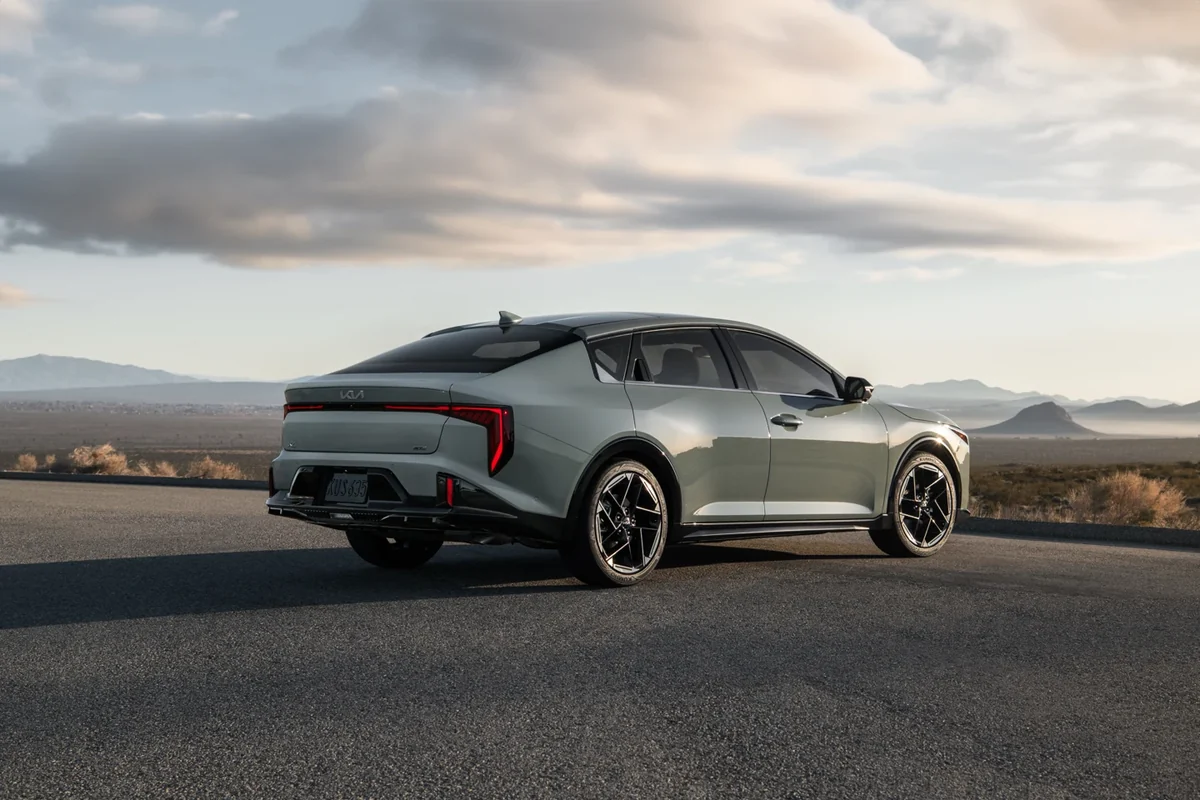
Cover: AI-generated Cariary editorial illustration, checked against the specified vehicle. It is not road-test photography.
This Kia K4 Review begins with a question that compact SUVs have made surprisingly interesting: what does a normal sedan still do especially well? The K4 answers with a low, distinctive body, useful passenger room and a starting price that leaves space in the budget for life outside the car.
The sharper point is that Kia has not made every appealing feature depend on buying the fastest engine. There is a sensible naturally aspirated version, a GT-Line with chassis changes but the same modest output, and a turbo that changes the transmission as well as the acceleration proposition. These are different ownership choices hiding beneath very similar styling.
Cariary sees the K4 as a car worth understanding before dismissing it as affordable transport. Its character comes from the gap between the dramatic exterior and the fairly ordinary jobs it is designed to do. The right version can make those jobs feel less ordinary without turning every commute into an expensive hobby.
Scope: 2027 U.S.-specification K4 sedan, with the hatchback mentioned only as a shopping alternative. This is a research-based buyer review, not a Cariary road test. Prices and specifications were checked on October 3, 2026; equipment varies by trim.
Four stars for distinctive design, generous rear legroom and a useful spread of trim choices. The missing fifth reflects the absence of a hybrid option in this U.S. lineup and the need to choose carefully between appearance, equipment and actual performance.
Kia K4 Review: Key Specifications
| Reference | 2027 K4 sedan, U.S. market |
|---|---|
| Base powertrain | 2.0-liter four-cylinder; 147 hp / 132 lb-ft; IVT; FWD |
| Turbo powertrain | 1.6-liter turbo four-cylinder; 190 hp / 195 lb-ft; eight-speed automatic; FWD |
| Starting MSRP | LX $22,390; GT-Line $25,590; GT-Line Turbo $28,490 |
| Additional destination | $1,245; taxes, licensing, options and dealer charges extra |
| Rear legroom / trunk | 38.0 inches / 14.6 cubic feet |
| Published combined economy | 33 mpg for 2.0-liter versions; 28 mpg for GT-Line Turbo |
| Rear suspension | Torsion beam on LX/LXS/EX; multi-link on GT-Line and GT-Line Turbo |
1. Kia K4 Review: A Sedan With a Clear Purpose
A sedan asks its buyer to value the journey differently from an SUV. You sit lower, load luggage through a separate trunk opening and give up the visual promise of all-terrain usefulness. In return, you can buy a substantial amount of car without paying for height you may rarely need. That is the K4’s starting argument, rather than a claim that everyone should stop buying crossovers.
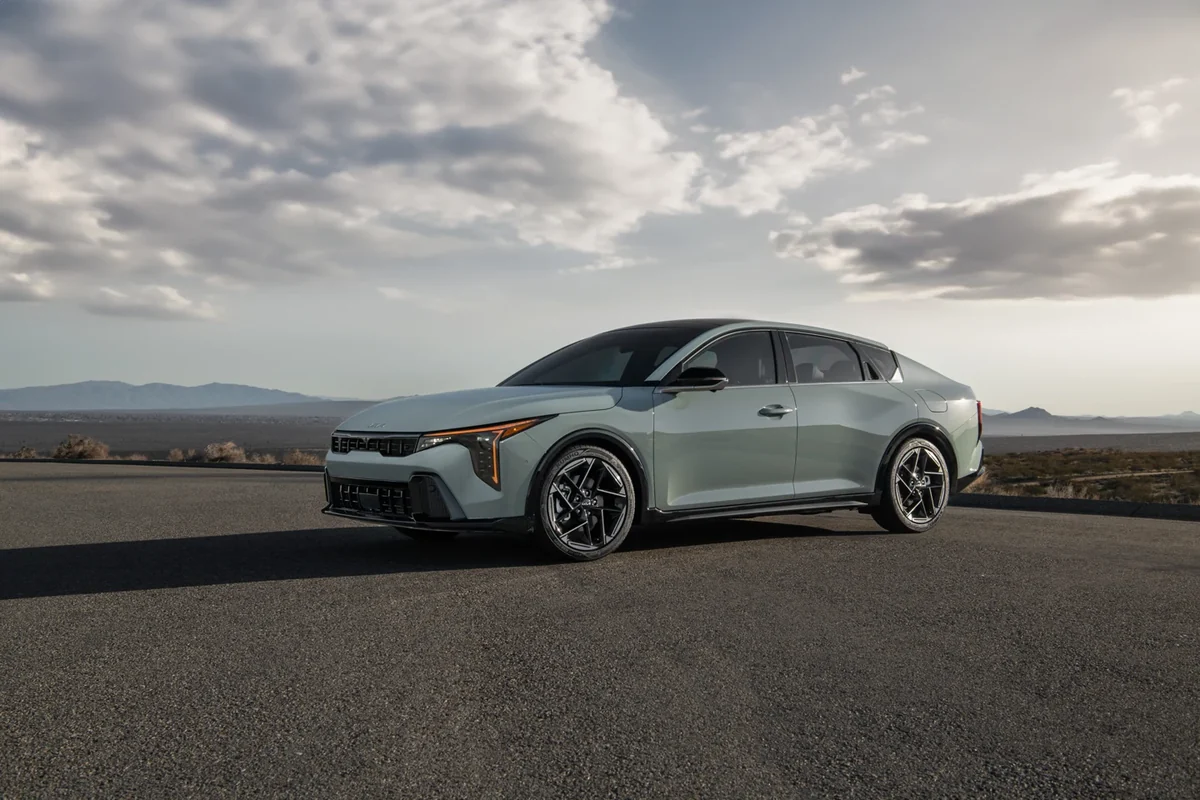
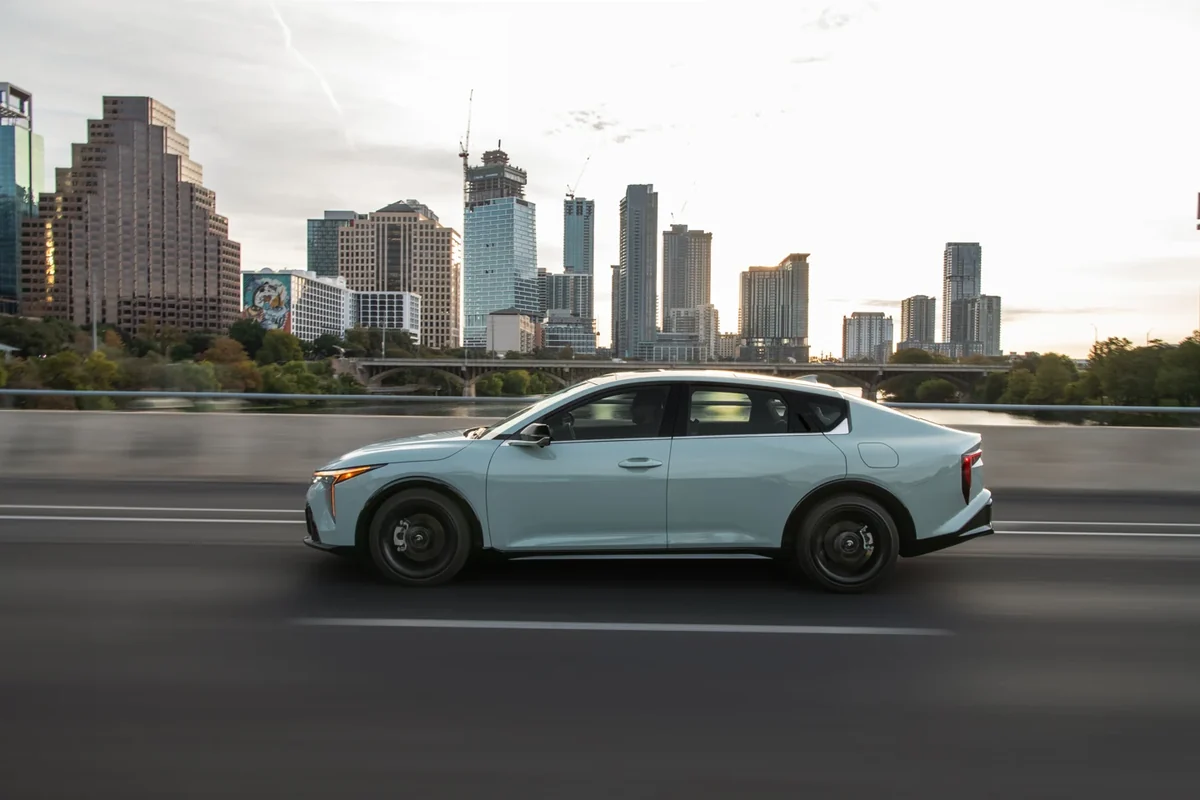
Its long roofline, angular lamps and concealed-looking rear door handles also push back against the idea that inexpensive cars should look apologetic. The shape is conspicuous enough to create a sense of occasion in a parking lot, but the car remains a front-wheel-drive compact sedan underneath. That distinction matters: styling can make an ordinary trip more enjoyable without promising sports-car behavior.
For a buyer replacing an older small car, the question is not whether the K4 resembles a larger premium model in a photograph. It is whether the seating position, entry height and trunk suit the next several years. A beautiful profile is a bonus only if the daily routine still works.
2. The 2027 Price Ladder Rewards Restraint
Kia’s official 2027 pricing lists the sedan at $22,390 for LX, $23,590 for LXS, $24,590 for EX, $25,590 for GT-Line and $28,490 for GT-Line Turbo. Destination adds $1,245 before taxes, licensing, options or dealer charges. These are manufacturer suggested prices, not promises about a particular dealer transaction.
The useful comparison is between the next feature you gain and the next amount you spend. EX to GT-Line is a $1,000 step before options; GT-Line to Turbo is $2,900. The first jump changes the look and rear suspension, while the second changes the engine and gearbox. Treating both as merely a more expensive trim would miss the substance of the choice.
Start with the least expensive version that meets your daily needs, then justify each upgrade. A nicer screen or a specific seat feature may improve every trip more than additional peak horsepower. Equally, someone regularly joining fast traffic with passengers may value the turbo’s extra torque more than decorative equipment. This is one of those ranges where a disciplined buyer can spend less and feel more satisfied.
3. Two Engines, Two Different Ownership Priorities
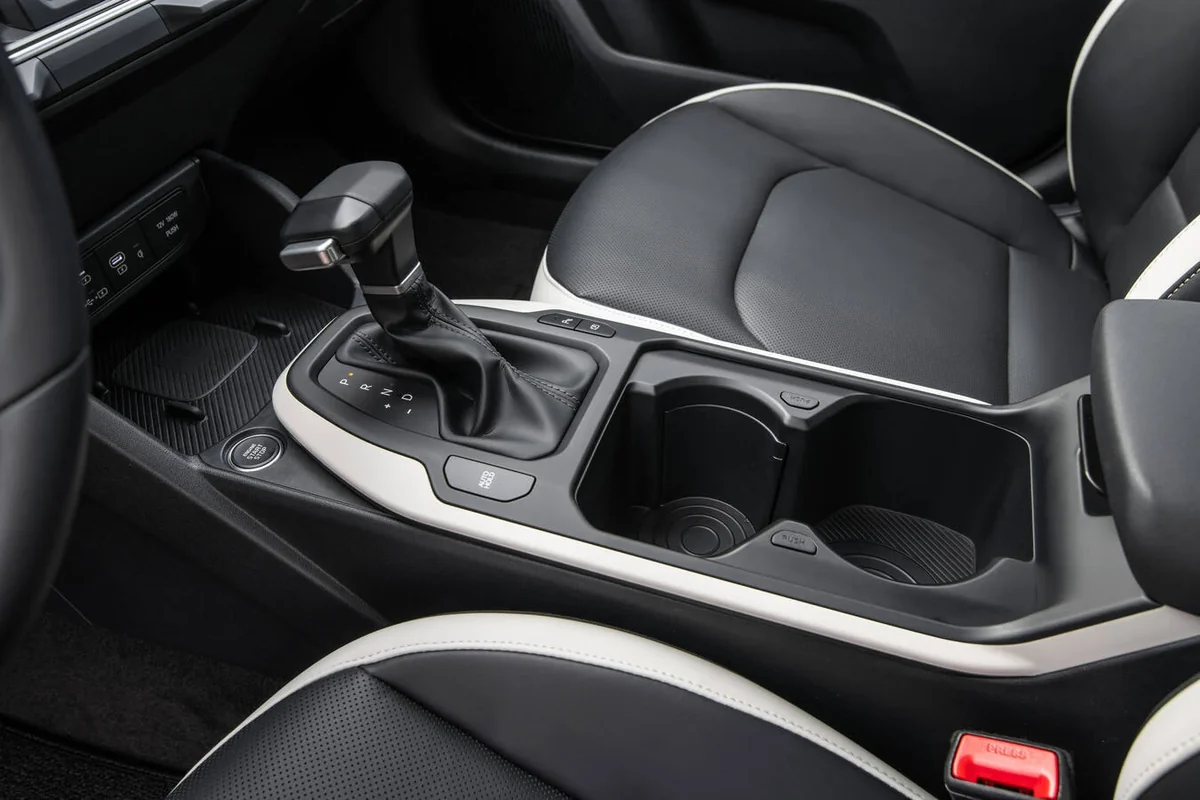
According to the 2027 specification table, the 2.0-liter engine produces 147 hp and 132 lb-ft and uses Kia’s IVT continuously variable transmission. The GT-Line Turbo has 190 hp and 195 lb-ft with an eight-speed automatic. Neither configuration makes the K4 a rear-drive sports sedan, and all-wheel drive is not part of this U.S. range.
The meaningful turbo gain is not just 43 additional horsepower. Its torque arrives across a low-to-mid engine-speed band, while the conventional stepped automatic gives the drivetrain a different operating pattern from the IVT. For a buyer, that changes what to pay attention to on the test drive: response while merging, the timing of a downshift and the sound during a longer climb.
Do not assume a CVT must be unpleasant or an eight-speed must be perfectly smooth in every situation. Calibration matters. Try the route you actually use, including a gentle pull away, a crowded junction and an uphill acceleration. Our Drivetrain Basics guide explains why the gearbox can shape a car’s personality as much as its engine output.
4. GT-Line Is More Than a Horsepower Label
A particularly useful detail is that the ordinary GT-Line keeps the 147-hp engine but receives multi-link rear suspension. LX, LXS and EX use a torsion beam. The Turbo also uses multi-link. That means GT-Line does not simply mean turbocharged, and the buyer needs to read the full badge rather than infer performance from the body kit.
Multi-link geometry gives engineers more freedom to manage wheel movement, but it is not an automatic certificate of superior ride quality. Springs, dampers, bushings, tire construction and wheel size still determine how the complete car responds. A simpler suspension can be well tuned; a more complex one can be made unnecessarily firm.
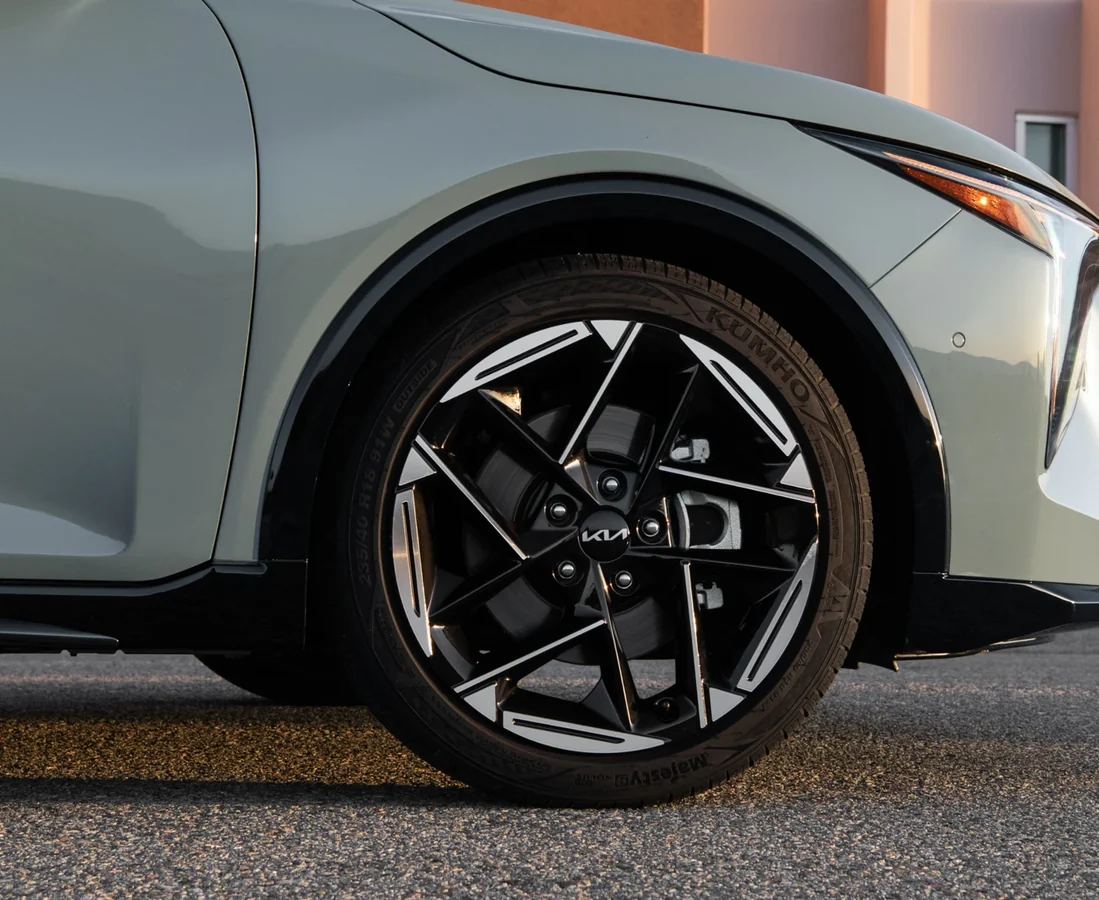
The K4’s 18-inch GT-Line wheels make this a real shopping consideration. Drive over the same broken surface in two trims if possible. The goal is a car that stays composed without repeatedly sending sharp impacts into the cabin. That is the distinction behind Cariary’s discussion of stiffness and handling: impressive hardware only matters when it helps the tires and passengers do their jobs.
5. Rear Legroom Is the Quiet Selling Point
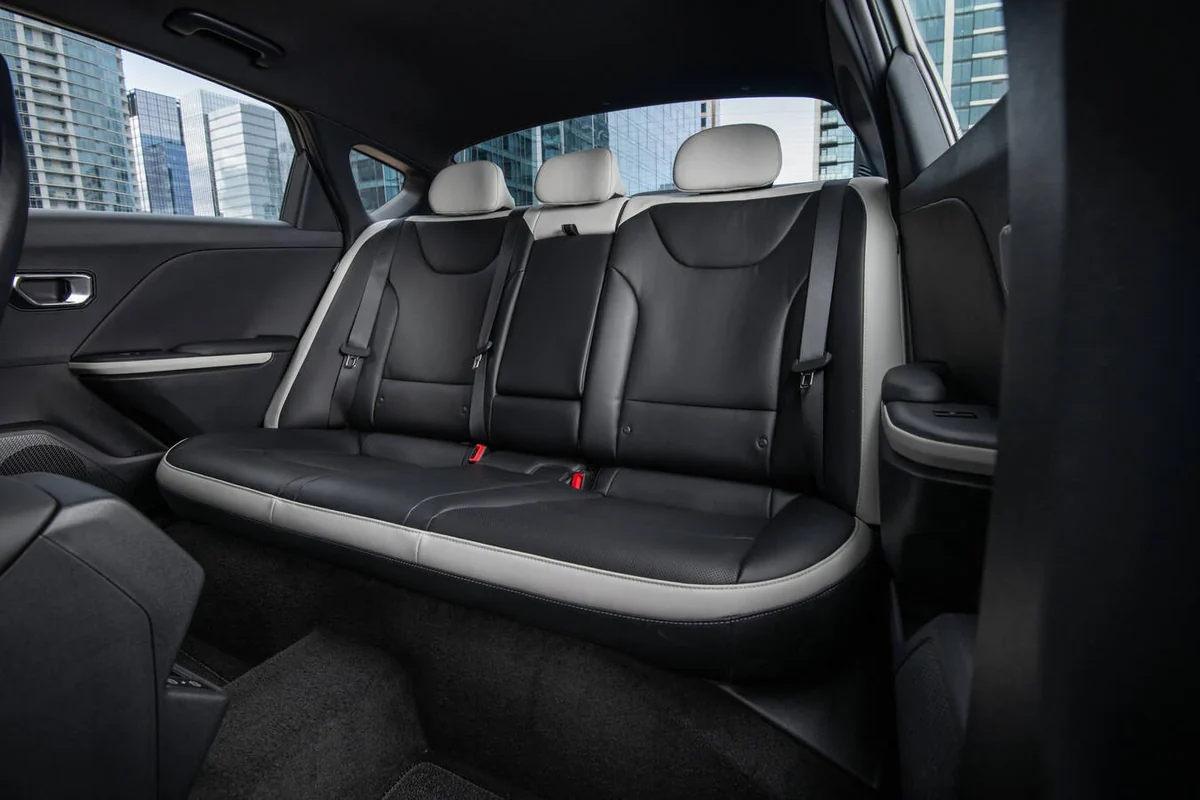
Kia lists 38.0 inches of rear legroom and a 14.6-cubic-foot trunk. Those figures explain why this car deserves to be considered by people who occasionally carry adults, rather than only by solo commuters. A small-car price does not necessarily mean the rear seat must become a temporary punishment.
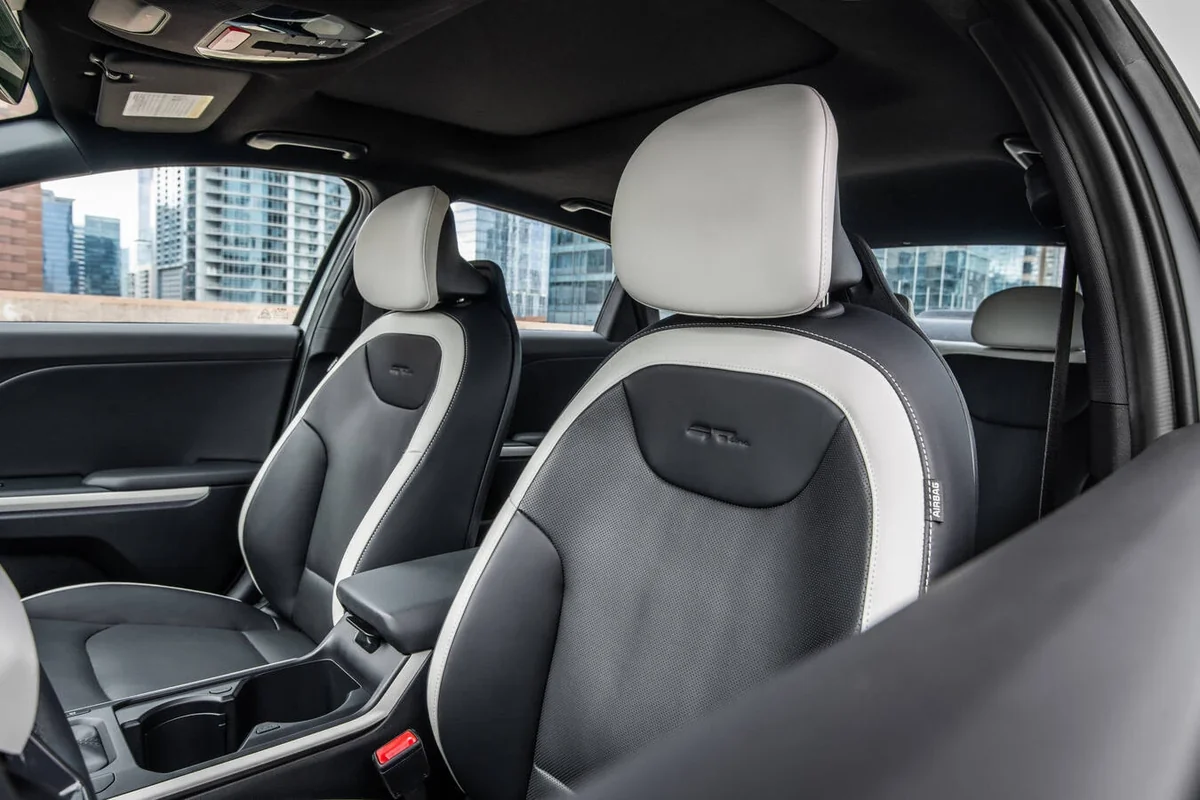
Numbers still cannot tell you whether a particular family fits. Put the front seat in the actual driver’s position, then check knee room, foot space and the angle of the rear cushion. A tall passenger may care more about head clearance beneath the roof than another inch on the specification table. Families should bring the child seat they intend to use.
The separate trunk is equally specific. It keeps luggage out of sight, but a large box may be stopped by the opening before the nominal volume is used. Kia’s 2027 hatchback starts at EX grade; its EX MSRP is $25,090, just $500 above the sedan EX before fees and options. Buyers who regularly move bulky objects should compare the opening and folding-seat arrangement, not choose the sedan purely from its lower entry price.
6. Cabin Technology Must Make Daily Tasks Easier
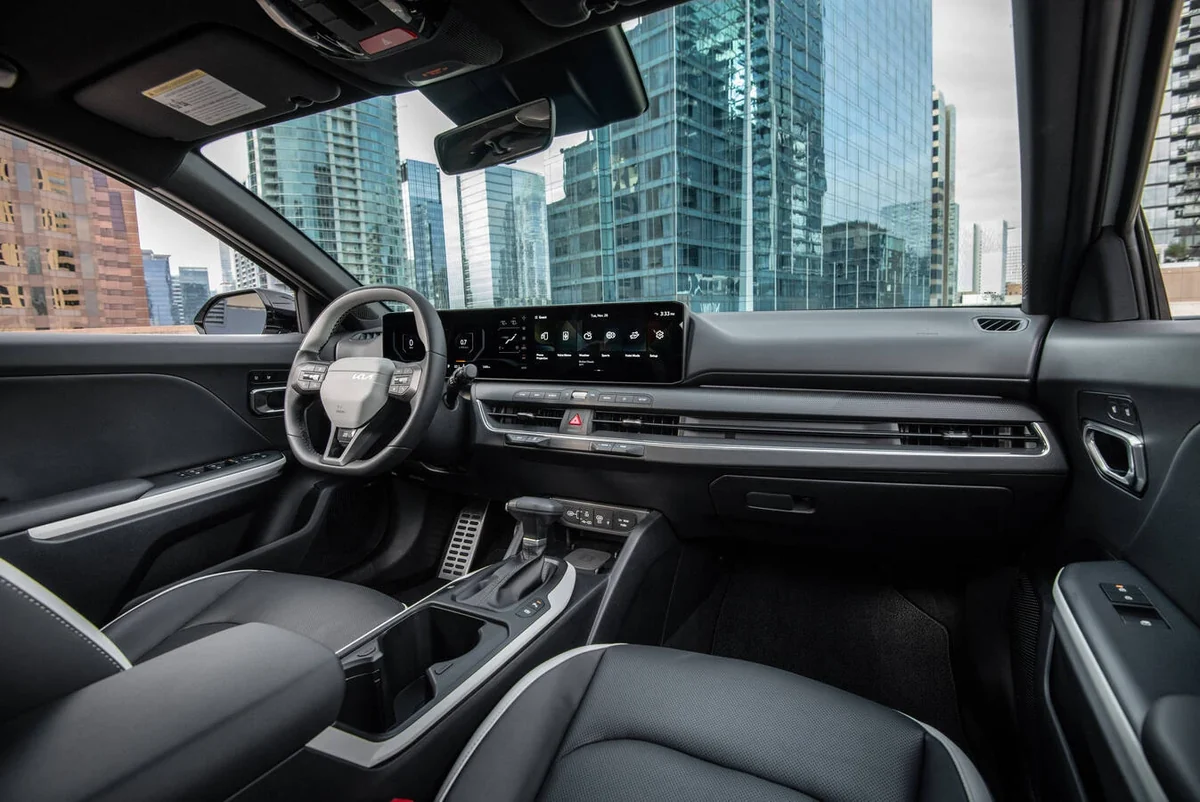
The K4 can offer a striking screen-heavy dashboard, but equipment differs materially by trim and package. Kia’s features and options list should be the checklist, especially for buyers shopping from photographs of a well-equipped press car. A display in an image does not establish that the entry model includes every surrounding function.
Available equipment such as ventilated front seats, a memory function and a heated steering wheel can matter more in repeated use than a dramatic launch-screen animation. Some of these features are bundled. Compare the complete option package and price rather than assuming a single desired item can be ordered alone.
Make the cabin demonstrate itself: adjust the temperature, change the audio source, pair your phone and return to the navigation view. Ask a second regular driver to do the same without coaching. A car that feels immediately understandable to everyone who uses it has a kind of value that does not appear in a horsepower comparison. Driver assistance is support, not permission to stop supervising the road.
7. The Missing Hybrid Changes the Comparison
The official 2027 figures show 29/39/33 mpg city/highway/combined for the 2.0-liter sedan versions and 26/33/28 mpg for GT-Line Turbo. These are published estimates; weather, speed, traffic and driving style change actual consumption. The 33-to-28 combined difference is a reminder that the turbo asks for an ongoing trade-off as well as its higher purchase price.
This U.S. K4 lineup does not include a hybrid. Drivers covering a large annual distance should therefore compare total ownership cost with an appropriate hybrid alternative, including the price difference and their own fuel cost. A fuel-economy advantage is not free if it requires a much larger initial spend, but neither should it be ignored because the K4 looks more interesting.
Our Toyota Camry review offers a larger hybrid-sedan perspective, rather than a same-size substitute. The useful lesson is to compare how a powertrain fits the routine. Avoid borrowing long-term reliability conclusions from another Kia or from a warranty headline; the exact vehicle’s service requirements and maintenance history still matter.
8. Cariary Perspective: Buy the Character You Will Use
The K4 makes an everyday car feel like a deliberate choice. That is more interesting than simply packing the most features into a low starting price. Its appearance gives the buyer something to enjoy, while its rear-seat dimensions and trim spread leave room for practical judgment.
Our four-star assessment favors the balance, not a claim that every version is equally good. EX deserves a close look for a straightforward daily car. GT-Line is appealing when the chassis specification and appearance justify the extra cost. Turbo belongs on the shortlist when its stronger drivetrain will be used often enough to outweigh the purchase and consumption penalty.
A fifth star would require fewer compromises across a wider range of buyers. The lack of a hybrid and the package-dependent cabin features keep the choice conditional. Still, a sensible sedan does not have to feel like surrender. The K4’s best argument is that careful spending and visual personality can occupy the same driveway.
Who Should Buy It?
Recommended For
Drivers who want an expressive, useful sedan at a contained purchase price, with genuine choices between equipment and turbo performance.
Not Recommended For
Buyers needing all-wheel drive, a hybrid powertrain, SUV entry height or a large hatch opening; shoppers who expect GT-Line alone to mean the turbo engine.
One-Line Verdict: The K4 makes the sensible sedan interesting, provided you buy the trim for its daily benefits rather than its badge.
Frequently Asked Questions
Is the 2027 Kia K4 GT-Line turbocharged?
Not automatically. GT-Line uses the 147-hp 2.0-liter engine; GT-Line Turbo uses the 190-hp 1.6-liter turbo. Both have multi-link rear suspension.
Does the Kia K4 have a CVT?
The 2.0-liter sedan uses Kia’s IVT continuously variable transmission. GT-Line Turbo instead uses an eight-speed automatic.
Is the Kia K4 available with AWD or a hybrid?
Neither is listed in the 2027 U.S. K4 sedan range reviewed here. Do not transfer another market’s specifications to a U.S. car.
How much is the 2027 Kia K4?
LX starts at $22,390 MSRP, plus $1,245 destination. Options, tax, licensing and dealer charges are additional.
Why does Cariary give the K4 four stars?
It combines distinctive design, useful passenger room and a sensible price ladder. The hybrid gap and trim-dependent compromises keep the recommendation below five stars.
Further Reading and Data Reference
Data reference date: October 3, 2026. Official specifications and attributed test observations are linked where discussed. Cariary Point is an editorial buyer-fit assessment, not an owner road-test score or reliability rating.
Explore more Cariary car reviews and buyer perspectives.