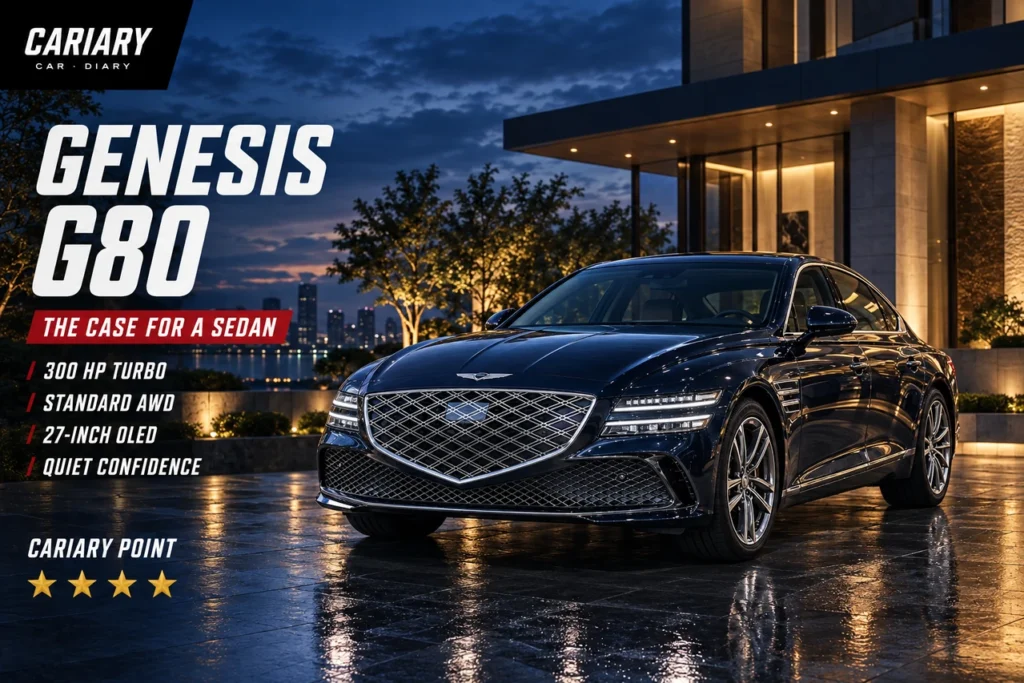
CARIARYCAR · DIARY · PERSPECTIVE
Cover: AI-generated Cariary editorial illustration, checked against the specified vehicle. It is not road-test photography.
This Genesis G80 review asks why someone would still choose a sedan when the showroom offers so many SUVs. The answer begins with proportion: a long hood, a lower roof and a cabin that promises separation from the busy world outside. The G80 makes that choice look deliberate.
Its value is not exhausted by comparing a list of features with a German competitor. The more interesting question is whether its idea of luxury suits you: visual confidence, generous equipment and a car that does not need to turn every journey into a performance demonstration.
This research-based review covers the facelifted gasoline Genesis G80, using 2026 U.S. specifications and prices. It does not cover the Electrified G80. Cariary has not road-tested this vehicle; interpretation and buyer checks are separated from manufacturer specifications.
Four stars for a distinctive luxury-sedan identity, substantial standard equipment and meaningful powertrain choice. Rear access, upper-trim cost and the need to assess local ownership support keep the recommendation conditional.
Genesis G80: Key Specifications
| Reference | 2026 U.S. gasoline G80, facelifted RG3 generation |
|---|---|
| 2.5T | 2.5-liter turbo inline-four; 300 hp / 311 lb-ft on premium fuel |
| 3.5T | 3.5-liter twin-turbo V6; 375 hp / 391 lb-ft on premium fuel |
| Transmission / drive | Eight-speed automatic / AWD |
| Display | 27-inch OLED instrument and navigation display |
| Starting MSRP | $58,450 before destination, taxes, options and fees |
| Seating | Five; rear access and headroom should be checked personally |
| Important trim distinction | Prestige Black omits several Sport Prestige chassis features |
Why the Genesis G80 Still Makes Sense as a Sedan
A sedan asks you to make peace with a lower seating position and a separate trunk. In return, it offers a different relationship with the road and a silhouette that does not depend on height for presence. Neither body style is morally superior. The question is which one makes ordinary travel feel right to you.
The G80’s appeal starts with that distinction. It can be a family car, an executive car or simply a car bought because its owner likes the way a large sedan looks. There is no need to invent a business purpose to justify the preference. Emotion is a legitimate part of an expensive purchase, provided it does not conceal a practical mismatch.
Before comparing upholstery, try getting into the rear seat and loading the objects you carry. A person with limited mobility may prefer a different seat height. Someone who rarely carries bulky equipment may find the sedan entirely sufficient. The shape should fit your life before it becomes a statement about your taste.
The Design Gives the G80 Its Own Identity
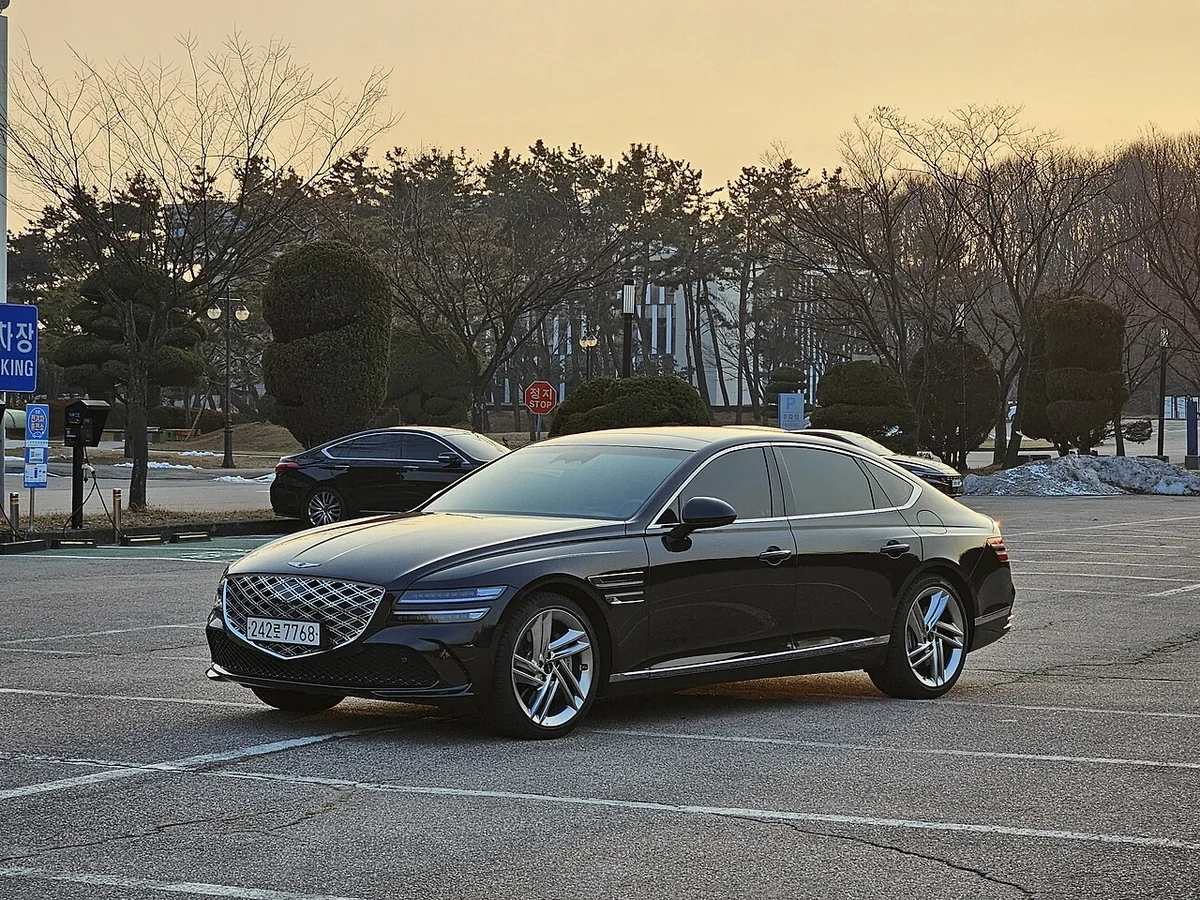
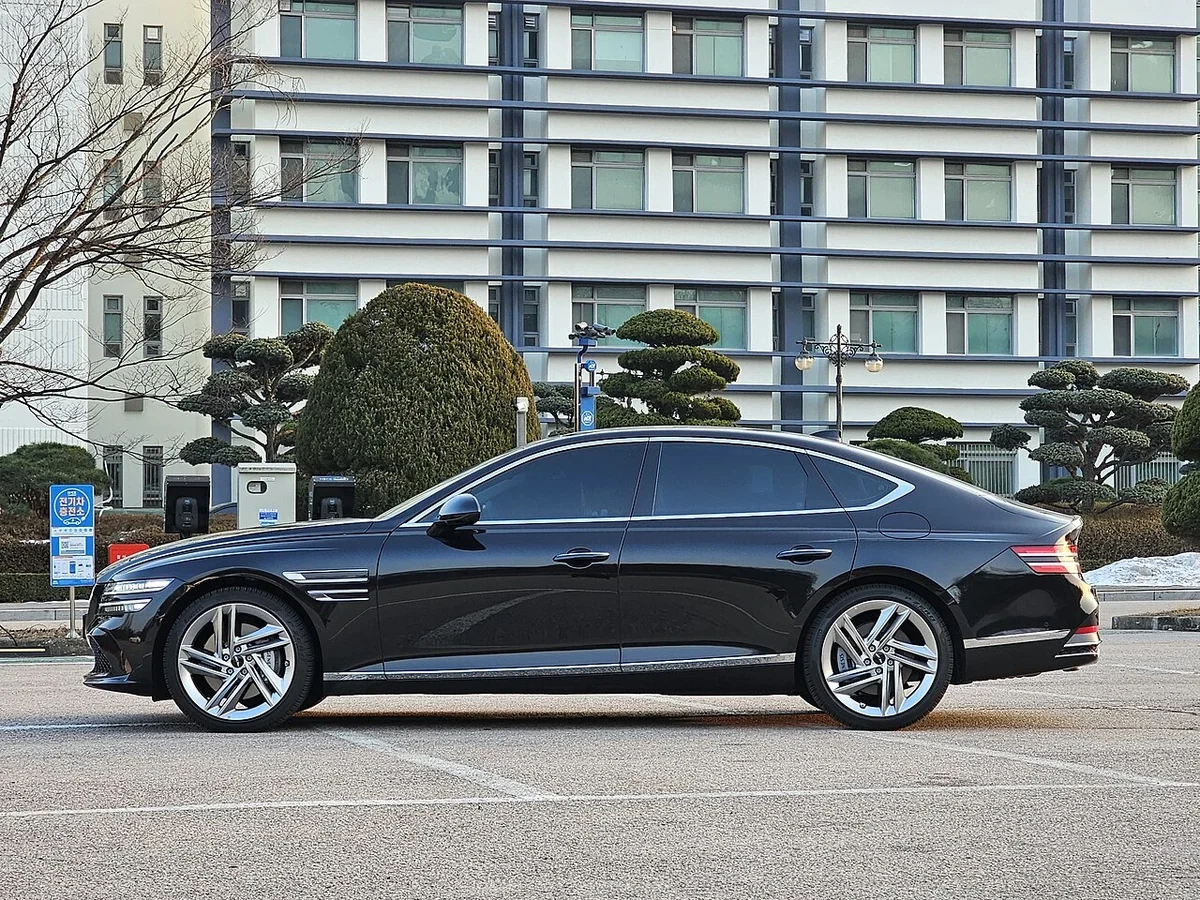
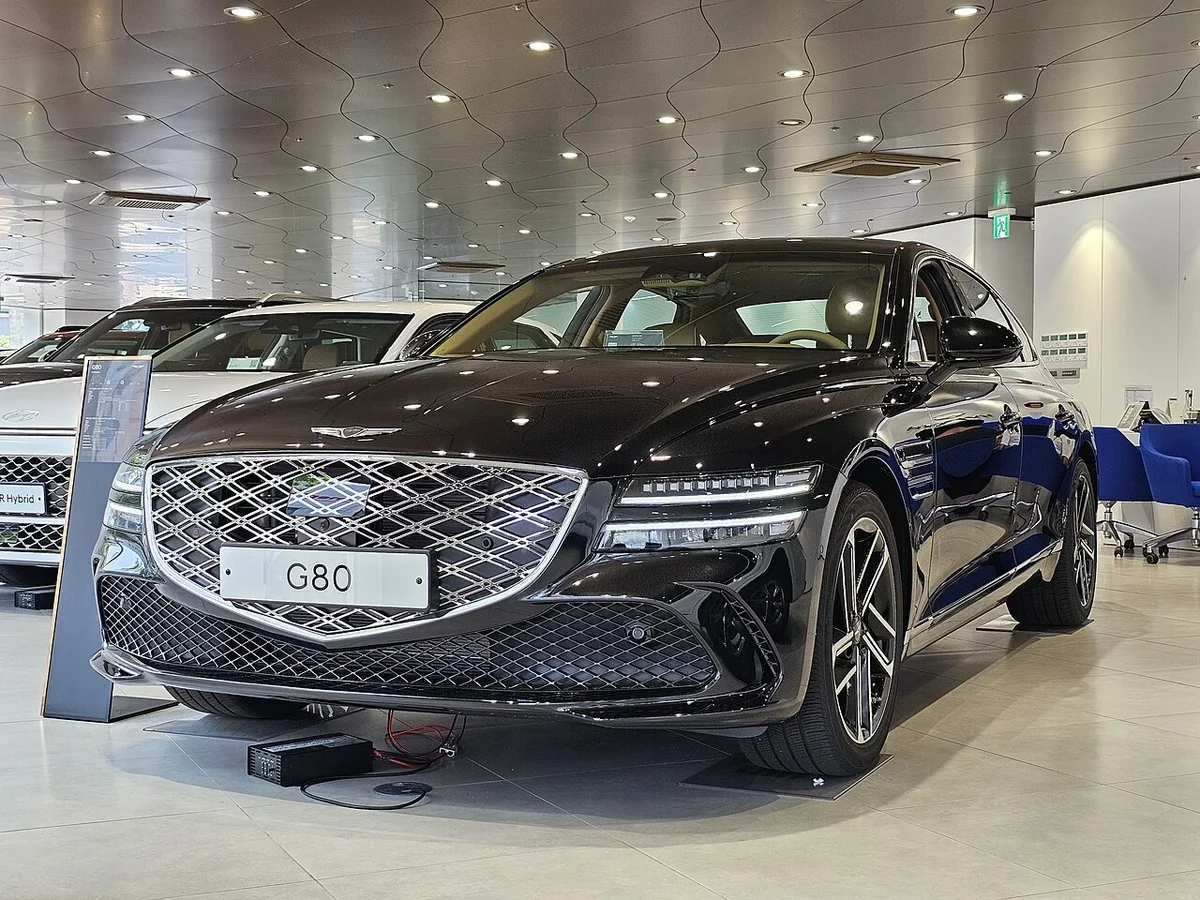
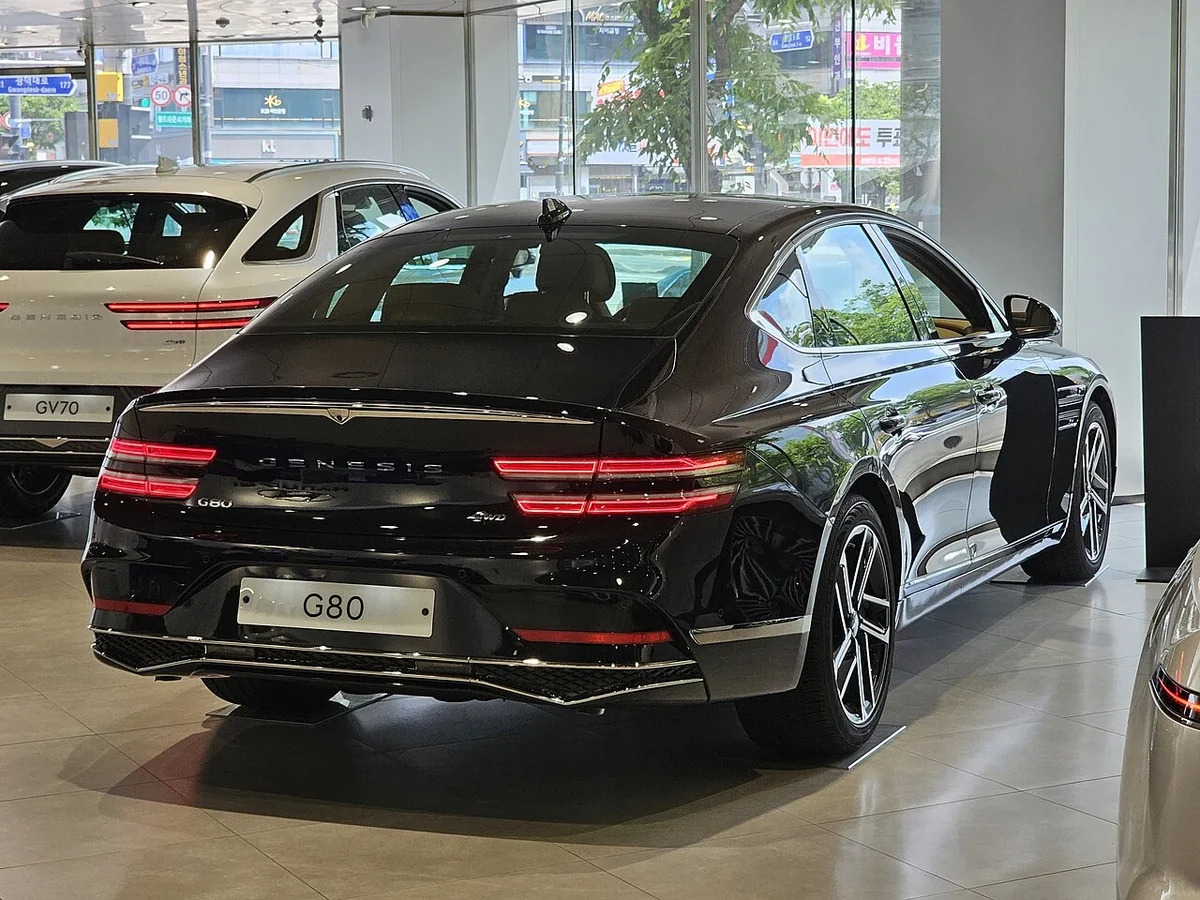
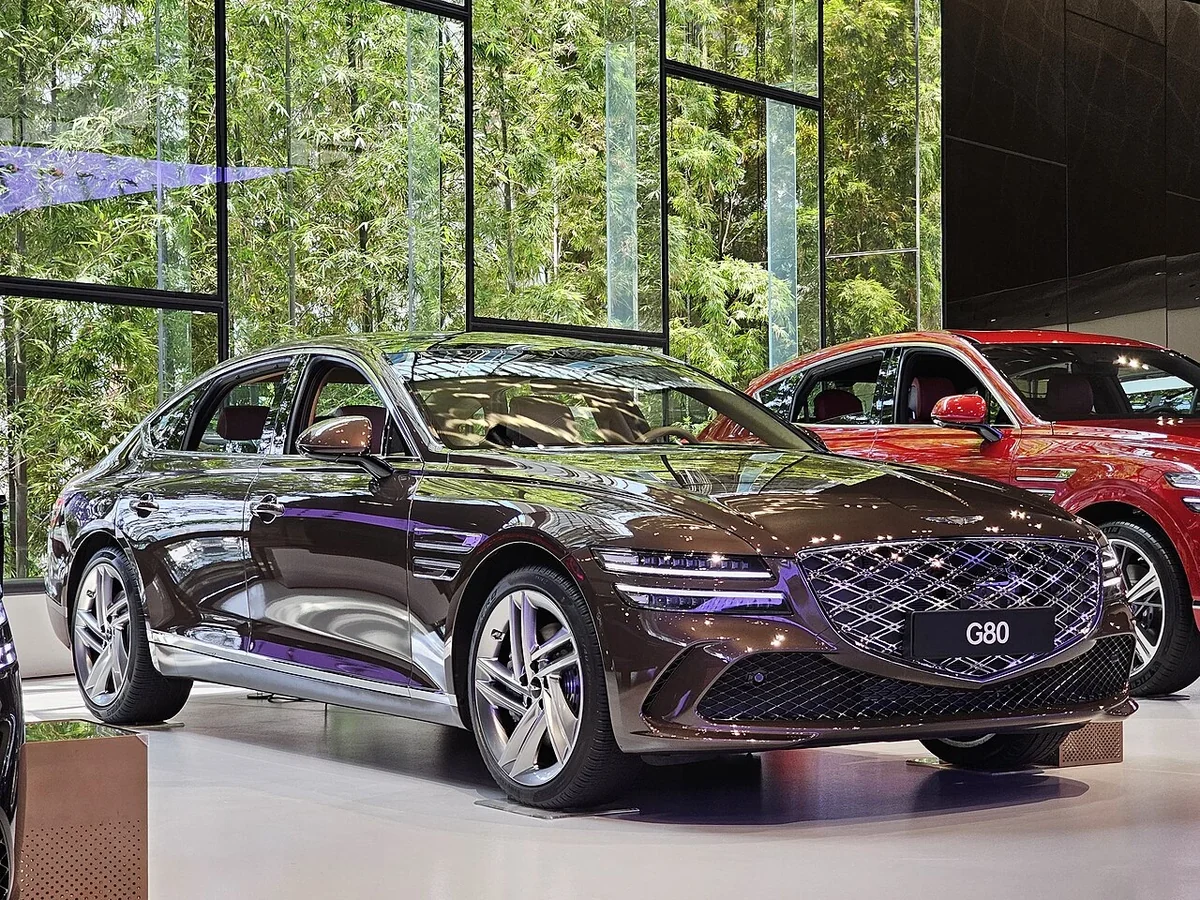
The twin-line lighting and broad crest-shaped grille make the G80 recognizable without relying only on a badge. The long body and descending roofline carry the luxury message from the side, where a grille cannot do the work. This is a car whose proportions matter as much as its decoration.
The facelifted model updates the details while retaining that basic shape. Current product images and the 2026 U.S. model page show the range, but the finish you choose can change the impression significantly. Dark trim can emphasize the outline; bright detailing can make the same body appear more formal.
The real photographs in this article show facelifted Korean-market examples. They illustrate the design, not an exact U.S. equipment order. A buyer should not infer that a photographed wheel, interior color or rear-seat control is standard on an American car simply because the body looks familiar.
Genesis G80 Engines: The Four-Cylinder Is a Serious Starting Point
The 2.5T supplies 300 hp and 311 lb-ft, while the 3.5T twin-turbo V6 supplies 375 hp and 391 lb-ft, using the premium-fuel ratings in the official 2026 specification document. Both are paired with an eight-speed automatic and AWD. The basic sedan proposition does not disappear when you choose four cylinders.
The useful comparison is how much effortless reserve you want, rather than whether one engine sounds more respectable. The V6 gives the buyer a stronger performance specification, but it also arrives within a more expensive equipment package. Separate your desire for power from your desire for a seat, camera or suspension feature.
On a test drive, compare gentle acceleration, a highway merge and the response after slowing for a junction. Listen at the pace you actually use. A maximum-throttle demonstration can be entertaining without answering whether the cheaper version already provides everything you need for a relaxed commute.
Comfort Depends on the Complete Specification
Luxury is often discussed as though soft leather creates a soft ride. It does not. Tires, wheel sizes, suspension calibration, seat shape and the road surface all contribute, and the G80 range offers different combinations. The specification sheet lists 18-inch wheels on the entry model and larger arrangements farther up the lineup.
Road Preview electronically controlled suspension is offered on specified higher trims. It is a control system, not a promise that the cabin will float over every broken surface. Test the car on patched pavement and ordinary speed humps, with the suspension mode you would normally leave selected. A carefully chosen demonstration road can make almost any premium car look convincing.
Seat fit deserves equal time. Adjust the cushion and wheel, then stay seated long enough to notice pressure points. If another person will share driving, let them establish their own position. A good luxury car should reduce fatigue for its actual occupants, not win an argument about the number of adjustments available.
The 27-Inch OLED Is a Tool, Not the Whole Interior
The broad OLED combines instrumentation and navigation into one visual span. Its significance is organizational: the cabin can present a lot of information without a collection of separate-looking screens. Whether that helps the driver depends on layout, brightness and how easily common tasks can be completed.
Try selecting a destination, changing audio sources, adjusting climate settings and connecting your phone while parked. The point is not to master every menu in the showroom. It is to find out whether basic actions feel natural after a few attempts, and whether the display remains legible from your preferred seat position.
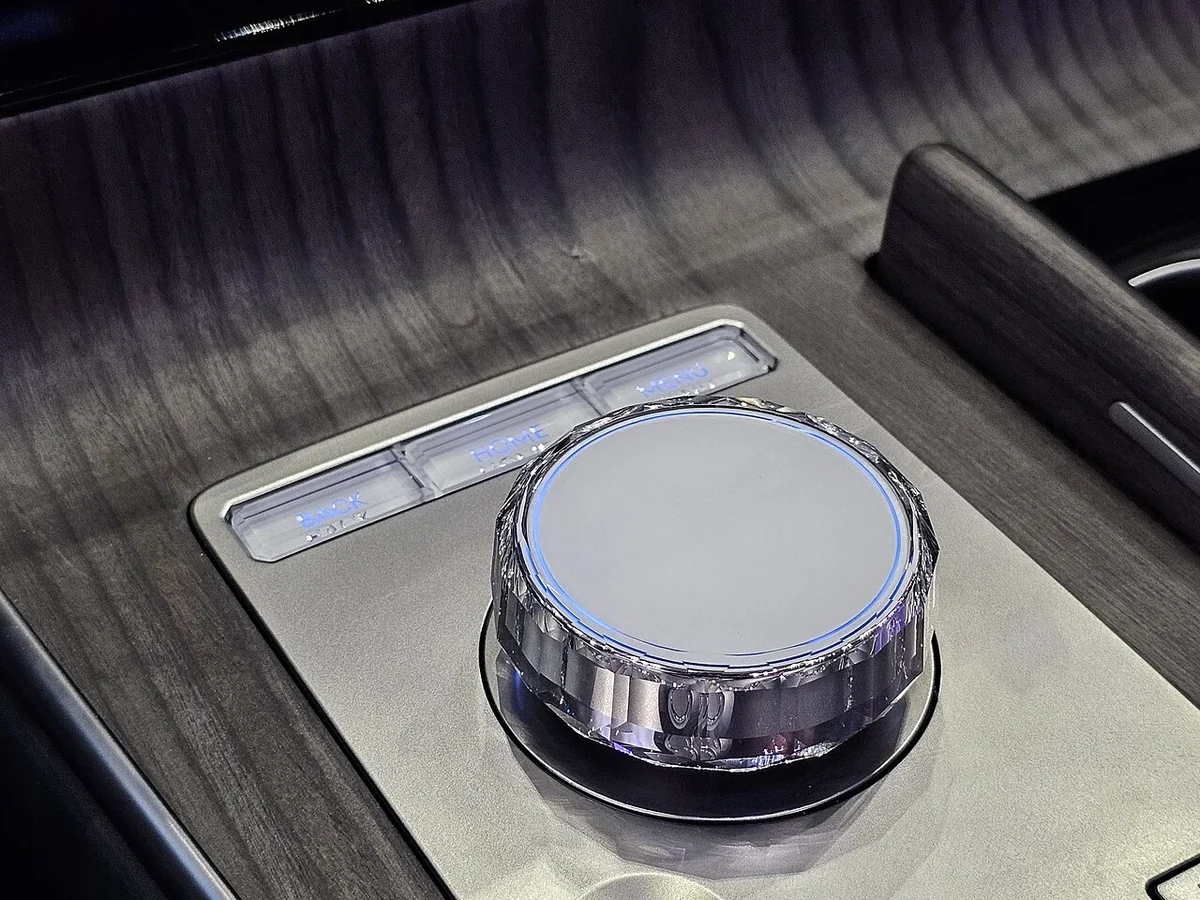
Physical controls deserve the same attention. A beautifully finished rotary control is still an interface that must be distinguished from its neighbors. Do not let the quality of a surface distract from its function. A cabin that looks expensive but makes a routine action awkward will repeat that awkwardness every day.
The Rear Seat Should Be Tested by Its Passenger
The G80’s sloping roof is part of its appeal, but it also makes rear entry and headroom worth a personal check. A photograph cannot settle that question because people differ in height, posture and mobility. Set the front seat properly before judging the room behind it.
A separate trunk can keep luggage out of the passenger compartment and preserve a traditional sedan layout. It also limits the size and shape of the opening. If you routinely transport a large stroller, sports equipment or an awkward case, bring it along. Cargo volume alone does not tell you whether the object will pass through the aperture.
Parents should also test child-seat installation and the reach needed to fasten a harness. Buyers who carry adults should ask those adults to try the back. The driver’s enthusiasm for the styling should not turn the regular passenger into an afterthought.
Prestige Black Is Not Simply Sport Prestige Plus
One of the most useful details in the official specification sheet is easy to miss. The 3.5T Sport Prestige includes rear-wheel steering, a rear electronic limited-slip differential and Sport+ mode. The 3.5T Prestige Black removes those items while introducing its own dark trim and interior treatment.
That makes the Black version a different expression of the car, not an automatic upgrade in every technical category. A buyer interested in the chassis equipment should read the order sheet instead of assuming the highest or most exclusive-sounding trim contains every feature below it.
There is nothing wrong with preferring the visual treatment. The important distinction is knowing what you are choosing. This is exactly why a feature list needs context: an expensive model can prioritize atmosphere over a particular dynamic capability. The right choice follows your preferences rather than the price ladder.
Genesis G80 Price: Compare the Cars You Would Actually Buy
The 2026 U.S. range starts at a listed $58,450 before destination, tax, options and dealer charges. The model page lists the 2.5T Advanced at $64,040 and 2.5T Sport Prestige at $69,950. These are reference MSRPs checked for this review, not an out-the-door offer or a prediction of a negotiated price.
At the upper end, the 3.5T Sport Prestige lists at $78,350 and Prestige Black at $79,350 before the same excluded charges. The spread is large enough that saying “the G80 is good value” without naming a trim is not very helpful. Identify the equipment you need and compare similarly equipped alternatives at actual local prices.
A discounted competitor, a different finance rate or a stronger trade-in offer can change the result. Ask for the full purchase figures in a comparable format. Monthly payment alone can conceal a different term, deposit or final obligation. The best trim is the one whose benefits remain convincing after the entire cost is visible.
The Rivals Ask Different Questions About Luxury
The BMW 5 Series, Mercedes-Benz E-Class and Audi A6 are natural points of reference, but the comparison should begin with the precise versions available in your market. Their powertrains and equipment strategies differ, and a broad badge comparison can hide more than it reveals.
Think about what you want to notice. Some buyers prioritize steering response, others isolation, interface familiarity or a particular rear-seat experience. The G80 deserves to be considered on those same terms. Calling it only a cheaper substitute misses the possibility that its design and equipment balance are the qualities you prefer in their own right.
An SUV from the same showroom is a different kind of rival. It may solve entry and cargo tasks better, while losing the sedan proportions that attracted you. There is no need to force one answer for every household. A useful comparison explains the trade, then lets the buyer decide which inconvenience is easier to live with.
Ownership Is Part of the Luxury Experience
A luxury purchase continues after delivery. Before committing, check where routine service will take place, how appointments are arranged and what transport support is actually available at your location. A broad brand promise should be translated into the terms that apply to your address and vehicle.
Get an insurance quotation and price the tires fitted to your preferred trim. Larger or staggered tire arrangements can alter replacement costs and rotation possibilities. Those details are less glamorous than an audio system, but they become part of the cost of enjoying it. Ask the service department to explain the scheduled maintenance rather than relying on a general sales estimate.
Warranty coverage also has conditions, exclusions and ownership rules. Read the documents supplied with the car, especially when considering a used example. Check the specific VIN for outstanding recalls and campaigns. The four-star Cariary assessment is about the model’s buyer proposition; it is not a guarantee of durability or a substitute for inspecting an individual vehicle.
Cariary Perspective: Choosing the Shape You Actually Want
The Genesis G80 is most compelling when it stops being described as an alternative someone settled for. Its long, low design and substantial equipment make a positive case for a sedan. The buyer can appreciate those qualities without needing to prove that every rival is overpriced or every SUV is unnecessary.
The 2.5T deserves particular attention because it preserves that core idea while keeping the financial commitment lower. The V6 and upper trims make sense when their specific qualities matter to you. Four stars recognize a car with a clear identity and real appeal, while leaving room for the practical and ownership questions that every luxury purchase must answer.
Who Should Buy It?
Recommended For
Drivers who deliberately want a comfortable, distinctive luxury sedan and will compare the actual trim equipment, service access and passenger fit.
Not Recommended For
Buyers needing an SUV-sized cargo opening, frequent easy rear access for mobility needs, or an assumption that the most expensive trim includes every performance feature.
One-Line Verdict: The G80 makes choosing a sedan feel intentional, provided you buy the specification that serves your idea of luxury.
Frequently Asked Questions
Is the 2026 Genesis G80 offered with AWD?
Yes. The U.S. gasoline versions covered here pair an eight-speed automatic with AWD.
How much power does the G80 2.5T produce?
The official rating is 300 hp and 311 lb-ft on premium fuel.
What does the 3.5T add?
Its twin-turbo V6 is rated at 375 hp and 391 lb-ft on premium fuel, with equipment depending on trim.
Is the 27-inch display standard?
The 2026 specification sheet lists the 27-inch OLED instrument and navigation display in the base equipment.
Does Prestige Black include all Sport Prestige features?
No. The official sheet specifically removes rear-wheel steering, rear e-LSD and Sport+ mode from Prestige Black.
Is this the Electrified G80?
No. This article concerns the gasoline G80. The electric version is a separate powertrain and packaging proposition.
What is the sensible first trim to compare?
Start with the 2.5T and list the comfort features you need. Move upward only after identifying what the extra money buys for your own use.
Further Reading and Data Reference
Data reference date: October 4, 2026. Official specifications and attributed test observations are linked where discussed. Cariary Point is an editorial buyer-fit assessment, not an owner road-test score or reliability rating.
Explore more Cariary car reviews and buyer perspectives.

