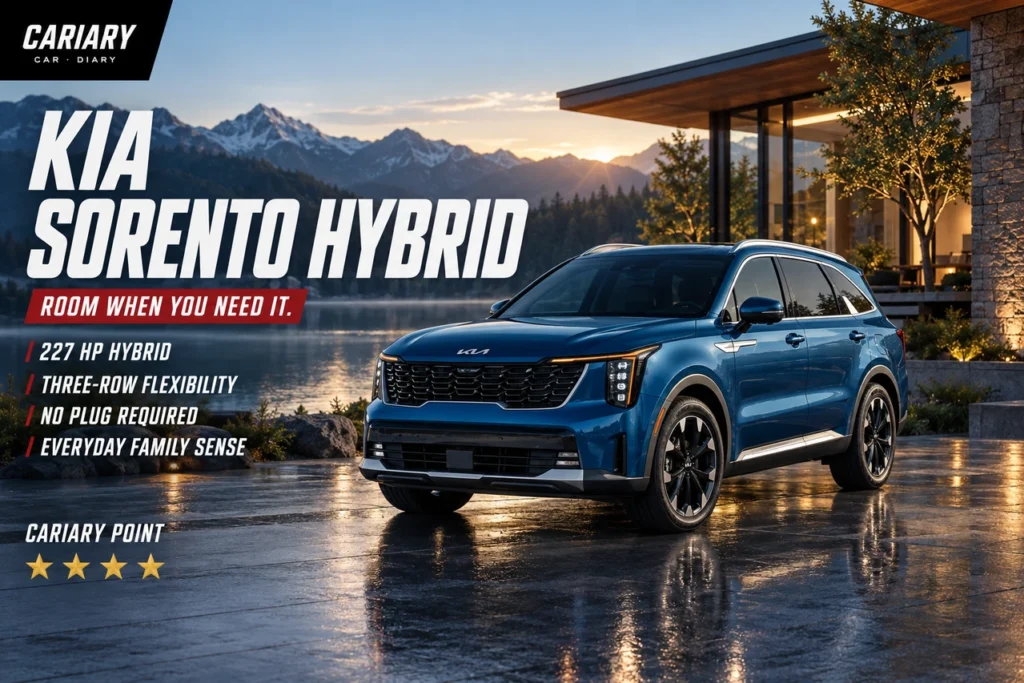
CARIARYCAR · DIARY · PERSPECTIVE
Cover: AI-generated Cariary editorial illustration, checked against the specified vehicle. It is not road-test photography.
This Kia Sorento Hybrid review starts with the third row on the days it stays folded. Many families need extra seats occasionally rather than constantly. Buying a much larger SUV for those few journeys can feel excessive; buying a two-row vehicle can make them awkward.
The Sorento occupies that useful middle ground. Its hybrid powertrain is part of the appeal, but the more revealing change for 2026 is a seat: a standard second-row bench gives the EX a different everyday role from the captain’s-chair configuration many people associate with the hybrid.
This research-based review covers the facelifted 2026 U.S. Sorento HEV. It does not substitute gasoline or plug-in-hybrid specifications. Cariary has not road-tested this vehicle; practical judgments are editorial interpretation rather than firsthand test results.
Four stars for useful seating flexibility, a conventional hybrid routine and a clear place between two-row and larger family SUVs. Limited full-house cargo flexibility and rising upper-trim cost prevent a universal recommendation.
Kia Sorento Hybrid: Key Specifications
| Reference | 2026 U.S. Sorento HEV |
|---|---|
| Powertrain | 1.6-liter turbocharged four-cylinder hybrid; six-speed automatic |
| System output | 227 hp / 258 lb-ft |
| Drive | EX FWD or AWD; X-Line SX Prestige AWD |
| EPA combined estimate | 37 mpg EX FWD; 34 mpg AWD |
| Seating | EX standard second-row bench; captain’s chairs available |
| Starting MSRP | EX FWD $38,890 before destination, taxes and fees |
| Charging | Conventional hybrid; no external plug |
Why the Kia Sorento Hybrid Fits the Middle Ground
A vehicle can have a third row without being the best choice for carrying a full group and all its luggage every week. That distinction is central to understanding the Sorento. The extra seats are valuable because they can solve occasional transport problems while the vehicle remains a less expansive choice than a larger three-row SUV.
Think about the week rather than the annual holiday. How often do you carry more than five people? How long are those trips? Are the extra passengers children or adults, and what else must come with them? The same seating arrangement can be ideal for a short lift home and frustrating for a long journey with suitcases.
The hybrid’s purpose fits that pattern. It offers electrified assistance without a charging routine, leaving the household to use a familiar fuel station. That can be a meaningful advantage for someone without a driveway. It does not remove the need to choose the right-sized vehicle in the first place.
The 2026 Bench Seat Changes the Buying Conversation
Kia’s 2026 model announcement identifies a standard second-row bench replacing captain’s chairs on the EX. The optional EX Premium Package brings captain’s chairs, a panoramic roof and Bose audio. The change matters because a bench lets more people travel while the third row remains folded for luggage.
Captain’s chairs still have a purpose. They can provide separation and a different access route to the rear. But choosing them should follow the passenger pattern, not the assumption that individual seats are always the more luxurious or useful answer. A family that often carries three people in the second row may prefer the simpler layout.
Inspect the actual car rather than relying on an older review. Model-year changes, market differences and packages can alter the seating arrangement even when the vehicle name is identical. Bring child seats and check how their installation affects access, using the vehicle and seat manufacturers’ instructions.
227 HP Is About Coordinating a Family Routine
The official HEV specification sheet lists a turbocharged 1.6-liter gasoline engine with electric assistance, producing 227 hp and 258 lb-ft as a system. A six-speed automatic handles the ratios. This is not the same engine and transmission combination as every gasoline Sorento.
System output should not be interpreted by adding unrelated component peak figures. The engine and electric motor operate across different conditions, and the control system coordinates them. What the driver needs is predictable response when leaving a junction, joining a highway or carrying a heavier load.
That is what to explore on a test drive. Use modest throttle as well as a normal merge, and notice how the car responds when you slow and accelerate again. Smooth cooperation is more valuable in a family car than a dramatic demonstration. A sensible power figure becomes meaningful through how easily it supports ordinary tasks.
Kia Sorento Hybrid Fuel Economy: FWD and AWD Are Different
The current U.S. product page specifies EPA estimates of 37 mpg combined for EX FWD and 34 mpg combined for the AWD versions. These are configuration-specific comparison figures, not a guarantee for an individual commute. Cold weather, load, driving conditions and vehicle condition all affect the result.
The difference can be put in perspective without promising a saving. At an assumed 12,000 miles a year, 37 mpg requires about 324 gallons and 34 mpg about 353. At an illustrative $3.50 per gallon, that is roughly $100 annually. This arithmetic uses the ratings and assumptions; it is not a measured road test.
Choose AWD for a genuine traction requirement, then understand its purchase and running-cost implications. Choosing FWD can be equally deliberate when your roads and climate do not call for the extra hardware. Our guide to FWD, RWD and AWD explains why the label alone does not settle the question of grip or suitability.
No Plug: Convenient, but Not Free Energy
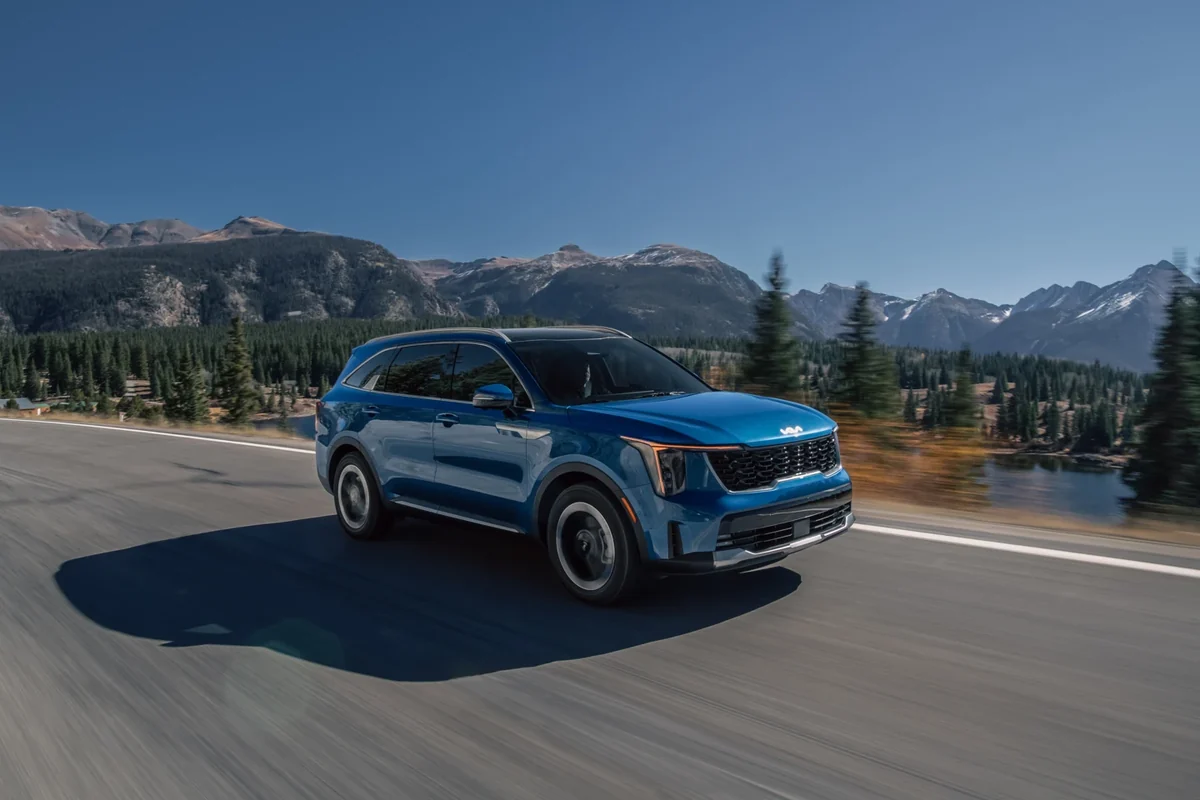
The HEV is a conventional hybrid. It manages battery energy within the vehicle and does not ask the owner to arrange external charging. Regenerative braking can recover some energy during slowing, while the gasoline engine still supplies the energy that ultimately supports most journeys.
That makes the routine simple for someone who cannot charge at home. It also means the hybrid should not be evaluated like a plug-in vehicle capable of a defined electric commute. The separately sold Sorento PHEV needs its own price, charging and usage calculation. Do not transfer its output or electric-range claims into an HEV comparison.
A useful ownership question is where the car spends its time. A hybrid can be attractive in mixed daily use, but a long, fast highway routine, winter temperatures or frequent heavy loads can change the benefit. Start with your actual schedule and fuel costs rather than a best-case story borrowed from someone else.
Cargo Space: The Seats and the Bags Compete
The official product page quotes up to 75.5 cubic feet with the second and third rows folded. That describes a maximum cargo arrangement, not the luggage capacity available with every seat occupied. The practical meaning depends on how often you need both passengers and bulky belongings at once.
The cargo photograph illustrates a loaded vehicle with rear seats folded. It should not persuade a buyer that the same camping load fits behind an occupied third row. Bring the objects you use, check the load height and consider how safely they can be secured. A number cannot show whether your stroller lies flat or whether a case blocks rear visibility.
If the full passenger group travels regularly, compare a larger three-row SUV and a minivan. The Sorento’s strength is flexibility within a more restrained package. It should not be forced into a job that makes every departure a negotiation over which bag stays home.

The Cabin Should Be Easy on a Busy Day
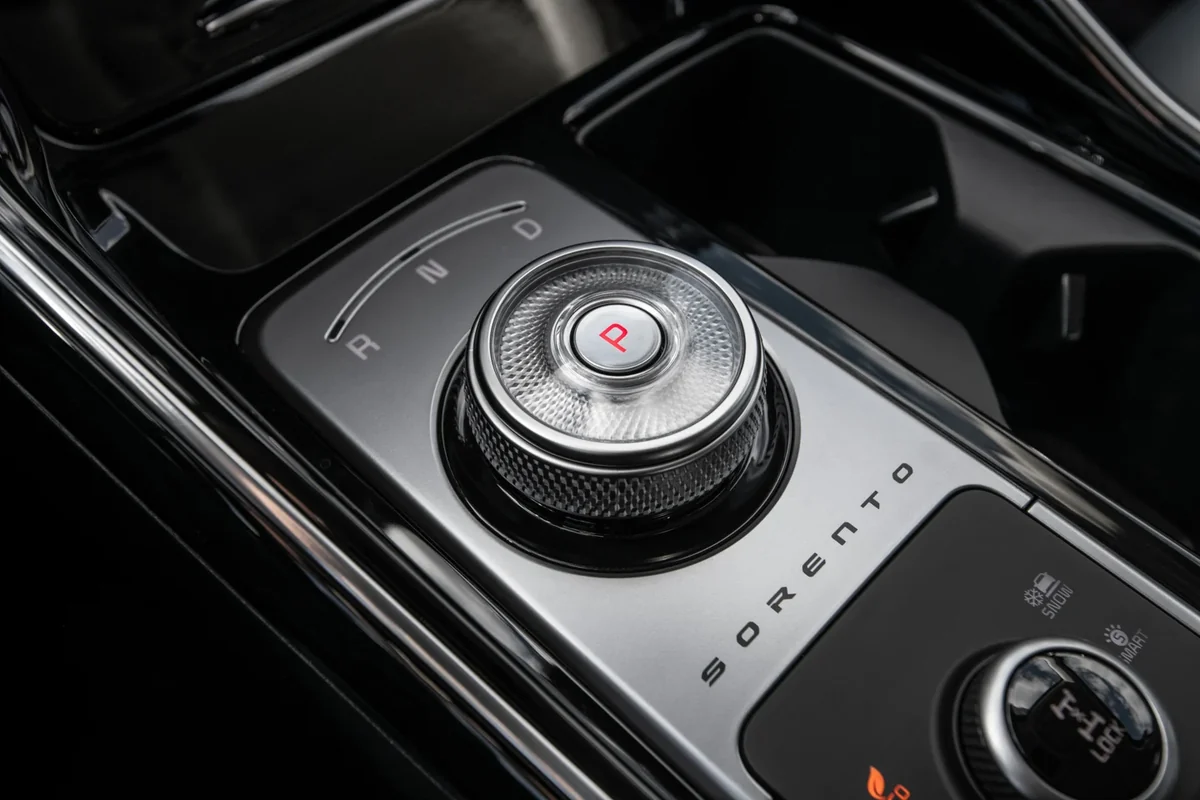
The Sorento’s updated cabin combines a broad screen area with familiar everyday controls. The 2026 announcement also identifies a new steering-wheel design. These details can make the interior feel more current, but the real test is whether frequent tasks can be done comfortably and consistently.
While parked, adjust the temperature, select navigation, pair a phone and change the audio source. Check the reach from the seat position you actually use. If two people share the vehicle, both should try the same tasks. A feature that works beautifully for one person can still be awkward for another.
Look at the rear passengers’ experience as well. Check vents, charging access, the path to the third row and how easily the seats move. A family car’s cabin is a collection of small repeated interactions. It earns its reputation through those details rather than the size of the main screen alone.
X-Line Adds a Look; Terrain Mode Needs Context
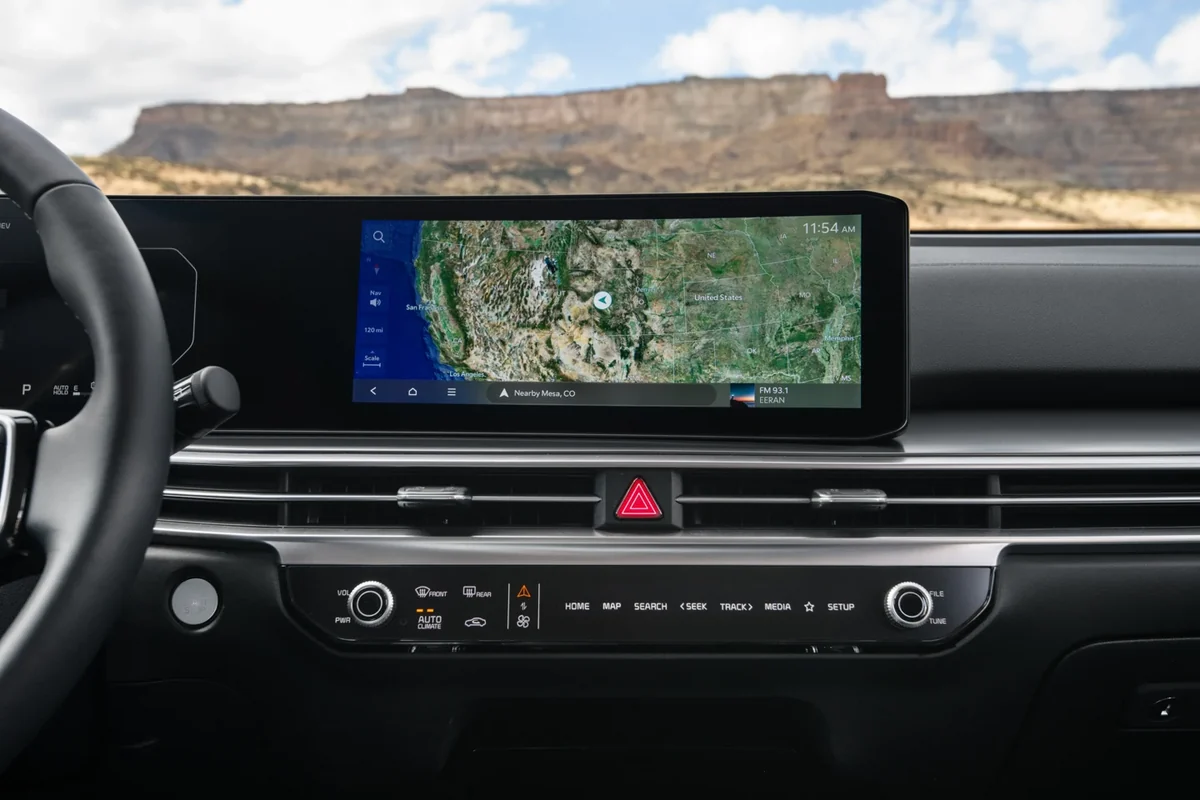
For 2026, Kia introduces X-Line treatment to the HEV lineup and adds Terrain Mode to AWD-equipped models. The darker exterior details make the Sorento appear tougher, while the selectable control strategy is intended to support traction in differing conditions.
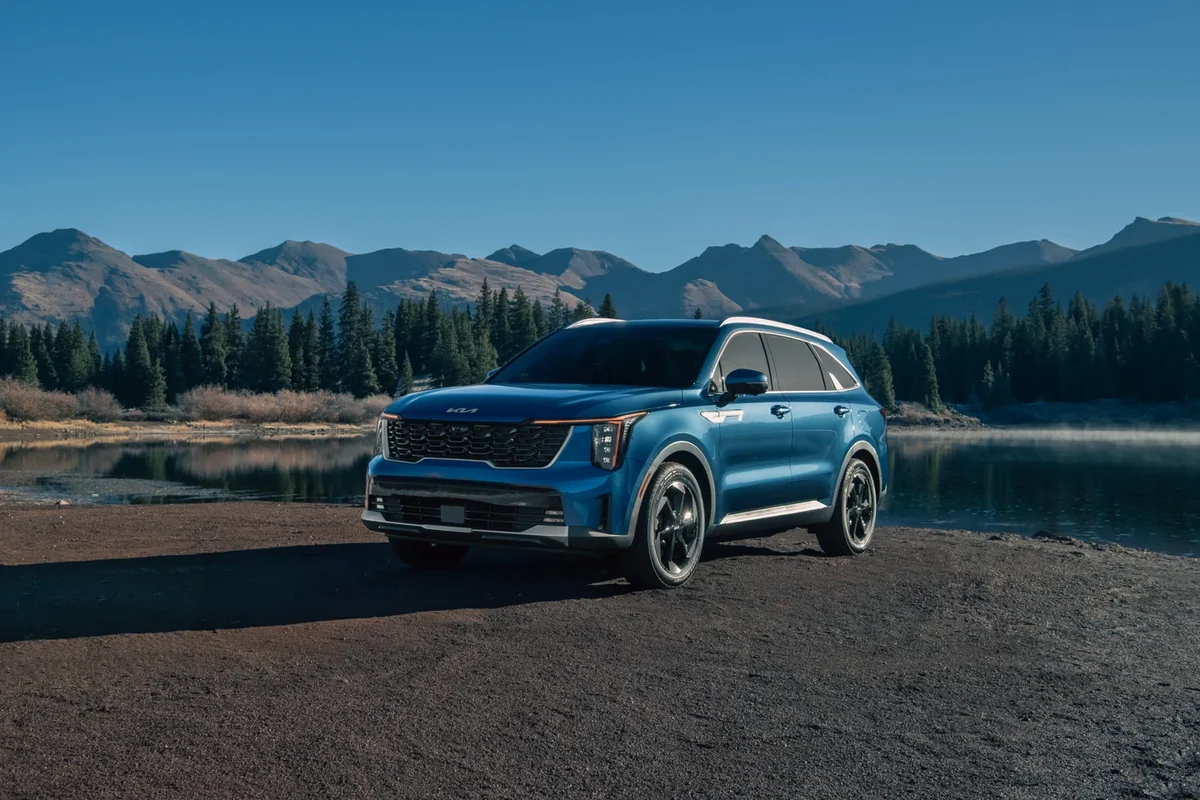
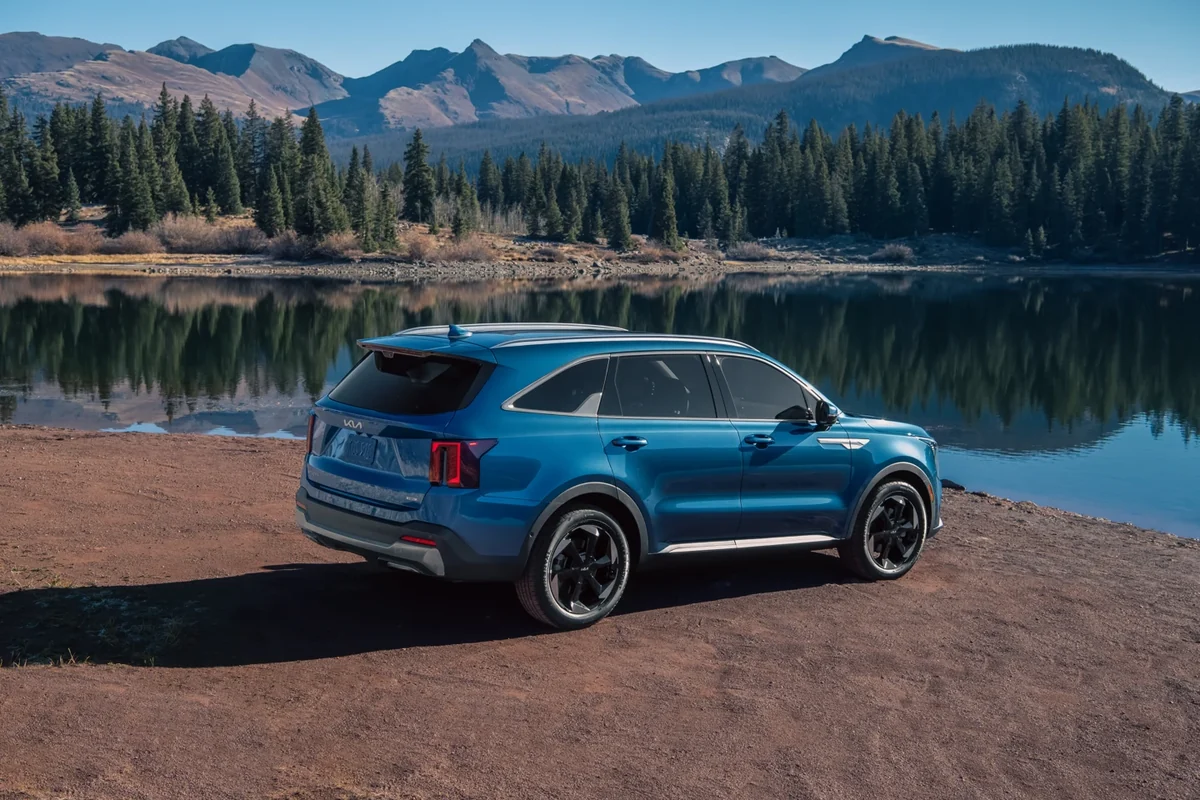
Neither feature changes the car into a dedicated off-road vehicle. Tires, ground clearance, approach angles, recovery planning and the limits in the owner’s manual still matter. An attractive photograph beside a lake is not evidence that any rough route is suitable for the car.
Buy the appearance if you enjoy it, but keep the capability decision separate. Someone who drives mostly paved roads may get more value from a comfortable tire package or useful seat equipment than a rugged-looking finish. A good purchase allows style to matter without confusing it with engineering proof.
Kia Sorento Hybrid Price: Keep the EX in the Comparison
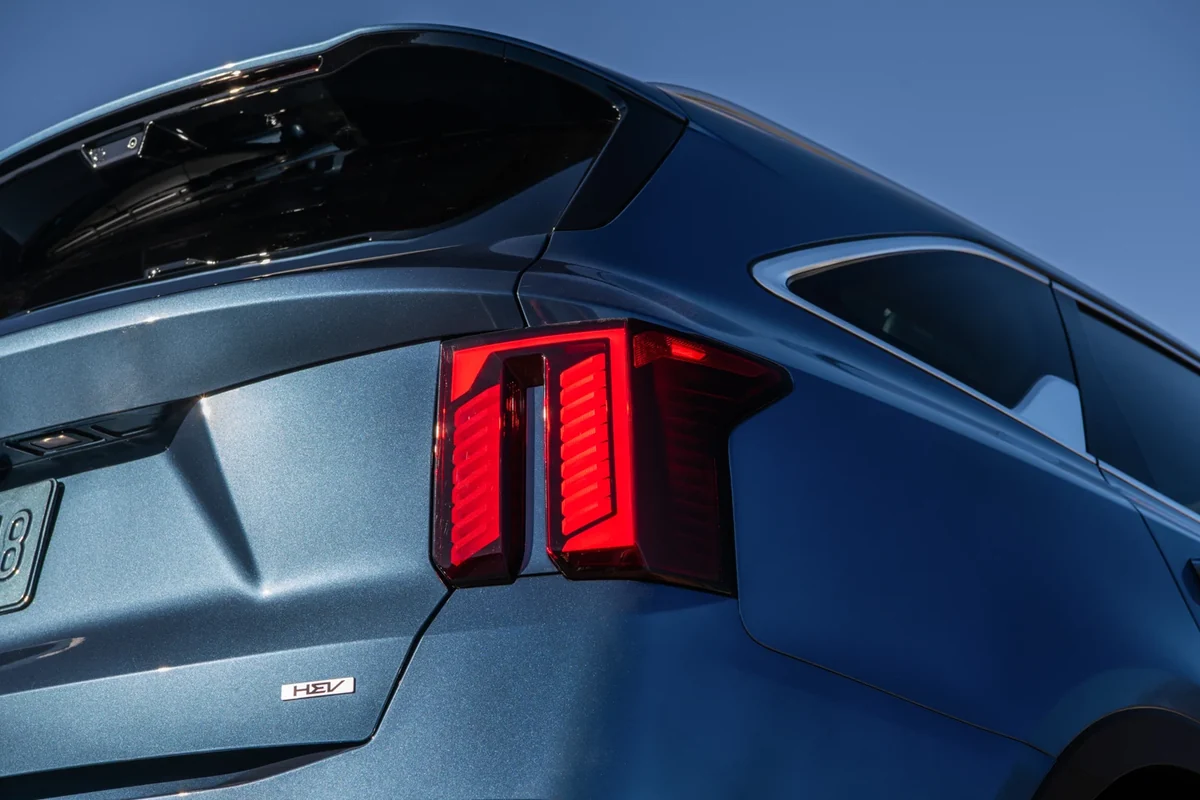
The official 2026 price list puts EX FWD at $38,890 and EX AWD at $40,690 before destination, tax, options and dealer charges. X-Line SX Prestige AWD lists at $47,190 on the same basis. The difference is substantial enough to require a clear explanation of what you will use.
Start with seating, climate needs, visibility aids and the features that reduce daily effort. If the EX already meets those needs, moving upward should add something you will repeatedly appreciate. A higher trim may be desirable, but desirability is not the same thing as better fuel-saving value.
Compare the actual local offers, including finance terms and insurance. A modest monthly difference can conceal a longer agreement or a larger deposit. The right conclusion comes from the whole purchase rather than an isolated headline MSRP. This is especially important when an upper Sorento approaches the price of a physically larger alternative.
Rivals: Do You Need More Car or Fewer Seats?
A two-row hybrid such as the Kia Sportage asks whether the occasional extra seats are worth carrying all year. A larger three-row model asks whether the Sorento is enough when everyone comes along. Those are more useful questions than trying to declare a winner without knowing the household.
The Hyundai Santa Fe Hybrid is also a relevant comparison, but equipment, price and cabin layout need to be matched carefully. Shared corporate background does not make the seating experience identical. Sit in both, use the same child seats and load the same luggage before deciding which packaging approach works better.
A minivan remains worth considering when frequent rear access is the main problem. Sliding doors can solve a task that a higher trim cannot. The Sorento should win because its balance fits your life, not because another body style was excluded before the comparison began.
Ownership: Choose the Individual Car as Carefully as the Model
A hybrid badge does not tell you the full maintenance bill or prove long-term reliability. Ask for the service schedule, read the warranty terms and understand which components receive which coverage. Conditions can differ for a subsequent owner, so the documents matter more than a slogan.
Check service access near home and obtain an insurance quote for the exact configuration. For a used example, inspect records, tires, seat mechanisms, cameras and the operation of the hybrid system with appropriate professional help. Outstanding recalls or campaigns should be checked by VIN rather than inferred from a general discussion online.
The four-star verdict recognizes a useful product idea. It does not promise that every example will behave identically or that the fuel savings will offset any purchase price. Keeping those distinctions clear makes the recommendation more useful, especially for buyers moving from a simpler or smaller vehicle.
Cariary Perspective: Flexibility Without Automatically Going Bigger
The Kia Sorento Hybrid is at its best when the household understands the role of its third row. The seats are a reserve of flexibility, not an excuse to ignore the room required by a full group. The 2026 bench-seat change makes that calculation more interesting because five people can travel without necessarily opening the back row.
That is the reason to give this car four stars. It offers a coherent answer to a common family problem while preserving a familiar fueling routine. The strongest version of the purchase is a deliberately chosen trim that gets used as intended. More expensive or more rugged-looking does not automatically mean better suited.
Who Should Buy It?
Recommended For
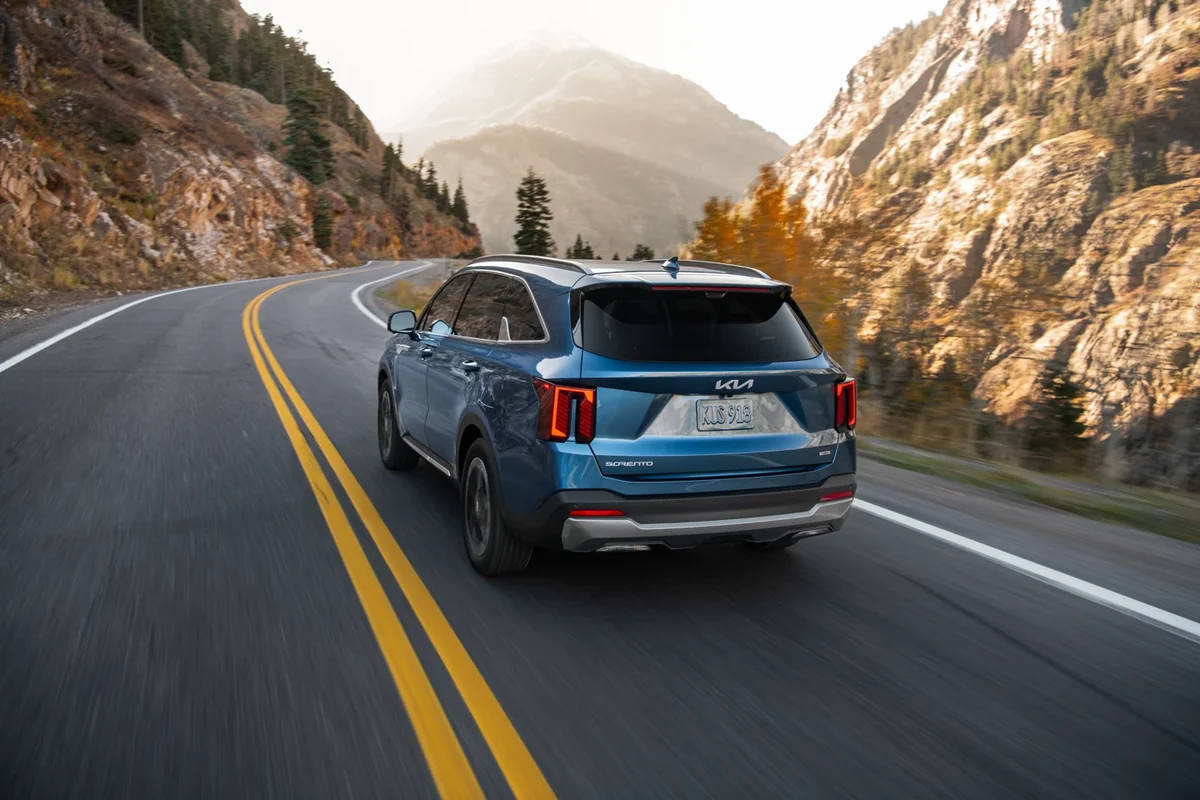
Households that usually travel with fewer passengers but sometimes need a third row, want a conventional hybrid and will test their exact seating and cargo needs.
Not Recommended For
Families regularly carrying a full passenger load plus bulky luggage, buyers expecting plug-in electric commuting, or drivers treating X-Line styling as proof of dedicated off-road capability.
One-Line Verdict: The Sorento Hybrid is a smart middle ground when extra seats are useful sometimes and the larger SUV is unnecessary most days.
Frequently Asked Questions
Does the Kia Sorento Hybrid need plugging in?
No. The HEV covered here is a conventional hybrid. The Sorento PHEV is a separate version.
How much power does the 2026 HEV make?
Kia lists system output of 227 hp and 258 lb-ft with a six-speed automatic transmission.
Does every Sorento Hybrid get 37 mpg?
No. The 2026 U.S. product page lists 37 mpg combined for EX FWD and 34 mpg combined for AWD versions.
What changed about the EX seating for 2026?
A second-row bench is standard. Captain’s chairs are available through the EX Premium Package, changing the passenger and cargo trade-off.
Is AWD standard?
No. EX is offered with FWD or AWD. The X-Line SX Prestige HEV is AWD.
Is the maximum cargo figure available with all seats in use?
No. The quoted 75.5-cubic-foot maximum requires the second and third rows to be folded. Test luggage with the seats you actually need upright.
Should I buy the top trim?
Only if its equipment serves your needs. Compare EX first, then judge each upgrade against the actual price difference and your family’s use.
Further Reading and Data Reference
Data reference date: October 4, 2026. Official specifications and attributed test observations are linked where discussed. Cariary Point is an editorial buyer-fit assessment, not an owner road-test score or reliability rating.
Explore more Cariary car reviews and buyer perspectives.

