Quick Take
The Tesla Cybertruck is one of the hardest vehicles to judge like a normal car.
On paper, it is an electric full-size pickup with serious towing capacity, a huge cargo claim, all-wheel drive availability, fast charging, and a high-performance Cyberbeast version. In real life, it is also a stainless-steel object that changes how people react to the vehicle before they even understand what it can do.
That is the main point: the Cybertruck is not just competing with the Ford F-150 Lightning, Rivian R1T, Chevrolet Silverado EV, or GMC Hummer EV Pickup. It is also competing with the idea of what a pickup truck is supposed to look like.
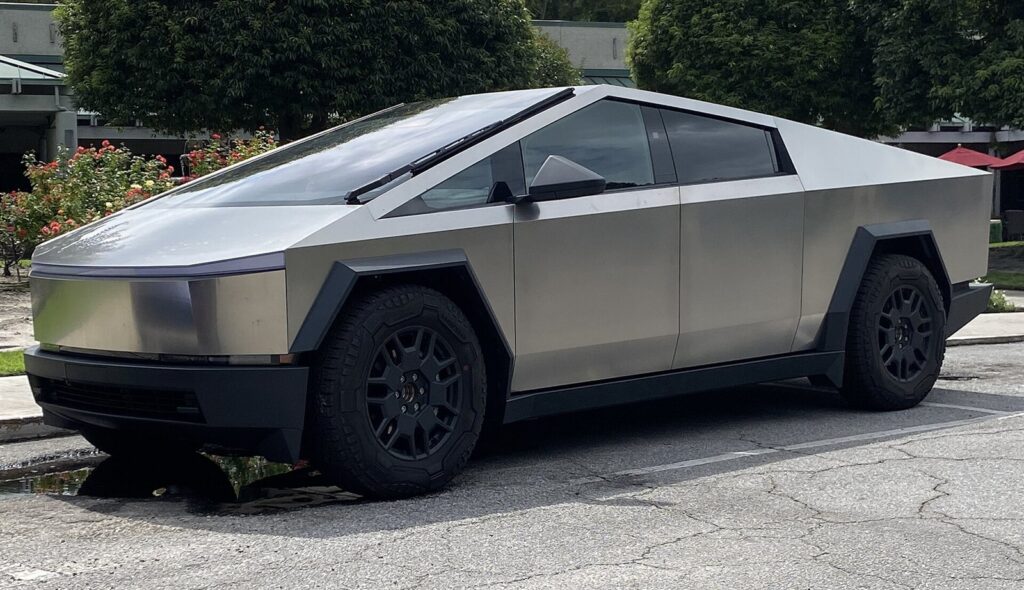
Image: Cutlass, CC0 1.0, via Wikimedia Commons.
What Is It?
The Tesla Cybertruck is a battery-electric full-size pickup truck. Tesla lists the truck at 223.7 inches long, which is about 5.68 meters. That puts it firmly in American full-size pickup territory, not large-SUV territory.
It seats five adults, offers a front trunk, a large cargo bed, available adaptive air suspension, and up to 11,000 pounds of towing capacity on higher-output versions. The Cyberbeast model is the attention-grabber, with Tesla claiming a 2.6-second 0-60 mph time with rollout subtracted.
But the Cybertruck is not defined only by numbers. It is defined by its shape, its stainless-steel body, its steer-by-wire system, its unusual door operation, and the way it turns every parking lot into a small public event.
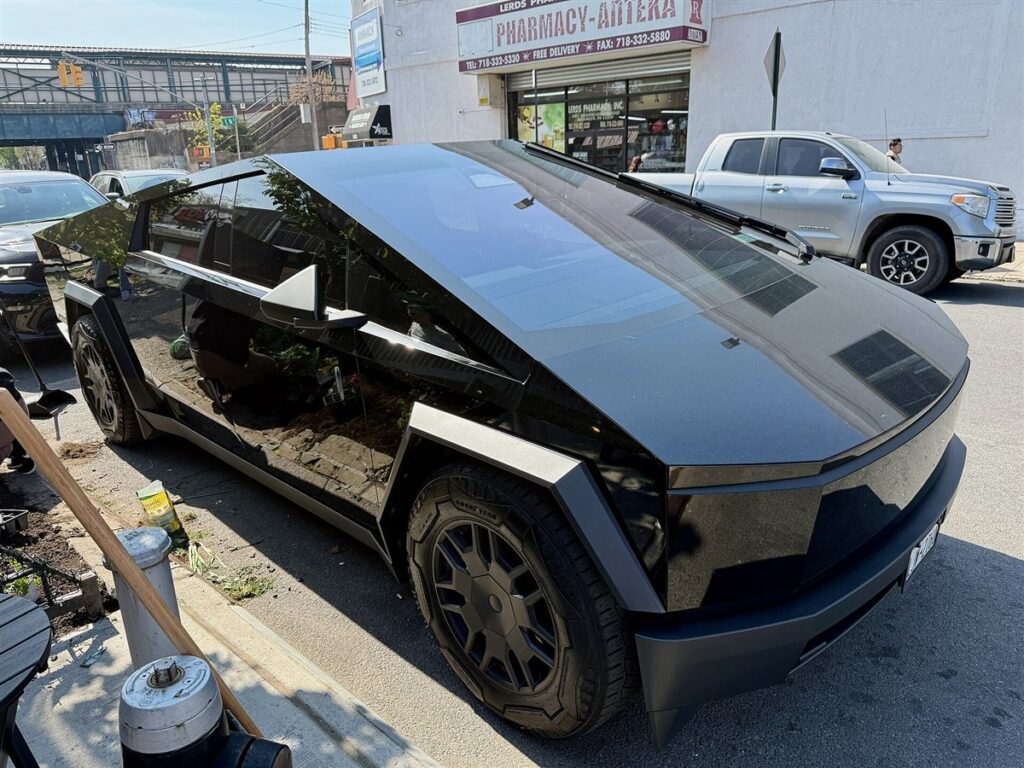
Image: Oleg Yunakov, CC BY-SA 4.0, via Wikimedia Commons.
Why This Car Exists
The Cybertruck exists because Tesla did not want to build a normal electric pickup.
Ford made the F-150 Lightning by electrifying a familiar truck shape. Rivian made the R1T by combining adventure lifestyle packaging with a premium EV platform. Chevrolet and GMC pushed battery size, range, and traditional American truck capability.
Tesla chose a different path. It treated the pickup truck as a cultural object first and a work vehicle second. The stainless-steel wedge is not subtle because it was never meant to be subtle.
That strategy explains both the appeal and the problem. The Cybertruck is memorable in a way few modern vehicles are. It also asks buyers to accept compromises that a more conventional truck does not.
Size and Real-World Usability
The Cybertruck’s length is the first practical reality check.
At about 5.7 meters long, it is manageable for drivers already used to full-size American pickups. If you currently own an F-150, Silverado, Ram 1500, or Sierra, the Cybertruck will feel unusual because of the visibility, steering, and body shape, but not shocking in footprint.
For someone coming from a sedan, compact crossover, Tesla Model Y, BMW X5, Hyundai Santa Fe, or Toyota RAV4, the Cybertruck is a different world. The length, width, and angular body make it feel large in places where normal SUVs still feel easy.
In city traffic, the issue is not only the length. It is the mental space the truck takes up. You need to think earlier about lane position, tight turns, curb clearance, and whether a parking entrance is worth attempting.
In supermarkets, apartment garages, older downtown parking lots, and narrow residential streets, the Cybertruck may be more demanding than many buyers expect. It can fit in many places, but “fit” is not the same as “feel easy.” A normal SUV driver should test-drive and park it before assuming they can live with it.
Key Specs and Real-World Meaning
Tesla’s own specification page lists major versions with around 320 to 325 miles of estimated range, 11,000 pounds of towing for AWD and Cyberbeast models, a 120.7-cubic-foot maximum cargo claim, and a curb weight above 6,600 pounds for the AWD model and about 6,863 pounds for Cyberbeast.
Those numbers mean the Cybertruck is not a light lifestyle EV. It is a heavy, powerful, complex truck.
The range is useful, but towing, cold weather, highway speed, tires, and payload can change the real number quickly. The towing rating matters if you occasionally tow, but buyers should not confuse the rating with long-distance towing convenience.
The performance is far beyond what most pickup buyers need. The weight is the number that quietly matters every day: for braking, tire wear, parking surfaces, road feel, and how much responsibility the driver has when using the power.
Steer-by-Wire: Useful Innovation or New Learning Curve?
The Cybertruck uses steer-by-wire. In simple terms, the steering wheel does not work like a traditional mechanical steering system where the wheel is physically linked to the front wheels through a steering column and rack. Instead, sensors read the driver’s input, computers interpret it, and electric actuators turn the wheels.
This allows Tesla to change the steering ratio depending on speed and situation. At low speeds, the Cybertruck can turn with very little steering-wheel movement. That is why the steering can feel extremely sensitive at first. Small hand movements can produce a large change in direction.
The upside is clear in tight spaces. A truck this large should feel clumsy in U-turns and parking-lot maneuvers, but steer-by-wire and rear-wheel steering help reduce that feeling. Once adapted, the driver does not need to spin a large steering wheel through multiple rotations.
The downside is also real. New drivers may over-correct. Low-speed steering can feel darty. The brain expects a normal truck response, and the Cybertruck does something different.
So is it genuine convenience or a technology that demands adaptation? Both. It makes the Cybertruck easier to maneuver than its size suggests, but it also creates a learning curve that traditional truck owners and normal SUV drivers should not ignore.
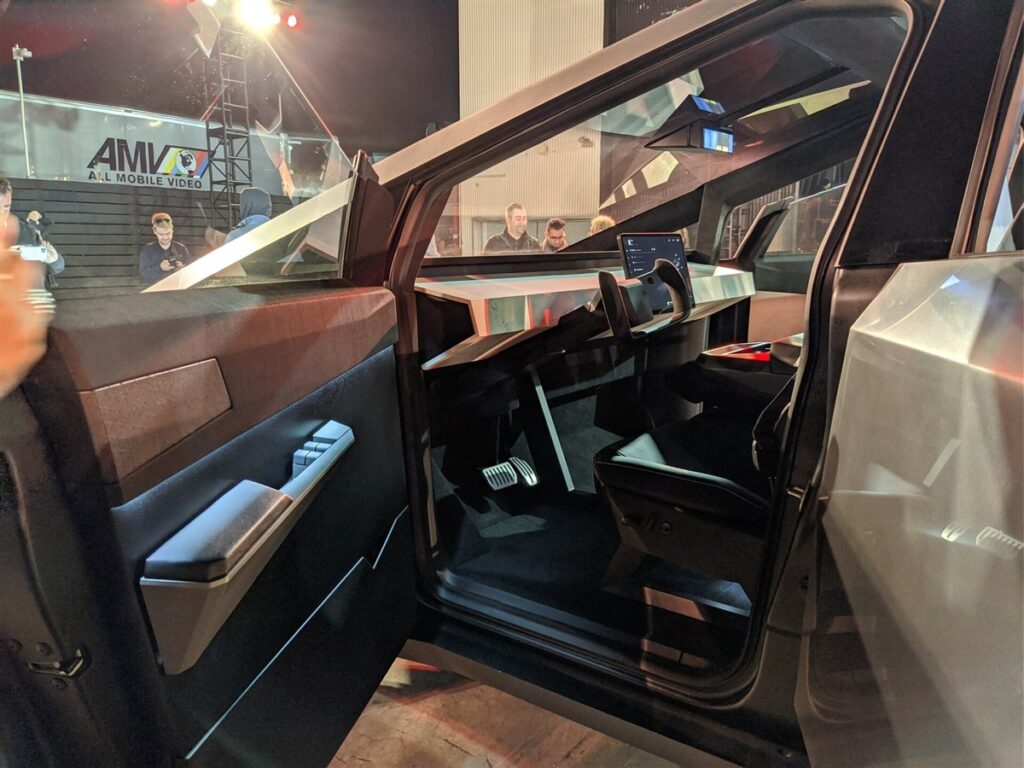
Image: u/mrlewaynee, CC BY-SA 4.0, via Wikimedia Commons.
Steering Wheel Design
The Cybertruck’s small steering wheel only makes sense when you understand steer-by-wire.
In a normal pickup, a small wheel with very quick steering could feel nervous or tiring because the driver would still need a predictable mechanical relationship between hand movement and wheel angle. In the Cybertruck, the steering system can vary that relationship electronically.
The low steering position also changes the driving posture. It can improve forward visibility and make the cabin feel futuristic, but it may not feel natural to drivers used to a conventional round wheel and higher truck seating position.
This is one of the Cybertruck’s clearest examples of Tesla design thinking: the hardware and software are designed as one system. The question is whether the driver wants to learn that system every day.
Door Opening System
The Cybertruck does not use normal exterior door handles.
From outside, the door release is built around a touch/button area near the B-pillar. From inside, occupants use electronic door-release buttons. This looks clean and futuristic, and it fits the Cybertruck’s design language.
But a door is not only a design feature. It is also an emergency system.
Compared with a normal mechanical handle, an electronic door system depends more heavily on power, software, and user knowledge. Tesla provides manual release methods, but the important buyer question is whether a passenger can find and operate them quickly under stress.
That is why physical backup systems matter. A good emergency release should be obvious, intuitive, and usable by someone who has never read the manual. The Cybertruck’s door concept looks advanced, but it also makes emergency usability a serious part of the ownership conversation.
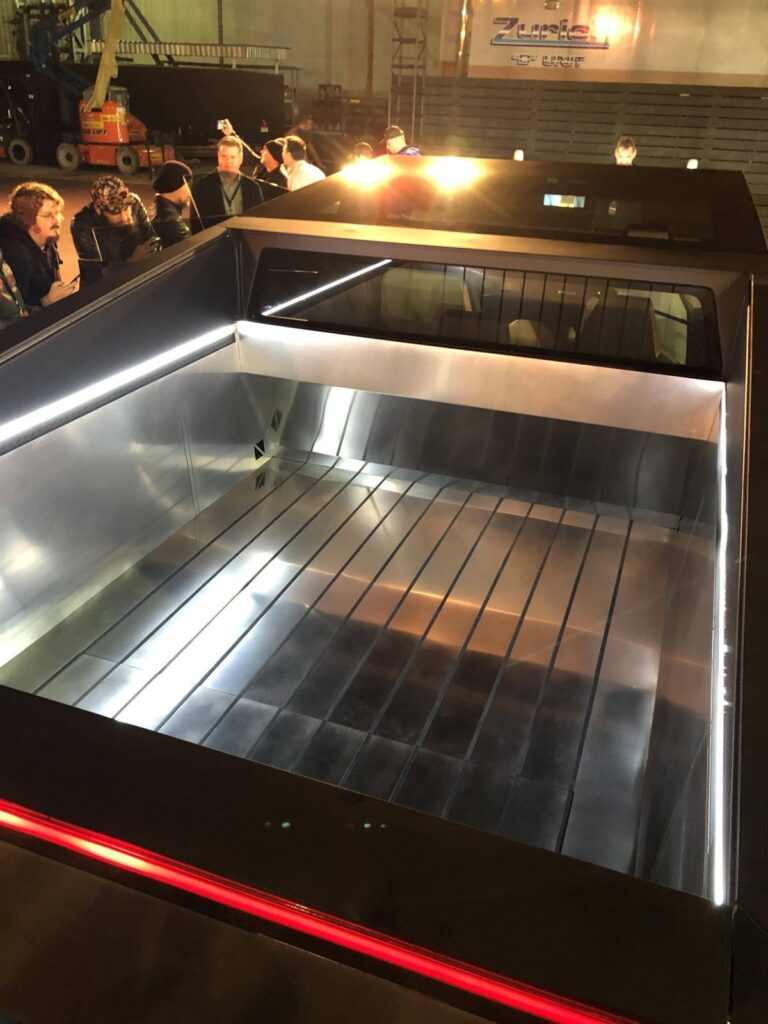
Image: u/mrlewaynee, CC BY-SA 4.0, via Wikimedia Commons.
Bed, Tonneau Cover, and Water Leaks
The Cybertruck’s bed is one of its most important practical features, but buyers should treat it as weather-resistant, not waterproof.
There have been owner and media reports of water entering the cargo-bed or tonneau-cover area. More importantly, Tesla’s own owner information states that the tonneau cover is intended to protect contents from most rain or snow, but it does not make the cargo bed fully waterproof. Water ingress or condensation can occur.
That matters because some buyers may assume a powered cover creates a sealed storage box. It does not. For tools, luggage, electronics, camera gear, or anything water-sensitive, the safer spaces are the cabin, frunk, or protected containers.
Has Tesla improved the issue? Tesla has made production and service updates across Cybertruck ownership areas, and some recalls have addressed trim or component issues, but there is no simple buyer-safe conclusion that all tonneau water concerns are permanently solved. Treat the bed as useful outdoor storage, not a dry trunk.
Suspension and Ride Quality
The Cybertruck’s suspension may be the part of the vehicle that deserves more credit than the design discussion usually allows.
Higher Cybertruck versions use adaptive air suspension. That means the vehicle can adjust ride height and suspension behavior electronically. It can raise for clearance, lower for efficiency or handling, and help the truck manage different loads.
For a vehicle this heavy and angular, many reviewers have found the ride better than expected. That does not mean it rides like a luxury sedan. It means Tesla has used suspension technology to make a very heavy pickup feel less crude than it could have been.
What makes the Cybertruck interesting is that many reviewers praise its ride quality despite its size and weight. Tesla achieves this through a combination of adaptive air suspension, rear-wheel steering, and electronic chassis controls.
The result is a truck that often feels smaller and more manageable than its dimensions suggest. It still feels like a large pickup, but not as cumbersome as many drivers expect.
From a Cariary perspective, this may be one of the Cybertruck’s most underrated strengths. The stainless-steel body and radical styling attract most of the attention, but the suspension technology may be the feature owners appreciate most after living with the vehicle every day.
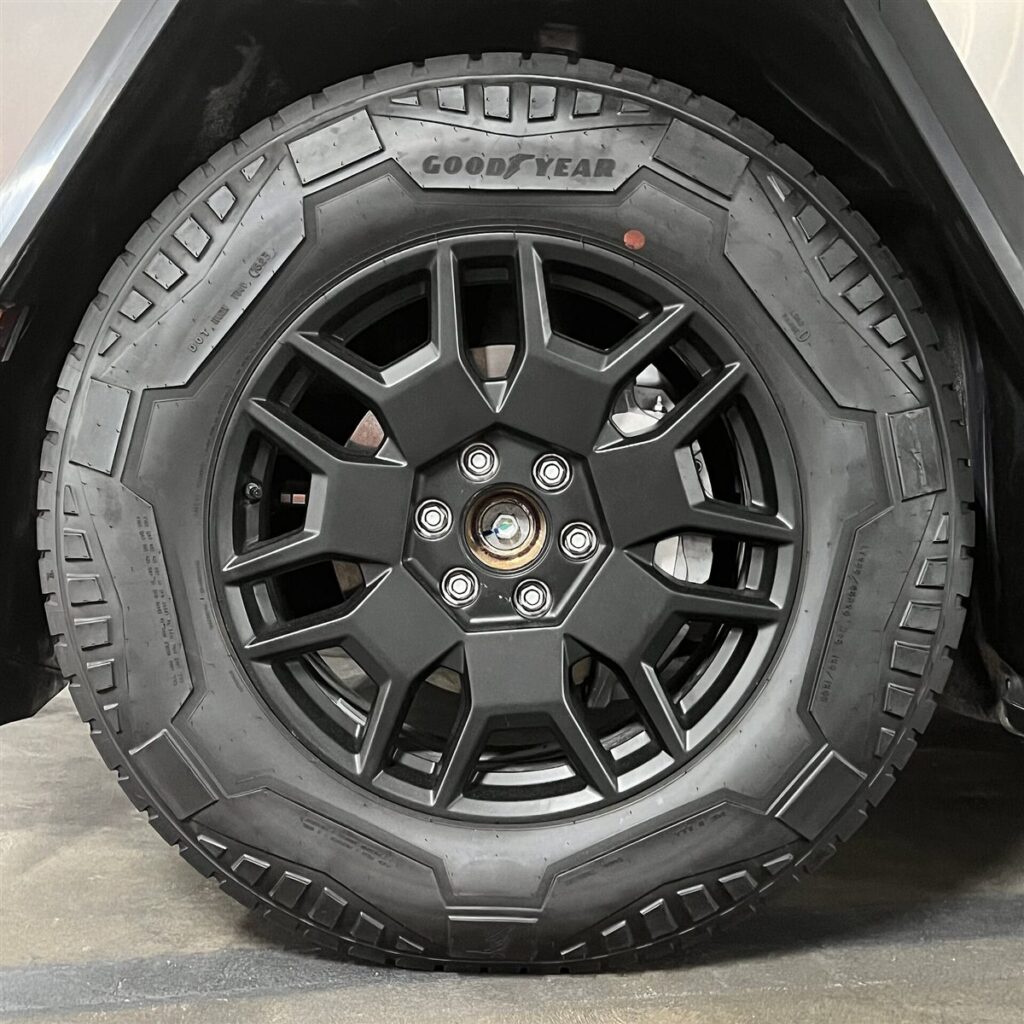
Image: TaurusEmerald, CC BY-SA 4.0, via Wikimedia Commons.
Braking Performance
The Cybertruck’s braking deserves strict scrutiny because the vehicle is heavy and extremely powerful.
Regenerative braking uses the electric motors to slow the vehicle and recover energy back into the battery. This is useful in daily driving, especially in stop-and-go traffic. But regenerative braking is not the same as physical braking. The disc brakes still matter for emergency stops, repeated high-speed braking, heavy loads, towing, and situations where the battery or traction conditions limit regen.
Independent testing has shown that the Cybertruck can stop competently, but not magically. Car and Driver recorded a 70-0 mph stop of 179 feet for a Long Range test truck on 20-inch all-terrain tires. That is not disastrous for a heavy truck, but it reminds buyers that physics has not disappeared.
The Cyberbeast makes this issue more important. Sports-car acceleration in a truck-sized body puts pressure on tires, brakes, suspension, and driver judgment. The Cybertruck’s braking is not necessarily a fatal weakness, but it is one of the areas where buyers should demand real test data instead of being distracted by acceleration numbers.
Cyberbeast and the Meaning of Extreme Power
The Cyberbeast is the version people talk about because it turns a full-size electric pickup into something that accelerates like a supercar.
Tesla claims 0-60 mph in 2.6 seconds with rollout subtracted. Some public discussion frames the Cyberbeast as a 1,000-horsepower-type machine, but independent published specifications often place its output in the mid-800-horsepower range. Either way, the buyer meaning is the same: this is more performance than most roads, jobs, or owners require.
The difference from a Ferrari or Lamborghini is purpose. A supercar is designed around speed, low weight, driver sensation, and handling theater. The Cyberbeast is a heavy pickup using electric torque to create shock value. It is quick, but not in the same emotional category as an Italian supercar.
That makes Cyberbeast feel less like the most rational Cybertruck and more like the halo version. It shows what Tesla can do. It gives the model a headline. It makes people talk. But for normal buyers, the AWD model may make more sense.
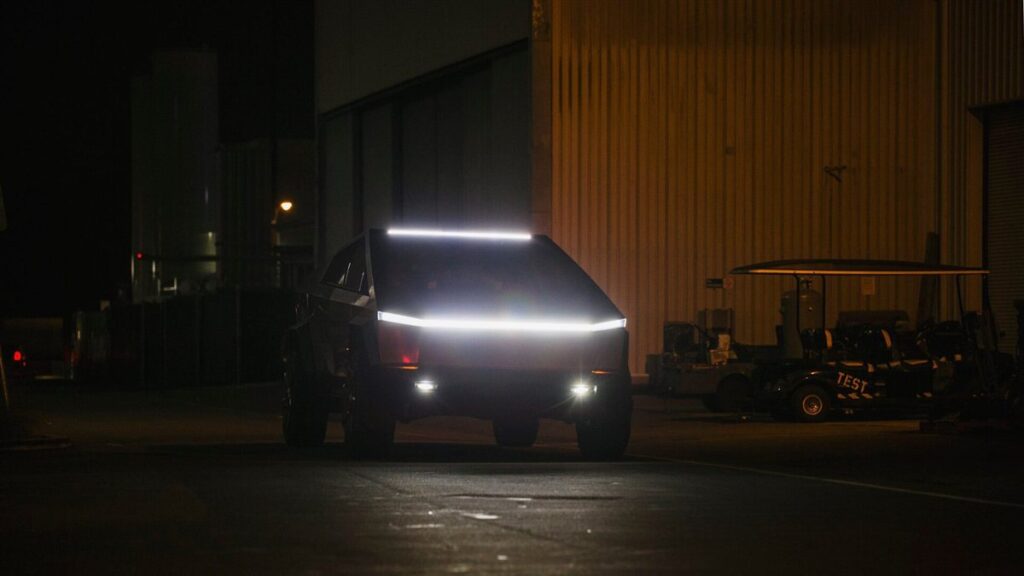
Image: u/Kruzat, CC BY-SA 4.0, via Wikimedia Commons.
Design and Identity
The Cybertruck does not look “EV-like” in the usual way.
Many electric vehicles use smooth noses, hidden grilles, soft surfacing, and aerodynamic curves. The Cybertruck uses flat stainless-steel panels, sharp edges, and a wedge profile. It is futuristic, but not soft. It looks less like a conventional electric truck and more like an industrial object that escaped into traffic.
That design has practical effects. The stainless-steel body helps create the identity, but it also changes maintenance expectations. The shape creates huge presence, but it can make judging corners and public reactions more complicated.
The Cybertruck is not trying to be handsome in a normal truck sense. It is trying to be unforgettable. On that point, it succeeds completely.
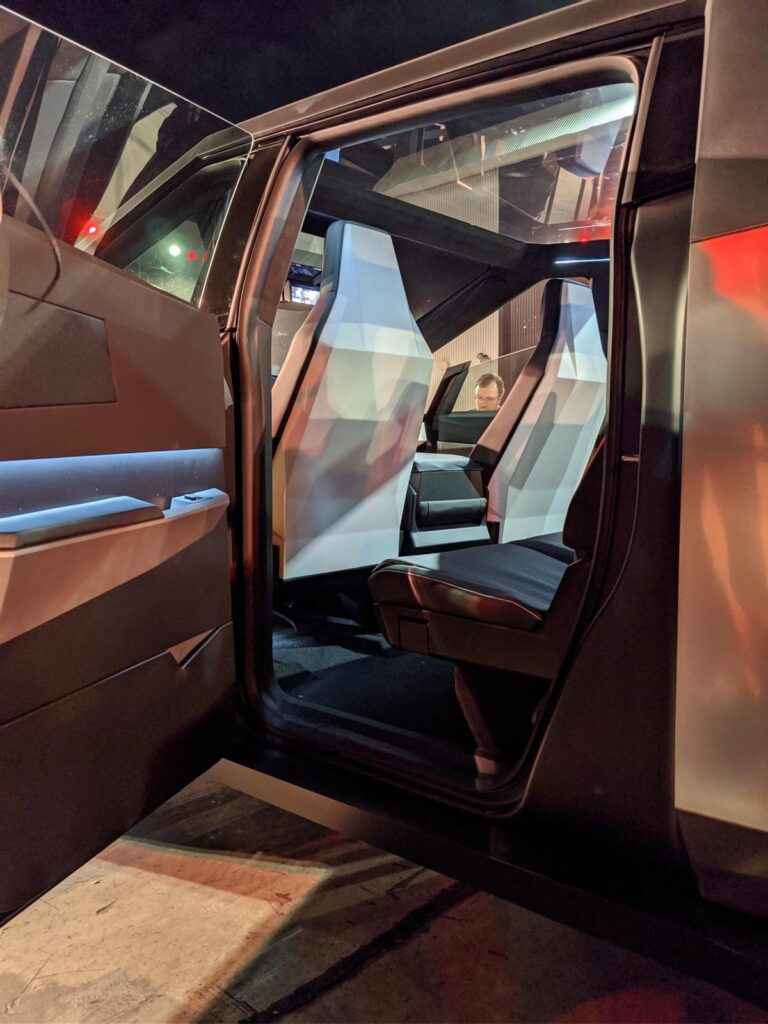
Image: u/mrlewaynee, CC BY-SA 4.0, via Wikimedia Commons.
Interior and Daily Use
Inside, the Cybertruck is more Tesla than truck.
The cabin is screen-led, minimal, and intentionally simple. There is a large central display, a rear passenger display on many versions, and fewer traditional controls than many pickup buyers may expect.
This can feel clean and modern, but it also means daily use depends heavily on Tesla’s interface logic. If you already like Tesla interiors, the Cybertruck will feel familiar. If you prefer physical buttons, traditional handles, and a normal instrument panel, it may feel too abstract.
The rear seat and cabin space make it a real crew-cab vehicle. The frunk adds useful covered storage, which matters because the bed should not be treated as waterproof.
Price-to-Value Judgment
The Cybertruck’s value depends heavily on what the buyer thinks they are buying.
If the goal is a conventional work truck, the value is harder to defend. A Ford F-150, Chevrolet Silverado, Ram 1500, or even an F-150 Lightning may feel more familiar, easier to service in some regions, and less socially complicated.
If the goal is an electric pickup with huge attention, unusual technology, fast acceleration, and a design that no other vehicle can copy, the Cybertruck has a unique value argument.
The risk is that buyers pay for the spectacle and then discover the daily compromises: size, parking, steering adaptation, bed water expectations, door-release learning, recalls, and public attention.
The Cybertruck is not cheap transportation. It is a high-commitment object.
Competitor Comparison
The Ford F-150 Lightning is the easiest comparison because it is the opposite philosophy. It looks and behaves like a familiar truck, just electric. That makes it easier for traditional pickup owners, fleet users, and buyers who want EV capability without explaining their vehicle everywhere they go.
The Rivian R1T feels more balanced as a premium adventure EV. It is still distinctive, but it is less confrontational. For buyers who camp, travel, carry gear, and want a modern EV truck without the Cybertruck’s social baggage, the Rivian may be the calmer choice.
The GMC Hummer EV Pickup makes the Cybertruck look almost efficient. The Hummer is also huge, heavy, and theatrical, but it leans into luxury off-road excess rather than minimalist futurism. The Hummer buyer wants drama with comfort. The Cybertruck buyer wants drama with disruption.
The Chevrolet Silverado EV is the practical counterargument. It focuses on range, usable truck packaging, and familiar pickup logic. It is not as culturally explosive, but that may be exactly why some buyers prefer it.
Recommended For
The Cybertruck makes sense for buyers who want a vehicle that feels like a technology object as much as transportation.
It is best for people who already understand large-vehicle ownership, have suitable parking, can charge at home or reliably nearby, and are willing to adapt to steer-by-wire, electronic doors, and Tesla’s interface.
It also fits buyers who want an EV pickup but do not want a normal-looking truck.
Not Recommended For
The Cybertruck is not ideal for buyers moving from a normal SUV who assume it will be easy just because it has cameras and clever steering.
It is also not the best choice for people who need quiet anonymity, simple mechanical controls, traditional door handles, waterproof covered cargo storage, or the easiest possible truck ownership experience.
Buyers who regularly use tight parking garages, older apartment complexes, narrow urban streets, or crowded school drop-off zones should be especially careful.
Buyer Verdict
The Tesla Cybertruck is a fascinating vehicle, but not a simple recommendation.
It is easier to admire than to universally recommend. The suspension is better than many skeptics expect. The steering technology genuinely helps maneuverability. The performance is extraordinary. The design has already entered automotive history.
But the size, door system, bed water expectations, braking demands, recall history, and daily attention all matter.
The best Cybertruck buyer is not simply someone who wants an electric pickup. It is someone who wants this specific electric pickup and accepts that ownership includes adaptation.
Cariary Perspective
The Cybertruck may be remembered less as the best pickup truck of its era and more as the vehicle that captured the mood of the 2020s: technological confidence, social division, design shock, and performance excess all in one stainless-steel shape.
Its most convincing engineering achievement may not be the Cyberbeast’s acceleration. It may be the way the chassis and suspension make such a large, heavy object feel more manageable than it should. That is real engineering, even if the design gets most of the attention.
But buyers should not let the spectacle soften their judgment. A truck this heavy and fast needs careful braking evaluation. A door system this electronic needs obvious emergency usability. A covered bed should not be treated as a dry trunk. The Cybertruck is brilliant in some ways, but it asks the owner to participate in the experiment.
One-Line Verdict
The Tesla Cybertruck is a cultural icon disguised as an electric pickup: astonishing, compromised, clever, difficult, and impossible to ignore.
FAQ
Is the Tesla Cybertruck a good daily driver?
It can be, but only for the right driver. If you have space to park it, reliable charging, and patience for its steering and size, it can work. If your daily life involves tight garages, narrow streets, or crowded urban parking, it may feel stressful.
How big is the Tesla Cybertruck?
Tesla lists the Cybertruck at 223.7 inches long, or about 5.68 meters. That places it in full-size pickup territory. It is not comparable to a normal midsize SUV in daily maneuvering.
Is the Cybertruck bed waterproof?
No. Buyers should treat it as weather-resistant, not waterproof. Tesla’s owner information says the tonneau cover does not make the cargo bed fully waterproof, and water ingress or condensation can occur.
Is steer-by-wire good in the Cybertruck?
It helps a large truck maneuver more easily, especially at low speed. But it also feels unusual at first because the steering response is much quicker than a normal vehicle. It is useful technology with a real learning curve.
Is the Cyberbeast worth it?
For most buyers, probably not. Cyberbeast is the halo version: extremely quick and technically impressive, but more about image and performance theater than practical truck value.
Are the Cybertruck brakes strong enough?
They can perform competently, but the vehicle’s weight and power mean braking deserves serious attention. Regenerative braking helps in daily driving, but physical brakes still matter for emergency stops, towing, and repeated heavy use.
Why do celebrities and influencers like the Cybertruck?
Because it is instantly recognizable. The Cybertruck works as a status object, content object, and public signal. For many high-visibility owners, attention is part of the appeal.
What should I compare with the Cybertruck?
Compare it with the Ford F-150 Lightning, Rivian R1T, Chevrolet Silverado EV, and GMC Hummer EV Pickup. Each offers a different answer to the electric truck question.
Related Cars
- Ford F-150 Lightning
- Rivian R1T
- Chevrolet Silverado EV
- GMC Hummer EV Pickup
- Tesla Model X
- Tesla Model Y
Internal Link Recommendations
- Link “NCM vs LFP battery comparison” to Cariary’s existing EV battery guide.
- Link “Ford F-150 Lightning” to the future Today Car page for Ford’s electric pickup.
- Link “Rivian R1T” to a future EV adventure truck comparison.
- Link “regenerative braking” to a Cariary EV technology explainer.
- Link “steer-by-wire” to a future automotive technology library page.
Data Reference Date
June 14, 2026