Quick Take
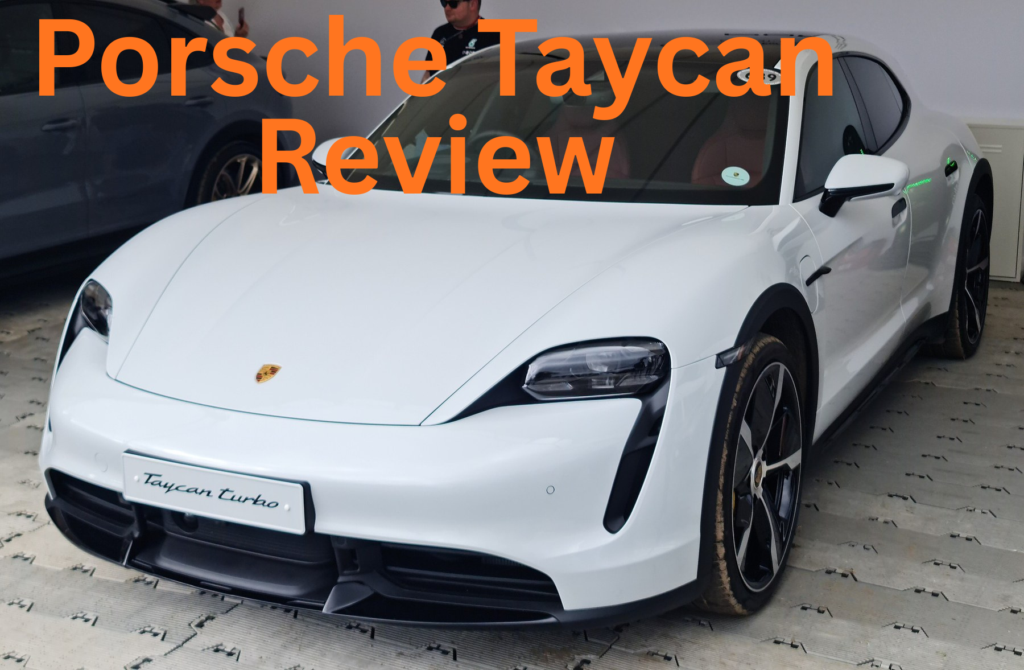
The Porsche Taycan is Porsche’s first fully electric production car, and more importantly, it is the EV that proved Porsche could enter the electric era without losing itself.
Many brands treated EVs as a new category that required a totally different personality. Porsche did something more difficult. It made an electric car that still felt like a Porsche: low, stable, precise, fast, and serious.
Ferrari and Lamborghini spent much longer protecting the emotional value of combustion engines. Porsche moved earlier with the Taycan, and the result was very Porsche-like: not the first EV, not the longest-range EV, but one of the first electric cars that made performance EVs feel genuinely desirable to driving people.
What Is It?
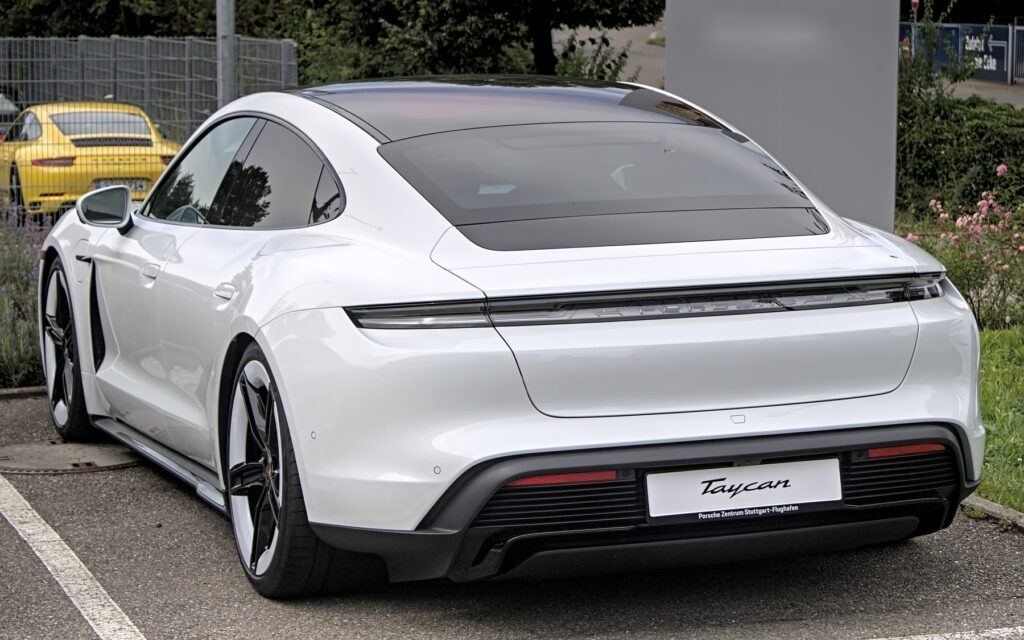
The Porsche Taycan is a fully electric performance sedan, available in several versions including the base Taycan, Taycan 4, 4S, GTS, Turbo, Turbo S, and Turbo GT. Porsche also offers more practical wagon-like versions such as the Sport Turismo and Cross Turismo.
Credit: Image: Alexander Migl, CC BY-SA 4.0, via Wikimedia Commons
The Taycan is not simply a luxury EV with a Porsche badge. It was developed around Porsche’s core driving priorities: body control, braking confidence, repeatable performance, steering response, and high-speed stability.
That is why the Taycan still matters. It made the idea of an electric Porsche feel believable.
Why This Car Exists
The Taycan exists because Porsche could not ignore electrification, but Porsche also could not afford to build an EV that felt ordinary.
A normal electric sedan can be fast in a straight line. That alone is not enough for Porsche. The Taycan had to prove that an EV could still feel engineered, balanced, and emotional.
Credit: Image: MercurySable99, CC0, via Wikimedia Commons
That is the context behind the car. Porsche did not follow the EV trend by making a generic battery sedan. It used the EV transition as a way to show that performance could survive without an engine.
In simple terms: the Taycan is what happens when Porsche accepts the future but refuses to become anonymous.
Key Specs and Real-World Meaning
The Taycan’s numbers vary widely depending on trim. A base Taycan is already quick enough for daily use, while the Turbo GT sits in extreme-performance territory with hypercar-like acceleration.
But the more important technical story is not only horsepower. It is the way Porsche engineered the car.
Credit: Image: Alexander-93, CC0, via Wikimedia Commons
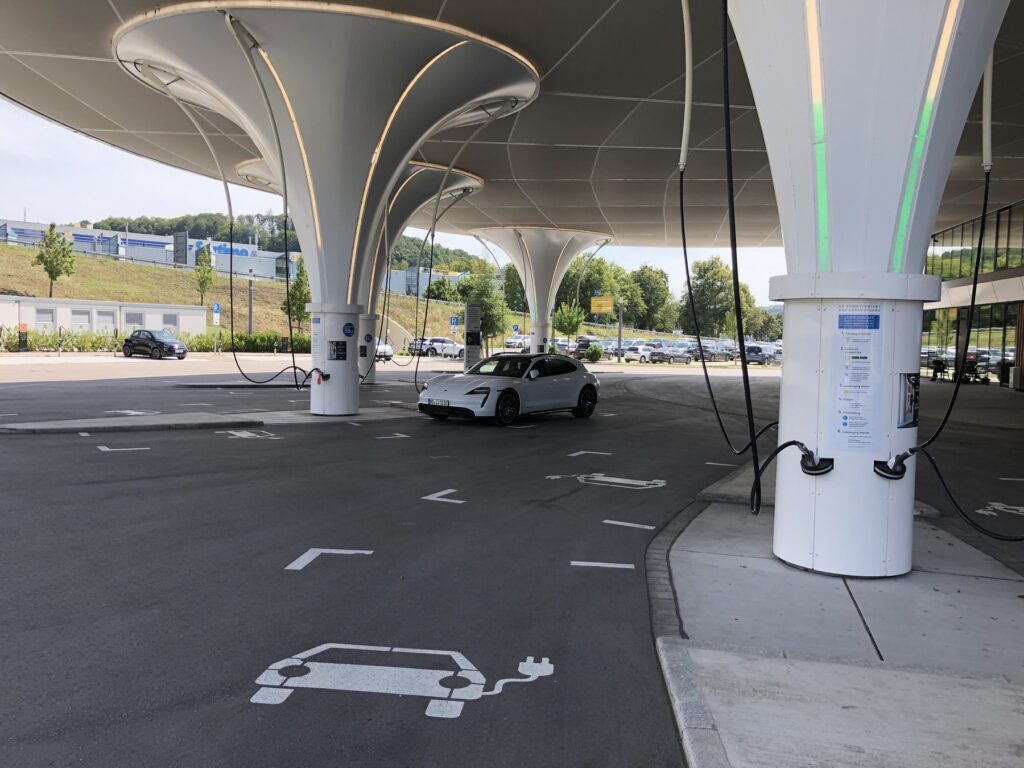
The Taycan uses an 800-volt electrical architecture, which allows very fast DC charging when the charger and conditions are right. Porsche’s updated Taycan models can charge at up to 320 kW under ideal conditions, and Porsche has also improved the charging window so the car can sustain high charging speeds more effectively.
For buyers, this matters because the Taycan is not only about short bursts of acceleration. It is designed to make high-performance EV ownership feel more usable over distance.
The Two-Speed EV Trick
Credit: Image: Vauxford, CC BY-SA 4.0, via Wikimedia Commons
One of the Taycan’s most Porsche-like technical features is its two-speed transmission on the rear axle.
Most EVs use a single-speed gearbox because electric motors produce strong torque immediately. Porsche chose something different. The Taycan’s short first gear helps acceleration from a standstill, while the longer second gear helps efficiency and performance at higher speeds.
This is why the Taycan can feel different from many EVs. It is electric, but it still has a kind of mechanical character. You can feel that Porsche wanted the car to do more than simply launch hard once.
This is exactly the kind of detail that makes the Taycan feel like Porsche did not just build an EV. Porsche built a Porsche EV.
Design and Identity
Credit: Image: Alexander Migl, CC BY-SA 4.0, via Wikimedia Commons
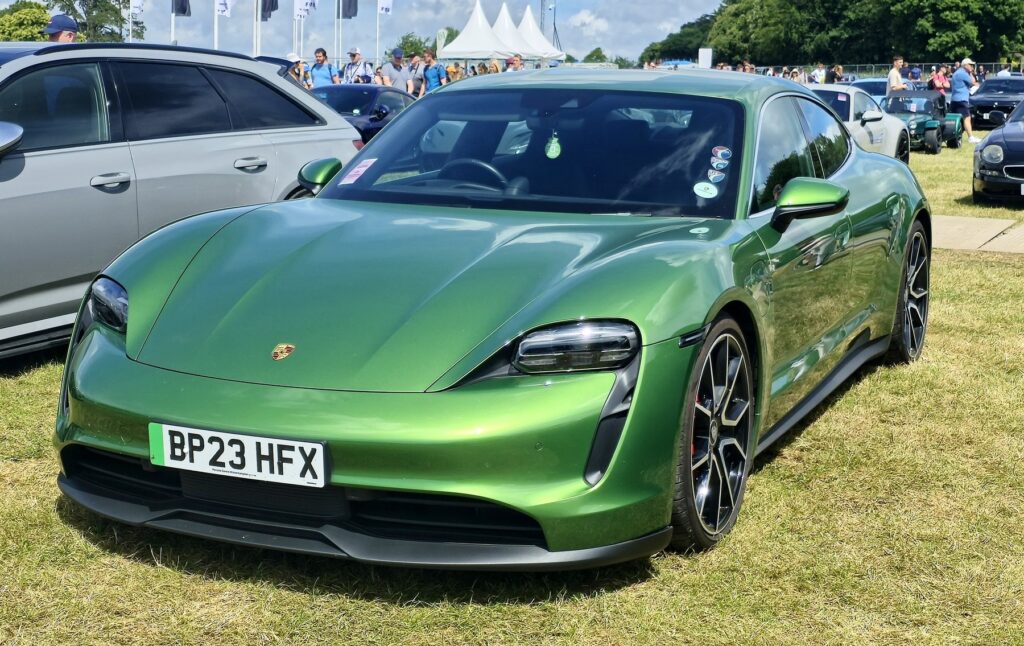
The Taycan is one of the best-looking electric sedans because it does not try too hard to look futuristic.
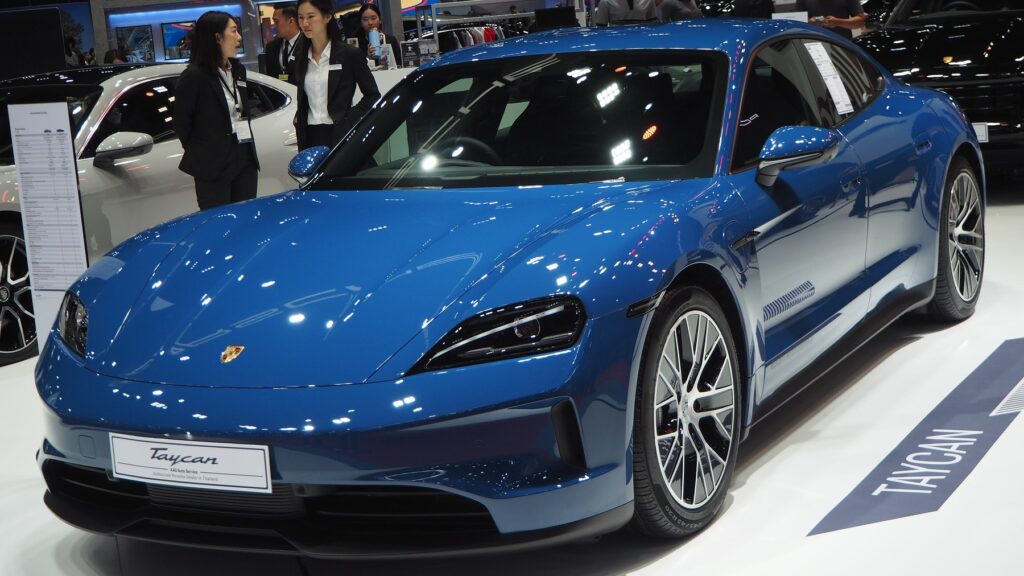
The front is low and clean. The headlights feel modern but still connected to Porsche’s sports-car language. The roofline is sleek without turning the car into a faceless EV pod. The rear light bar gives it a technical identity, but the overall shape remains recognizably Porsche.
Credit: Image: Alexander Migl, CC BY-SA 4.0, via Wikimedia Commons
This is where Porsche did the job properly. The Taycan looks electric, but it does not look like Porsche abandoned its own design memory.
A lot of EVs age quickly because they were designed around trendiness. The Taycan has a better chance of aging well because the proportions are doing the work, not gimmicks.
Interior and Daily Use
The Taycan interior is modern, low, and driver-focused. It does not feel like a traditional gas-powered Panamera, and it should not. The cabin is more digital, more compact in feel, and more EV-specific.
The biggest daily-use question is not performance. It is space and practicality.
Credit: Image: Alexander-93, CC BY-SA 4.0, via Wikimedia Commons
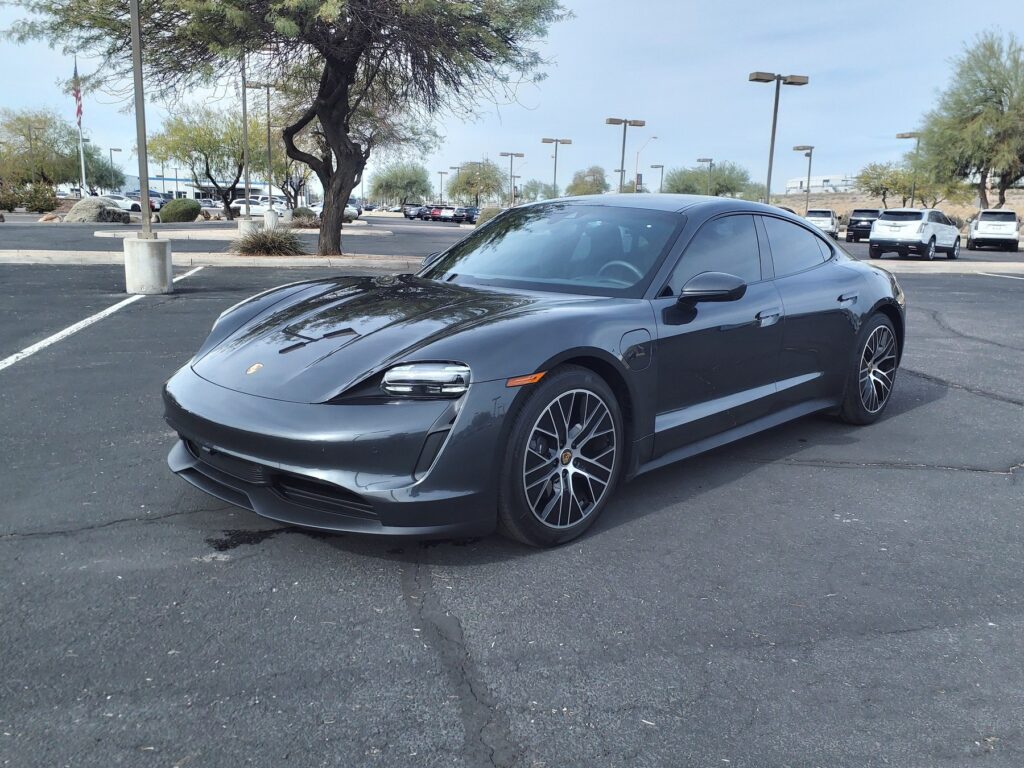
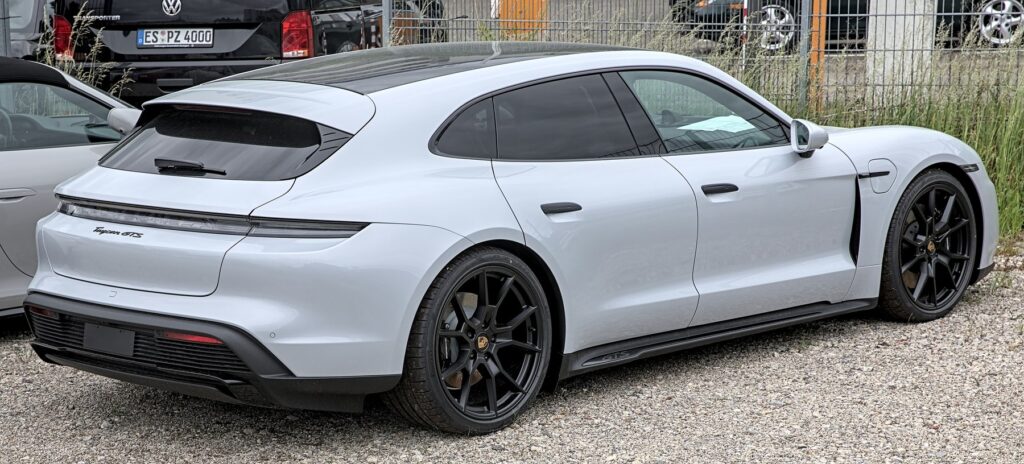
The sedan looks fantastic, but the Sport Turismo and Cross Turismo versions make more sense for buyers who want the Taycan experience with more cargo flexibility. They keep the low Porsche character while making the car easier to live with.
The Taycan is not the most spacious luxury EV. It is not trying to be. It is the EV for buyers who care about driving feel first and cabin volume second.
Performance Character
Credit: Image: Alexander Migl, CC BY-SA 4.0, via Wikimedia Commons
The Taycan is fast in the obvious EV way, but the better part is how it handles speed.
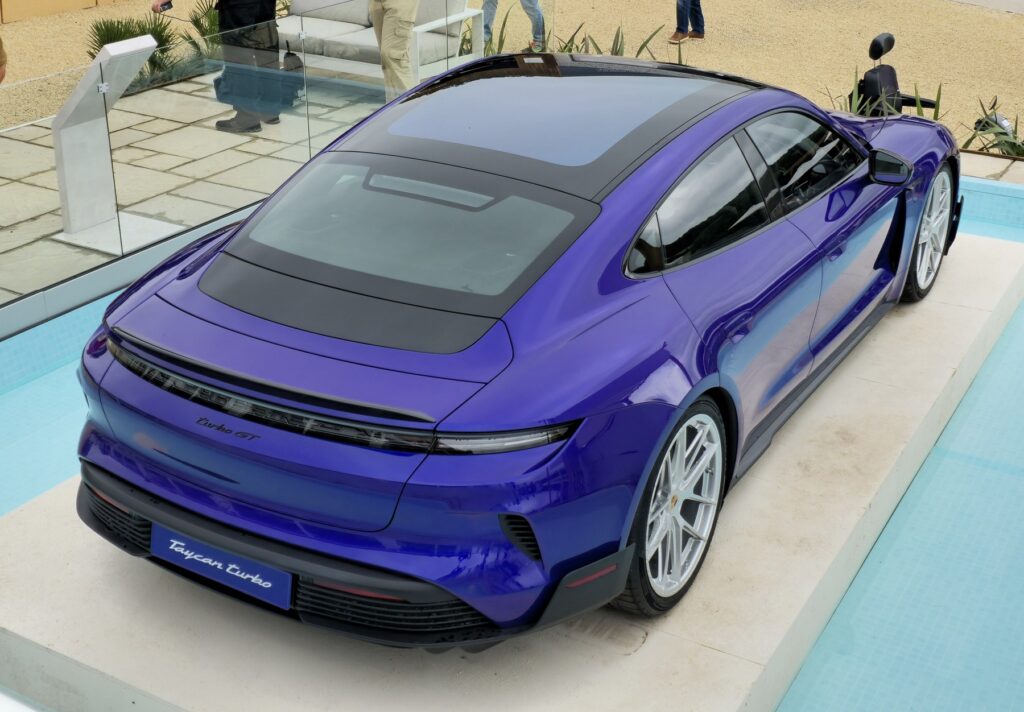
Many EVs feel dramatic in a straight line and heavy everywhere else. The Taycan is different. Its battery weight is still there, but Porsche uses chassis tuning, low center of gravity, steering precision, and suspension control to make the car feel more disciplined than most performance EVs.
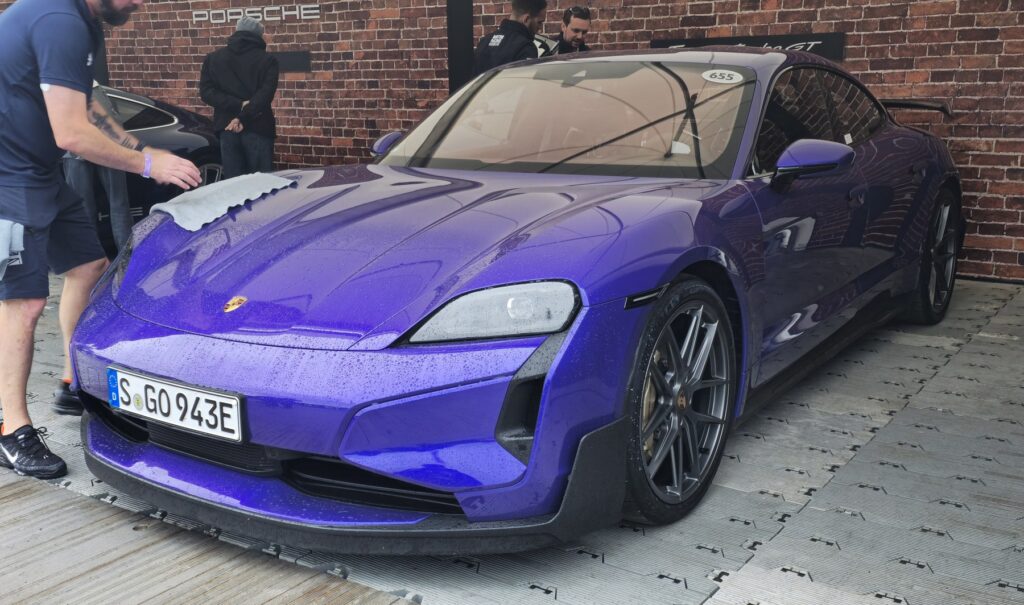
The Turbo GT pushes this idea to the extreme. It is proof that Porsche is not treating electric performance as a soft compromise.
Credit: Image: Alexander Migl, CC BY-SA 4.0, via Wikimedia Commons
The Taycan is not exciting because it is silent and fast. It is exciting because Porsche managed to make silence feel engineered.
Price-to-Value Judgment
The Taycan is not a cheap car. Current U.S. pricing places the base Taycan well above ordinary EV sedans, and higher trims quickly move into serious luxury-performance money.
But for a Porsche, and especially for a Porsche EV, the value story is stronger than it first looks.
Credit: Image: Vauxford, CC BY-SA 4.0, via Wikimedia Commons
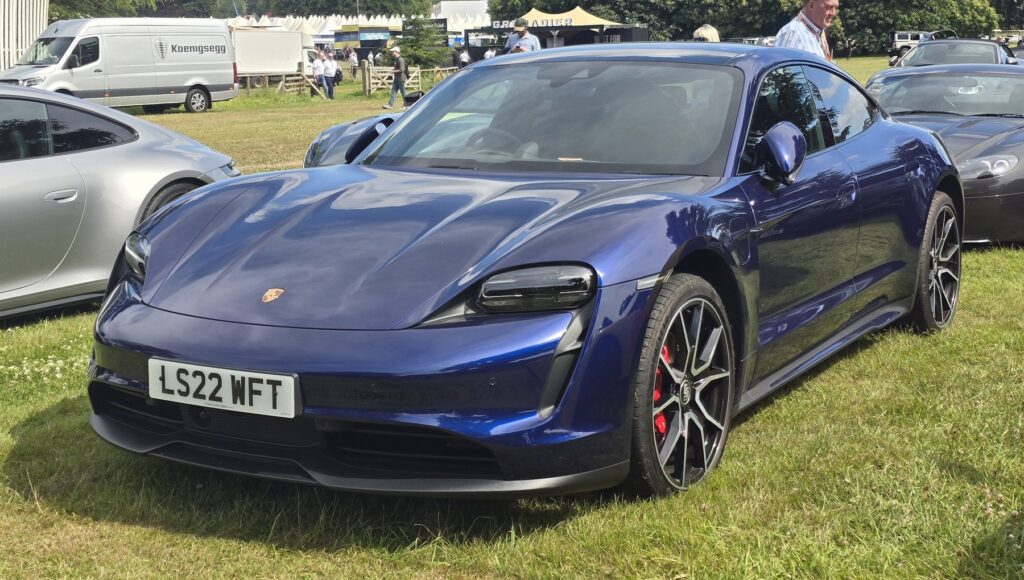
You are getting Porsche design, Porsche chassis tuning, fast charging hardware, serious performance, and a car that still feels special even in lower trims. The base Taycan and Taycan 4S may actually make more sense than the headline Turbo models for many buyers.
The Turbo GT is for people chasing extremes. The regular Taycan is for people who want the Porsche EV experience without paying supercar money.
That is why Cariary sees the price as surprisingly reasonable in context. Not cheap. But fairer than expected when you consider the badge, engineering, and driving experience.
Competitor Comparison
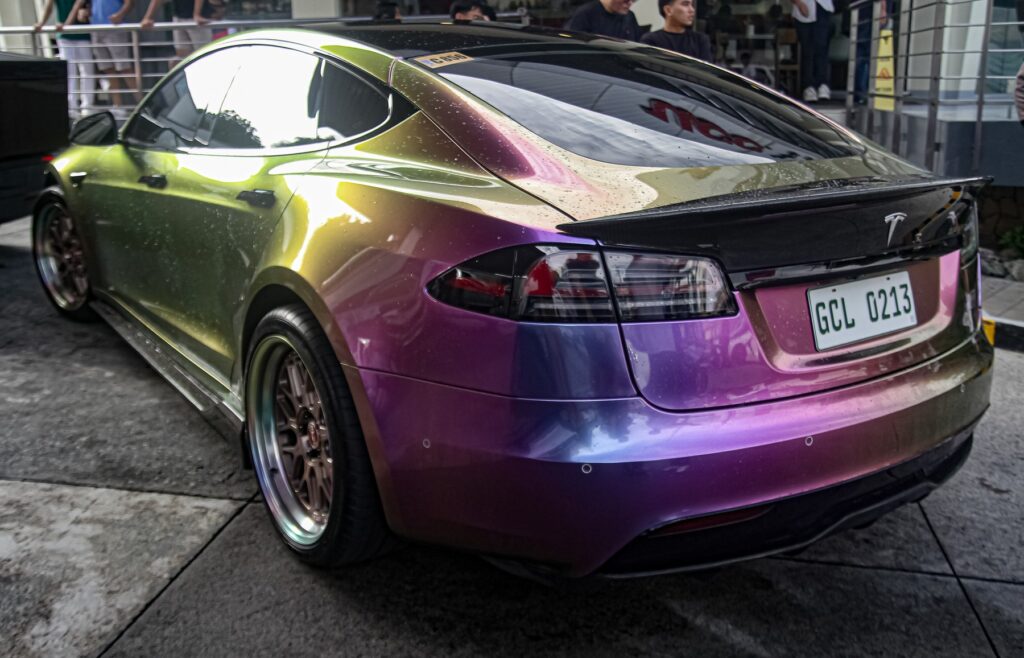
The Tesla Model S is the obvious comparison because it offers huge acceleration, long range, charging-network strength, and strong software. It is the more tech-centered EV.
Credit: Image: Alexander-93, CC BY-SA 4.0, via Wikimedia Commons
The Taycan is different. It may not always win on range or screen-centered convenience, but it feels more like a driver’s car.
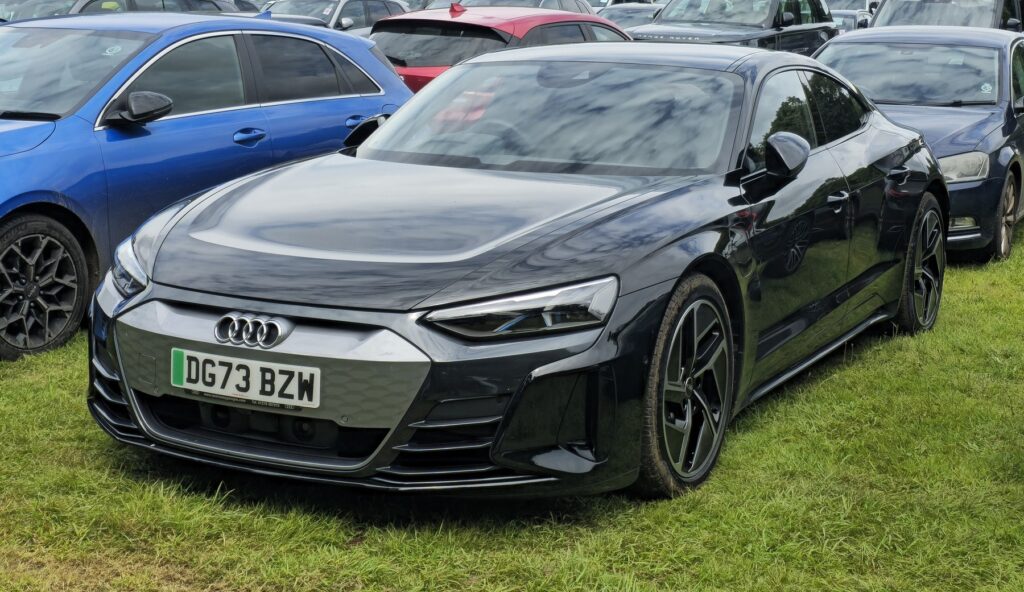
The Audi e-tron GT shares a close engineering relationship with the Taycan, but its personality is softer and more grand-touring focused. It is the calmer cousin.
Credit: Image: Alexander Migl, CC BY-SA 4.0, via Wikimedia Commons
The Lucid Air is the range and luxury-efficiency alternative. It offers impressive space and EV engineering, but it does not carry Porsche’s sports-car identity.
The BMW i5 M60 is more conventional as a luxury sedan. It is easier to understand for buyers coming from gas-powered executive cars, but it does not feel as purpose-built as the Taycan.
Recommended For
The Porsche Taycan is recommended for buyers who want an EV but still care deeply about driving feel, steering precision, braking confidence, and brand identity.
It is also a strong choice for buyers who want a Porsche but need four doors and prefer electric performance over a combustion sports sedan.
Not Recommended For
The Taycan is not recommended for buyers whose top priorities are maximum range, lowest price, biggest cabin, or the most advanced software ecosystem.
If you want the most efficient long-distance EV tool, look at Tesla or Lucid. If you want an EV that still feels like a Porsche, the Taycan is the answer.
Buyer Verdict
The Porsche Taycan is one of the most important EVs because it made electric performance feel legitimate outside the Tesla world.
It is beautiful, fast, technically interesting, and genuinely Porsche-like. It also proves that an EV does not need engine noise to have character.
The best Taycan for most buyers is probably not the fastest one. A Taycan 4S or well-optioned base model gives much of the experience without pushing the price into extreme territory. The Turbo GT is amazing, but the normal Taycan is the bigger achievement.
Cariary Perspective
The Taycan feels like Porsche looking at the EV transition and saying, “Fine, but we will do it our way.”
That is why the car matters. Ferrari and Lamborghini protected combustion emotion for longer, and that makes sense for those brands. Porsche made a different decision. It entered the EV market early and built something that did not feel like surrender.
For Cariary, the Taycan is one of the cleanest examples of Porsche being Porsche. The design is beautiful, the performance is serious, and the two-speed rear transmission gives the car a technical personality most EVs do not have.
It is not the longest-range EV. It is not the cheapest EV. But it may still be the most convincing answer for buyers who want an electric car that feels like it was built by people who love driving.
One-Line Verdict
The Porsche Taycan is the EV that proved Porsche could go electric without becoming ordinary.
FAQ
Is the Porsche Taycan Porsche’s first electric car?
Yes. The Taycan is Porsche’s first fully electric production car.
Does the Porsche Taycan have a transmission?
Yes. The Taycan uses a two-speed transmission on the rear axle, which helps with hard acceleration and high-speed efficiency.
Is the Taycan better than a Tesla Model S?
It depends on the buyer. The Model S is stronger for range, software, and charging-network convenience. The Taycan is stronger for driving feel, chassis control, and Porsche identity.
Is the Porsche Taycan expensive?
It is expensive compared with normal EVs, but surprisingly reasonable in the context of Porsche performance cars, especially in base or 4S form.
Is the Taycan Turbo GT worth it?
The Turbo GT is for buyers who want the most extreme Taycan. Most buyers will get more usable value from a Taycan, Taycan 4S, or GTS.
Should I buy the Taycan sedan or Cross Turismo?
Choose the sedan if design and performance-sedan proportions matter most. Choose the Cross Turismo or Sport Turismo if you want more cargo flexibility.
Related Cars
- Tesla Model S
- Audi e-tron GT
- Lucid Air
- BMW i5 M60
- Mercedes-AMG EQE
- Porsche Panamera
- Porsche Macan Electric
Data Reference Date
July 27, 2026