Core summary
The fourth-generation MDX offers three-row family utility with a V6 powertrain. Standard models and Type S have different engines and chassis equipment, so they should be compared as distinct specifications.
The fourth-generation MDX is a three-row SUV with two distinct powertrain propositions: the standard V6 and Type S. It should be approached as a family vehicle first, then as a performance or equipment choice. This article anchors generation-specific facts to the 2022 introduction rather than combining every later update into one specification.
History & generations
The 2022 MDX introduced the fourth generation. Buyers comparing an earlier MDX with this one should not assume shared cabin controls or mechanical specification merely because the badge is unchanged. Later model-year updates also need their own equipment check; the original launch description is a historical reference, not a current order guide.
Body, platform & design
The three-row body creates two separate loading tests: luggage with the final row in use, and bulkier cargo with it folded. Both matter if the car will alternate between school transport and holidays. A large published maximum cargo figure does not answer how many travel bags fit when every intended passenger is aboard.
_rear_view.png)
Engine & drivetrain
The standard launch model uses a 3.5-litre naturally aspirated V6 rated at 290 hp and 267 lb-ft with a ten-speed automatic. Type S uses a different, turbocharged 3.0-litre V6. Treat those as separate mechanical choices rather than describing Type S as a cosmetic package on the standard engine.
_side_view.png)
Trim differences
Determine the drivetrain and package from the specific model-year specification, then compare comfort and technology equipment. The standard model’s front-drive and SH-AWD offerings should not be mixed with Type S assumptions. A used listing that emphasises appearance is not a substitute for identifying the actual variant.
Interior & seating
Try access to the third row with the second row set as the family will use it. Adults, children and child seats make different demands, and a nominal seat count does not capture them. Also check whether the front occupant can use the controls comfortably; a family vehicle’s interface is part of daily utility.
Efficiency & range
Estimate fuel costs for the standard V6 and Type S separately. Their different engines should not be represented by one generic MDX consumption claim. The sensible comparison uses the same passenger load and route, especially for a household that regularly combines urban trips with fully loaded holiday travel.
Safety & equipment
For a three-row vehicle, confirm the permitted child-seat positions and fitting instructions in the individual car’s handbook. Then verify assistance equipment and recall status for that vehicle. This profile does not infer a crash-test result from the brand or from the presence of three rows.
Strengths
The MDX’s strongest case is providing one vehicle for a household’s passenger and cargo tasks. A standard-engine example can be the more coherent choice when those tasks dominate. Type S should earn its extra expense through a genuine preference for its different drivetrain, not through the assumption that it is necessary for family use.
The MDX should win its place by carrying the family well. Compare the standard V6 with Type S only after the third row, luggage space and everyday access have passed the test.
Considerations
The third row and remaining luggage room are the important constraints to test before selecting equipment. A buyer carrying adults in every row frequently may reach a different conclusion from a household using the last row occasionally. Import-market buyers should also establish local support for the actual specification before relying on a distant-market brochure.
Recommended use
Consider the MDX for family travel where three-row flexibility is useful and its size fits the parking environment. Take the usual passengers and a representative luggage load to the viewing. If that test works, choose the powertrain and package around the remaining budget rather than reversing that order.
Rivals & related
The Infiniti QX60 and Lexus TX are relevant three-row luxury alternatives, though availability and generation differ by market. A Volvo XC90 supplies another comparison for cabin use. Evaluate third-row access and luggage with seats occupied before comparing screens or output; those practical differences can decide the purchase.
FAQ
Q: Is Type S just an appearance package?
A: No. It has a different turbocharged engine from the standard launch V6.
Q: Does the largest cargo figure describe seven-passenger travel?
A: No. Check the seating configuration used for that measurement.
Q: Does this article describe every later MDX update?
A: No. Its historical specification reference is the 2022 fourth-generation introduction.
What makes the Acura MDX different?
The MDX should win its place by carrying the family well. Compare the standard V6 with Type S only after the third row, luggage space and everyday access have passed the test.
Who should consider it?
Family travel requiring three rows
Sources & updates
Specification reference: Acura: fourth-generation 2022 MDX introduction. The linked manufacturer material identifies the edition used here; specifications are not universal across years or countries.
The buying comparisons and suitability judgements are Cariary editorial analysis, not claims from a road test. Existing photograph credits identify the photographed generation and any unverified trim; an illustrative photograph is not proof of equipment.
- Official model information →
- Manufacturer media archive →
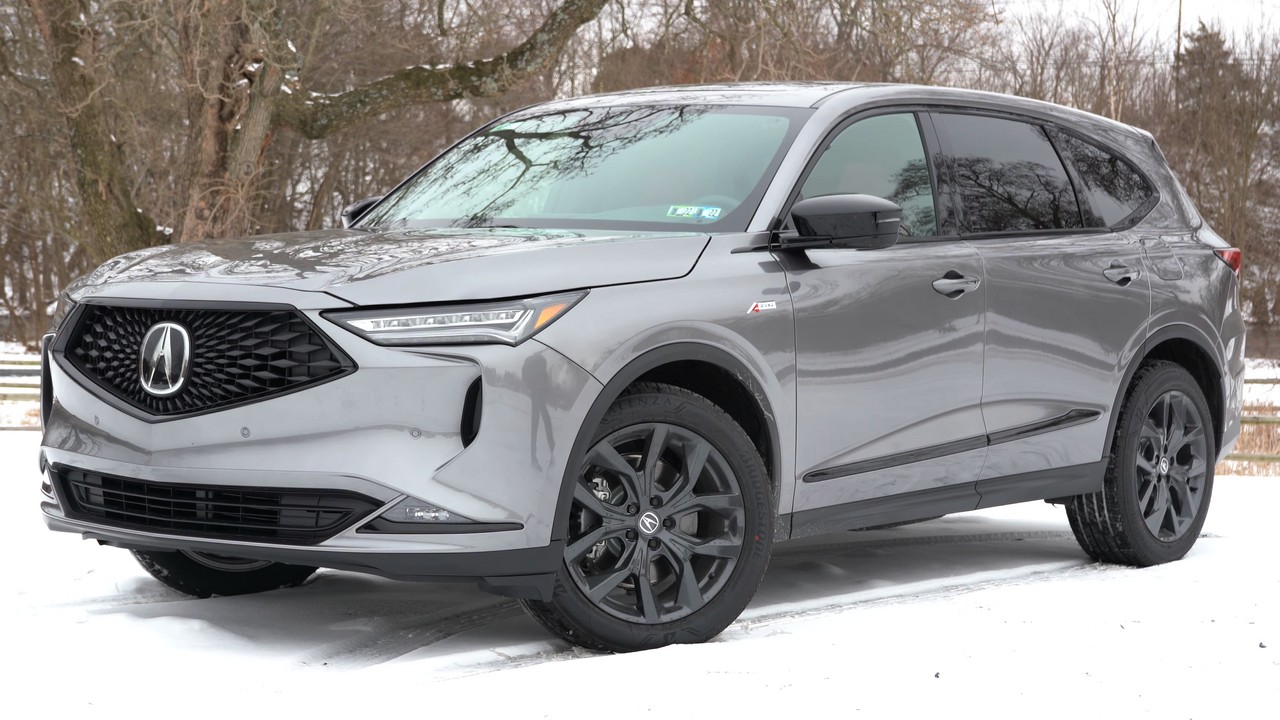
- Photograph — Grey 2022 Acura MDX, front three-quarter view →Gold Pony; CC BY 3.0
View all official references (3 more)
- Photograph — Grey 2022 Acura MDX, rear three-quarter view →Gold Pony; CC BY 3.0
- Photograph — Grey 2022 Acura MDX, side profile →Gold Pony; CC BY 3.0
- Acura: fourth-generation 2022 MDX introduction →Dated specification reference; suitability comments are editorial analysis.
Last editorial review: September 20, 2026 — vehicle-specific editorial revision. Specifications remain market- and model-year-specific.