Core summary
The 8Y RS 3 combines a five-cylinder engine with compact Audi practicality. Sportback and Sedan offer different loading arrangements, and neither should be confused with an S3.
The 8Y RS 3 combines a turbocharged five-cylinder engine with a compact, usable body. That engine layout gives it a clear identity within the small performance-car field, but the practical appeal depends on whether the chosen body works for everyday life.
Cariary would start with Sportback versus Sedan, then assess condition and equipment. A car bought for its engine still needs to carry the people and bags that come with ordinary ownership.
History & generations
Audi introduced the 8Y RS 3 in 2021 in Sportback and Sedan forms. This guide uses the launch-generation specification and photographs, rather than treating the earlier 8V or later facelift details as identical.
An S3 is a different model, not an RS 3 with fewer cosmetic additions. Confirm the factory identity and production period before using specifications from an online advert.
Body, platform & design
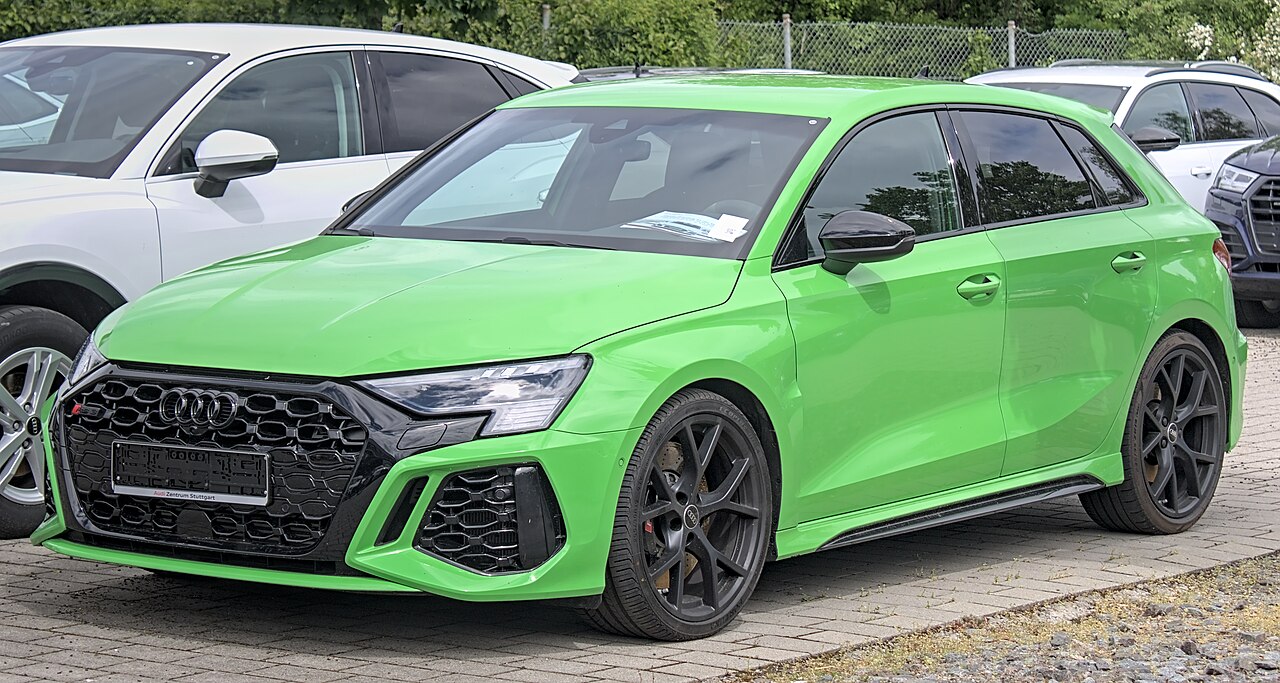
The green Sportback photographs show its five-door hatchback body from the front, while the grey Sportback rear and separate grey Sedan rear make the loading-shape difference visible. They are deliberately labelled as different vehicles and bodies.
The larger openings and RS details distinguish its appearance, but the everyday decision is still practical. Try the boot or hatch with real luggage and check rear-door access in a normal parking space.

Engine & drivetrain
Audi's 2021 European reference specifies a 2.5-litre turbocharged five-cylinder with 294 kW/400 PS and 500 Nm. A seven-speed S tronic and quattro system with a rear torque splitter accompany it. The manufacturer quotes 3.8 seconds from 0 to 100 km/h.
Those are metric launch figures. Do not substitute them for a US horsepower label or describe them as independent Cariary test results. On a used car, document any engine or transmission software changes.

Trim differences
Sportback and Sedan describe body choices, while market-specific packages govern details such as seats, trim and equipment. Do not assume a package name from one country carries the same content in another.
A heavily optioned car is only the better purchase if its equipment is useful and its condition is sound. Verify brakes, wheels and seats against the original build rather than identifying everything by appearance.
Interior & seating
The RS 3 retains everyday passenger accommodation, but compact dimensions still require a personal fit test. Sit in the rear behind the usual driver and try child-seat installation if that is part of the plan.
Performance seats should be assessed over more than a minute. Check support, entry and visibility from your driving position, then operate normal infotainment and climate functions while stationary.
Efficiency & range
This is a performance-led petrol purchase. Estimate fuel, insurance, tyres and servicing from the exact vehicle and your mileage rather than assuming compact size means inexpensive ownership.
Previous use matters on a second-hand example. A service history and specialist inspection are more useful than a seller's claim that it has only been driven carefully. Modified performance may also affect insurance and warranty arrangements.
Safety & equipment
The torque splitter is a chassis tool, not permission to explore the car's limits on public roads. Tyre condition, temperature and road grip still matter. Have the fitted tyre and brake setup checked, particularly after modifications.
Confirm assistance features, open campaigns and repair history by VIN. If a car has seen track use, ask for appropriate maintenance records rather than treating either track use or its absence as a complete verdict on condition.
Strengths
The five-cylinder engine gives the RS 3 a distinctive reason to exist beyond a numerical power contest. The availability of practical body styles also makes it relevant to buyers who cannot justify a dedicated two-seat sports car.
Its strongest ownership case combines that character with an appropriate body and a well-maintained example. The badge is not a substitute for either.
An appealing compact performance car when its engine character matters and its costs are understood. Buy a well-documented example and choose the body around real passenger and luggage needs.
Considerations
Running costs can be substantial relative to the car's footprint, and performance modifications deserve careful investigation. Ask what has changed, who performed the work and whether supporting documentation exists.
Also choose the body honestly. A Sedan may be the shape you prefer, while the Sportback's hatch may better suit awkward luggage. Neither is automatically superior for every household.
Recommended use
The RS 3 suits an enthusiast wanting a compact daily car with a distinctive engine and useful passenger access. It is worth testing when a larger performance sedan seems unnecessarily bulky.
It is less suitable when low operating cost is the main priority or when rear passengers and large loads routinely exceed compact-car space. In that situation, stepping up in size may solve more than stepping up in power.
Rivals & related
A Mercedes-AMG A 45 S provides a high-performance hatchback comparison, while the CLA 45 S offers a different four-door silhouette. The BMW M240i adds a six-cylinder coupe alternative with less convenient rear access.
Compare cabin fit, engine character, maintenance and insurance on specific examples. The fastest brochure acceleration does not automatically make the best daily car.
FAQ
Is an RS 3 the same as an S3? No. Are Sportback and Sedan the same body? No; their rear loading arrangements differ.
Does 400 mean every market advertises 400 hp? The cited European figure is 400 metric PS. Are the acceleration figures measured by Cariary? No; they are Audi's 2021 manufacturer claims.
What makes the Audi RS 3 different?
An appealing compact performance car when its engine character matters and its costs are understood. Buy a well-documented example and choose the body around real passenger and luggage needs.
Who should consider it?
Compact everyday performance with a distinctive five-cylinder engine
Sources & updates
The manufacturer references below identify the dated specifications used in this guide. Cariary buying assessments are editorial analysis, not a claimed first-hand road test or a diagnosis of an individual vehicle. Photographs have individual source links and licence credits. Confirm equipment, ratings and campaign status for the exact production date and original market before buying.
- Audi RS 3 Sportback and Sedan: technical facts, 2021 →
- Photograph — Green Audi RS 3 8Y Sportback front and side →Alexander-93; CC BY-SA 4.0
- Photograph — Grey Audi RS 3 8Y Sportback rear at a motor show →Alexander Migl; CC BY-SA 4.0
View all official references (1 more)
- Photograph — Grey Audi RS 3 8Y Sedan rear and side →Alexander-93; CC BY-SA 4.0
Last editorial review: September 20, 2026. Specifications remain market- and model-year-specific.