Core summary
The SQ7 TFSI combines a V8 with the Q7 body. This guide separates the petrol model from the earlier SQ7 TDI and distinguishes older photographs from later facelift equipment.
The SQ7 TFSI puts a petrol V8 into Audi's large Q7 SUV. The important distinction is not simply that it is quick: it retains a family-oriented body with a third seating row in the referenced seven-seat configuration. That makes it a different proposition from the five-seat SQ8.
Cariary would first establish how often those extra seats are needed. Their usefulness should justify the larger vehicle before the V8 becomes the deciding attraction.
History & generations
Audi introduced petrol TFSI versions of the SQ7 and SQ8 in 2020. Earlier SQ7 TDI specifications describe a different engine and should not be copied into a petrol listing. The 4M family also spans exterior updates.
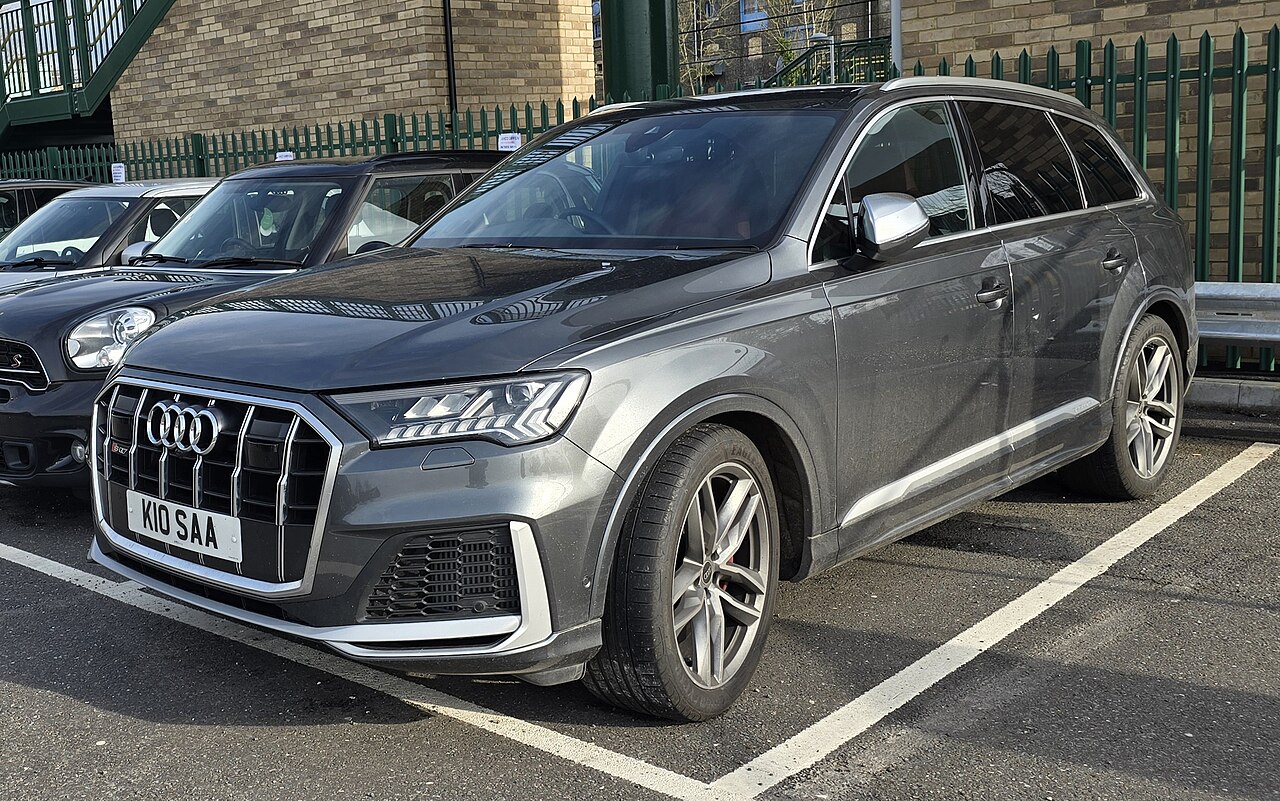
The gallery shows 2021 and 2023 TFSI examples, before the later Q7 facelift. The dated 2024 technical reference supports the drivetrain and seven-seat configuration, not a claim that the older photos show the newer exterior.
Body, platform & design
The tall rear body and long passenger compartment distinguish the SQ7's purpose from the lower-roof SQ8. The two gallery cars are separate examples with different wheels and exterior details.
Measure parking access and assess how the rear doors open beside neighbouring vehicles. A large SUV can be easy to see out of while still being awkward to load in a narrow bay. Camera coverage cannot create physical clearance.

Engine & drivetrain
The cited European TFSI data lists a 4.0-litre biturbo V8 with 373 kW/507 PS and 770 Nm, paired with eight-speed tiptronic and quattro. These are European units, not a relabelled US horsepower rating.
Have a used example inspected by a specialist familiar with the engine and chassis. Ask for service invoices and check cooling, leaks, stored warnings and smooth transmission operation. These are inspection priorities, not a diagnosis of a universal defect.
Trim differences
A Q7 with S line styling is not an SQ7. Likewise, optional chassis, audio and assistance equipment must be verified on the individual vehicle. The original specification is more useful than a dealer's generic feature list.
Identify the fitted suspension and brake hardware before comparing ownership costs. A sophisticated option may be desirable, but it also needs to work correctly and be included in the inspection.
Interior & seating
Test third-row access with any child seats already installed in the second row. Leave the front seats in normal positions, then ask actual passengers to try the rear seats. Seat count alone does not establish suitability for a long holiday.
Load bags with all required seats upright. Operate every folding mechanism and rear climate control. An occasional extra seat and a regularly occupied third row create very different luggage requirements.
Efficiency & range
The SQ7 is not an economy-led way to obtain seven seats. Budget for fuel, the fitted tyres, insurance and specialist maintenance. Compare an ordinary Q7 if family space matters much more than the V8.
The best value is not necessarily the cheapest used example. An apparently affordable purchase with overdue consumables or unresolved suspension warnings can leave little reserve for proper upkeep.
Safety & equipment
Check campaigns by VIN and demonstrate the fitted assistance features. Ask for calibration records following relevant accident or glass repairs. Test cameras and parking sensors around the full body.
Correct tyres and healthy brakes are fundamental on a heavy performance SUV. Driver aids and all-wheel drive do not make unsuitable tyres acceptable in poor conditions.
Strengths
The SQ7's strongest argument is the combination of three-row accommodation and petrol V8 performance. It offers that combination in an upright body rather than a styling-led SUV coupe.
For a household that travels with several people, the packaging can be more important than small differences in acceleration against rivals. Decide with passengers aboard, not only from the driver's seat.
A strong fit when three rows and V8 character are both genuine priorities. Its size and maintenance commitment make less sense if the extra seats will rarely be used.
Considerations
Size, access and running costs are the main compromises. Inspect the underside, wheel condition and load area as well as the polished cabin. Signs of heavy use are reasons for closer assessment, not automatic proof that the vehicle is unsuitable.
Keep diesel, petrol and facelift specifications separate when reading advertisements. A model year should be confirmed with build information.
Recommended use
Consider the SQ7 when you need a substantial family tourer and actively want a V8. It is harder to justify for a single occupant making mainly short city trips.
If the third row is unnecessary, compare the SQ8 or a smaller performance SUV. If performance is secondary, the regular Q7 deserves an equally serious test.
Rivals & related
A BMW X7 provides a useful three-row luxury comparison, while the Mercedes-Benz GLS tests a similar family-touring brief. Compare equivalent engines and equipment rather than entire model ranges.
Within Audi, an SQ8 tests whether five seats are enough, and a regular Q7 tests how much of the SQ7 premium you truly need.
FAQ
Is the SQ7 always diesel? No; this page covers TFSI petrol. Do the photos show the latest facelift? No, they are identified 2021 and 2023 examples.
Does the quoted 507 figure mean US hp? No, it is metric PS. Must I verify seating on an imported car? Yes—confirm the exact original-market specification.
What makes the Audi SQ7 different?
A strong fit when three rows and V8 character are both genuine priorities. Its size and maintenance commitment make less sense if the extra seats will rarely be used.
Who should consider it?
Family touring with three rows and V8 performance
Sources & updates
Manufacturer references identify the dated specifications used here. Cariary buying assessments are editorial analysis, not a claimed first-hand road test or a diagnosis of an individual vehicle. Photographs carry individual source and licence credits. Confirm the exact build, market and equipment before purchase; photographs of another trim do not establish your car’s specification.
- Audi SQ7 and SQ8 TFSI launch, September 2020 →
- Audi SQ7 TFSI seven-seat technical data, October 2024 →
- Photograph — Grey 2023 Audi SQ7 TFSI front and side →Calreyn88; CC0
View all official references (1 more)
Last editorial review: September 20, 2026. Specifications remain market- and model-year-specific.