Core summary
A plug-in 3 Series whose value depends on charging access—and on which battery generation you buy.
The G20 BMW 330e combines a rechargeable battery and electric motor with a turbocharged petrol engine. Its purpose is not merely to sit numerically near the 330i. It offers electric running for suitable daily journeys and petrol capability when the trip extends beyond that routine. Whether it makes sense depends heavily on dependable charging access and the exact build year. Later battery revisions materially change the comparison, so a single electric-range number should never be attached to every G20 330e. This profile covers the sedan, with photographs of early G20 examples. It is a researched buying guide rather than a claim that Cariary has driven these particular cars.
History & generations
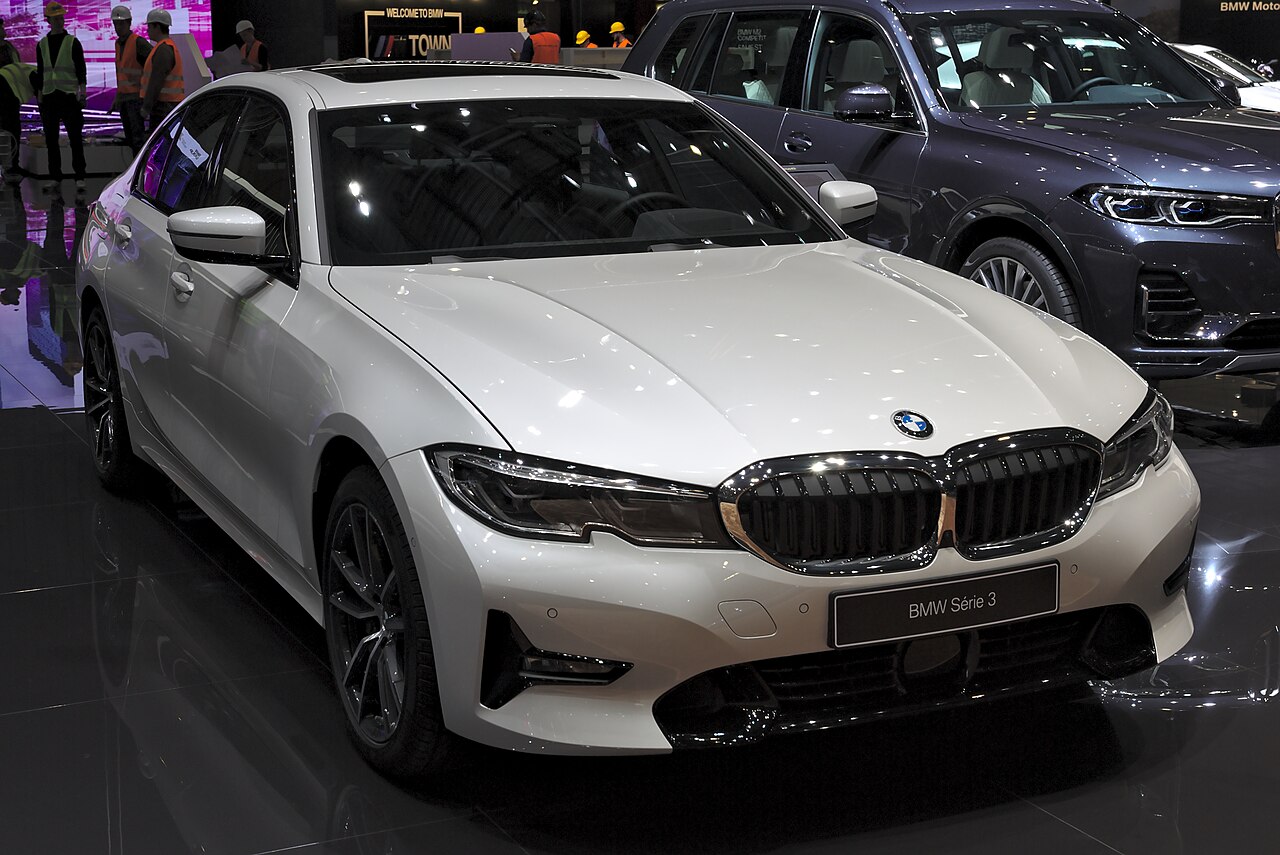
The G20 330e reached the market in 2019 after an earlier preview, continuing BMW's plug-in 3 Series concept in the seventh-generation sedan. The initial car and the substantially revised 2024 battery specification are not interchangeable. Both carry the 330e name, but used buyers need to establish production details before comparing charging and electric-distance claims. A facelift appearance alone is not a complete battery specification. Check the VIN, build record and original market literature. The white Geneva display car and the street photographs in this gallery illustrate early-generation exteriors; they are not presented as pictures of the later battery hardware or updated interior.
Body, platform & design
The 330e retains the G20 sedan outline, with a charging flap on the left front wing providing a useful visible distinction from conventional petrol versions. Several gallery angles show that area; the rear views also document the 330e badge. Neither feature verifies battery health, so visual identification is only the first step. Inspect the charging flap, port and latch for damage and demonstrate their operation. The car still uses a separate boot rather than a large hatch. Try the opening with your normal bags before buying, especially if a stroller is involved. Appearance packages such as M Sport alter the presentation without making every pictured option standard.

Engine & drivetrain
The original G20 330e combined a turbocharged 2.0-litre petrol engine with an electric motor, with up to 215 kW/292 hp available under the launch XtraBoost conditions. Treat that maximum as a defined operating capability, not a promise that all power is always available regardless of conditions. Test the car in electric operation and with the engine running, checking smooth transitions, warnings and transmission behaviour. The powertrain contains both combustion and high-voltage systems, so inspection should cover both. A test drive made only with a depleted battery is incomplete, just as an electric-only demonstration cannot establish engine condition. Arrange a properly charged viewing when possible.

Trim differences
The powertrain name does not specify the whole car. M Sport, seat options, assistance, cameras and audio can differ by country and year. The blue and black gallery examples show M Sport appearance, while the white display car documents another presentation of the early model. Confirm equipment against a factory build list and operate it. Also distinguish rear-wheel drive from xDrive where offered; the 330e badge alone is insufficient. For this car, the most valuable specification detail may be the battery revision rather than an appearance package. A listing that quotes later electric range for an early car needs clarification before any price comparison can be meaningful.

Interior & seating
The 330e provides five seats in a familiar 3 Series cabin, but electrification brings packaging trade-offs. BMW quoted 375 litres of boot capacity for the original G20 330e launch, so do not copy the conventional petrol sedan's cargo figure into an early plug-in listing. Volume alone also misses the shape of the floor and opening. Test actual luggage and rear-seat folding where fitted. Set the driver's seat and assess rear comfort behind it, then check climate, screens and phone connection. The gallery is exterior-focused and does not prove cabin equipment. Inspect charging-cable storage too: an accessible cable is more useful than one that requires unloading the boot every evening.

Efficiency & range
Charging behaviour determines much of the 330e's ownership case. A buyer who can plug in routinely has a different proposition from one who plans to treat it solely as a petrol car. BMW's May 2024 UK update specified a 19.5 kWh usable battery and up to 11 kW three-phase AC charging, a later specification that must not be assigned to a 2019 example. Establish the actual battery and onboard charger first. Build a cost estimate around electricity price, regular trip length and longer petrol journeys rather than using a combined plug-in consumption headline as universal fuel use. Charging availability is a practical requirement, not a minor optional convenience.
Safety & equipment
Have the high-voltage system and ordinary chassis condition assessed by a suitably qualified workshop. Investigate charging faults, warning messages and signs of underside damage rather than assuming that the petrol engine makes battery problems irrelevant. Do not handle exposed high-voltage components yourself. Confirm fitted assistance systems and ask about calibration after glass or body repairs. Check tire ratings, wear and braking condition, and verify recall status using the VIN. A plug-in test should also include safe cable and port operation. The presence of charging equipment in a listing does not establish its condition or compatibility with the owner's installation; an appropriate electrical professional should assess a home setup when needed.
Strengths
The 330e can divide duties in a way a conventional petrol sedan cannot: electric running for compatible everyday journeys, with a petrol engine for trips that do not fit that electric routine. It preserves the basic appeal of a 3 Series sedan while offering a different route to ownership efficiency. That flexibility is its strongest argument, not the assumption that a hybrid badge automatically reduces every expense. Cariary's view is that a well-matched owner benefits more than an owner chasing a tax or consumption headline without a charging plan. Later battery updates can make an important difference, but should be evaluated against price and actual daily distance.
The 330e is compelling when it is charged regularly; distinguish the early and later batteries before using electric range to justify the purchase.
Considerations
A used 330e requires evidence about two propulsion systems. Ask for service invoices, remaining battery-warranty terms and any available battery-health information. Demonstrate charging from the type of connection you will use, and check that all included cables are undamaged. A displayed electric distance is affected by recent operation and conditions; it is not a standalone battery certificate. Inspect the petrol engine even if the seller emphasizes electric commuting. Consider reduced early-car boot space and the inconvenience of charging away from home. If regular plugging in is unlikely, compare a 320i or 330i honestly instead of assuming the plug-in will necessarily be cheaper to own.
Recommended use
The 330e is best matched to an owner with a predictable daily route, regular charging and occasional longer journeys. Before shopping, record where the vehicle parks overnight and whether a dependable socket or charger is actually available there. Then compare that routine with the particular car's usable electric capability, leaving a margin for weather and aging. A renter who relies on distant public charging may face a very different experience from a homeowner who plugs in after parking. Passenger comfort and boot fit still matter, so do not let drivetrain calculations crowd out a normal family-car test. The right 330e is one that fits both the route and the household.
.jpg)
Rivals & related
Compare the BMW 330i if petrol simplicity and performance matter more than electric commuting, and the 320d only if a longer-distance diesel routine genuinely fits. A Mercedes-Benz C-Class plug-in hybrid or Volvo S60 Recharge of a comparable year may be relevant where sold, but their battery revisions and packaging must be matched carefully. An all-electric sedan is also worth considering if charging is dependable and the longer journeys are manageable. Use the same route and ownership assumptions for every contender. Comparing an early used 330e against a current rival's best electric range without acknowledging age and price differences produces a misleading answer.
FAQ
Q: Is a 330e the same as a 330i with a small starter battery?
A: No. It is a rechargeable plug-in hybrid with an electric traction motor.
Q: Can I use 2024 range and charging figures for a 2019 car?
A: No. Establish the battery revision and market specification.
Q: Should I inspect the engine if I plan to drive electrically?
A: Yes. Both powertrain systems matter.
Q: Does it make sense without regular charging?
A: Its main advantage is harder to realize; compare non-plug-in alternatives using your own costs.
What makes the BMW 330e different?
The 330e is compelling when it is charged regularly; distinguish the early and later batteries before using electric range to justify the purchase.
Who should consider it?
Chargeable daily commuting with petrol backup for longer trips
Sources & updates
The original preview and 2019 market-launch material establish the early G20 plug-in concept and packaging. The May 2024 UK release is used specifically to distinguish later battery and AC-charging capability, not to retrofit those claims onto the pictured cars. Each photograph has its own credited and licensed Commons source. This profile does not infer equipment or battery health from photographs. The ownership comparisons are Cariary's editorial interpretation; a VIN-specific build record, manual and qualified inspection remain necessary for an individual purchase.
- BMW — 330e market launch, August 2019 →
- BMW UK — G20 330e preview, 2018 →
- BMW UK — revised 3 Series and 330e battery, May 2024 →
Last editorial review: September 20, 2026. Specifications remain market- and model-year-specific.